
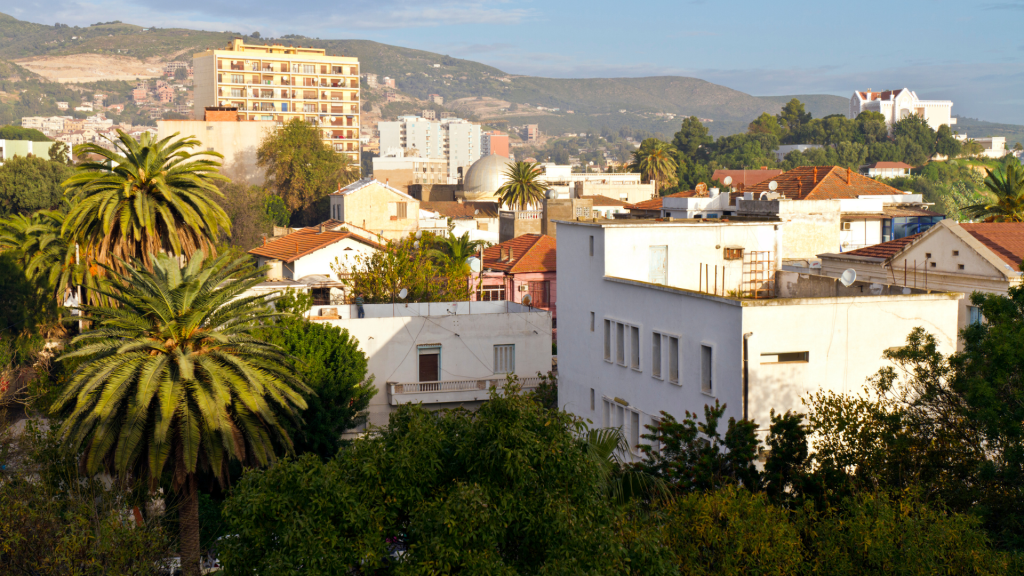

Algeria's best-known sights are the Casbah of Algiers, the Roman towns of Timgad, Tipaza and Djemila, the bridges of Constantine and the rock art of the Tassili n'Ajjer above Djanet. Each needs a different plan: the Casbah is a half-day walk with a guide, Timgad is a day trip from Batna, and the Tassili is a desert trek you can only do with an approved agency.
Below we take each one in turn with how to visit it, then add Oran, the M'Zab Valley and the Djurdjura, and finish with cash, SIM cards, visas and etiquette. Visas, money and safety get more room in our broader Algeria travel guide.
Table of Contents
- 1. Walk the Algiers Casbah: living history and how to visit
- 2. Algiers beyond the Casbah
- 3. Roman ruins in Algeria: Timgad, Tipaza and Djemila
- 4. Tassili n'Ajjer: sandstone plateaus and rock art above Djanet
- 5. Constantine: the Rhumel gorge and its bridges
- 6. Oran: Santa Cruz, raï and karantika
- 7. Tlemcen: Andalusian Algeria
- 8. Ghardaïa and the five ksour of the M'Zab
- 9. Hiking in the Djurdjura Mountains
- 10. More of the Sahara and the coast
- How much time does each of these need?
- Practical tips for traveling in Algeria
- Visas, safety and local etiquette
- Seasons, trip length and getting around
1. Walk the Algiers Casbah: living history and how to visit
The Casbah is the old medina of Algiers and has been on the UNESCO World Heritage list since 1992. The Zirids founded the town in 944, and the Ottomans built the citadel at the top between 1516 and 1592. It is still a lived-in neighborhood, and many houses are in poor repair, so expect closed lanes and scaffolding.
Casbah architecture and the best walking route
The houses are whitewashed and packed so tightly that they lean on one another down the slope. From the lane you see little more than a heavy wooden door with an iron knocker. Behind it, most houses open onto an inner courtyard with galleried rooms around it.
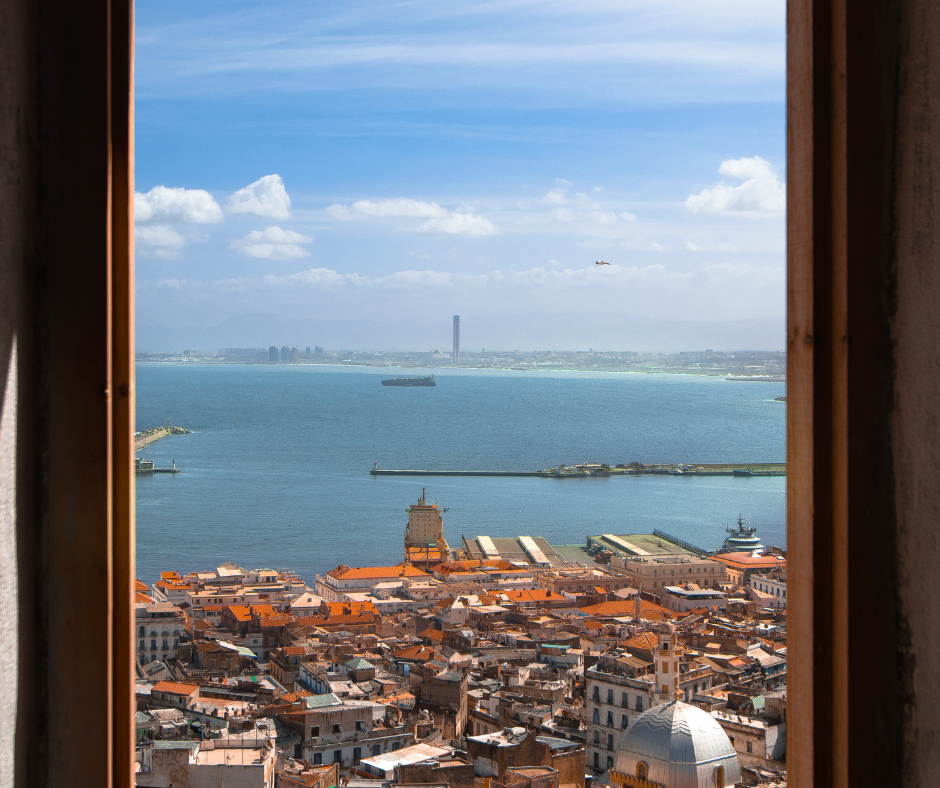
The lanes twist, climb and dead-end, and first-time visitors get lost fast. The easiest way in is to take a taxi to the upper Casbah, around the Bab Jdid gate and the citadel (Dar es-Soltane), then walk downhill toward the sea and Place des Martyrs. That way the stairs go down, not up.
On the way down you pass small mosques, old public fountains and neighborhood bakeries, where the Casbah still works like a village.
When to go and how to get around the Casbah
Go early. Between about 9:00 and 11:00 the lanes are still cool and the sun reaches down into them.
Late afternoon is the other good slot, with softer light on the walls. Avoid midday in summer: the stairs are steep and there is little shade.
We'd take a local guide for a first visit. A guide knows which lanes are open and which doorways are private homes, so you don't end up in someone's courtyard, and can point out details you would walk straight past. Keep your phone and wallet in a front pocket in the crowded market lanes.
Street food and pastries in and around the Casbah
Leave time to eat. The street stalls are in the lower Casbah around Place des Martyrs, where you can watch bourek being fried: thin dioul pastry rolled around spiced minced meat.
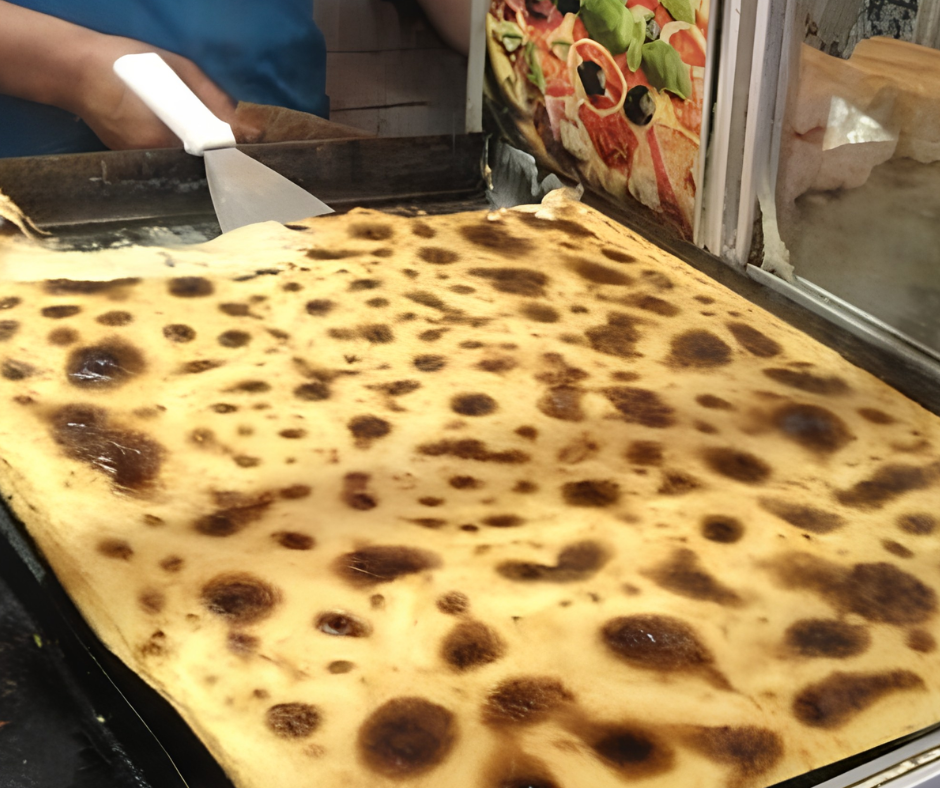
Also look for garantita (karantika in Oran), a baked chickpea-flour flan sold hot by the slice with a pinch of cumin. For a break, the neighborhood cafés serve coffee and sweet mint tea with pastries.
Two pastries to ask for: kalb el louz, an Algiers cake of semolina and almonds soaked in syrup and scented with orange blossom (a Ramadan favorite), and baklawa, layered with nuts.
2. Algiers beyond the Casbah
Give the capital a second day. Most of these sights are a short taxi or Yassir ride apart, national museums usually charge about 200 DZD (2026), and many close one day a week, so check before you go.
- Notre-Dame d'Afrique: a neo-Byzantine basilica inaugurated in 1872 on the cliffs above Bologhine, with one of the widest views over the bay. Go by taxi: the Bologhine cable car that once ran up here hasn't worked for years.
- Jardin d'Essai du Hamma: a botanical garden founded in 1832, about 32 hectares of palm and ficus avenues running down toward the sea. Entry is a small fee, about 150 to 200 DZD.
- National Museum of Fine Arts: above the Jardin d'Essai, opened in 1930, with about 8,000 works, one of the largest art collections in Africa.
- Maqam Echahid: the Martyrs' Memorial, three concrete palm fronds about 92 m high, inaugurated on 5 July 1982, with the Mujahid museum on the War of Independence underneath. A short cable car runs up from El Hamma.
- Bardo Museum: a late-18th-century Ottoman-era villa that has housed a museum since 1930, now covering prehistory and ethnography.
- Palais des Raïs (Bastion 23): on the seafront below the Casbah, three Ottoman palaces and six fishermen's houses around a fort begun in 1576, restored and open as an arts and culture center since 1994.
- Djamaa El Djazaïr and Ketchaoua: the Great Mosque of Algiers in Mohammadia has the world's tallest minaret at 265 m and was officially inaugurated on 25 February 2024. At the foot of the Casbah, Ketchaoua Mosque, documented in 1612, served as a cathedral from 1832 to 1962 and reopened in 2018 after restoration.
- La Grande Poste and Rue Didouche Mourad: the 1913 post office is the landmark of the French-built center; its interior has been closed for restoration since 2019, so admire it from outside, then walk up Didouche Mourad, the main shopping street.
3. Roman ruins in Algeria: Timgad, Tipaza and Djemila
Algeria has three Roman sites on the UNESCO list, all inscribed in 1982: Timgad and Djemila in the eastern highlands, and Tipaza on the coast west of Algiers. All three are big and open, with little shade and not much signage, so a guide makes a real difference.
Timgad: Trajan's grid town in the Aurès
Timgad sits at about 1,000 m on the northern edge of the Aurès Mountains, 35 km east of Batna. Emperor Trajan founded it around AD 100 as a colony for army veterans, laid out as a near-perfect square grid crossed by the Decumanus Maximus and the Cardo Maximus. It was planned for about 15,000 people and soon spread beyond the grid.

The original paving is still there, and you can see ruts left by cart wheels in the stones. Trajan's Arch, a triple arch about 12 m high, was partly restored in 1900 and is the one landmark everyone photographs.
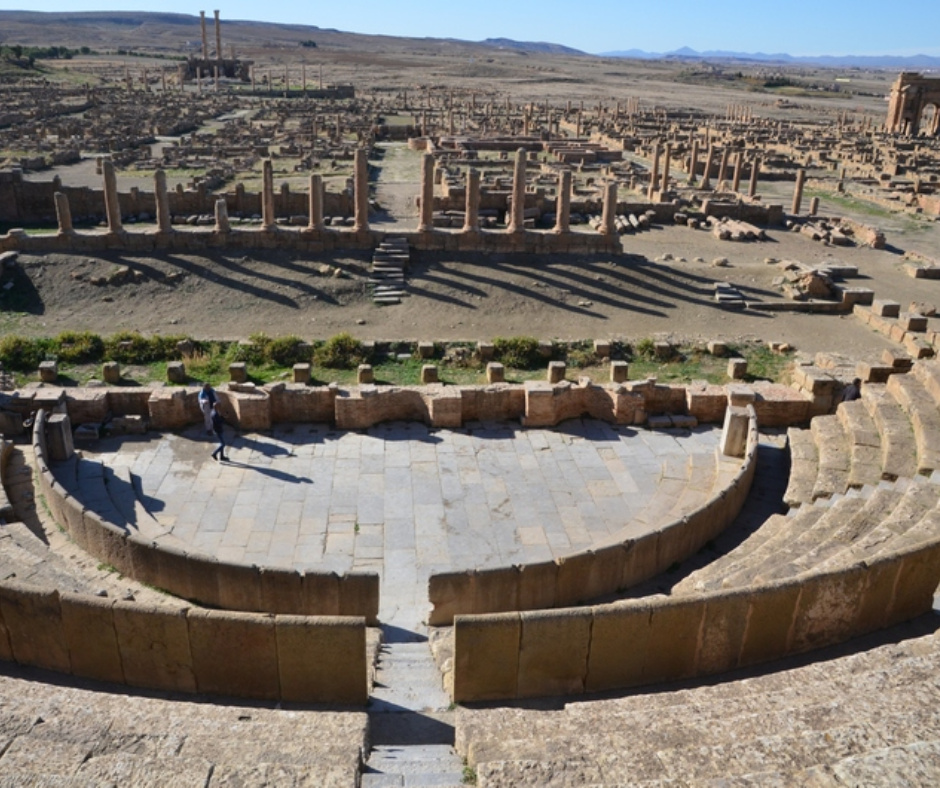
Climb the theater (about 3,500 seats) for the best view over the forum, the baths and the remains of the public library. Since about 2010 the summer Timgad festival has used a modern open-air theater next to the site, not the Roman one. Getting there from Batna and what to see first are covered in our Timgad day trip guide.
Tipaza: Roman ruins on the Mediterranean shore
Tipaza is the one to pick if you have a single free day in Algiers: it is about 70 km west of the capital, and the ruins run down to the sea. The site comes in layers, a Punic trading post first, a Roman colony after that, then early Christian and Byzantine remains on top.
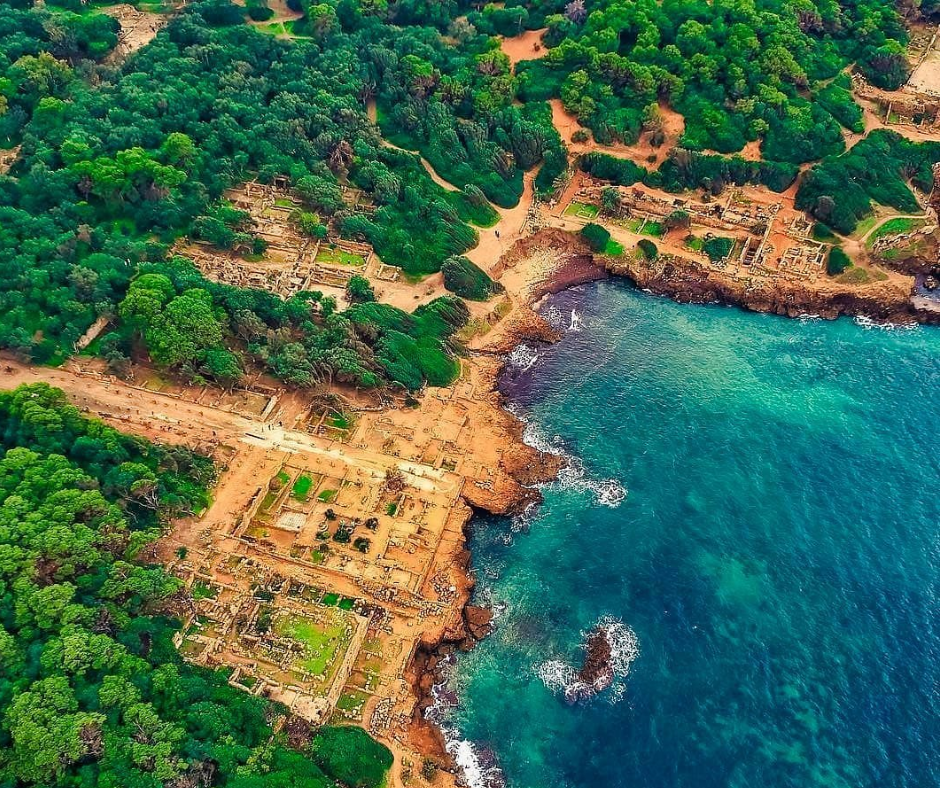
The ruins sit in a park of pine and olive trees. On the western hill is the Great Basilica, used as a stone quarry for centuries, so mostly its floor plan survives. There is also an amphitheater, a theater, and cemeteries of stone coffins around the basilicas, some covered with mosaics.
Coming from Algiers, you pass the Royal Mausoleum of Mauretania near Sidi Rached, about 13 km east of Tipaza, so stop there first. It is a huge round tomb on a hilltop, about 60 m across and now about 32 m high.
It is usually linked to the Mauretanian king Juba II and Cleopatra Selene and dated to around 3 BC, though both the date and the attribution are debated, and it is part of the Tipasa World Heritage property. Its French name, "Tombeau de la Chrétienne", comes from the moldings on its false doors, which look like a cross.
We'd allow at least half a day for Tipaza and the mausoleum together. Chenoua is right next door if you want a swim afterwards, and it is one of many beaches in Algeria that pair well with a day of sightseeing. For a wider look at these historical spaces, see our guide to famous landmarks in Algeria.
Djemila: Roman Cuicul in the mountains near Sétif
Djemila, ancient Cuicul, is about 50 km northeast of Sétif, on a ridge at roughly 900 m. Unlike flat Timgad, it had to fit a narrow, sloping spur, so the Roman planners bent the usual grid to follow the ground.
Don't skip the small site museum. Its walls are covered with large mosaics lifted from the town's floors, close enough that you can look straight into the faces of people who lived here about eighteen centuries ago.
Go in spring if you can, between March and May, when the hills around the gray columns turn green. Winters at this height are cold and often wet.
Planning your visits to Timgad and Tipaza
Timgad is on an open plateau at about 1,000 m, so the sun is strong by late morning, and outside summer it gets cold once the sun goes down. Neither site has much shade.
Base yourself in Batna, 35 km away, or in Constantine for a longer day, and book a taxi or driver for an early start. If you'd rather sleep next to the ruins, the Trajan Hotel is right next to the site. Entry to Algerian museums and sites is cheap, usually 200 to 300 DZD (2026).
Tipaza is an easy day trip from Algiers along the coast road. Bring sunscreen, a hat and more water than you think you need, because there are no stalls inside either site. This matters most from June to August, when Algeria in summer calls for early starts and long afternoons by the sea.
4. Tassili n'Ajjer: sandstone plateaus and rock art above Djanet
The Tassili n'Ajjer is a sandstone plateau in Algeria's far southeast, eroded into towers, arches and canyons, with dune fields along its edges. UNESCO inscribed it in 1982 for its landscape as much as for its rock art, and it is what brings most visitors to Djanet.
Planning a Tassili trip from Djanet
Every Tassili trip starts in Djanet, an oasis town that is now a wilaya in its own right. Air Algérie flies there from Algiers, and in recent Saharan seasons (roughly October to May) there have also been direct flights from Paris CDG; check the schedule each season. The airport is about 30 km from town. Plan a night in Djanet before heading out so your agency can sort vehicles, supplies and paperwork, and get enough cash: the south runs almost entirely on it.
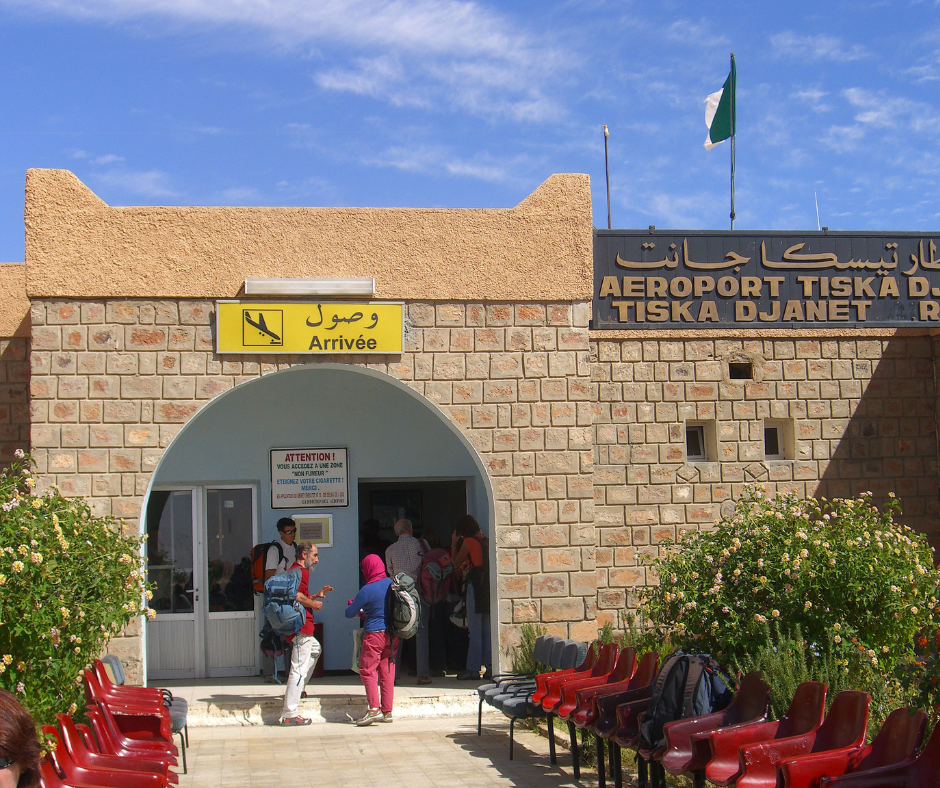
Many visitors to the south come in on the visa on arrival for Saharan tourism. You need an organized tour, booked through an approved Algerian agency, whose itinerary includes the southern wilayas; Djanet counts.
Before you leave home, the agency submits the request on the Tourism Ministry's platform and you receive a QR-code authorization that lets you board, and the fee is paid on arrival (about EUR 110 by most reports, depending on nationality). You don't have to land at a southern airport with it, and many travelers come in through Algiers; it covers up to 30 days.
Your agency should carry a first-aid kit, enough water for the whole route and a satellite phone. Mobile coverage is patchy or unavailable in remote southern areas, and in the canyons you should assume there is none.
Why you travel with Tuareg guides
You can't do this trip on your own. Foreigners in the south are expected to go with an approved agency, which also organizes the police or gendarmerie escort the authorities assign on some routes. The guides and drivers are mostly local Tuareg who find the way by rock landmarks, since the wind wipes out tracks, and who know where the gueltas (rock pools that hold water) are.
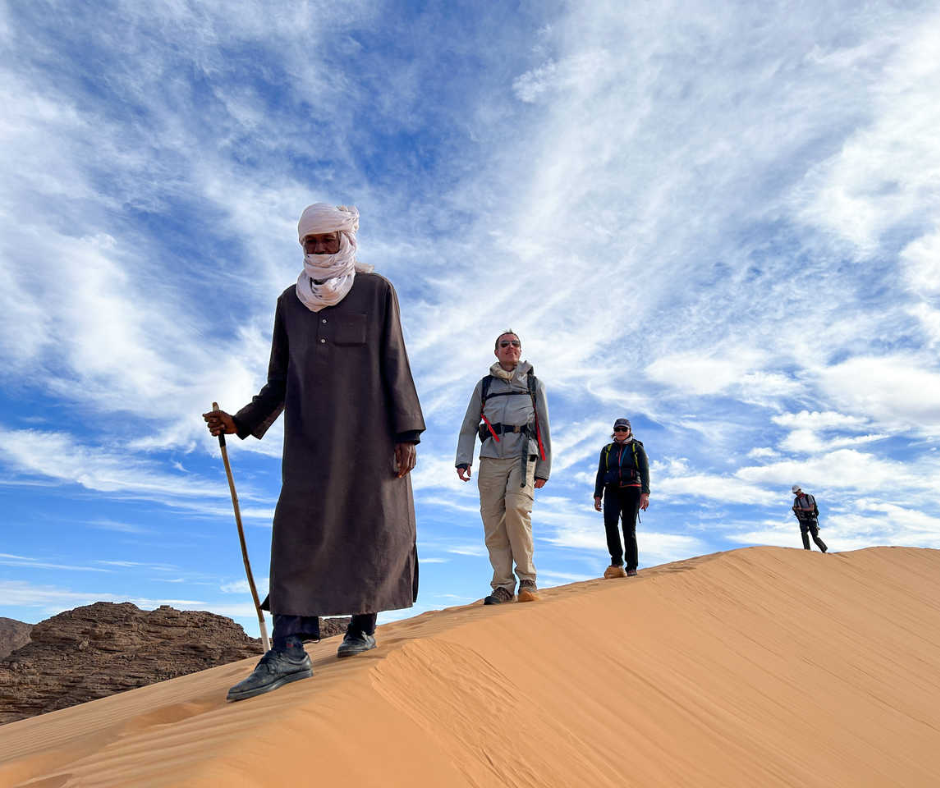
The team handles the 4x4s, the cooking and the camp. In the evening you'll be offered Tuareg tea: strong, very sweet green tea brewed over embers and poured from a height to raise a froth, usually in three rounds.
Walk at your guides' pace, dress modestly if you stop at a camp or a family's tent, and always ask before taking anyone's portrait.
Sefar and the rock art: look, don't touch
UNESCO counts more than 15,000 drawings and engravings in the Tassili. They record a time when the Sahara was green: first wild animals, then cattle herders, then horses and finally camels. Scholars still argue over exact dates, but the main traditions are placed between about 10,000 BC and the first centuries AD.
Sefar, on the high plateau, is the best-known site, with Round Head figures such as the "Great God" and many cattle scenes. Getting there is a real trek: from Djanet you climb the Tafilalet pass (about 600 m of ascent) with donkeys carrying the gear, and a Sefar circuit usually takes 8 to 10 days there and back. It suits fit walkers. If that's too much, shorter 4x4 trips around Djanet and in the Tadrart reach other engravings and paintings.
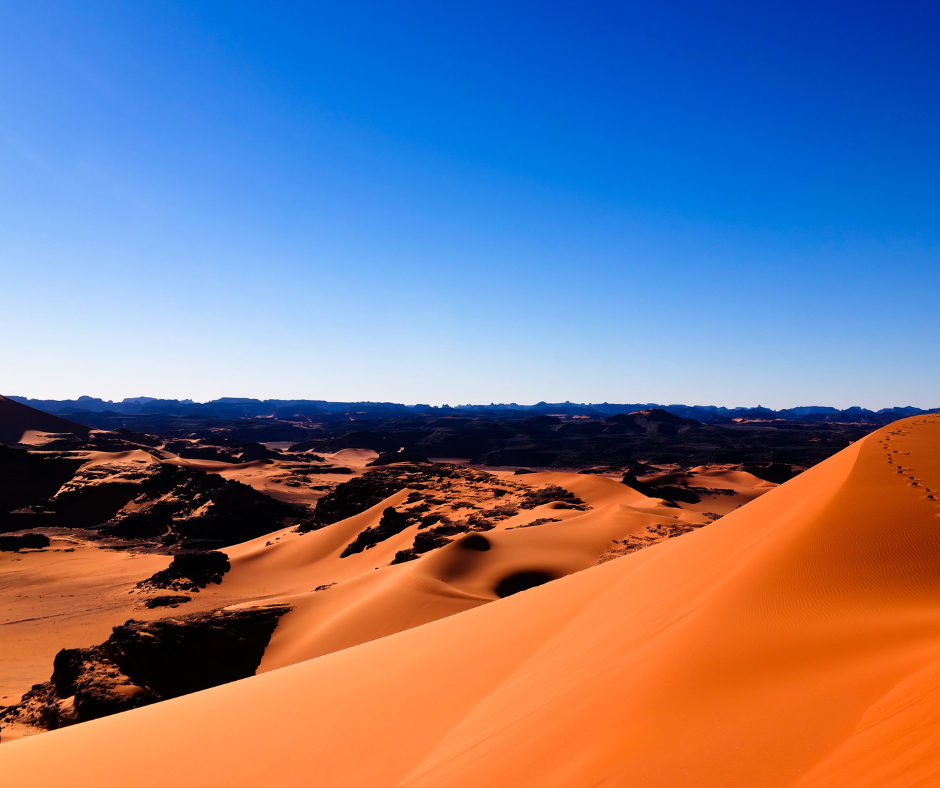
Don't touch the rock: oil from your skin damages the pigments. Never wet a painting to make it show up in photos, keep trekking poles away from the shelter walls, and don't pick up flints or bits of pottery. Taking antiquities out of Algeria can lead to prison.
5. Constantine: the Rhumel gorge and its bridges
Constantine's nickname, the City of Bridges, is literal: the old town sits on a limestone rock cut off by the Rhumel gorge, and bridges are the way across. Long before the emperor Constantine gave it his name in the 4th century, it was Cirta, capital of Massinissa's Numidian kingdom.
Two bridges to start with: Sidi M'Cid and Bab El-Kantara
Start with the Sidi M'Cid suspension bridge: opened in 1912, it spans 164 m and hangs 175 m above the river. You can walk across it. Go early for the light on the cliffs, and expect a little movement when the wind picks up.

Further along the gorge, Bab El-Kantara has the longest story. The Romans built the first bridge here. Salah Bey had it rebuilt in stone on the Roman remains in 1792, it collapsed in 1857, and the French replaced it with the iron arch you see today, finished in 1863.
From the middle, the river is about 125 m below you.
Visiting the Emir Abdelkader Mosque
Away from the bridges, the Emir Abdelkader Mosque is worth the detour. Completed in 1994 next to the Islamic university of the same name, it is one of the largest mosques in Algeria, with two minarets of about 107 m and calligraphy that rewards a slow look.
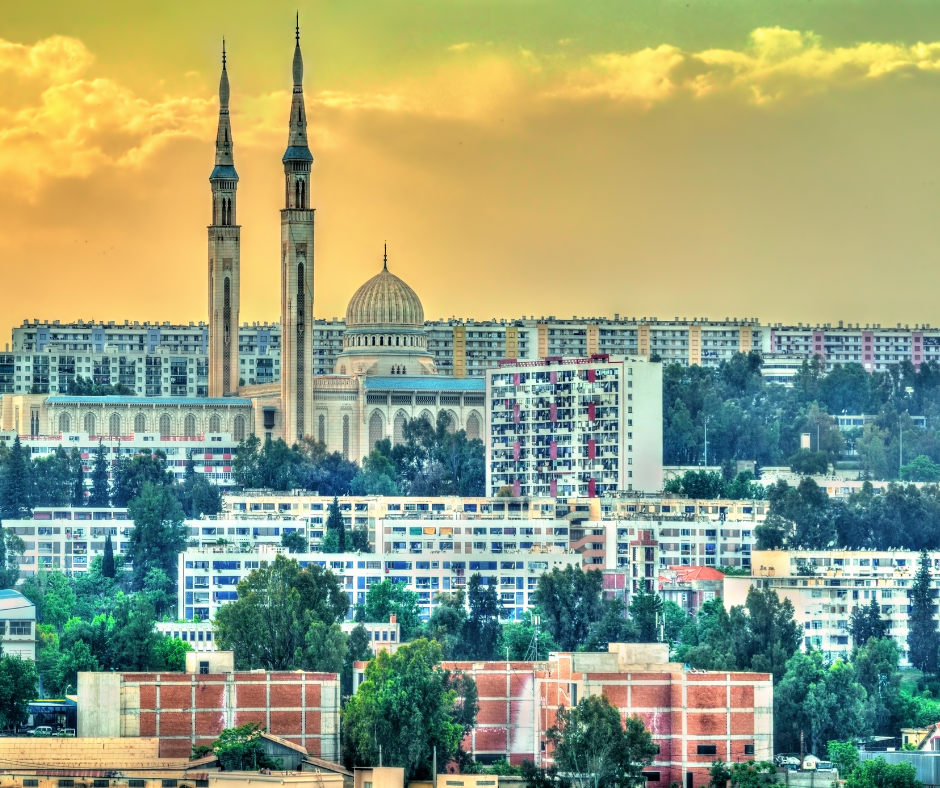
It's an active place of worship, so go outside prayer times and cover arms and legs; women should bring a headscarf. Friday around the midday prayer is the worst time to try.
Mellah Slimane footbridge and Sidi Rached viaduct
The Mellah Slimane footbridge is the one locals cross on foot every day. Built by Ferdinand Arnodin and opened in 1925, it is 125 m long and only a couple of meters wide, and it links the train station district with the city center.
Locals also call it the "passerelle de l'ascenseur" because of the lift that serves it. For a change of scale, look at the Sidi Rached viaduct, finished in 1912: 447 m long, with 27 arches (the biggest spans 70 m), carrying the road between the Coudiat district in the center and the railway station.
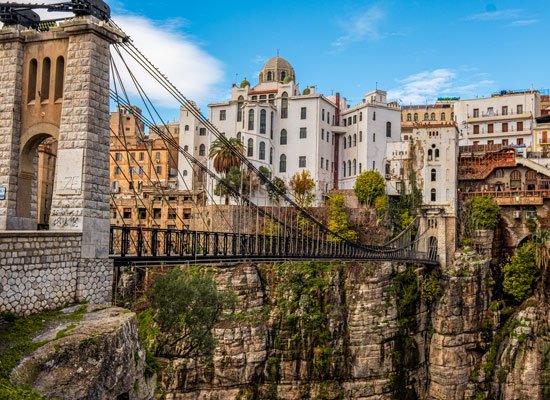
More than a century on, the viaduct still carries a big share of the city's traffic. There's a fuller plan for the city in our guide on things to do in Constantine.
The view from the Monument aux Morts
For the best view of the whole gorge, walk up to the Monument aux Morts on the Sidi M'Cid rock. It is a copy of Trajan's Arch at Timgad, about 21 m high, built between 1918 and 1930 for the city's dead of the First World War.
From there you can follow the gorge and pick out the bridges one by one. You may read about the Chemin des Touristes, a 2.5 km path cut into the gorge walls beneath the bridges in the 19th century. It has been closed since 1958. The province relaunched its rehabilitation in late 2024, section by section, but don't plan on walking it until it actually reopens.
6. Oran: Santa Cruz, raï and karantika
Oran has a different feel from Algiers or Constantine. Spain held it for most of the period from 1509 to 1792, and it is the home of raï, which you'll hear drifting out of cafés. The festivals move around: in August 2025 the national raï festival was split between Sidi Bel Abbès and Oran, and in July 2026 the government created an annual international raï festival in Oran. Time it right and you can catch one of the Algerian festivals worth planning a trip around.
For the view over the city and the port, go up to Fort Santa Cruz on Mount Murdjadjo (the Pic d'Aïdour). The Spanish built it between 1577 and 1604, and the Santa Cruz chapel beside it was added in the 19th century. The road up is steep, so we'd take a taxi to the top and walk back down if you've got the energy. In summer, locals head west of the city to Les Andalouses and Aïn El Turk, two favorites in our Oran beach guide.
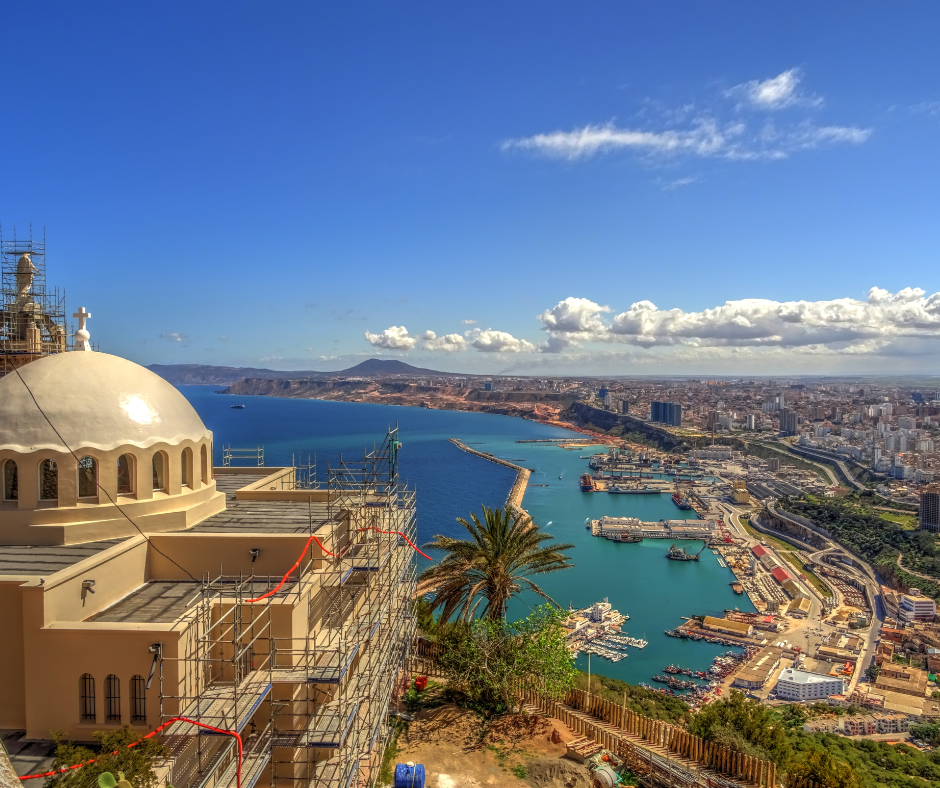
Before you leave, eat karantika, Oran's chickpea-flour flan, served hot in a baguette with cumin and harissa from street stalls in the center. It is the city's signature snack and costs very little.
7. Tlemcen: Andalusian Algeria
Tlemcen, in the hills of the northwest about 140 km from Oran, was the capital of the Zayyanid kingdom from 1236 to 1554 and has some of the finest medieval Islamic architecture in the country. The Great Mosque, founded in 1082 by the Almoravids, has a carved, pierced mihrab dome dated 1136. El Mechouar, the Zayyanid citadel, was rebuilt on its old foundations in 2010 and 2011.
Just outside town are the 38 m minaret of Mansourah, left from the Marinid siege of 1299 to 1307, and the shrine of Sidi Boumediene, a 12th-century Sufi saint, with its 1339 mosque and madrasa. Give it two days, three with the Beni Add caves and the El Ourit waterfalls. Air Algérie flies from Algiers in about an hour and a quarter.
8. Ghardaïa and the five ksour of the M'Zab
The M'Zab Valley lies about 600 km south of Algiers. Its five fortified ksour, El Atteuf, Bounoura, Melika, Ghardaïa and Beni Isguen, were founded by the Mozabites from the early 11th to the mid-14th century, and UNESCO listed the valley in 1982.
The Mozabites are a conservative Ibadi Muslim community, and visits are tightly controlled. Beni Isguen is the strictest: you enter only with a local guide, taken on at the main gate, visitors leave by sunset, and non-residents can't stay the night inside. Cover shoulders and legs, and don't smoke in the streets.
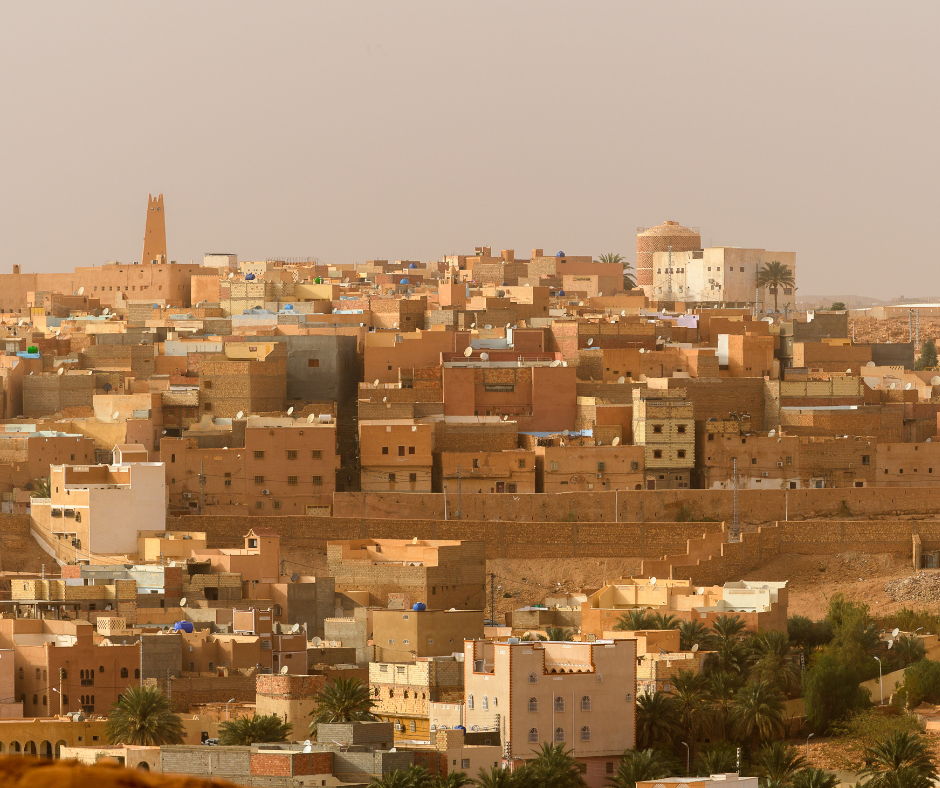
Photographing people, especially women, is not allowed, and some areas are off-limits to cameras altogether; your guide will tell you where you can shoot. For somewhere to stay, Hôtel M'Zab and El Djanoub are in Ghardaïa, and family guesthouses sit in the Beni Isguen palm grove.
9. Hiking in the Djurdjura Mountains
Closer to Algiers, the Kabylie region shows a greener side of the country. Hiking in the Djurdjura takes you through the cedar forests of the Tikjda plateau and up to Lalla Khedidja, at 2,308 meters the highest peak of the range, often with Barbary macaques watching from the slopes. Spring and early autumn are the best seasons, when the trails are clear of snow and the heat is still manageable.
10. More of the Sahara and the coast
With more time, these are the places we'd add, each worth a few days of its own.
- Taghit: an oasis near Béchar on the Oued Zousfana, where the high dunes of the Grand Erg Occidental rise right behind the ksar. There are Neolithic rock engravings close by, and a date festival in late October.
- Timimoun: the red-ochre oasis of the Gourara, watered by foggaras, underground channels that carry water to the palm gardens. Its Ahellil songs have been on UNESCO's intangible heritage list since 2008.
- The Hoggar and Assekrem: dark volcanic peaks around Tamanrasset in the Ahaggar Cultural Park. Sunrise from the Assekrem plateau (about 2,726 m), where Charles de Foucauld built his hermitage in 1911, is the big moment. As in the Tassili, you go with a licensed agency and local guides.
- Ghoufi: in the Aurès near Batna, balconies of abandoned stone houses above a 3 to 4 km stretch of the Oued Abiod canyon, a troglodyte village lived in until the 1970s. It pairs well with Timgad.
- The Jijel corniche: the coast road west of Jijel, where cliffs drop into the sea, and the Grottes merveilleuses at Ziama Mansouriah, 35 km from town, caves found in 1917 that stay at 18°C all year.
How much time does each of these need?
| If you want | Plan for |
|---|---|
| The Casbah and the rest of Algiers | Half a day for the Casbah, 1 to 2 days for the city; best March to May and September to November |
| Timgad, Tipaza or Djemila | A day each, in spring or autumn; fly to Batna for Timgad and Sétif for Djemila, while Tipaza is a day out from Algiers |
| Constantine's bridges | 1 to 2 days, spring or autumn |
| Oran and Tlemcen | 1 to 2 days for Oran, 2 to 3 for Tlemcen |
| The M'Zab Valley | 1 to 2 days between October and April, flying into Ghardaïa |
| The Tassili n'Ajjer | 7 to 10 days from Djanet, late October to April |
Practical tips for traveling in Algeria
Three habits make daily travel much easier: carry cash, get a local SIM on arrival, and pack for big temperature swings.
Cash, exchange rates and cards
Algeria runs on cash. Away from big international hotels, airline offices and a few upscale shops, you pay in dinars for nearly everything, the south included, and cards and ATMs give you the official rate (about 150 DZD to the euro, autumn 2026) rather than the roughly 275 of the informal market.
That gap is why most visitors change euros through their guide or host, even though the informal market is technically outside the exchange-control law. If you declared more than 1,000 euros on arrival, change part at a bank as well, since customs may ask for the receipts, and spend your dinars before you leave, because non-residents can't take them out.
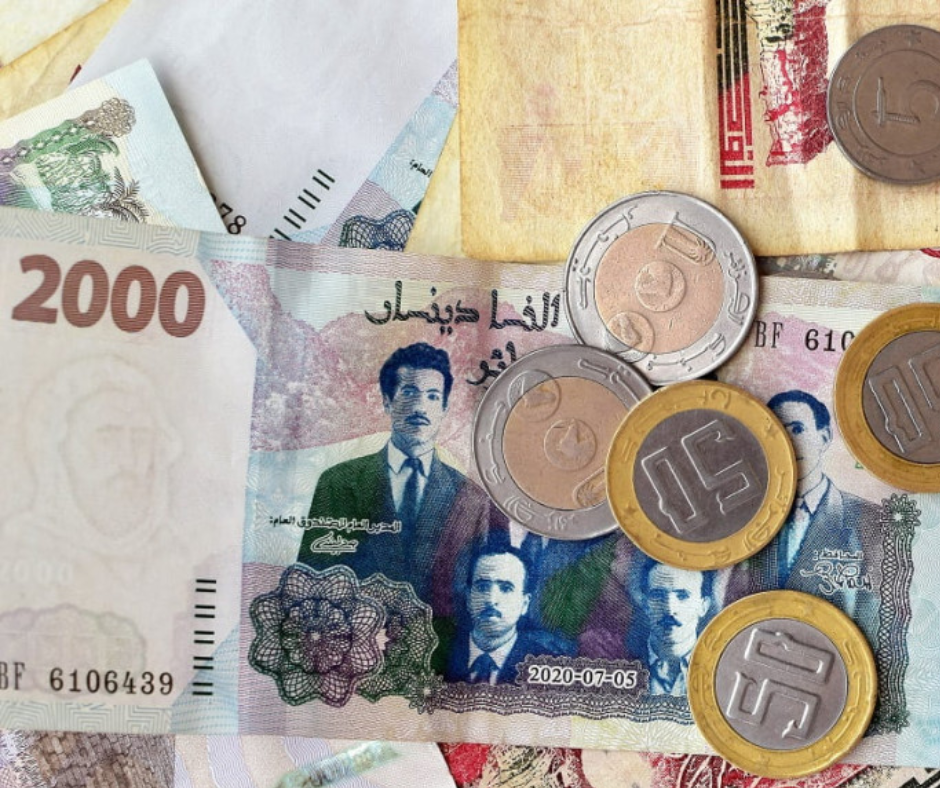
Bring clean, untorn euro or US dollar notes, keep them in an inside pouch, and carry small dinar notes: taxi drivers and food stalls rarely have change for big ones. To help map out your baseline budget, see our practical breakdown in the article asking is Algeria cheap.
SIM cards, ride-hailing and what to pack
Buy a local SIM at Algiers airport after customs. Each of the three operators, Mobilis, Djezzy and Ooredoo, has a shop there, and registration takes your passport. Data is cheap and coverage is good in cities and along main roads. In the far south Mobilis has the best coverage, and in remote areas there is often none.
Once you have data, download Yassir, the main ride-hailing app (Uber doesn't operate in Algeria). It works in Algiers, Oran and Constantine, shows the fare before you book, and saves you haggling or explaining addresses in French or Arabic. Many rides are paid in cash.
Pack for temperature swings. Constantine is at over 600 m, the Saharan plateaus are higher, and in the desert the temperature drops fast after sunset, close to freezing on winter nights.
Bring light, loose layers for the day and a warm fleece or down jacket for desert nights, plus a tightly woven cotton scarf (the Tuareg chèche) to keep sand off your face and camera when the wind gets up. For sun protection and wind gear in more detail, see our Algeria packing list.
Visas, safety and local etiquette
Two things catch first-time visitors out: the visa, which most nationalities must get before they travel, and the conservative dress and photography norms, especially in the south and the M'Zab.
Visa and safety basics
Most Western travelers, including UK, EU, US and Canadian citizens, need a tourist visa from an Algerian consulate before they fly; there is no e-visa yet (October 2026). Besides the forms, photos and a passport valid for at least six months, you need one of these: a hotel booking confirmation, a certificate of accommodation (certificat d'hébergement) certified by the local town hall in Algeria, or an invitation and itinerary from an Algerian travel agency.
In London the fee is GBP 85 and processing takes about 10 working days in person. The only shortcut is the visa on arrival described above, for agency-organized tours that include the south.
What surprises most people on our trips is how relaxed and welcoming Algeria feels compared with what they had read online, from the Casbah lanes to the Tuareg camps. We only run trips on routes we know well, working with licensed agencies and guides from the region, and we've never had an incident on our trips. For the deep south in particular, look up your government's official advice for the exact route before you commit, and confirm that your insurance covers it.
Expect police and gendarmerie checkpoints on main roads. They are routine: slow down, have your passport ready and expect a question or two about where you're heading. On some desert routes the authorities also assign an escort to foreign visitors, which your agency organizes. Things run at their own pace, so leave slack in your plans.
For a fuller breakdown of current conditions, keep our guide covering whether Algeria is safe bookmarked for your trip.
Dress, photos and Fridays
Algeria is a Muslim country and fairly conservative outside the beach resorts. Cover shoulders and knees with loose trousers and long sleeves, especially in the south, the M'Zab and the market districts.
Keep public affection to holding hands. Ask before photographing anyone, and never photograph police, military sites, checkpoints or government buildings. The weekend is Friday and Saturday, and Friday is the main day of communal prayer.
On Fridays many shops and offices are shut, and much of what is open closes around the midday prayer, so plan transport and meals around it. During Ramadan, don't eat, drink or smoke in public in the daytime. Public holidays have the same effect on a bigger scale, so check the dates of Algeria's public holidays before you lock in your plans.
Seasons, trip length and getting around
What is the best time to visit Algeria?
For the north, spring (March to May) and autumn (September to November), when it is warm but not hot. For the Sahara, late October to April; from May to September desert highs reach 36 to 38°C. A trip in March, April or November lets you combine both without packing for extremes.
How many days do you need in Algeria?
Ten days to two weeks for a first trip. A week covers Algiers, Tipaza and Constantine with Timgad, or Algiers plus a short desert trip from Djanet; two weeks add Oran and Tlemcen, or the M'Zab and a longer Sahara route, with domestic flights saving the long road days.
Can tourists travel freely around Algeria?
In the north, yes: you can move around independently by train, bus, shared taxi, ride-hailing app or domestic flight, with routine police checkpoints on main roads. In the south, the authorities expect foreigners to travel with an approved Algerian agency, and on some desert routes they assign an escort, which the agency arranges.
If you want to fit the Casbah, Timgad and the Tassili into one trip, contact us with your dates. We'll tell you what suits the season (spring and autumn for the north, roughly October to April for the Sahara) and plan the itinerary with you, then arrange the pieces: the agency letter for your visa, a driver waiting at arrivals, and local guides from the Casbah to the desert.


