

This isn't a day-by-day itinerary. It's a closer look at the landmarks that define Algeria's story, from Ottoman-era mosques to French colonial architecture to a mountain range that looks like it belongs on Mars.
Each one comes with the history behind it and what you actually need to know before you go, hours, cost, and how to get there.
Must-visit landmarks for history enthusiasts:
The unique charm of this African country lies in its rich history. In fact, Algeria is shaped by different civilizations, each leaving its mark. Yet, reading about Algeria is nothing compared to experiencing it for yourself !

You can kick off your journey in Algeria by exploring vibrant cities where each corner reveals stories of resilience and cultural heritage.
You will get the chance to walk in the footsteps of people of ancient times and listen to the untold stories awaiting you.
The Casbah of Algiers
A UNESCO-listed 17th-century medina spilling down the hillside toward the Mediterranean.

Visiting: Free to walk, but a local guide is worth hiring here, the layout is genuinely disorienting, and a guide will get you into courtyards and rooftops you'd otherwise walk straight past.
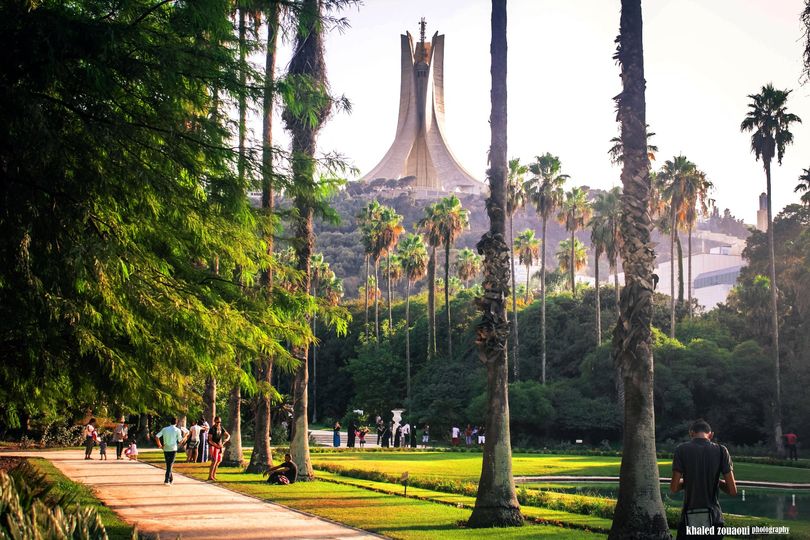
Makam Echahid
A visit to the Martyrs' Memorial, or Maqam Echahid, is a must-do while in Algeria. It has profound significance and stunning architecture.
This remarkable building pays tribute to the Algerian War of Independence martyrs. It is made up of three palm trees joined together to protect a flame beneath it; the ‘Eternal Flame’ honoring fallen soldiers.

It also includes three 10-meter-diameter Islamic turrets, and a six-meter dome at the top. The location also houses the Museum of El Mujahid, an amphitheater, and a crypt.
Standing 92 meters tall, the monument is perched on the hills with a view of the Hamma neighborhood. Note that this popular destination is open to the public and generally free to access.
We also suggest strolling in the nearby gardens to get expansive views over Algiers. We bet that you will admire the scenery and will feel more connected to this country.
Visiting: The memorial grounds are free to enter and open during daylight hours, though the Museum of El Mujahid beneath it keeps its own schedule and offers a museum detailing the fight for freedom, so it's worth checking locally before you go. Visit during the cooler months between April and October for a more comfortable climb. The easiest way there is by taxi from central Algiers, a 10 to 15 minute ride. If you're already at the Botanical Garden of Hamma nearby, it's a walkable, if uphill, 20 minutes on foot.
The Place Grande Poste
It is essential to make a halt at the Place Grande Poste on the way to the port of Algiers. Its white, arched façade is considered among the architectural marvels of the city.
This neo-Moorish monument was created in 1910 by French architects Marius Toudoire and Jules Voinot and is nestled between the Mediterranean and downtown Algiers. It is one of the most recognizable structures in the capital thanks to its ancient Algerian architectural patterns.

With its large size, elaborate tiles, and luxurious decorations, the structure feels more like a palace than an administrative facility.
During regular business hours, which are usually weekdays from early in the morning until late in the afternoon, the building is open. Verifying precise timings in advance is advised, though. Admission is free.
Visiting: Entry is free, and most visitors spend one to two hours here. The building itself dates to 1910 and was Algeria's largest post office, though it was converted into a museum in 2015. The square around it is one of the liveliest spots in the city center, so plan to linger rather than just snap a photo and move on.
Sidi M'Cid Bridge
The Sidi M'Cid Bridge is a must-see when visiting Algiers. It is a popular tourist destination and a breathtaking engineering marvel. Constructed in the early 1900s, this striking building links the city to the nearby hills.

The bridge, which spans a deep gorge, provides stunning views of the surroundings. We strongly recommend walking across the Sidi M'Cid Bridge for a thrilling experience. As you go, take in the spectacular views of Algiers and the Mediterranean.
We bet that you will enjoy taking the perfect picture or just enjoying the breathtaking scenery.
Visiting: The bridge is free and open to pedestrians at all hours, though early morning offers the calmest crossing before the day's traffic picks up the gentle sway in the cables. As with any public site in Algeria, dress modestly and keep your belongings close while crossing, since the walkway can get crowded midday.
Botanical Garden of Hamma
Located in the Mohamed Belouizdad area, the Botanical Garden of Hamma is an exquisite garden. It is recognized among the most significant botanical gardens in the world.
The five-hectare garden opened its doors in 1832. It grew to 18 hectares in 1837 and is now an enormous 58 hectares.

Although there used to be a lot more plant species in the garden, there are now over 1,200. It houses the Algerian National Institute of Agronomical Research in addition to the public gardens.
Visiting: Entry costs around 150 Algerian dinar, and the garden is open year-round, with hours running from 10am to 7pm between May and August, and 10am to 6pm the rest of the year. The Jardin d'Essai metro station sits right at the entrance, just a few minutes from Alger Centre. Give yourself two and a half to three hours to see it properly, and bring water if you're visiting in summer.
The ruins of Timgad
A near-perfectly preserved Roman grid city founded by Emperor Trajan, known as the "Pompeii of Africa."

Visiting: Base yourself in nearby Batna and arrive early, the site sits on an exposed plain with little shade, so mornings are far more comfortable than midday.
Tipasa ruins
Roman ruins scattered along the Mediterranean coastline, layered with Phoenician, Byzantine, and early Christian history.

Visiting: An easy day trip from Algiers via the coastal highway. Go early to beat the crowds, and save time afterward for a fresh fish lunch at the port.
Religious heritage and iconic sites
The Great Mosque of Tlemcen
The Great Mosque of Tlemcen, which dates to 1097, is the city's oldest mosque in the Arab world. It is one of the rare surviving remains of Almoravid architecture in the entire world.
The mosque, which was constructed under Sultan Ali ibn Yusuf, has a large rectangular courtyard, an 11-nave prayer hall, a mihrab from the 18th century, and minarets from the 14th century. It features a courtyard that is enclosed as well.

This monument is considered among the most important landmarks of Algeria. It represents the Algerian people's identity and resilience. During the War of Independence, resistance fighters used it as a base.
The Great Mosque of Algiers stands near the harbor, in the old Casbah neighborhood. Built of stone, brick, and wood, this stunning white structure is embellished with intricate ceramic and wood decorations.
Visiting: The mosque sits in Tlemcen, close to the city center, and pairs naturally with a stop at the nearby Mosque and Tomb of Sidi Boumediene. As an active place of worship, plan your visit outside prayer times and dress modestly. Tlemcen is a full day's travel from Algiers, so this is best folded into a wider western Algeria route rather than a standalone day trip.
Notre Dame d'Afrique
The beautiful basilica known as Notre Dame d'Afrique, is perched on a rock overlooking the Bay of Algiers on the city's north side.
Constructed in the late 1800s, this church is a prime example of the Neo-Byzantine architectural movement under French colonial rule. After fourteen years of construction, the church finally opened its doors in 1872.

This cathedral, which combines Islamic and Catholic architectural elements, is a symbol of religious peace.
It is frequently cited as a mirror image of the Notre-Dame de la Garde, which is situated across the Mediterranean in Marseille.
The basilica features elaborate mosaics and a dazzling white façade. It has 14 exquisite stained glass windows as well. It portrays scenes from Islamic and Christian cultures.
The breathtaking views of the Mediterranean offer a true serene haven.
Visiting: Dress respectfully, since it's an active place of worship, and aim for late afternoon when the light and the sunset views over the bay are at their best. Hours are limited and the basilica closes for daily mass, so it's worth checking before you go rather than arriving to locked doors. The easiest way up is the cable car from Bologhine, which saves you a steep uphill walk or a longer taxi detour.
Highly recommended cultural activities:
The Ahmed Zabana National Museum in Oran
One of Oran's must-see cultural gems is the Ahmed Zabana National Museum. It is tucked away in the bustling Haï Sidi El Bachir neighborhood.
This museum was formerly called the Demaëcht Museum, but in 1986 it changed its name to honor Algerian revolutionary Ahmed Zabana.

Important artifacts from Islam, rare ethnic treasures from North Africa, and intriguing ancient items are all featured in its several themed galleries.
You can also view masterpieces by famous French Orientalists and Algerian painters from the 20th century. Furthermore, you will come across intricate mosaics, ceramic artwork, and beautiful old sculptures.
Remember that admission to the museum is free. It is open for visitors every day from 8:30 AM to 5:00 PM, except on Saturdays. You can check our blogpost on Oran's unmissable experiences for more details.
The Town of M’zab Valley
Five fortified 11th-century Mozabite cities on the edge of the Sahara, still shaped by strict Ibadi Muslim tradition.

Visiting: A local guide is required to enter the walled cities, this is a rule, not a suggestion, and photography is restricted, particularly of people.
The Kabylie region
Nestled between Skikda and Algiers, the Kabylie region offers a remarkable fusion of rich cultural heritage and natural beauty.
It is divided into three major regions: the Collo Kabylie, the Little Kabylie, and the Great Kabylie. These mountains form an astounding scene of rocky summits and verdant valleys.
The ideal starting point for exploring Kabylie is Tizi Ouzou, which stands in the very heart of this area.
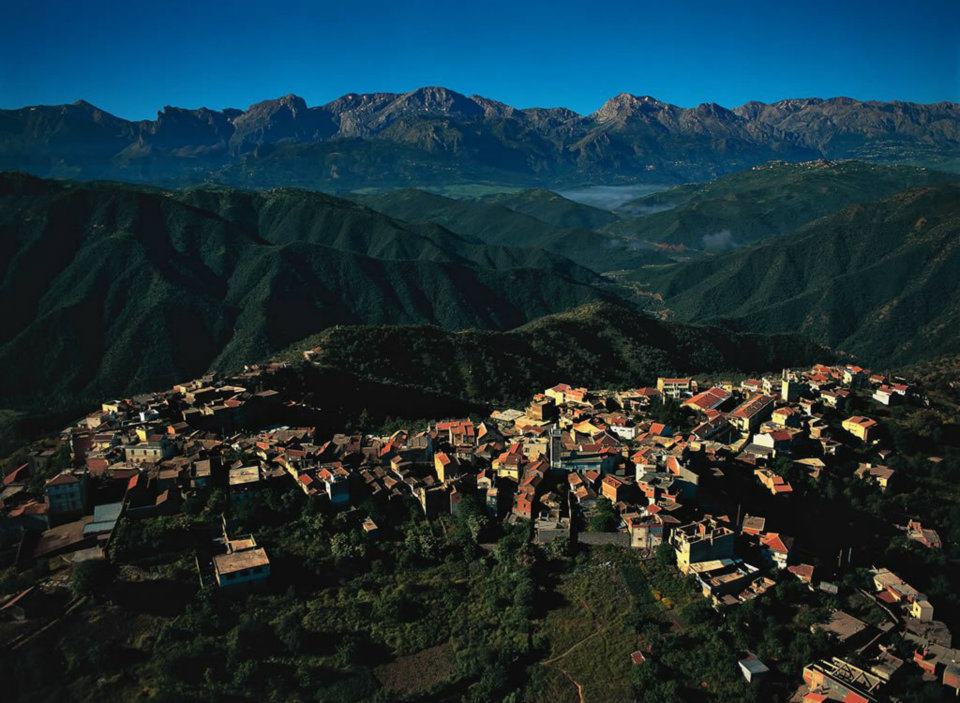
Initially established by the Turks and then enlarged by the French, Tizi Ouzou provides a distinctive fusion of local customs and historical influences.
Get the chance to fully experience the vibrant Amazigh culture by traveling to Kabylie.
Explore charming towns, savor regional cuisine, and feel the hospitality of the Kabyle people, whose traditions and language have endured for centuries. You can even try picking up a few Tamazight words while you're there.
Whether you want to hike through the Djurdjura Mountains, explore the coastal charm of Bejaïa, or visit Tizi Ouzou's markets and festivals, Kabylie's timeless vibe is waiting for you everywhere you look.
Visiting: Tizi Ouzou is the natural base for exploring the region and is reachable by road from Algiers in under two hours, making Kabylie an easy add-on to a longer northern Algeria itinerary rather than a trip requiring its own dedicated flight or long drive.
Natural landscapes:
Hoggar Mountains
The Hoggar Mountains rise strongly to the north of Tamanrasset. This stone desert is known for its gorgeous stone cliffs that flame red at sunrise and sunset.
This 550,000-square-kilometer highland area is part of the huge Sahara Desert. The distinctive stony landscape is similar to that of Mars, with limited vegetation found in some places.

Explore the region, which is home to Ahaggar National Park, with its breathtaking views and abundance of natural beauty.
Mount Tahat, the highest mountain in the area at 2,908 meters, is also located in this beautiful spot.
The peaks, which are mostly made of old metamorphic rock, have remarkable shapes that have been shaped by erosion.
Visiting: Tamanrasset is the gateway city and the base for any expedition into the range, and independent travel isn't really an option here, permits are required and usually bundled with a local guide. Many trips build in a stop at the Assekrem Plateau, a windswept viewpoint at 2,780 meters that's become one of the signature stops in the range. This is a multi-day trip, not a detour, so it needs its own dedicated block of time on the itinerary.
Tassili n'Ajjer National Park
A UNESCO-listed sandstone plateau holding the largest collection of prehistoric rock art in the world.
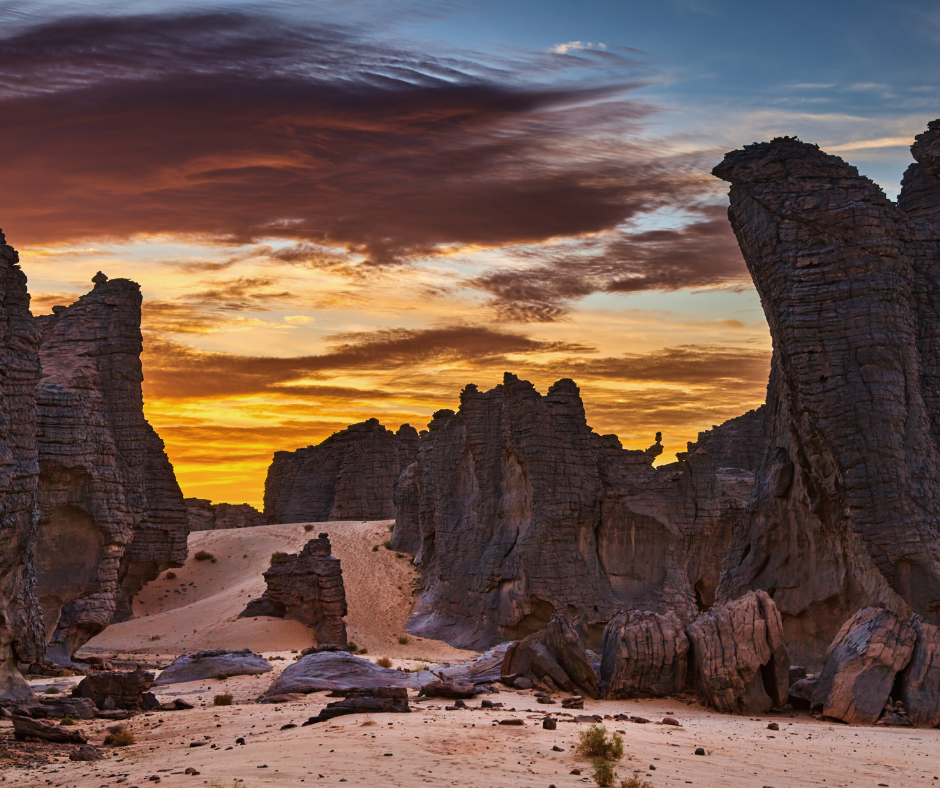
Visiting: Reachable via the oasis town of Djanet. Independent travel isn't possible here, trips run through an approved local agency that handles permits, guides, and transport.
Tips and Recommendations
From the golden sands of the Sahara to the historic ruins of Timgad, Algeria's stunning landscapes and famous landmarks promise something special. The country has many beauties just waiting to be discovered.
Whether you're drawn to the untamed beauty of the Tassili n'Ajjer, the peace and quiet of coastal cities like Oran, or the lively culture in Algiers.
You can maximize your time in Algeria and explore a variety of spots by organizing short one-day trips.

It's important to plan your itinerary carefully; read our in-depth guide for tips on choosing the best places to visit and efficiently planning your vacation.
Since these landmarks are often crowded, it’s also essential to consider a few practical details and take some security measures to ensure your safety. Check out our extensive travel safety guide to Algeria for a detailed look.


