
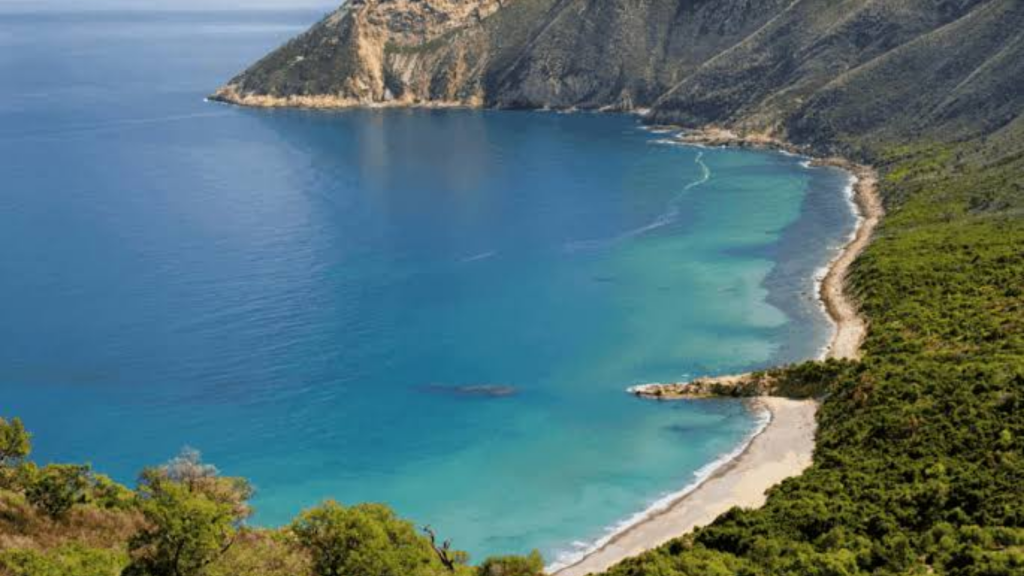

The main beaches near Oran are west of the city: Ain El Turk about 15 km out, Les Andalouses at 25 km, and Madagh and Cap Blanc more than 40 km away in Aïn El Kerma. With children, the easy picks are the long sand at Les Andalouses and the calmer beaches under the Cap Falcon lighthouse; for the clearest water, it's the Madagh coves under cliffs and pine forest. For a hike with your swim, go east instead, to Kristel and the coves of Cap de l'Aiguille, which you reach only on foot or by boat.
Swimming season is June to September, when the beaches authorized for swimming (32 in Oran province in 2026) have Civil Protection lifeguards from 9:00 to 19:00. July and August are the hottest and most crowded months. If Oran is your first stop in the country, the Algeria travel guide has the visa and safety basics.
Sandy beaches west of Oran
Les Andalouses, 25 km west
Les Andalouses, in El Ançor commune about 25 km west of central Oran, is a bay with roughly 2.5 km of sand and a resort complex behind it. There is usually a sea breeze in the afternoon, which helps with the heat.
Because the beach is long, you can usually find space if you walk away from the main entrances. On July and August weekends (Friday and Saturday in Algeria) even Les Andalouses fills up.
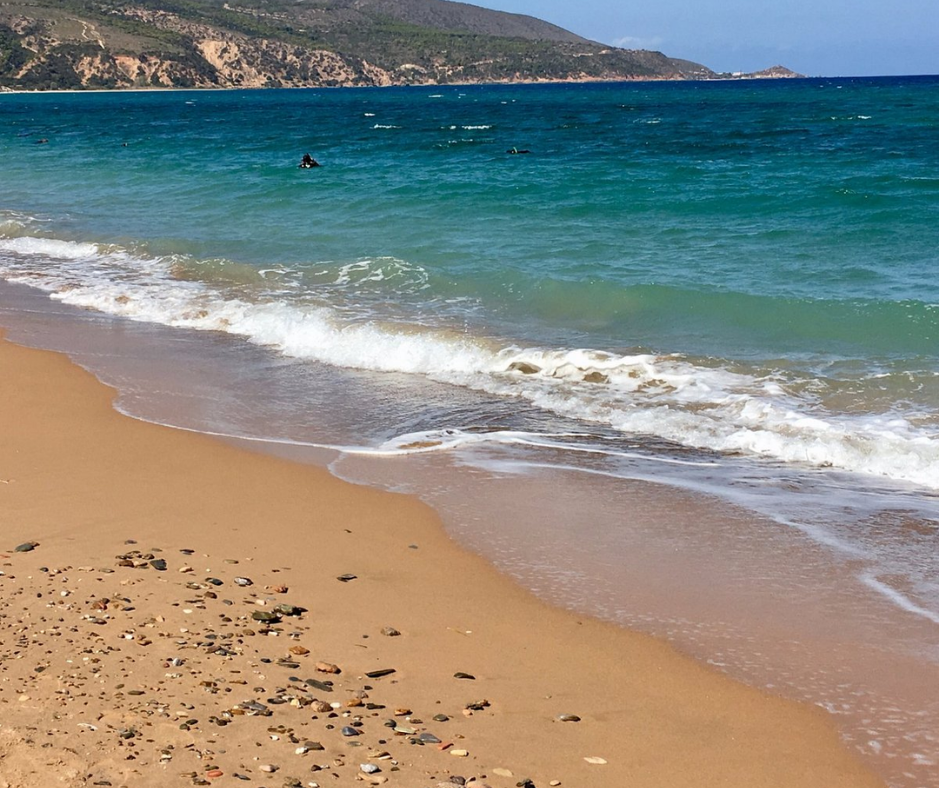
We'd come here for an easy swimming day. The bay is open and sandy, and the water tends to be calmest in the morning, before the wind picks up and the crowds arrive.
Vendors on the sand rent parasols and loungers, but you don't have to pay. Under the national rules adopted in May 2026, at least 70% of every authorized beach has to stay free for anyone to use. Oran went further for summer 2026, making the tables, chairs and parasols on its public beaches free.
Authorized car parks were capped at 100 DZD per car, and those with fewer than 50 spaces are free. You can also bring your own parasol and chairs and set up wherever there's room on the sand.
The resort hotels behind the beach have restaurants and pools, so Les Andalouses also works as a base if the beach matters more to you than the city. It's about 25 km back to central Oran.
Finish with a late-afternoon walk along the waterline to the end of the bay, when the sand has cooled.
Seafood by the water in Ain El Turk
Ain El Turk, about 15 km northwest of central Oran, is the closest beach town to the city. Its bay runs about 8 km from Saint-Roch to Cap Falcon, past beaches such as Trouville and Bouisseville, and the seafront is lined with hotels, holiday flats and restaurants.
That makes it the easiest place to combine a swim with a long lunch: you can walk off the sand and sit down at a seafood place a few minutes away.
Look for grilled sardines, sea bream and red mullet. Fish is often priced by weight, so ask what it costs before it goes on the grill.
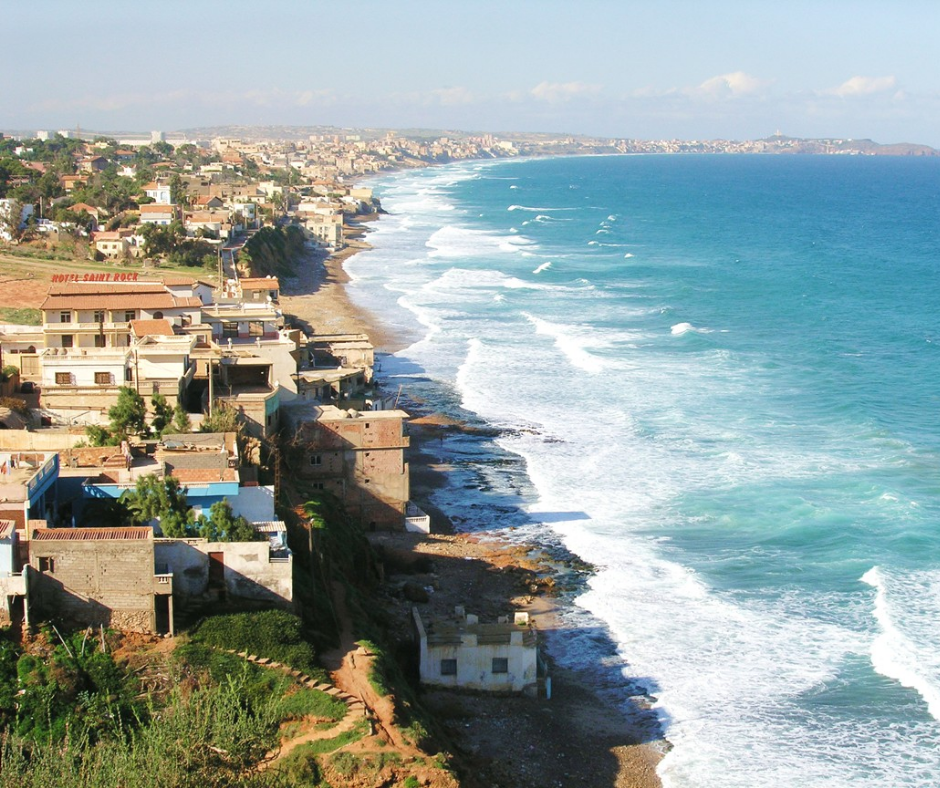
It usually comes with lemon, bread, fries and a salad. In July and August the terraces facing the sea fill up at lunch and again in the evening, when families come out after the heat breaks, so go early.
The hotel restaurants along the bay are more formal and more expensive, and they are the places most likely to take a foreign card (at the official exchange rate). Smaller places take cash only.
Being nearest the city, Ain El Turk is also the most crowded stretch on summer weekends. If you want more room, keep driving west.
Cap Falcon, at the end of the bay
Cap Falcon closes the western end of the Ain El Turk bay. Its lighthouse, an octagonal tower of white stone about 29 m tall, was first lit in 1868 on the highest knoll of the cape. It is still staffed and closed to visitors. The beaches under the cape are calmer than the middle of the bay, which is why local families like them.
Bousfer, Bomo and Coralès
Past Cap Falcon, Bousfer-Plage, about 20 km west of the center, has fine sand with rock shelves that show at low tide. It's an easygoing family beach with cheap guarded parking and few places to eat, so people bring a picnic. Bomo and Coralès, two smaller beaches in the same commune, are just along the coast; Bomo was one of six beaches the province inspected before the 2026 season.
Swimming and water sports
Plage de Madagh: Madagh 1 and Madagh 2
Plage de Madagh is two beaches, Madagh 1 and Madagh 2, in coves backed by cliffs and pine forest. They are in Aïn El Kerma commune, at the western end of Oran province near the Ain Temouchent line, an hour to an hour and a half by car from Oran depending on traffic. It also makes our wider list of Algeria's best beaches, next to the coves of Jijel and El Kala.
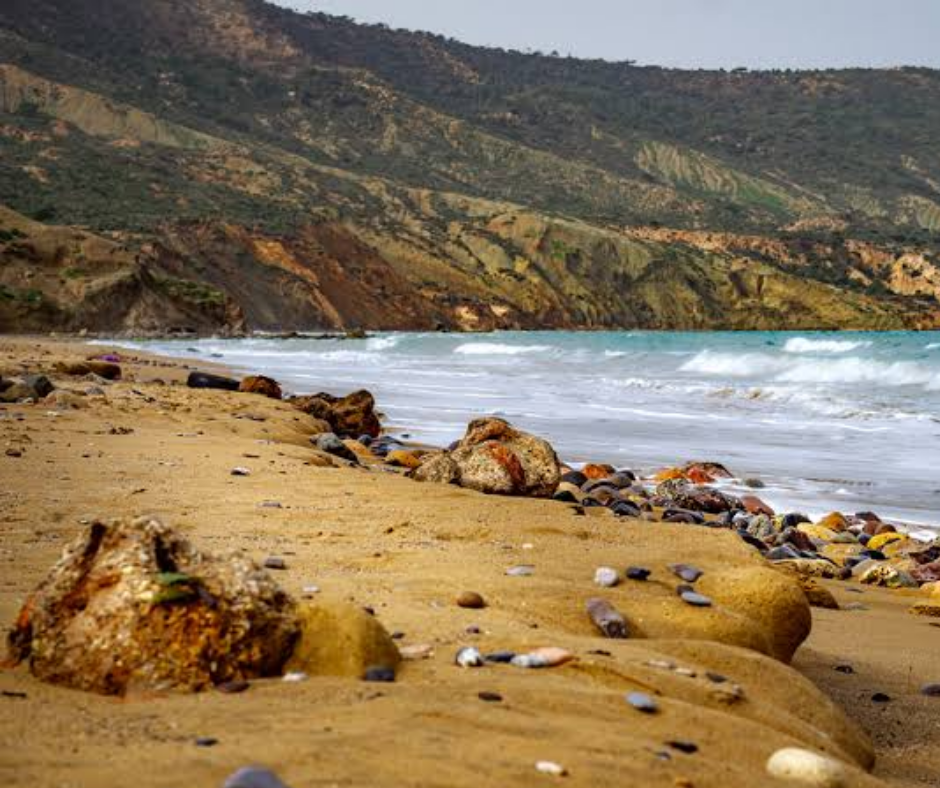
The water is clear, pale over the sand and deep blue further out, and the main beach has fine sand and shallow water near the shore, which is why families like it. It is busy on summer weekends, and the parking and kiosks fill up early.
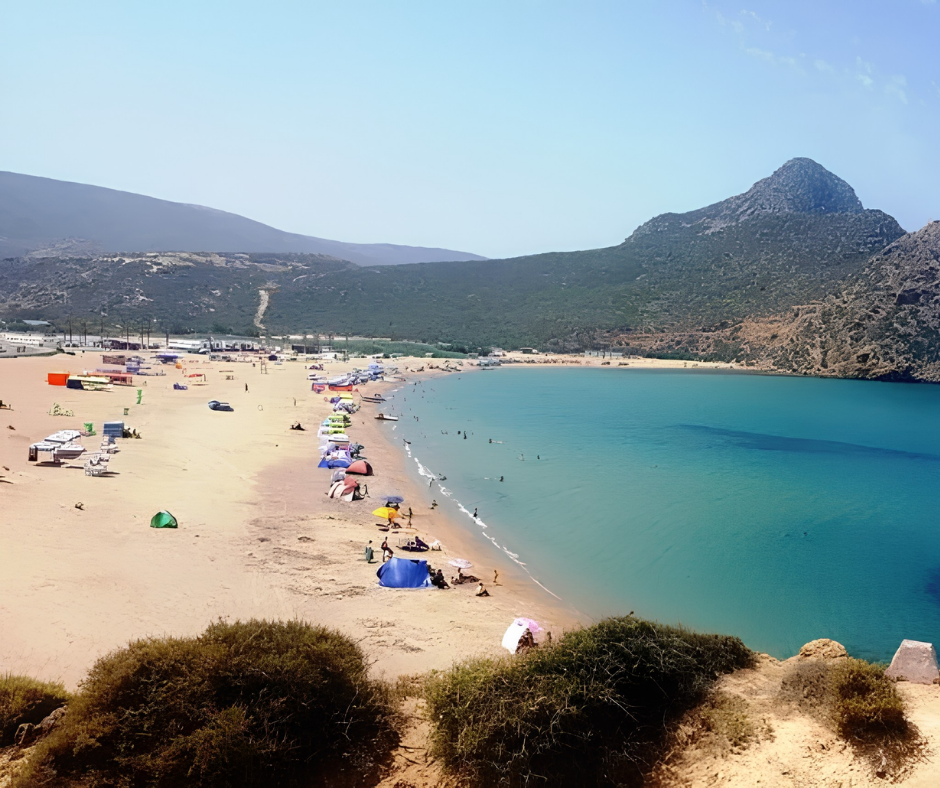
Swim only on a beach authorized for swimming that summer, and only while the lifeguards are on duty: Civil Protection's summer figures show that more than half of drownings happen on beaches closed to swimming. Stay close to the shore and swim parallel to it rather than heading straight out.
Keep your first swim shallow until you have a feel for the sea that day, and if the lifeguards put up the red flag, stay out.
Bring water shoes, because some entry points are over smooth rocks that are slippery under the surface. July and August are also fire season in the Madagh forest, so no barbecues or stoves under the pines.
Jet skiing and paddleboarding: Ain Franin and Ain El Turk
Ain Franin, in Bir El Djir commune on the east side of Oran bay, is a small beach under high cliffs. It was closed after a rockfall in 2022 and reopened in June 2025, once nets had been fitted over the cliffs. Check that it is on the current summer's authorized list before you go.
For jet skis, head to the other side of the bay: rental outfits work the Ain El Turk beaches in summer, including Bouisseville and the beaches near Cap Falcon. Go in the morning, before the afternoon wind chops up the sea.
Listen to the operator's briefing, wear the life jacket and take a slow first lap to get used to the steering. Jet skis are supposed to use buoyed corridors and stay out of the swimming area, but on crowded beaches that rule is often ignored, so keep well clear of swimmers yourself.
Paddleboarding is the quieter option. On a flat morning you can paddle along the coast and look down into the water, keeping off the foot of the cliffs where rock can fall.
Water sports here are informal and mostly summer-only, so ask on the beach what's available that day. Surfers should come in winter: the sea is often flat in July and August, and the better swells around Cap Falcon and Ain El Turk run from about October to April.
Coastal hikes and viewpoints
Cap de l'Aiguille: the coastal trail from Kristel
Cap de l'Aiguille is the headland at the northeast end of Oran bay, next to Kristel, a fishing village about 26 km east of the city in Gdyel commune. No road reaches the coves: you either walk in along the cliffs or take a boat from Kristel's small port (about 20 minutes).
The usual route starts at Kristel's beach and runs about 4.5 km each way, with roughly 200 m of climbing; allow around two hours each way. Hikers on Wikiloc rate it difficult. Start early, because there is almost no shade and the rock gives off heat by midday.
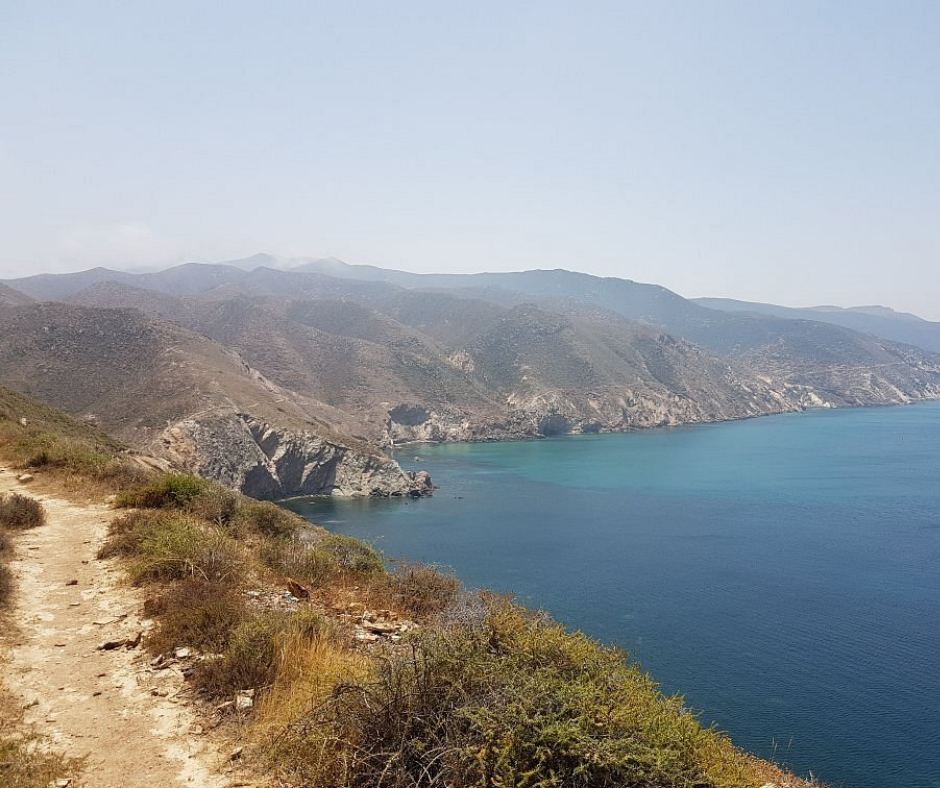
The path is narrow and stony in places, so wear shoes with good grip, not sandals. At the far end are rocky coves under the cliffs and the cape's lighthouse, built in 1865 and one of the oldest in Algeria.
The water in the coves is clear enough for a mask and snorkel. There are no lifeguards out here, so swim only when the sea is calm, and keep some energy for the walk back, which feels longer after a swim.
Carry at least two liters of water per person and something salty to eat. In July and August the scrub on this coast is a fire risk, so no stoves or cigarettes on the trail.
Cap Blanc's white cliffs
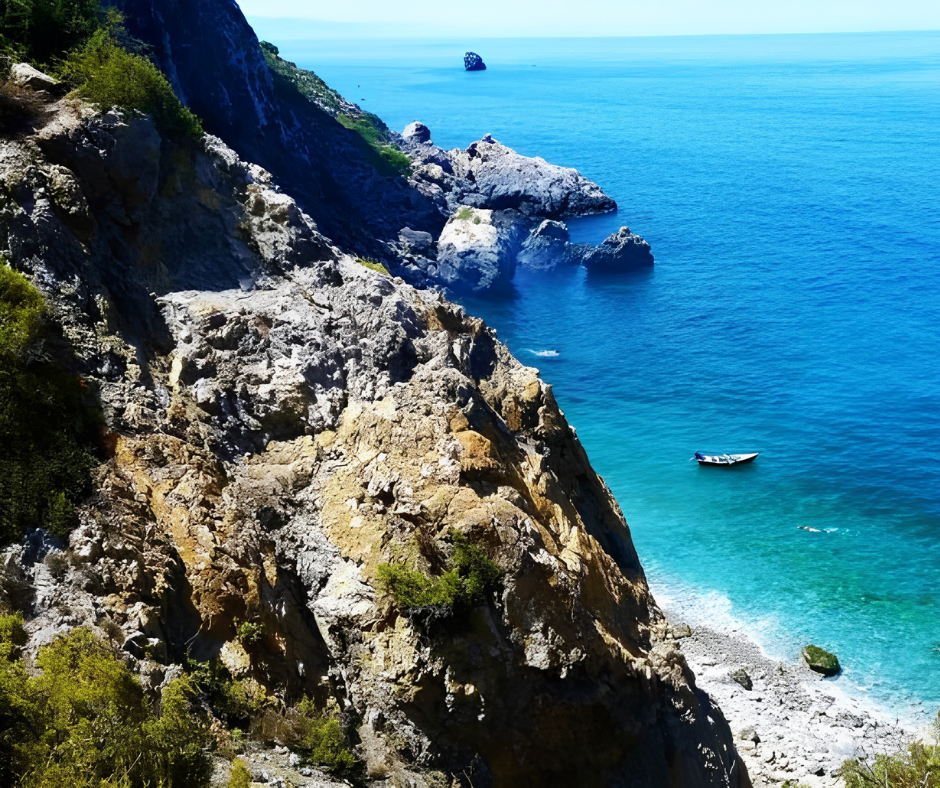
Cap Blanc is in Aïn El Kerma commune, on the same stretch of coast as Madagh, and takes its name from the white limestone cliffs that drop into the sea. Divers come for the rocky seabed and photographers for the cliffs.
There is a small beach, but the reason to come is the walk along the clifftops, with the water below. Facilities are few, and not every part of this coast is authorized for swimming, so check where the lifeguard post is before you get in.
Come in the morning, when the light is clear and the wind is usually lighter than later in the day.
Late afternoon is the other good time, when the low sun brings out the texture of the rock. Keep off the flat rock platforms by the water unless the sea is completely calm, since waves can wash over them without warning.
Bring a windproof layer: the cape is exposed and the wind can be strong. Inland, the country changes completely, with the Tassili sandstone and the Roman ruins at Timgad among the must-do experiences in Algeria.
The view from Fort Santa Cruz on Mount Murdjadjo
Fort Santa Cruz isn't a beach, but it has the widest view of the coast. It sits at about 400 m, near the top of Mount Murdjadjo west of the center, and looks over the port, the whole bay and the city.
The Spanish held Oran from 1509 to 1792, with an Ottoman interval from 1708 to 1732, and built the fort between 1577 and 1604 to control the high ground above the harbor. Between that Spanish past and the Front de Mer promenade, Oran earned its place on our list of the best cities to visit in Algeria.
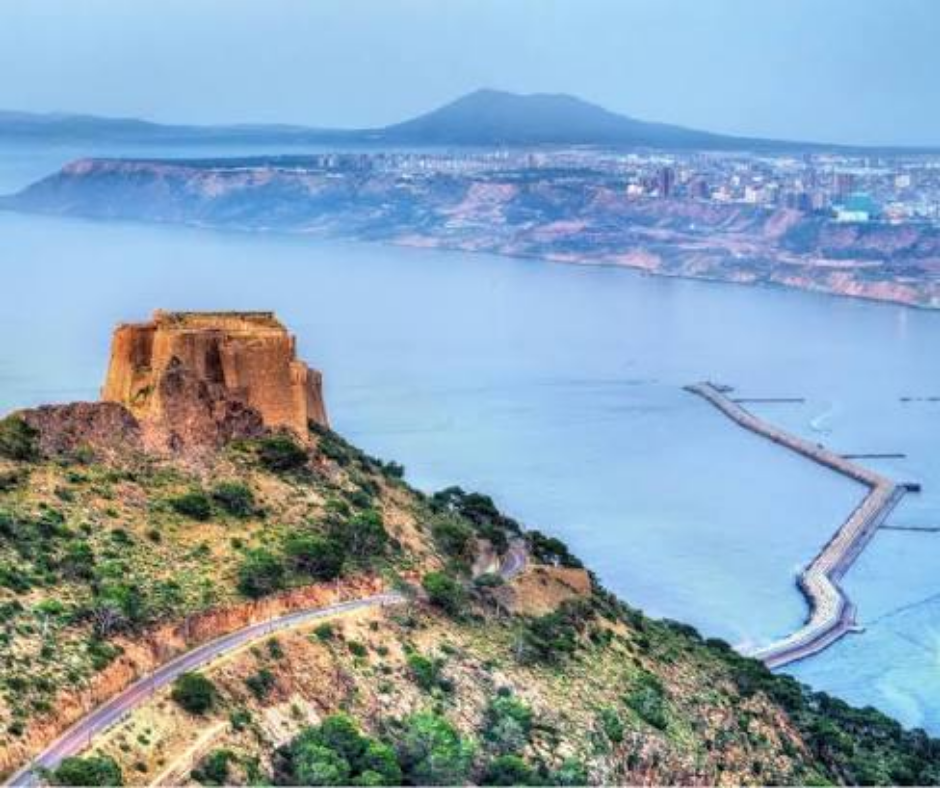
The Santa Cruz chapel next to the fort, with its statue of the Virgin, was added in the 19th century. Walk around the outside of the walls for views in both directions along the coast.
The road up is steep, so we'd take a taxi to the top (about 20 minutes from the center) and walk down if you have the energy. There is a cable car up the mountain, but it has been out of service for long stretches, so don't count on it. Go in the morning, before the midday heat and the weekend visitors.
Preparing for a beach day in Oran
What to pack for the Oran coast
In July and August the sun is strong even when the sea breeze makes it feel cooler than it is. The Algeria summer travel guide explains how to plan a whole day around that heat.
Pack high-SPF sunscreen, a wide-brimmed hat and sunglasses, and plan to be in the shade in the middle of the day.
For the city itself, from the old Sidi El Houari quarter to Santa Cruz and the Front de Mer, our guide on what to experience in Oran has the details, including what to eat and where to stay.
A dry bag keeps your phone and camera out of the sand and spray. Take more water than you think you need: there may be nothing to buy at quieter spots like Cap Blanc, and nothing at all on the Cap de l'Aiguille trail.
Bring cash in small notes, since the people renting parasols and selling snacks don't take cards. A long-sleeved shirt helps on exposed headlands when the afternoon wind gets up.
Getting around and when to go
A rental car is the easiest way to combine distant spots such as Madagh and Cap Blanc in one day and come back when you like.
Without a car, agree a day rate with a taxi driver before you set off. Yassir, the Algerian ride-hailing app, works in Oran and is fine for the closer beaches such as Ain El Turk; Uber doesn't operate in Algeria. For Madagh or Kristel, arrange the ride back in advance, because cars can be hard to find out there.
July and August are peak season: Algerian families are on holiday and the popular beaches are packed. Weekends and public holidays in Algeria add even more people, so check the calendar before you pick your beach day.
June and September are quieter, and the lifeguards are on duty in both months. The sea is warmer in September than in June.
Average sea temperature off Oran, by month:
| Month | May | June | July | August | September | October |
|---|---|---|---|---|---|---|
| Sea temperature | About 19 °C | About 21 °C | About 24 °C | About 25 °C | About 24 °C | About 22 °C |
Whatever the month, get to the beach before 10 am for a parking space and a spot near the water.
Beach food in Oran
Most beach food in Oran is cheap street food, sold from kiosks and carts on the sand and along the promenades.
The one to try is karantika (also spelled garantita), Oran's baked chickpea-flour flan, sold warm in a piece of baguette with cumin and a smear of harissa.
Maakouda, a fried potato fritter, is another easy snack to eat while you walk.
For a sit-down meal, the small fish restaurants near the beaches and ports grill the day's catch. Ask what came in that morning and what it costs per kilo before you order.
Grilled fish with fries, salad and a cold soda is the standard beach lunch, and most of these places don't serve alcohol.
Beach questions
Which Oran beach is best for families?
Les Andalouses or Madagh: both have sand, shallow water near the shore, lifeguards in season and kiosks. Les Andalouses is closer, about 25 km out; Madagh's coves are prettier but an hour or more away, so arrive before 10 am.
Are beaches in Oran free?
Yes. At least 70% of every authorized beach must stay free to use, and for summer 2026 Oran also made access and the tables, chairs and parasols on its public beaches free. Authorized car parks were capped at 100 DZD per car.
Can you wear a bikini on Oran beaches?
Yes. On crowded public beaches you'll see everything from swimsuits to burkinis and leggings with a T-shirt, and bikinis are more usual at the resort and hotel beaches of Les Andalouses and Ain El Turk. Topless sunbathing isn't done, and drinking alcohol in public, beaches included, is illegal.
When is the sea warm enough to swim in Oran?
From June, at about 21 °C. We'd pick September: the sea is still about 24 °C, the lifeguards are still on duty and the crowds have gone.
Are there jellyfish in Oran?
Sometimes. Jellyfish on the Algerian coast peak in July and August, and Portuguese man o' war have washed up at Les Andalouses. If you're stung, get out, lift tentacles off with a card without rubbing, and rinse with seawater, not fresh water. See the lifeguard post or a doctor if the pain is bad, and never touch stranded ones.
When you are ready to put the coast and the city into one trip, we can build a custom Algeria itinerary for you, with a driver waiting at Oran airport and transfers out to the far beaches.


