
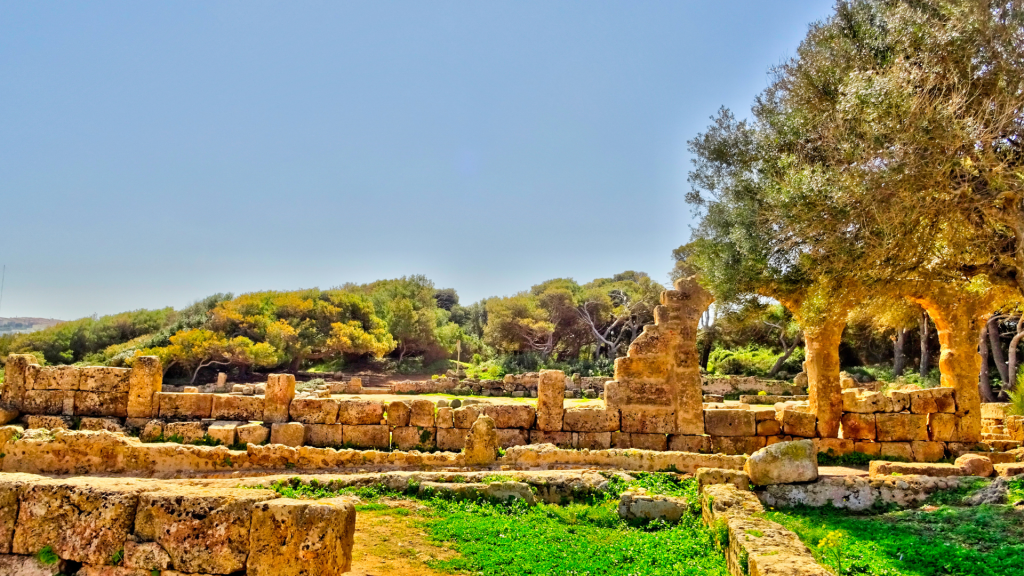

Tipaza's best sights fit into one day: Roman and early Christian ruins that run down to the sea, a royal Mauretanian tomb on the hill outside town, a fish lunch at the port and a swim at Chenoua. Give it a second day if you also want the museum in Cherchell or a hike on Mount Chenoua. Most visitors come on a day trip from Algiers, about 70 km to the east, and our Algeria travel guide helps you fit it into a longer route.
Planning a day or two in Tipaza
| If you have | What fits | Getting there |
|---|---|---|
| One day, with a car or driver | The archaeological park, the Royal Mausoleum on the way back, a fish lunch at the port and a swim at Chenoua | About 1 hour 15 minutes by road from Algiers |
| One day, by public transport | The archaeological park, the Tipaza museum, the port and Chenoua Beach | ETUSA bus from Tafourah in Algiers, about 1 hour 30 each way |
| Two days | All of the above, plus the Cherchell museum and a hike on Mount Chenoua | Cherchell is about 30 km further west, 30 to 40 minutes by road |
The UNESCO Roman ruins of Tipaza
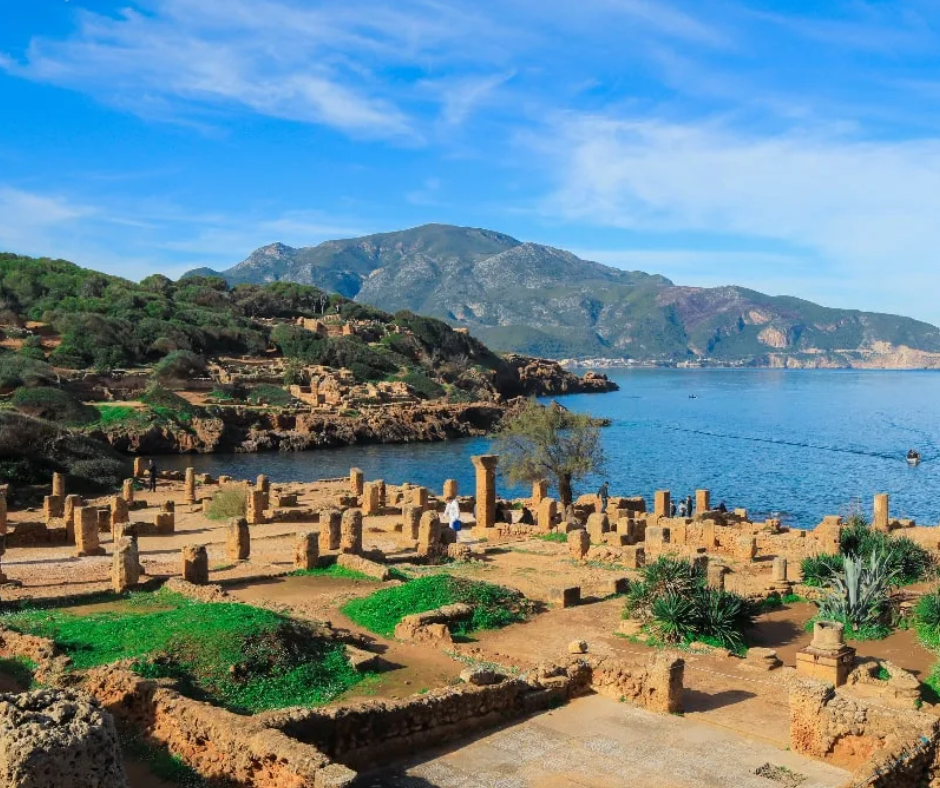
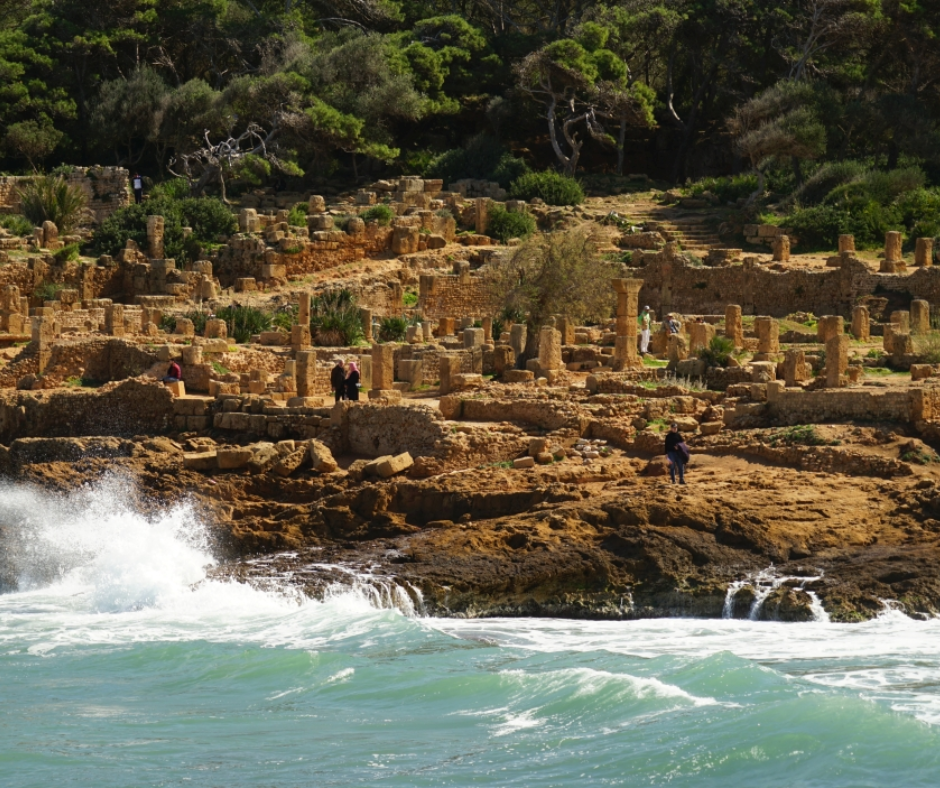
Most people come for the archaeological park. Tipasa began as a Punic trading post, became a Roman colony and later had a large Christian community, so the ruins mix Roman streets, baths and temples with early Christian and Byzantine-era remains, all on low headlands above the water. UNESCO listed Tipaza in 1982, together with the Royal Mausoleum of Mauretania east of town. The modern town is small, but on history alone it bears comparison with the best cities to visit in Algeria.
A short history of Tipasa
| When | What happened |
|---|---|
| Around the 6th century BC | Phoenician and Punic trading post below Mount Chenoua |
| AD 46 | Under Claudius, Tipasa becomes a municipium with Latin rights, later a Roman colony |
| 237 or 238 | Date of the oldest Christian epitaph in Roman Africa, found at Tipasa |
| 4th century | Saint Salsa is martyred; the Great Basilica and the Salsa basilica are built |
| About 430 | The Vandals take the city; in 484 its Catholic bishop is expelled |
| 534 onward | Byzantine reconquest and partial rebuilding |
| End of the 7th century | The city is destroyed and abandoned |
| 1857 | The modern town of Tipaza is founded; today it is the capital of Tipaza Province, with 25,225 people in the commune at the 2008 census |
| 1982 | UNESCO World Heritage listing |
| 2002 to 2006 | On UNESCO's List of World Heritage in Danger |
1. Walk the archaeological park
The amphitheater is the first building you see after the entrance. From there, follow the old main street west past the nymphaeum (the monumental fountain) to the Great Basilica on its headland.
Built in the 4th century with seven aisles, about 58 by 42 m, it was one of the largest churches in North Africa. It then served generations of builders as a stone quarry, so today you mostly walk its floor plan, with traces of the mosaic floor. At the western end of the park, facing the sea and Mount Chenoua, is the stele to Albert Camus, carved with a line from his essay "Noces à Tipasa".
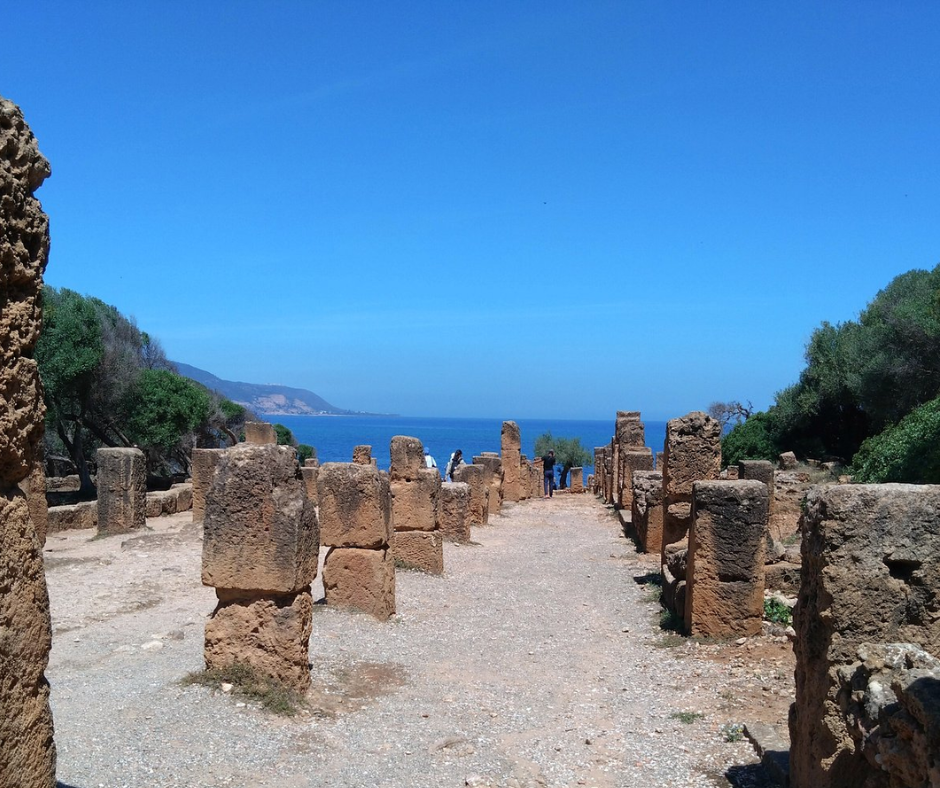
The theater stands near the old Caesarea gate on the western side of the Roman town. It once seated three to four thousand people, but in 1847 most of its stone tiers were pulled down to build a hospital for cholera victims at Marengo (today Hadjout), so only the orchestra, the first rows of seats and the stage supports are left.
Allow at least two hours for the park, since the streets, baths, stretches of the 2.2 km city wall and the shoreline paths take longer than the map suggests. The park has been reported open daily from 9 am to 8 pm between April and October and until 5 pm in winter, and entry costs a couple of hundred dinars (check on the day).
Start at the small Tipaza museum in town, near the port, which opened in 1955. It holds the Mosaic of the Captives, a 3rd-century floor found in 1913 in the civil basilica and showing Berber prisoners, plus Punic, Berber and Roman glass and pottery and two carved white marble sarcophagi, one telling the legend of Pelops and Oenomaus. Half an hour there makes the ruins easier to read.
2. The eastern hill and the Basilica of Saint Salsa
The site has a second zone that most day-trippers miss. On the hill east of the old town, about 300 m outside the Roman walls, lie large Christian cemeteries full of stone sarcophagi and the basilica of Saint Salsa. Tradition says Salsa was a young Christian stoned to death in the 4th century after throwing the head of the town's serpent idol into the sea, and the church grew over her tomb.
The eastern zone is fenced separately from the main park and its access varies, so ask at the main gate whether it is open on the day. It is quieter than the western park, with views back over the port and the bay.
3. The Royal Mausoleum of Mauretania (Kbor er-Roumia)
About 13 km east of Tipaza, on a hill near Sidi Rached some 250 m above sea level, stands the Royal Mausoleum of Mauretania, known locally as Kbor er-Roumia and in French as the Tombeau de la Chrétienne. It is traditionally linked to King Juba II and Queen Cleopatra Selene II, though both its date and who it was built for are debated, and it may be older. From the hill you look across the Mitidja plain to the sea, and it is an easy stop on the way back to Algiers.
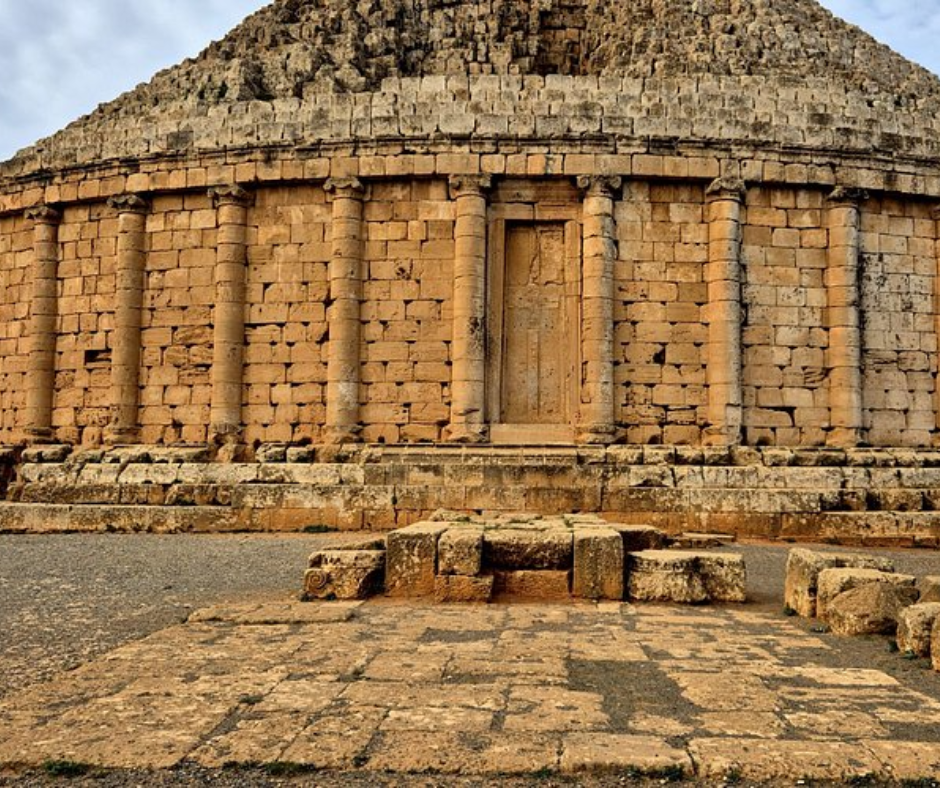
The tomb is a round drum on a square base about 60 m across, topped by a stepped cone. It now stands about 32 m high, against roughly 40 m when it was built. Sixty Ionic columns are set into the outer wall (their capitals are gone), and four false doors face the cardinal points.
The moldings on those doors look like a cross, which is where the French name comes from. The stone turns gold in the late afternoon, but ask about closing time first, especially in winter.
Seafood at Tipaza's fishing port
Tipaza's small fishing port is a short walk from the ruins and the town center. It is still a working harbor: the boats unload in the morning, and the restaurants around the port cook what came in.
4. Seafood at the fishing port
Go down to the quay in the morning, when the small boats come in with crates of red mullet, sea bream and sardines. Fishermen sell to restaurant owners and fishmongers on the spot, and you can watch the haggling from the edge of the quay.
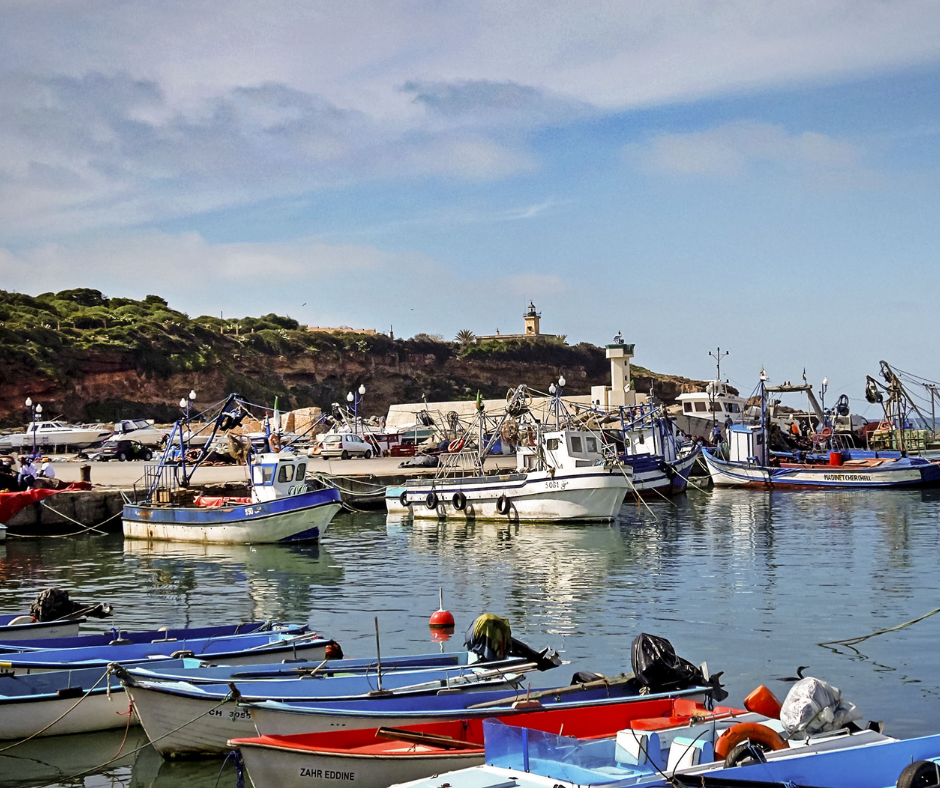
Look for clear eyes, red gills and firm flesh, and ask which restaurant the sellers eat at themselves. Some French or Arabic helps, as little English is spoken on the quay.
Lunch at the harbor restaurants
The restaurants around the port are simple places, many with outdoor tables over the water. Order the grilled fish of the day: it usually comes with lemon, bread and an Algerian salad. Fish is often priced by weight, so ask the price per kilo before it goes on the grill.
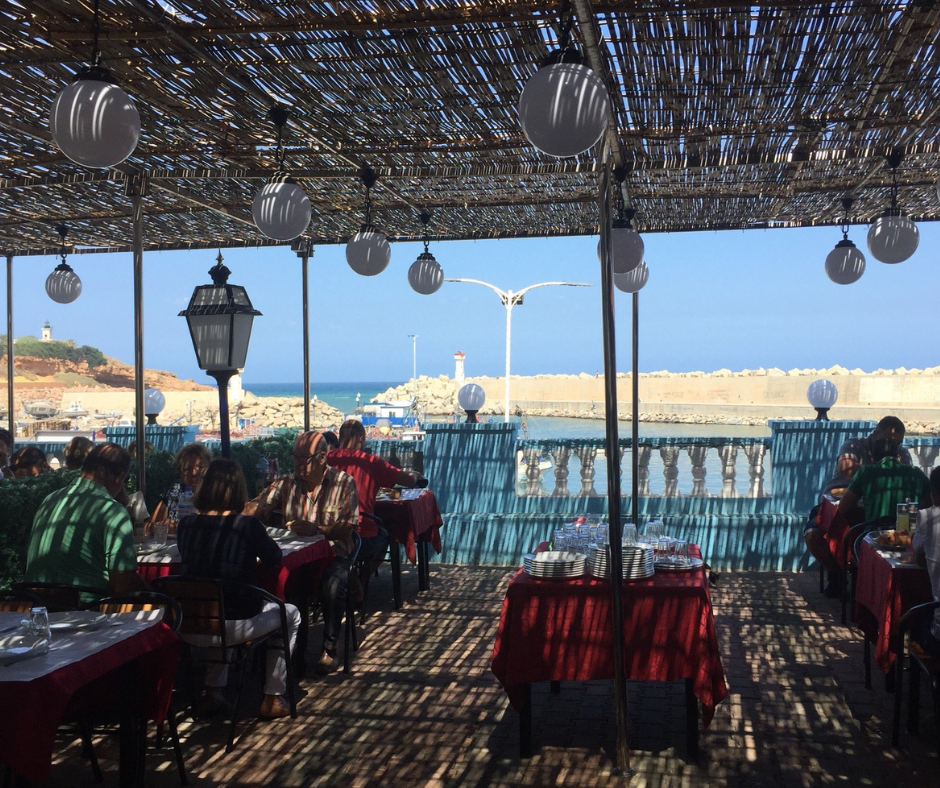
Fried calamari and octopus in a light tomato sauce are the other usual choices. Most of these restaurants serve no alcohol, so drinks mean a cold gazouz (soda) or mint tea. Bring cash, and expect a wait for a table on summer weekends.
Beaches at Chenoua and Matarès
Tipaza is also a beach town, and Algerian families fill its coast in July and August. The shore alternates long sandy bays with rocky coves that suit snorkeling.
5. Chenoua Beach
Chenoua Beach lies at the foot of Mount Chenoua, just west of Tipaza: a sandy bay nearly 2 km long. In summer the water is usually calm and clear, which makes it a good swim after a morning in the ruins.
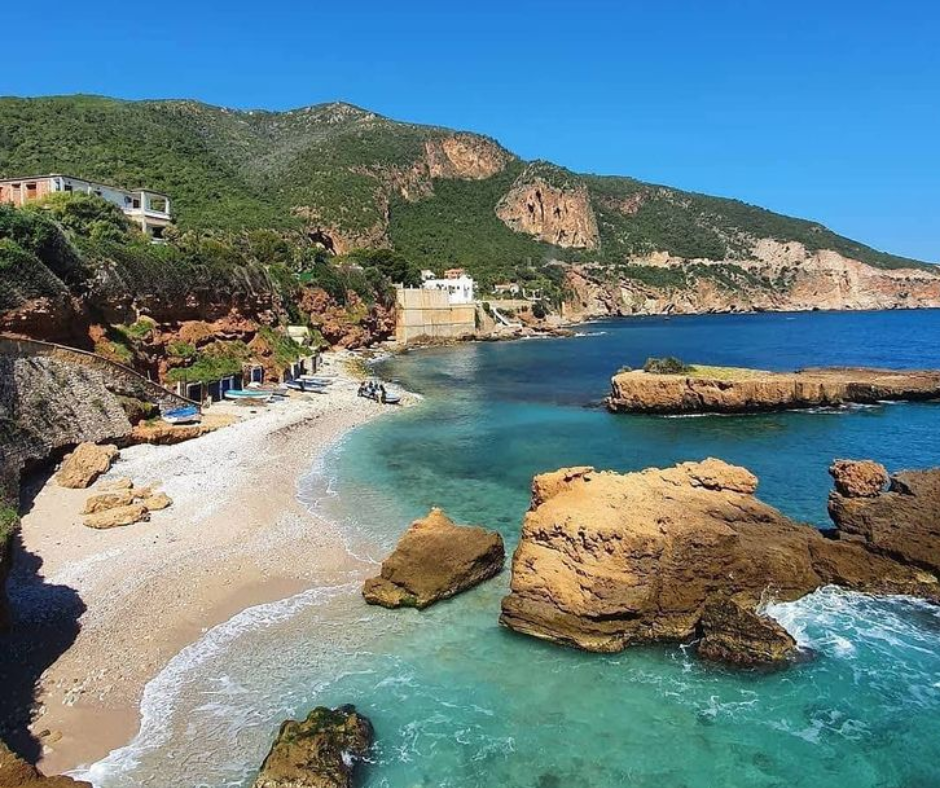
It is the busiest beach in the area, so arrive early on summer weekends to get a spot near the water. Small cafés and snack stands open behind the beach in season, so you can get a cold drink without leaving the sand. At the western end, the green slopes of the mountain drop straight into the sea.
6. Finding quiet at Matarès
For something quieter, the Matarès area at the edge of town has smaller coves and rocky points, around a resort complex designed by the architect Fernand Pouillon and opened in 1971. The rocks make it better for snorkeling or reading than for a long swim, and water shoes help with the stones and the sea urchins.
Outside the August peak, Matarès is much calmer than Chenoua. It is also a good place for an evening walk along the rocks as the sun goes down behind Mount Chenoua.
Cherchell, ancient Caesarea
Cherchell is about 30 km further west, 30 to 40 minutes by road. As Caesarea it was the capital of Juba II's kingdom of Mauretania and later of the Roman province of Mauretania Caesariensis. Its ruins are more scattered than Tipaza's, but its museum has the better collection, especially of sculpture.
7. The Cherchell archaeological museum
The museum, built in 1908 on Place des Martyrs, holds one of the best collections of ancient marble sculpture in North Africa. Many pieces are Roman-era copies of Greek statues, several commissioned under Juba II, and gods such as Apollo, Athena and Venus stand beside imperial portraits and a head usually identified as Cleopatra Selene. Look closely at the folds of the togas and the carved hairstyles of the women's portraits.
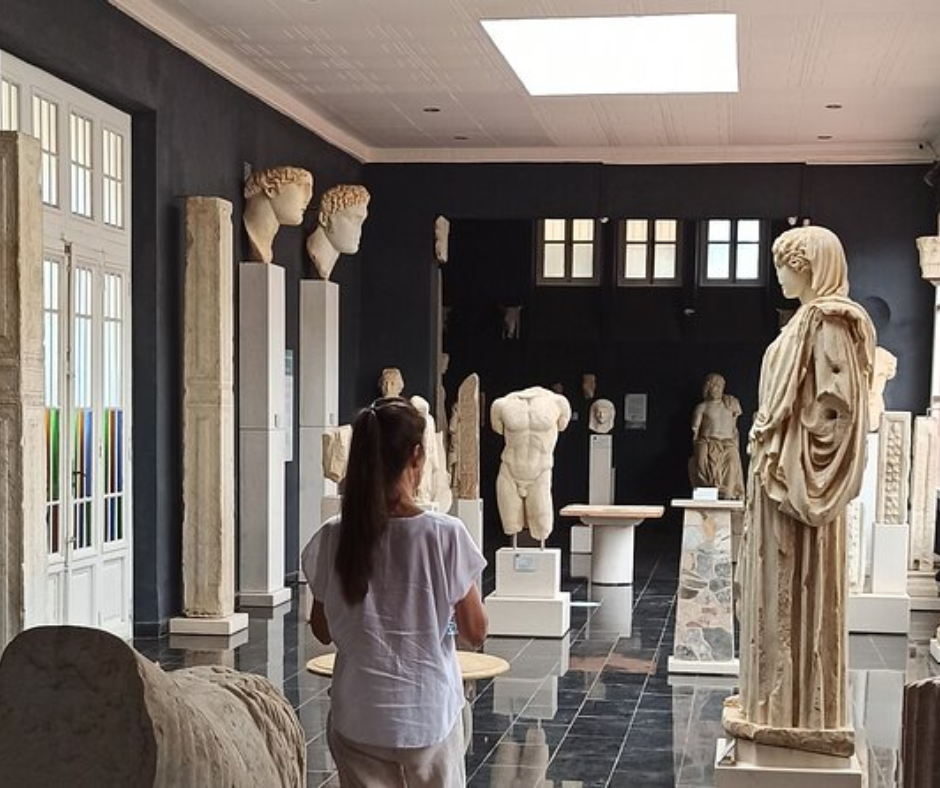
The mosaics are the other reason to come. They show farm work and scenes from mythology, laid in colored stone that has held up for well over fifteen centuries. Entry is a few hundred dinars; bring cash, and check opening days before you drive out.
The town square and the old port
The museum faces Place des Martyrs, which stands on the old Roman square and is shaded by century-old ficus trees. Sit on a bench and watch the town go by for a while, then walk down to the port, which occupies the site of the ancient harbor.
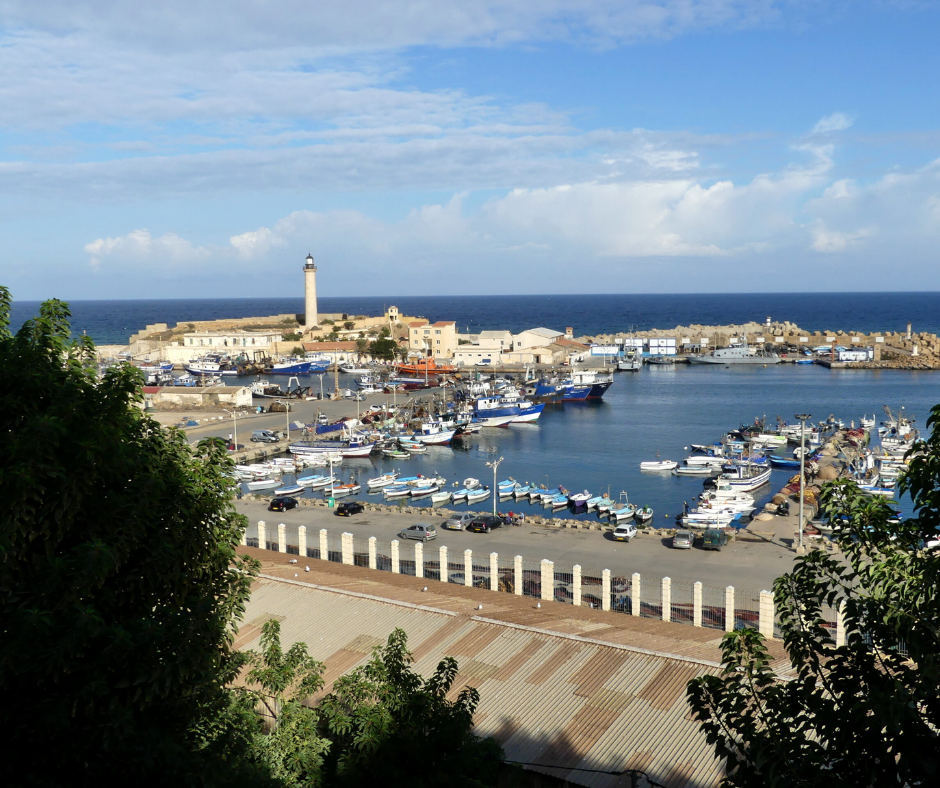
Cherchell's port is smaller and quieter than Tipaza's, with fishing boats tied up where ships once loaded for Rome. If this layered history appeals to you, the Andalusian palaces and mosques of Tlemcen, near the Moroccan border, carry the story into the medieval era.
Hiking around Tipaza
Away from the shore, the hills around Tipaza are covered in pine and Mediterranean scrub, and they make a good half-day break from the ruins.
8. Hiking on Mount Chenoua
Mount Chenoua rises to 905 m between Tipaza and Cherchell. Paths climb through scrub and pine woods, and the walk up to the high ground takes about two hours, with views back over the town, the ruins and the bay. The mountain is home to the Chenoua people, the largest Berber-speaking group in western Algeria, and you pass their villages on the lower slopes; ask before photographing anyone.
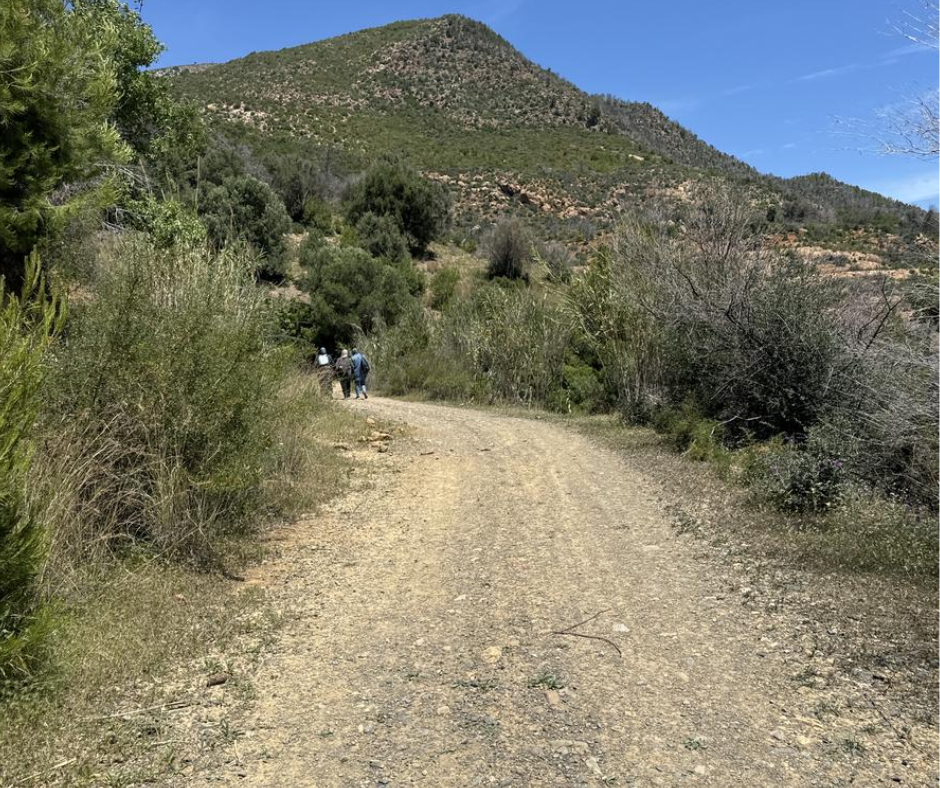
Start early to avoid the afternoon heat. Paths are poorly marked, so we'd go with a local guide or a hiking group rather than alone, and tell your hotel where you are going. Spring is the best season, when the slopes are green and the wildflowers are out.
Walking the coastal pine forests
For an easier walk, pine woods line parts of the coast around Tipaza. They give shade and a soft floor of needles, and here and there the trees open onto small coves below.
Go in the late afternoon, when the heat drops and the wind picks up in the pines. Bring water and keep to the main paths.
Planning your Tipaza trip
Tipaza is an easy day trip from Algiers, though a long day if you add the mausoleum and Cherchell. Sort out transport the evening before and leave early.
Tipaza practical table
Fees are low but rarely posted online. Most sites and museums charge 200 to 300 DZD (2026), which is about EUR 0.75 to 1.10 with cash changed informally or EUR 1.35 to 2 by card, so bring small notes and check hours on the day, especially in winter and during Ramadan.
| Site | Where | Entry and hours | Time needed |
|---|---|---|---|
| Archaeological park (western zone) | Western exit of town, short walk from the center | A couple of hundred DZD; reported 9 am to 8 pm April to October, to 5 pm in winter | 2 to 3 hours |
| Eastern hill and Saint Salsa | Just outside town on the east side | Ask at the main park gate whether it is open | 45 minutes |
| Tipaza museum | Town center, near the port | Usually 200 to 300 DZD; check opening days locally | 30 to 45 minutes |
| Royal Mausoleum of Mauretania | About 13 km east, near Sidi Rached | Check fee and closing time locally, especially in winter | 45 minutes |
| Cherchell museum | About 30 km west, on Place des Martyrs | A few hundred DZD; check opening days | 1 hour |
Getting from Algiers to Tipaza
A private car or taxi is the quickest option. Tipaza is about 70 km west of Algiers, roughly an hour and a quarter by road, and longer on summer weekends when beach traffic fills the coast road. Taxis rarely run the meter on a trip this long, so agree the price before you set off, or compare it with what Yassir quotes. With a car or driver it is also easy to add the mausoleum and Cherchell.
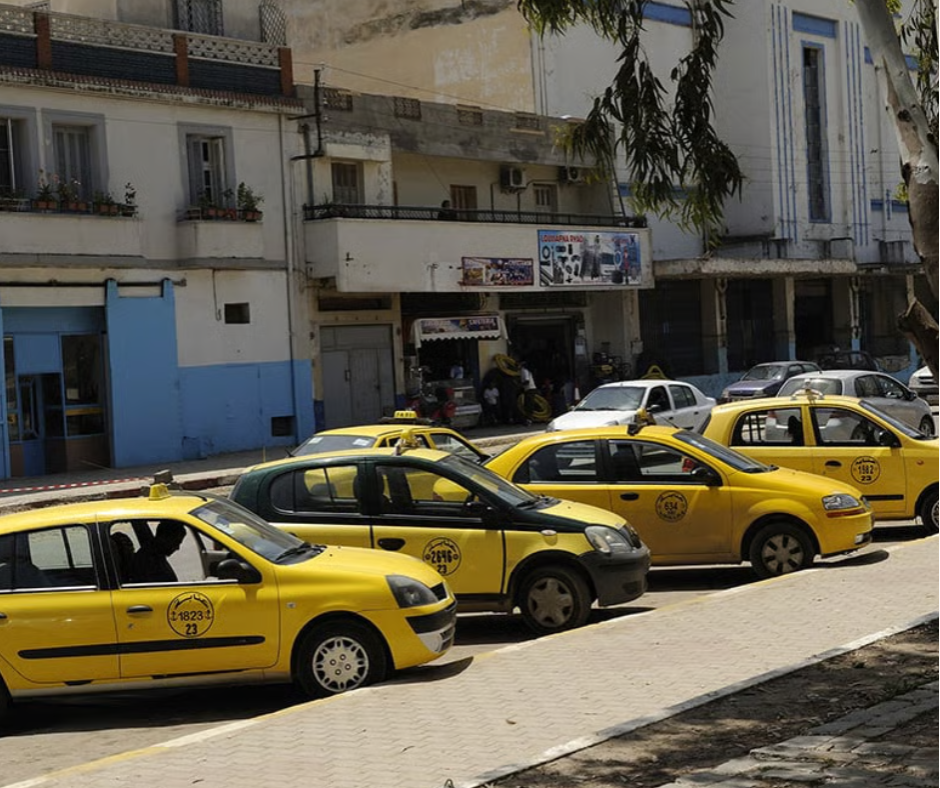
The cheap option is the bus: ETUSA runs a direct line from its Tafourah station in central Algiers to Tipaza, and buses also leave from the Caroubier bus station. Allow about an hour and a half each way. Shared taxis (taxis collectifs) are the other budget choice and leave only when every seat is taken. Either way, leave Algiers early so you reach the ruins before the midday heat.
Read also: Algeria Public Transport Guide
Best time to visit and what to pack
Spring (March to June) and autumn (September to November) are best for the ruins and the walks. The sea is warm enough to swim from about June to October, so September and early October give you both. July and August are hot, and the beaches and the coast road fill with Algerian holidaymakers; since the park stays open until about 8 pm in summer, save the ruins for late afternoon.
Wear walking shoes with good grip, as the Roman paving is uneven and gets slippery. Bring a hat, high-factor sunscreen and plenty of water, especially in summer. A light layer is useful in the evening, when the sea breeze cools things down even in July.
Coming in July or August? See Algeria in Summer.
Tips for independent travelers
Tipaza is easy to do on your own, but two things catch visitors out: cash and dress.
Money and cash
Algeria runs mostly on cash, and foreign cards are rarely accepted outside large hotels. In Tipaza, plan to pay entry fees, meals and transport in dinars, and carry small notes and coins for water, snacks and parking.
Cash changed informally goes much further than a card: about 275 DZD to the euro, against about 150 at banks and ATMs (autumn 2026), so before the day trip, ask your guide, host or agency in Algiers to introduce you to a reliable changer. Anyone who declared over EUR 1,000 when landing should also change part of it at a bank, since customs can ask for those receipts at departure.
For a full budget breakdown, see Is Algeria Cheap?
Dress and local customs
Tipaza is a relaxed beach town, but swimwear stays on the beach. Put on a cover-up for the town and the port restaurants, and cover shoulders and knees for the archaeological park and the museum in Cherchell.
A few words of French or Arabic help a lot. A "Salam" or "Merci" goes down well, and people are usually happy to point you to a restaurant or a path if you ask. If you want a photo of the fishermen at the port, or of anyone else, women above all, ask first. Pair the trip with a day in the Casbah of Algiers, one of the medinas in Algeria best explored on foot.
Tipaza FAQ
Is Tipaza worth visiting?
Yes. It is the easiest Roman site to reach from Algiers, and its ruins run right down to the sea. In one day you can walk the archaeological park, see the Royal Mausoleum and swim at Chenoua. Go in spring or early autumn, when the heat and the beach crowds are lower.
Who is buried in the Royal Mausoleum of Mauretania?
Nobody knows for sure. Tradition links the tomb to King Juba II and Queen Cleopatra Selene, daughter of Cleopatra VII and Mark Antony, and popular accounts date it to around 3 BC. Archaeologists still debate both the date and the attribution, and some think it is older.
Why was Tipaza on UNESCO's endangered list?
From 2002 to 2006 UNESCO listed Tipasa as World Heritage in Danger. The reasons were uncontrolled building near the ruins, damage from unmanaged visits and too few staff and funds. It was removed after Algeria set official boundaries, moved families out of the protected area and adopted a protection plan.
Tipaza suits anyone with a free day in Algiers, and it is at its best in late spring or early autumn, when you can walk the ruins in the morning and swim in the afternoon. With two days, add Cherchell and a walk on Mount Chenoua. We can arrange a driver for the day from Algiers or build Tipaza into a longer trip: send us your dates and we will plan the itinerary with you.
Read also: Is Algeria Worth Visiting? What to Know Before You Go (2026)


