


Tlemcen is western Algeria's city of medieval Islamic architecture: an Almoravid Great Mosque founded in 1082, the Zayyanid royal citadel of El Mechouar and the Marinid ruins of Mansourah are all within a few kilometers of each other. We'd give it two full days, or three if you also want the caves of Beni Add, the El Ourit waterfalls and the Lalla Setti plateau.
Below are the nine sights we'd put on a first visit, checked against current sources in October 2026, with the practical details that trip people up: whether the cable car is running, getting there from Oran, money and dress. Tlemcen's Great Mosque is one of the religious sites we single out in our travel guide to Algeria, along with Notre Dame d'Afrique in Algiers.
Planning two days in Tlemcen
| Before you go | What we'd tell a friend |
|---|---|
| Getting in | Fly Algiers to Zenata airport with Air Algérie (about 1 hour 15 minutes), or come by train or road via Oran, about 140 km away |
| Time to allow | Two full days in the city; add a third for the Beni Add caves and El Ourit |
| When to come | March to May and September to November |
| Tickets | About 200 DZD for El Mechouar in recent reports (about EUR 0.75 with cash changed informally, EUR 1.35 by card, autumn 2026); no ticket needed for the mosques |
| Don't leave without | Seeing the Almoravid, Zayyanid and Marinid monuments, hearing some Andalusian (hawzi or gharnati) music and learning about the chedda, Tlemcen's bridal costume |
The nine sights by place and time
The numbers match the sections below. Sights 1 to 4 and the Kissaria (9) are in or just outside the city; for 5 to 8 you need the cable car, a taxi or a driver.
| Sight | Where | Time needed | Best time |
|---|---|---|---|
| 1. El Mechouar | City center | 1 to 1.5 hours | Opening time |
| 2. Mansourah | Western edge of town, short taxi ride | 1 hour | Early morning or late afternoon |
| 3. Great Mosque | City center, next to the Kissaria | 30 minutes | Outside prayer times, not Friday midday |
| 4. Sidi Boumediene | El Eubbad, on the slope above town | 1 to 1.5 hours | Morning |
| 5. Lalla Setti | Plateau above the city, cable car from Grand Bassin | 2 hours | The hour before sunset |
| 6. El Ourit waterfalls | About 7 km east | 1 to 2 hours | Weekday morning, late winter to spring |
| 7. Beni Add caves | Aïn Fezza, about 17 km east | 1.5 hours | Any time; it is 13°C inside |
| 8. El Ourit viaduct | Above the falls, about 7 km east | 30 to 45 minutes | Late afternoon |
| 9. Kissaria souks | City center, by the Great Mosque | 1 hour | Mid-morning, not Friday |
A short history of Tlemcen
Most of what you come to see was built in a 300-year window. The Almoravids gave Tlemcen its Great Mosque, and the Zayyanids made it a royal capital in 1236 and filled it with palaces, madrasas and shrines. The Marinids of Fez besieged it and later ruled it for a decade, leaving Mansourah and Sidi Boumediene behind.
| When | What happened |
|---|---|
| 2nd century AD | Roman military outpost of Pomaria |
| Late 8th century | The town of Agadir; its mosque is dated to around 790 |
| 1081 to 1082 | The Almoravid Yusuf ibn Tashfin founds Tagrart next to Agadir; the two grow into Tlemcen |
| 1136 | The Great Mosque is rebuilt with its carved mihrab dome |
| 1236 to 1554 | Capital of the Zayyanid kingdom, founded by Yaghmurasan |
| 1299 to 1307 | Marinid siege; the besiegers build Mansourah |
| 1337 to 1348 | Marinid rule; the Sidi Boumediene mosque goes up in 1339 |
| 1550s | Ottoman control |
| 1836 to 1842 | French troops take the city in 1836, the Treaty of Tafna hands it to Emir Abdelkader in 1837, and the French occupy it for good on 30 January 1842 |
| 1962 | Algerian independence |
| 2011 | Capital of Islamic culture; El Mechouar is rebuilt for the year |
Tlemcen's Historic Sites: The Zayyanid Citadel and Marinid Ruins
Tlemcen was the capital of the Zayyanid kingdom from the 13th to the 16th century, and an Almoravid and then Almohad city before that, so most of what you come to see is medieval architecture in the Hispano-Moorish style also found in Fez and Granada. That heritage earns it a place in our guide to Algeria's best cities, where it gets its own section. Start your days early: the light is softer, and from June to September the afternoons are hot.
1. El Mechouar Palace, the Zayyanid Royal Citadel
El Mechouar was the citadel and palace of the Zayyanid sultans from the mid-13th century, and the seat of power in Tlemcen until the Ottomans took the city in the 16th century. Its name comes from the council hall (mechouar) where the ministers met the sultan.
Know before you go that the palace you walk through is largely a reconstruction: it was rebuilt on its excavated foundations in 2010 and 2011 for "Tlemcen, capital of Islamic culture 2011", using the structures and decoration found during the digs, while the outer walls were restored. Look at the carved plaster, the painted wood and the horseshoe arches.
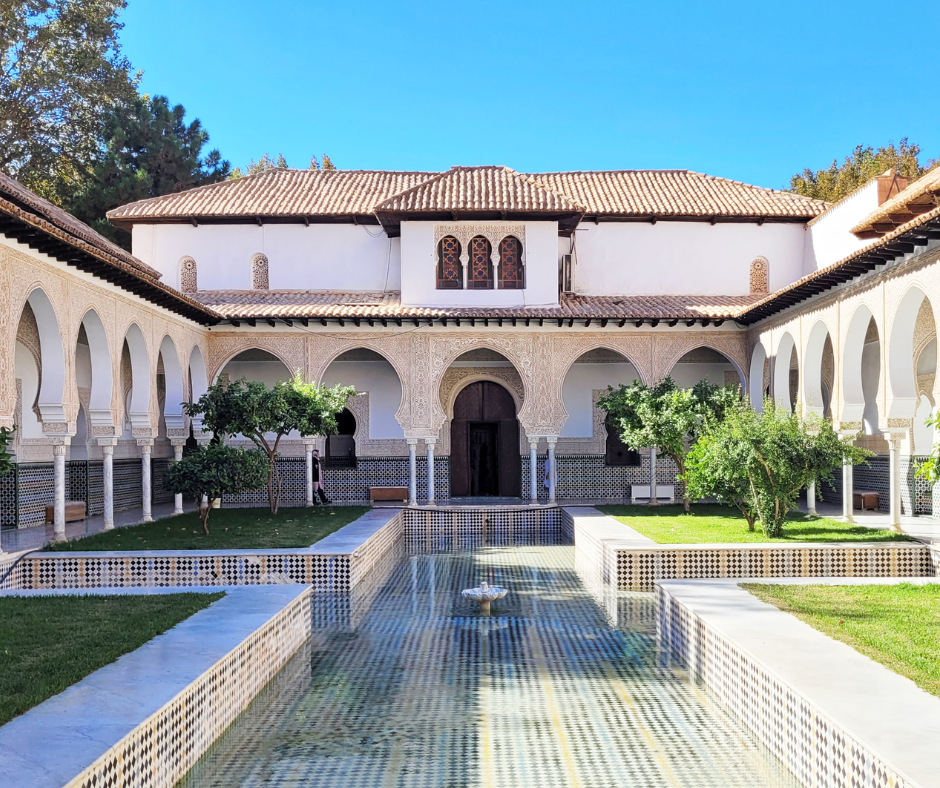
Entry was about 200 DZD in recent reports, in line with other Algerian sites. Published opening hours disagree, so check locally before you set aside a morning. In summer, go at opening time, as the courtyards have little shade. The citadel is in the center, a short walk from the Great Mosque and the Kissaria, so the three fit easily into one morning.
2. The Mansourah Ruins and Minaret
On the western edge of town are the remains of Mansourah, the city the Marinid sultan Abu Yaqub Yusuf built while besieging Tlemcen from 1299 to 1307. A camp grew into a walled town of about 101 hectares, with some 80 towers, palaces and a great mosque completed around 1302. When the sultan was murdered in 1307, the siege ended, the Marinids went home to Fez and Mansourah was abandoned.
The mosque's stone minaret, 38 m high, is what you come for. Only three of its four faces still stand, and from the back you can see where the fourth has fallen away.
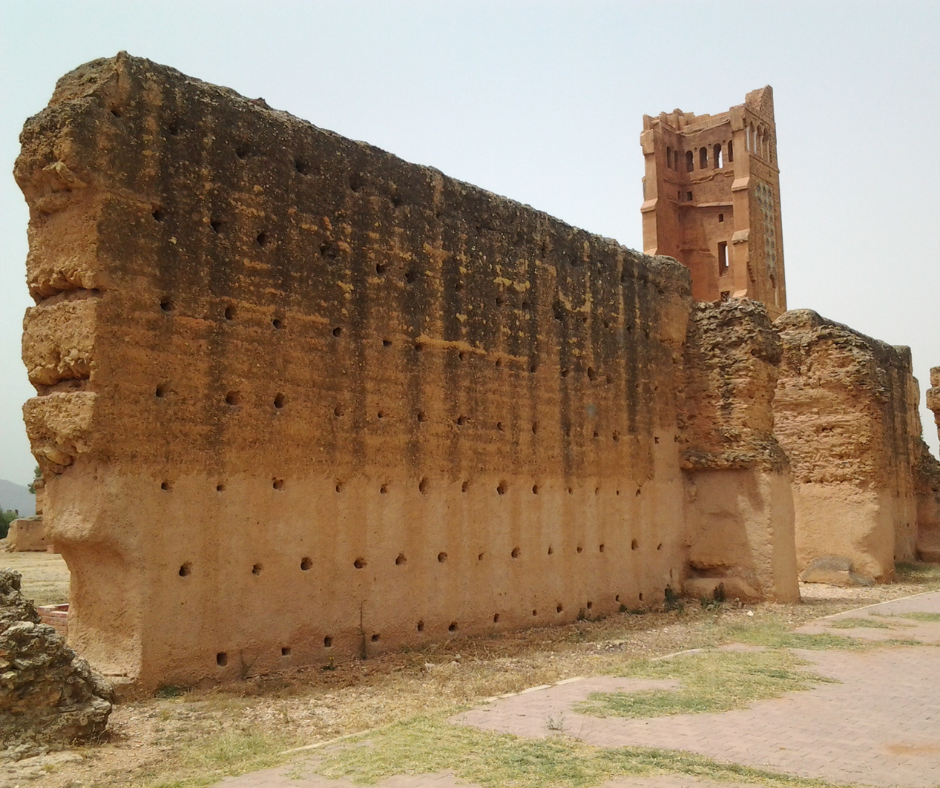
Walk around the back of the site and along the line of the old ramparts, which were built of packed earth and stood about 12 m high. There's almost no shade and the ground is uneven, so bring water and decent shoes. On the minaret's main face, look for the carved stone decoration around the arched gateway at its base, which was the mosque's main entrance. For Roman ruins rather than medieval ones, Tipaza on the coast west of Algiers is the place to go.
Mosques and Shrines in Tlemcen
Tlemcen has been a center of Sufism and Islamic scholarship since the Middle Ages, and its two most important religious sites are the Great Mosque in the center and the shrine of Sidi Boumediene on the hillside above town. Both are working places of worship, so plan around prayer times, especially Friday midday.
3. The Great Mosque of Tlemcen
The Great Mosque was founded in 1082 by the Almoravid ruler Yusuf ibn Tashfin and rebuilt under his son Ali ibn Yusuf; an inscription under the dome in front of the mihrab dates that work to 1136. The brick minaret, about 29 m high, was added in 1236 by Yaghmurasan, founder of the Zayyanid dynasty. Inside, 13 aisles of horseshoe arches run toward the qibla wall.
The dome over the mihrab bay is the reason to come: a ribbed dome of intersecting arches with pierced, carved plaster between the ribs that lets light filter through. Scholars of Islamic architecture since Georges Marçais have treated it as a high point of the Almoravid style.
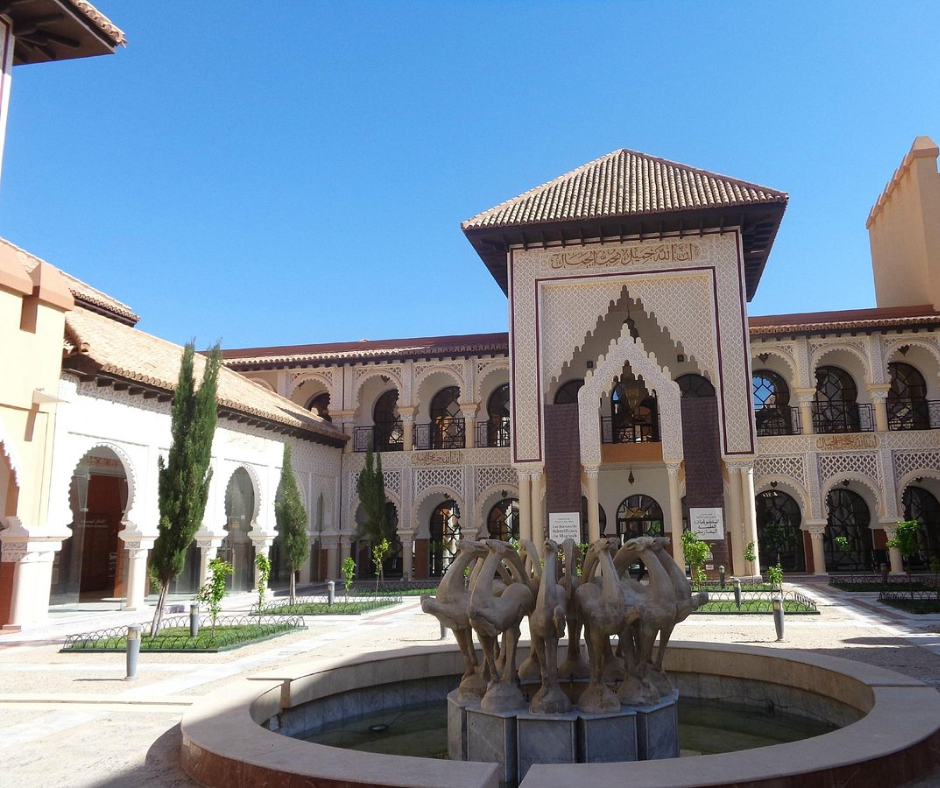
Whether non-Muslims can go inside depends on the caretaker and the time of day, so ask at the door outside prayer times, avoid Friday midday, and women should have a headscarf ready. If you can't go in, the minaret and the lanes around the mosque are still worth the stop, because the old town grew around it. Inside, look for the marble columns set into the piers near the mihrab. Tlemcen's old town and nearby Nedroma also made our selection of medinas in Algeria worth visiting.
4. The Sidi Boumediene Complex
The complex is in El Eubbad, a village on the slope above the city and a short taxi ride from the center. It grew up around the tomb of Abu Madyan (Sidi Boumediene), a Sufi master born in al-Andalus who died near Tlemcen in 1198 and is still one of the most revered saints in the Maghreb.
The Marinid sultan Abu al-Hasan added the mosque in 1339 and the madrasa in 1347; the historian Ibn Khaldun is said to have taught there. People still come to the tomb to pray and ask for blessings.
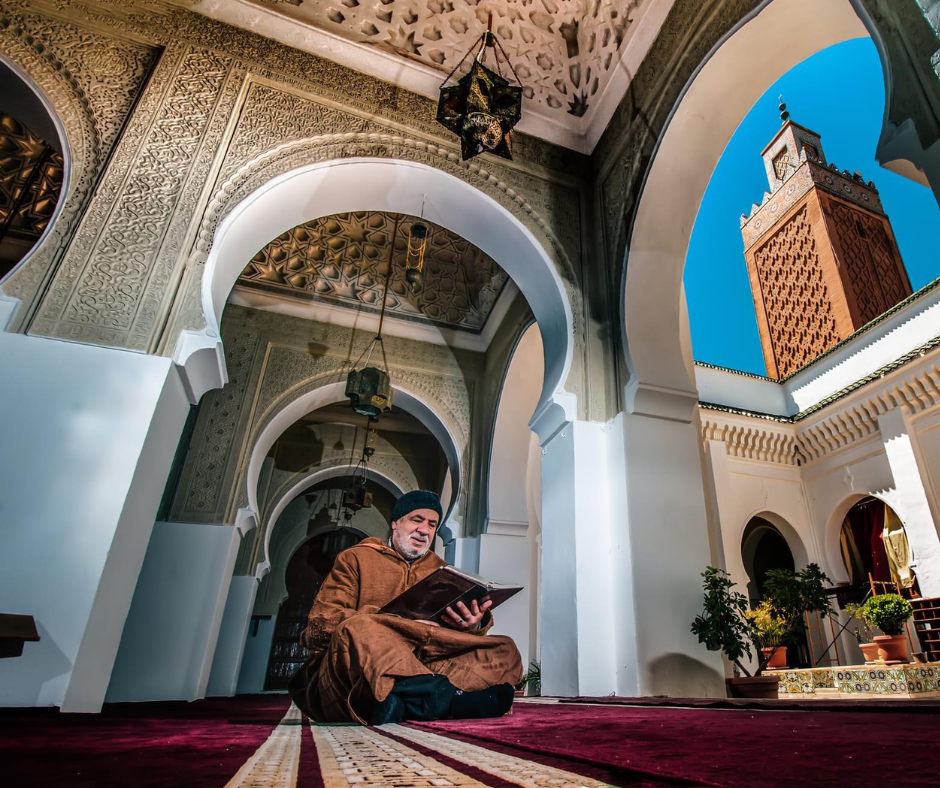
Dress modestly: shoulders and knees covered for everyone, and a headscarf for women entering the mosque and the shrine. At the mosque's monumental porch, look at the zellige tilework and the cedar doors covered in engraved bronze, then visit the madrasa, where students lived in small rooms around a courtyard. Always ask before photographing people, especially at the tomb, which draws a steady stream of local pilgrims.
Viewpoints and Nature Around Tlemcen
The hills rise quickly around the city, and within half an hour's drive you can be on a wooded plateau, at a waterfall or underground. Much of this area is inside Tlemcen National Park, created in 1993. It covers about 8,225 hectares across seven communes, including the forests of Ifri, Zarifet and Aïn Fezza and the El Ourit gorge.
The park counts more than 1,000 plant species and over 200 animal species. In 2016 UNESCO added the wider Tlemcen Mountains to its network of biosphere reserves.
5. Lalla Setti Plateau and the Cable Car
Lalla Setti is the plateau directly above Tlemcen to the south, with a park, an artificial lake, cafés and the best view over the city. The quickest way up is the cable car (télécabine) from the Grand Bassin station: a 1.7 km line with three stations and a ride of about seven minutes.
It closed for a major overhaul in early 2025 and went back into service in early July 2026, so it was running as of autumn 2026. It has had long closures before, so ask your hotel before you go; a taxi up the road is the fallback.
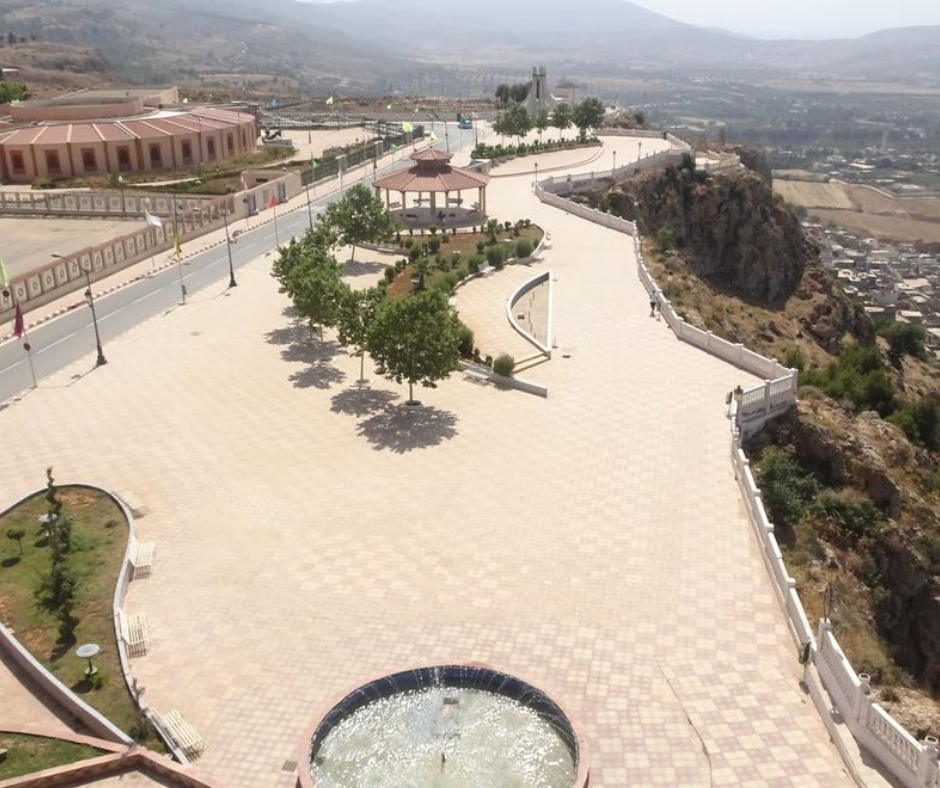
Come up about an hour before sunset, when local families fill the park and the cafés, and stay to watch the lights come on in the city below. The plateau is noticeably cooler and windier than town, so bring a layer even in summer.
6. Tlemcen National Park and the El Ourit Waterfalls
The El Ourit waterfalls are a series of stepped cascades in a pine-covered gorge about 7 km east of Tlemcen, inside the national park and just off the main road. Above them, an iron railway viaduct from around 1890 crosses the gorge (more on it below). Paths lead down from the road along the water.
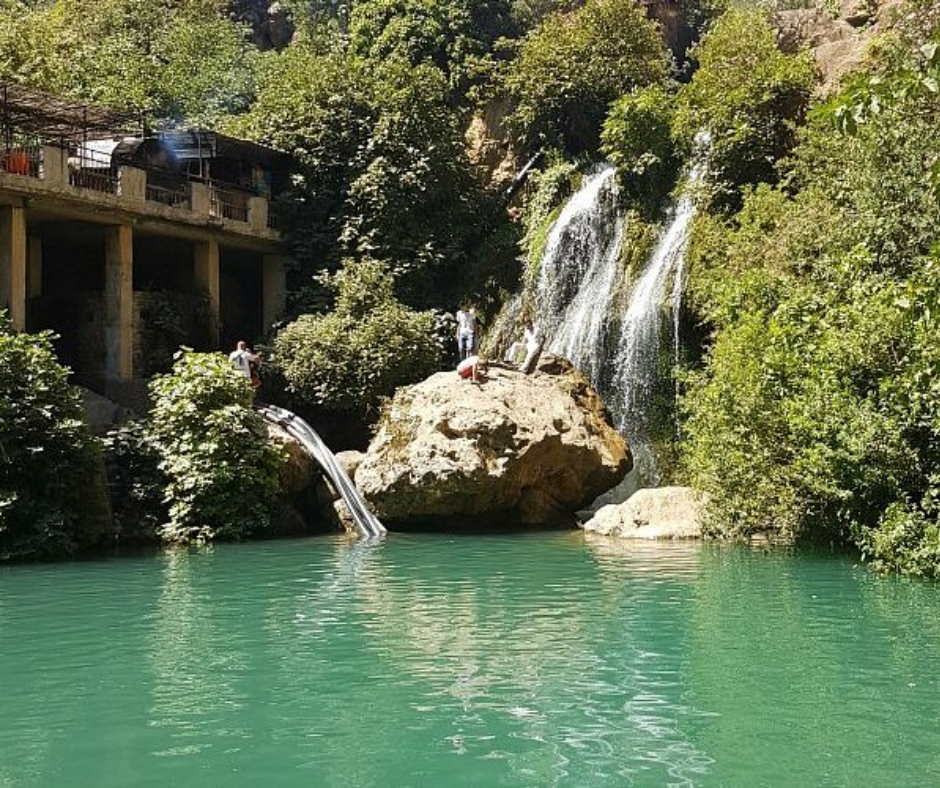
The flow depends on the rain. The falls are at their best from late winter through spring and can shrink to a trickle by late summer; the stream was dry for decades before the water returned in 2009. The rocks by the water are slippery, so wear shoes with grip. The gorge is a favorite picnic and barbecue spot for local families on the Friday and Saturday weekend, so come on a weekday morning if you want it quiet.
Caves and a 19th-Century Viaduct East of the City
Two more sights east of the city make a good half-day together, since both lie on the way to Aïn Fezza: the caves of Beni Add and the El Ourit viaduct.
7. The Caves of Beni Add
The caves of Beni Add are in the hills of Aïn Fezza, about 17 km east of Tlemcen. The visitor route runs for about 700 m through a series of chambers full of stalactites and stalagmites, reaching 57 m below the entrance. Inside it stays at about 13°C all year, a relief in July and chilly in a T-shirt.
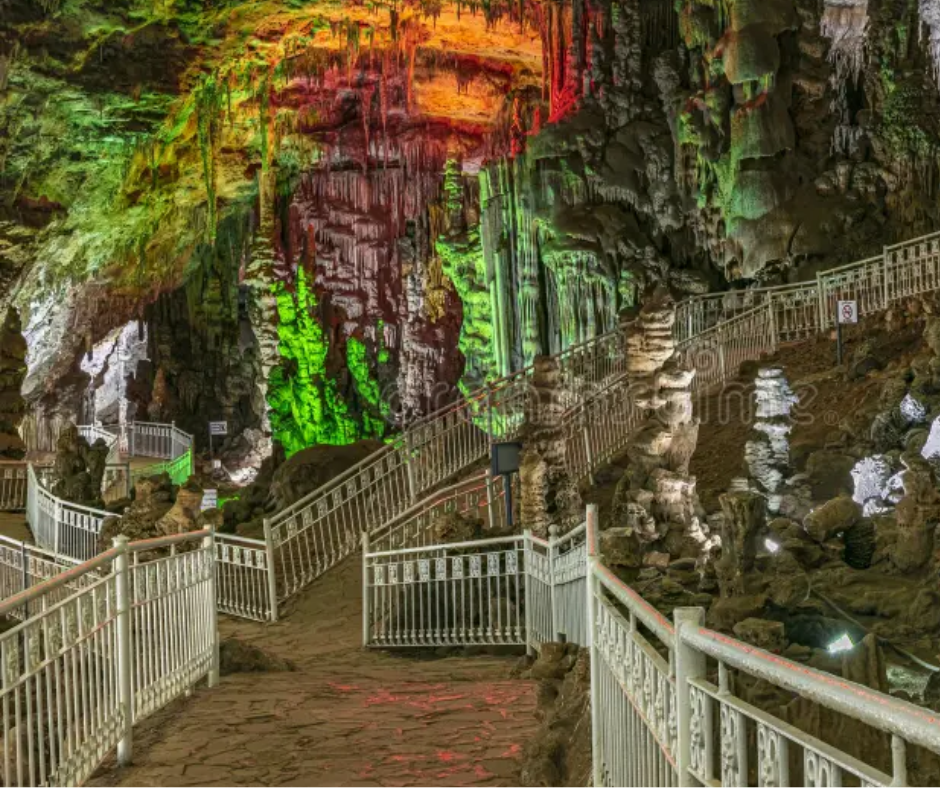
The route is lit, so you don't need a headlamp, but the steps are damp: keep your hands free and wear shoes with grip, and bring a layer. The caves have a wartime history too.
During the War of Independence, fighters used them as a hideout and a passage, until the French army sealed the fissure they came through with concrete; the site was restored and reopened to visitors in 2006. If caves fascinate you, the Grottes Merveilleuses near Jijel, on the eastern coast, are the other caves not to miss.
8. The El Ourit (Eiffel) Viaduct
The viaduct is an iron arch bridge that carries the railway from Sidi Bel Abbès into Tlemcen across the El Ourit gorge. It was built around 1890, and engineering studies credit the design to Gustave Eiffel, which is why it's known locally as the Eiffel bridge. It belongs to a different era from the rest of this list: the colonial railway that reached Tlemcen at the end of the 19th century.
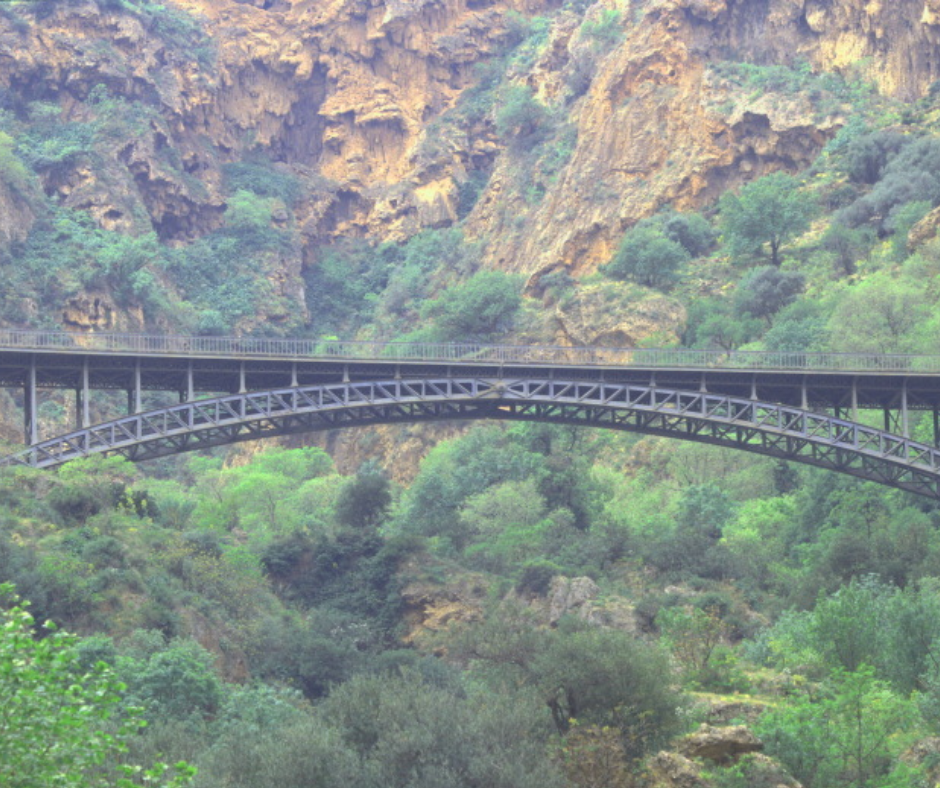
Late-afternoon light is best on the ironwork. It's a railway bridge, so look at it from the road or from the paths in the gorge and stay off the tracks; from below you can get the falls and the viaduct in one frame. Allow 30 to 45 minutes, or combine it with a picnic at the falls.
Shopping and Food in Tlemcen
Tlemcen has a long tradition of weaving and embroidery, and its bridal costume is on UNESCO's intangible heritage list (2012, for the rites and craftsmanship of the Tlemcen wedding costume). The old market streets around the Great Mosque are where you see both.
9. The Kissaria and the Old Souks
The Kissaria is the old market quarter just off the central square by the Great Mosque, a tight grid of small shops selling fabric, traditional clothes (including children's outfits for Eid and weddings), henna, incense, sweets and dried fruit. Tlemcen's weavers were known for wool and silk, and you'll still find woven blankets and burnous among the textiles. Go mid-morning, once the shutters are up, and expect many shops to be closed on Friday.
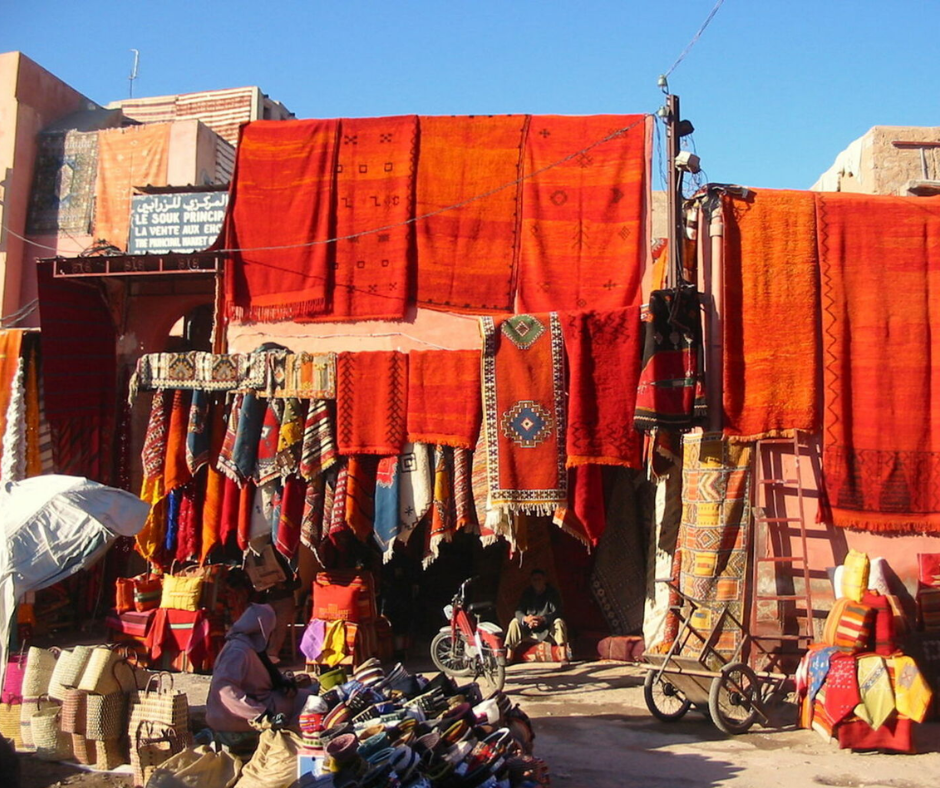
For carpets and textiles, check how dense the weave is and whether the dye rubs off. Bargaining is normal in the souk, less so where prices are marked; keep it friendly. The shop windows are also where you'll see the chedda of Tlemcen, the bridal costume: a gold-embroidered velvet caftan worn with layers of pearl necklaces and a tall conical headdress.
Andalusian music: hawzi and gharnati
Tlemcen calls itself the capital of Andalusian art in Algeria. Its music descends from the court music of al-Andalus, and the local school of the classical repertoire is known as gharnati, after Granada. Hawzi is its lighter, popular offshoot, sung in Arabic dialect, and you hear both at weddings and family celebrations.
The easiest way to catch a concert is the national Hawzi music festival, held in Tlemcen every year. The dates move: the 14th edition ran from 25 to 30 December 2025 at the Abdelkrim Dali palace of culture, and the 15th opened in July 2026 at the Grand Bassin. Ask your hotel or guide what is on during your stay.
What to Eat in Tlemcen
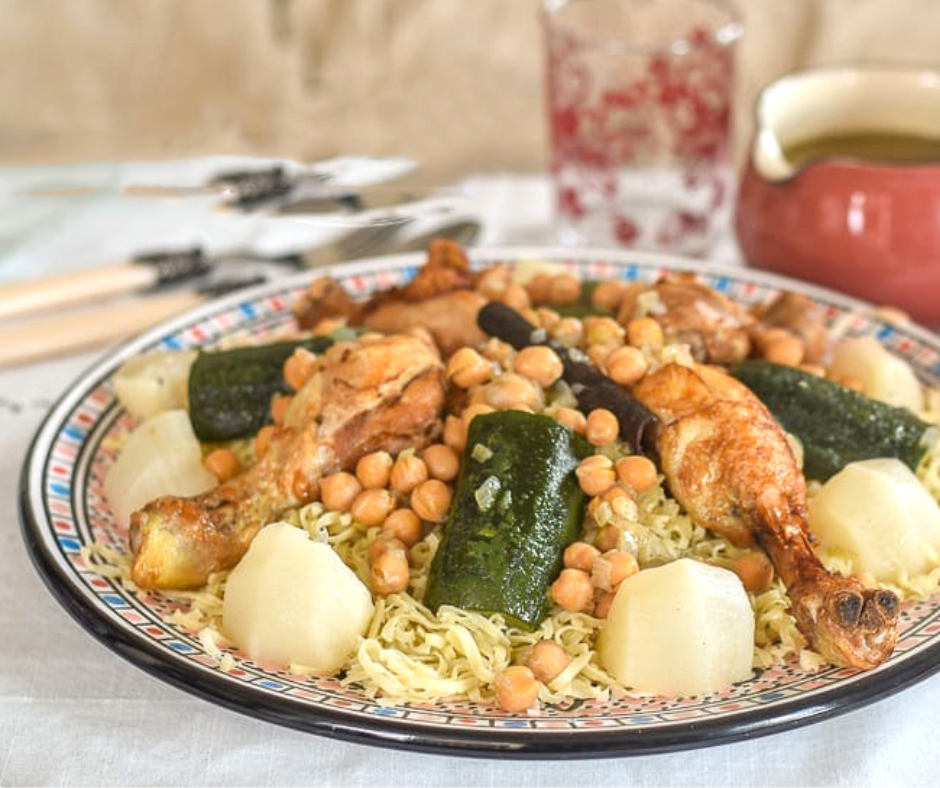
Food in Tlemcen mixes Berber, Arab and Andalusian influences, including sweet-and-savory tajines with prunes or apricots that families serve at Eid and weddings. Try rechta, thin fresh noodles in a white sauce with chicken, turnips and chickpeas; it's best known as an Algiers dish but is cooked across the north for family occasions. Chorba frik, a tomato soup thickened with cracked green wheat, is the Ramadan staple all over Algeria.
Mhadjeb are thin semolina crêpes folded around a tomato and onion filling, sold hot from street stalls across the country. For something sweet, look for makroud (semolina diamonds filled with dates) and honey-and-almond pastries in the pâtisseries around the center. Most restaurants don't serve alcohol; the large hotels are the exception.
Planning a Trip to Tlemcen
Tlemcen runs on cash: big hotels take foreign cards, but most restaurants, taxis, shops and ticket offices don't, and anything paid by card or from an ATM goes through at the official rate (about 150 DZD to the euro, against roughly 275 on the informal market, autumn 2026). Most visitors change cash through a guide or host who knows a reliable changer, and anyone who declared more than EUR 1,000 at the airport should keep a bank receipt or two for customs when leaving.
When to Visit and How to Get Around
Come in spring (March to May) or autumn (September to November). In spring the hills are green and the El Ourit falls are running; by October the heat has eased, with highs around 26°C. Summer is hotter than the altitude suggests: Tlemcen sits at about 840 m, but July and August highs average 33 to 34°C. Winters are cool and wet, with January nights around 5°C and occasional snow on the hills.
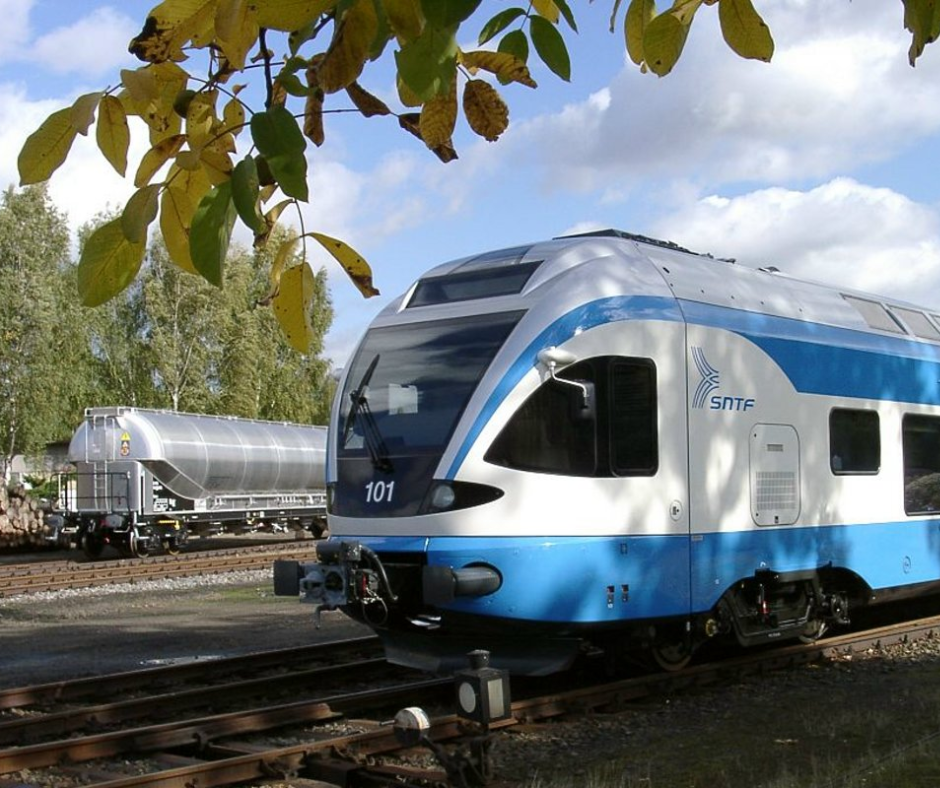
The quickest way in is the Air Algérie flight from Algiers to Zenata airport, about an hour and a quarter. By rail, SNTF's October 2025 timetable had a daily train from Algiers via Oran, taking about two and a half hours on the Oran to Tlemcen leg; check current times before you travel, as they change by season. By road, Oran is about 140 km away.
Between sites in town, taxis are simplest; settle the price before the driver sets off. For Beni Add and El Ourit, hire a driver for half a day so you aren't stuck waiting for a ride back. The Moroccan border west of the city has been closed since 1994, so you can't continue overland to Oujda.
Day trip to Nedroma
Nedroma, about 60 km northwest of Tlemcen in the Trara hills, is the best day trip from the city. Its old town (also in our medina selection above) is built around a Great Mosque founded in 1145. Its Almoravid minbar, the earliest that survives, is now in the National Museum of Antiquities in Algiers. Go with a driver and combine it with lunch on the coast.
Where to Stay and Cultural Etiquette
Stay in the center, near the Mechouar and the Great Mosque, to walk to the main sites; Mansourah and Sidi Boumediene are short taxi rides away. The Renaissance Tlemcen, a large Marriott-brand hotel on the Lalla Setti plateau, is the main upscale option, with views over the city but a taxi ride from the old town. Book a few weeks ahead for summer and public holidays, and have your passport ready, as hotels ask for it at check-in.
Location, nicknames, language and whether to go
Where is Tlemcen in Algeria?
Tlemcen is in the far northwest of Algeria, about 140 km southwest of Oran and roughly an hour's drive east of the closed Moroccan border beyond Maghnia. It sits at about 840 m in the foothills of the Tlemcen Mountains, which keeps it greener and cooler than the coast in spring. The city had 173,531 people at the 2008 census.
What is Tlemcen famous for?
It is famous for medieval Islamic architecture: the Almoravid Great Mosque with its carved mihrab dome, the Zayyanid citadel of El Mechouar, the Marinid minaret of Mansourah and the shrine of Sidi Boumediene. It is also Algeria's home of Andalusian music and of the chedda, the gold-embroidered bridal costume on UNESCO's list since 2012.
Why is Tlemcen called the pearl of the Maghreb?
Tlemcen has long been called the pearl of the Maghreb and the African Granada. Both nicknames point to its golden age as the Zayyanid capital from 1236 to 1554, when it was a center of trade, scholarship and Andalusian-style building, set among hills with plenty of water and gardens.
What language is spoken in Tlemcen?
Algerian Arabic (Darja) is the everyday language. Officially the languages are Arabic and Tamazight; in hotels and shops, and with older people, French usually works too. A few words of French or Darja go a long way; English is rare outside the big hotels.
Is Tlemcen worth visiting?
Yes, if you like architecture and history. It has one of the largest groups of medieval monuments in Algeria, all within a few kilometers, plus cool hills, caves and waterfalls close by. It is quieter than Algiers or Oran and has little nightlife, so two or three days is the right length for most people.
Practical Tips for Tlemcen
Leave some slack in your schedule. Opening hours change without much notice, Friday midday is for prayer, and during Ramadan (expected around 8 February to 9 March 2027) the city slows down by day and comes alive after sunset. Carry a light scarf for mosques and shrines, and dress modestly in the old town: long trousers or a skirt below the knee, and covered shoulders.
A greeting helps: say "Salam alaykoum" when you walk into a shop, and French is widely spoken if you don't have Arabic. Ask before photographing people, and don't photograph police, checkpoints or government buildings.
Pick Tlemcen for architecture and history rather than nightlife: two days covers the city, a third adds the caves and waterfalls, and it pairs naturally with Oran. If you'd like help fitting it into a route around western Algeria, you can reach out to us for more detailed information, and we'll suggest an itinerary that matches your dates and interests.


