

The Algerian Sahara covers more than four-fifths of the country, so for a first trip pick one region: Djanet for the Tassili n'Ajjer rock art and the red dunes of the Tadrart, Tamanrasset for the volcanic Hoggar mountains, or Timimoun and Taghit for the sand seas of the Grand Erg Occidental. Go between October and April, with an approved Algerian agency: the authorities expect it in the deep south, and it qualifies you for the Sahara visa on arrival.
Below we compare the regions, then cover routes, the visa-on-arrival scheme, the guide rules, money and packing. Our Algeria guide takes care of the rest of the country if the desert is only one part of your trip.
Sand, rock and mountain
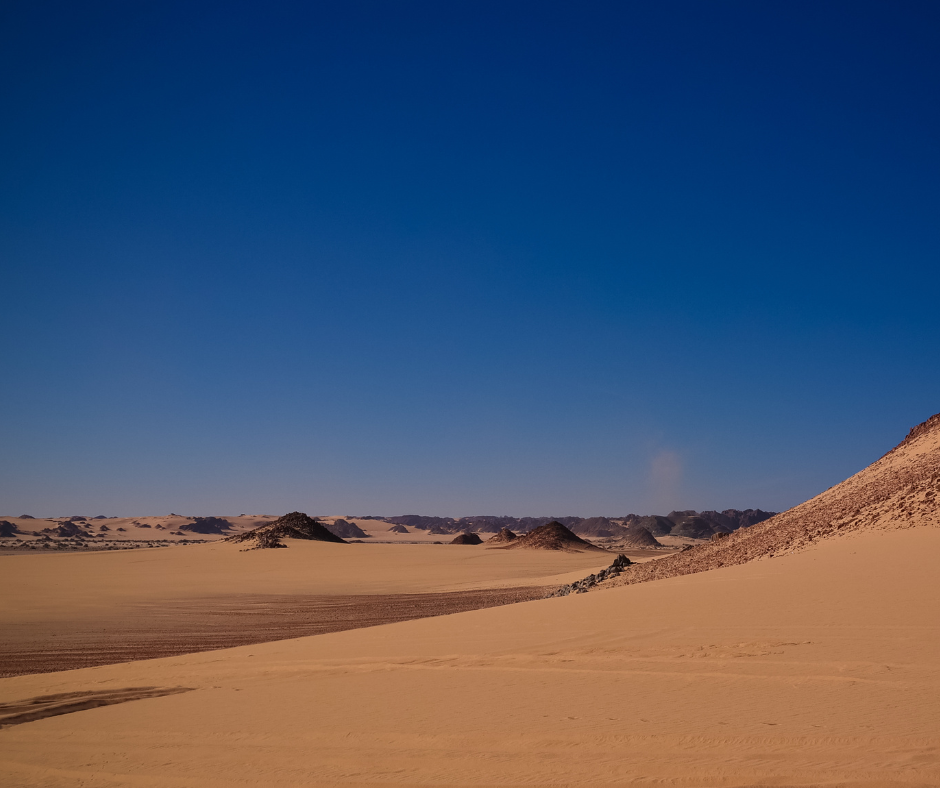
Most of the Algerian Sahara isn't sand, even though the desert takes up more than four-fifths of the country. Only a fifth to a quarter of the Sahara is erg, the sand seas of the postcards. The rest is reg (flat gravel plain), hamada (bare rock plateau) and mountain.
Algeria has two of the great sand seas, the Grand Erg Occidental in the west and the Grand Erg Oriental toward Tunisia and Libya. Between them lie stony plateaus such as the Tademaït, between El Menia and In Salah. The Tanezrouft, in the far southwest, is one of the emptiest stretches of the whole desert.
In the southeast rise the volcanic Hoggar and the sandstone Tassili n'Ajjer, with Mount Tahat at about 2,908 m. Rain is rare: well under 100 mm a year at the desert's northern edge and less than 50 mm across the center and south.
Regions, visas and what a day costs
- Three regions to pick from: Djanet (Tassili n'Ajjer, Tadrart Rouge), Tamanrasset (Hoggar), and Timimoun with Taghit (Grand Erg Occidental).
- Months that work: October to April; June to August is too hot in the lower oases.
- Flights: into Algiers, then a domestic hop to Djanet, Tamanrasset, Timimoun or Béchar.
- Visa: issued on arrival for agency-organized trips in 24 southern wilayas (fee commonly about EUR 110), otherwise from a consulate before you go.
- Who you travel with: in the deep south, an approved Algerian agency and its local guides.
- Daily budget: roughly EUR 85 to 140 per person (2026), all-inclusive, for two to four travelers.
Choosing Your Algerian Desert Destination: Djanet, the Hoggar or the Grand Erg
The regions look very different, and they are a domestic flight apart, so with a week or ten days most people choose one.
| Region | Landscape | Highlights | Nights to allow | Airport |
|---|---|---|---|---|
| Djanet and the Tadrart Rouge | Sandstone towers, red dunes, rock art | Tassili plateau, Tadrart canyons, Tegharghart | 6 to 10 | Djanet (DJG) |
| Tamanrasset and the Hoggar | Volcanic peaks and basalt plateaus, little sand | Assekrem sunrise, Charles de Foucauld's hermitage | 5 to 7 | Tamanrasset (TMR) |
| Timimoun | Red-ochre ksour, palm gardens, salt flat | Foggaras, old ksar, sunsets over the sebkha | 3 to 4 | Timimoun (TMX) |
| Taghit | Tall dunes behind a mud-brick ksar | Sunrise on the big dune, rock engravings | 2 to 3 | Béchar (CBH), then about 95 km by road |
Djanet and the Tadrart Rouge
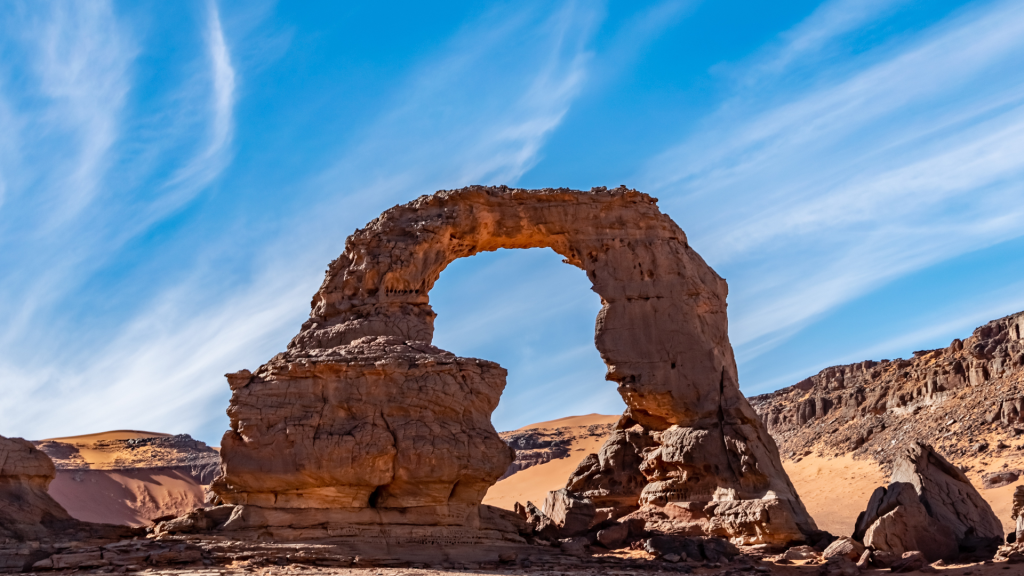
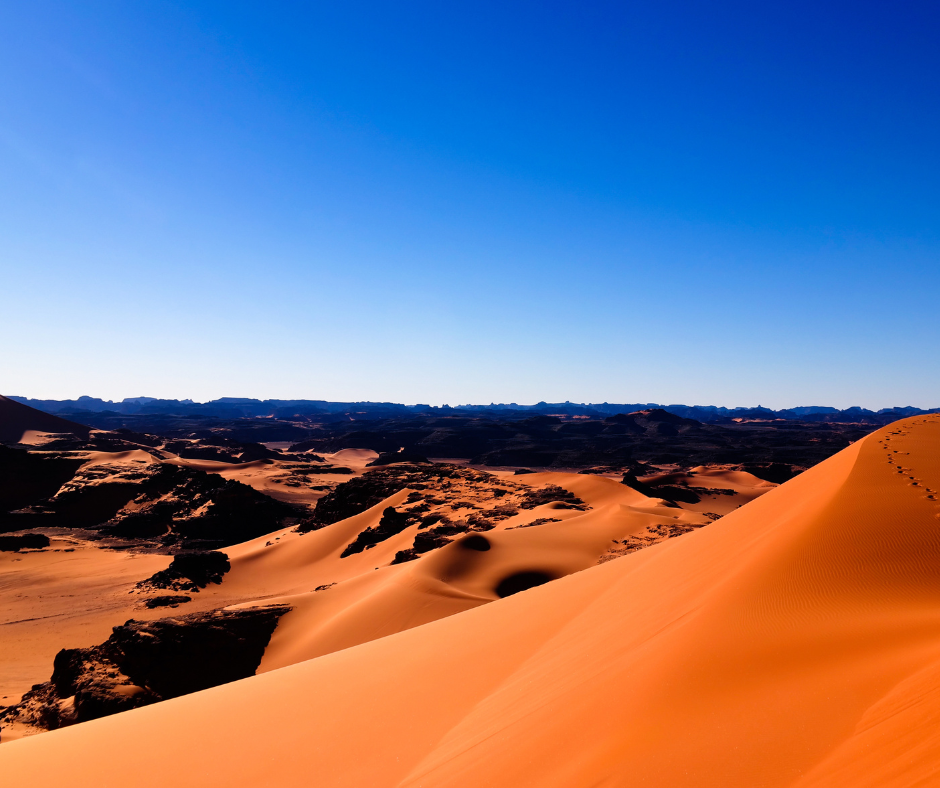
If you want red sand against dark rock, head to Djanet. The oasis town in the far southeast is the base for both the Tassili n'Ajjer plateau and the Tadrart Rouge, a sandstone massif most of a day's 4x4 drive further southeast, where orange and red dunes pile up against black cliffs.

We love the Tadrart because erosion has cut the sandstone into arches, pillars and towers, and its canyons hold rock engravings of their own. It's our first choice for photographers and for anyone who wants soft dunes and rock canyons on the same trip. The catch is distance: with most of a day's drive each way from Djanet, it doesn't fit into a short trip.
Tamanrasset and the Hoggar Mountains
Choose Tamanrasset if you want mountains. The town sits at about 1,300 m at the foot of the Hoggar (Ahaggar), where the desert is mostly volcanic peaks and dark basalt plateaus, with little sand.
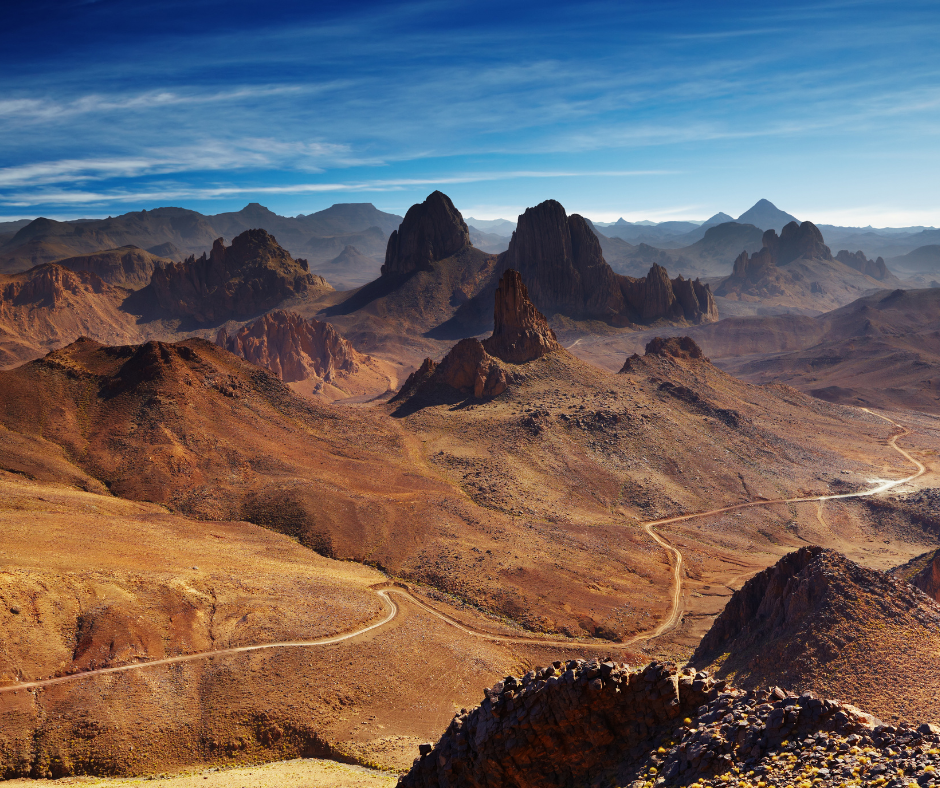
The draw is the Assekrem plateau, about 2,726 m up and roughly 80 km north of Tamanrasset; the 4x4 needs about three hours to get there, mostly on rough track. Charles de Foucauld built his hermitage here in 1911, and most groups sleep at the refuge below it to watch sunrise over the Atakor peaks. We recommend the Hoggar for hikers, but it has the coldest nights. Your agency runs the trip and, on the routes where the authorities assign a police or gendarmerie escort, sorts that out as well.
The Great Western Erg: Timimoun and Taghit
For the endless-sand-sea picture, look at Timimoun and the Great Western Erg (Grand Erg Occidental). On the western edge of the same erg, the oasis of Taghit is the easiest way into the big dunes: it's about 95 km from Béchar, roughly an hour and a half by road, and the dunes rise straight up behind the old ksar. Timimoun, on the southern edge, is called the Red Oasis for its red-ochre mud-brick buildings.

This is our pick if you care more about palm groves, villages and dunes than rock formations. Timimoun's gardens are still watered by foggaras, underground channels that carry groundwater from the plateau. It is also the hottest region in summer (July highs average around 44°C), so keep it for October to March. The foggaras, the old ksar and the sunsets over the salt lake are all covered in our guide on how to travel Timimoun.
Many travelers also stop on the way south in the M'Zab Valley, the group of five fortified towns the Mozabites built from the 11th century onward at the northern edge of the desert, on the UNESCO list since 1982. Ghardaïa, the largest of the five, is the usual base, and our list of things to do in Ghardaïa covers its busy market and the Great Mosque. Beni Isguen is stricter: its old town is off limits without a local guide, and you pick one up at the gate.
Ancient Rock Art of the Sahara
For us, the rock art is the strongest reason to choose Djanet. The paintings and engravings run from something like 10,000 BC to the first centuries AD, and over that span you can watch the Sahara dry out on the rock.
Tassili n'Ajjer National Park
This UNESCO World Heritage Site (inscribed in 1982) rises directly behind Djanet. UNESCO has counted more than 15,000 drawings and engravings up there, and they follow the climate: first giraffes, elephants, hippos and crocodiles from the savannah years, then herds of cattle, and later horses and camels.
The best-known painted sites, such as Tamrit and Sefar, are on top of the plateau, reached on foot by the Akba Tafilalet pass, a steep climb of about three hours with donkeys carrying the gear. Our Tassili n'Ajjer National Park guide explains the different rock art periods and how to reach the plateau.
Allow three or four days on the plateau. Don't touch or wet the paintings for photos, and leave flints and potsherds where they lie: taking antiquities out of Algeria can lead to prosecution.
The Crying Cows of Tegharghart
About 25 km from Djanet, a short detour off the airport road, a lone rock at Tegharghart carries one of the finest engravings in the region: a small herd of long-horned cattle cut in deep relief, with lines running down from their eyes like tears.
Nobody knows what the tears mean. The usual reading is that the cattle are mourning as the grassland dried up. It's an easy half-day outing from Djanet, handy on the day you arrive or leave.
A sample week from Djanet
- Day 1: Arrive in Djanet, visit the crying cows of Tegharghart, first night in town or at a camp nearby.
- Day 2: Out to the dunes of the Erg Admer, camp in the sand.
- Day 3: The rock forest of Tikoubaouine, then on toward the southeast.
- Days 4 to 6: The Tadrart Rouge: red dunes, arches and engraved canyons, two or three nights in camp.
- Day 7: Back to Djanet and the flight north. The Essendilène canyon and its guelta, about 100 km northwest of town, need an extra day.
This plan skips the Tassili plateau itself. To see the painted sites of Sefar or Tamrit, add three or four days on foot.
The Sahara is only one part of Algeria. The Casbah of Algiers, the Roman towns and Constantine are in our guide to things to do in Algeria.
The Tuareg Way of Life
Many of the guides, drivers and cooks in Djanet and Tamanrasset are Tuareg, and for us the evenings around the fire with them are the best part of a trip. The Tuareg are sometimes called the "Blue Men" for the indigo-dyed veil (tagelmust) that men wear; women traditionally don't cover their faces. Guides usually speak Arabic and French as well as Tamahaq; English is less common.
The Tea Ceremony Ritual
With Tuareg hosts, tea takes its time. Green tea is boiled with a lot of sugar in a small pot on the embers, then poured from a height, back and forth between glass and pot, until it carries a thick foam.
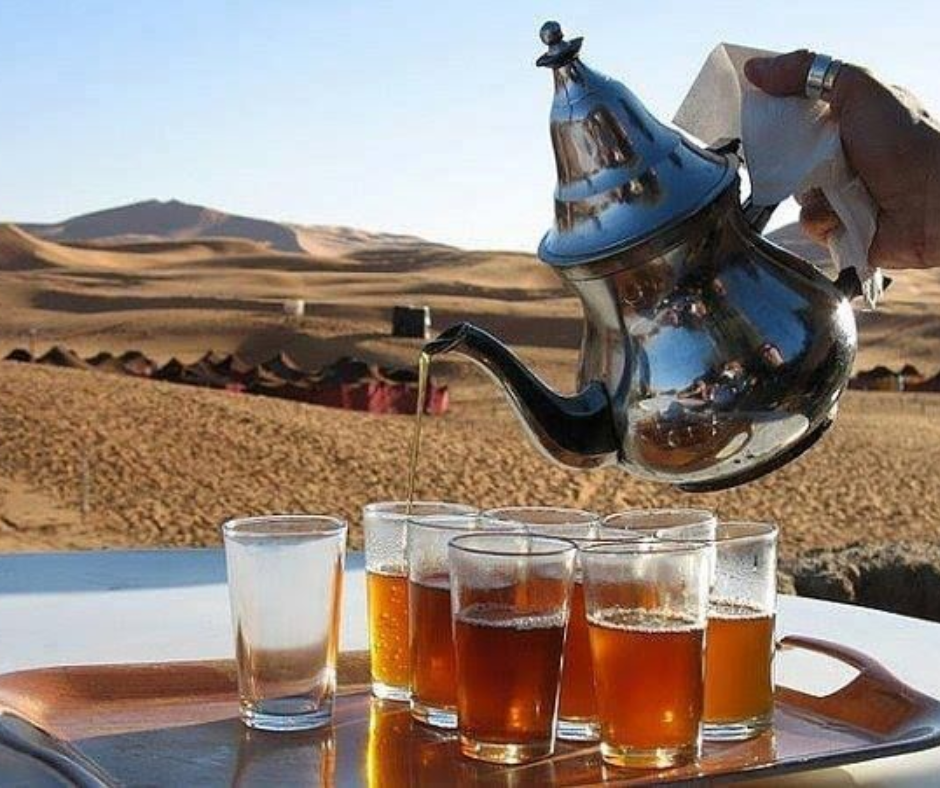
Custom calls for three glasses. Tellers word it differently, but the gist is that the first glass is bitter like life, the second sweet like love and the third gentle like death. Accept all three; leaving before the third can come across as rude. Spending a few days with Tuareg hosts on an Algeria nomad experience lets you see this ritual as part of daily life rather than a show.
Respectful Interaction
Tuareg manners are reserved. Don't rush greetings, and ask before photographing anyone, especially women and older people. Long pants and loose long-sleeved shirts keep the sun off and are what people expect. Your guide will translate and tell you when a photo isn't welcome.
Desert wildlife and plants
Most animals here come out at night. The fennec fox, Algeria's national animal, the dorcas gazelle, the Barbary sheep of the mountains and the sand cat all live here. The Hoggar and the Tassili are among the last refuges of the Critically Endangered Saharan cheetah, though sightings are very rare.
The plant to look for is the Saharan cypress, or tarout, which grows wild only on the Tassili n'Ajjer. A couple of hundred trees survive, many thought to be more than 2,000 years old, and the species is listed as Critically Endangered.
Where to Sleep: Bivouacs vs. Guesthouses
You'll either camp in the desert or base yourself in a town and do day trips. Trips into the Tadrart and the Hoggar are almost always camping trips; Taghit and Timimoun work well from a guesthouse.
Expedition Camping (Bivouac)
For the full experience, we recommend bivouac camping. This is how most trips in the Tadrart Rouge and the Hoggar run: you travel by 4x4 during the day and camp in a different spot each night. The crew put up simple tents and cook over a fire, often taguella, the Tuareg bread baked under sand and embers.
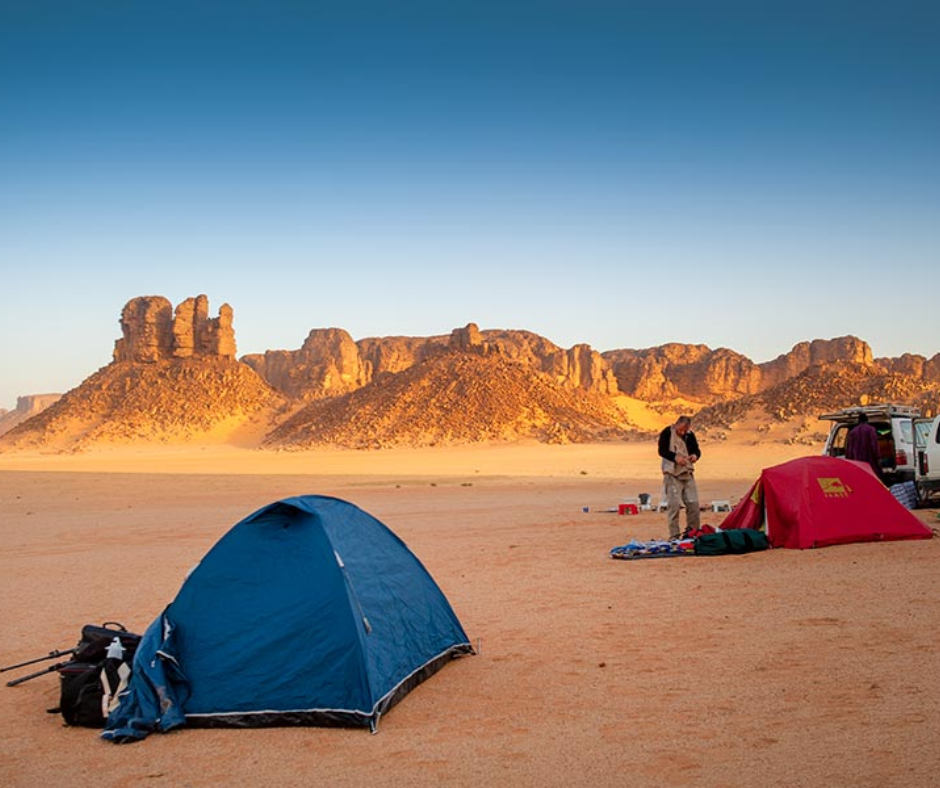
There's no light pollution, so on clear nights the Milky Way is right overhead. There are no facilities either: no toilets, no showers, and water is kept for drinking and cooking. Gear, etiquette and safety for nights like these each get their own section on camping in the Algerian Sahara.
Traditional Guesthouses
If you prefer a shower and a mattress, base yourself in a guesthouse in Djanet, Tamanrasset, Timimoun or Taghit. Many are built in the local style, with a courtyard and thick earth or stone walls.

From a guesthouse you do day trips and come back to a cooked meal and a bed. It's more comfortable, but it limits how far you get: the Tadrart and the top of the Tassili plateau are out of day-trip range. There is also a middle ground: glamping in Algeria, with real beds and private tents in places like Taghit and Timimoun.
Red Tape: Visas, Guides and Logistics
Most visitors need a visa before they fly. For Sahara trips there's a shortcut, but it only works if you book through an agency.
The Visa on Arrival Scheme
Book an organized trip through an approved Algerian travel agency, with an itinerary in the south, and you can skip the consulate and get your visa when you land. Since 1 March 2023 the scheme has covered 24 southern wilayas, including Djanet, Tamanrasset, Illizi, Timimoun, Adrar, Béchar, Béni Abbès and Ghardaïa. The agency files your request on the Tourism Ministry's platform and sends you a QR-code authorization that lets you board.
The fee, commonly reported at about EUR 110 and varying by nationality, is paid at the airport, and the visa runs for up to 30 days to match the trip. It isn't limited to southern airports: it can be issued in Algiers and at other international entry points, as long as most of the trip is in the south. We recommend it because it skips the consulate, but it doesn't work for independent travel, and some nationalities are excluded.
The Standard Consulate Visa
If your trip is mostly in the north, or you travel without an agency, you need a standard tourist visa from the Algerian consulate in your country. It must be backed by a hotel booking, an agency invitation and itinerary, or a certificat d'hébergement. London charges GBP 85 (2026) and takes about 10 working days for in-person applications, so give yourself at least a month.
Mandatory Guides
Don't plan to rent a car and drive into the deep Sahara on your own. In the far south, foreign visitors are expected to be with an approved Algerian agency and its guides, and on certain routes a police or gendarmerie escort joins them. Away from the towns there's often no phone signal, so your crew is also your link to help.
Travelers on our Djanet and Hoggar trips often say the south felt calmer and friendlier than they had imagined before they came. We stick to routes our partners have driven for years, with licensed local agencies and Tuareg guides, and our trips there have always gone off without trouble. Before you pay a deposit, look up the current official travel advice for the region you pick and confirm that your insurance covers it.
For the rest of the country, from visa paperwork to safety, the details are in our page on Algeria Visa: Requirements and Visa on Arrival.
How much does a Sahara trip in Algeria cost?
In 2026 a deep-south trip costs roughly EUR 85 to 140 per person per day for two to four travelers. That covers the 4x4 and driver, guide, cook, camping gear and all meals. Solo travelers pay more.
| What you're paying for | Per person, groups of 2 to 4 (2026) |
|---|---|
| Five days out of Djanet or Tamanrasset | About EUR 425 to 700 |
| A week | About EUR 600 to 980 |
| Ten days | About EUR 850 to 1,400 |
| Visa fee at the airport | About EUR 110 in most reports |
| Crew tips, pooled | 1,500 to 2,000 DZD a day for each traveler |
The domestic flight from Algiers comes on top, and its price swings a lot with the season. In euros the tips are about EUR 10 to 13 a day counted at the official rate (about 150 DZD to the euro, autumn 2026), or EUR 5.50 to 7.30 if you changed cash informally (about 275).
Packing for Extremes: Your Sahara Packing List
In December and January it can be around 20°C at midday in Djanet and below freezing at night on the Tassili plateau or at Assekrem. Pack for both.
Clothing Layers
Skip cotton for the cold hours: it holds sweat and chills you after dark. Merino or synthetic layers work better. By day, wear loose, light-colored long sleeves and a hat. For the night, bring a fleece, a down jacket and a beanie, and in midwinter a sleeping bag rated to around freezing.
Tech and Hygiene
There is no electricity in the dunes. Bring a high-capacity power bank (20,000 mAh) for your phone and camera. You won't shower on a bivouac trip, so pack wet wipes and hand sanitizer, plus a headlamp with spare batteries for finding your way around camp after dark. Leave the drone at home: bringing one into Algeria without authorization is illegal, and customs usually confiscate them.
Practical Matters: Money and Transport
Currency and Cash
The south runs on cash dinars, so bring euros and let your guide or agency point you to a trusted changer on the informal market (outside the letter of the exchange-control law but open), where a euro fetched about 275 DZD in autumn 2026 against about 150 at banks, ATMs and on cards. Change modest amounts and count the notes. If you declared over 1,000 euros on arrival, change part of it at a bank and keep the receipt, as customs can ask for it when you leave.
Getting There
Most travelers fly into Algiers (ALG) and take a domestic flight on to Djanet (DJG), Tamanrasset (TMR), Timimoun (TMX) or Béchar (CBH) for Taghit. Air Algérie flies those routes together with its subsidiary Domestic Airlines, which took over from Tassili Airlines in 2025. Schedules change at short notice, so we'd allow a night in Algiers between your international arrival and the domestic flight.
In recent winter seasons Air Algérie has also flown from Paris CDG to Djanet, which saves the connection; check whether it is running for your dates. For a longer trip that strings Taghit, Timimoun and the Tassili together, see our Algeria desert road trip from Algiers to Djanet.
Dunes, guides and the best months
Is the Sahara in Algeria mostly sand?
No. Only a fifth to a quarter of the Sahara is sand sea; for big dunes, head for the Grand Erg Occidental around Taghit and Timimoun, or the Erg Admer and Tadrart near Djanet.
What is the best part of the Algerian Sahara to visit?
For a first trip we'd pick Djanet: in one week you get the Tassili rock art, the red dunes of the Tadrart and rock canyons. Choose Tamanrasset if you want mountains and walking, and Taghit or Timimoun for oases and dunes with a guesthouse bed every night.
Do you need a guide in the Algerian Sahara?
In the deep south, yes. Around Djanet and Tamanrasset foreigners are expected to travel with an approved Algerian agency and local guides, and only an agency can get you the visa on arrival. Taghit and Timimoun are fine on your own, though a local guide is still the easiest way into the dunes.
When is the best time to visit the Algerian Sahara?
October to April. November and March give warm days and nights that are cool rather than freezing. December and January are coldest, with frost on the Tassili plateau and at Assekrem. From May to September the heat in the lower oases is too much for most people, and many camps close.
Is the Algerian Sahara for You?
Basic camps, long 4x4 days and an agency crew are the deal here; what you get back is rock art and dunes with very few other visitors. Go between October and April; from June to August the lower oases are too hot for most people.
With a week, choose one region: Djanet for the Tassili and the Tadrart, Tamanrasset for the Hoggar, or Timimoun and Taghit for dunes and oases. With two weeks you can combine two. Sort out the visa through your agency before you buy flights.
If you have questions about routes or want us to put a trip together, contact us with your dates and the region you're leaning toward, and we'll tell you what fits the season. We put together the crew (local guides, cooks and drivers) and file the visa-on-arrival request through a licensed Algerian partner agency.


