

Djanet is more than just a destination. It is a gateway to a version of Earth that feels entirely alien. Located in the far southeast of Algeria, this oasis town serves as your launchpad into the Tassili n'Ajjer National Park, a UNESCO World Heritage site that combines geological wonders with prehistoric history.
We know that planning a trip to the deep desert can feel overwhelming. That's why we, the WildyNess Team, have designed this guide to walk you through the absolute best things to do, from scaling red dunes to drinking tea with the Tuareg.
Conquer the Red Dunes of Tadrart Rouge
If you are looking for the most iconic Saharan scenery, you must start your adventure in the Tadrart Rouge. This region is often called the "Red Tadrart" because the sand here is not just yellow. It shifts from deep apricot to a rich, blood-red hue that changes intensity with the movement of the sun. Exploring this area in a 4x4 is one of the most exhilarating things to do in Djanet.
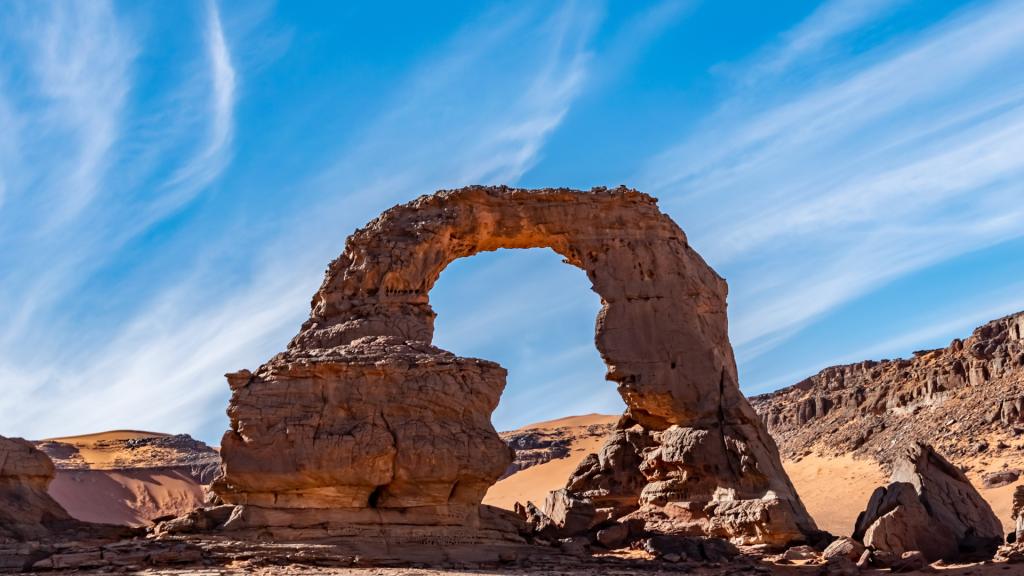
You will likely drive through the "Cathedral" of Tamezguida. This natural rock arch looks like a gothic monument carved by the wind. It frames the desert beyond it and provides one of the best photo opportunities in the entire park. We recommend asking your driver to stop here so you can walk beneath the arch and fully appreciate the scale of these sandstone giants.
Your journey through the Tadrart will eventually lead you to Moul n'Aga. The name translates to "The Camel" in the Tuareg language. When you see the rock formation sitting atop the dune, you will understand why. It perfectly mimics the silhouette of a resting camel looking out over the sand.
The climax of the Tadrart Rouge experience is the climb up Tin Merzouga. This is one of the highest dunes in the region. We suggest you tackle this climb in the late afternoon. The hike to the summit is physically demanding, but the reward is a 360-degree view of an endless ocean of red sand waves. Watching the sunset from this peak is a spiritual experience. As the sun dips below the horizon, the burning red sands turn to a cool purple, and the silence is absolute.

Walk Through History at Sefar and Jabbaren
While Tadrart Rouge is about geological drama, the Tassili n'Ajjer plateau is about human history. Visiting the archaeological sites here is not just a hike. It is a time-travel experience. The plateau is home to one of the largest collections of prehistoric rock art in the world.
We highly recommend a trekking expedition to Sefar. Known as the "Stone City," Sefar is a labyrinth of eroded sandstone rocks that resemble streets and houses. It feels like walking through the ruins of a city built by giants. Hidden within these "streets" are ancient paintings that date back thousands of years. You will see depictions of strange, round-headed figures that have fueled local legends and international theories for decades.
Another essential stop is Jabbaren. The name means "The Giants" in Tamasheq, referring to the massive depictions of human figures found on the rock walls. To reach Jabbaren, you will need to hike up onto the plateau. The ascent can be steep, but it is accessible for anyone with a reasonable fitness level. Once you arrive, you are rewarded with thousands of paintings showing scenes of daily life, hunting, and dancing from the Bovidian period. These images prove that this arid desert was once a green savannah teeming with life.

Witness the "Crying Cows" of Taghaghart
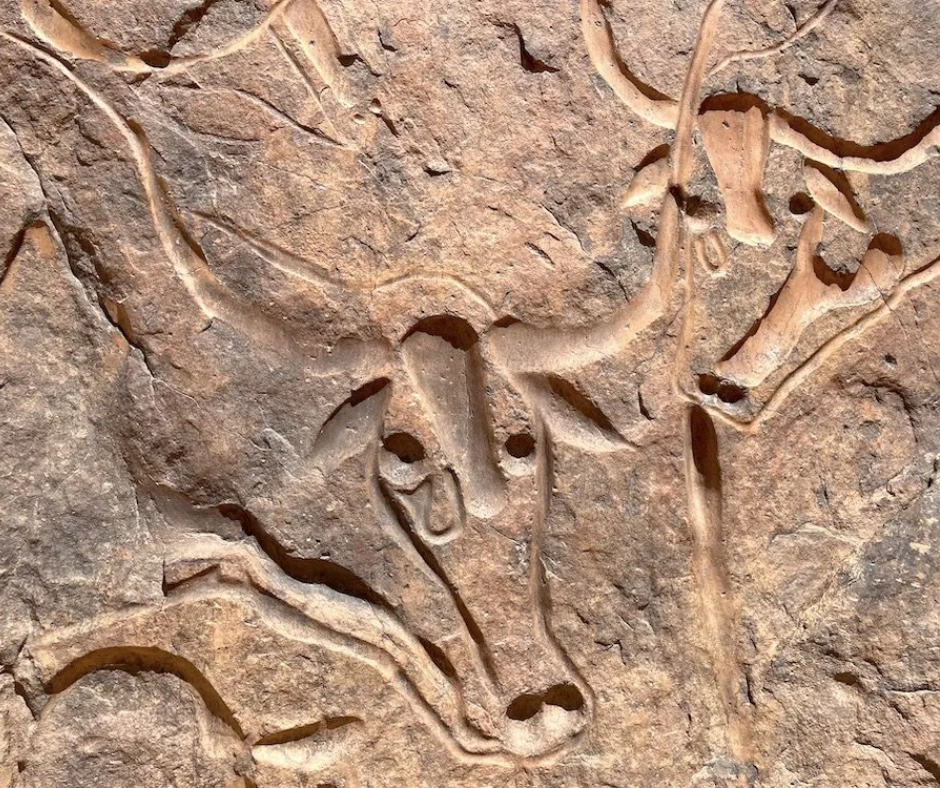
Just a short distance from Djanet, you will find one of the most emotional pieces of rock art in the Sahara. The engraving of the "Crying Cows" at Taghaghart is a masterpiece of Neolithic art.
The stone carving depicts a small herd of long-horned cattle. The artist skillfully used the natural veins and stains in the rock to create the illusion of tears streaming from the cows' eyes. Archaeologists and historians believe this piece was created during a time when the climate was beginning to change. The "Green Sahara" was drying up, and the water sources were disappearing.
Standing before this engraving allows you to feel the anxiety and sorrow of the ancient people who watched their world change forever. It is a poignant reminder of the region's history and a must-see stop on your return to Djanet.
Find the Hidden Waters of Essendilène Canyon
The Sahara is defined by its dryness, which makes the discovery of water even more powerful. A trip to the Essendilène Canyon offers a striking contrast to the open dunes. Here, you will hike through a narrowing gorge with high rock walls that provide welcome shade.
As you walk deeper into the canyon, the landscape changes. You will find oleander bushes with pink flowers and ancient Saharan cypress trees. These trees are living fossils and some are estimated to be thousands of years old. They have survived by tapping into deep underground water reserves.
At the very end of the canyon lies the guelta. This is a permanent pool of cold, clear water tucked into the rocks. While it is usually too cold for a swim, it is a perfect spot to rest and eat lunch.
The microclimate here is noticeably cooler than the surrounding desert. We find that the walk to Essendilène is one of the most relaxing activities in the region, offering a quiet intimacy with nature that differs from the vast openness of the dunes.

Discover the Gueltas of Iherir Valley
For more of that same contrast, the Iherir Valley is worth the detour. This UNESCO-listed oasis sits between high cliffs, fed by a chain of gueltas linked by a thin river. Dense greenery covers the canyon floor. Fewer visitors make it out here than to Essendilène, so it feels more like a discovery than a stop.
Head Into the Hoggar Mountains
If you have extra days, the Hoggar Mountains are worth the trip. This region sits further south, home to Mount Tahat, the highest peak in Algeria at 2,908 meters.
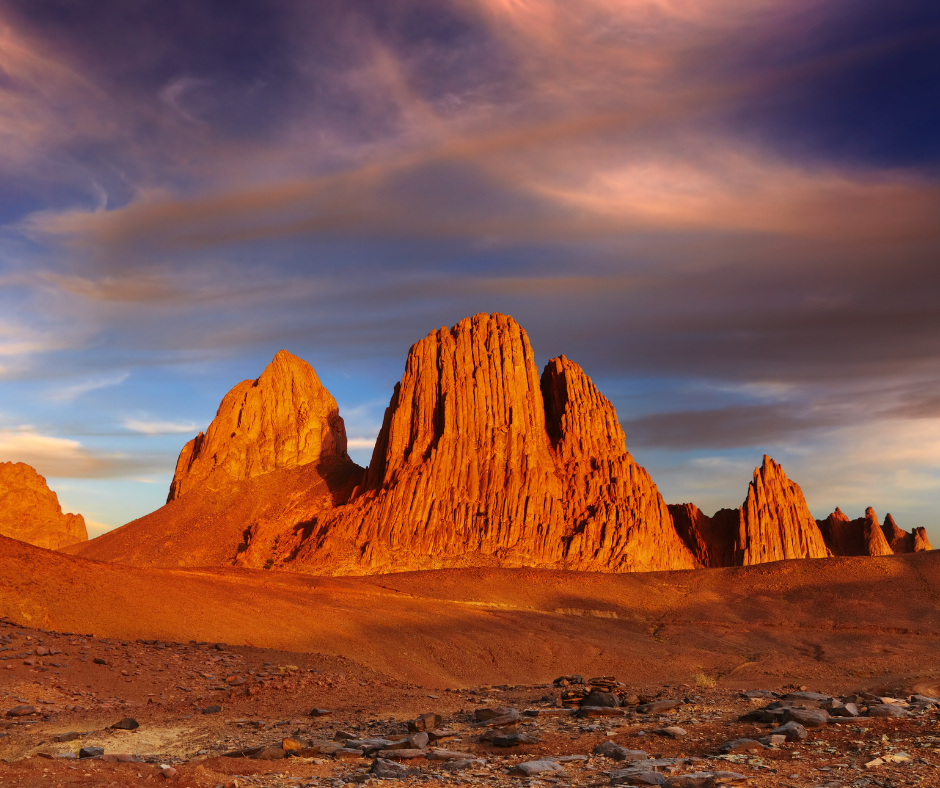
The landscape here is different from the Tassili plateau: dark, ancient rock shaped by centuries of erosion into sharp, unusual forms. Much of it falls within Ahaggar National Park, and the drive out there is as striking as the destination itself.
Immerse Yourself in Tuareg Culture
You cannot visit Djanet without engaging with the Kel Ajjer, the Tuareg people of this region. Their hospitality is legendary, and spending time with them is a highlight of any trip.
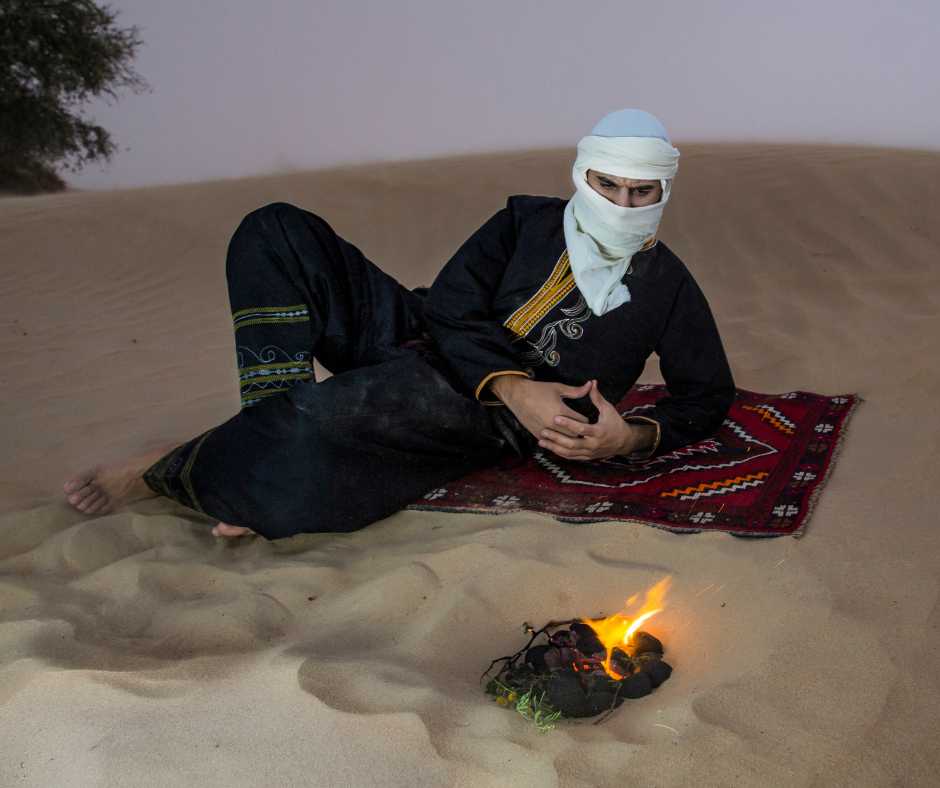
The most iconic cultural experience is the tea ceremony. This is not a quick drink. It is a ritual. Your guide will brew three separate rounds of tea over the embers of a fire. The first glass is "bitter like life," the second is "strong like love," and the third is "sweet like death" (or "mild like the breath of life," depending on the storyteller). Watching the tea being poured from high above to create a thick foam is captivating.
You should also ask to try Taguella. This is a traditional flatbread baked directly in the hot sand and embers. The Tuareg people make a dough of semolina and water, bury it in the sand under the fire, and let it bake. Once cooked, the bread is cleaned of sand, broken into small pieces, and covered with a savory sauce of meat and vegetables. Sharing a communal platter of Taguella under the stars is the best way to bond with your travel companions and guides.
If you can time your visit correctly, we strongly suggest coming during the Sebiba festival. This event takes place annually during the Islamic month of Muharram (Ashura). It commemorates a peace treaty between two local tribes. The men dress in their finest indigo robes and traditional face veils, dancing with swords in a ritualized display, while the women sing and play drums. It is a UNESCO Intangible Cultural Heritage event and a sensory explosion of color and sound.
Ride Out on a Camel Trek
After the color and noise of Sebiba, a camel trek offers a quieter pace.
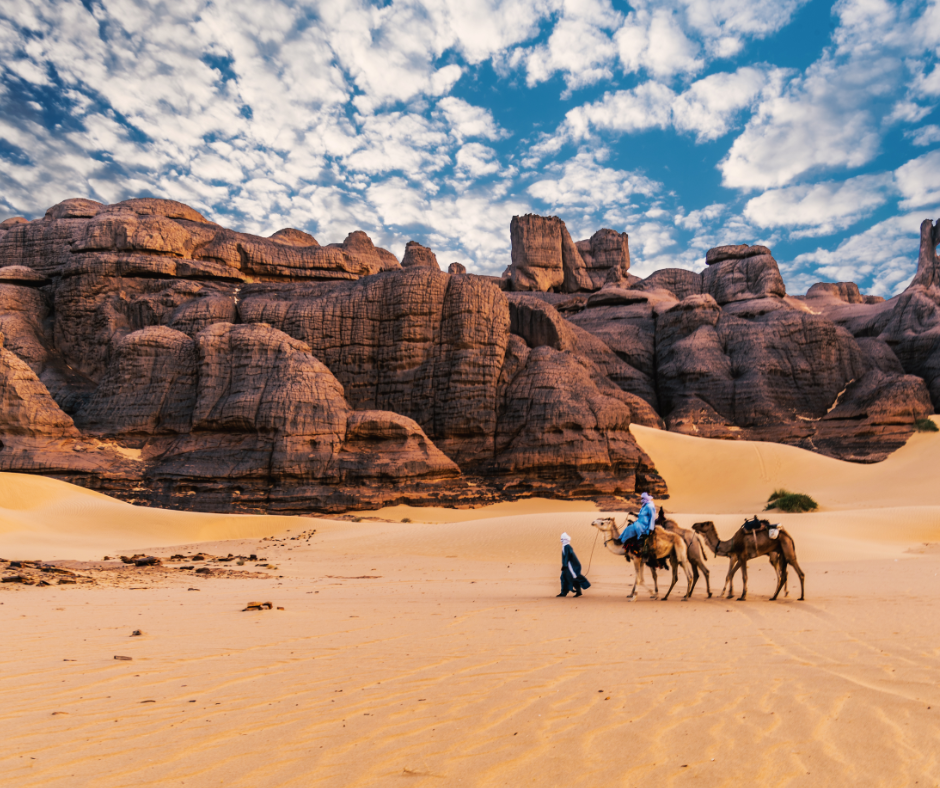
Trade the 4x4 for a camel and move through the dunes at walking speed. You'll notice things a vehicle would miss: a line of rock art on a cliff face, a hidden valley between the dunes.
Explore the Ksour and Market of Djanet
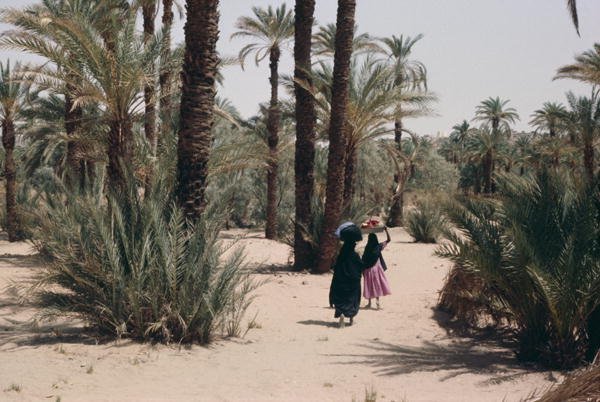
Djanet town has its own rhythm, away from the dunes and canyons. Start with a walk through the palm grove. Nearly 30,000 date palms grow here, shading small farms. Vendors sell potatoes, tomatoes, olives, and citrus, alongside the dates the region is known for.
Before or after your desert expedition, spend some time in the town of Djanet itself. The town is built on the side of a mountain and overlooks the palm grove.
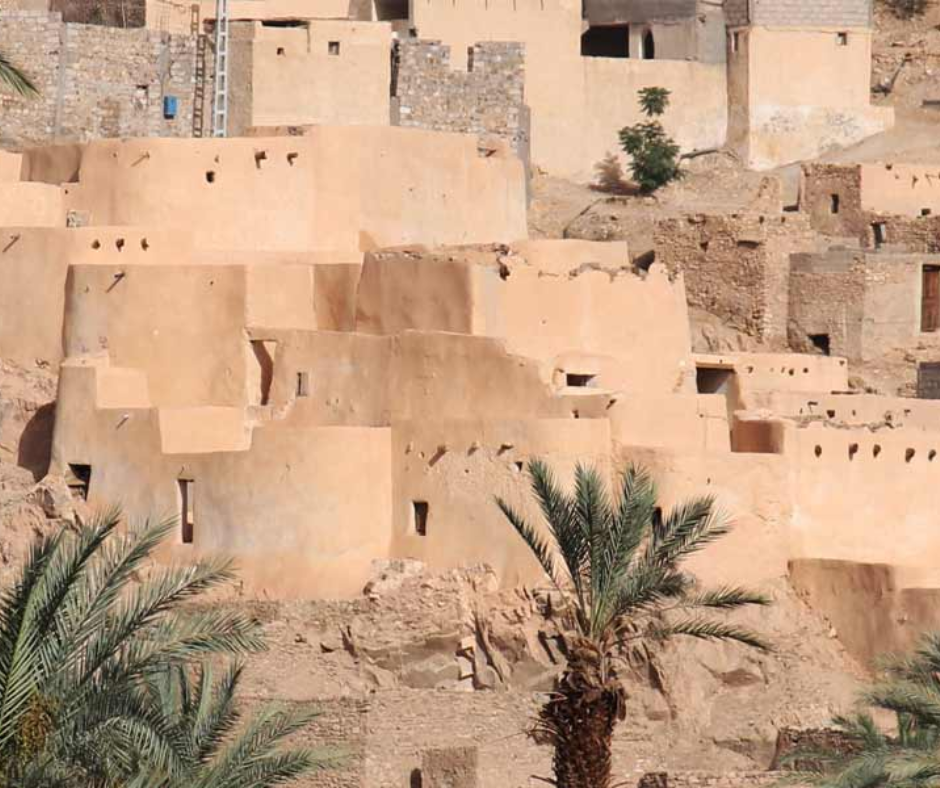
We recommend walking through the old Ksour (fortified villages) of El Mihan or Adjahil. These mud-brick ruins wander up the hillside and offer a glimpse into how people lived here for centuries. The narrow alleyways and crumbling walls are incredibly photogenic.
These aren't the only ksour worth seeing. Zellouaz sits nearby, along the Idjeriou River.
All three villages date back to the 16th century. Back then they were more than homes. They were centers for trade and religious learning, with small Zaouïas, or religious schools, built into the mud-brick maze.
Djanet itself carries another layer of history. Under French colonial rule, it was known as Fort Charlet. It later became the heartland of the Kel Ajjer Tuareg you'll meet in town today.
You should also visit the local market in the center of town. This is where you can buy dates harvested from the nearby palm groves. It is also the best place to find Tuareg handicrafts, from woven textiles to hand-thrown pottery. This market has been a trading stop for centuries, once linked to caravan routes carrying salt, gold, and spices into Libya and Niger.
Look for silver jewelry, which is a specialty of the region. The intricate geometric designs on rings, pendants, and crosses each carry specific meanings and protective symbols. You can also find Cheche (the long headscarf) in various colors. Buying a Cheche and having a local show you how to tie it properly is a great way to prepare for the sun and wind of the desert.
Round off your time in town with a visit to the Djanet Museum. The collection is small but dense: Tuareg artifacts, handmade tools, and objects that trace the region's history. It's a good way to get context before heading back out to the desert sites.
Essential Logistics for Your Trip
Now that you know what to do, we need to cover how to make it happen. Traveling to the Algerian South requires specific preparation.
The Visa Process
This is the most critical step. You generally cannot just fly to Djanet and get a visa without prior arrangement. Algeria has introduced a "Visa on Arrival" system specifically for the South, but it requires an approved travel agency. You must book your tour with a certified agency first. They will submit your passport details to the authorities and send you an official document often called a "Boarding Pass." You present this document at the airport in your home country to board the plane. Upon arrival in Djanet (or Algiers if transiting), you pay the visa fee (usually around 70 Euros) and receive your visa.
This detailed guide about Algerian Visa, safety and security can help you a lot in this matterGetting There.
This system is officially called the "regulation visa on arrival." It has been in place since early 2023, made specifically to ease travel to Algeria's deep south.
Getting There
Most travelers fly into Algiers (ALG) and then take a domestic flight to Djanet (DJG) with Air Algérie. These flights often leave late at night or very early in the morning. We recommend booking your international and domestic flights with plenty of buffer time, as schedules can change.
Djanet Airport (DJG) sits about 50 km south of the town center. On average, two flights a day pass through it. Domestic routes connect Djanet to Algiers, Tamanrasset, Constantine, Oran, Ouargla, and El Oued. Paris is the main international link. Both Air Algérie and Tassili Airlines fly the route. It's worth comparing both, since seats sell out fast in high season.
What to Pack
The desert climate is extreme. During the day, the sun is intense, but at night, temperatures can drop near freezing, especially in winter. You need layers. Bring a high-quality sleeping bag rated for cold temperatures. You also need a good pair of broken-in hiking boots. The terrain varies from soft sand to sharp, abrasive rock. A headlamp is essential for camp life, and a power bank is necessary as you will be off the grid for days.
This guide about what to wear in Algeria can help you in deciding what to pack and wear in there.
When to Go
The best time to visit Djanet is from October to April. During these months, the daytime temperatures are pleasant (20°C to 25°C), making hiking and climbing dunes enjoyable. The summer months (June to August) are dangerously hot and are not suitable for tourism.
Where to Stay
Once you've settled on when to go, the next question is where to sleep.
Camping is the classic choice. Pitching a tent under a dark sky is part of the Djanet experience, and most trips build in a night around the campfire. If you want more comfort, Djanet town has hotels that pair well with organized day tours. For something in between, ask about a bivouac: a traditional desert camp with proper bedding and meals cooked by local cooks.
Ready for the Silence of Djanet?
Djanet offers something that is becoming rare in our modern world: true disconnection. The combination of the red Tadrart sands, the history of Tassili n'Ajjer, and the warmth of the Tuareg people creates a travel experience that stays with you long after you return home.
We hope this guide helps you visualize the adventure that awaits. If you are ready to stop dreaming and start planning, we are here to help you navigate the logistics and connect you with the best local guides. All you have to is just reach out to us from this page.


