
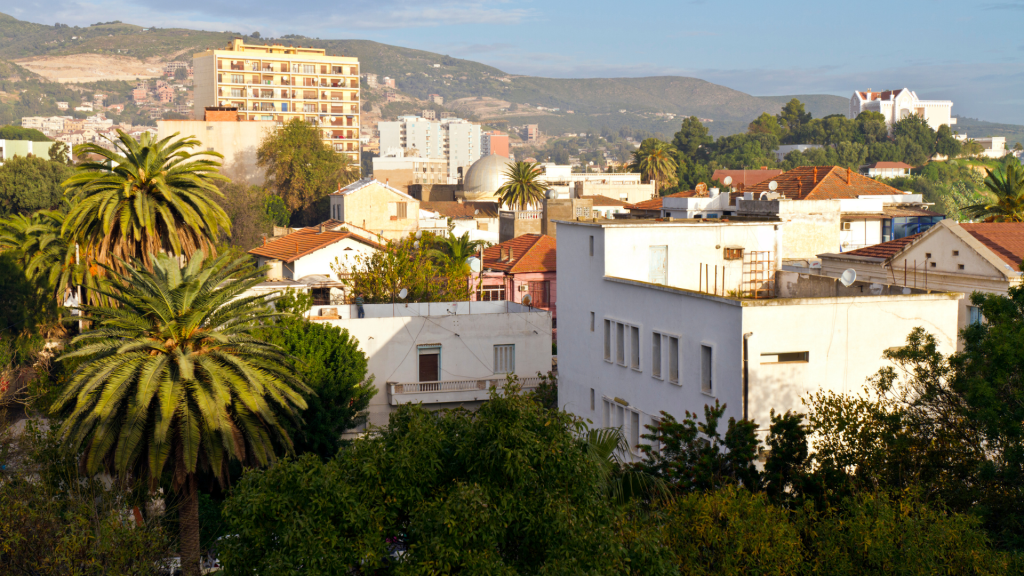

Planning an adventure across Algeria can feel incredibly daunting with its massive landscapes and complex regional logistics.
That is why our team at WildyNess created this guide to map out your journey seamlessly, ensuring you experience the true depth of local life with absolute confidence.
Table of Contents
- Navigating the Living History of the Algiers Casbah
- Discovering the Scale of North African Roman Archaeology
- Venturing Into the Sandstone Wilderness of Tassili n'Ajjer
- Traversing the Canyons and Bridges of Historic Constantine
- Establishing Practical Logistical Systems for Algerian Travel
- Master Key Protocols for Entry Requirements and Cultural Etiquette
Navigating the Living History of the Algiers Casbah
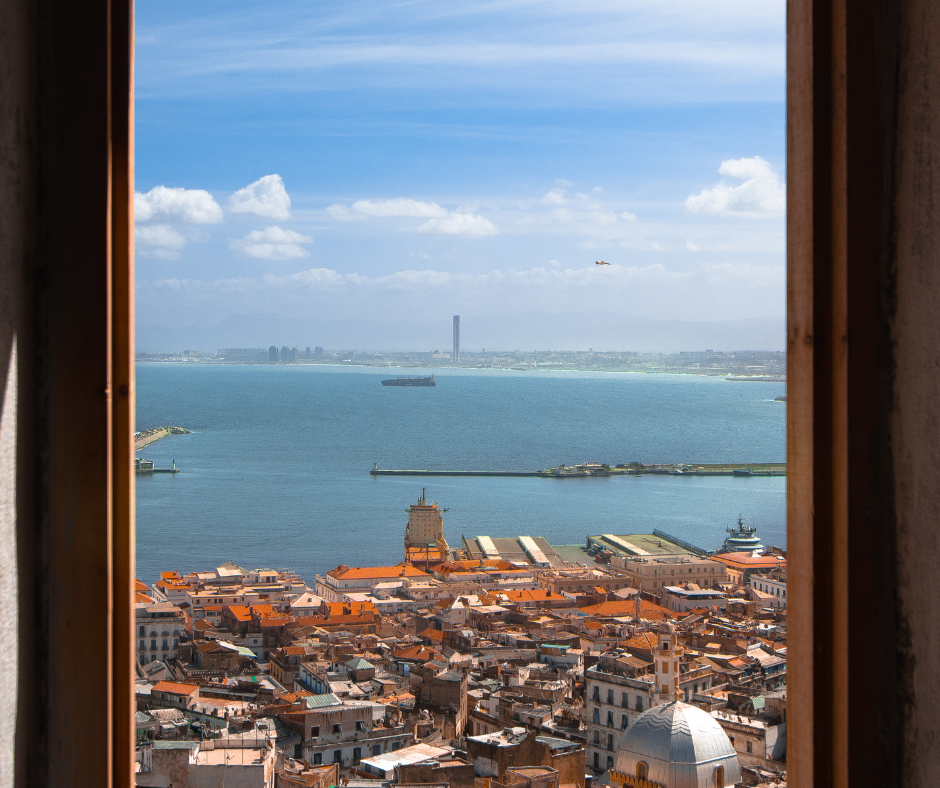
The Algiers Casbah stands as the historic capital medina and holds status as a protected UNESCO World Heritage Site. This dense urban labyrinth serves as an active, thriving residential neighborhood where ancient architectural traditions intersect with modern daily life.
Navigating the Historic Architecture and Neighborhood Districts
The physical architecture of the Casbah relies on a dense network of whitewashed houses that lean against one another for structural support across steep coastal slopes. As you walk through the upper and lower sectors, you will encounter heavy wooden doors accented with intricate iron knocker details that hide expansive interior courtyards.
The layout purposefully disorients outsiders, a design feature that historically protected the inhabitants from maritime invasions. To explore efficiently without exhausting yourself, we highly recommend taking a vehicle to the upper citadel gates, such as Bab El Jdid, and walking downward through the maze toward the sea.
This route reveals open communal spaces where neighborhood elders gather outside traditional bakeries and small fountain alcoves.
Practical Timings and Safety Precautions for Urban Exploration
Timing your exploration drastically changes your experience within these narrow corridors. The ideal hours to explore run from 9:00 to 11:00 in the morning, when the early sunlight illuminates the alleys and the temperature remains cool enough for comfortable walking.
While the late afternoon offers a softer light for viewing the architectural textures, you should avoid navigating the steep stairs during the peak heat of midday.
For safety, keep your primary navigation devices and personal items secure while moving through crowded market lanes. Engaging a local neighborhood guide is highly beneficial, as they provide access to private rooftops and ensure you navigate the complex layout respectfully without accidentally intruding on private family courtyards.
Savoring Authentic Medina Culinary Traditions and Street Food
An exploration of the Casbah is incomplete without dedicating time to its distinct culinary landscape. Traditional street food stalls line the lower markets near Place des Martyrs, where you can watch vendors fry fresh bourreks, which are thin sheets of pastry stuffed with egg, potato, and tuna.
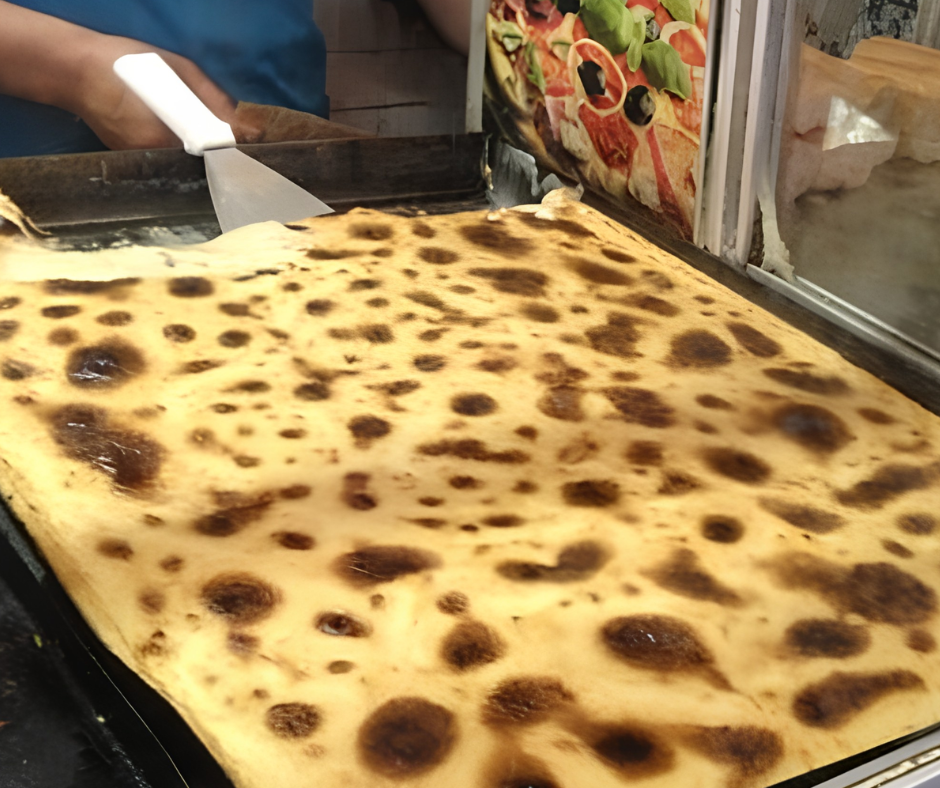
Another staple to try is garantita, a simple, comforting savory cake made from chickpea flour and served hot with a dusting of cumin. For a traditional pause during your trek, step into a neighborhood café to drink sweet mint tea paired with regional pastries.
Look for kalb el louz, a dense semolina cake soaked in honey and scented with orange blossom water, or crisp layers of nut-filled baklawa.
Discovering the Scale of North African Roman Archaeology
Algeria contains some of the most expansive and exceptionally well-preserved Roman archaeological sites in the entire Mediterranean basin. These ancient cities provide an unfiltered look into corporate Roman urban planning and imperial coastal life.
Exploring the Imperial Grid Systems and Monumental Structures of Timgad
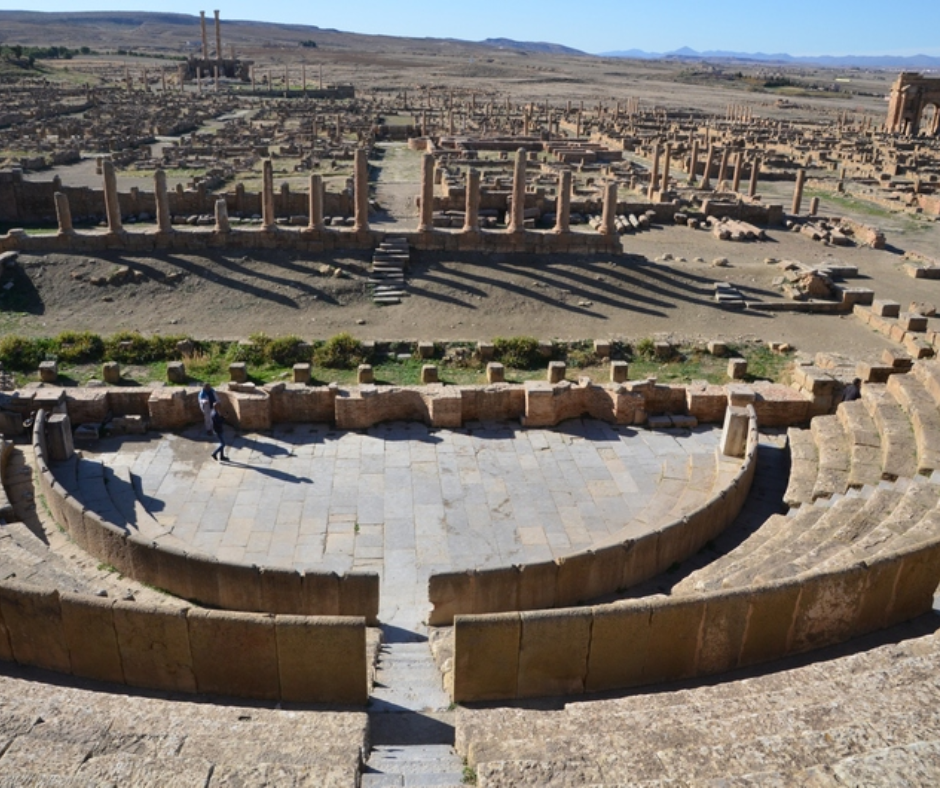
Located on the northern slopes of the Aurès Mountains, the ancient military colony of Timgad represents a flawless textbook design of Roman urban planning. Emperor Trajan founded the city around 100 AD specifically for veteran soldiers, laying out an exact square grid intersected by the Decumanus Maximus and the Cardo Maximus.
Walking down these original stone roadways, you can still see the deep grooves worn into the rock by ancient chariot wheels. The site features a massive twelve-meter-high triumphal arch, known as Trajan’s Arch, which stands firmly against the open landscape.
You can climb to the upper tiers of the restored theater to fully comprehend the massive scale of the public baths, the municipal library, and the central forum that once hosted thousands of Roman citizens.

Investigating the Coastal Ruins and Cultural Layers of Tipaza
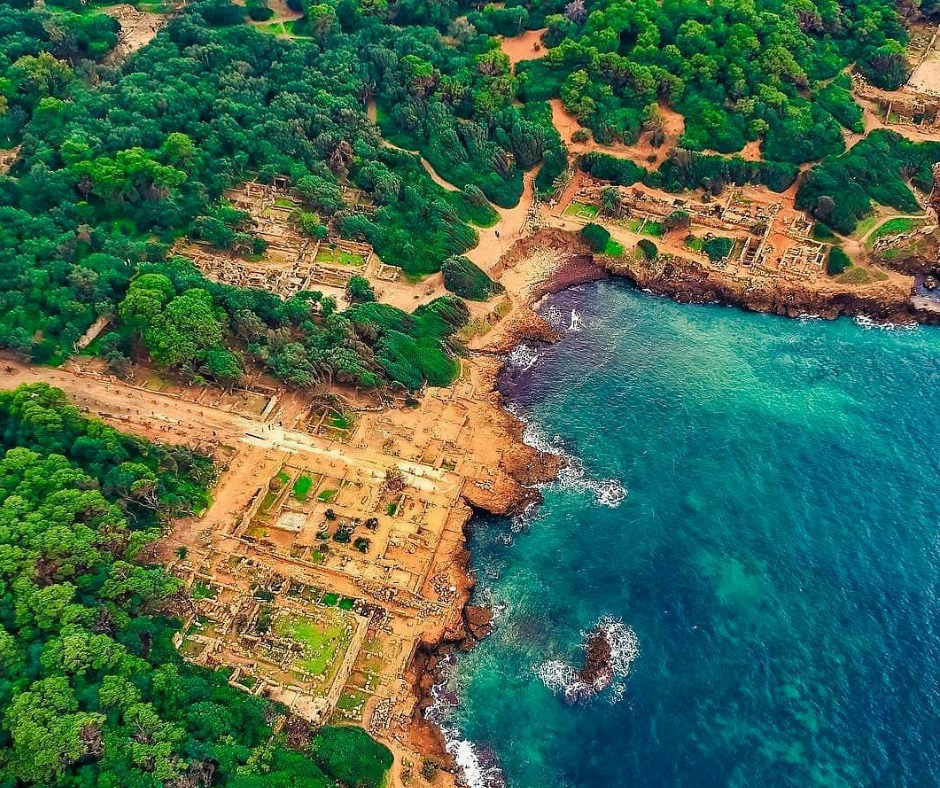
Tipaza offers a completely distinct archaeological experience by combining ancient ruins with a direct maritime setting just west of Algiers. The site preserves successive layers of Phoenician, Roman, Byzantine, and early Christian history directly on the Mediterranean shoreline.
You can wander beneath the shade of native pine and olive trees to explore the remains of the largest basilica in North Africa, which sits on a cliff overlooking the water. The surrounding park contains an ancient amphitheater, collective burial sites, and fragmented mosaic floors exposed to the sea air.
On the way to or from Tipaza, stop at the Royal Mausoleum of Mauretania. It's a massive circular tomb on a hill, visible from a distance, dating back to the Numidian Berber kings. Locals sometimes call it "Tombeau de la Chrétienne" because of a cross-like pattern on its false doors. It's older than anything else on this stretch of coast, and it connects you to a layer of Algerian history that predates Rome entirely.
This open-air setting requires visitors to pace themselves deliberately, allowing time to sit by the coastal cliffs where ancient columns lie partially submerged in the surf. For a wider look at these historical spaces, see our guide to famous landmarks in Algeria.
Climbing Through the Mountain Ruins of Djemila
Unlike the flat expanse of Timgad, Djemila, ancient Cuicul, was built directly into rugged mountain terrain near Sétif. Roman architects had to bend their usual grid rules to fit the slopes, which gives the site a layout unlike anywhere else in the country.
Don't skip the on-site museum. It holds massive, colorful mosaics lifted from the original floors and mounted on the walls for preservation, close enough that you can look straight into the faces of people who lived here eighteen centuries ago.
Visit in spring if you can, between March and May, when the surrounding hills turn green and fill with wildflowers against the grey stone columns.
Maximizing Your Archaeological Visits with Smart Logistics
To thoroughly appreciate both Timgad and Tipaza, your itinerary must account for regional transit and environmental exposure. Timgad sits in an exposed high-altitude plain, meaning it experiences intense sun during the day and sharp temperature drops in the afternoon.
You should base yourself in the nearby city of Batna or the historic city of Constantine, arranging an early morning private taxi to reach the ticket office right as it opens.
For Tipaza, a day trip from the capital is highly manageable via the coastal highway. Always pack high-factor sunscreen, a wide-brimmed hat, and significant water reserves, as these vast, exposed archaeological parks feature minimal shade and no modern commercial stalls within the ruins.
Venturing Into the Sandstone Wilderness of Tassili n'Ajjer
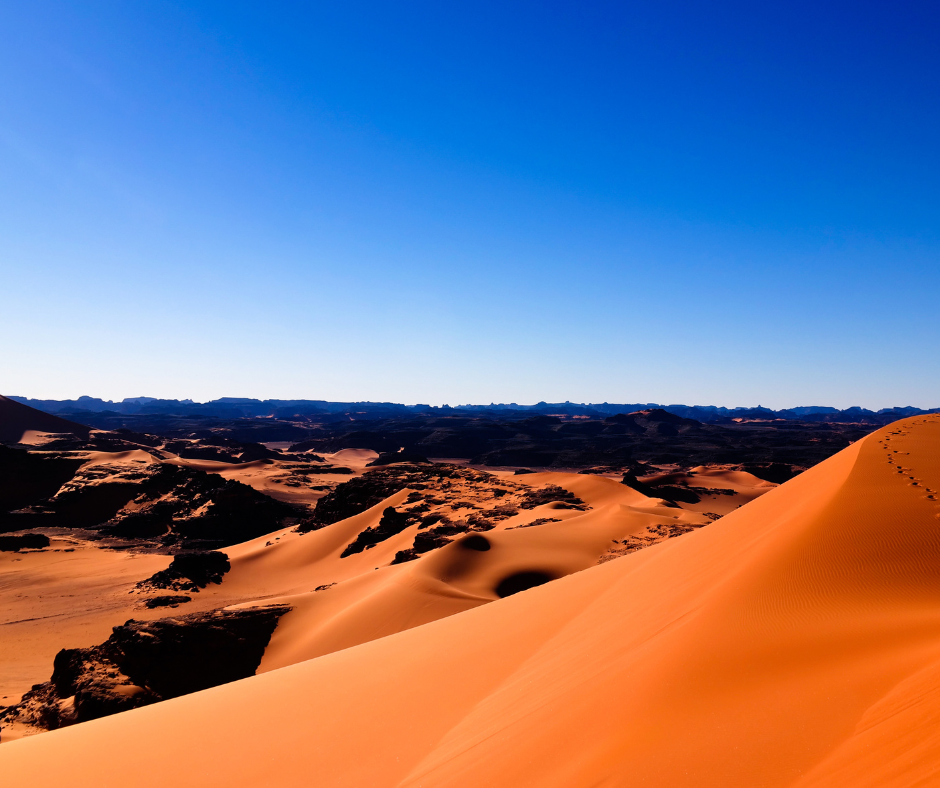
The deep southern territory of Algeria holds one of the most sublime desert landscapes on earth. This sector of the Sahara consists of a vast stone forest characterized by massive sandstone towers, deep dry canyons, and high plateaus alongside towering dune fields.
Planning Desert Expeditions Out of the Gateway Oasis of Djanet
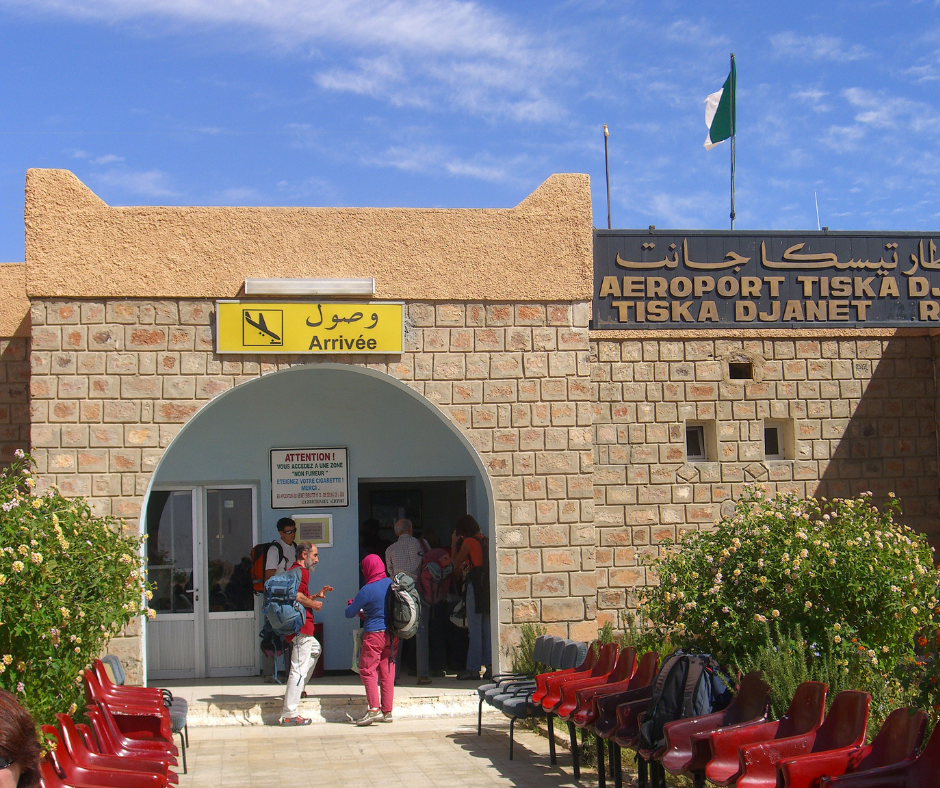
Every professional expedition into the heart of Tassili n'Ajjer requires utilizing the remote oasis town of Djanet as your primary operational base. Domestic flights from Algiers frequently arrive late at night, making it necessary to spend at least one day in town organizing your gear, verifying security permits, and securing local currency.
Travelers can take advantage of the specific regularization visa-on-arrival scheme for Southern Algeria, provided your trek is officially registered through an authorized local agency at least two weeks prior to landing.
Before leaving the oasis, ensure your support team has packed comprehensive medical kits, multi-day water rations, and emergency satellite communication devices, as standard cellular networks disappear entirely once you enter the canyons.
Securing Tuareg Guides for Safe Remote Navigation and Cultural Protocol
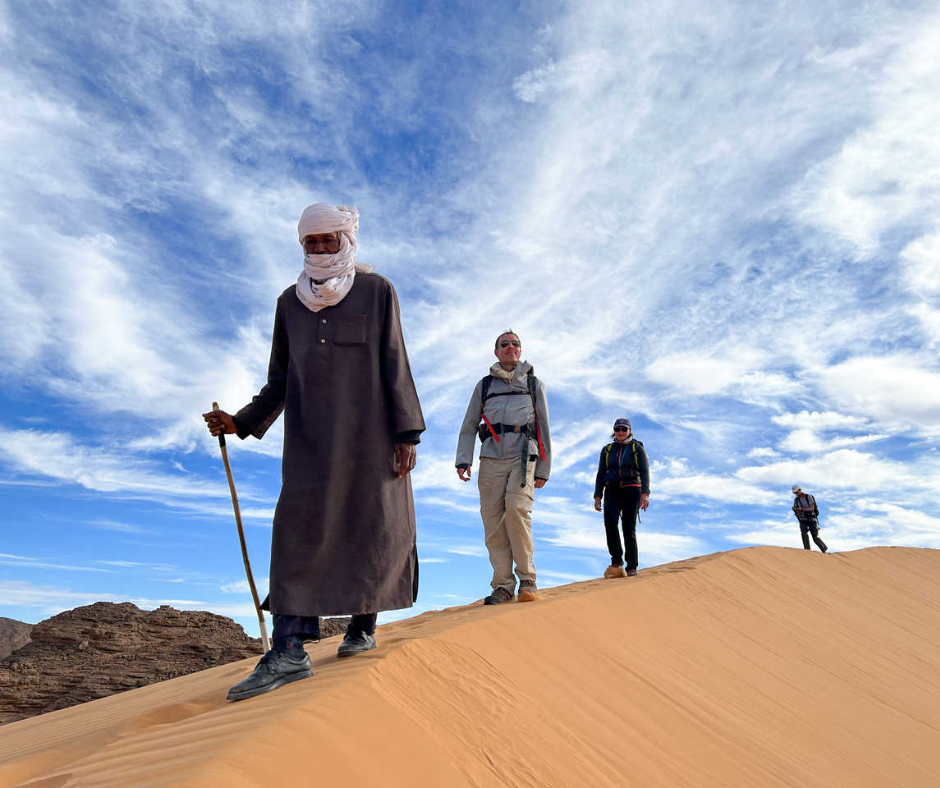
Traversing this terrain safely is impossible without the specialized knowledge of native Tuareg guides and drivers. The landscape features tracks that are easily erased by shifting winds, requiring navigational skills tied to specific rock landmarks and hidden water sources known as gueltas.
Your Tuareg support team manages the technical aspects of 4x4 transport and base camp setup, and they introduce you to essential desert protocols. This includes the traditional preparation of strong, frothy green tea over hot acacia embers, a ritual that serves as a cornerstone of Saharan hospitality.
Respecting your guides involves adhering to their pacing during treks, maintaining a modest dress code when interacting with families in local encampments, and always requesting permission before taking portraits.
Preserving Prehistoric Saharan Rock Art and Exploring Sefar
Tassili n'Ajjer operates as a massive open-air museum housing tens of thousands of prehistoric rock paintings and engravings that document a time when the Sahara was a lush, fertile savanna teeming with wildlife.
An expedition up the steep passes to the high plateau of Sefar reveals incredible depictions of human figures, elephants, giraffes, and ancient cattle herds dating back more than eight thousand years. Preservation of these delicate cultural artifacts is a critical responsibility for every traveler.
You must strictly avoid touching the rock surfaces, as the natural oils on human hands accelerate the degradation of the ancient pigments. Never spray water on the paintings to make them appear clearer for photographs, and keep your trekking poles far away from the shelter walls to prevent accidental chipping.
Traversing the Canyons and Bridges of Historic Constantine
Known globally as the City of Bridges, Constantine sits dramatically atop a massive limestone plateau split in two by the sheer drop of the Rhumel Gorge. The urban landscape relies entirely on a network of historic engineering feats to connect its distinct neighborhoods.
Walking the Famous Suspended Structures of Sidi M'Cid and Bab El-Kantara
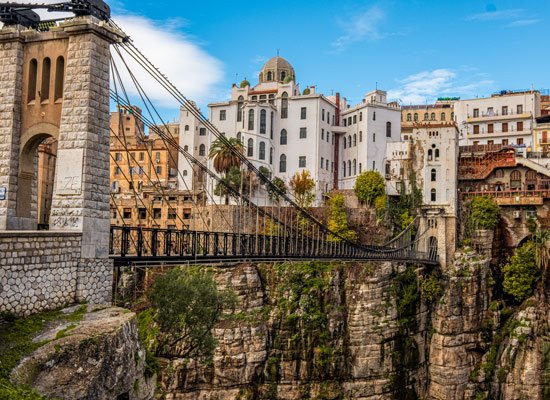
The most iconic structure in the city is the Sidi M'Cid Suspension Bridge, which hangs at a spectacular height of 175 meters above the rushing river bed. Walking across this pedestrian-friendly span in the early morning offers an unmatched perspective of the sheer rock cliffs, though you should be prepared for the gentle, natural sway of the cables when the valley winds pick up.
Further down the gorge, the Bab El-Kantara Bridge showcases a compelling structural history. It began as an ancient Roman foundation, was heavily modified with stone arches during the Ottoman period, and was ultimately upgraded with a massive French iron arch during the nineteenth century.
Walking across it provides a tangible lesson in how successive empires solved the challenge of this extreme terrain.

Visiting the Emir Abdelkader Mosque
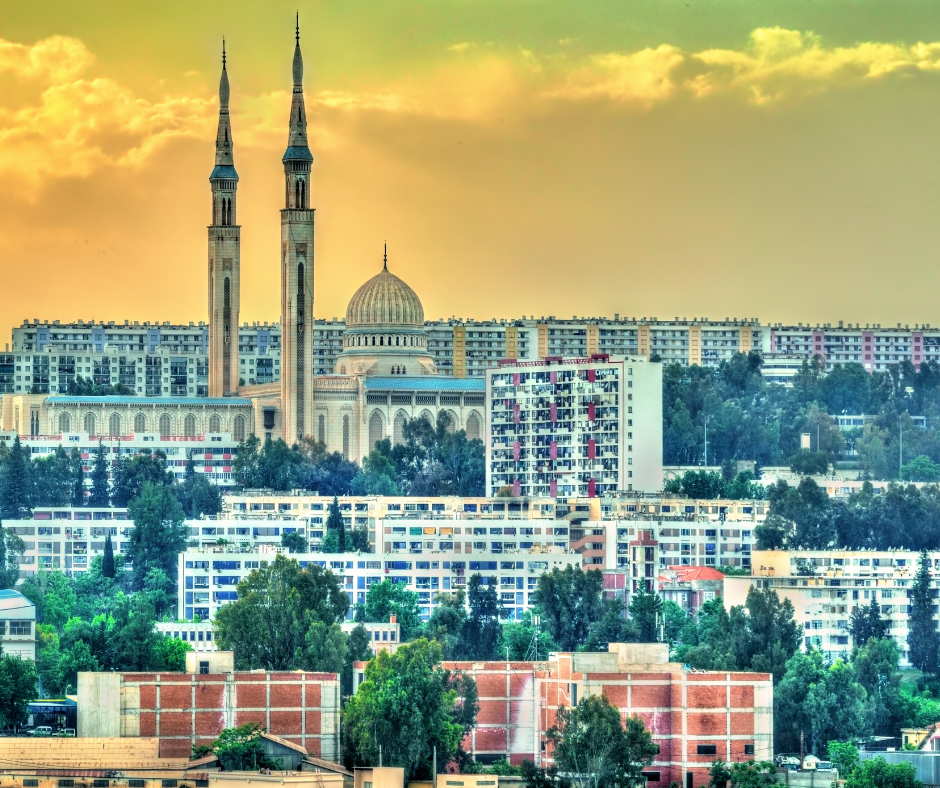
Away from the bridges, the Emir Abdelkader Mosque is worth the detour. It's one of the largest mosques in the world, with towering minarets and calligraphy work that rewards a slow look.
It's an active place of worship, so plan your visit outside prayer times and dress respectfully. Headscarves are usually provided at the entrance for women who need one.
Accessing the Pedestrian Pathways of Mellah Slimane and Sidi Rached
For an intimate look at the daily foot traffic of the local population, you should cross the slender Mellah Slimane Bridge, an exceptional pedestrian suspension walkway that connects the modern train station district directly with the winding alleys of the historic medina.
The bridge can be accessed via an urban elevator system that drops you straight onto the walkway level, framing excellent views of the old city walls. For a contrast in scale, visit the massive Sidi Rached Bridge. The Sidi Rached Bridge utilizes twenty-seven stone arches across its length of 447 meters to link the central district with the main railway station.
Watching the local traffic flow smoothly across this monumental stone viaduct highlights how these historic structures remain completely vital to the daily survival of the city. You can access the complete plan for this region through our guide on things to do in Constantine.
Tracking Panoramic Perspectives and Exploring the Monument aux Morts
To capture the true geographic context of Constantine, you should hike up to the Monument aux Morts, a classic triumphal arch built on a cliff edge to honor the soldiers of the First World War.
This vantage point delivers a complete panoramic view of the entire canyon system, allowing you to trace the path of every single bridge as they span the deep limestone split. For a deeper historical adventure, you can hire an official local guide to lead you down the historic tourist path cut directly into the rock face beneath the bridges.
This trail takes you safely through hidden tunnels and stone staircases carved right into the cliff side, providing a dramatic view of the architecture soaring directly above your head.
Experiencing the Radiant City of Oran
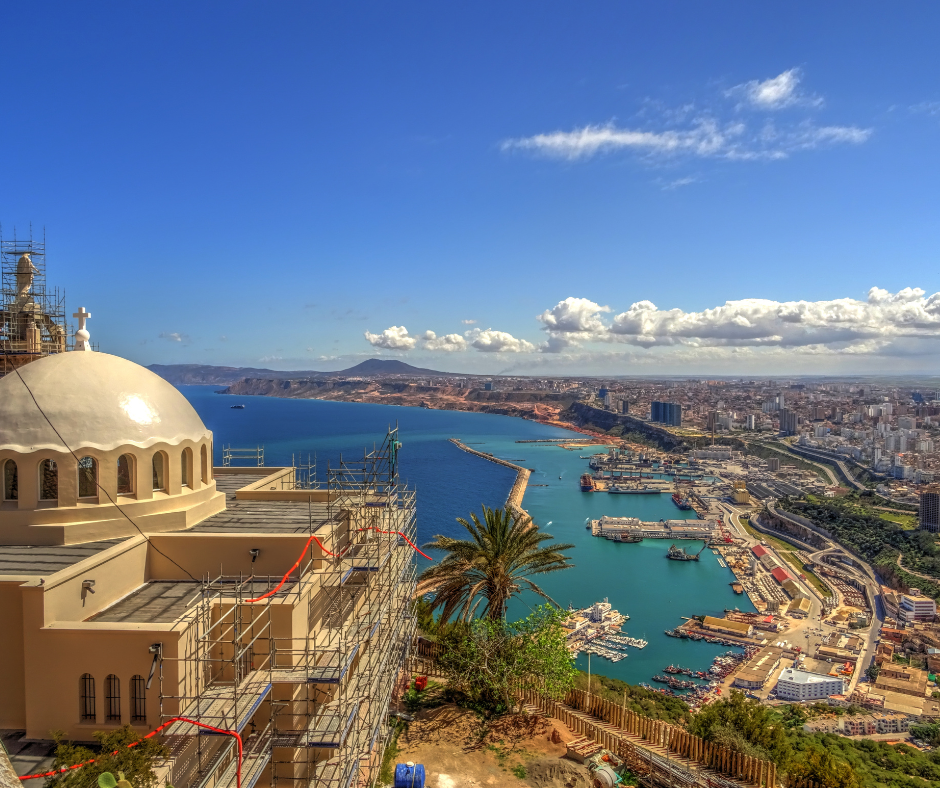
Oran carries a different rhythm than Algiers or Constantine, shaped by a strong Spanish influence layered over its Algerian roots. This is also the birthplace of Raï music, and you'll hear it drifting out of cafés before you've even settled in.
For the clearest view of the city, climb up to Fort Santa Cruz on the Pic d'Aidour. The Spanish built it in the 16th century, and the Chapel of Santa Cruz stands right beside it. The climb up is steep, so we recommend a taxi to the top and walking back down if you've got the energy for it.
Before you leave, track down a Karentika, a chickpea-flour flan served hot inside a baguette with a dash of cumin and harissa. Grab one near Place du 1er Novembre to eat exactly the way locals do.
Entering the M'Zab Valley
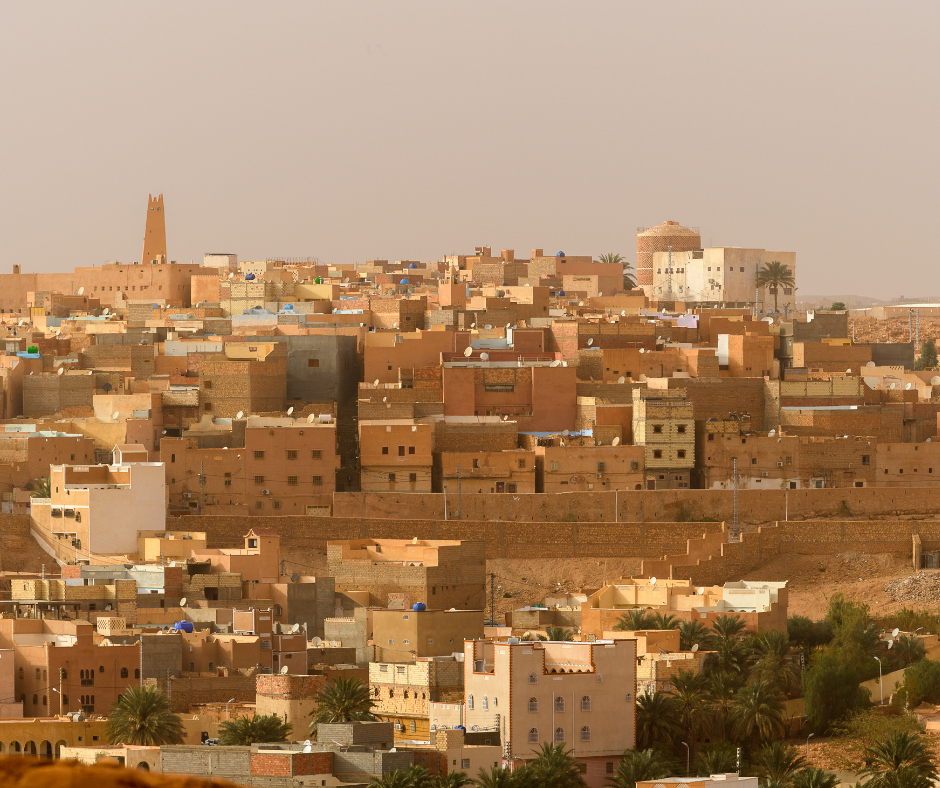
Head south from the coast and you'll reach the M'Zab Valley, five fortified cities built by the Mozabites in the 11th century. From above, it looks almost like a cubist painting brought to life.
This is a deeply religious, conservative Ibadi Muslim community, and tourism here is tightly regulated to protect that way of life. You cannot enter the old walled cities without a local guide. That's not a suggestion, it's a rule.
Photography is restricted too, especially of people, and your guide will tell you exactly where a camera is welcome. Respect those boundaries and you'll be let into a place that has barely changed in a thousand years.
Establishing Practical Logistical Systems for Algerian Travel
Executing a successful journey across these diverse regions requires moving past generic travel advice and implementing concrete daily habits that match local infrastructure.
Executing Cash Exchanges and Managing Local Financial Transactions
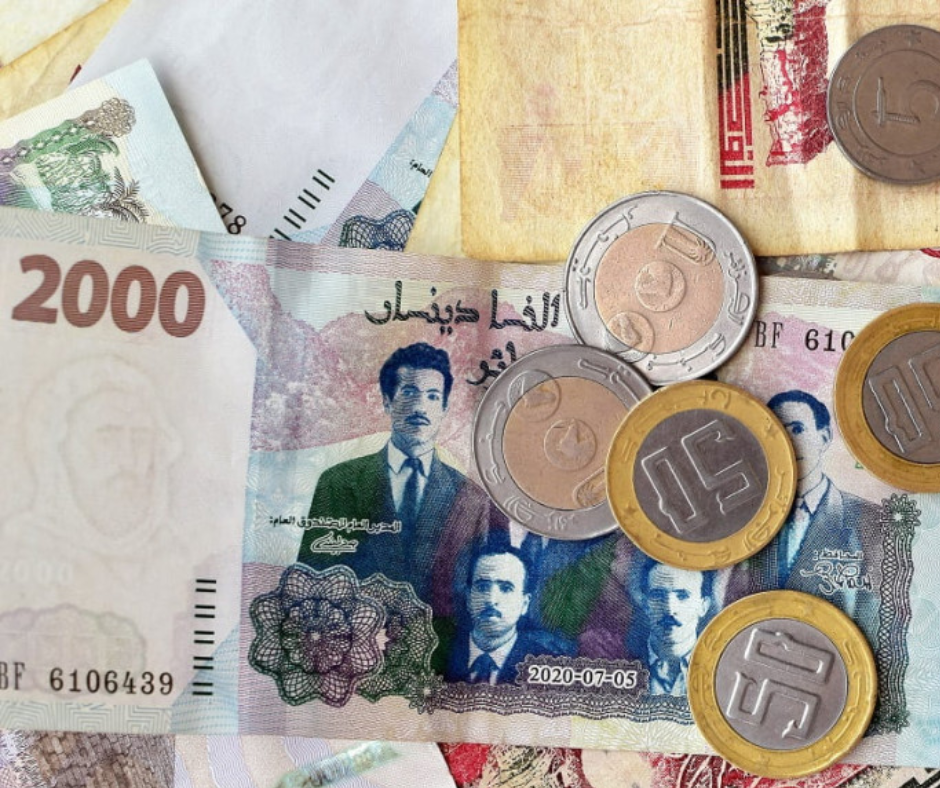
The economy of the country functions almost exclusively on physical cash transactions, meaning you must develop a systematic approach to money management from the moment you land. International credit cards are virtually useless in regional markets, smaller guesthouses, and rural transport hubs.
You should bring clean, untorn Euro or US Dollar banknotes to exchange at authorized bank desks inside the international airports of Algiers or Oran. Always store your cash reserves in secure, internal travel pouches rather than external pockets.
When exploring local markets, ensure you carry smaller denominations of the Algerian Dinar, as independent taxi drivers and street food vendors rarely carry substantial change for large banknotes. To help map out your baseline budget, you can review our practical breakdown within the article asking is Algeria cheap.
Selecting Mobile Connectivity Options and Packing for Extreme Weather Variations
Maintaining reliable communication is essential for checking regional transit schedules and staying in touch with your local guides. You should purchase a local prepaid SIM card from providers like Mobilis or Djezzy at the airport terminal immediately after clearing customs. These networks offer affordable data packages that provide consistent coverage across major highways and urban centers.
Once you have data, download Yassir, Algeria's answer to Uber. It works well in Algiers, Oran, and Constantine, with fixed pricing that sidesteps any language barrier with drivers.
Your physical gear list must account for intense geographic and climate variations. If your itinerary moves from the breezy Mediterranean coastline to the high altitude of Constantine or the deep Saharan plateaus, you will experience sudden temperature drops as soon as the sun sets.
Pack high-quality, breathable linen layers for daytime exploration alongside a heavy fleece jacket for cold desert nights. A durable, tightly woven cotton scarf is an absolute necessity to protect your face and camera gear from sudden windborne dust storms during remote expeditions. For specific insights into selecting sun protection and wind gear, you can cross-reference our guide on what to pack for Tunisia to mirror those identical desert climate demands.
Master Key Protocols for Entry Requirements and Cultural Etiquette
Understanding regulatory frameworks and social expectations prevents friction with local border officials and ensures harmonious interactions within traditional neighborhoods.
Navigating Formal Visa Applications and Safety Guidelines
Securing your formal entry permissions requires a methodical approach well in advance of your flight. Most international travelers must apply for a standard tourist visa through their nearest Algerian consulate, a process that demands submitting a verified hotel confirmation, an official certificate of accommodation, or a formal letter of invitation from a registered domestic tour agency.
The country is exceptionally welcoming, though it operates on a distinct local rhythm that requires flexibility. Security infrastructure is visible and robust across all major northern municipalities, which keeps urban exploration safe.
When heading into deep rural territories, use reputable transportation networks, keep your primary identification documents accessible for routine municipal checkpoints, and completely avoid unguided transit near the remote border zones of Mali, Niger, or Mauritania.
For a thorough analytical breakdown of modern travel conditions, keep our guide covering whether Algeria is safe bookmarked for your trip.
Adhering to Regional Social Values and Behavioral Standards
Daily life across both urban and rural communities is deeply anchored in traditional Islamic values, which sets a clear baseline for appropriate public behavior. Travelers should prioritize covering both their shoulders and knees by opting for loose, breathable trousers and long-sleeved shirts, especially when visiting interior regions or moving through conservative market districts.
Public displays of affection are highly inappropriate and should be avoided entirely to respect local sensibilities. Always ask for explicit verbal consent before taking photographs of residents, and keep in mind that Friday serves as the primary day of communal prayer.
This religious scheduling means that small shops, municipal offices, and local museums frequently adjust their opening hours or close entirely during the afternoon, requiring you to plan your transit and dining options with extra foresight.
If you have any further questions about coordinating your logistics, please do not hesitate to contact us directly. All you have to do is send a direct message to our operations office, and we will plan your personalized itinerary together.


