

Three days in Algeria is enough for Algiers and the Roman ruins at Tipaza, and that is where this itinerary stays: one day in the Casbah and the French-built center, one on the coast west of the city, and one on the hills and landmarks around the bay.
The Sahara is a flight away and needs a trip of its own. What follows is the plan we would give a first-time visitor, with the visa, money and transport details that catch people out.
The plan, day by day
| Slot | What you see, and how you get there |
|---|---|
| Day 1, morning | The Casbah from top to bottom with a local guide: taxi to the Citadel, then downhill on foot (3 to 4 hours) |
| Day 1, afternoon and evening | Rue Didouche Mourad and the Grande Poste (outside only) by metro, then Maqam Echahid at sunset by Yassir or the El Hamma cable car |
| Day 2 | Tipaza ruins, lunch at the port and the Royal Mausoleum, by ETUSA bus or a driver, about 1.5 hours each way |
| Day 3, morning | Jardin d'Essai (about 150 to 200 DZD) and the Museum of Fine Arts, by metro |
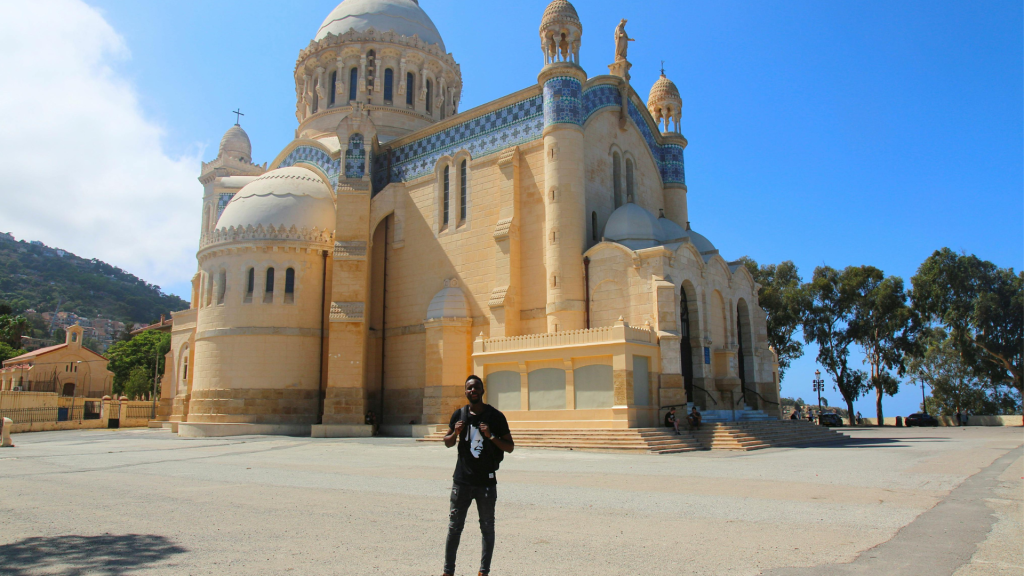
| Day 3, afternoon | Notre-Dame d'Afrique, then the Djamaa El Djazaïr esplanade by taxi on the way to the airport |
Planning Your 72-Hour Trip
Three days won't stretch to both the Sahara and the coast, so base yourself in Algiers. From there the Ottoman Casbah, the colonial center, the post-independence monuments and the Roman sites at Tipaza are all within a day's reach, and you don't lose half the trip to domestic flights. If you can stretch the trip, here is how to spend 10 days in Algeria, with Constantine, the Roman cities of the east and the M'Zab Valley added to the route.
Sort out the visa first. Expect to need a tourist visa from an Algerian consulate before you fly: that goes for most nationalities, UK, EU, US and Canadian citizens included.
There is no e-visa (October 2026), and the visa on arrival is only for organized tours to the southern wilayas, so it won't cover a city break in Algiers. Consulates ask for a hotel booking or an invitation from an Algerian travel agency, and the London consulate quotes about 10 working days, longer in summer and around Ramadan. Carry printed copies of the visa, your hotel bookings and your insurance as well as the versions on your phone, and keep your passport on you: hotels need it at check-in.
Documents, fees and the southern exception are set out in Algeria Visa: Requirements and Visa on Arrival.
This itinerary runs on cash: street food, taxis, the Tipaza ticket and most restaurants won't take cards, and because cards and ATMs give the official rate (about 150 DZD to the euro, autumn 2026) against about 275 at Square Port Saïd, it pays to bring euros or dollars and change them through your guide or host. Our main guide to Algeria explains how that informal market works and what the EUR 1,000 customs declaration means for you.
Algiers is conservative by Mediterranean standards. Pack clothes that cover your shoulders and knees. Women should bring a light scarf: it keeps the sun off at Tipaza and covers your hair if you go into a mosque or the Great Mosque complex on day three. For the rest of the bag, see What to Wear in Algeria.
Day 1: The Casbah and Colonial Algiers
The Casbah
Spend the first morning in the Casbah, the Ottoman old town on the hill, which UNESCO listed in 1992. Its lanes twist, climb and dead-end, and a map app is not much help here. Start at the top near the Citadel and walk downhill toward the sea, which saves your legs for the stairs. If your first day is a Friday, go early: most shops close around the midday prayer.

On the way down, restored Ottoman palaces sit a few lanes away from houses held up by scaffolding. People live here, so expect kids playing in doorways and bread coming out of neighborhood ovens. Hire a local guide for this part: without one you will spend half the morning at dead ends.
If you prefer a set program, a lot of the best Algeria tours and day trips from the capital include a guided walk through the Casbah. A guide can also get you into the courtyards of traditional houses that look plain from the lane, and knows which stretches are closed for restoration.
What to see inside the Casbah
Walk it in this order, from the top down to the sea. Opening hours change and several houses are under restoration, so let your guide check what is open that week.
- The Citadel (Dar Soltane): the Ottoman fortress at the top, built between 1516 and 1592. It has been under a long restoration.
- Ali la Pointe's house, 5 Rue des Abderrames: blown up by French paratroopers on 8 October 1957, during the Battle of Algiers, with the resistance fighters hiding inside. The ruined house is kept as a memorial.
- Dar Mustapha Pacha: a palace built in 1798 and 1799, now the National Museum of Miniatures, Illumination and Calligraphy.
- Ketchaoua Mosque and Dar Aziza, on Place Ben Badis in the lower Casbah: the mosque dates from 1612 and reopened in 2018 after restoration. Dar Aziza, a 16th-century palace opposite, now houses the national office for cultural property, so you may only see it from outside.
- The Palace of the Rais (Bastion 23): three Ottoman palaces and six fishermen's houses on the seafront, restored and opened in 1994 as an arts and culture center.
Lunch
For lunch, stay in the lower Casbah or walk to Place des Martyrs, where small places serve grilled sardines and bowls of chorba frik, a soup of cracked green wheat, tomato and lamb. It is cheap and filling, and it is the soup most Algerian families break the fast with in Ramadan. For more ideas, see Algerian Street Food: What to Eat and Where and our page on where to eat couscous in Algeria.
The French-built center
After lunch, trade the old town's lanes for the boulevards the French laid out. Walk Rue Didouche Mourad, lined with white Haussmann-style apartment blocks, part of the reason the city is called Alger la Blanche. Finish at the Grande Poste, the neo-Moorish post office opened in 1913. Its interior has been closed for restoration since 2019, so for now you see it from the outside.
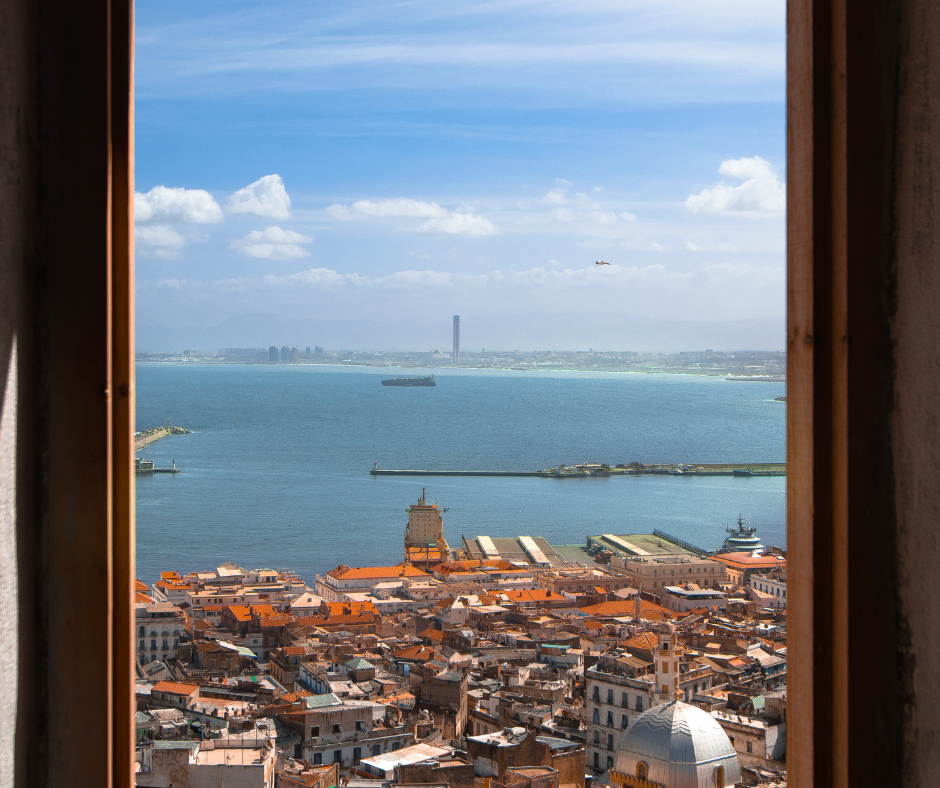
End the day at the Maqam Echahid (Martyrs' Memorial), the 92 m concrete monument to the War of Independence, inaugurated on 5 July 1982, with the Mujahid museum underneath. It stands on the hill above El Hamma and looks out over the whole bay. Get there about an hour before sunset to watch the lights come on. Use Yassir, the Algerian ride-hailing app (Uber does not operate in Algeria): the fare is shown before you get in, and booking a ride back to your hotel is easy.
Day 2: Tipaza's Roman Ruins and the Coast
Tipaza
On day two, head to Tipaza, about 70 km west of Algiers. The site has three layers: a Punic trading post first, then a Roman colony and base for Rome's hold on Mauretania, and later a sizable Christian town with basilicas of its own. The ruins run right down to the rocks at the water's edge. UNESCO listed them in 1982, along with the Royal Mausoleum you pass on the way back.
The easy option is a private driver for the day. The cheap one is the bus: ETUSA runs a direct line from its Tafourah station in central Algiers to Tipaza, and buses also leave from the Caroubier bus station. Allow about an hour and a half each way with stops.
Shared taxis (taxis collectifs) are the other budget choice and leave when every seat is taken. Anyone backpacking Algeria on a tight budget ends up in shared taxis and buses for most trips between cities.
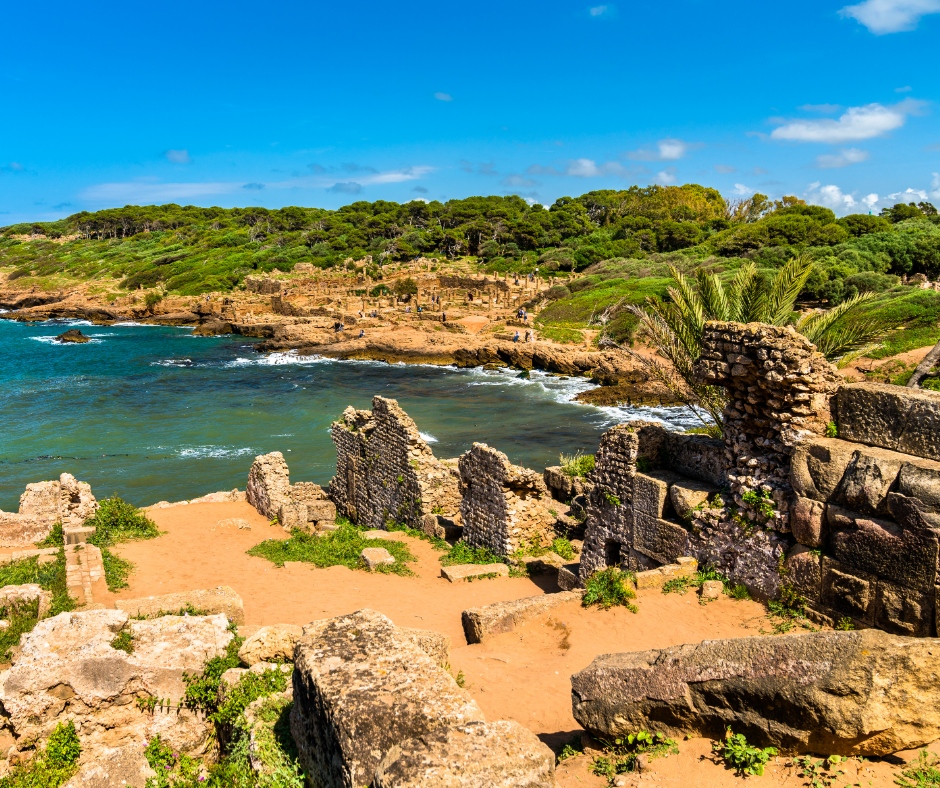
Give the archaeological park at least three hours. The main remains are the Great Basilica, the amphitheater, the theater and the baths, spread through pines and olive trees rather than a bare dig, with wildflowers in spring. Walk down to the shore, where foundations and cut stone run out onto the rocks, and look for the stele to Albert Camus, who wrote about the place in his essay "Noces à Tipasa".
Entry costs a couple of hundred dinars at most. The park has been reported open daily from 9 am to 8 pm between April and October and until 5 pm in winter, so sunset only works in the warmer months. Couples planning a romantic trip to Algeria can bring a picnic and stay until closing.
Next to the ruins, the modern town of Tipaza has a small fishing port lined with seafood restaurants. Pick your fish from the day's catch and have it grilled. Order maakouda on the side: fried potato patties with garlic and parsley.
Kbor er-Roumia on the drive back
Break the return journey at the Royal Mausoleum of Mauretania, which people here call Kbor er-Roumia. The round stone tomb stands on a base about 60 m wide and is now about 32 m high. It is traditionally linked to King Juba II and Queen Cleopatra Selene, though historians still argue over its date and builders. It sits on a hill above the Mitidja plain, and it belongs to the Mauretanian kings rather than to Rome.
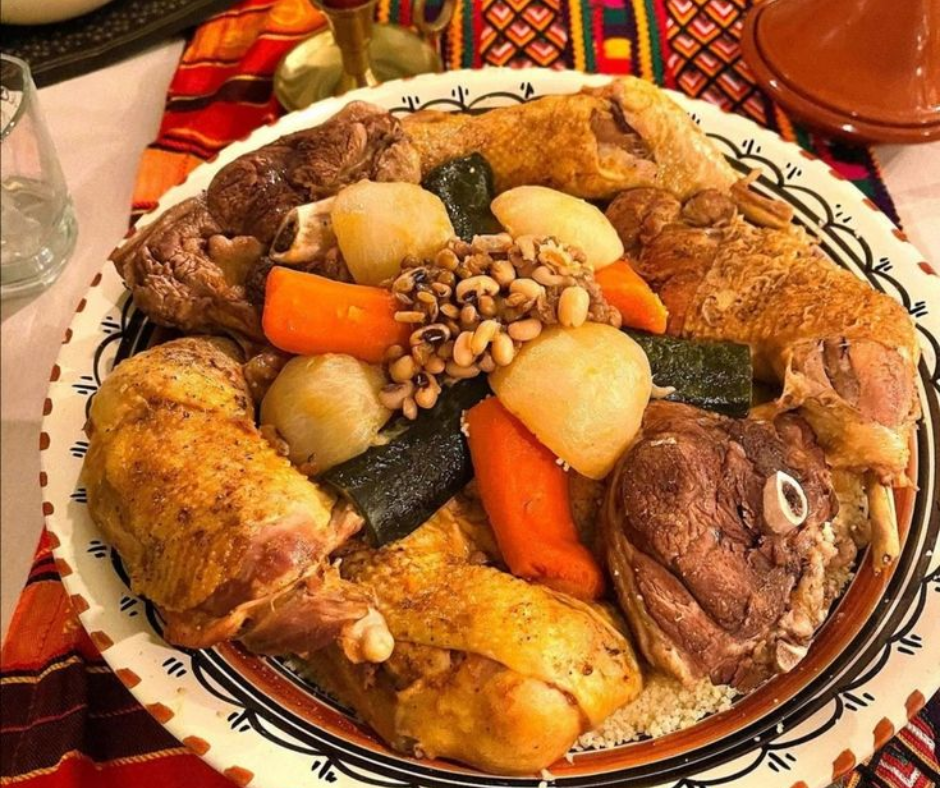
Back in Algiers, have couscous for dinner. Algerian couscous is usually savory, served with lamb or chicken in a red tomato sauce or a white one, with chickpeas and vegetables such as zucchini and turnip. Algeria inscribed it on UNESCO's intangible heritage list in 2020, jointly with Morocco, Tunisia and Mauritania. Ask your hotel for a family-run restaurant nearby.
Day 3: Jardin d'Essai, Notre-Dame d'Afrique and the Great Mosque
Jardin d'Essai du Hamma
Start the last day at the Jardin d'Essai du Hamma, a botanical garden founded in 1832 that covers about 32 hectares. It has a formal French garden and a looser English one, long alleys of palms and some huge ficus trees, and a small entry fee (about 150-200 DZD).
Mornings are quiet. Families love it too, and it is one of the easy breaks we kept in our 10-day family itinerary in Algeria. Metro Line 1 stops at Jardin d'Essai station, right by the gate.
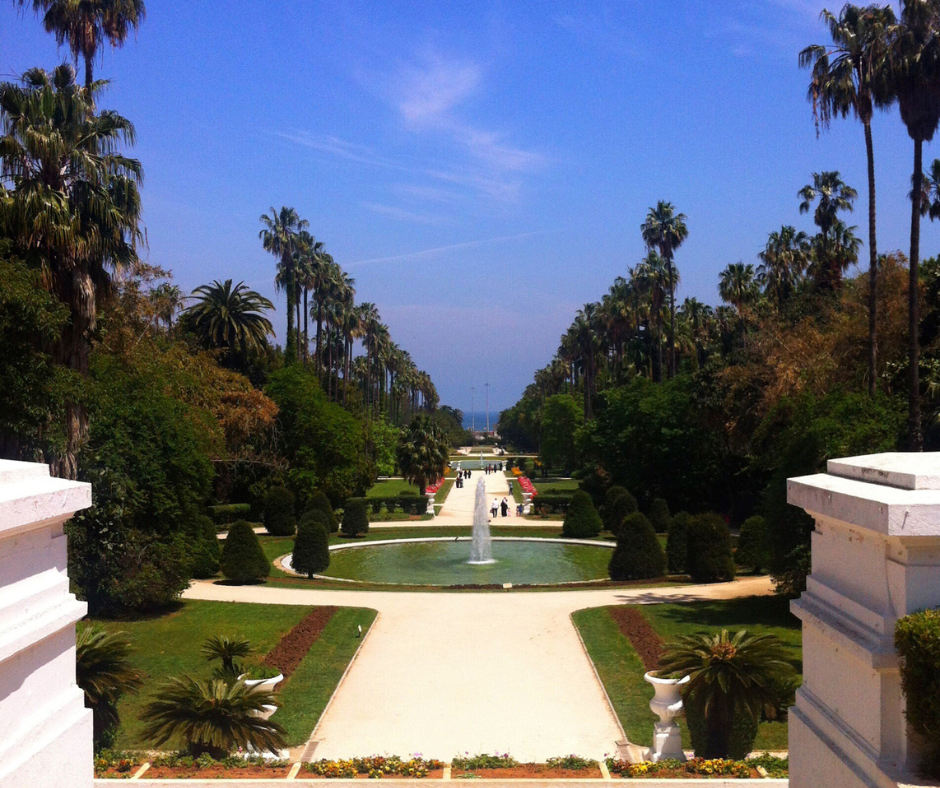
Exit 2 of the same metro station leads up to the National Museum of Fine Arts, at the top of the garden. Even on a short visit, the view from the museum down the garden's central alley to the sea is one of the best photos in the city. The cable car from the garden goes the other way, up to the Maqam Echahid, if you skipped it on day one.
Rainy-day swap: the Bardo and the Museum of Antiquities
If it rains, swap the garden for two museums. The Bardo, a late-18th-century Ottoman-era villa, holds Algeria's prehistory and ethnography collections, including finds from the tomb of Tin Hinan in the Hoggar. The National Museum of Antiquities covers Roman and Islamic Algeria, with mosaics and sculpture that make Tipaza easier to read, and charges 200 DZD.
Final Afternoon in Algiers
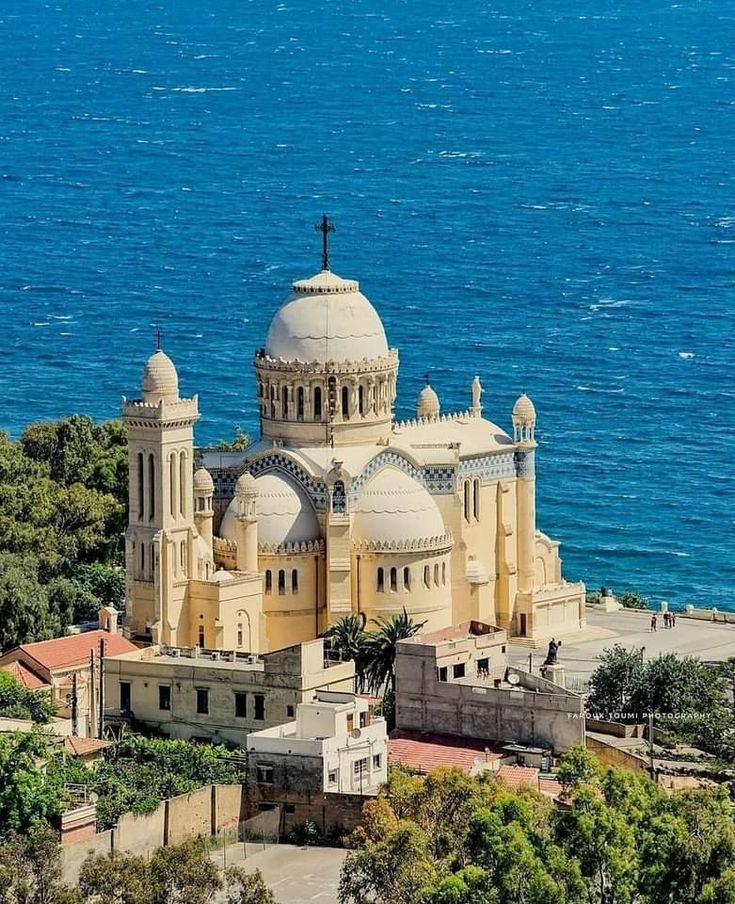
After lunch, go to the Basilica of Notre-Dame d'Afrique, a neo-Byzantine church consecrated in 1872 on a clifftop above Bologhine, at the western end of the bay. Inside are mosaics, hundreds of ex-voto plaques, a dark bronze Virgin and the famous inscription "Notre-Dame d'Afrique, priez pour nous et pour les musulmans" (Our Lady of Africa, pray for us and for the Muslims). Getting up there means a taxi or a Yassir to the door: the old Bologhine cable car has been out of service for years, and walking up is long and steep.
Finish at the Great Mosque of Algiers, Djamaa El Djazaïr, which sits in Mohammadia on the airport side of town. No minaret in the world is taller than its 265 m tower. The prayer hall holds about 37,000 people and the whole complex up to 120,000; it was officially inaugurated in February 2024.
The esplanade is public and fills with families in the late afternoon. Guided visits to parts of the complex, including the museum and the viewing platform in the minaret, have been offered, but times and booking rules change, so ask your guide or hotel the day before. Cover your arms and legs, and women should cover their hair.
Before the airport, stop at a patisserie for kalb el louz ("heart of almond"), a semolina cake made with almonds and orange-blossom water and soaked in syrup. It is an Algiers specialty and a Ramadan favorite, so outside Ramadan not every shop has it. It goes well with a coffee or a glass of mint tea.
Where to stay in Algiers for 3 days
The center, around Rue Didouche Mourad and the Grande Poste, is the most practical base for this plan. You can walk to the lower Casbah and the metro. Hydra and El Biar, on the hills above, are quieter, greener residential districts, but you will need a taxi for almost everything.
Expect to pay more for a room here than elsewhere in Algeria, where a budget room runs 4,000 to 7,000 DZD; the international hotels charge international prices. Book ahead for July and August and around the two Eids, and keep your passport ready: hotels register every guest at check-in.
Other ways to spend 3 days in Algeria
- Constantine, Djemila and Timgad: fly from Algiers or take the Coradia (about 6 h 45 to 7 h 30, three trains a week). Spend a day on the bridges over the Rhumel gorge, then day trips to Djemila (about 110 km) and Timgad (about 120 km), both UNESCO-listed Roman towns.
- Ghardaïa and the M'Zab Valley: about 600 km south of Algiers, by coach or a short flight. Two days cover the five ksour. Beni Isguen only lets visitors in with a local guide, whom you hire at its gate, and residents don't accept being photographed.
- Djanet and the Tassili n'Ajjer: about 2 h 15 by air from Algiers, but in the deep south you travel with a licensed agency, which also arranges the guide and permits. Three days give you the Erg Admer dunes and the nearest rock art; the plateau itself needs a week. Since this is the deep south, read the official travel advice for the route and confirm your insurance covers it before you pay for anything.
Phones, transport, safety and language in Algiers
A local SIM is easy to get at the airport or any phone shop in town, as long as you have your passport to register it. Mobilis, Djezzy and Ooredoo are the three operators. Data bundles cost about 1,000-1,500 DZD for 10-50 GB over 30 days (2026 prices), roughly EUR 3.60-5.50 at the informal rate or EUR 6.60-10 at the official one. Yassir works best with a local number, and you will want maps on the Casbah's hills.
Inside Algiers, the metro (a single line) costs 50 DZD a ride and the tram 40 DZD, a flat fare since May 2026. Neither climbs into the hilly neighborhoods, so taxis and Yassir do most of the work.
With a street taxi, agree the price before the car moves. Coming in from the airport, the cheapest rides are the SNTF train to Agha (80 DZD, about 20-25 minutes, roughly hourly) and ETUSA bus 100 to Place des Martyrs (50 DZD); the metro hasn't been extended that far yet, and a taxi to the center runs about 1,500-2,500 DZD.
First-time visitors often tell us Algiers felt friendlier and easier-going than they had expected from what they read online. You will notice a visible police presence, with officers on the main squares and checkpoints on the roads into the city, which is a normal part of daily life here. Pickpockets work the crowded parts of the Casbah, the markets and public transport, so keep your phone and wallet in a front pocket or a cross-body bag.
French is widely spoken in Algiers, although Arabic and Tamazight are the only official languages. English is more common among younger people and in tourism. A few words of Algerian Arabic help: "salam" for hello and "saha" for thank you.
Packing and Preparation Checklist
For three days a carry-on is enough, and it saves waiting at the baggage belt at Houari Boumediene. Pack:
- High-SPF sunscreen and a wide-brimmed hat. The Mediterranean sun is strong in spring and autumn too.
- Walking shoes with good grip, because the Casbah steps and the Tipaza paving get slippery and uneven.
- A modest outfit for the Great Mosque and Notre-Dame d'Afrique: long trousers or a long skirt and a top that covers the elbows, plus a scarf for women.
- Basic stomach medicine, in case the change in food upsets you.
Before you fly to Algiers
Is 3 days enough for Algeria?
Enough for Algiers and Tipaza, not for Algeria: Constantine, the M'Zab Valley and the Sahara each need their own trip, or an itinerary of ten days or more.
Can you see the Sahara in 3 days?
Only a small part of it. Djanet is about 2 h 15 by air from Algiers, so three days there give you the dunes and the nearest rock art with an agency, but not the Tassili plateau. Taghit and Timimoun need a domestic flight too. For a real desert trip, plan a week.
Which Casbah houses and palaces can you visit inside?
The two run as public venues are Dar Mustapha Pacha, home to the museum of miniatures and calligraphy, and the Palace of the Rais (Bastion 23) on the seafront. The Ketchaoua Mosque can be visited outside prayer times. The Citadel has been under restoration, so ask your guide what is open that week.
This plan suits a first visit, a stopover or a long weekend. It works best from March to June and from September to November.
July and August are hot and the coast road to Tipaza fills with beach traffic, and in Ramadan most cafes and restaurants close during daylight. Short on time? The same Casbah and Tipaza combination also fits into a weekend in Algeria if you only have two days.
If you want help planning these three days, from a driver waiting at arrivals to a Casbah guide and a car for the Tipaza day, or a longer route through Algeria, reach out.


