
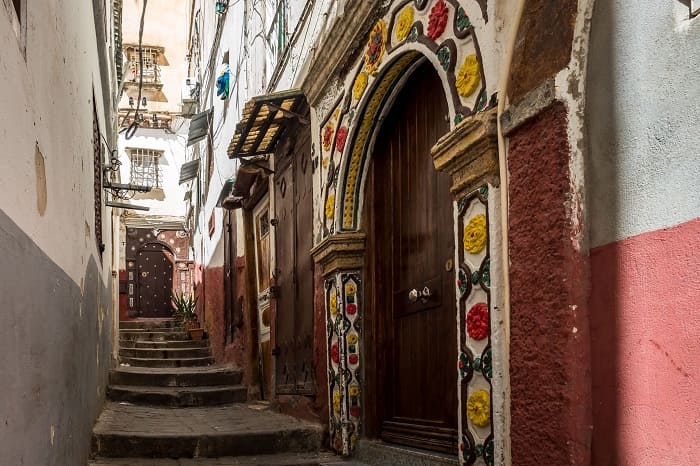

Ten days is enough to see Algiers, the Roman towns of the north-east and the M'Zab Valley, plus three days in the Sahara around Djanet if you add them. The route below runs Algiers (two days), a day trip to Tipaza and Cherchell, Constantine and Djémila, Timgad, Ghardaïa, back to Algiers, then an optional flight south to Djanet.
It's a fast route. Three of the days involve 400 to 650 km of travel, so if you'd rather go slower, drop Timgad or the M'Zab and keep the rest. Prices are in Algerian dinars (DZD).
Transport, museum, fuel and popular-restaurant prices were checked in October 2026; figures marked 2024 are older, so treat them as rough. Dollar figures use the official rate, about 134 DZD to the dollar in October 2026. Cash changed on the informal market goes much further (see the money notes at the end).
For your visa, look at the checklist in our Algeria travel guide before you book flights. An invitation and itinerary from an Algerian travel agency works, and so does a hotel booking or a certificate of accommodation from your host, certified by the local town hall; the consulate needs one of the three. If an approved agency books the whole route, including Ghardaïa and Djanet, it can also request the visa on arrival that Algeria grants to organized tours of the south.
Day 1: Arrival in Algiers
Houari Boumediene Airport is about 20 km east of central Algiers. The train to Agha station is the cheap option at 80 DZD (20 to 25 minutes, roughly hourly); ETUSA bus 100 to Place des Martyrs costs 50 DZD but takes 45 to 60 minutes. Taxi drivers ask roughly 1,500 to 2,500 DZD, so settle the fare first, or use Yassir. Don't look for a metro link: the line doesn't reach the airport yet.
Kick off at the Casbah of Algiers
Start with the Casbah, the old town on the hill above the port. Much of it goes back to the Ottoman era, when the citadel at the top was built (1516 to 1592), and UNESCO listed the quarter in 1992. Walking its lanes costs nothing. They are steep and easy to get lost in, so we'd go with a local guide: it saves a lot of climbing up dead ends, and a guide knows which courtyards and workshops welcome visitors.

From central Algiers, a taxi to the Casbah cost around 200 to 300 DZD in 2024 ($1.50 to $2.20). The metro is cheaper: Line 1 ends at Place des Martyrs (50 DZD a ride), at the bottom edge of the Casbah, and you walk up from there.
Inside, the alleys are lined with Ottoman-era houses, small mosques and shops. You can buy souvenirs in the artisan shops along the way.
Notre Dame d’Afrique
In the afternoon, go to Notre-Dame d'Afrique, the neo-Byzantine basilica on the cliff above Bologhine, west of the Casbah. It was inaugurated in 1872, and its terrace looks out over the whole Bay of Algiers.
Entry is free, though a small donation is appreciated. A taxi from the Casbah cost around 300 to 400 DZD ($2.20 to $3) in 2024.
Older guides mention a cable car from Bologhine up to the basilica. It dates from 1984 but hasn't run for years (TSA found it still broken in late 2023), so take a taxi.

Afterward, walk along the Corniche, the seafront road below the basilica, for the sea air and the view back toward the city.
Street vendors along the way sell snacks such as maakouda (fried potato cakes, about 50 DZD each in 2024) and mhadjeb (a thin semolina crêpe stuffed with a spicy tomato and onion filling, about 70 DZD).
Visit Bab El Oued
As evening comes, head to Bab El Oued, the working-class district along the coast west of the Casbah. It's young, loud and dense, and the sidewalks are packed at the end of the day.
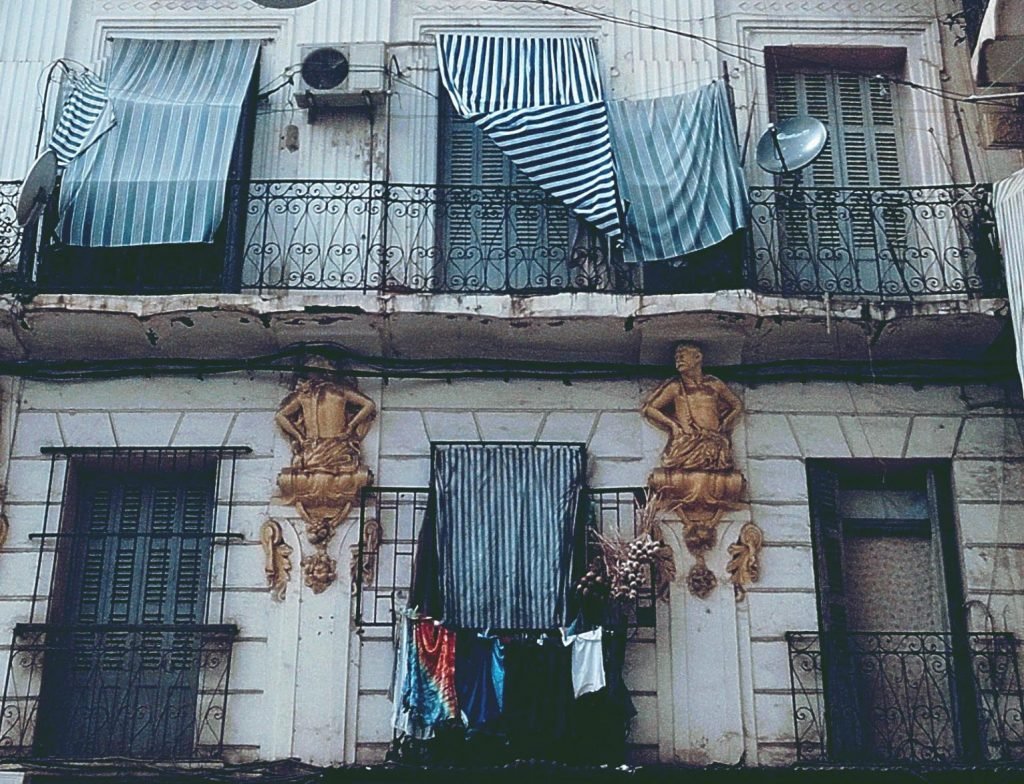
Walk up Avenue du Colonel Lotfi, lined with cheap clothing and electronics shops, to Place des Trois Horloges, the square named after its three-faced clock. It's the center of the neighborhood.
Bab El Oued was built in the 19th century for European workers, many of them Spanish, Italian and Maltese, which explains the Haussmann-style apartment blocks with their balconies. Today the main streets feel like one big open-air market.
It's a good area for a cheap dinner of grilled meat or a plate of couscous in one of the small popular restaurants.
The ten days in one table
| Days and base | What you see, and how you get there |
|---|---|
| 1 to 3, Algiers | The Casbah, Notre-Dame d'Afrique, Djamaa El Djazaïr, Maqam Echahid, the Bardo Museum and the Jardin d'Essai, then a day trip about 70 km west to Tipaza, the Royal Mausoleum of Mauretania and Cherchell, best by car or with a driver |
| 4 to 5, Constantine | Djémila on the drive in (about 390 km on the A1, or a 1-hour flight) and the Sidi M'Cid bridge; next day Timgad, Lambaesis and dinner in Batna, about 120 km each way |
| 6, Ghardaïa | The old town and Beni Isguen with a local guide; about 640 km by road, or a direct flight of just over an hour |
| 7, Algiers | The MAMA museum and shopping in the lower Casbah; a flight of about an hour, or 8+ hours by bus |
| 8 to 10 (optional), Djanet and a desert camp | Tassili n'Ajjer rock art, dunes and a night under the stars; fly from Algiers, then 4x4 with an approved agency |
Day 2: More of Algiers: mosques, museums and gardens
Day 2 covers the newer city: the two great mosques, the Martyrs' Memorial, the Bardo Museum and the Jardin d'Essai. These two Algiers days are also the backbone of our plan for a weekend in Algeria, if a short city break is all you have.
Don't do this day on a Friday. The Algerian weekend is Friday and Saturday, and the Bardo Museum, for one, is closed on Fridays.
Visit the Great Mosque of Algiers and Martyrs' Memorial
"The Great Mosque of Algiers" can mean two buildings. Djamaa El Kebir, on Rue de la Marine at the foot of the Casbah, dates from about 1097 and is the oldest mosque in the city. The new one, Djamaa El Djazaïr, was officially inaugurated in February 2024 on the bay at Mohammadia, and no minaret in the world is taller than its 265 m. Non-Muslim visitors can usually walk its esplanade and some public areas for free outside prayer times. Cover arms and legs; women also cover their hair.
Then go up to the Martyrs' Memorial (Maqam Echahid) in El Madania. Its three concrete palm leaves, 92 m high, were inaugurated on July 5, 1982, the 20th anniversary of independence, in memory of those who died in the War of Independence. The esplanade is free, and the National Museum of the Moudjahid underneath charged a small fee of around 200 DZD ($1.50) in 2024.
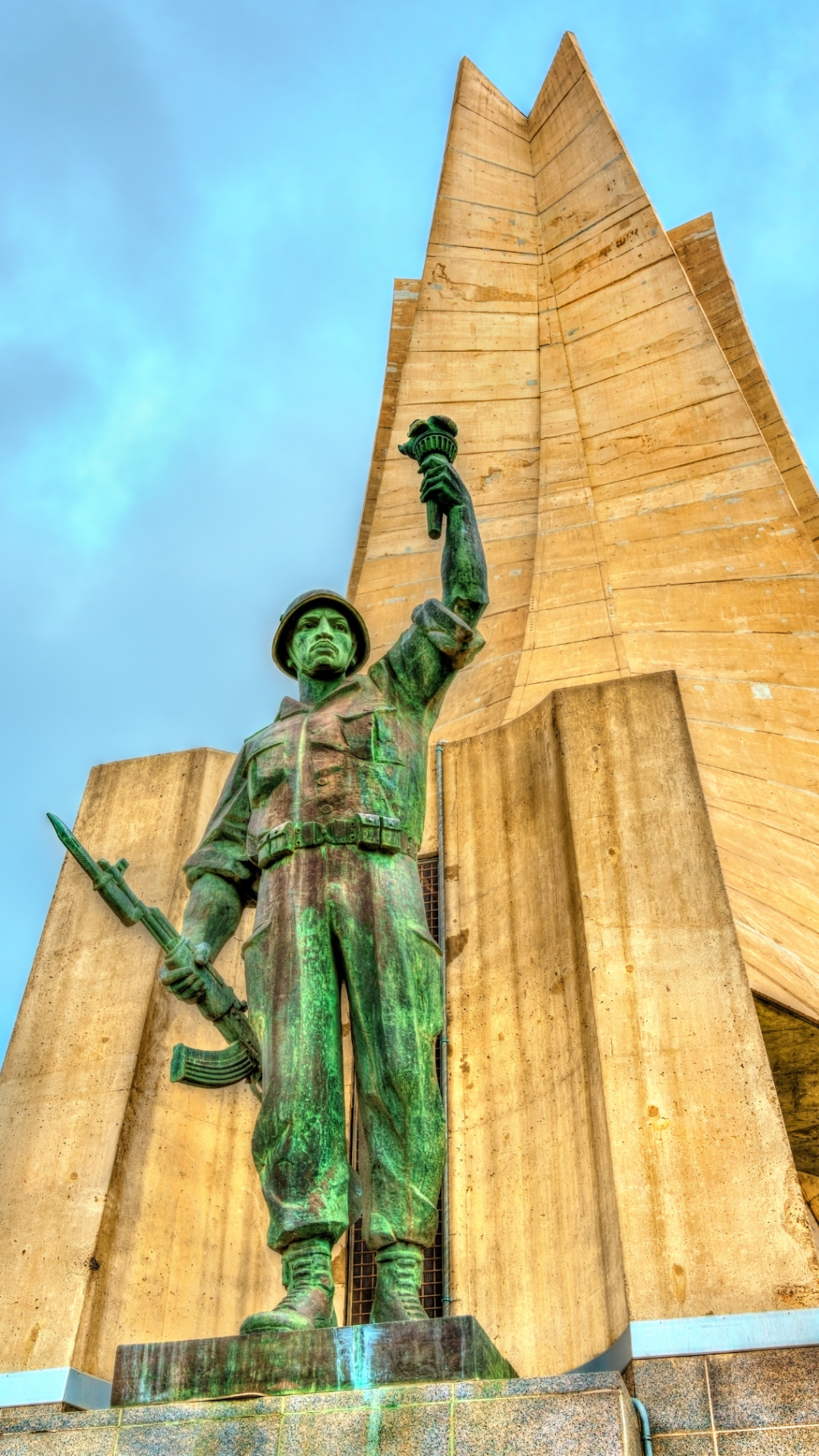
The museum covers the independence struggle with artifacts and documents. To reach the memorial, take a taxi (about 300 to 400 DZD from the center in 2024) or the cable car up from El Hamma, next to the Jardin d'Essai. It was one of only two Algiers cable cars still running when TSA checked in late 2023.
The Bardo Museum
In the afternoon, visit the Bardo Museum on Rue Franklin Roosevelt. The building is a late 18th-century Ottoman villa that became a museum of prehistory and ethnography in 1930. The collections run from prehistoric tools to traditional costume and crafts.
Full price is 200 DZD (half price for students, free for under-16s). It opens Saturday to Thursday, 9 a.m. to 5 p.m. from October to April and 10 a.m. to 6 p.m. from May to September. Take a taxi: no tram line goes near it.
Take a walk in Jardin d’Essai du Hamma
Afterward, go to the Jardin d'Essai du Hamma, the botanical garden founded in 1832 on about 32 hectares between the sea and the hill of the Martyrs' Memorial. The metro stops right by it, at Jardin d'Essai station.
Adult admission was 150 to 200 DZD in 2025 (sources differ), and the small zoo inside charges extra.

Walk the long avenues of plane trees, palms and dragon trees, then sit by the ponds. The shade makes it a good stop on a hot afternoon.
Café life in Algiers
In the evening, sit down in a neighborhood café. Algiers runs on coffee, but mint tea, made with fresh leaves and plenty of sugar, is easy to find too.
A cup cost around 80 to 100 DZD ($0.60 to $0.75) in 2024. With it, try kalb el louz, the Algiers cake of semolina and almonds soaked in syrup, or a piece of baklawa, about 100 to 150 DZD each. Taxis are the easiest way back to your hotel at night.
For the day, budget roughly $50 to $100 for meals and taxis. Hotels in Algiers start at about $30 to $50 a night for a simple central room and go to $150 and more at the top end.
What to eat in Algiers
Algiers cooking is Mediterranean and North African at once. The city's own dish is rechta: thin fresh noodles in a white sauce with chicken, chickpeas and turnip, eaten especially at Mawlid and Yennayer.
Other dishes to look for are chakchouka (peppers and tomatoes cooked down with eggs), couscous with lamb or chicken, and tajine, which in Algeria usually means a stew rather than the clay pot, for example tajine zitoune (chicken with olives).
For a sit-down traditional meal, Restaurant El Djenina on Rue Didouche Mourad, near the Bardo Museum, serves couscous, tajines and méchoui (roast lamb) in an Ottoman-style dining room. It closes on Fridays and costs more than a popular eatery: one 2025 listing gives meals from about 3,000 DZD.
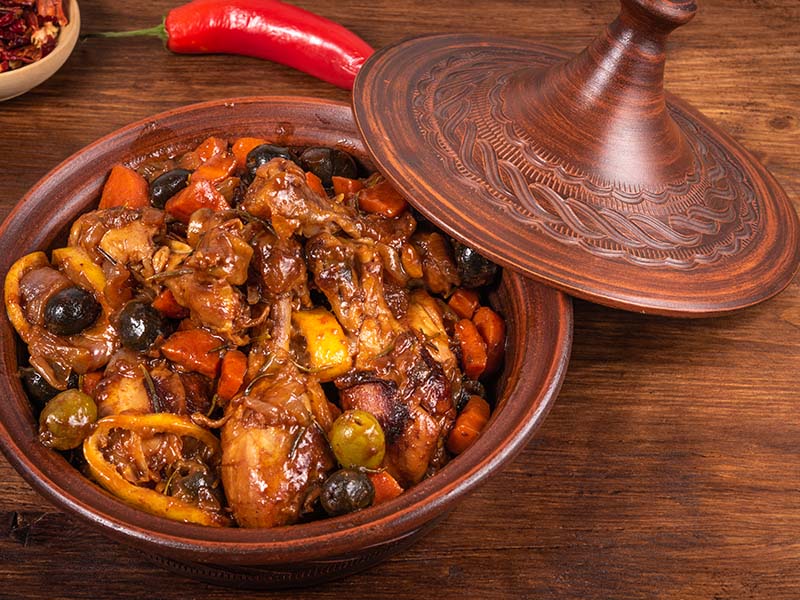
For dessert, zlabia (a syrupy fried sweet) cost just 20 to 30 DZD ($0.15 to $0.22) a piece in 2024.
In the old Casbah, small stalls sell brochettes (meat skewers) and freshly squeezed juice.
On the Corniche, vendors sell bourek, fried pastry rolls filled with minced meat.
Algiers has no big night market. Evenings are liveliest during Ramadan, when cafés and pastry shops stay open late after the fast is broken and families walk the seafront.
How to explore Algiers
Taxis are everywhere, and a ride across the center cost about 300 DZD ($2.20) in 2024. Agree the price before you set off, since meters are rarely used. Ride-hailing apps work too: Yassir (Algerian and the most used), Heetch and TemTem. Uber does not operate in Algeria.
For cheaper trips, use the metro and the tram. The metro has a single line, from Place des Martyrs through the center to El Harrach and Aïn Naâdja, and a ticket costs 50 DZD. The tram serves the eastern districts for a flat 40 DZD (since May 2026).
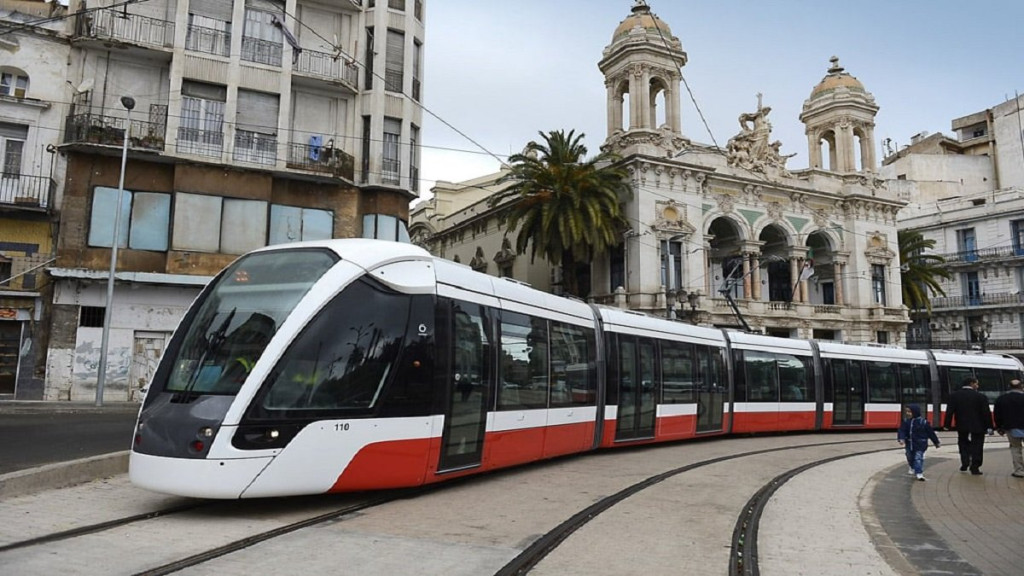
Minibuses and ETUSA city buses, at about 30 to 50 DZD a ride, are cheaper still and reach the suburbs.
Shared taxis run fixed routes between neighborhoods and nearby towns and leave when full. They're cheap, but you need to know where each one stops, so ask at your hotel.
Where to stay in Algiers
Algiers has hotels at every level. Book ahead, and keep your passport handy: hotels need it to check you in.
For luxury, the Sofitel Algiers Hamma Garden sits next to the Jardin d'Essai. Hôtel Sidi Yahia, a four-star in the residential Hydra district, is a comfortable step down; rates swing a lot by date, so compare online.

On a budget, Hotel Samir is a small three-star on Rue Didouche Mourad, right in the center.
Afric Hotel-Casbah, a short walk from Place des Martyrs and its metro station, is another budget option. Rooms there cost roughly 5,500 to 6,000 DZD ($41 to $45) a night in 2024, depending on the season.
Day 3: The Roman ruins of Tipaza and Cherchell
Tipaza and Cherchell, west along the coast, make an easy day trip from Algiers. Short on time? The first three days of this route work well on their own, and our 3-day Algeria itinerary shows how to fit Algiers and Tipaza into 72 hours.
Both started as Phoenician trading posts and grew into Roman towns. Cherchell, then called Caesarea, was the capital of King Juba II's Mauretania.
Admire the Roman ruins of Tipaza
Leave early for Tipaza, about 70 km west of Algiers. Buses run from Algiers several times a day and cost a couple of hundred dinars at most, but the trip takes 1.5 hours or more with traffic. A car or a hired driver saves a lot of time if you also want to see Cherchell.
UNESCO added Tipasa to its list in 1982. Entry to the archaeological park is about 200 DZD ($1.50).
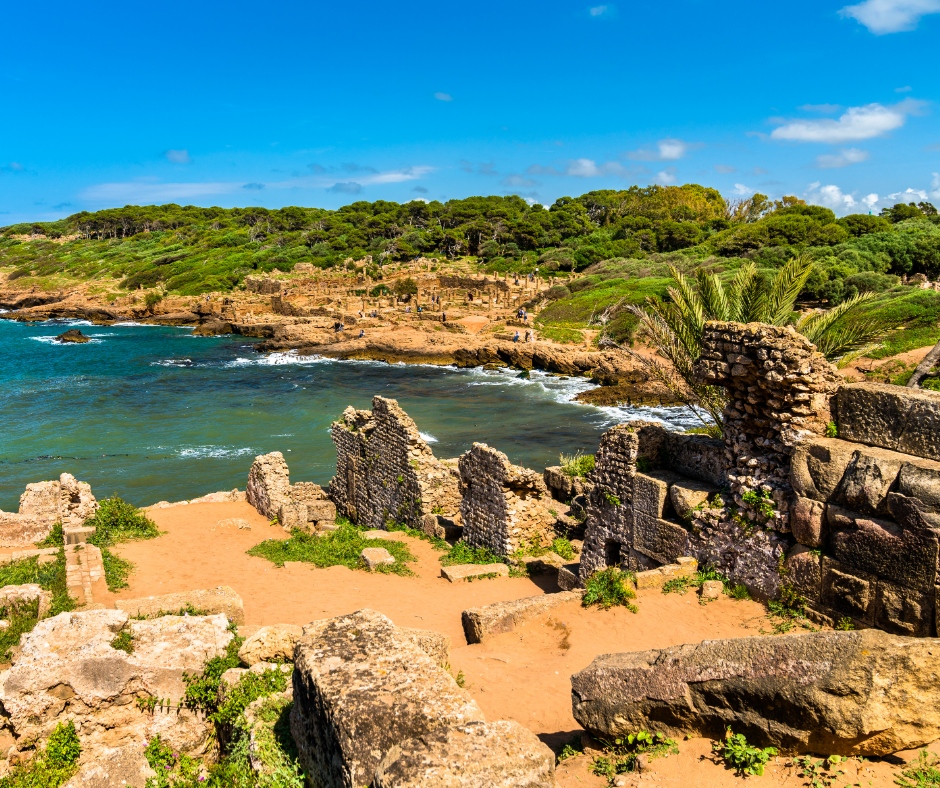
From the entrance you pass the amphitheater, then follow the paths through the old town to the Great Christian Basilica, a 4th-century church with seven aisles, on a headland above the sea. A stele to Albert Camus, who wrote about Tipasa, stands among the ruins facing Mount Chenoua. There is little shade, so go early in summer.
Between Algiers and Tipaza the road passes the Royal Mausoleum of Mauretania (Kbor er-Roumia), a huge round stone tomb up on the hills above the coast, and it's worth pulling over. It's usually linked to Juba II and Cleopatra Selene and dated to around 3 BC, though both points are debated. It belongs to the same UNESCO listing.
Cherchell's museum and Roman remains
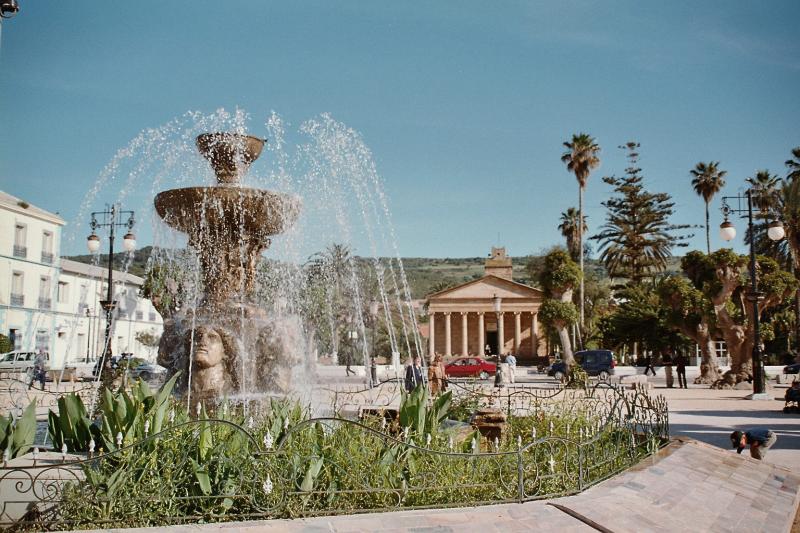
In the afternoon, drive on to Cherchell, about 30 km further west (30 to 40 minutes). Roman and Phoenician remains are scattered through the modern town.
The main reason to stop is the Cherchell museum, with mosaics and marble statues from ancient Caesarea. Museum tickets in Algeria usually cost 200 to 300 DZD ($1.50 to $2.20, 2026).
Local buses and shared taxis link the two towns for about 100 DZD ($0.75).
After a full day of exploration, return to Algiers in the evening, where you can unwind at your hotel.
By bus, the whole day cost only about 600 DZD ($4.50) in fares in 2024, but you'll spend a lot of it waiting. A rental car cost around 4,000 to 5,000 DZD ($30 to $37) a day, plus fuel, which is cheap: unleaded is 47 DZD a liter in 2026.
Entry fees are low. Sites and museums charge about 200 to 300 DZD each, so the day's tickets come to well under 1,000 DZD.
Of the day trips from Algiers, this is the easiest to organize. If the west appeals to you more than the Sahara, our northern Algeria itinerary continues from Tipaza to Oran and Tlemcen.
Day 4: The Bridges of Constantine and the Ruins of Djémila
Day 4 takes you east to Constantine, with a stop at the Roman town of Djémila on the way.
Algiers to Constantine is about 390 km on the A1 motorway, four hours or more by car. Djémila is just off that route, about 45 km from Sétif, so if you're driving, see it on the way and reach Constantine by late afternoon. If you'd rather not spend the day on the road, Air Algérie flies Algiers to Constantine in about an hour.
Intercity buses leave from the Caroubier bus station in Algiers, with tickets at around 1,000 to 1,500 DZD ($7.50 to $11) in 2024. A bus won't drop you at Djémila, though, so without a car you'd visit it as a side trip from Sétif.
Enjoy the views from Sidi M’Cid Bridge
In Constantine, start at the Sidi M'Cid Bridge, a suspension bridge opened in 1912 that hangs about 175 m above the Rhumel gorge, with a 164 m span. Walk across for the view of the cliffs and the old town on its rock.

Several bridges cross the gorge, which is why Constantine is called the "City of Bridges." Sidi M'Cid is free to cross.
The city's cable car, back in service since April 2025 after seven years of works, also crosses the Rhumel. Traveling with children? The cable car and this bridge are two of the best moments in our 10-day family itinerary in Algeria.
Admire the Kasbah of Constantine
Next, explore the old town. The medina is called Souika, and it runs down the rock from the Kasbah, the upper quarter, which the French largely turned into barracks and a military hospital. The lanes of Souika are free to wander, with small markets and old houses, and the Palace of Ahmed Bey (built 1825 to 1835) is the main sight nearby.
Djémila, Roman Cuicul
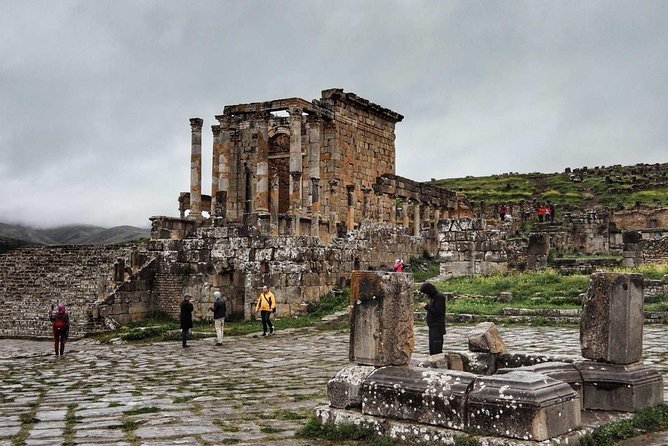
UNESCO listed Djémila in 1982. Old Cuicul, at about 900 m in the hills near Sétif, has survived better than almost any other Roman town in North Africa. From Constantine it's 105 to 117 km, close to two hours each way, which is why we suggest seeing it on the drive from Algiers.
Entry is a few hundred dinars, in the usual 200 to 300 DZD range for Algerian sites (2026). The site has temples, basilicas, an arch, the forum and a museum full of mosaics. Bring water and a hat, as there is very little shade.
Spend the night in Constantine. You'll sleep here two nights, since Timgad is a day trip.
For transportation, expect $30 to $40 a day for a rental car, or about $10 each way by bus from Algiers (2024 prices). Entry fees for Djémila and its museum come to a couple of dollars.
This is one of the longest days of the trip. If you don't want to rush, fly to Constantine and give Djémila a separate half-day.
Day 5: Timgad's Roman legacy and Batna
Day 5 is a day trip south from Constantine to Timgad, with stops at Lambaesis and Batna on the way back.
Timgad is about 120 km from Constantine, roughly two hours by road.
Buses run from Constantine to Batna, with local transport on to Timgad, for about 400 DZD ($3) each way in 2024. A car or driver is much simpler.
Timgad, Trajan's town for veterans
The emperor Trajan founded Timgad in AD 100 as a colony for army veterans, 35 km east of Batna, and UNESCO listed it in 1982. Its street grid is still clear. Entry is around 200 DZD ($1.50), though some visitors report paying more. Inside are the Arch of Trajan, the Capitol temple, several baths, a public library and a theater that held about 3,500 people.
It's often called the "Pompeii of North Africa" because so much of the town plan survives. The museum by the entrance displays more than 80 mosaics found on the site. Go early: there is almost no shade, and in summer the stone heats up by late morning. To be at the gate when it opens, sleep at the Trajan Hotel, about 80 m from the site, instead of in Constantine.
© Amine Layati
In the afternoon, stop at Lambaesis (Tazoult), about 10 km east of Batna on the road back from Timgad. It was the camp of Rome's Third Augustan Legion, and you can still see the remains of the headquarters, the baths and a small museum with mosaics.
Batna itself is the main town of the Aurès mountains, home to the Chaoui Berbers, and a practical place for dinner before the drive back.
Savor the local cuisine at Batna
In Batna, try berkoukes (large-grain, hand-rolled couscous in a soupy sauce) or chakhchoukha, torn pieces of thin semolina flatbread soaked in a spiced tomato and meat sauce, a dish of the east and the Aurès.
Popular restaurants charge about 600 to 1,200 DZD ($4.50 to $9) per person (2026). After dinner, return to Constantine for the night.
Transportation for the day: around $30 to $40 for a rental car, or about $6 round-trip by bus (2024). Entry fees are a few hundred dinars per site.
Day 6: The M’Zab Valley and Ghardaïa
Start at Ghardaïa
Next, head south to the M'Zab Valley, a UNESCO site since 1982. Its five fortified towns (ksour) were founded between about 1012 and 1350 by the Ibadi Muslim Mozabites, whose community still lives in them and sets the rules for visitors.
Ghardaïa is about 640 km from Constantine by road, nine to ten hours of driving. Air Algérie flies the route direct about three times a week (just over an hour on the spring 2026 schedule); otherwise you connect through Algiers.
Long-distance buses also run from Constantine. They cost far less than flying but take most of a day or a night.
In Ghardaïa, spend the afternoon in the old town and around the market square, where traders sell carpets, textiles and pottery made in the valley.
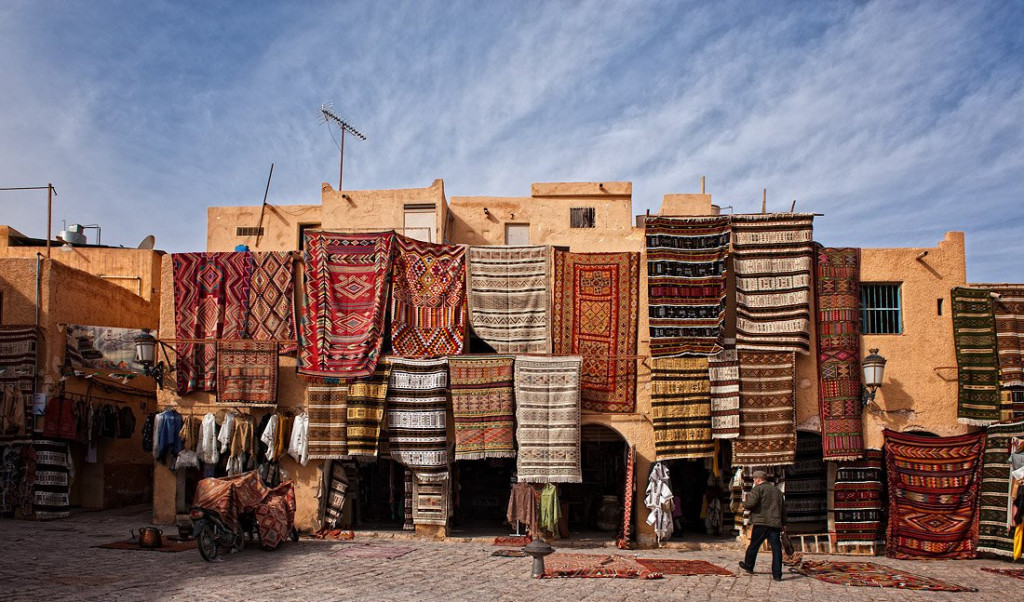
The architecture is plain and practical: earth-toned houses stacked up each hill around the mosque at the top.
Parts of Ghardaïa are fine on your own. Beni Isguen is different: you go in with a local guide, hired at the gate, or not at all. Visits run in the morning and from mid-afternoon to sunset, and are suspended on religious holidays.
Cover shoulders and legs, don't smoke, and don't photograph people, especially women. Your guide will tell you where photos are off-limits. Non-residents can't stay overnight inside Beni Isguen.
For the night, choose a guesthouse in a restored traditional house or a hotel in Ghardaïa. For quiet, look at the family guesthouses in the Beni Isguen palm grove; in town, the long-established names are Hôtel M'Zab (formerly Les Rostémides) and El Djanoub. Guesthouses in the valley charged roughly 7,000 to 14,000 DZD ($50 to $100) a night in 2024.
Continue to M’Zab Valley
If you can, give the valley two nights rather than one. The towns are close together, but visiting hours are short and the midday heat is strong for much of the year.
Costs for the day: the flight or bus, the guesthouse and the guide fees. Domestic fares change with the season, so check them when you book the trip.
Day 7: Return to Algiers
Return to Algiers on an early flight (about an hour) or an overnight bus (about 600 km, eight hours or more).
The morning flight gets you into the capital with most of the day left. The bus is cheaper, but you arrive tired.
Buses leave from Ghardaïa's main bus station. Back in Algiers, use the afternoon for anything you missed.
One good option is MAMA, the Museum of Modern and Contemporary Art on Rue Larbi Ben M'hidi, in a neo-Moorish department store built in 1914. It shows Algerian and international art from 1945 onward. Museum tickets in Algeria usually cost 200 to 300 DZD.
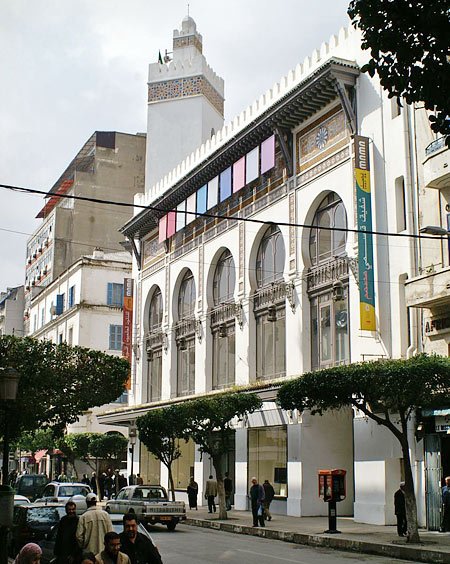
In the evening, go back to the lower Casbah to shop for souvenirs in the small markets and artisan shops.
Look for hand-made jewelry, pottery and textiles.
End the day with a farewell dinner. Try rechta (fresh noodles with chicken and chickpeas) or chorba frik, the soup of green cracked wheat and meat that Constantine calls jari. Meals cost around 1,000 to 1,500 DZD ($7.50 to $11) per person in 2024.
Today's costs: the flight or bus, a museum ticket or two, and around $7.50 to $11 for dinner, depending on where you eat.
Optional Days 8-10: Sahara Desert Adventure
With three more days, fly south to Djanet, the oasis town below the Tassili n'Ajjer plateau, for rock art, dunes and a night in the desert. Go between October and April; summer heat in the south makes walking hard going.
Day 8: Fly to Djanet
Fly from Algiers to Djanet and spend the afternoon on the rock art near town. The Tassili n'Ajjer, on UNESCO's list since 1982, holds more than 15,000 engravings and paintings, and its main traditions span roughly 10,000 BC to the first centuries AD.
Foreign visitors in the south are expected to travel with an approved agency, so a local guide comes with the trip. Ask the agency exactly what its price includes (park fees, vehicle, guide, meals). The best-known painted sites, such as Sefar, are up on the plateau and need a steep climb and several days on foot, so a three-day trip sticks to sites you can reach by 4x4.

Guesthouses in Djanet charged roughly 7,000 to 14,000 DZD ($50 to $100) a night in 2024.
Day 9: A night in the desert
Spend the day on a guided desert tour by 4x4. Many tours include a camel ride through the dunes.
Then camp under the stars, with tents and meals handled by the guides and the cook. A private camp for two turns this night into one of the highlights of a romantic trip to Algeria.
In 2024 these tours cost roughly $100 to $200 per person per day, usually including the vehicle, driver, guide, meals and camping gear. Check what's included before you pay.
Sunset on the dunes and a sky with no town lights are what most people remember. Desert nights get cold in winter, so pack a warm layer. Kids love it just as much, and we share tips on heat, food and pacing in our guide to Algeria with kids.
Day 10: Back to Algiers
Drive back to Djanet in the morning and fly to Algiers. Leave a buffer before any international connection, since southern flight schedules change.
For the desert extension, budget for the return flight to Djanet, the agency's daily rate and a night or two in a guesthouse. Price the flight first: fares vary a lot by season.
Getting to Djanet
You land at Tiska (DJG), about 30 km south of Djanet. From Europe, fly or take a ferry to Algiers and connect there.
Air Algérie flies to Djanet from Algiers and from a few southern cities, including Illizi, Ouargla and Tamanrasset. During the Saharan season (roughly October to May) it has also run direct flights from Paris CDG; check the current season's schedule.
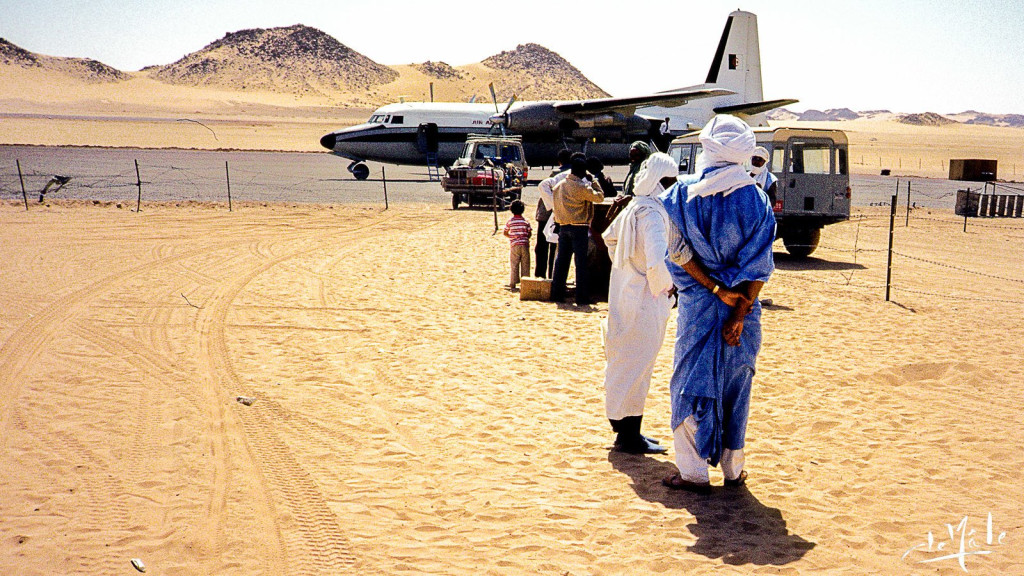
Air Algérie sells tickets on its website. You may still see Tassili Airlines mentioned: it was transferred to Air Algérie in 2025 and now flies as Domestic Airlines. Fares vary by season, and flights around Christmas and New Year fill early.
From the airport, taxis and hotel or agency transfers take about 30 minutes to the town center.
Where to stay in Djanet
In Djanet, La Grotte des Ambassadeurs is a hotel in the Ifri district, opened in 2009, with air-conditioned rooms and secure parking.
It is named after a nearby site with Neolithic rock paintings. It fills up in the winter season, so book ahead.
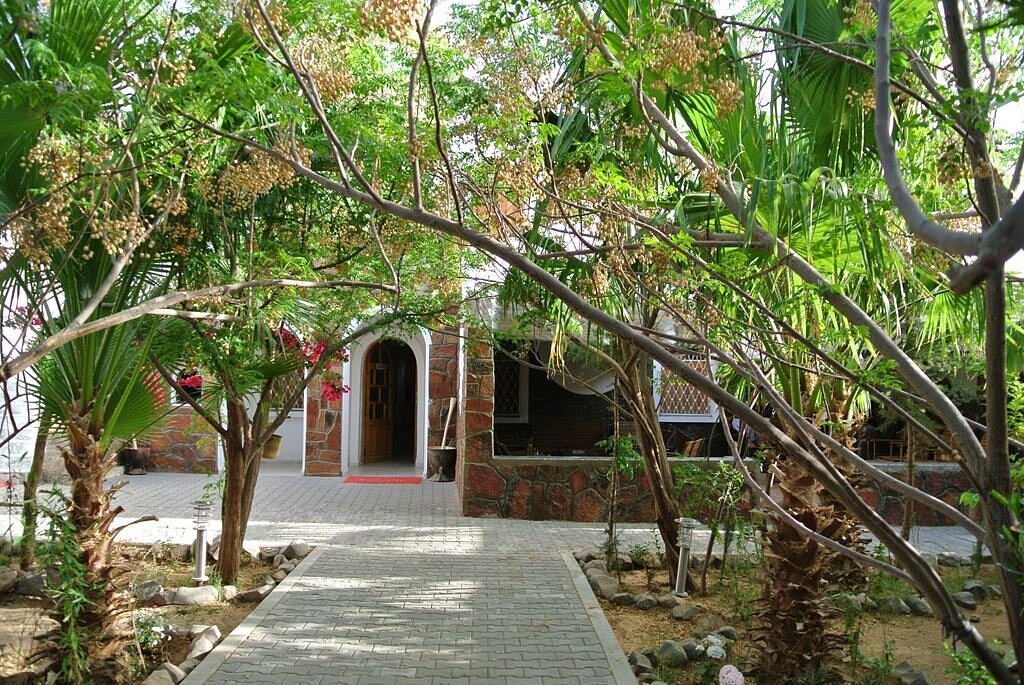
Dar Dhiaf Hotel de Charme is smaller, with simple, comfortable rooms and a terrace laid with traditional Algerian mattresses for evenings outside.
Most desert trips camp in the dunes and rocky valleys around Djanet, at spots your agency picks for the route.
Camping suits travelers who don't mind basic comfort: there are usually no showers, and the toilet is a walk behind a dune.
Alternative routes: 7, 10 and 14 days
The route above is one way to spend ten days. These three variants use the same building blocks.
7 days: the north only
For a first trip with no desert, keep Algiers and the Roman north-east and skip the long legs south.
Days 1 to 2: Algiers.
Day 3: Tipaza and Cherchell.
Day 4: Drive to Constantine, stopping at Djémila.
Day 5: Timgad and Batna.
Day 6: Constantine at a slower pace: Souika, the Palace of Ahmed Bey and the cable car.
Day 7: Fly back to Algiers.
10 days: west and east
Swap the M'Zab and the Sahara for Oran and Tlemcen. Oran has the Santa Cruz fort on Mount Murdjadjo and the region where raï music was born. Tlemcen has the Great Mosque (founded 1082), the Marinid ruins of Mansourah and the Sidi Boumediene complex.
Days 1 to 2: Algiers.
Day 3: Tipaza and Cherchell.
Day 4: Coradia train to Oran, roughly 4.5 to 5 hours.
Day 5: Oran.
Days 6 to 7: Tlemcen.
Day 8: Fly to Constantine from Oran or Tlemcen, connecting in Algiers if there is no direct flight that day.
Day 9: Constantine, with Djémila or Timgad as a day trip.
Day 10: Fly back to Algiers.
14 days: the north plus the deep south
Do Days 1 to 7 of the main route, then give the Sahara a full week. Both southern stops need an approved agency, and the season is October to April.
Day 8: Fly from Algiers to Djanet.
Days 9 to 10: Rock art and dunes around Djanet, or the Tadrart, with nights in camp.
Day 11: Fly to Tamanrasset, checking that the Djanet to Tamanrasset flight runs on your dates.
Day 12: Drive 3 to 4 hours to the Assekrem plateau (about 2,726 m) and sleep near the top.
Day 13: Sunrise at Charles de Foucauld's hermitage, built in 1911, then back to Tamanrasset.
Day 14: Fly to Algiers.
Read your government's current travel advice for Djanet and Tamanrasset, and confirm your insurer covers the southern leg, before you book it.
Car rental in Algeria
Renting a car gives you freedom in the north. It is not an option for the Sahara: foreigners in the south travel with an approved Algerian agency, which provides the 4x4 and a driver who knows the desert tracks.
Hertz has offices at Algiers airport and in Oran, and local rental firms operate in the big cities.
Prices were around 4,000 to 5,000 DZD ($30 to $37) a day in 2024. Fuel is cheap: unleaded costs 47 DZD a liter and diesel 31 DZD (January 2026 prices).
Bring an International Driving Permit along with your national license, since rental firms and police may ask for it. Expect frequent police and gendarmerie checkpoints: slow down, stop when asked and have your passport ready.
Before you book this route
This route covers Algiers, the Roman north-east, the M'Zab and, with the last three days, the Sahara. Expect some long transfers between stops; the history is the payoff.
With only a week, stop after Day 7. If the desert is the main reason you're going, spend fewer days in the north and more around Djanet.

Visas: there is still no e-visa (October 2026), so most travelers, UK, EU, US and Canadian citizens included, apply at an Algerian consulate before the trip. Only organized tours of the south booked through an approved agency can get a visa on arrival instead. On language, French gets you further than English, which is rare outside big hotels; Arabic and Tamazight are the official languages.
Money: carry dinars. Cards and ATMs give only the official rate of about 150 DZD to the euro (autumn 2026) and are taken mostly in big hotels and airline offices, while a changer your guide or host trusts pays roughly 275 on the informal market, which is technically outside the exchange-control law but used openly. If you declare more than EUR 1,000 in cash on arrival, customs may want official exchange receipts when you leave, and dinars can't leave the country with you, so spend them before you fly.
The north is best in spring (March to May) and autumn (September to November). Summer is hot inland and very hot in Ghardaïa, and the Djanet extension works best from October to April.
Travelers on our trips often tell us Algeria felt far more relaxed and welcoming than they'd pictured at home. We stick to routes our guides have driven for years, always through a licensed agency with local guides, and we haven't had an incident on any of our trips. In the south, the authorities assign a police or gendarmerie escort on some desert routes, and your agency arranges it. You can explore our detailed guide on staying safe in Algeria.
Carry your passport: hotels need it at check-in, and so do domestic flights.
Days, transport, the desert and Tunisia
Is a week enough, or do I really need ten days? Seven days covers Algiers, Tipaza and the Roman north-east at a quick pace. Ten lets you add the M'Zab Valley and three days around Djanet, and two weeks fits both the north and a proper desert trip. With fewer than five days, stay around Algiers and Tipaza.
Can I do this route on my own, without a tour? In the north, yes: trains, buses, shared taxis and domestic flights link the cities, and you can rent a car, which you will want for Djémila. Not in the south, where foreigners travel with an approved Algerian agency that supplies the guide and the 4x4 and can arrange a visa on arrival.
Fly or take the bus between cities? Fly the long legs: Algiers to Constantine is about an hour by air against four hours or more by road, and Constantine to Ghardaïa is nine to ten hours' drive. Buses cost much less but eat whole days. Algiers to Oran is the exception, since the train does it in about 4.5 to 5 hours.
Is there time for the Sahara as well as the north? Yes, if you fly: about a week in the north, then three to six days out of Djanet or Tamanrasset with a local agency, between October and April.
Could I start in Tunisia and cross over? Yes. The Tunis to Annaba train runs three times a week in each direction and takes most of a day, and several road crossings are open. From Annaba, Constantine is the natural next stop for an east-first route. You still need your Algerian visa in advance, and the Moroccan border remains closed.
If you'd like help putting the route together, we can turn it into a real trip: a driver waiting at arrivals in Algiers, local guides in each city, transfers and stays booked, and the Djanet extension with the visa on arrival through a licensed partner agency. Just tell us how you want to travel.


