

Venturing into the world's largest desert can feel equal parts thrilling and intimidating. You might worry about navigating the sheer scale of the dunes, understanding the complex visa requirements, or simply staying safe in such a remote environment.
That is why our team at WildyNess created this guide to transform your hesitation into confidence. We want you to focus less on the logistics and more on the silence of the sands. Ready to roll?
The Big Three: Choosing Your Algerian Desert Destination
Algeria offers the most diverse Sahara experiences on the continent. Unlike other destinations where the desert looks the same everywhere, the Algerian Sahara changes drastically depending on which region you visit. We break down the three main hubs to help you decide which landscape speaks to you.
Djanet and the Tadrart Rouge
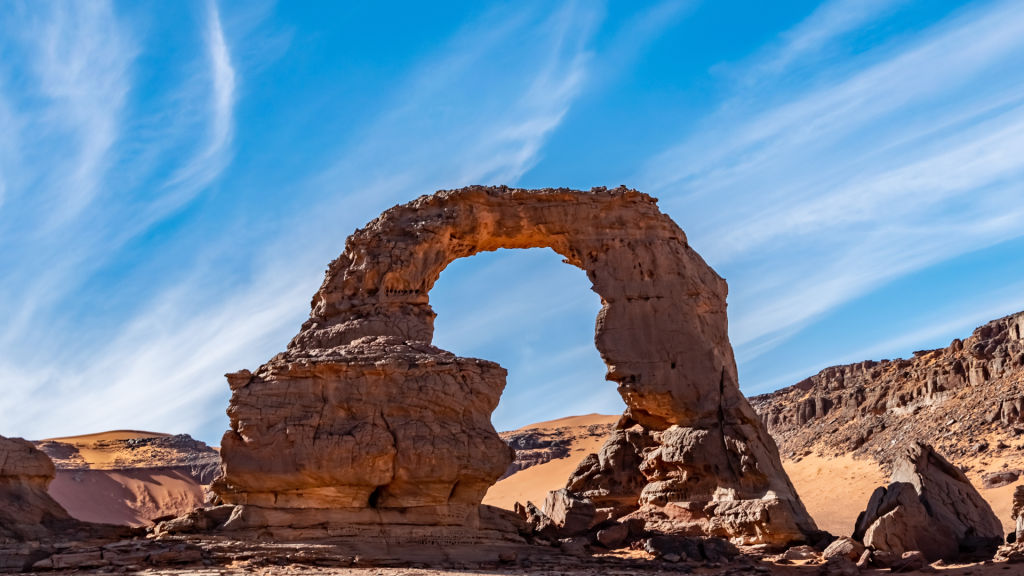
If you want the classic Martian landscape, head to Djanet. Located in the southeast, this oasis town serves as the gateway to the Tadrart Rouge. This area is famous for its deep orange and red sands that contrast against dark sandstone rock formations.
We love this region because it feels like walking through an open-air art gallery. The erosion has carved the rocks into arches, pillars, and shapes that look like animals or castles. This is the best choice for photographers and travelers who want a mix of soft dunes and dramatic rocky canyons.

Tamanrasset and the Hoggar Mountains
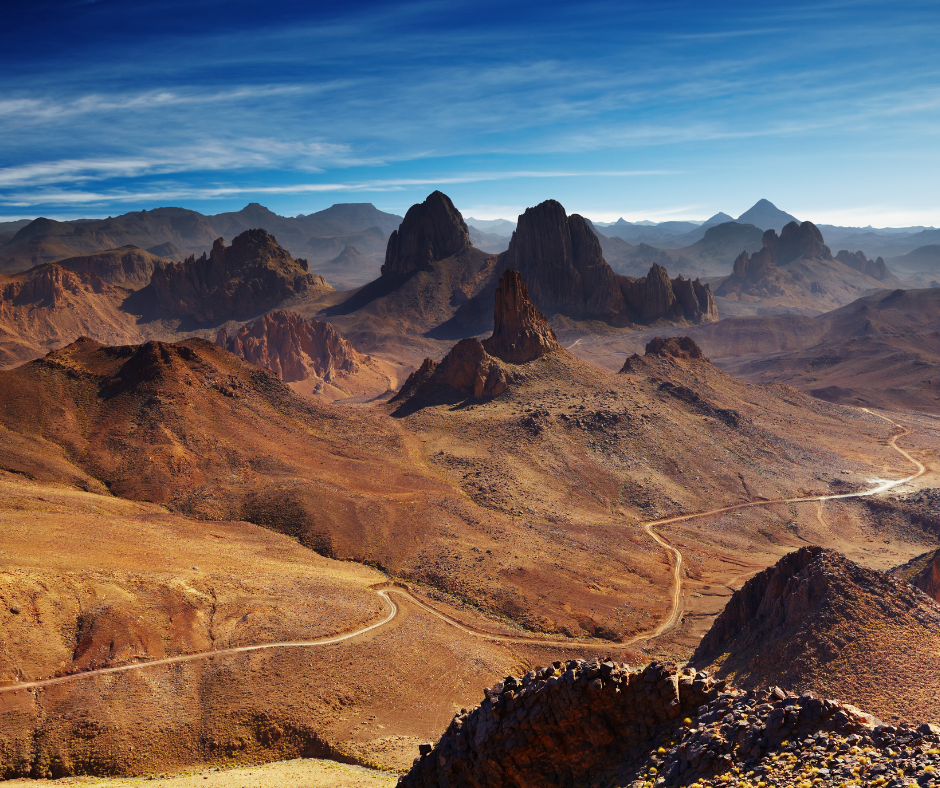
Travelers seeking rugged terrain and high altitudes should choose Tamanrasset. This city sits in the heart of the Hoggar Mountains (Ahaggar). Here, the desert is not defined by soft sand but by jagged, volcanic peaks and black basalt plateaus.
The highlight is the Assekrem, a plateau where you can watch the sun rise over a landscape that looks prehistoric. We recommend this region for hikers and those who want to see the "stone desert" at its most dramatic. It is cooler here due to the altitude, offering a physically demanding but rewarding adventure.
The Great Western Erg (Timimoun)
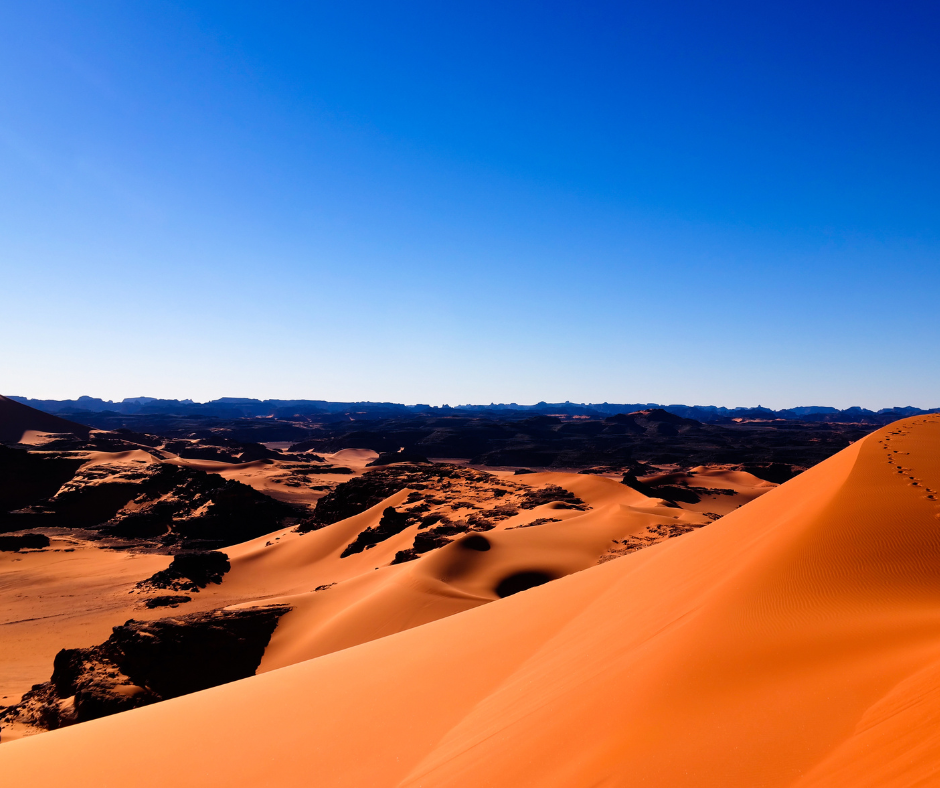
For the quintessential "endless ocean of sand" experience, look toward Timimoun and the Great Western Erg. This area features the iconic golden dunes that stretch as far as the eye can see. Timimoun is known as the Red Oasis due to its distinctive red mud-brick architecture.
We find this region perfect for travelers who want to explore palmeries, ancient irrigation systems (foggaras), and vast, rolling dunes without the heavy rock formations found in the south.

Time Travel: Ancient Rock Art of the Sahara
The Algerian Sahara is home to one of the most significant prehistoric art collections on Earth. You are not just visiting a desert; you are stepping into a library of human history that dates back thousands of years.
Tassili n'Ajjer National Park
This UNESCO World Heritage Site near Djanet is non-negotiable for history buffs. The plateau contains over 15,000 rock engravings and paintings. You will see depictions of giraffes, elephants, and crocodiles, proving that this arid landscape was once a lush savannah.
We encourage you to take your time here. The art tells the story of climate change and human evolution in a way no textbook can.
The Crying Cows of Tegharghart
Located roughly 30 kilometers from Djanet, this specific site features a masterful engraving of long-horned cattle. The detail is exquisite, showing teardrops falling from the cows' eyes.
Local legends vary on the meaning, with some suggesting it represents the sorrow of the herds during a time of drought. Seeing this artistry up close allows you to connect emotionally with the ancient people who called this challenging environment home.
For more tourist attractions in Algeria in general, we suggest reading this Ultimate Guide to Tourist Attractions in Algeria.
Cultural Immersion: The Tuareg Way of Life
The landscapes are impressive, but the people make the Sahara truly special. The Tuareg, often called the "Blue Men" because of their indigo-dyed veils (Tagelmust), are the guardians of this land. We believe that engaging with their culture is the most rewarding part of the trip.
The Tea Ceremony Ritual
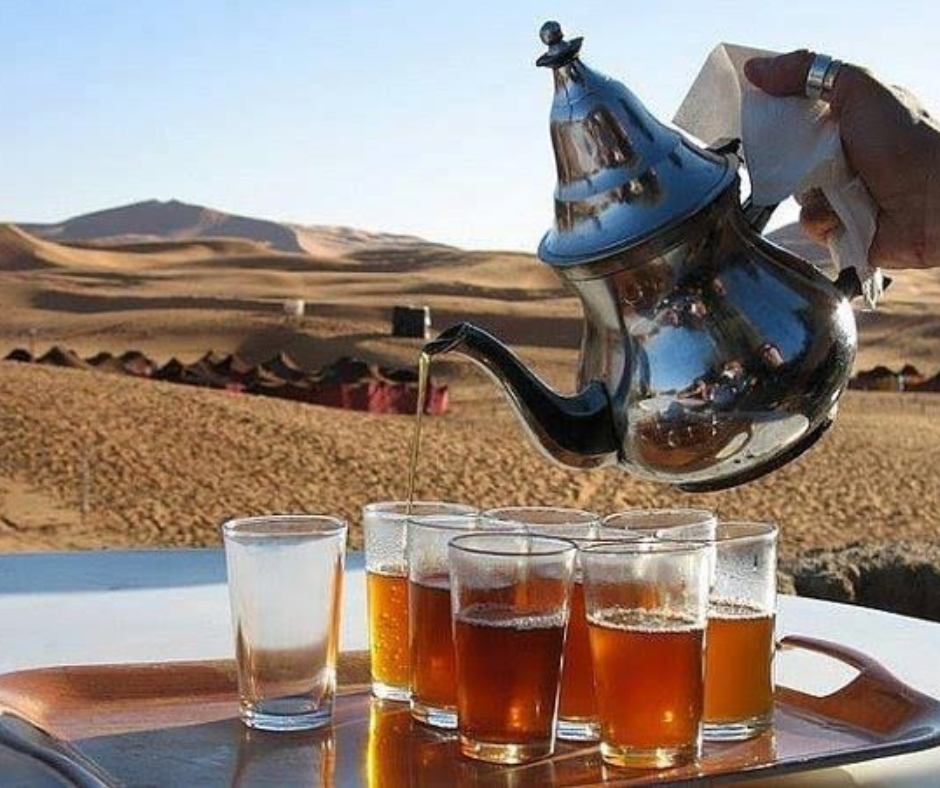
You cannot visit the Sahara without experiencing the Tuareg tea ceremony. This is not a quick caffeine fix. It is a slow, deliberate ritual of hospitality. Your host will brew green tea over coals and pour it from a height to create a thick foam.
Custom dictates three rounds of tea. The first is "bitter as death," the second is "mild as life," and the third is "sweet as love." We advise you to sit, watch the process, and accept all three glasses. It is a sign of respect and friendship.
Respectful Interaction
Tuareg culture is reserved and dignified. When you meet locals, a calm and polite demeanor goes a long way. Always ask for permission before taking portraits, especially of women or elders. We also recommend dressing modestly. Long pants and loose shirts protect you from the sun and align with local customs. Your guide will often act as a bridge, helping you translate and understand the nuances of these interactions.
Sleeping in the Sands: Bivouacs vs. Guesthouses
Your accommodation choice dictates the rhythm of your trip. In the Algerian Sahara, you generally choose between the raw immersion of camping or the structure of a town stay.
Expedition Camping (Bivouac)
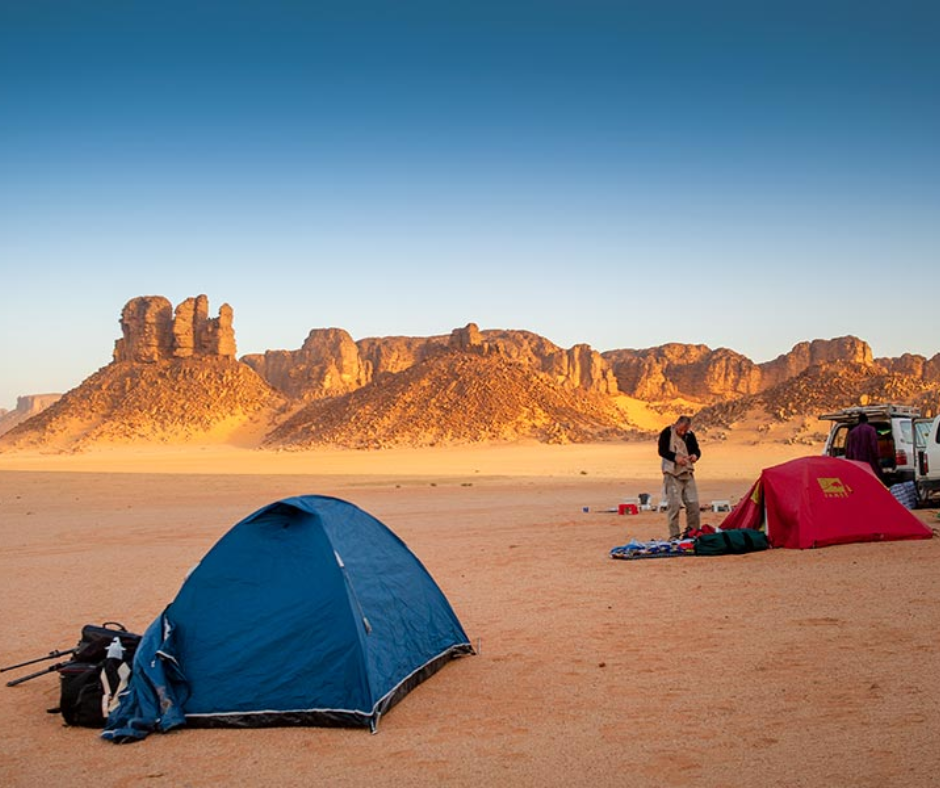
For the full experience, we recommend "bivouac" camping. This is how most expeditions in Tadrart Rouge or Hoggar operate. You travel by 4x4 during the day and set up camp in a different spot each night. The guides set up simple tents and cook traditional meals like tagella (sand bread) over a fire.
This option offers zero light pollution and total silence. You sleep directly under the Milky Way. Note that facilities are non-existent in the wild. You use nature as your bathroom and wet wipes for showers. It is rustic, but the connection to nature is unmatched.
Traditional Guesthouses
If you prefer a shower and a mattress, base yourself in a guesthouse in Djanet or Tamanrasset. These are typically built in the local architectural style with central courtyards and mud-brick walls.
You can do day trips into the desert and return to a cooked meal and a bed at night. This is a good compromise for those who want to see the desert but need more comfort, though it limits how deep into the wilderness you can go.

Navigating the Red Tape: Visas and Logistics
Algeria has historically been difficult to enter, but this is changing. Understanding the entry requirements is the first step to your adventure.
The Visa on Arrival Scheme
Recently, Algeria introduced a procedure to facilitate tourism in the southern regions (Djanet, Tamanrasset, Illizi). If you book an organized tour with an approved Algerian travel agency, they can arrange a "Visa on Arrival" authorization for you. You send them your passport copies, and they provide a document allowing you to board your flight. You then pay for and receive the visa upon landing at the southern airport. We highly recommend this route as it bypasses the lengthy consulate process.
The Standard Consulate Visa
If you plan to visit Algiers or the north before heading south, you must apply for a standard tourist visa at the Algerian consulate in your home country. This requires an invitation letter or a confirmation of accommodation from a local partner. Start this process at least a month in advance.
Mandatory Guides
You cannot simply rent a car and drive into the deep Sahara alone. Algerian law requires tourists in the southern desert to be accompanied by an accredited guide or agency. This is for your safety and navigation. The desert is vast, and GPS can be unreliable. Your guide is your lifeline.
We recommend reading this detailed guide about visas, safety and more for more informations: Your Guide to Algeria: Visa, Safety, and Security.
Packing for Extremes: The Survival List
The desert environment is harsh and unforgiving. The temperature difference between day and night can be extreme. Smart packing makes the difference between misery and comfort.
Clothing Layers
Avoid cotton. It holds sweat and makes you cold at night. We suggest merino wool or synthetic layers. Bring loose, light-colored long sleeves for the day to deflect the sun. For the night, you need a heavy fleece, a down jacket, and a warm beanie. It can drop to near freezing in the winter months.
Tech and Hygiene
There is no electricity in the dunes. Bring a high-capacity power bank (20,000mAh) to keep your camera and phone charged. Since water is precious and reserved for drinking and cooking, you will not be showering during a bivouac trip. Pack a large supply of wet wipes and hand sanitizer to maintain hygiene. A good headlamp with spare batteries is also essential for navigating the campsite after dark.
Practical Matters: Money and Transport
Currency and Cash
The currency is the Algerian Dinar (DZD). The banking system is not well-connected internationally, and credit cards are almost useless in the south. You must bring foreign currency (Euros or USD) in cash. You can exchange this at banks or, as is common practice, through informal exchange points which often offer better rates. Ask your guide for assistance with this upon arrival. Make sure you bring enough cash for your entire trip, including tips and souvenirs.
Getting There
Most travelers fly into Algiers (ALG) and then take a domestic flight to Djanet (DJG) or Tamanrasset (TMR). Air Algérie operates these domestic routes. We advise leaving plenty of buffer time between your international arrival and your domestic departure, as schedules can change. There are also occasional direct flights from Paris to Djanet during the high season (October to April), which saves considerable time.
Final Thoughts for the Prepared Traveler
A trip to the Algerian Sahara is a journey into one of the last true wildernesses on the planet. By securing your visa through a trusted agency, packing the right thermal layers, and embracing the local Tuareg hospitality, you set the stage for a life-changing experience.
Remember that cash is king, guides are mandatory, and the history you will witness on the canyon walls is older than civilization itself. You are now equipped with the knowledge to navigate the logistics. The only thing left to do is book that flight and step into the sand.
If you have specific questions about routes or need help connecting with reliable local partners, please contact us. We are here to help you design a seamless itinerary.


