

Unless you hold one of a handful of exempt passports, you'll need a visa from an Algerian consulate before flying; the one visa on arrival is reserved for organized Sahara tours booked through an approved Algerian agency. On safety, the strictest official advice is about the far south and the border regions, a long way from Algiers, Oran and Constantine, and people who travel with us often say the country felt calmer and friendlier than what they'd read online.
Over four-fifths of Africa's largest country is Sahara, and that size is why the rules change with the region. In the north you can travel independently by train, plane or car. In the south, you travel with an approved agency.
This page covers the visa first: who needs one, what it costs, how to apply and how the Sahara visa on arrival works. Then come the security picture and the money side in autumn 2026, and a short orientation to the main regions.
It focuses on visas and safety, while our Algeria travel guide goes wider, into routes, food and where to stay. Rules here change with little notice, so we date the figures that move.
Getting your Algerian visa in order
If you hold a UK, EU, US or Canadian passport, you apply in advance at the Algerian embassy or consulate that covers where you live, with a passport valid for six months from arrival (two blank pages), two forms, two photos, proof of income and one proof of where you'll stay.
The fee is $160 for US citizens and GBP 85 at the London consulate (2026), and processing takes about 5 to 8 business days in Washington or about 10 working days in person in London. There's no e-visa. A visa on arrival exists only for organized Sahara trips through an approved agency.
What you need to know before traveling to Algeria
Visa and entry requirements
Only a short list of nationalities can come without a visa, for up to 90 days: Tunisians, Libyans, Mauritanians, Malians, Malaysians, Seychellois and holders of Sahrawi Republic passports. Hong Kong SAR passport holders get 14 days, and Moroccans have needed a visa again since 26 September 2024. Everyone else, Western travelers included, gets a tourist visa from a consulate before leaving home. There is no nationwide e-visa as of October 2026, although one has been announced several times.
Your passport must be valid for at least six months from arrival, with two blank pages. The consulate in London, for example, asks for two application forms, two photos, copies of every passport page and proof of employment or income.

On top of that comes proof of where you'll stay, and any one of these works: a certificat d'hébergement from your host, certified by their town hall (APC); an official invitation and itinerary from an Algerian travel agency; or a hotel booking confirmation. If you're booking a tour, ask the agency for its invitation early.
In London the tourist visa costs GBP 85, payable in cash or by postal order and not refundable (a work visa is GBP 270 and needs its own paperwork). Travel insurance is not required for British and Irish applicants there, but most other consulates, including those in Schengen countries, ask for it.
Requirements differ from one consulate to the next, so follow the website of the one you apply to. In London, count on about 10 working days if you apply in person and 15 or more by post, and roughly five days extra around summer, New Year, Ramadan and Eid.
Algeria visa fees and processing times (2026)
| Where you apply | Fee | Payment | Processing time | Good to know |
|---|---|---|---|---|
| United Kingdom: Consulate General, London | GBP 85 (work GBP 270, transit GBP 60) | Cash or postal order, non-refundable | About 10 working days in person, at least 15 by post | Travel insurance not required for British and Irish citizens |
| United States: Embassy in Washington or Consulates General in New York and San Francisco | $160 (work and cultural visas $190) | USPS money order | About 5 to 8 business days | Washington covers DC, Maryland, Virginia, West Virginia, Delaware and the Carolinas; western states such as California and Texas apply in San Francisco, the rest in New York |
| Other countries | Set by each consulate | Check the consulate's website | Varies | Schengen-area consulates usually ask for travel insurance |
Types of Algerian visa
| Visa | Who it is for | London fee |
|---|---|---|
| Tourist | Holidays, tours and sightseeing | GBP 85 |
| Business | Meetings and trade visits | GBP 85 |
| Family visit | Staying with relatives in Algeria | GBP 85 |
| Work | Paid employment, with its own paperwork | GBP 270 |
| Transit | Passing through Algeria | GBP 60 |
How to apply, step by step
Find your consulate. You apply where you live. In the US that means Washington, New York or San Francisco, depending on your state.
Get your proof of stay. A hotel booking, a host's certificate certified by their town hall, or an agency invitation and itinerary.
Fill in two application forms and get two passport photos (on a white background in the US).
Gather the rest: your passport, copies of all its pages (London), proof of employment or income, a copy of your flight itinerary, and insurance if your consulate asks for it.
Submit and pay. London takes applications in person or by post. Washington takes drop-offs Monday to Thursday, 9 am to 1 pm.
Wait, and don't book anything non-refundable until the visa is in your passport.
Check the visa on collection: compare its dates and length of stay with your itinerary.
Visa on arrival for Sahara tours
The exception is the Sahara visa on arrival. Since March 2023 it covers organized trips to 24 southern wilayas, including Djanet, Tamanrasset, Timimoun, Ghardaïa, Béchar and El Oued. The paperwork runs through an approved Algerian agency, which submits the request to the Tourism Ministry; you get a QR-code authorization that lets you board, then pay on landing (commonly reported at about EUR 110, depending on nationality).
The visa lasts as long as the trip, up to 30 days. It doesn't cover independent travel or a trip that stays in the north.
The 24 wilayas on the 2023 list are Adrar, Laghouat, Biskra, Béchar, Tamanrasset, Djelfa, M'Sila, Ouargla, Illizi, El Bayadh, Tindouf, El Oued, Naâma, Ghardaïa, Timimoun, Bordj Badji Mokhtar, Ouled Djellal, Béni Abbès, In Salah, In Guezzam, Touggourt, Djanet, El M'Ghair and El Meniaa.
The visa can be issued at international airports and at land and sea border posts, so many travelers land in Algiers, as long as the itinerary includes the south. The official text speaks of organized tourist groups, so treat it as a route for trips booked through an approved agency.
Some nationalities are excluded, so ask the agency to check your passport before you book. At the border, have your passport, the QR-code authorization and the fee ready. By July 2026 about 39,000 tourists from 120 countries had used it, according to the Tourism Ministry.

Check the dates and the length of stay on your visa against your itinerary. The UK Foreign Office (FCDO) warns that overstaying is likely to mean detention at the airport when you leave, possible prosecution and up to three months in prison. Extensions are handled by the local wilaya.
We'd start the application at least a month before departure. That leaves time to chase a missing document or wait out a slow consulate in peak season. If you travel with us, we arrange the agency invitation and itinerary letter for a consulate application or, for a Sahara trip, the visa-on-arrival request through a licensed Algerian partner agency.
One more thing for arrival: declare any foreign currency worth more than EUR 1,000. That is Algerian customs' threshold. The declaration can be made ahead of time on the customs ALCES system or on paper at the border. Keep it: customs asks for it again on departure, and if you declared over 1,000 euros it may also want official exchange receipts.
Your safety checklist for Algeria
See a doctor or travel clinic a few weeks before you go to check your routine vaccinations and anything extra your route needs.
Carry prescription medicine in its original packaging, with a copy of the prescription or a doctor's letter.
Healthcare depends a lot on where you are. Algiers, Oran and Constantine have large public hospitals, private clinics and plenty of pharmacies.
Remote areas are another story. Specialist care in the Sahara usually means a transfer north, and the FCDO notes that phone coverage is patchy or unavailable in remote southern areas.
Take out travel insurance that covers medical evacuation and repatriation. If you're not British or Irish, your consulate will probably ask for proof of it with the visa application anyway.
That cover matters most in the Sahara, where a medical evacuation can mean a flight back to Algiers.
In cities, petty theft is the main everyday risk, mostly in crowded markets and on buses and trams, and the FCDO warns about pickpockets. Keep your phone out of back pockets and carry only the cash you need for the day. Fake guides and taxi meter tricks are the other things to watch for, and we cover the six most common travel scams in Algeria separately.
Keep your passport on you for intercity trips. Hotels need it at check-in, you need it for domestic flights, and police checkpoints ask for photo ID.
Safety, region by region, has its own page: updated safety tips for traveling in Algeria.
Your guide to transportation and road conditions
Getting around comes down to distance. The north is well served by road, rail and air; the Sahara is a flight, or a long drive with an agency.
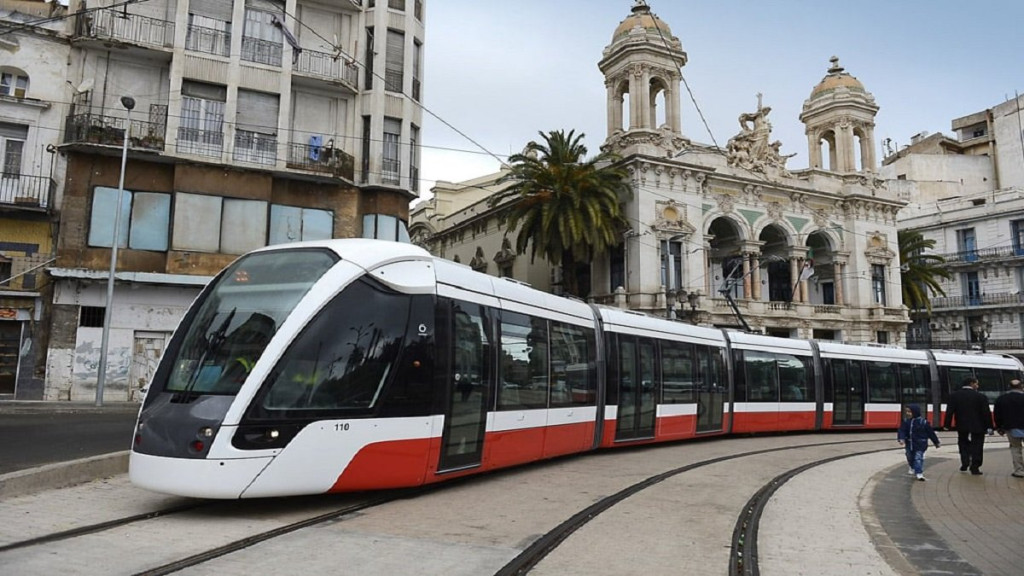
Algiers has one metro line (50 DZD a ride), a tramway with a flat 40 DZD fare since May 2026, and ETUSA buses. Oran and Constantine also have trams.
Two cheap options run from Algiers airport into town: the train to Agha (80 DZD, about 20 minutes) and ETUSA bus 100 to Place des Martyrs (50 DZD). The metro doesn't go there yet. Uber doesn't operate in Algeria, but Yassir and Heetch do, and most rides are paid in cash.
SNTF trains link the main northern cities. The Coradia express between Algiers and Oran takes about 4.5 to 5 hours on the current timetable and often runs late. Algeria has no high-speed rail, so don't build a tight connection around a train.
Main roads in and between the northern cities are generally in decent shape. In the mountains and the south, expect poor signage, sand on the road and long stretches without fuel or phone signal. Police and gendarmerie checkpoints are frequent: approach slowly, stop when asked and have your passport ready.
The Sahara is different: foreigners are expected to go with an approved agency and a guide, and some desert routes come with a police or gendarmerie escort. That's routine, and the agency sorts it out.
For long distances, fly. Air Algérie and its subsidiary Domestic Airlines, which took over from Tassili Airlines in August 2025, fly from Algiers to Sahara towns such as Djanet, Tamanrasset and Ghardaïa and save you days on the road.

Away from the cities, public transport thins out to intercity buses and shared taxis, so plan each leg before you set off, especially if you're driving.
A rental car gives you freedom in the north, but Algiers traffic is hard work and you'll stop at checkpoints on most intercity roads. Fuel is cheap: unleaded costs 47 DZD a liter at the pump (price set in January 2026).
Our rule of thumb: train or car in the north, a plane plus an agency 4x4 in the south.
Local customs and culture in Algeria
Respect local laws
Algeria is a conservative Muslim country, and some of its social rules are written into law. Knowing them avoids most awkward moments.
Kissing and cuddling in public draw stares and can bring police attention under public-indecency law. Holding hands is generally fine.
Same-sex sexual acts are illegal under article 338 of the Penal Code, with up to two years in prison and a fine. LGBT travelers should be discreet.
No eating, drinking or smoking in public in daytime during Ramadan, which should begin around 8 February in 2027 (a day either way, depending on when the moon is sighted).
Alcohol is legal but limited: licensed shops, hotels and some restaurants sell it, most restaurants don't, and drinking or being drunk in public is against the law.
Don't photograph police, military or gendarmerie sites, checkpoints, ports, airports or government buildings. Drones need an authorization that tourists can't realistically get, and customs confiscates them on arrival, so leave yours at home. The FCDO says the same about binoculars, telescopes and some photography equipment.
Dress conservatively outside beach resorts: cover shoulders and knees, and be stricter about it in the south and in the M'Zab Valley. Foreign women don't need to cover their hair, except inside mosques.
Women traveling alone tend to get more unwanted attention after dark. At night, take a Yassir or a taxi booked by your hotel rather than walking long distances.
What to expect about languages in Algeria
Arabic is the official language, and Tamazight has been an official language too since 2016. Day to day, most people speak Algerian Arabic (darja) or a Berber language such as Kabyle. French is widely used, although it has no official status.
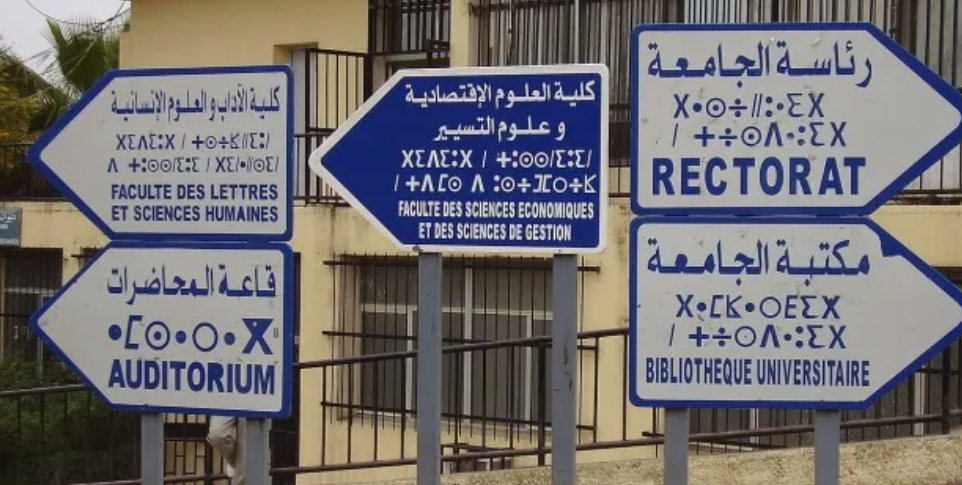
In the cities, French gets you through hotels, shops, offices and taxis. English is much less common, so don't count on it outside big hotels and agencies.
A few words go a long way: salam alaykum (hello) and shukran (thank you) in Arabic, or azul (hello) in Kabylie.
Accommodation and budgeting tips for Algeria
Where to stay in Algeria
Algiers, Oran and Constantine have international chain hotels and business hotels, and Algiers is the most expensive city in the country.
Expect roughly 4,000 to 7,000 DZD a night for a budget hotel or guesthouse room in 2026, and more in Algiers. Every hotel will ask for your passport at check-in.

In the Sahara the choice narrows to simple hotels in the oasis towns and, on tours, camps arranged by your agency. Don't count on hot water or Wi-Fi.
Book ahead for the Saharan season (roughly October to April), around Eid and in the summer holidays, when Algerians travel too. A hotel confirmation also counts as a supporting document for the visa.
Payment options in Algeria
Algeria runs on cash. Outside large international hotels, airline offices and some upscale shops and restaurants, a foreign Visa or Mastercard is of little use, and in nearly all of the south you pay in dinars.
ATMs in cities and at Algiers airport often take foreign cards, but reliability varies by bank and withdrawal limits are low. Travelers report the most luck with BNA, BEA, Société Générale Algérie, BNP Paribas El Djazaïr and BDL. Don't rely on finding a working one in small Saharan towns.
The catch with cards and ATMs is the rate: they give the official one, about 150 DZD to the euro (October 2026), while the informal market, not legal on paper but used openly by almost everyone, pays about 275. If you change cash that way, have your guide or host take you to someone they know who changes money.

Safety tips and emergency services for traveling in Algeria
Algeria surprises most first-time visitors. Our travelers regularly come back saying it felt far more relaxed and welcoming than they'd expected, with strangers quick to point the way or pour a glass of tea. The precautions that matter day to day are the ones above: watch your phone in crowds, agree taxi fares and keep your passport handy for checkpoints.
In the south, the trip changes character: Tassili rock art, sunrise over the Hoggar and nights in camp under the stars. We run trips there only on routes we know well, with licensed Algerian agencies and local Tuareg guides, and not one of them has had an incident.

Emergency numbers: police 17 or 1548, ambulance 1021 (or 16), fire 14. Response is reasonable in the big cities and slow in rural areas and the desert.
Operators speak Arabic and French. English is rare, so if you can, ask your hotel, host or guide to make the call for you.
Save your embassy's emergency number on your phone and on paper, in case you lose the phone. Most embassies are in Algiers.
Keep photocopies or photos of your passport and visa separately from the originals. They make a lost-passport report and a replacement much faster.
What the official travel advice says. The UK FCDO advises against all travel within 30 km of Algeria's borders with Libya, Niger, Mali and Mauritania, and within 30 km of the Tunisian border in Illizi and Ouargla provinces and the Chaambi mountains area. Along the rest of the Tunisian border, it advises against all but essential travel within 30 km.
The US State Department rates Algeria Level 2 (reissued 25 August 2026), with Do Not Travel for Tamanrasset, Illizi, In Salah, In Guezzam, Bordj Badji Mokhtar, Tindouf, the Tébessa mountains and remote Sahara travel without an organized tour, and it advises avoiding rural areas within 250 km of the Libya, Niger, Mali and Mauritania borders and within 50 km of the Tunisian border. Before booking, look up your own government's advice for your route and make sure your insurance covers each region you'll visit; some policies exclude areas under an official advisory.
Where to go once you have your visa
Your consulate wants to see where you are going, so here is a quick orientation for planning the itinerary. The northern cities and Roman sites are easy to visit independently; the Sahara needs an agency and a flight.
Algiers: the Casbah (UNESCO, 1992) is best seen with a local guide, as the FCDO also suggests. The Jardin d'Essai, the Martyrs' Memorial, the Bardo Museum and Notre-Dame d'Afrique fill a second day.

Oran, the home of raï (UNESCO, 2022), has the Spanish Santa Cruz fort on Mount Murdjadjo above the port and the old Sidi El Houari quarter.

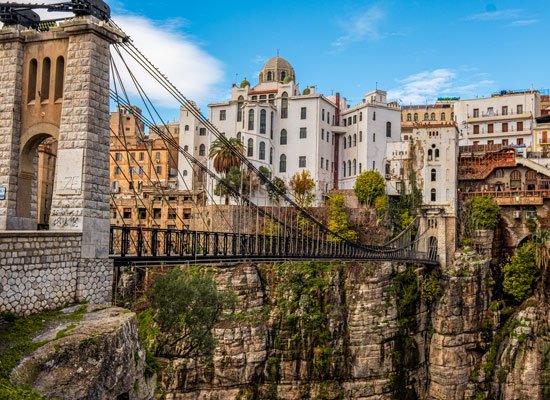
Constantine, the City of Bridges, sits on a rock above the Rhumel gorge. Its old town holds the Palace of Ahmed Bey, and the 1912 Sidi M'Cid suspension bridge crosses about 175 m above the river.
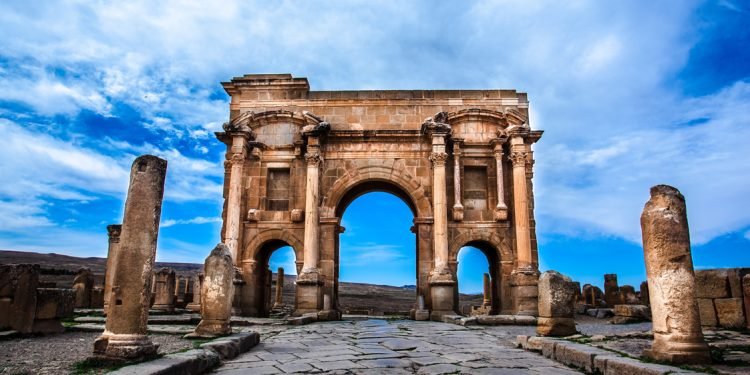
Two of North Africa's best-preserved Roman towns are within reach: Timgad, founded in AD 100 near Batna, and Djémila, in the hills northeast of Sétif, both on the UNESCO list since 1982.
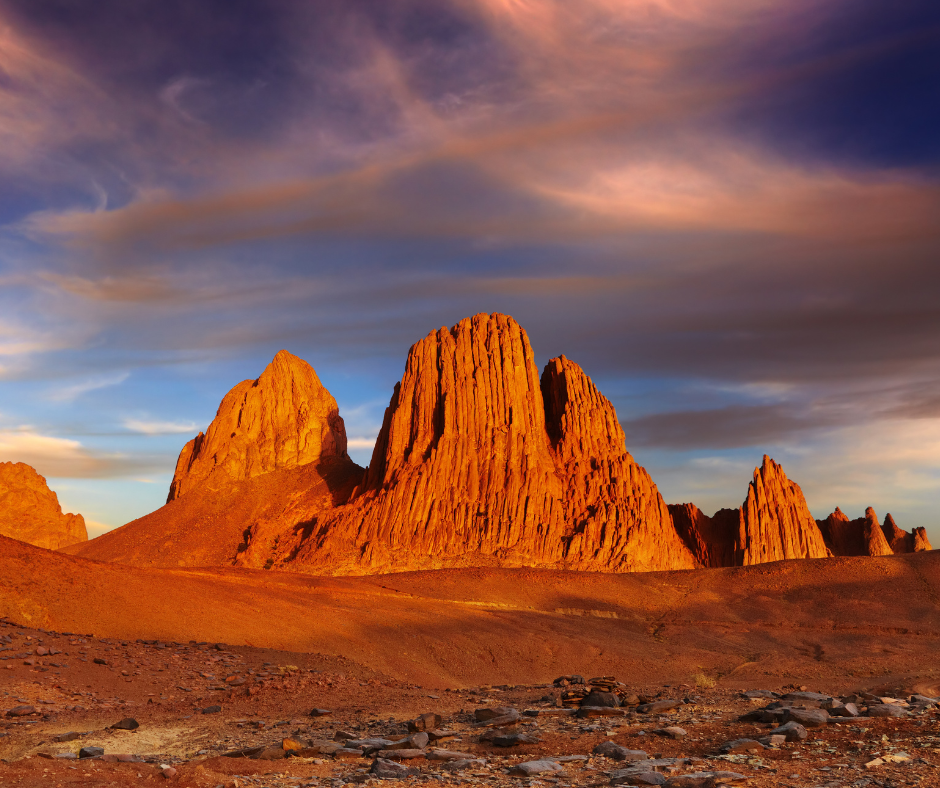
The deep south is where the visa on arrival applies: Tamanrasset for the Hoggar and the Assekrem plateau, and Djanet for the Tassili n'Ajjer rock art (UNESCO, 1982). For either, you go with a licensed agency and local Tuareg guides, and the season runs roughly October to April.
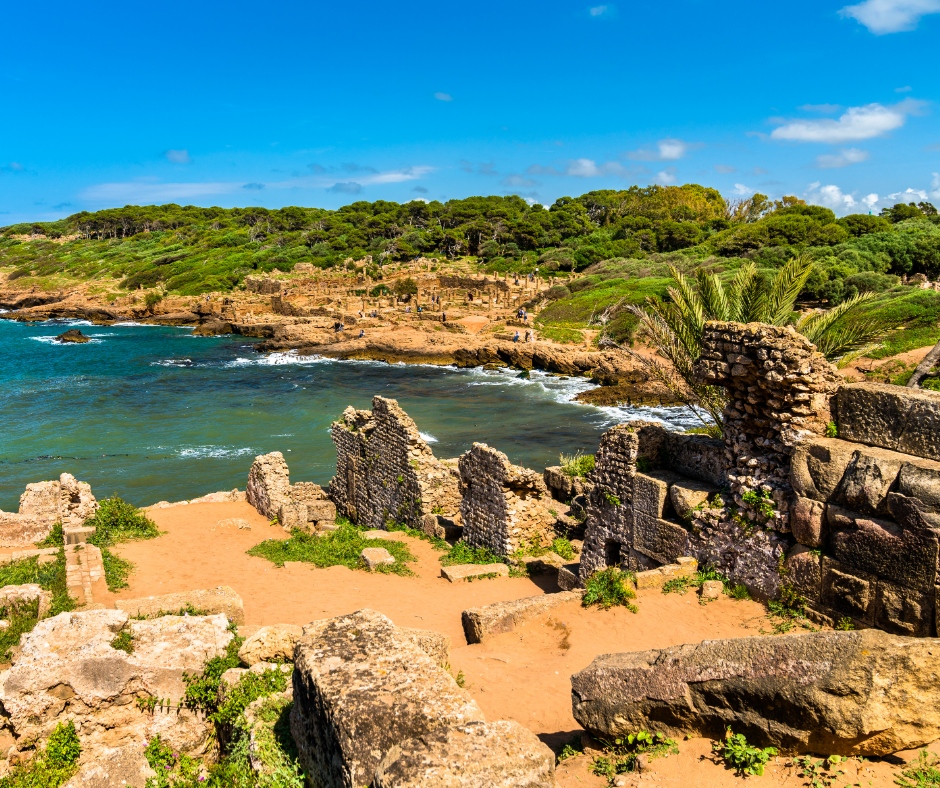
On the coast, Annaba has the ruins of Hippo Regius, where St Augustine was bishop. Tipaza, about 70 km west of Algiers, makes an easy day trip to Punic and Roman ruins by the sea.
Visa FAQ
Does Algeria have an e-visa?
No. It has been announced several times, but as of October 2026 there's no e-visa and no launch date, so you apply at a consulate, in person or by post.
How long does an Algeria visa take?
In Washington, about 5 to 8 business days. In London, about 10 working days in person or 15 or more by post, plus about five around the holidays. We'd start a month before you fly, to leave time for a missing document.
Can I get a visa on arrival in Algeria?
Only on an organized trip booked through an approved Algerian agency, with the southern wilayas on the itinerary. The agency handles the request with the Tourism Ministry, and you fly with the QR-code authorization and pay the fee on arrival. Independent and north-only trips don't qualify, and the stay is capped at 30 days.
Do I need an invitation letter for an Algerian visa?
Not necessarily. Any one of three proofs of accommodation will do: a hotel booking, your host's certificat d'hébergement certified by their town hall, or an Algerian travel agency's invitation and itinerary. Book a trip with us and we'll supply the agency letter.
Planning your Algeria trip
Who is Algeria for right now? Travelers who can handle visa paperwork, cash-only days and some improvisation, and who'd like Roman cities and Saharan rock art without crowds. It's harder going if you need English everywhere, card payments or nightlife.
If you have about ten days, our updated 10-day itinerary runs from Algiers through Constantine and the Roman sites to Ghardaïa and Djanet, and our fun facts article lists more than 20 facts about the country to know before you go.
Start the visa paperwork about a month ahead, earlier for a Sahara trip in peak season. Share your travel plans with us and we will help you put the trip together.


