


Algeria has fewer tourist scams than Morocco or Egypt, mostly because it has so few tourists: in the medinas and souks, people tend to leave you alone. The problems visitors do run into are overpriced taxis (especially unlicensed drivers at Algiers airport), short-counting when changing money, and informal guides who name their price only at the end.
Below are the six we'd watch for in 2026: unofficial guides, pickpockets, taxis, money changers, fake tour operators and commission shops, with what each looks like in Algeria and how to avoid it. Prices and exchange rates are as of autumn 2026.
Street scams in Algeria and how to avoid them
Unofficial guides in the Casbah and other old towns
In the Casbah of Algiers, and sometimes at Roman sites such as Tipaza, young men will offer to show you around, point out a view or a shortcut, and open with a bit of history. Many grew up in the neighborhood and know the lanes well, and plenty of the Casbah's guides started out exactly this way. The trouble comes when no price was agreed: after an hour's walk there's a demand for a large tip, or a detour to a shop that pays them a cut.
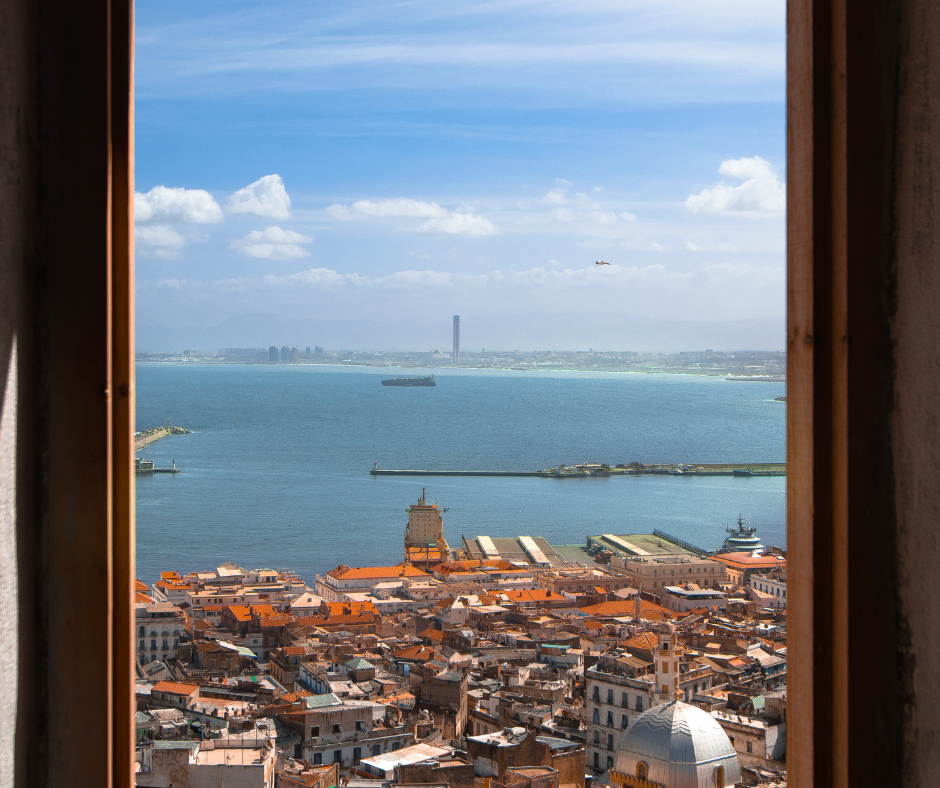
You don't have to turn everyone away. Decide at the start: either say clearly that you don't need a guide, or agree the price, the length of the walk and "no shops" before you take a step.
The UK Foreign Office (FCDO) advises using a good local guide in the Casbah and making sure your hotel or hosts know your plans, so the easiest fix is to book one through your hotel, host or an agency the day before. In Beni Isguen, in the M'Zab Valley, a local guide is compulsory and you hire one at the main gate, which settles the question for you.
Pickpockets and distraction tricks in crowded places
As in most big cities, pickpocketing and petty theft happen where it's crowded: markets, bus and train stations, and buses or trams at rush hour. The setups are the same as anywhere: someone bumps into you, asks for directions or points at a stain on your jacket while a partner goes for your pocket or bag.
Carry a zipped crossbody bag in front of you, keep your phone out of your back pocket, and leave most of your cash in the hotel safe. Take your passport on long journeys and domestic flights, where you need it. If something gets spilled on you, step away from the people offering help and check your belongings before you clean up.
If you drive, leave nothing visible in a parked car. And don't photograph police, checkpoints, ports or military sites. It can lead to questions from the police and a deleted memory card, and it isn't worth the picture.
Scams and fixes
| The trick | How to sidestep it |
|---|---|
| An unofficial guide in the Casbah or at a Roman site who starts with a friendly history lesson | Say no clearly, or agree the price, the length and "no shops" before you start |
| A bump, a question or a "stain" on your jacket in a market, station or crowded tram | Zipped bag in front, phone out of your back pocket |
| "The meter's broken," or a driver approaching you inside the Algiers airport terminal | Official rank or an app, and the fare agreed before your bags go in |
| Bundles counted fast or swapped at an informal changer | Go with your guide or host and count every note yourself |
| A Sahara tour far below licensed prices, or an "Algeria e-visa" website | Ask for the license number; there is no e-visa (Oct 2026) |
| "The only shop with authentic work," or bread and "specials" on the bill you never ordered | Choose your own shops, ask prices before ordering and check the total |
Taxi scams in Algeria and how ride-hailing helps
The broken meter and the airport overcharge
City taxis in Algeria are legally required to have a meter and to run it, but many drivers prefer to name a fixed price, and a visitor with luggage gets a higher one. "The meter's broken" is the usual line. The worst overcharging is at Algiers airport, where unlicensed drivers wait in the arrivals hall: in February 2025 the Algerian press reported one asking a returning traveler 5,000 DZD for a ride to Dely Brahim, far above the usual fare.
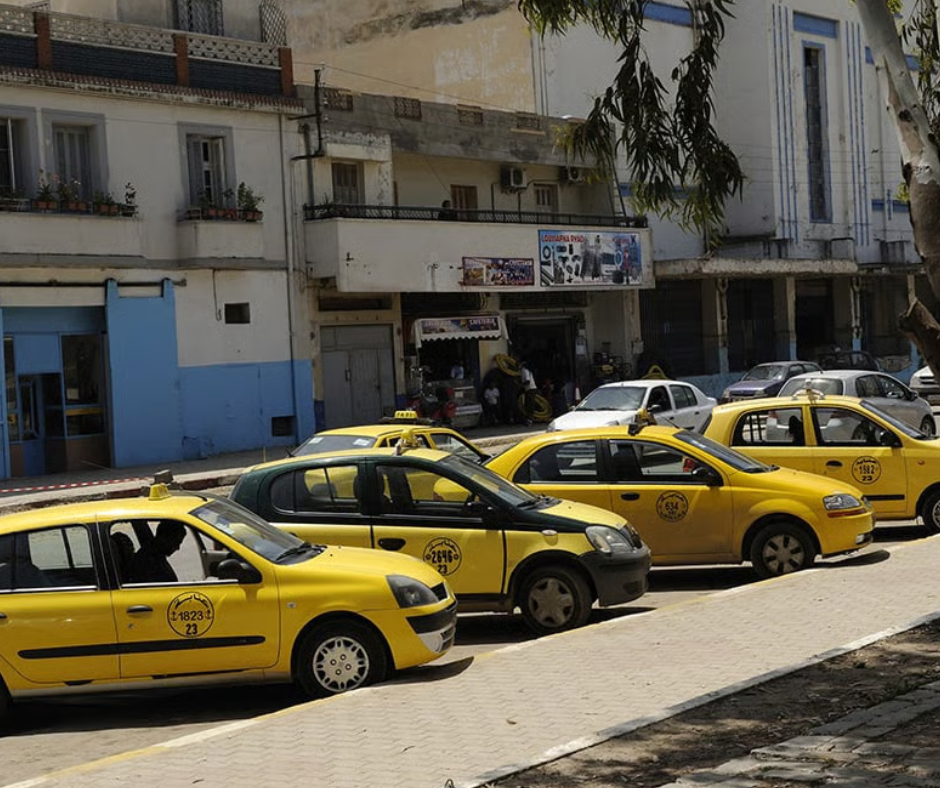
At the airport, use the official taxi rank: since summer 2025 the fares to each destination are posted and licensed drivers wear an identifying vest. A ride into central Algiers from there runs about 1,500 to 2,500 DZD. Land before about 22:25 and you can still catch the airport train to Agha (80 DZD), while ETUSA bus 100 goes to Place des Martyrs (50 DZD) until around midnight.
In town, ask the driver to start the meter before your bags go in the trunk. If the driver won't, agree a firm price or take the next taxi. Taxis get scarce after dark, so the FCDO suggests asking your hotel to call a firm it trusts.
Ride-hailing apps in Algeria: Yassir, Heetch and TemTem
Ride-hailing apps take the haggling out of it. Yassir, the Algerian market leader, Heetch and TemTem all work in the big cities; Uber doesn't operate in Algeria. The app shows the fare before you book, the route is tracked, and the driver's name and plate are on record. Most riders pay the driver in cash at the end.
Apps are most useful at the airport and for late rides back to your accommodation, so install Yassir before you fly. A few of them only accept an Algerian number, so you may need a local SIM first, and registering one takes your passport. Mobilis, Djezzy and Ooredoo all have booths at Algiers airport, as we note in our Algeria travel guide.
Money scams and currency exchange risks in Algeria
Changing money on the informal market
Algeria has two exchange rates. The official one, about 150 DZD to the euro in autumn 2026, is what you get from a bank, an ATM or a card payment. The informal "square" market (Square Port Saïd in Algiers, and a similar spot in every big city) pays about 275. Strictly speaking it breaks Algeria's exchange-control rules, yet it works in plain sight, and with a gap that wide nearly everyone uses it, Algerians and visitors alike.
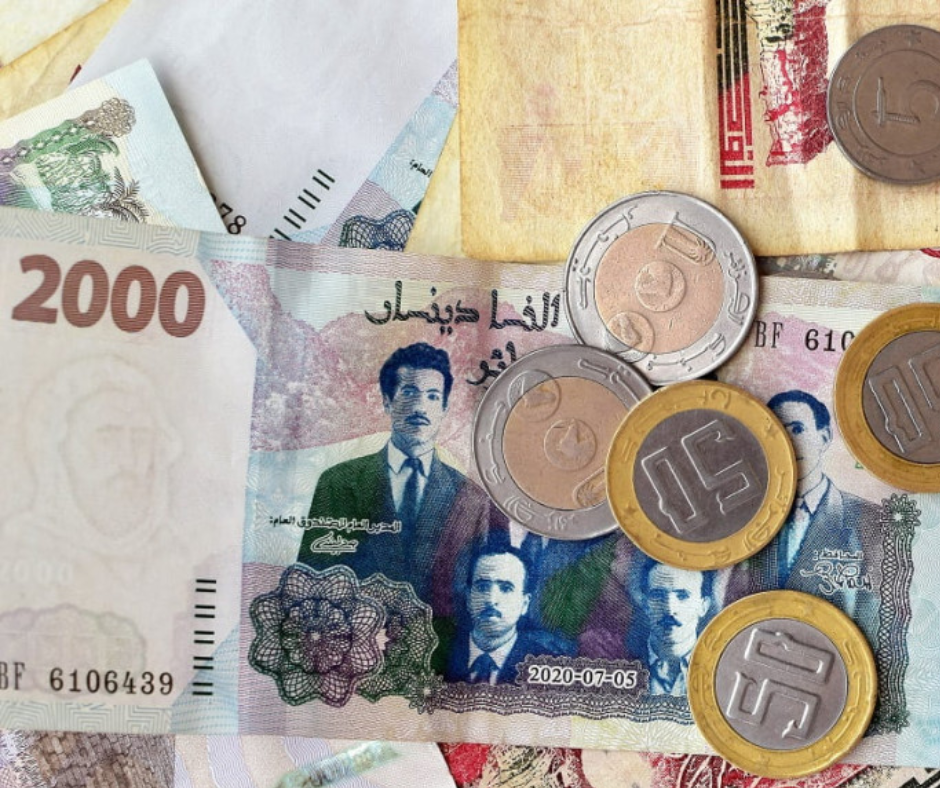
The risk for a visitor is at the table. Travelers have reported short-counting and sleight of hand with bundles of notes at Square Port Saïd, and counterfeit notes turn up now and then. The fix is to bring someone: your guide, host or agency can take you to a changer they know, or do the exchange for you. Count the dinars yourself before you hand over your euros, change modest amounts at a time, and never change money on the street at night.
Think about the way out, too. Declare more than EUR 1,000 when you land and customs may want official exchange receipts as you leave, which no informal changer will give you, so either change part of it at a bank and keep that slip, or arrive with under EUR 1,000 in cash.
Cash, cards and ATMs
Outside large international hotels, airline offices and a few upscale shops and restaurants, a foreign card is little use: you pay cash, and in the south nearly always. Paying by card also locks you into the official rate, so each euro buys about 45% fewer dinars and everything costs about 80% more than with cash changed informally. Either way you'll carry more cash than at home. Keep a day's spending in a front pocket, a small reserve somewhere else on you, and the rest in the hotel safe.
ATMs in the cities and at Algiers airport often accept foreign Visa and Mastercard, though not every bank's machines do and withdrawal limits are low. We found no recent press reports of card skimming in Algeria, but the usual habits cost nothing: use a machine inside or attached to a bank branch during opening hours, so there's someone to help if it keeps your card, and cover the keypad when you type your PIN.
Look at the card slot before you put your card in, and if anything is loose or looks added on, use another machine. How much cash to bring, and where ATMs tend to work, is in our Algeria travel tips.
Fake tour operators and excursions in Algeria
Checking a tour operator's license and reviews
Be wary of anyone, in a tourist area or on social media, who offers a Sahara or mountain trip far below what licensed agencies charge. Travel agencies in Algeria need a license from the Ministry of Tourism, and for the deep south it matters twice: the authorities expect foreigners to travel there with an approved agency, and the visa on arrival for Saharan trips is only issued through one. An unlicensed operator can arrange neither, and if the vehicle or the plan falls apart you have nobody to hold to account.
Ask for the agency's license number; wilaya tourism directorates publish lists of licensed agencies. Look for a real address and phone number, and for recent reviews on independent platforms, not just on the operator's own page. The same goes for visas: Algeria has no e-visa as of October 2026, so any website selling an "Algeria e-visa" is not official.
A real operator will put the itinerary, what's included and the price in writing before you pay. For how travel in Algeria feels region by region, and what to check before heading south, see our answer to is Algeria safe for tourists.
Commission shops and sales pressure in the souks
Hard selling is much rarer in Algeria than in Morocco: most souks serve locals, and shopkeepers usually let you browse. When pressure comes, it tends to come from a guide or driver who insists on one particular craft shop or cooperative, "the only place with authentic work". Some of these shops pay the guide a commission, and it ends up in your price.
Pick your own shops. If you want a carpet in Ghardaïa or silver jewelry in Kabylie, tell your guide at the start that you'll shop on your own time.
If you do end up in a shop that pushes, a polite but firm no is enough. Look at a few stalls before you buy leather goods, rugs or jewelry, so you have a feel for quality and price.
Padded restaurant bills
Most Algerian restaurants price fairly. Where there's no printed menu, though, a visitor's bill can grow: bread, bottled water or a plate of olives you didn't ask for, or a "special" with no price. Ask for the prices before you order, say no to what you don't want when it arrives, and check the total before you pay. As a yardstick, couscous or a simple main in a popular restaurant runs about 600 to 1,200 DZD (2026).
Protecting your phone and data in Algeria
Public Wi-Fi and fake hotspots
Anyone can name an open network "Airport Free WiFi" and read what passes through it. Use your own SIM for banking and bookings instead: data costs little here, about 1,000 to 1,500 DZD for 10 to 50 GB over 30 days in 2026.
Online contacts who ask for money
Some scams start before the trip. Someone you met on a dating app or social media becomes a close friend fast. Then come requests for money for a ticket, a visa or an emergency, or an offer to "sponsor" your visa with an invitation letter.
Never send money to someone you have not met in person, and read your own government's travel advice on this. On the trip itself, post photos once you've moved on, and don't share your hotel name or room number with people you've just met.
Keeping your plans to yourself matters even more on a solo trip, and we wrote a separate page on Algeria solo travel for that.
Emergency numbers in Algeria
- Police: 17 or 1548
- Gendarmerie (outside the cities): 1055
- Ambulance: 1021 or 16
- Fire and civil protection: 14
Save your embassy's phone number too, along with your hotel's and your agency's. If you don't speak Arabic or French, ask your host or guide to make the call.
What to do if you are scammed or robbed
- Go to the nearest police station (commissariat), or the gendarmerie outside the cities, and ask for a written declaration of loss or theft. Your insurer will need it.
- Block your bank cards and change any passwords stored on a stolen phone.
- If your passport is gone, contact your embassy in Algiers for an emergency travel document, and bring the police declaration.
- Tell your agency or host. They can come with you to the station and translate.
- Keep every receipt and the police paperwork for your insurance claim.
Do you need travel insurance for Algeria?
Some consulates require it with the visa application. The Algerian consulate in London, for example, says travel insurance is not required for British and Irish citizens but asks other nationalities for it, and consulates in Schengen countries usually require it. Check with the consulate where you apply.
Required or not, we'd take it. Look for medical cover and evacuation, theft of cash and belongings, and cover for the regions you plan to visit, including any Sahara trip. Check that your policy doesn't exclude areas named in your government's travel advice. For a claim, you'll need the police declaration and your receipts.
Four habits that prevent most scams in Algeria
Agree the price before the service starts: the taxi fare, the guide's fee and how long the walk lasts, the changer's rate and the total in dinars.
Know the going rates, and keep an offline map open so you notice when a driver takes the long way. Some benchmarks from autumn 2026:
| What you're paying for | Fair price in dinars | € at the bank rate (about 150) | € with cash changed informally (about 275) |
|---|---|---|---|
| Licensed taxi, Algiers airport to center | 1,500 to 2,500 | 10 to 17 | 5.50 to 9 |
| Airport train to Agha | 80 | 0.55 | 0.30 |
| ETUSA bus 100, airport to Place des Martyrs | 50 | 0.35 | 0.20 |
| Algiers metro ticket | 50 | 0.35 | 0.20 |
| National museum ticket | About 200 | 1.35 | 0.75 |
| Couscous in a popular restaurant | 600 to 1,200 | 4 to 8 | 2.20 to 4.40 |
| Prepaid SIM data, 30 days | 1,000 to 1,500 | 6.65 to 10 | 3.65 to 5.45 |
Don't carry everything at once. With most of your cash in the hotel safe, a lost wallet is an annoyance rather than the end of the trip.
And if a deal feels wrong, walk away. In daytime there's usually another taxi or another stall; after dark, use an app or ask your hotel.
Algeria scams: what people ask us
Should scams put me off Algeria?
No. They are small-scale (taxis, changers, informal guides), and people traveling with us often say the country felt calmer and more welcoming than they had expected from what they read.
Which scam am I most likely to run into?
Taxi overcharging, especially by unlicensed drivers at Algiers airport, is the most common. After that come short-counting by money changers, informal guides who name a price only at the end, and commission shops. Agree every price in advance and most of these never happen.
What's a fair taxi fare from Algiers airport?
From the official rank, where fares are posted and licensed drivers wear a vest, expect 1,500 to 2,500 DZD to central Algiers (2026), and ignore anyone who approaches you inside the terminal.
Can I change money informally without getting cheated?
Yes, if you don't go alone. The square market is technically outside the law, but it's where most locals and visitors change, at about 275 DZD to the euro against roughly 150 at the bank (autumn 2026). Take your guide or host, count every note and change modest amounts.
Who do I call in an emergency?
Dial 17 or 1548 for the police, 1055 for the gendarmerie outside the cities, 1021 or 16 for an ambulance and 14 for the fire service and civil protection. If you don't speak Arabic or French, ask your host or guide to call for you.
Planning your Algeria trip with local help
Most travelers we host find Algeria easier-going than they expected, and the situations above mostly happen when you're alone, tired and new in town: landing late at Algiers airport, changing money on day one, walking into the Casbah without a plan. WildyNess arranges custom Algeria itineraries with a driver waiting for you at arrivals, local guides and hosts, and transfers between stops, so who meets you, who shows you around and what it costs are settled before you arrive.
If that suits you, reach out to us with your dates and the places you want to see, and we'll suggest a route. If you'd rather travel independently, the habits above will cover you in the cities. The deep south is the one region where you need an approved agency anyway.


