

Ghardaïa is the largest of the five fortified towns of the M'Zab Valley, about 600 km south of Algiers by road, and the natural base for a visit. With two or three days you can walk Ghardaïa's old ksar and market, tour Beni Isguen with a local guide and stay for its late-afternoon auction, see the Sidi Brahim mosque at El Atteuf, and spend half a day in the dunes to the south.
UNESCO put the whole M'Zab Valley on its World Heritage list in 1982. Each town (a ksar, plural ksour) stands on its own rocky hill above the Oued M'Zab, with the mosque at the top, tightly packed houses below and the palm grove further out.
It is a conservative and private place. At Beni Isguen you hire a guide at the gate and go nowhere without one, and outsiders can't stay the night inside the walls. In every one of the old towns, residents, and women above all, are not to be photographed.
Below we go town by town, then cover food, where to sleep, when to go and the local rules. If Ghardaïa is part of a wider trip, our Algeria travel guide helps you connect it with the north.
Ghardaïa trip basics
| Planning point | For Ghardaïa |
|---|---|
| Getting there | Air Algérie from Algiers to Noumérat airport, about 16 km from town, or a long day on the road via Laghouat |
| Time to allow | Two or three days |
| When to come | October to April; March for the National Carpet Festival |
| House rules | Beni Isguen only with a guide hired at the gate; no photos of residents; modest dress |
| Visa | Ghardaïa wilaya is covered by the visa on arrival for organized tours of the south |
Five ksour on five hills
El Atteuf, Bou Noura, Ghardaïa, Beni Isguen and Melika make up the pentapolis, as the valley's five ksour are known together. Two later towns further out, Berriane and Guerrara, date from the 17th century and are sometimes added to make seven.
They were built by the Mozabites, a Berber-speaking people who follow the Ibadi school of Islam. Ibadi communities moved south after their Rustamid state at Tahert fell in 909, and they settled this dry, remote valley, where they could live by their own rules. The five ksour were founded between about 1012 and 1350.
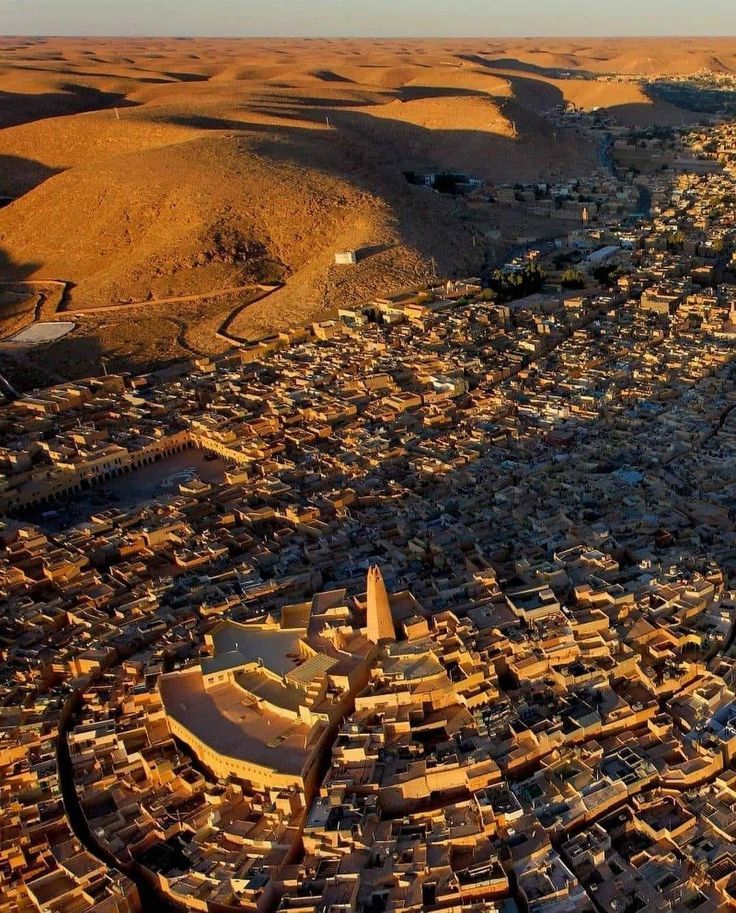
Each ksar follows the same plan: the mosque and its minaret on the summit, houses in rings down the slope, a wall around the edge and a palm grove outside, where many families kept summer houses. Water comes from the rare floods: dams on the wadi push the floodwater into channels and refill the wells.
The French architect André Ravéreau, who worked in the valley for years, called his 1981 book on it Le M'Zab, une leçon d'architecture (a lesson in architecture), and all five ksour are still lived in. Our full M'Zab Valley guide goes deeper into the five towns, the Ibadi community and the rules for visitors.
The five towns compared
| Ksar | Founded | Where | Main sight | Guide | Time needed |
|---|---|---|---|---|---|
| El Atteuf | About 1012, the oldest | Downstream end of the valley | Sidi Brahim mosque | Recommended | Half a day with Bou Noura |
| Bou Noura | Mid-11th century | Hill between Beni Isguen and El Atteuf | Ruined upper town, restored minaret | Recommended | 1 to 2 hours |
| Ghardaïa | 11th century (by tradition) | Center of the valley, the largest | Great Mosque minaret, market square | Recommended in the ksar | Half a day |
| Melika | 11th or 12th century (sources differ) | Plateau between Ghardaïa and Beni Isguen | Tombs of Sheikh Sidi Aïssa and his family | Recommended | 1 to 2 hours |
| Beni Isguen | 11th century (some sources give a later date) | Across the valley from Ghardaïa | Walls, watchtower, Lalla Achou auction | Compulsory, hired at the gate | 2 to 3 hours with the auction |
Ghardaïa, the heart of the valley
Ghardaïa is the largest town in the valley and the capital of the wilaya of the same name. Algerians often call it the pearl of the oases. The old ksar climbs a hill above the Oued M'Zab, while the modern town, the hotels and most restaurants spread along the valley floor.
The town is also home to a large Arab community of Maliki Muslims (the Chaamba) alongside the Mozabites. The new town has the traffic, cafés and shops of any big southern Algerian town, while the ksar stays quiet and residential.

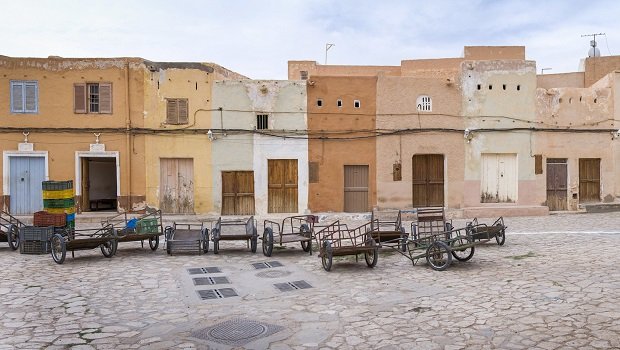
The old town is a tangle of narrow lanes, many of them covered, that wind up toward the mosque. Doors are low, windows are few and small, and the house fronts are washed in white, ochre or pale blue.
A local guide is the easiest way in. The lanes are a maze, some areas are residential and closed to visitors, and a guide knows where you can and can't take photos.
Visit the Great Mosque of Ghardaïa
The Great Mosque sits on top of the ksar hill. Tradition dates it to the founding of the town in the 11th century, and its minaret is visible from most of the old town.
That minaret is the valley's signature shape: a plain square tower that tapers as it rises and ends in four pointed corners, built of stone and lime plaster with no decoration at all.
Non-Muslims are generally not allowed inside the mosques of the M'Zab, so plan to see the Great Mosque from the outside and from the lanes around it. Your guide will know the best spot for a photo of the minaret.

For Mozabites the mosque is the center of community life as well as a place of prayer. Its bare whitewashed walls follow the Ibadi taste for modesty, and the council of religious scholars, the Azzaba, traditionally met there to run the town's affairs.
It is busiest at the Friday midday prayer, so keep your camera away and don't linger at the entrance at prayer times.
Wander through the local markets
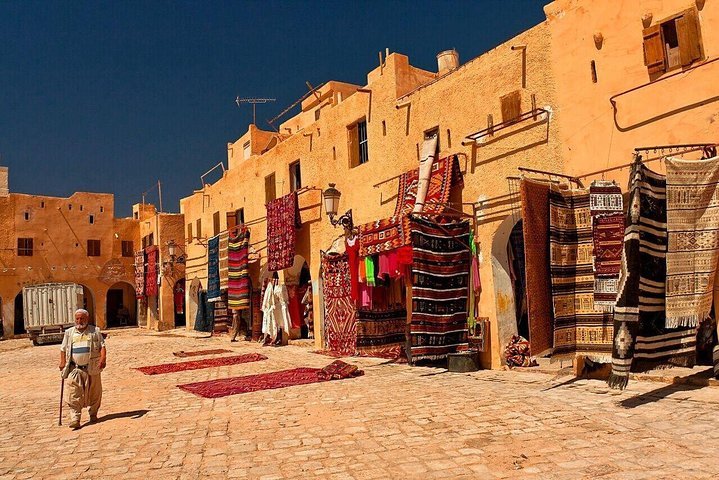
The market square at the foot of the old town is the place to shop in Ghardaïa.
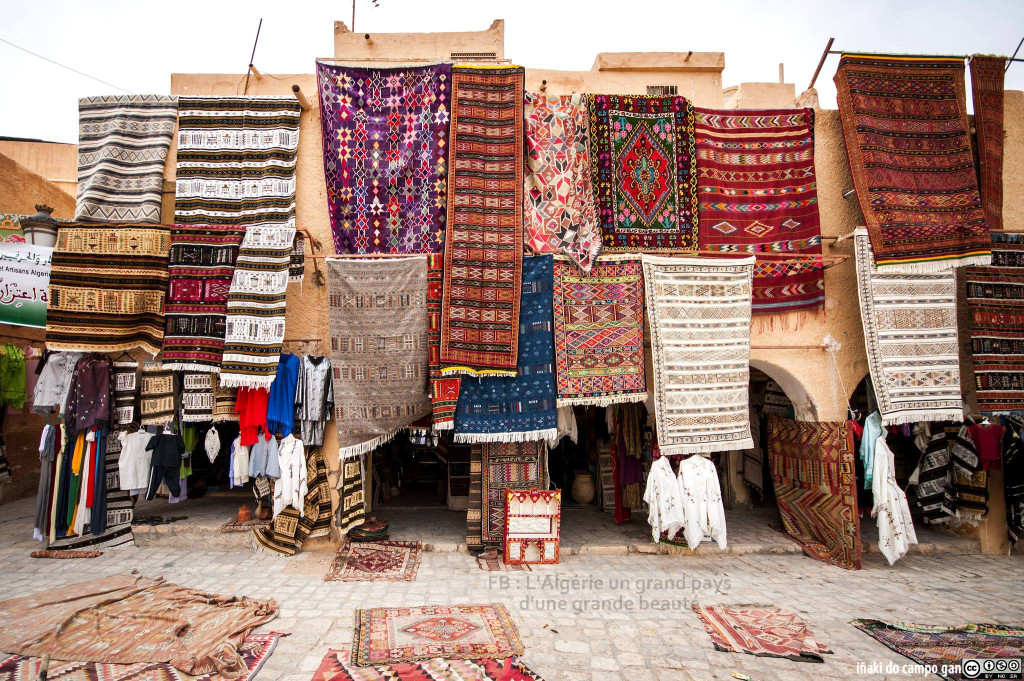
Expect spice sellers, dates from the palm groves, household goods, and piles of carpets and blankets. Prices are rarely marked, bargaining is normal, and almost everyone wants cash.
Ghardaïa is best known for its wool carpets and blankets, woven by women, often in natural wool colors with geometric patterns. You'll also find silver jewelry and leather goods.

Weaving is mostly done at home, so you are more likely to see it in a carpet shop or a cooperative than on the street. If you want to watch a loom in use, ask your guide before you arrive.
Shopkeepers are used to visitors, and many speak French as well as Arabic and Tumzabt, the Mozabite Berber language. A few words of French or Arabic help, and bargaining should stay friendly.
Local specialties to try
Restaurants in Ghardaïa are simple and mostly in the new town. They serve the standard southern Algerian menu of soups, grilled meat, couscous and tajines.
Couscous comes with lamb or vegetables and a bowl of broth. It is the dish of family gatherings and Fridays.
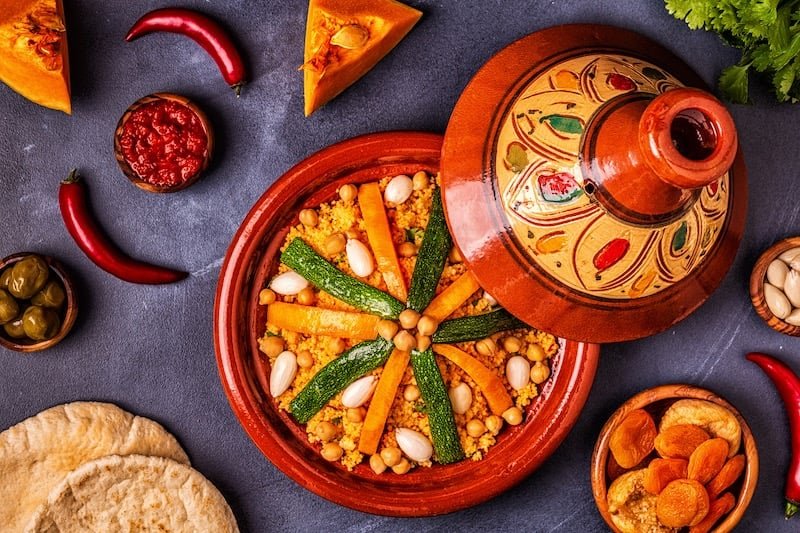
Berkoukes is a large-grain, hand-rolled couscous cooked in a soupy sauce with meat and vegetables, welcome on a cold winter evening.
For dessert, look for makroud: diamond-shaped semolina pastries filled with date paste, fried or baked, then dipped in honey or syrup. With palm groves on every side, dates themselves are on every table.
Meals end with sweet green tea, usually with mint.
Don't expect alcohol, and there are very few places to eat inside the ksour. For home cooking, ask your guide or guesthouse about a meal with a local family, which needs arranging in advance.
Beni Isguen, the holy town of the M'Zab
Beni Isguen is the holy town of the M'Zab and the most strictly run of the five. If you only have time for one guided visit, make it this one.
It is a few kilometers from Ghardaïa, across the valley, inside a complete ring of walls with a watchtower at the top.
Visits go through the official guides' office at the main gate; you can't walk in alone. The town closes to outsiders at sunset, non-residents may not spend the night inside, smoking is banned within the walls, and residents may not be photographed. Some quarters are closed to visitors altogether, and the guides' office does not open on religious holidays.
Arrive in the late afternoon for the auction on Lalla Achou square. Every day except Friday, before sunset, auctioneers walk around the square calling out bids for whatever people have brought to sell.
Expect secondhand furniture, carpets, household items and crafts. The auctioneers are approved by the Azzaba, the town's council of clerics, and the sale has run this way for centuries. Watching costs nothing; just keep your camera off the people.
Dress more conservatively here than anywhere else in the valley: long trousers or skirts, covered shoulders and nothing tight, for men as well as women.
The houses face inward. Each has a central courtyard lit by an opening in the ceiling, thick walls of stone and lime plaster, and a roof terrace where families sleep on summer nights.
The lanes are narrow and often covered, so they stay shaded most of the day. Upstream of the ksar, the Beni Isguen palm grove has one of the valley's old flood-diversion dams, worth asking about if your guide has time.
The guide isn't optional here, but it is also what makes the visit worthwhile: you get the history, the house layouts and the community rules from someone local.
Visit El Atteuf, the oldest ksar of the valley
El Atteuf, at the downstream end of the valley, is the oldest of the five ksour, founded in about 1012.
It sees fewer visitors than Ghardaïa or Beni Isguen, and its lanes are quiet and residential.
The building most people come for is the Sidi Brahim mosque, a small whitewashed mosque next to the tomb of Sheikh Sidi Brahim, in an old cemetery at the foot of the ksar's southern slope.
Its rounded, hand-plastered walls and the way light enters the prayer hall are said to have inspired Le Corbusier, who visited it, when he designed the Notre-Dame-du-Haut chapel at Ronchamp in France. Ask your guide whether it is open to visitors on the day.
Below the town, the palm grove is still farmed.
The houses follow the same plan as in Beni Isguen: thick walls, a courtyard at the center and small openings that keep out the heat.
Go in the morning, when the lanes are cooler. Guides often pair El Atteuf with Bou Noura, which is on the way back toward Ghardaïa.
If you like architecture, El Atteuf is the stop not to skip, mainly for the Sidi Brahim mosque. Allow half a day for El Atteuf and Bou Noura together.
Bou Noura and its ruined upper town in the M'Zab Valley
Bou Noura (Bounoura) stands on a rocky hill where the Oued M'Zab meets a smaller wadi, the Oued Azouil, between Beni Isguen and El Atteuf. It was founded in the mid-11th century.
Its upper town was destroyed around 1250, either in a war with neighboring Melika or in an internal conflict that drove much of the population out, and it stayed in ruins for centuries.
Only the mosque at the summit was kept up. Its minaret stood broken at half height until 1983, when the community restored it with traditional techniques and materials recovered on site.
Today the lower town is lived in, and the ruined upper quarter, with its walls and restored mosque, is the reason to come. It is small, with far fewer shops than Ghardaïa, so pair it with another ksar.
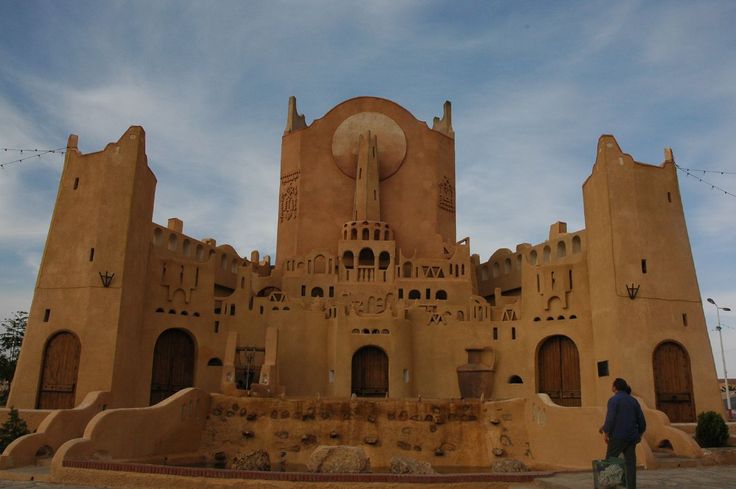
Go with a guide. Without one, the upper town is just a hill of broken walls; with one, you can read the old streets and houses in it.
Melika, the ksar on the hill
Melika is the ksar most visitors skip, and the easiest to add. It sits on a plateau above the Oued M'Zab, halfway between Ghardaïa and Beni Isguen. Ibadi Mozabites founded it; sources date it either to the early 11th century or to 1124.
Until the 19th century Melika was regarded as the holy town of the M'Zab, a role that then passed to Beni Isguen. Its layout has one oddity: the souk adjoins the great mosque in the center of the town, instead of sitting at the edge as in the other ksour.
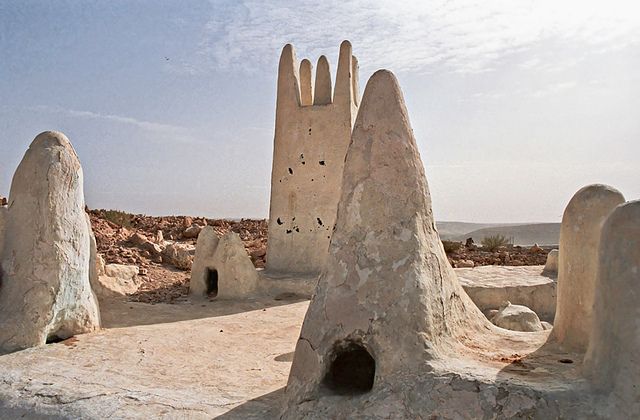
The reason to come is the cemetery, with the tombs of Sheikh Sidi Aïssa and his family. Their whitewashed clay pinnacles, called iduden, point at the sky like fingers. Go with your guide, keep to the paths and keep your camera off people. One to two hours is enough, and it pairs well with Beni Isguen on the same afternoon.
The desert and palm groves around Ghardaïa
Ghardaïa is not in the sand sea. The M'Zab sits on the Chebka, a bare, rocky limestone plateau cut by dry valleys, and the dunes start further south. For the bigger desert regions further south, from Djanet to Timimoun, see our guide to the Sahara in Algeria.
Local tours usually head to the dunes around Sebseb, about 50 km to the south, for a half day or an evening of 4x4 driving, sandboarding or a short camel ride, often with tea and bread baked in the sand.
Some add a night in a desert camp, which gets cold from December to February. For the biggest dunes in this part of the country, though, Taghit on the Grand Erg Occidental is hard to beat.
The nearest ranges of the Saharan Atlas, around Laghouat, are about 200 km north and fit on the drive from Algiers rather than as a day trip.
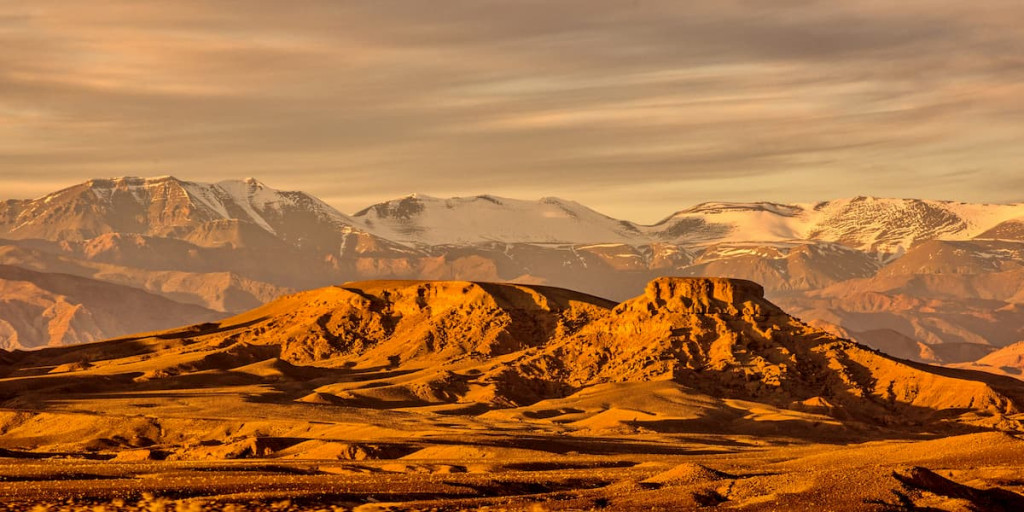
Closer to town, the palm groves along the Oued M'Zab are the easy green escape: shaded tracks, walled gardens and old water channels, best on foot in the late afternoon.
Practical tips for visiting Ghardaïa
When is the best time to visit Ghardaïa?
The best time to visit Ghardaïa is October to April, when daytime temperatures are comfortable for walking the ksour.
Winter days are mild and sunny, but nights from December to February are cold, so bring a warm layer, especially for a desert camp.
We'd pick March, or late October to November. Spring has the carpet festival; autumn has the date harvest in the palm groves. Autumn can also bring rare but heavy storms that send floodwater down the Oued M'Zab, so keep an eye on the forecast and stay out of the wadi bed when rain is expected.
The big event is the National Carpet Festival (Fête du tapis), held in Ghardaïa every March for more than 50 years, usually during the spring school holidays. It brings a crafts fair, a parade of floats covered in handwoven carpets, fantasia and folk performances. Book early if you want to be there.
Avoid June to September if you can. Daytime temperatures often pass 40°C, and even the shaded lanes don't help much at midday.
Where to stay in Ghardaïa
Ghardaïa has a few large state-run hotels, some private hotels in the new town and a handful of guesthouses. Expect basic to mid-range standards.
The two classic hotels were designed by the French architect Fernand Pouillon. Hôtel M'Zab (formerly Les Rostémides) was built in 1970 to 1972 on the site of an old fort, reopened in November 2021 after 27 years closed, and has about 150 rooms with views over the valley. El Djanoub, also by Pouillon, is a large hotel with a pool.
Hotel Belveder in Bounoura is smaller and listed as a farm stay on the booking sites, with a garden and its own restaurant.
For something more traditional, we can arrange a guesthouse in an old farmhouse in the Beni Isguen palm grove or a night with a Mozabite host family, with home-cooked dinners. Expect simpler rooms, some with shared bathrooms.
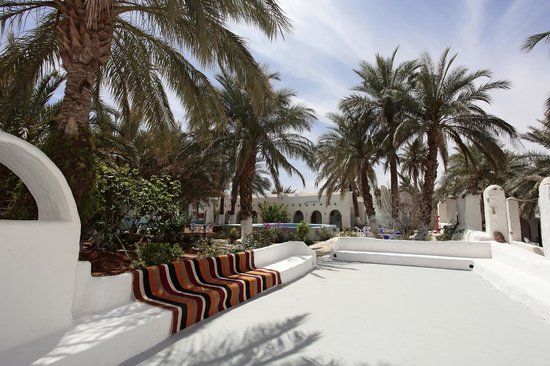
Other small, family-run guesthouses (maisons d'hôtes) are scattered through the palm groves and around Bounoura.
Many places in Ghardaïa are not on international booking sites, cards are rarely accepted, and online photos and reviews can be years old. Check recent reviews before you book and plan to pay in dinars.
Book ahead for the carpet festival in March, the winter and spring school holidays, and the Eid holidays, when Algerian families travel south.
Respect local customs
The Mozabites follow the Ibadi school of Islam, and their towns run on community rules that are stricter than in most of Algeria. The rules below matter most inside the ksour.
Keep your voice down near mosques and during the call to prayer, and don't play music in the lanes.
Ramadan rules apply everywhere in Algeria, the M'Zab included: no eating, drinking or smoking in public during daylight. The 2027 fast is expected to begin around 8 February.
Don't photograph residents, especially women, in any of the ksour, and keep your camera down around mosques. Your guide will tell you which areas are off-limits for photos. Leave your drone at home: Algeria requires an authorization that tourists can't realistically get, and drones are confiscated at customs.

Both men and women should dress modestly. Loose, light cotton is the most comfortable in the heat.
For women, that means covered shoulders and knees at least, and more in Beni Isguen. For men, long trousers, not shorts, in the old towns. Non-Muslims generally can't enter the M'Zab mosques, so don't go in unless your guide says it's allowed.
Before you arrive
Flights to Noumérat airport, about 16 km southeast of town, leave from Algiers with Air Algérie; by road it's about 600 km. Most visitors need a visa arranged in advance. Organized tours booked through an approved Algerian agency are the exception, because Ghardaïa is one of the 24 southern wilayas where the visa on arrival applies.
The Beni Isguen guide is hired at the gate on the day, but the other ksour, the dunes and a meal with a family are easier to arrange before you arrive. If you'd like us to handle it, we can create a customized itinerary around your dates and put you in touch with a local guide and a host family in the valley.
A plan that works: day one for Ghardaïa's ksar and market; day two for El Atteuf and Bou Noura in the morning and Beni Isguen with its auction in the late afternoon; day three for the palm groves and the dunes.
Beni Isguen, timing and the trip down from Algiers
Can I walk around Beni Isguen without a guide?
No. An official guide hired at the main gate has to take you in, and the town closes to outsiders at sunset. Come in the late afternoon and you can watch the auction on Lalla Achou square, held every day except Friday.
Is one day in Ghardaïa enough?
Not for the whole valley: Ghardaïa's ksar and market fill the first day, El Atteuf and Bou Noura the next morning with Beni Isguen and Melika that afternoon, and the palm groves or the Sebseb dunes fill a third.
Should I fly or drive from Algiers?
Fly if time is short. Air Algérie goes from Algiers to Noumérat airport, about 16 km southeast of town. The road is about 600 km, a full day's drive via Laghouat, where you can break the journey. For the March carpet festival and the school holidays, book the flight early.

Is Ghardaïa right for you?
Ghardaïa rewards an interest in architecture, Islamic history and traditional town life. Expect rules, guides and quiet evenings.
It is a poor fit if you want nightlife, a drink with dinner or the freedom to wander and photograph as you like. If big dunes are your priority, Taghit or the deep south will suit you better.
Two or three nights is enough for most people. Fly in from Algiers, or break the drive in Laghouat, and come between October and April.
Ghardaïa is a quiet, conservative town. People we send here often say the country turned out calmer and friendlier than they had pictured, and our guide to safety in Algeria covers the practical side.


