
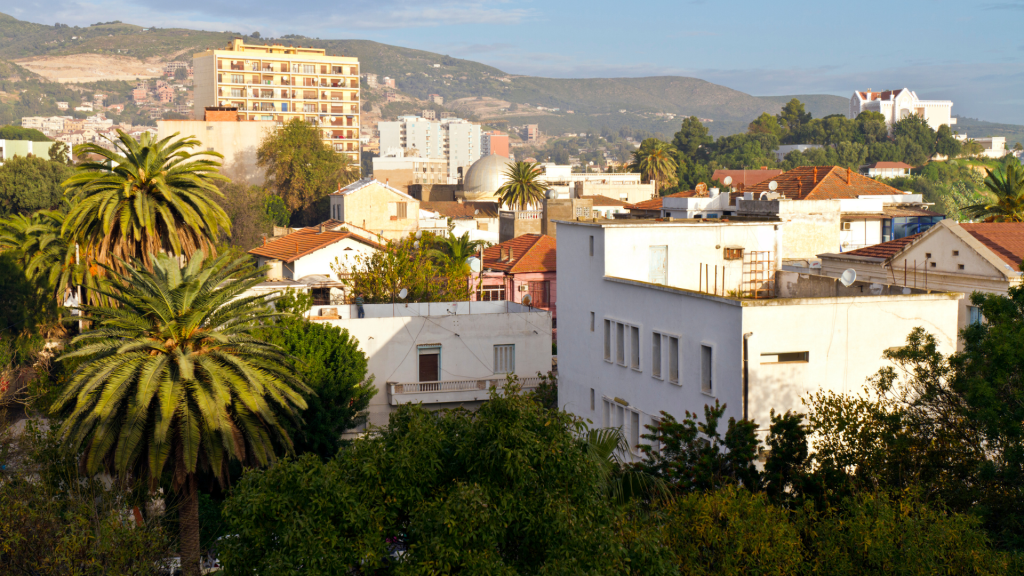

Annaba is worth two or three days. Walk the Roman ruins of Hippo Regius, where St Augustine was bishop, then climb to the Basilica of St Augustine on the hill above them, swim off the corniche, and ride the cable car up to Seraïdi in the Edough mountains. In the evening, eat a bourek annabi on the Cours de la Révolution.
The city is in Algeria's far east, about 600 km from Algiers by road, and it has its own airport. The 2008 census counted about 257,000 people in the city itself and over 600,000 in the wider urban area. It is one of the few cities in Algeria where you can see Roman ruins and swim on the same day. Below is how we'd do each part, with the catches.
A short history of Annaba
Annaba began as a Phoenician trading port. The Numidian kings made it one of their royal towns, which is where the Roman name Hippo Regius ("royal Hippo") comes from. Under Rome it became a busy port and, later, a bishop's seat. Augustine was its bishop from the 390s until he died in 430, while the Vandals besieged the city; they took it the following year.
After the Arab conquest at the end of the 7th century, a new town called Bouna grew up a little to the north. Its Sidi Bou Merouane mosque, built in 1033, still stands in the old town. Annaba later came under the Hafsids of Tunis and, from 1533, the Ottomans.
French troops took it in 1832 and renamed it Bône; the Cours de la Révolution and the basilica are from that period. Since independence in 1962 the city has been Annaba, a major port, with the El Hadjar steelworks about 8 km to the south.
Hippo Regius: the Roman ruins of Annaba
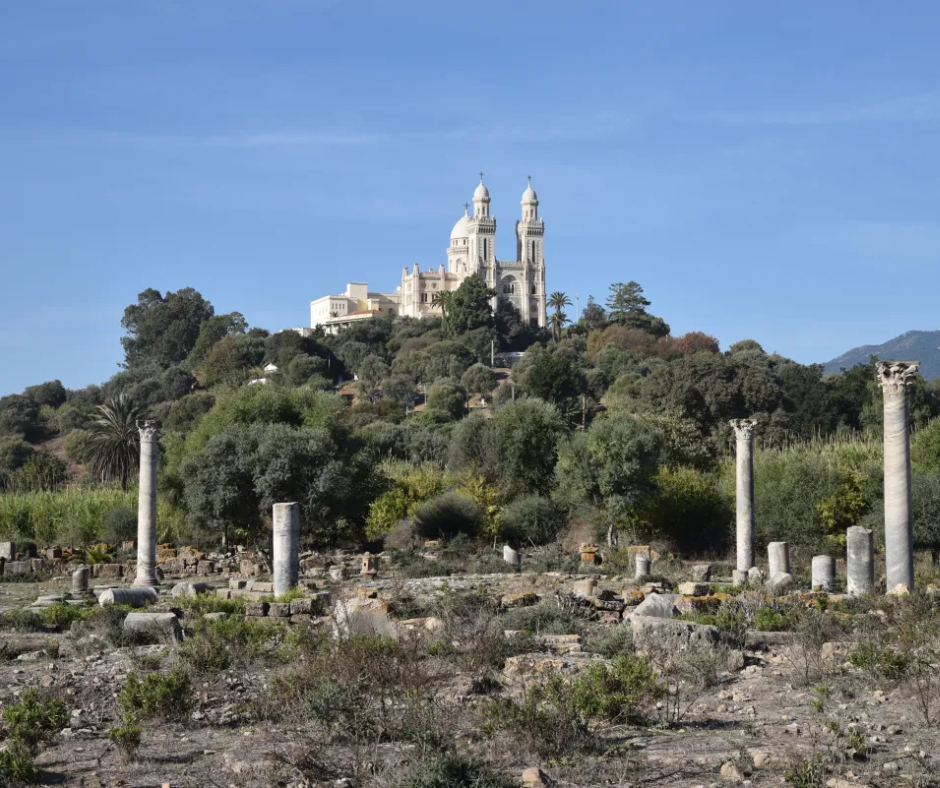
Hippo Regius is the reason most visitors come. It began as a Phoenician port, became a royal town of the Numidian kings and then a Roman city. St Augustine was its bishop for more than 30 years and died there in 430, during the Vandal siege. The ruins lie on the southern side of modern Annaba, about 2 km from the old town.
The site is large, only part of it has been excavated, and it spreads over a gentle slope below the basilica. Start at the Great Forum. At about 76 by 43 m, it is among the largest Roman forums found in North Africa.
Leave as much time for the site museum as for the ruins. Its mosaics show hunting scenes, the sea god Oceanus and a view of Hippo itself. The best-known piece is the Trophy of Hippo, a bronze monument about 2 m tall, found in the forum, which commemorates Julius Caesar's victory over the Numidian king Juba I.
See the museum first and the stones outside make more sense. Then do the open-air site early: shade is limited, and by midday in summer it is hot and the light is flat for photos. Algerian museum and site tickets typically cost 200 to 300 DZD (2026). Hours change, so ask your hotel or guide the day before.
The Great Forum and the theater
The forum was the city's public square. It is paved in blue-gray limestone, and its dedication inscription dates it to 78 or 79 AD, under the Flavian emperors. Around it you can trace the foundations of temples and public buildings. A short walk away is the Roman theater, one of the best-preserved parts of the site.
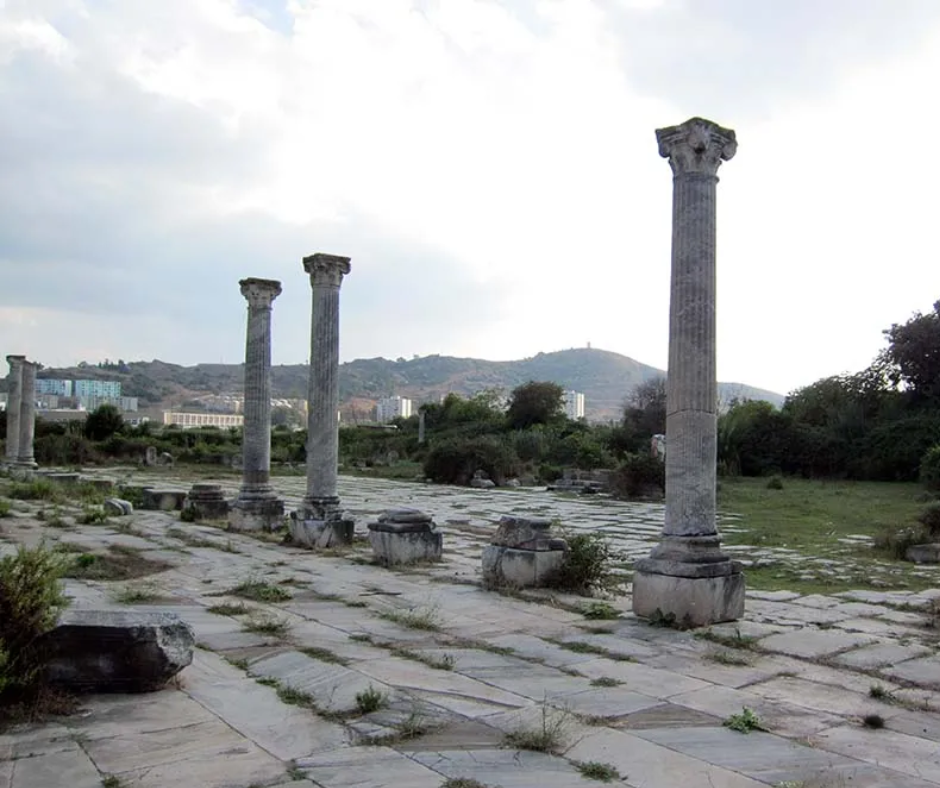
Climb to the top rows of the theater for the view across the excavated quarters to the hill of the basilica.
What to see in the Hippo Regius Museum
The museum, opened in 1968, holds more than 20,000 objects from prehistory to the colonial period, most of them from Hippo and nearby sites. Look for the statues of Bacchus, Venus, Minerva and Hercules, the coins and pottery, and a white marble Gorgon mask found in 1930.
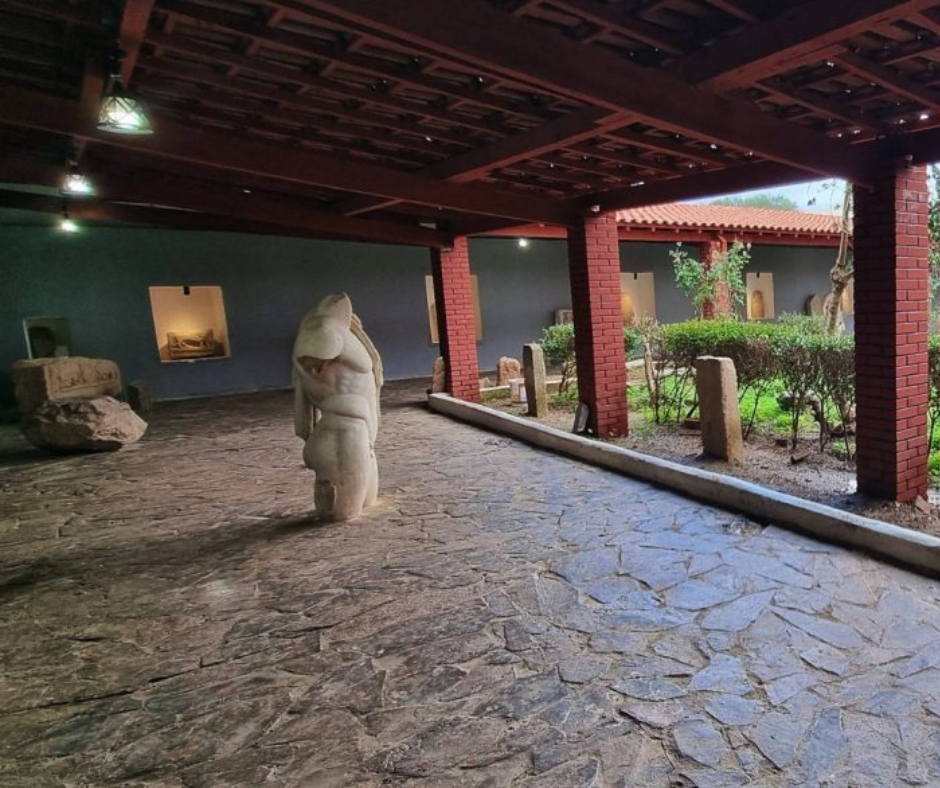
The large mosaics were lifted from the villas and brought indoors to protect them. Seen together, they show how richly the houses on this coast were decorated. If you like your ruins right by the sea, Tipaza's Roman ruins west of Algiers, a UNESCO site since 1982, are the other coastal Roman site worth the trip, at the far end of the country.
The Basilica of Saint Augustine
The Basilica of St Augustine sits on a hill above the ruins, with views over the whole bay. It was built between 1881 and 1900 and consecrated on 29 March 1900, in a mix of neo-Byzantine and neo-Moorish styles, on a Latin-cross plan under a dome.
It is dedicated to the author of the Confessions and The City of God, one of the most influential thinkers in Western Christianity. Inside, his recumbent statue holds a bone relic brought from Pavia in 1842. The church is cool and quiet after the coast, and its painted stained-glass windows tell the story of his life.
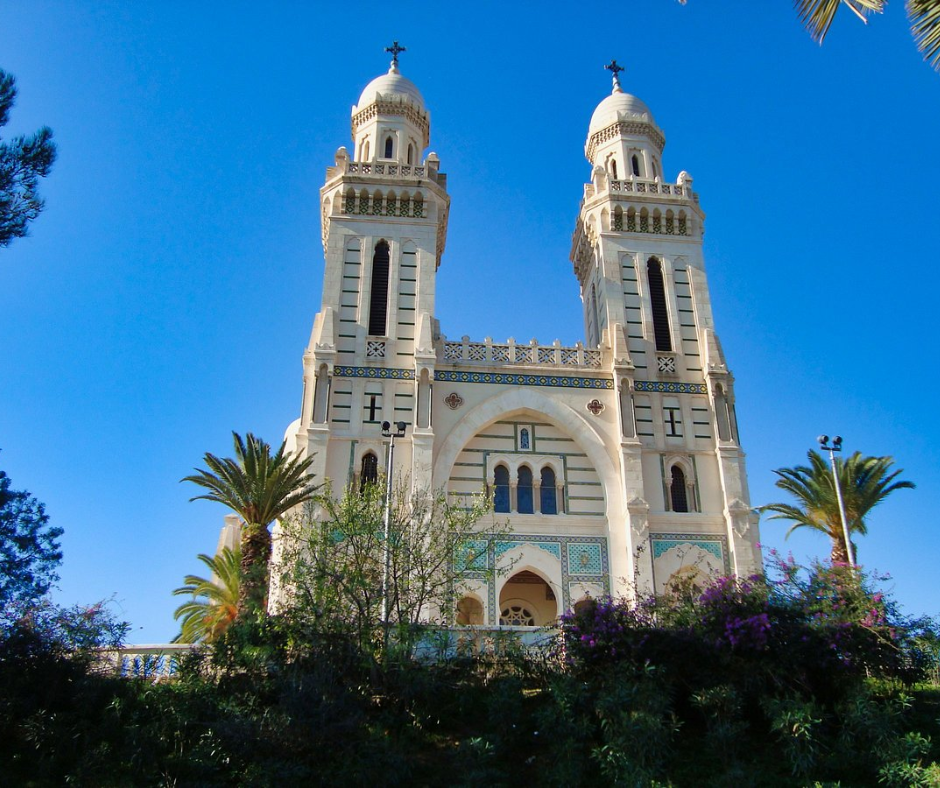
From the terrace around the church you look straight down on the harbor and along the rugged coast to the east.
The basilica is still a working Catholic church with a small congregation. Keep your voice down, cover shoulders and knees, and avoid service times if you want to walk around. Opening hours are not reliably published online, so ask at the gate or have your guide call ahead.
Architecture and interior
The architect was a French priest, Abbé Joseph Pougnet, who also designed Saint-Louis Cathedral in Carthage (1884 to 1890), so this church's closest relative is across the border in Tunisia. The stone was shipped from all over France.
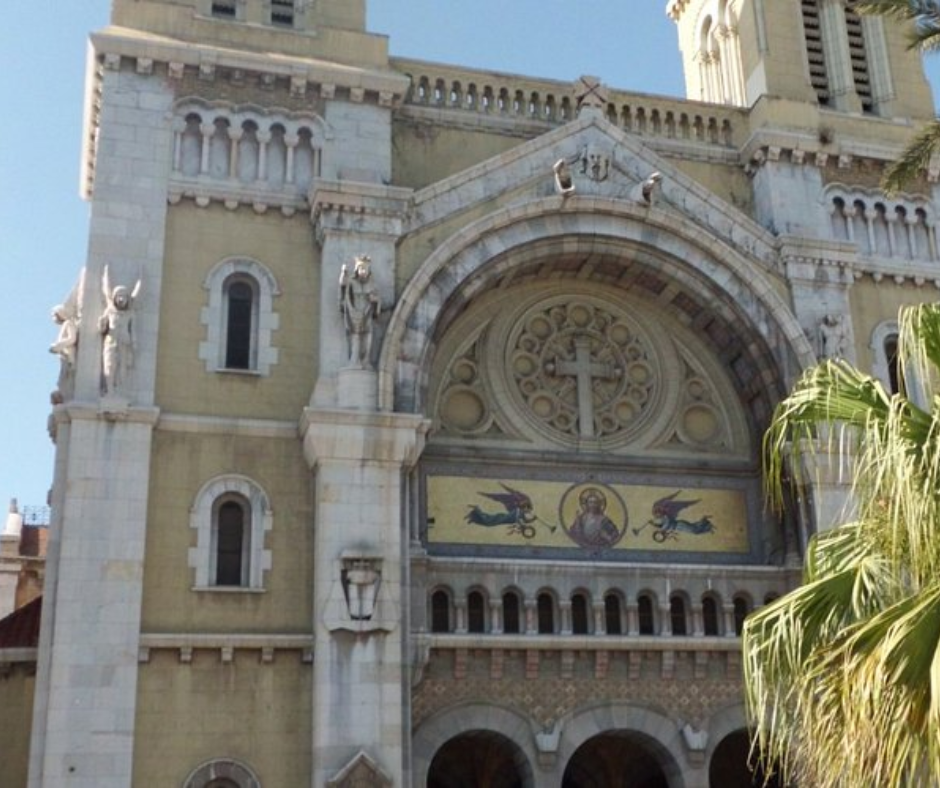
Inside, the naves have wooden coffered ceilings and upper galleries, and the decoration uses Carrara marble. A restoration paid for by Algeria, France and a personal donation from Pope Benedict XVI started in 2010, and the basilica reopened on 19 October 2013.
The terrace and gardens
The gardens around the basilica have shaded benches. From here you can see how modern Annaba has grown up around the ruins of Hippo Regius.
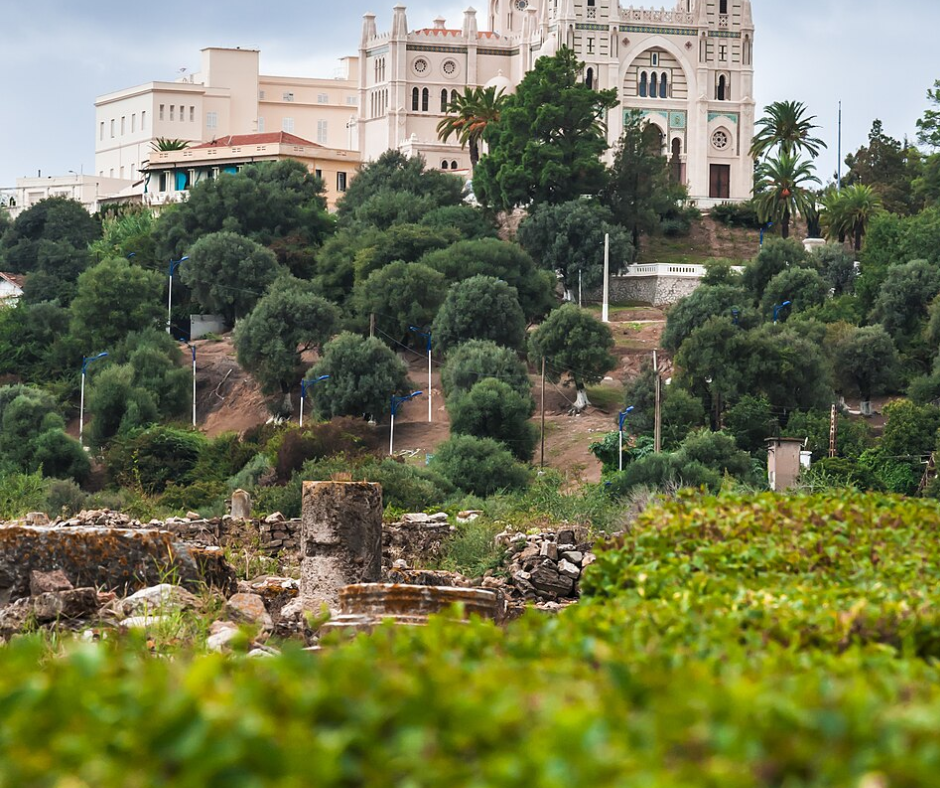
It is also one of the few spots in town where the Edough mountains and the sea fit in a single frame. Come in the late afternoon, when the low sun lights up the harbor and the industrial district beyond it.
The old town and its mosques
The old town sits on a low rise next to the Cours de la Révolution, around the former Place d'Armes.
The Sidi Bou Merouane mosque, built in 1033, is the one to see. Its prayer hall reuses Roman columns carried up from Hippo, a direct link between the two cities. Close by is the Salah Bey mosque, from the end of the 18th century, named after the Ottoman-era bey of Constantine.
A simple route: start on the Cours, walk up to Place d'Armes, see Sidi Bou Merouane and the Salah Bey mosque, then come back down through the market streets for a coffee on the Cours. Visit outside prayer times, ask before you go in, and cover shoulders and knees; women should bring a scarf for their hair.
Beaches along the Annaba Corniche
The Corniche is where Annaba goes in the evening, especially in summer. The road runs north from the center along the coast past a string of beaches and rocky coves: Rizzi Amor (still often called Chapuis) and Saint-Cloud are about 3 km out, and Ain Achir is about 7 km out.
On summer nights the sidewalk fills with families out for a walk and an ice cream. For a classic sandy beach, Ain Achir is the one: about 290 m of sand, shallow water and, in season, kiosks selling snacks and cold drinks.
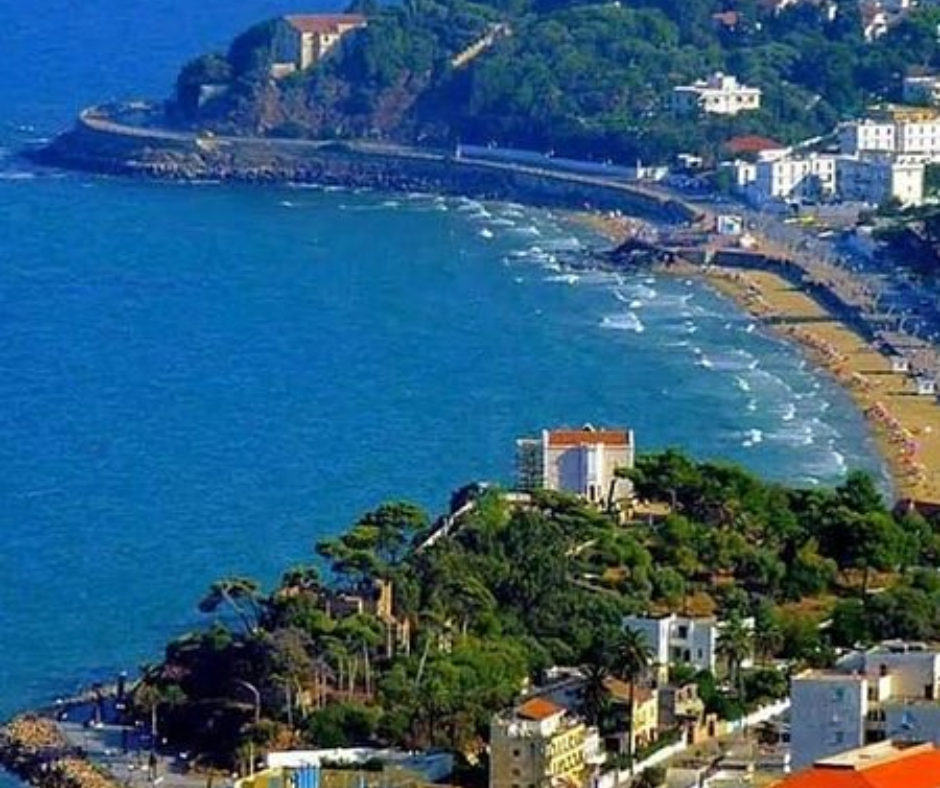
Saint-Cloud, officially Rezgui Rachid, is closer to town and busier. Cafes and restaurants line the road behind it, and it's the best stretch for watching the evening promenade, when half the city seems to be out walking.
The Corniche is longer than it looks on a map, so wear proper shoes or take a taxi one way. Annaba is also one of the coastal cities worth visiting in Algeria if you are planning a trip along the sea.
Explore Annaba: Algeria’s Best-Kept Coastal Secret
Ain Achir beach
We think Ain Achir is the nicest beach within easy reach of the center. The sand is fine, the curve of the bay keeps the water fairly calm, and in season you can rent an umbrella and chairs, or sit on the rocks at either end for more space.
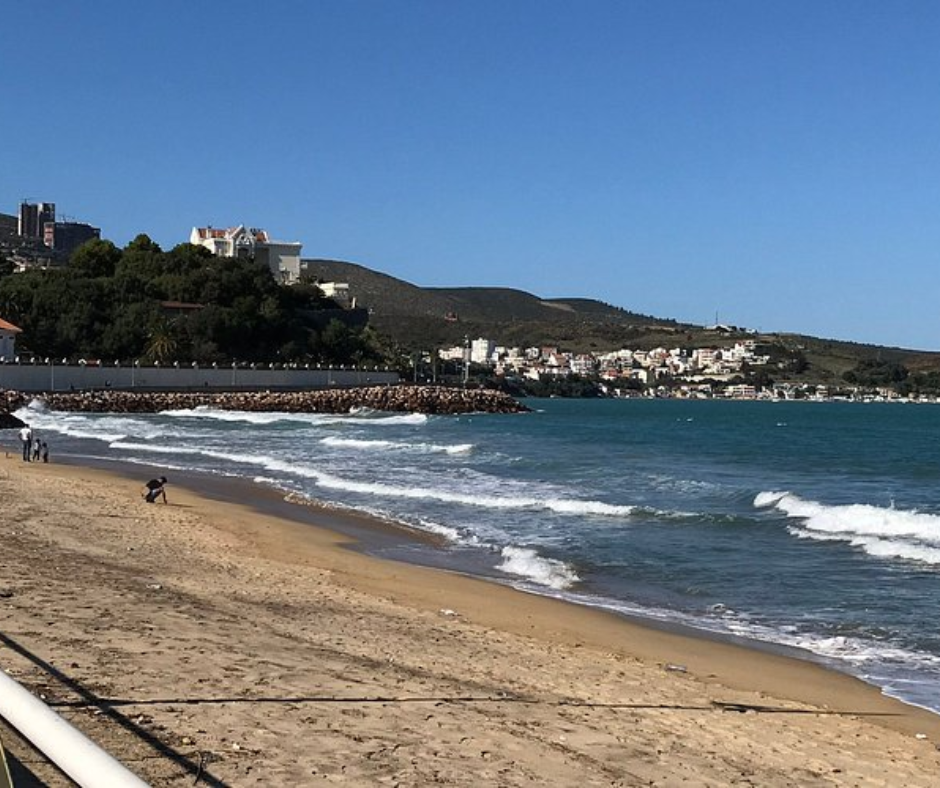
On summer weekends it gets crowded, so arrive before 10 am. Swim where lifeguards are posted: Civil Protection lifeguards work the authorized beaches from June to September.
Saint-Cloud (Rezgui Rachid) beach
Saint-Cloud is Annaba's town beach and where the city's young people hang out. The promenade here is wide and has plenty of benches, and it's a good spot for a coffee or an ice cream at sunset.
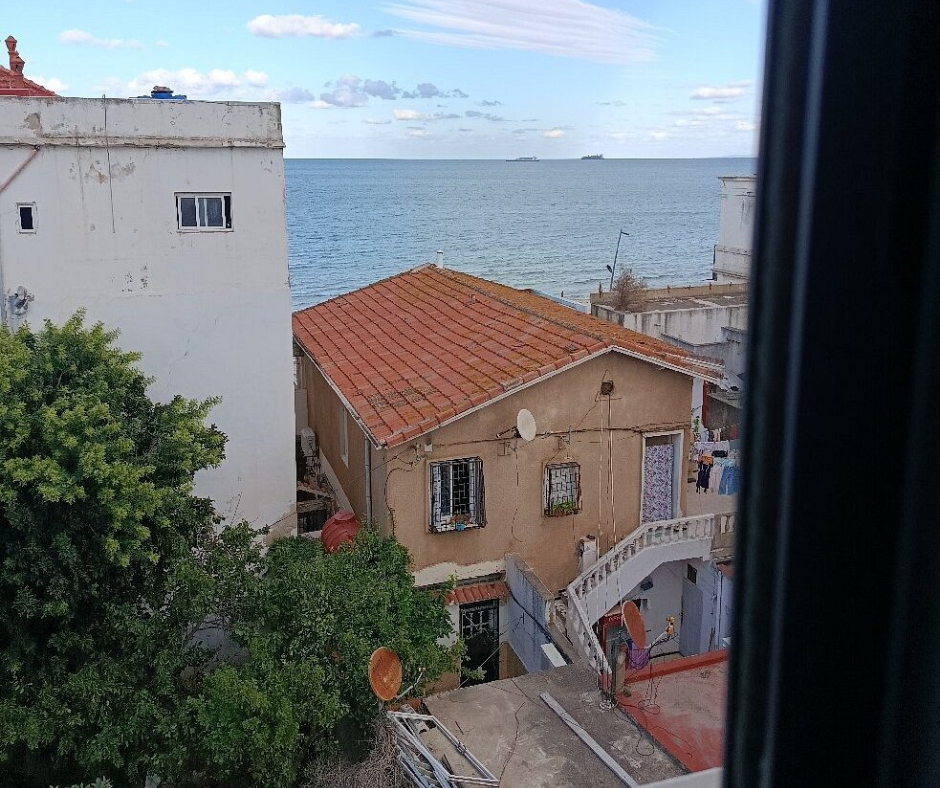
Seafood restaurants face the beach across the road, so you can go from a swim to dinner without a taxi. On summer weekends, book or eat early.
Seraïdi and the Edough mountains
Seraïdi sits at about 850 m in the Edough massif, right above the city, and it is usually several degrees cooler than the coast. The slopes are covered in cork oak and pine, and the village itself is small and quiet.
The easiest way up is the cable car (téléphérique) from central Annaba. It reopened on 21 July 2025 after about five years out of service, and the ride over the forest, with the sea behind you, is half the point of the trip.
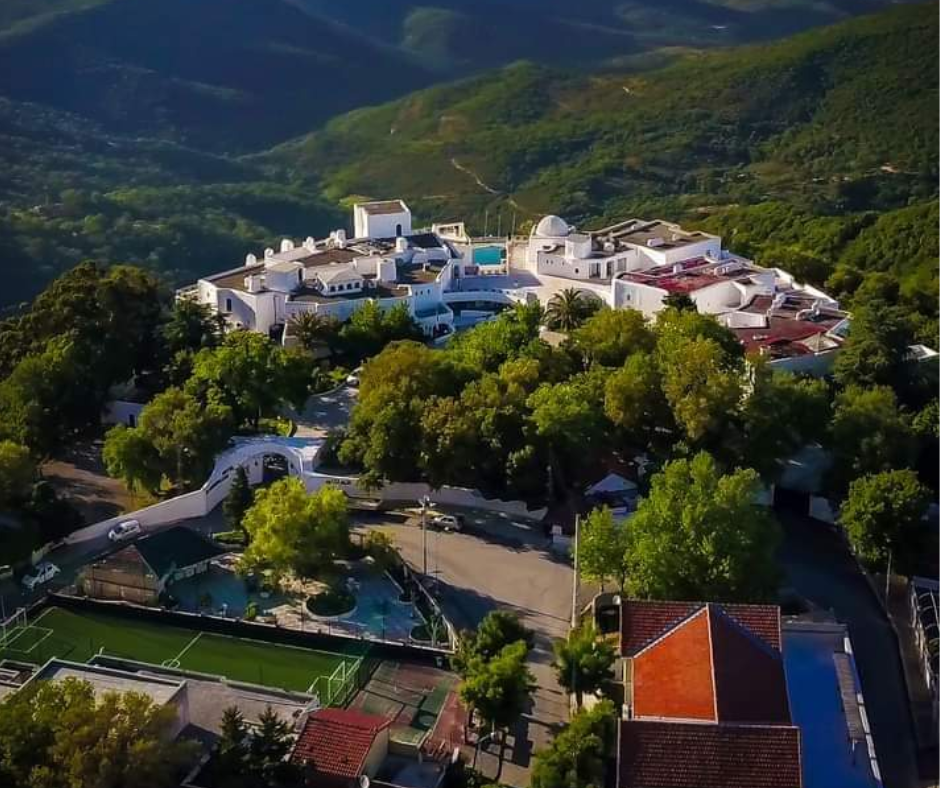
At the top, walk the village lanes or take one of the forest paths. There are a few places to eat, but far less choice than in town, so outside summer check what's open before you plan lunch up there.
The viewpoints near the village look along the coast toward Cap de Garde. Bring a light jacket even in summer: at 850 m the evenings are cooler, and cloud can roll in fast.
Riding the Seraïdi Cable Car
For locals the cable car is transport, and for visitors it's an outing. The line, built in 1986, is 4.15 km long and climbs from the city grid to the green slopes of the Edough, with an intermediate station at Sidi Harb.
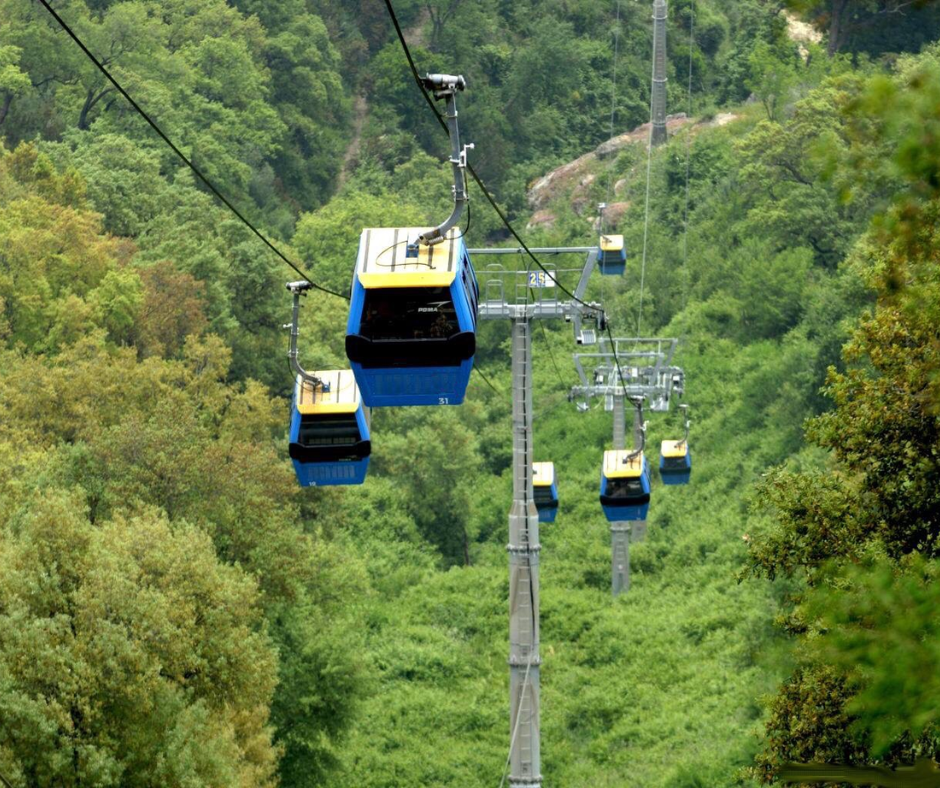
The ride takes under 20 minutes in six-seat cabins, with views back over the harbor and the basilica. It runs in daytime only (about 7 am to 6 pm by most accounts), so check the time of the last cabin down before you set off on a walk.
Hiking Trails of the Edough Massif
The trails around Seraïdi range from easy forest walks to steeper climbs. The forest is mostly cork oak, there is plenty of birdlife, and wild boar live here too, though you will rarely see one.
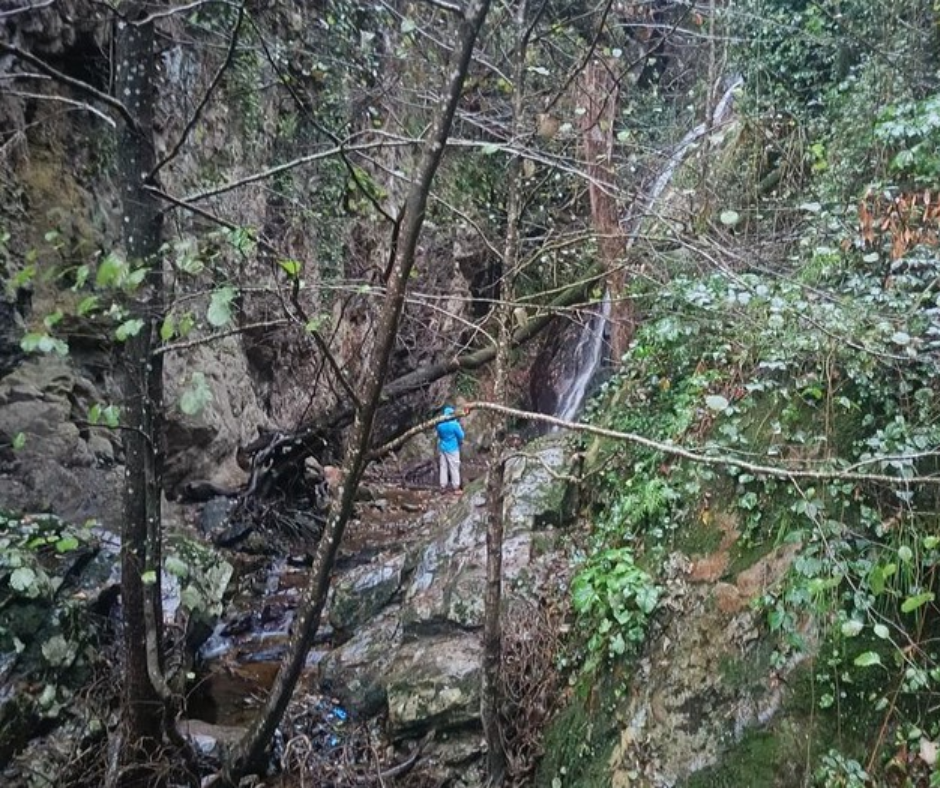
Some paths end at viewpoints over Cap de Garde (Ras el Hamra) and coves that are hard to reach by road. Those coves are easy to miss, so on a full-day hike we'd bring a local guide who knows the paths. Further west, Bejaia's Gouraya National Park has similar forest trails with sea views, one more reason to look at the things to do in Bejaia.
Day trips from Annaba
Cap de Garde
The headland of Cap de Garde (Ras el Hamra) closes the bay on the northwest side, beyond the Corniche beaches. Its lighthouse dates from 1908 and stands about 143 m above the sea. Below it are rocky coves for a swim in summer. Go by taxi and bring water.
Guelma
Guelma is about 60 km southwest of Annaba. Its Roman theater seats about 4,500 people. About 20 km west of town, the hot springs of Hammam Debagh (Hammam Maskhoutine) come out of the ground close to boiling and have built up white limestone cascades.
El Kala National Park
El Kala is about 77 km east of Annaba, near the Tunisian border. The national park around it, a UNESCO biosphere reserve since 1990, protects freshwater lakes (Tonga and Oubeïra), the Mellah lagoon, cork oak forest and a quiet coastline. Because the town sits so close to the frontier, look up the official travel advice for that border strip before the day trip, and make sure your policy covers it.
Food on the Cours de la Révolution
The Cours de la Révolution is Annaba's main promenade, a wide boulevard almost a kilometer long, laid out in the colonial era. It is lined with arcades, cafe terraces and century-old ficus trees, and the Regional Theatre of Annaba is on it.
The dish to try here is bourek annabi. Elsewhere in Algeria bourek is usually a rolled pastry with minced meat. The Annaba version is a square parcel of thin pastry filled with mashed potato, minced meat, cheese and a whole raw egg, folded and fried so the yolk stays runny.

After that, locals go for a créponné, a lemon sorbet made with lemon juice, sugar and beaten egg white. There is no milk in it, but it comes out surprisingly smooth.
Eat it as you walk under the ficus trees on the Cours. The cafes here serve coffee and mint tea all day, and a terrace table is the best seat in town for watching Annaba go by.
Bourek annabi
Every family in Annaba has its favorite bourek vendor, usually on or near the Cours. The trick is in the frying: the pastry has to turn crisp while the egg inside stays soft.

It comes with a wedge of lemon. You will see it most during Ramadan, when it sits next to the chorba on almost every table. Eat it hot; it does not travel well.
Créponné, the lemon sorbet
Annaba and Oran both claim the créponné. One story credits an ice-cream maker in colonial-era Bône (Annaba's old name), another a crèmerie in Oran. Either way, it is now made all over Algeria, and it is at its best on a hot afternoon.
In summer you will find it at ice-cream shops around the Cours, sold by the cup. It is cheap, sharp and very sweet, and it melts fast in the heat.
Annaba planning pointers
- Give the city two or three days: one for Hippo Regius and the basilica, one for Seraïdi and the Corniche, and a spare for Cap de Garde or a day trip.
- Fly into Rabah Bitat airport (AAE), about an hour from Algiers, or come by the night train from Algiers or the Tunis to Annaba train. By road the city is about 600 km east of Algiers and roughly 100 km from the Tunisian border.
- Come between April and June or in September and October for the ruins and trails; save July and August for the beach.
- Keep dinars on you for tickets: Algerian museums and sites typically charge 200 to 300 DZD (2026).
- Do the Hippo Regius museum first and the open-air site straight after, before the midday heat.
Two days in Annaba
| When | What | How to get there |
|---|---|---|
| Day 1, morning | Hippo Regius museum, then the forum and theater before the midday heat | Taxi or Yassir from the center (about 2 km) |
| Day 1, afternoon | Basilica of St Augustine and its terrace | Walk up the hill from the ruins |
| Day 1, evening | Old town mosques, then bourek annabi on the Cours | On foot |
| Day 2, morning | Cable car to Seraïdi and a forest walk | Cable car from central Annaba (under 20 minutes) |
| Day 2, afternoon | Ain Achir beach in summer, Cap de Garde the rest of the year | Taxi along the Corniche (about 7 km) |
| Day 2, evening | Saint-Cloud promenade, seafood dinner and a créponné | Taxi or walk back along the Corniche |
Practical tips for visiting Annaba
Cash runs Annaba. Taxis, cafes, street food and most restaurants take dinars only, and foreign cards work mainly in the big international hotels.
Carry small notes for snacks and taxis. French is widely spoken, but a few words of Arabic (salam alaykum, shukran) go down well, and a greeting before you ask for anything turns a transaction into a conversation.
For getting around, Yassir, the Algerian ride-hailing app, works in Annaba and shows the fare upfront; Uber does not operate in Algeria. The center is compact enough to walk, and the old town is a short climb from the Cours.
Dress modestly away from the beach: cover shoulders and knees in the old town, at the basilica and around mosques, and carry a scarf if you plan to go inside one.
Getting to Annaba
By air, Rabah Bitat airport (AAE) is south of the city, about an hour's flight from Algiers on Air Algérie. It also has direct flights from Paris, Lyon, Marseille and Istanbul.
By train, a daily night train runs from Algiers via Sétif and Constantine; on the latest published timetable it left Algiers at 18:40 and arrived the next morning. The international train from Tunis runs three times a week each way, takes about 9.5 hours and costs about 1,640 DZD in second class. It resumed on 15 September 2026 after summer track work. In the summer season, Algérie Ferries also sails from Marseille to Annaba.
Where to stay
For a short stay, pick the center around the Cours, within walking distance of the old town and the cafes. The Corniche suits a summer beach stay but is noisy on summer nights, and Seraïdi is the quiet, cooler option if you have a car. Expect 4,000 to 7,000 DZD a night for a budget hotel or guesthouse room (autumn 2026): EUR 15 to 25 if you changed cash informally, EUR 27 to 47 if you pay by card. Book ahead for July and August.
Cash, cards and a local SIM
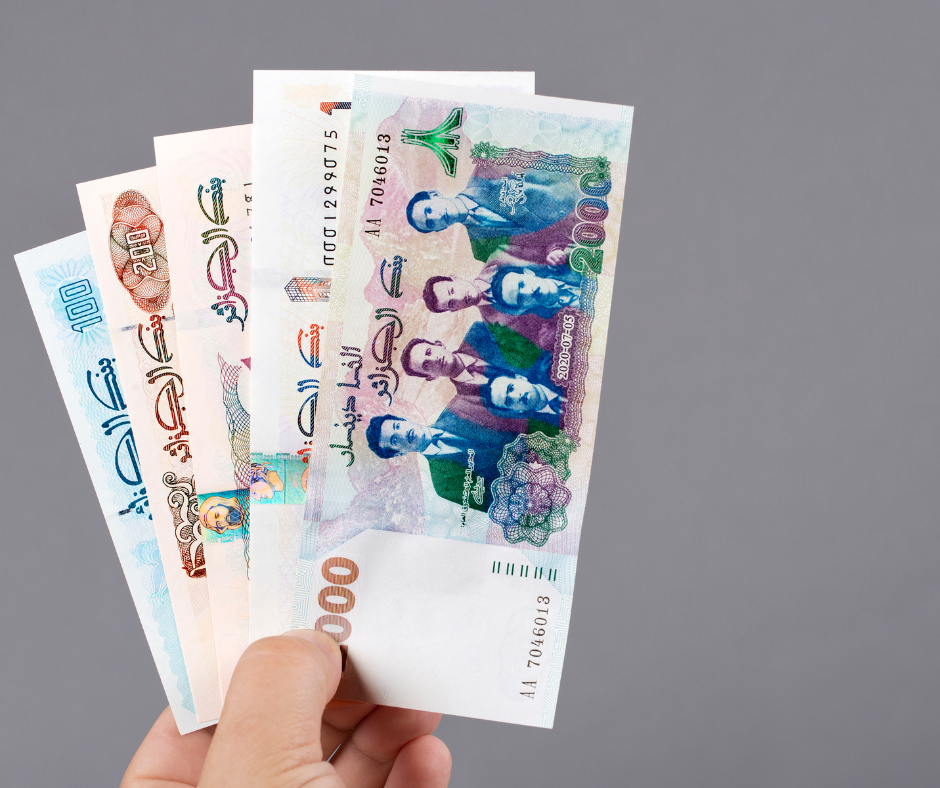
Pay by card or take money from an ATM and you get the official rate, about 150 DZD to the euro in autumn 2026; the informal "square" market gives around 275. In other words, each euro on a card brings you about 45% fewer dinars, and everything ends up about 80% dearer. ATMs in the center take Visa and Mastercard at some banks but can be empty or offline, so do not rely on them.
Changing on that informal market is technically against Algeria's exchange-control law, yet it runs in the open here as in every big city, and most locals and visitors rely on it. Let your guide, host or agency handle the exchange, and count the notes. One catch: if you declared over EUR 1,000 when you arrived, customs may want official exchange receipts on the way out, so change part of it at a bank.
Buy a local SIM card for maps and ride-hailing. Any of the three operators (Mobilis, Djezzy, Ooredoo) will sell you a prepaid one once you show your passport for registration, and 10 to 50 GB for 30 days costs roughly 1,000 to 1,500 DZD (2026).
Etiquette, photos and safety
People in Annaba are hospitable. A shopkeeper may offer you tea or ask where you are from; if you have time, say yes, because that is how most conversations start.
Ask first before you photograph anyone, women in particular, and keep your camera away from the port, police, checkpoints and military sites. Annaba is a normal big city where you take the usual care with pickpockets, and travelers we work with often say the east felt more relaxed and friendly than they expected.
Annaba before you book
What was Annaba called before?
Hippo Regius in Roman times, then Bouna (Bona to Europeans) after the Arab conquest, and Bône under French rule from 1832 to 1962; it became Annaba after independence.
Does Annaba have an airport?
Yes: Rabah Bitat (AAE), just south of the city, with Air Algérie flights from Algiers in about an hour and direct flights from Paris, Lyon, Marseille and Istanbul. Have some dinars on you for the ride into town.
Is Annaba worth visiting?
For two or three days, yes. Few places in Algeria give you a Roman city where Augustine lived, a 19th-century basilica above it, an 11th-century mosque in the old town, town beaches and forest trails within one short stay. It is also an easy first stop off the Tunis train.
What is the best time to visit Annaba?
For the ruins and the Edough trails, go in April to June or September to October, when average highs run from about 21 to 29°C. July and August are beach season, with average highs around 31 to 32°C and busy beaches. November to February is mild but the wettest part of the year.
Annaba suits a two- or three-day stop at the eastern end of an Algeria trip, or a first stop if you arrive on the train from Tunis. June to September is beach season; spring and autumn are better for the ruins and the Edough trails.
If you need help planning your Algeria itinerary, reach out to us and we will put the route together with you. We can also put you in touch with a local guide for Hippo Regius and the Edough trails, and have a driver waiting when you land at Annaba.
Read also:
Safety, Visa Requirements & What To Do
Algeria Solo Travel: Safety & Logistics Guide
Is Algeria Worth Visiting? What to Know Before You Go (2026)


