

Ten days is enough to show children Algiers, two Roman towns, the gorge at Constantine and a taste of the Sahara in Ghardaïa, if you fly the long legs and plan one main activity a day. The plan: three days around Algiers, four based in Constantine, three in the M'Zab Valley.
It is a family version of our classic 10-day Algeria itinerary, with shorter driving days and more breaks.
The family route, base by base
| Days | Where you sleep and what you do |
|---|---|
| 1 and 2 | Algiers: the Casbah with a guide and Notre-Dame d'Afrique, then the Bardo Museum, the Jardin d'Essai and the El Hamma cable car (taxi, Yassir or metro) |
| 3 | Still Algiers: Tipasa's Roman ruins by the sea, about 1 hour 15 minutes each way with a driver |
| 4 and 5 | Constantine, an hour's flight: the cable car over the Rhumel valley, then the Sidi M'Cid bridge and the Palace of Ahmed Bey on foot |
| 6 | Constantine: Djemila and its mosaic museum, about 1 hour 45 minutes each way with a driver |
| 7 | Constantine: a slow day with a treasure hunt in the Cirta Museum |
| 8 to 10 | Ghardaïa, about 1 hour 15 minutes by air from Algiers: the market, the palm groves and Beni Isguen with a guide, flying back on day 10 |
Logistics for the Ten-Day Family Route
Distances and Internal Flights
Algeria is Africa's largest country, and the distances add up. Algiers to Constantine is about 390 km on the A1 motorway, 4 to 5 hours of driving; Algiers to Ghardaïa is about 600 km, 7 to 8 hours. With children, each is a full day lost in a car.
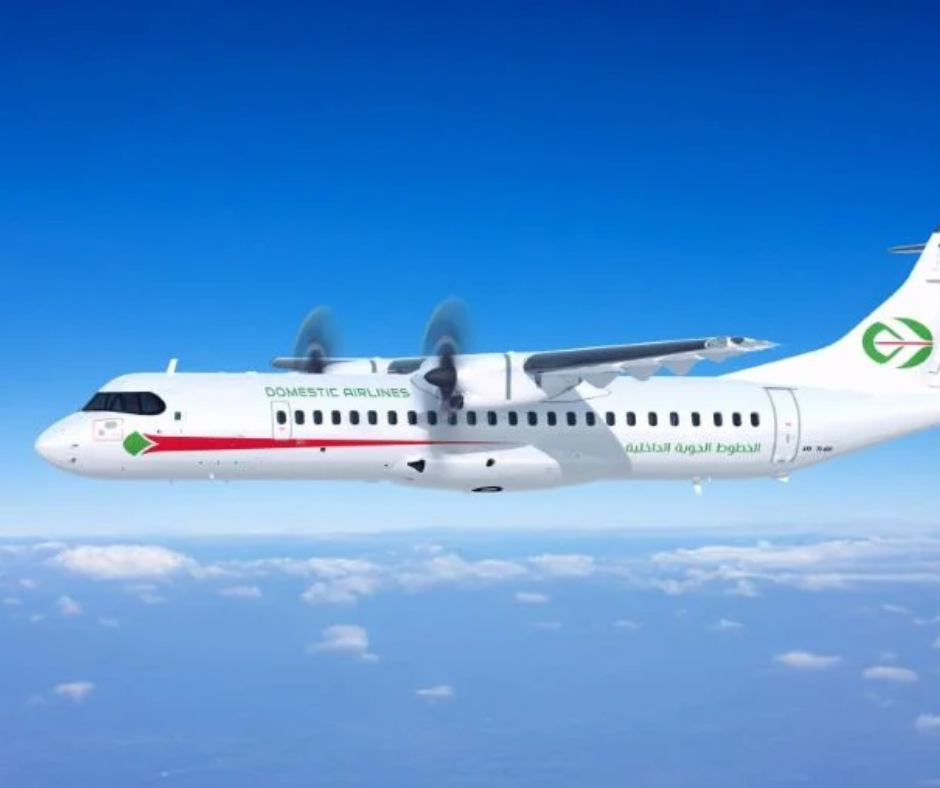
So fly the long legs: Air Algérie and its subsidiary Domestic Airlines take about an hour from Algiers to Constantine and about 1 hour 15 minutes to Ghardaïa, and Air Algérie has had a direct Constantine to Ghardaïa flight a few days a week. Book early for school holidays, and carry passports: you need them for domestic flights. For the short hops (Tipasa, about 70 km west of Algiers; Djemila, about 110 km from Constantine), hire a driver.
There's no e-visa (October 2026), so every member of the family, children included, gets a visa from an Algerian consulate before the trip. For each child, bring a birth certificate and a parental authorization, plus the other parent's consent letter if one parent travels alone.
Every stop on this route is in the north or the M'Zab Valley, on well-traveled roads, and families on our trips often tell us Algeria felt more relaxed and welcoming than they had expected. For the Djemila day, a driver who knows the mountain road makes it much easier.
When to Go and What to Pack
Spring (March to May) and autumn (October and November) suit this route best. In July and August Ghardaïa regularly passes 40°C and the Roman sites have almost no shade; in winter, Djemila (about 900 m up) and Constantine can be cold and wet.
Pack layers, wide-brimmed hats, high-SPF sunscreen and a light scarf each against sun and dust (it doubles as a head covering in a mosque). Good closed shoes matter most: the Casbah is all steps, and the Roman sites are uneven stone.
See a travel clinic about eight weeks ahead. The US CDC recommends routine vaccines, hepatitis A from age one and typhoid, and warns that rabid dogs are common, so keep children away from strays. The FCDO says private clinics are usually better than state hospitals, so insure for private care and evacuation. Ambulance: 1021 or 16.
Fuller packing lists are in our Algeria travel guide.
Read also: What to Wear in Algeria: Packing Guide
Days 1 and 2: Algiers, History and Outdoor Breaks
The Casbah of Algiers with Children
Algiers gets two days, and the trick with children is to alternate each sight with somewhere they can run; day 3 is for Tipasa (below). Start in the Casbah, the old town above the port, a UNESCO site since 1992. Most of it is Ottoman, built from the 16th century on: houses, mosques and palaces linked by stairs and alleys too narrow for cars.
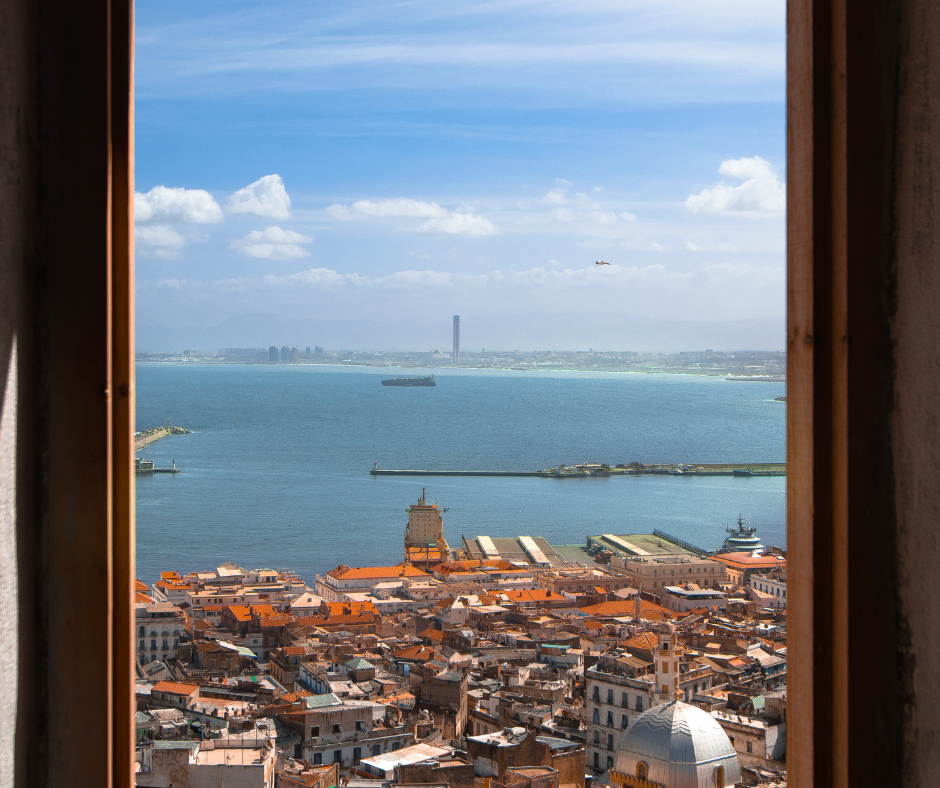
Leave the stroller at the hotel and bring a baby carrier. Get dropped off at the top, near the Citadel, and walk down. A local guide is worth it here: they know the lanes, and they'll point out old fountains you'd otherwise miss.
Pacing, food and the heat are the other things to plan for when traveling with children in Algeria. Give children a mission: count the carved wooden doors, or spot the brass door knockers.
Views over the Bay from the Basilica of Notre-Dame d'Afrique
In the afternoon, take a taxi or a Yassir ride up to Notre-Dame d'Afrique, a neo-Byzantine basilica inaugurated in 1872 on the heights above Bologhine.

The terrace looks across the whole bay of Algiers. Inside, a line around the apse, in French, Arabic and Berber, asks Our Lady of Africa to pray "for us and for the Muslims". Don't look for the old cable car from Bologhine, which hasn't run for years; El Hamma's, on day 2, is the one that works.
The Bardo Museum and the Shaded Paths of the Jardin d'Essai
On day 2, pair a short museum visit with a long afternoon outdoors. The Bardo National Museum of Prehistory and Ethnography is in a late-18th-century Ottoman-era villa, a museum since 1930. Children remember the skeleton and jewelry of Tin Hinan, the Tuareg queen whose tomb at Abalessa, near Tamanrasset, was excavated in 1925.
Adult entry is about 200 DZD, under-16s free, and Fridays are closed or short, so go another day. The Bardo is not next to the garden: take a taxi down to El Hamma, or the metro to Jardin d'Essai station.
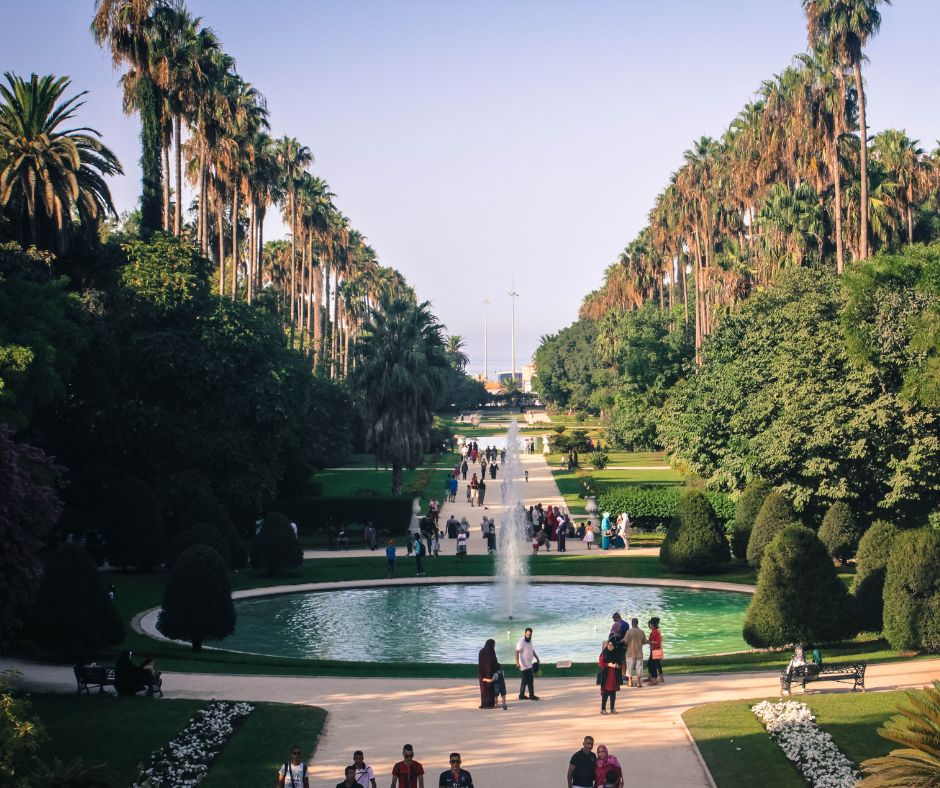
The Jardin d'Essai (founded 1832, about 32 hectares, entry about 150 to 200 DZD) has flat, shaded paths lined with palms and bamboo. By its lower gate, the El Hamma cable car climbs briefly to Maqam Echahid, the 92 m Martyrs' Memorial, where the plaza gives children room to run. If you only have a couple of days in the capital, our weekend in Algeria plan covers the same ground at a faster pace.
Day 3: Tipasa, Roman Ruins by the Sea
Tipasa is the third day of the Algiers stay, about 70 km west, roughly an hour and a quarter by road. Founded as a Punic trading post, it grew into a Roman town whose ruins (UNESCO, 1982) now stretch along the shore under pine trees: a theater, an amphitheater, a large Christian basilica, and streets that run down to the sea. Arrive early, and keep small children close on the rocks above the water.
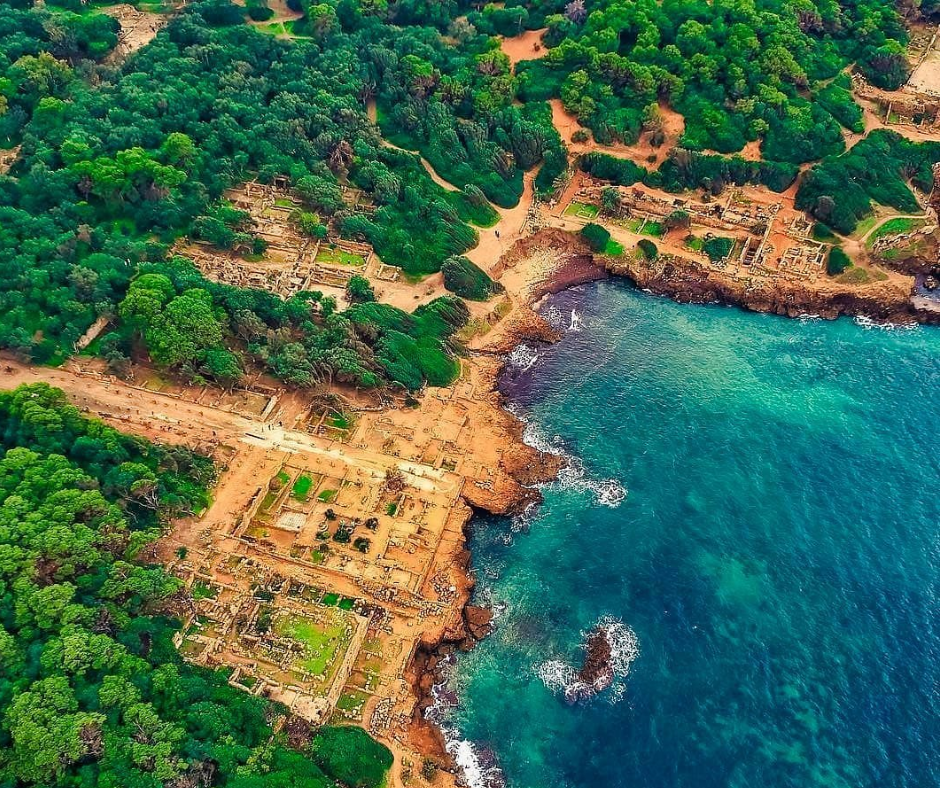
Two hours on the site is plenty for most children. Have lunch at a fish restaurant in Tipasa's small port beside the ruins, then stop on the drive back at the Royal Mausoleum of Mauretania, a huge round stone tomb above the coast that belongs to the same World Heritage site.
Days 4 and 5: The Bridges of Constantine
Crossing the Gorge by Cable Car
On day 4, fly to Constantine (about an hour) or drive the A1 (4 to 5 hours). The city sits on a rock plateau almost surrounded by the gorge of the Rhumel, hence its name, the City of Bridges. The cable car, back in service since April 2025 after seven years shut, shows children the shape of it: about 1.5 km from Rue Tatache Belkacem in the center, past the Ben Badis hospital, up to the Emir Abdelkader district, crossing the Rhumel valley.
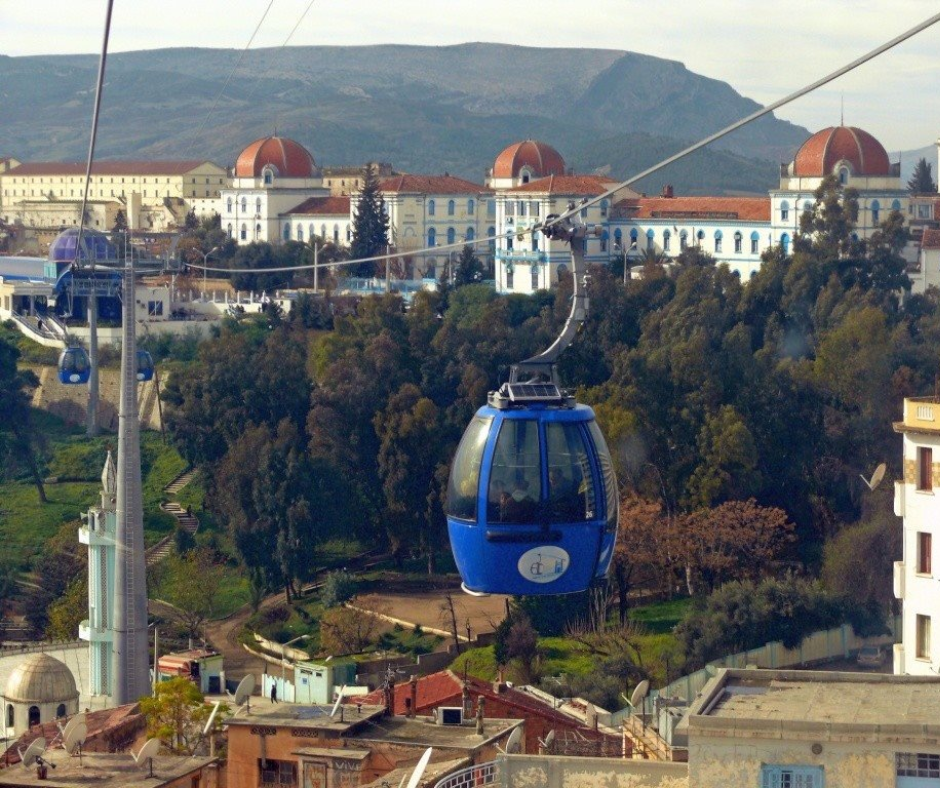
The ride takes a few minutes, so it fits into your arrival afternoon. Cabins hold up to ten people and you may share.
Walking Across the Sidi M'Cid Suspension Bridge
Day 5 is for the Sidi M'Cid bridge, which has hung about 175 m above the river since it opened in 1912. Older children and teenagers like looking straight down into the gorge, and you can feel the deck move slightly underfoot. Hold younger children's hands.

Go on a weekday morning or late afternoon, when there is less traffic, and agree a meeting point on the far side before everyone scatters for photos. The bridge is also one of the stops we suggest for a romantic trip to Algeria. Then try the Palace of Ahmed Bey (1825 to 1835) in the old town, with its shaded courtyard gardens.
Day 6: Djemila, Roman Town Planning in the Mountains
On day 6, drive from Constantine to Djemila, about 110 km and 1 hour 45 minutes each way. Djemila, Roman Cuicul, was founded in the 1st century AD at about 900 m, its plan bent to fit a narrow mountain ridge; UNESCO listed it in 1982. Mornings can be cool, and by midday there is almost no shade.
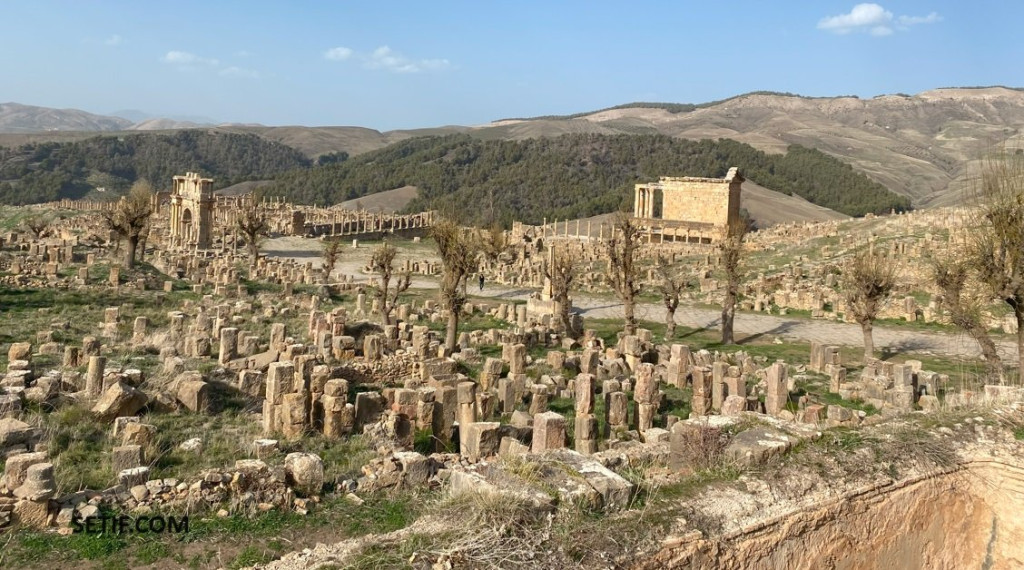
Start in the site museum, whose walls are covered in large mosaics of animals and hunting scenes, and give children a list of animals to find. Then walk to the forum, the Arch of Caracalla and the Market of Cosinius, where the stone stalls still stand. A guide helps a lot; book one in advance, since there may be none at the gate. Many families prefer a private tour for days like this, and our guide to Algeria tours compares private, small-group and expert-planned options.
Day 7: The Cirta Museum in Constantine
A Treasure Hunt for Young Explorers
Keep day 7 slow. The Musée national Cirta in Constantine pulls together what the family has seen: prehistoric stone tools, Numidian finds from King Massinissa's time, Punic stelae, Roman mosaics and statues.
Make it a treasure hunt: find the animals in the mosaics and the coins with a king's face, or guess what each stone tool was for. It is open Saturday to Thursday, and on Friday afternoons only; entry is about 150 to 200 DZD.
The Winged Victory and the Statue from Djemila
Two pieces are worth finding: the bronze winged Victory found in Constantine's Casbah in 1855, and a life-size marble statue of Faustina the Elder, wife of the emperor Antoninus Pius, found at Djemila near the Arch of Caracalla the children walked past the day before.
Ask children to compare the statues' faces and clothes with the people in the mosaics: who looks rich, who is working, who is hunting. A quiet indoor day is also a good rest before the flight south.
Swap or add: Timgad
If your children have more energy than patience for museums, swap the Cirta day for Timgad, a long day trip south of Constantine. The town was founded by the emperor Trajan around AD 100, 35 km east of Batna, on a near-perfect grid that children can read straight away.
Stand at the main crossroads, find Trajan's Arch, then climb the steps of the theater, which seated about 3,500. Entry is about 200 DZD (autumn 2026). There is almost no shade, so leave early and be back in Constantine for a late lunch.
Days 8 to 10: Ghardaia Market and the M'Zab Valley
Daily Life and Craftsmen in the Market
On day 8, fly to Ghardaïa, direct from Constantine if the day suits or via Algiers. Ghardaïa is one of five fortified ksour founded in the M'Zab Valley between the 11th and 14th centuries, a UNESCO site since 1982. On day 9, visit its market square, in the lower old town, lined with arcades and shops selling carpets, spices, dates and copperware. Walk one full loop before buying, to get a feel for prices.

The thick wool carpets are traditionally woven by women at home, so you mostly see finished pieces.
Visiting the M'Zab with children
Go to Beni Isguen, about 2 km from Ghardaïa, in the morning: it shuts at sunset, and you can only enter with a local guide taken on at the main gate. Everyone, children included, should cover shoulders and legs; light trousers and a long-sleeved top work in the heat. Nobody smokes, and you must not photograph people, especially women. Explain the rules to children beforehand, and give them something to look for instead: the hilltop mosque, the palm groves and the old wells.
Friendly Haggling in the Ghardaia Market
For souvenirs (silver jewelry, leather pouches, a carpet, local dates), greet the seller with "salam alaykum" before asking a price. Food has fixed prices; carpets and souvenirs are where bargaining is expected.
Counter with a polite lower offer, move up in small steps, and settle the price before anything is wrapped. Stalls don't take foreign cards, so carry small notes. On day 10, fly back to Algiers (about 1 hour 15 minutes) and book your flight home for that evening or the next day.
Money and Transport Tips
Daily Cash and Currency Exchange
Outside big international hotels, Algeria runs on cash, and with a family's spending the rate matters: cards and ATMs give the official rate of about 150 DZD to the euro (autumn 2026), so everything costs about 80% more than with cash changed on the informal market at about 275, which most visitors do through a guide, host or agency they trust.
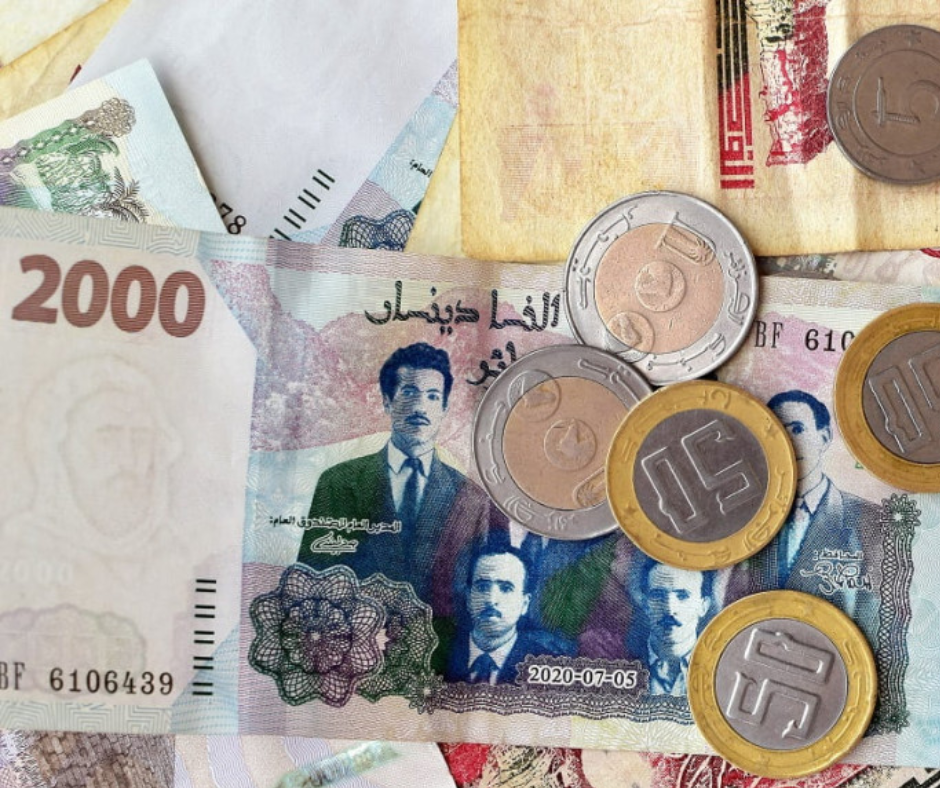
Spend your dinars before flying home: tourists may not take them out. Split daily cash into envelopes, and pack a second card separately.
Getting Around: Taxis, Drivers and Flights
City taxis rarely use meters, so agree the fare before loading the bags, or use Yassir, which shows the price up front (Uber doesn't operate in Algeria). Taxis and app cars have no child seats: bring a travel seat if your child needs one. Children under 10 may not ride in front (road law 26-09, May 2026). For Tipasa and Djemila, a private driver is far easier than public transport.
Book the three domestic flights early so the family sits together, and recheck the times a week before: schedules change.
Where to stay with children
In Algiers, stay in the center around Rue Didouche Mourad or near the Casbah, so the first two days are short taxi rides; the Afric Hotel-Casbah is one option by the old town. If the children need a pool and a beach, the resorts at Sidi Fredj, west of the city, put you on the road to Tipasa, but every city day then starts with a drive.
In Constantine, sleep in the center near the bridges, since four nights there means a lot of coming and going on foot. The Grand Hôtel Cirta reopened at the end of December 2025 after a long restoration. In Ghardaïa, you can stay in town at Hôtel M'Zab or El Djanoub, or, for a quieter base with children, in one of the family guesthouses in the Beni Isguen palm grove.
Wherever you book, ask four things: is there a family room or connecting rooms, can they add a cot, is there a lift, and do they serve breakfast early enough for a morning start. Expect about 4,000 to 7,000 DZD a night at budget hotels and guesthouses, and more in Algiers.
What this trip costs a family of four
The big items are the three domestic flights per person, the hotels and the two days with a driver for Tipasa and Djemila. Ask us for a current quote, since flight prices change with the season. The smaller costs, at autumn 2026 rates:
- Site and museum tickets: about 200 to 300 DZD for adults; children often go free in national museums.
- Jardin d'Essai: about 150 to 200 DZD each.
- Meals: about 600 to 1,200 DZD a plate in a popular restaurant.
- Algiers metro and tram: 50 and 40 DZD a ride.
- A guide for the Casbah or Beni Isguen, plus a tip of about 1,000 DZD for a half day.
Four plates in a popular restaurant come to roughly EUR 9 to 18 if you're paying with dinars changed informally (about 275 to the euro), or EUR 16 to 32 at the official rate (about 150).
Shorter, younger and older versions
Seven days: keep Algiers and Tipasa (days 1 to 3) and Constantine with Djemila (days 4 to 6), and fly home from Constantine via Algiers on day 7. You lose the M'Zab but save a flight.
With babies or toddlers: replace Ghardaïa with three days on the coast near Algiers or Tipasa, and drop Djemila if the drive feels long.
With teenagers: add the Sahara. Taghit's dunes, near Béchar, suit a few nights of sandboarding and stars. For Djanet and the Tassili, the trip has to run with an approved Algerian agency; booked that way, an organized tour that includes southern wilayas can use the visa on arrival.
Ages, flights and adding the Sahara
What age is best for this itinerary?
About six and up: children who can walk for an hour on uneven stone and steps. The Casbah, the Roman sites and Beni Isguen are hard with a stroller. With babies or toddlers, use a carrier, cut Djemila and spend the last days on the coast instead of in Ghardaïa.
Should we fly or drive between Algiers, Constantine and Ghardaïa?
Fly. Algiers to Constantine is about 390 km, four to five hours by car, and Algiers to Ghardaïa about 600 km, seven to eight hours. Each flight takes about an hour to an hour and a quarter. Keep the car for day trips to Tipasa and Djemila, with a hired driver who brings or fits a child seat.
Can we add the Sahara to a family itinerary?
Yes. Ghardaïa already puts you on its edge, and Taghit adds real dunes for a few nights between October and April. Djanet and the Tassili are better for older children and teenagers, need another week of their own, and run with an approved Algerian agency and local Tuareg guides; we organize them that way.
Whatever their ages, leave a free half-day after each flight. If you would like us to handle the logistics (an airport pickup in Algiers, drivers, local guides and the domestic flights), tell us about your family and we will tailor it to your children's ages.


