
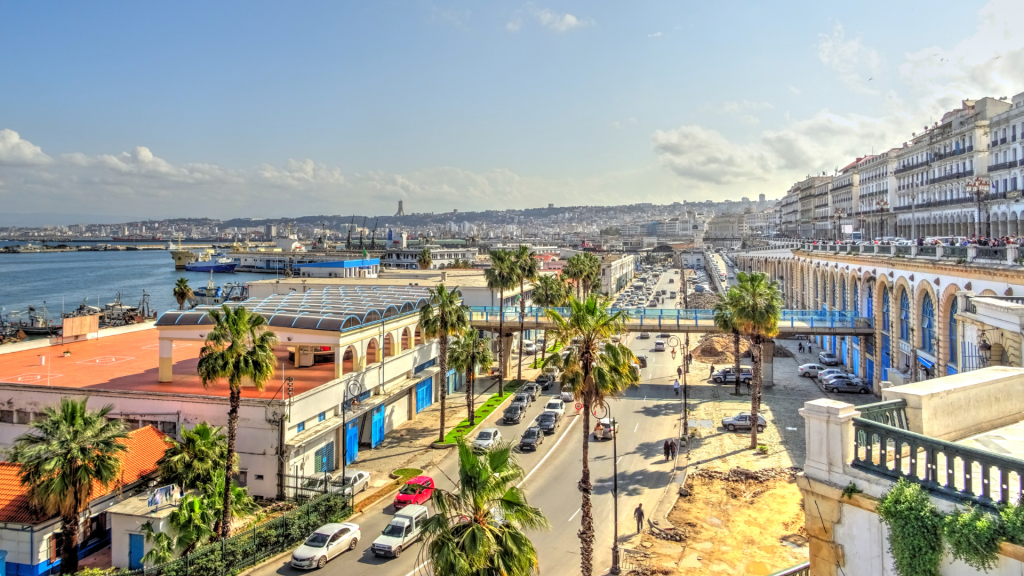

A first trip around northern Algeria needs about 12 days: three days for Algiers and Tipaza, four for Oran and Tlemcen in the west, and four or five for Constantine and the Roman towns of Djémila and Timgad in the east. With only a week, pick one side of the capital, because Oran and Constantine lie roughly 400 km away in opposite directions.
For the wider country, the Sahara included, see our complete Algeria guide.
Trains, visas and the best months for the northern loop
| For this route | What to plan on |
|---|---|
| Time | About 12 days for the full loop, or one week for just the west or just the east |
| Transport | Coradia train from Algiers to Oran (4.5 to 5 hours), a flight from Oran to Constantine, and a car with a driver for the Roman sites |
| Visa | A consulate visa for most Western passports, since the visa on arrival doesn't cover trips that stay in the north |
| Season | March to May, or September to early November |
| UNESCO stops | The Casbah of Algiers, Tipasa, Djémila and Timgad |
| Tickets | Usually 200 to 300 DZD per site or museum (2026), paid in cash |
Planning a Northern Algeria Itinerary
Getting Between Algiers, Oran and Constantine
This is the order we'd suggest for about 12 days:
| Day | Sleep in | Travel | Highlights |
|---|---|---|---|
| 1 | Algiers | Arrive; airport train or bus into town | The Casbah with a local guide |
| 2 | Algiers | Metro, cable car, taxi | Bardo Museum (closed Fridays), Maqam Echahid, Jardin d'Essai |
| 3 | Algiers | Day trip, about 70 km west | Tipaza and the Royal Mausoleum of Mauretania |
| 4 | Oran | Coradia train, about 420 km, 4.5 to 5 hours | Evening on Place du 1er Novembre |
| 5 | Oran | Taxi up the hill | Santa Cruz fort, Sidi El Houari |
| 6 | Tlemcen | About 140 km, roughly 2 hours by road | The Great Mosque |
| 7 | Tlemcen | On foot and by taxi | El Mechouar, Mansourah, Sidi Boumediene |
| 8 | Constantine | Back to Oran, then a flight of about 1 hour 20 minutes (or via Algiers) | Sidi M'Cid bridge |
| 9 | Constantine | On foot and cable car | Old town, Palace of Ahmed Bey |
| 10 | Constantine | Day trip, about 120 km each way | Timgad, Batna |
| 11 | Constantine or Algiers | Djémila as a day trip, or on the A1 back to Algiers (about 390 km) | Djémila and its mosaic museum |
| 12 | Fly home |
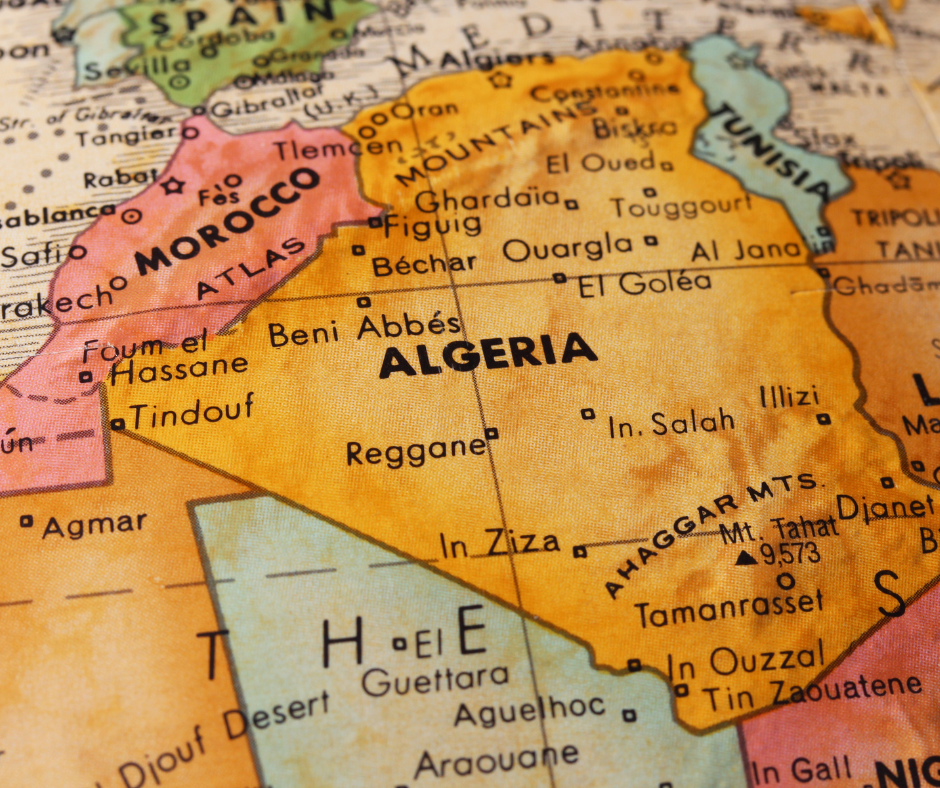
Between Algiers and Oran, the SNTF train is the comfortable option. Count on 4.5 to 5 hours on the Coradia express, more when it runs late, which is often; in April 2026 a ticket cost about 1,130 to 1,700 DZD. Algeria has no high-speed rail.
For long hops such as Oran to Constantine, Air Algérie's domestic flights save a day. Shorter legs are covered by buses and interwilaya shared taxis (taxis collectifs), which charge per seat and leave when full. For Djémila and Timgad, a car with a driver is far simpler.
Read also: Algeria Public Transport Guide
Cash and SIM cards
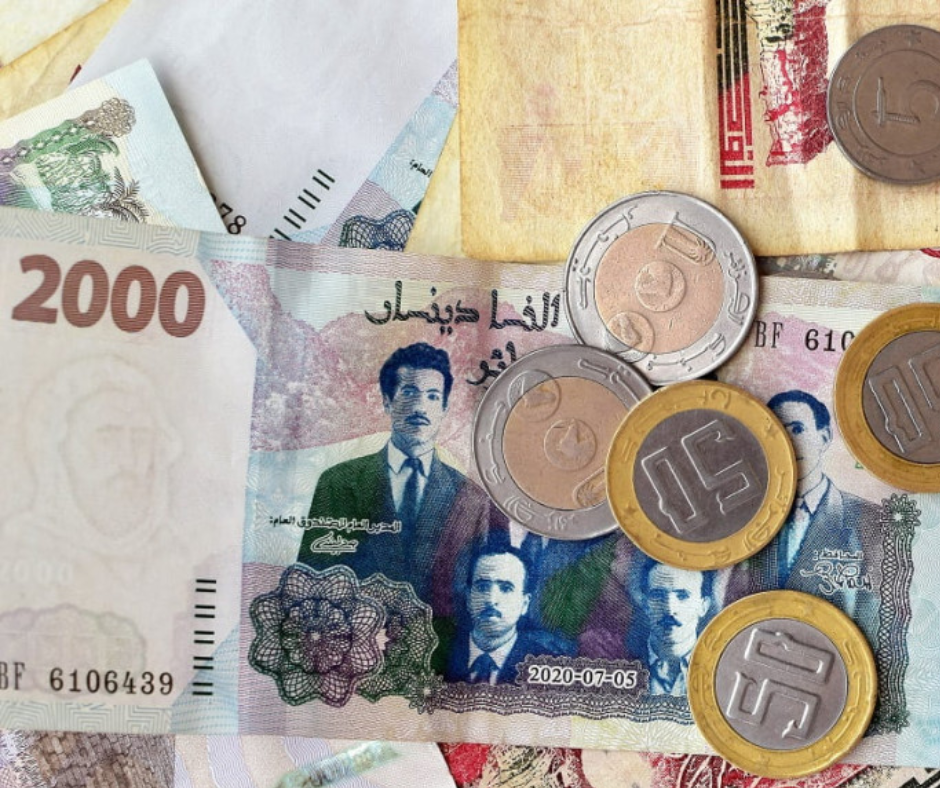
On this route you'll pay cash almost everywhere, from small hotels and taxis to most site ticket offices, and cards and city ATMs (where limits are low) give the official rate of roughly 150 DZD per euro (autumn 2026), against roughly 275 from informal changers. They work openly, though outside the letter of the exchange-control law, so let your guide or host take you to one they trust. If you declared more than EUR 1,000 on arrival, change part of it at a bank and keep the receipts for customs.
Get your SIM before you leave Algiers airport: Mobilis, Djezzy and Ooredoo all sell them there, and registration takes your passport. Data is cheap, and you'll use it for maps and Yassir rides.
Visa for a northern Algeria trip
Holders of UK, EU, US and Canadian passports, like most Western visitors, apply for a visa at an Algerian consulate ahead of the trip; there is no e-visa (October 2026). The visa on arrival only covers organized trips that include the southern wilayas, so it does not help on a north-only route.
The file usually contains the application forms and photos, proof of income, and a passport with at least six months left and two blank pages. On top of that, consulates want one supporting document: hotel bookings, a certificat d'hébergement from a host certified by the town hall, or an invitation and itinerary from an Algerian travel agency. London, for example, charges GBP 85 and takes about 10 working days for applications made in person, 15 by post. We can provide the agency invitation and itinerary letter for this route.
When to Go and What to Wear
The coast has a Mediterranean climate, but the eastern half of this route is high ground: Sétif and Timgad are around 1,000 m up and Djémila about 900 m, so winter nights are cold and snow is possible.
We'd go from March to May or September to early November, when it's mild enough for long days on foot. July and August are hot inland and the coast fills with holidaymakers; December to February is the wettest time on the coast.
Dress modestly: cover shoulders and knees in towns, and women should carry a light scarf for mosques.
This matters most in the old quarters (the Casbah, Constantine's old town, the streets around Tlemcen's Great Mosque) and in mountain villages, which are more conservative than central Algiers or Oran.
For a full packing list by season, see What to Pack and Wear in Algeria.
Where to stay on the route
Rooms in simple hotels and guesthouses run about 4,000 to 7,000 DZD a night in most of the country, more in Algiers, and every hotel asks for your passport at check-in. Where to base yourself:
Algiers: The lower town around the Grande Poste for metro access, or the Afric Hotel-Casbah near Place des Martyrs to be close to the old town.
Oran: The center around Place du 1er Novembre, within walking distance of Sidi El Houari.
Tlemcen: The center near the Great Mosque and El Mechouar, so the main sights are on foot.
Constantine: On the rock itself, close to the bridges. To be at Timgad when it opens, the Trajan Hotel stands about 80 m from the site.
Algiers and the Historic Casbah
Algiers is the natural start, since most international flights land there. It has two faces: the Ottoman Casbah on the hill and, below it, the 19th-century French boulevards along the bay.
Give the city two days and Tipaza a third. Only have two days? Our plan for a weekend in Algeria squeezes the capital and Tipaza into a short break.
The Casbah: Ottoman Algiers on its hill
UNESCO listed the Casbah in 1992. The settlement here goes back to the Zirids in 944, but most of what stands is Ottoman: the citadel at the top (1516 to 1592), whitewashed houses packed wall to wall, small mosques and restored palaces such as Dar Mustapha Pacha.
Expect a workout. Most lanes are steep steps, narrow enough to touch both walls in places, with the odd view down to the bay.
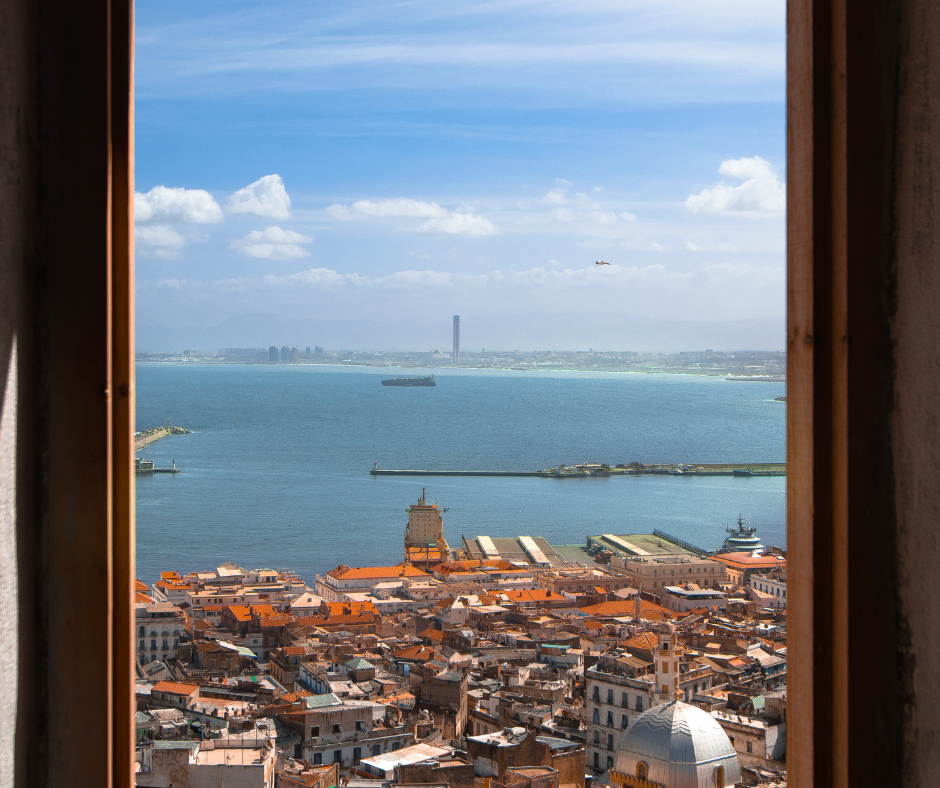
Hire a local guide. Street signs are close to nonexistent and plenty of houses are crumbling, so it takes someone who knows the quarter to find the lanes, courtyards and old fountains that are open to visitors. The UK Foreign Office also advises a good local guide here.
Start around 9 am, before the midday heat and the afternoon crowds in the lower lanes.
The rest of the capital, from the waterfront to the hilltop districts, is in our 15 Best Things to Do in Algiers.
The Bardo and the Martyrs' Memorial
About 2 km uphill from the center, the Bardo National Museum of Prehistory and Ethnography fills a late-18th-century Ottoman-era villa that became a museum in 1930. It covers prehistory in the Maghreb and the Sahara, plus costumes and jewelry from around Algeria. It closes on Fridays.
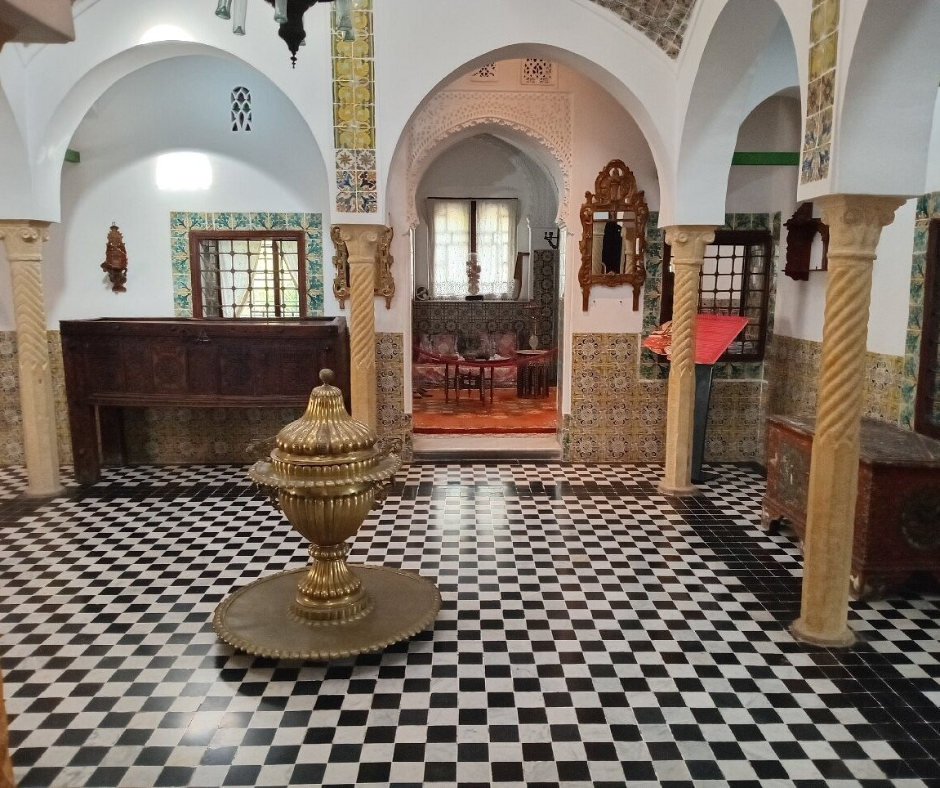
For modern Algeria, go to the Maqam Echahid (Martyrs' Memorial), the 92 m concrete monument to the dead of the War of Independence, inaugurated on 5 July 1982, with the Museum of the Mujahid underneath.
It stands on the hill above El Hamma, looking over the bay. The easy way up is the short cable car from beside the Jardin d'Essai, which was running in the latest reports.
The Western Loop: Tipaza, Oran, and Tlemcen
West of the capital the history changes: Roman Tipaza, Spanish Oran (held for most of 1509 to 1792) and Tlemcen, capital of the Zayyanid kingdom from the 13th to the 16th century.
The Ruins of Tipaza
Tipaza is about 70 km west of Algiers, roughly an hour and a quarter by road and longer on summer weekends. It started as a Punic trading post and became a Roman colony; today its ruins, on the UNESCO list since 1982, spread over low headlands right down to the water.
The amphitheater is the first building you see after the entrance. From there the old main street runs west past baths and houses to the Great Basilica, an early Christian church on its own headland, with burial grounds around it.
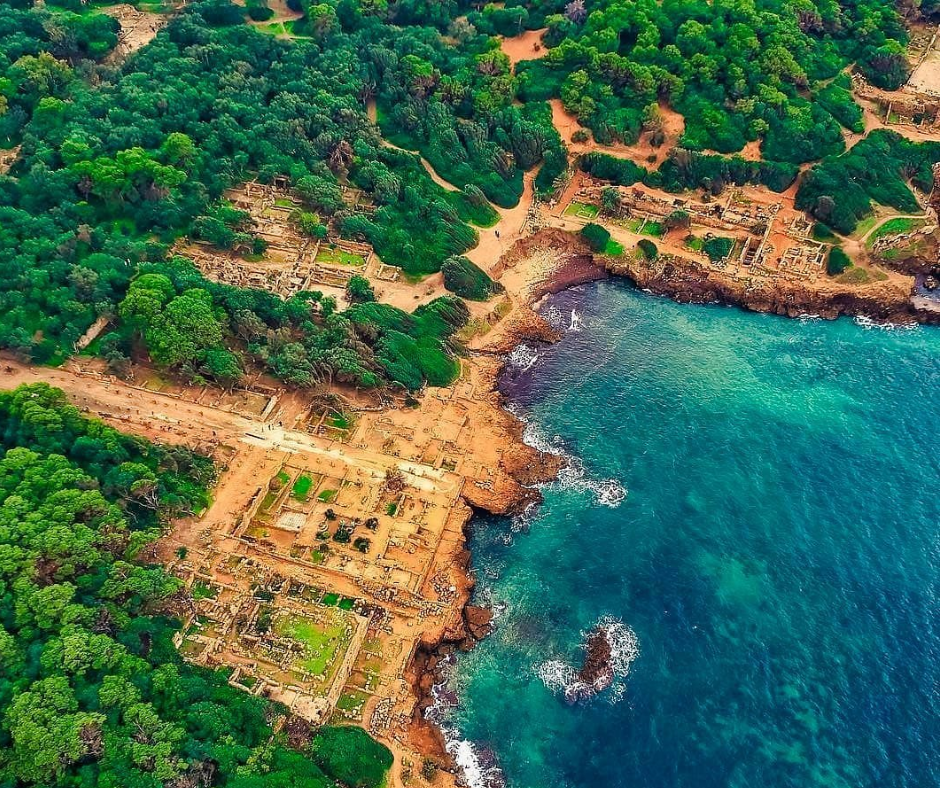
Pines and olive trees grow through the site, so there is some shade, and stone sarcophagi lie around the basilicas. Allow at least two hours.
Late afternoon gives softer light on the columns and the sea, but ask at the gate when the park closes. Driving back to Algiers, you pass close to the Royal Mausoleum of Mauretania (Kbor er-Roumia) near Sidi Rached, which is worth the stop.
Read also: 8 Best Things to Do in Tipaza, Algeria
The Spanish Military Architecture of Oran
Oran is Algeria's second-largest city and the main port of the west. The forts on the hills are Spanish; the squares below were laid out by the French after 1831.
The Santa Cruz fort, built by the Spanish between 1577 and 1604 near the top of Mount Murdjadjo, is about 15 minutes by car above the center. The chapel beside it was added in the 19th century.
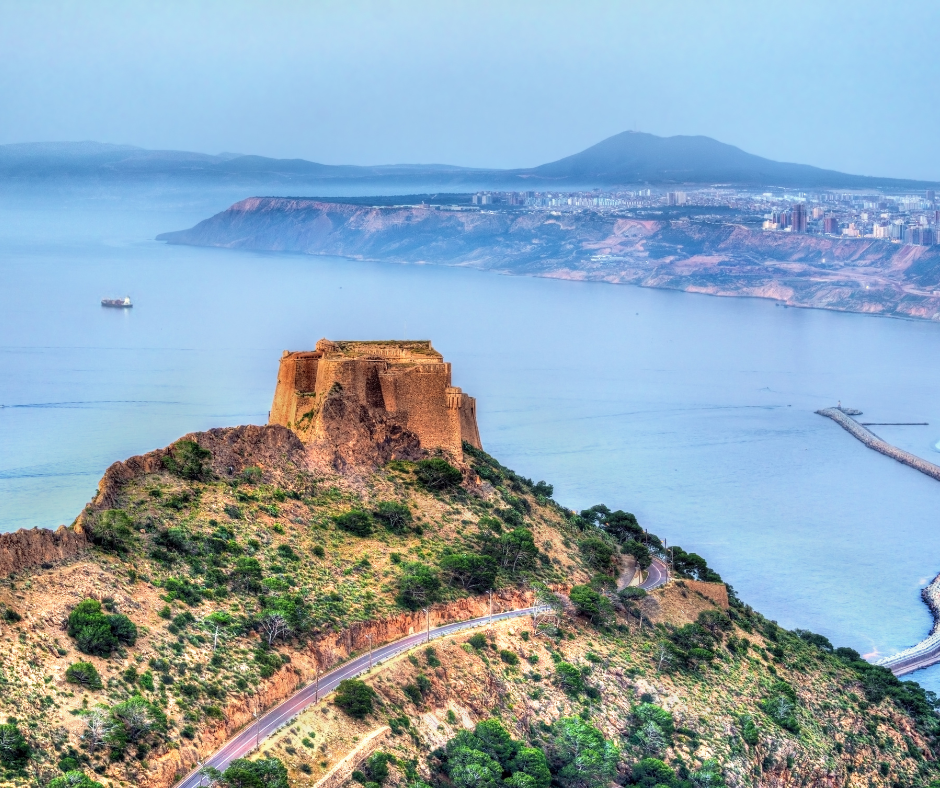
Go for the view: the port, the whole bay and the city below. Take a taxi up.
Back in the center, Place du 1er Novembre is the French-era heart of town, with the former opera house, opened in 1907 and now the regional theater named after the playwright Abdelkader Alloula. The old quarter of Sidi El Houari is a short walk away.
Read also: 12 Best Things to Do in Oran
The Andalusian Heritage and Palaces of Tlemcen
Tlemcen sits at about 840 m in the hills inland from Oran. It is the Algerian home of gharnati, a style of Andalusian music, and in our view has the finest medieval Islamic buildings in the country. Give it two full days.
The Great Mosque was founded in 1082 by the Almoravid ruler Yusuf ibn Tashfin. Go in for the ribbed dome in front of the mihrab, dated 1136, with pierced, carved plaster between the ribs. The brick minaret was added in 1236.
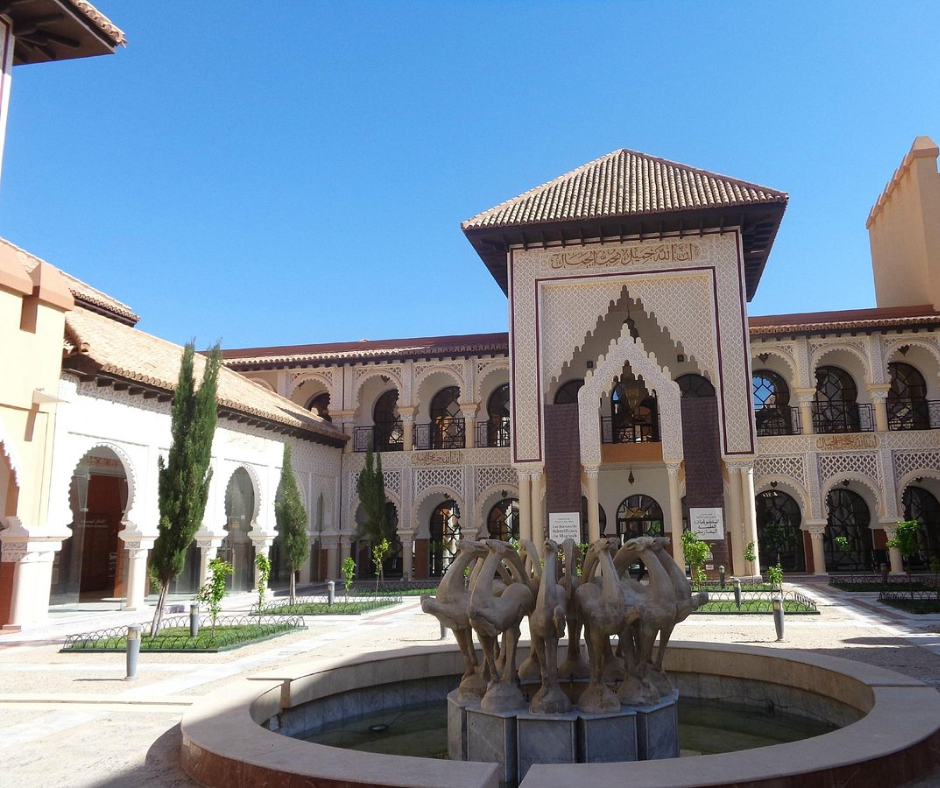
A few minutes' walk away, El Mechouar was the citadel and palace of the Zayyanid sultans. The palace you walk through is largely a reconstruction, rebuilt on its excavated foundations in 2010 and 2011.
Tlemcen also has a long weaving and embroidery tradition. Its bridal costume is on UNESCO's intangible heritage list (2012), and in the old town you can still buy woven blankets and burnous, the hooded wool cloak.
Everything else worth seeing in Tlemcen is in our Tlemcen, Algeria: 9 Best Things to Do.
The Eastern Circuit: Constantine, Djémila and Timgad
The east is where the Roman north is best preserved: UNESCO listed both Djémila and Timgad in 1982, and few Roman towns in North Africa survive as completely. Constantine, the base, sits on a rock above the Rhumel gorge. Expect police and gendarmerie checkpoints on the roads between them: they are routine, so slow down, have your passport ready and you will usually be waved on quickly.
Base yourself in Constantine for three or four nights and see the Roman towns as day trips. If you would rather combine the north with the Sahara, our 10-day Algeria itinerary does exactly that, with an optional finish in Djanet.
The Roman Ruins of Djémila
Djémila, the Roman Cuicul, stands at about 900 m on a narrow spur between two ravines, in the hills about 50 km northeast of Sétif.
The ground was too steep for a regular grid, so the builders bent the Roman plan to fit the ridge: streets follow the spur, and the town grew south from its first forum to a second, larger one in the Severan period.
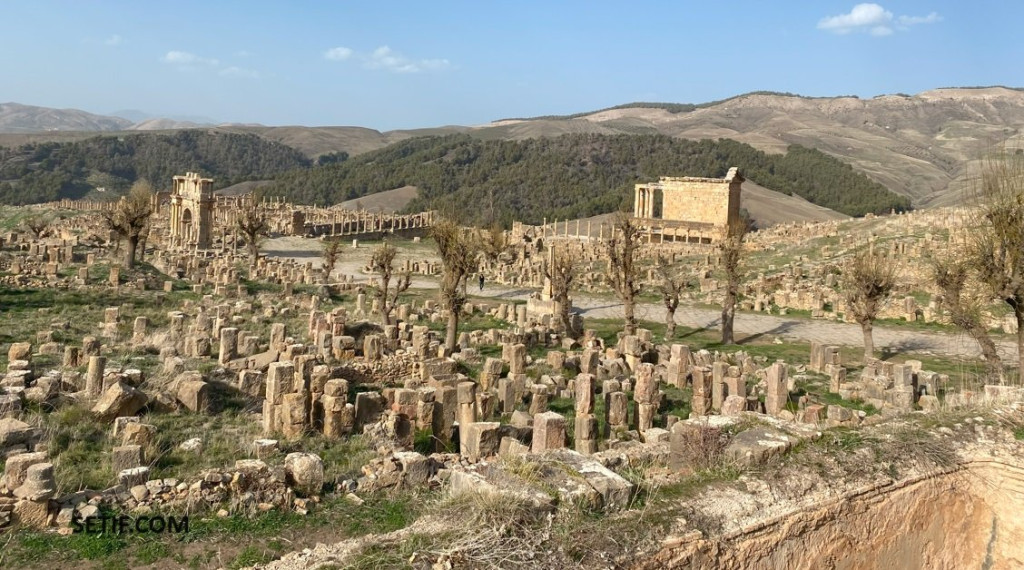
Look for the arch of Caracalla, built in 216, and the theater cut into the hillside, built in 161 and able to seat about 3,000.
Start or finish at the site museum by the entrance. Its walls are hung with large floor mosaics lifted from the town's houses, many of them mythological scenes. Like Timgad, the site has little shade.
Ancient Timgad
Timgad was founded by the emperor Trajan around AD 100 as a colony for veterans of the Third Augustan Legion. UNESCO calls it a typical example of a Roman town planned on a grid.
The square plan is still easy to read. The main east-west street, the decumanus, runs from Trajan's Arch past the Forum, a paved square of about 50 by 43 m.
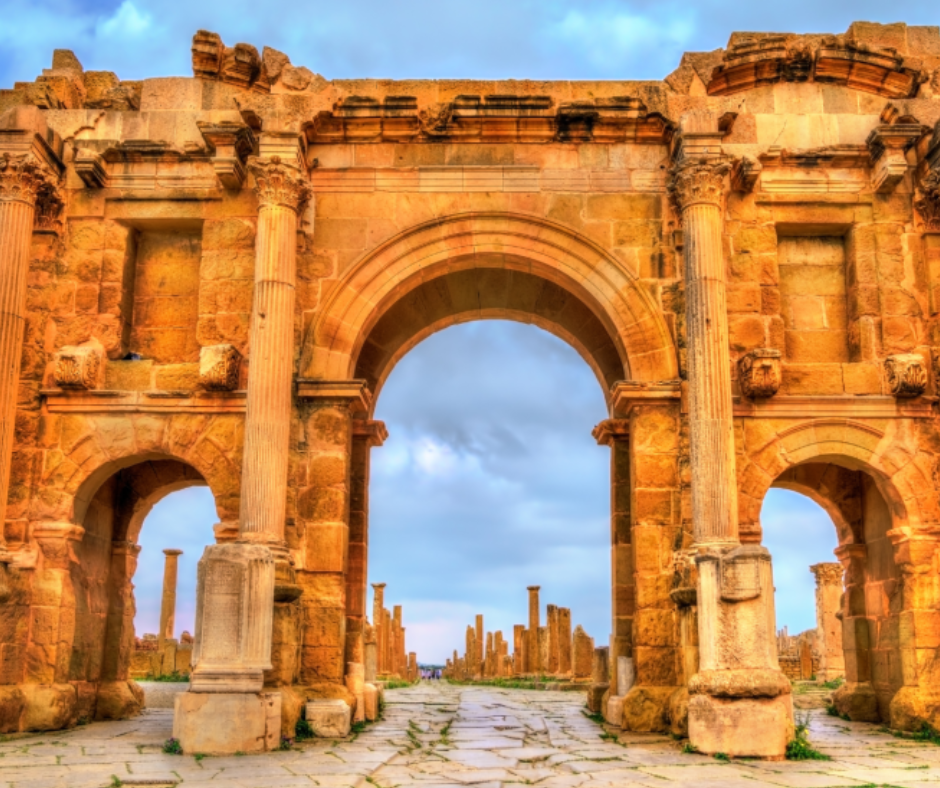
Timgad sits about 1,000 m up on the northern edge of the Aurès, 35 km east of Batna. Look for wheel ruts worn into the paving stones, the public library and some of the town's many baths.
The ruins have almost no shade. In summer, arrive at opening time with plenty of water; in winter it can be cold and windy. From Constantine it is about 120 km, roughly two hours each way.
Read also: Timgad Day Trip Guide: Pompeii of Africa
The Gorge and Bridges of Constantine
Constantine, the ancient Cirta of the Numidian kings, is built on a limestone rock cut off on most sides by the gorge of the Rhumel.
It is called the City of Bridges because several bridges cross the gorge, from the stone arches of Sidi Rached to the cable-stayed Salah Bey viaduct, opened in 2014.

The Sidi M'Cid suspension bridge, opened in 1912, is the one people come for: its deck hangs about 175 m over the Rhumel. It is free to walk across; if you don't like heights, look at it from the Monument aux Morts on the far side.
The old town sits right on the cliff edge, with narrow market streets where you can eat chakhchoukha or trida, two dishes of the east. Then cross the bridge to the Monument aux Morts for the view back over the gorge.
Read also: Best Things to Do in Constantine
Shorter and longer versions: 7, 10 and 14 days
| Version | Route | Best for |
|---|---|---|
| 7 days, east | Algiers (2 days), Tipaza, Constantine, Djémila, Timgad | Roman history and dramatic scenery |
| 7 days, west | Algiers (2 days), Tipaza, Oran, Tlemcen | Spanish and Andalusian heritage, raï, the sea |
| 10 days | The 12-day loop without the second days in Oran and Tlemcen | Seeing both sides at a quicker pace |
| 14 days | The 12-day loop plus two nights in Ghardaïa, or Annaba | A taste of the desert, or St Augustine's Hippo |
Adding the M'Zab Valley
Two nights in Ghardaïa give you a taste of the desert without the deep south. Fly from Algiers or Constantine; Air Algérie has run Constantine to Ghardaïa direct a few times a week. The valley's five fortified towns date from about 1012 to 1350 and are a UNESCO site (1982). In Beni Isguen you'll need a local guide, engaged at the gate, and photographing people, women above all, is off limits.
Adding Annaba
In the far east, Annaba has the ruins of Hippo Regius, where St Augustine was bishop and died in AD 430. The Basilica of St Augustine (1881 to 1900) stands on the hill above them. The Seraïdi cable car, back in service since July 2025, climbs into the hills behind the city. Annaba works as the end of the eastern loop, or as the start if you come in by train from Tunis.
Days, trains, driving and seasons
Can I see the whole north in under two weeks? Yes: about 12 days covers Algiers, Tipaza, Oran, Tlemcen, Constantine, Djémila and Timgad without rushing, and two weeks lets you add the M'Zab Valley or Annaba.
Train or plane between Algiers, Oran and Constantine? Both. Algiers to Oran is a train ride, roughly 4.5 to 5 hours on the Coradia, often late, for about 1,130 to 1,700 DZD (April 2026). For Oran to Constantine, fly: about 1 hour 20 minutes direct. Algiers to Constantine is about an hour by air, against four to five hours by road.
Can I rent a car and drive myself? Yes. Rental firms operate in the big cities, the A1 motorway links Oran, Algiers and Constantine with no tolls, and unleaded costs 47 DZD a liter (2026). Bring an International Driving Permit and keep your passport handy for checkpoints. Many travelers hire a car with a driver for the Roman sites instead.
Which month would you pick? April, May or October. March, September and early November work too, with cold nights at Timgad and Djémila (900 to 1,000 m); July and August are hot inland, and December to February is the wettest time on the coast.
Oran or Constantine, if I only have a week? Go east for Roman history and scenery: Constantine's gorge and bridges, plus Djémila and Timgad. Go west for Spanish forts, raï music, the sea and Tlemcen's medieval mosques. Both routes start with two days in Algiers and a day at Tipaza.
Most days on this route include a long transfer, so it works best if history is what you came for. It is not a beach trip, and in July and August the inland sites are hard work.
Tell us which parts you'd rather not handle yourself: we can have a driver waiting at arrivals in Algiers, a car and driver for Djémila and Timgad, and local guides in each city. If you'd like us to fit it to your dates, contact us via email and we'll map out your custom itinerary together.


