
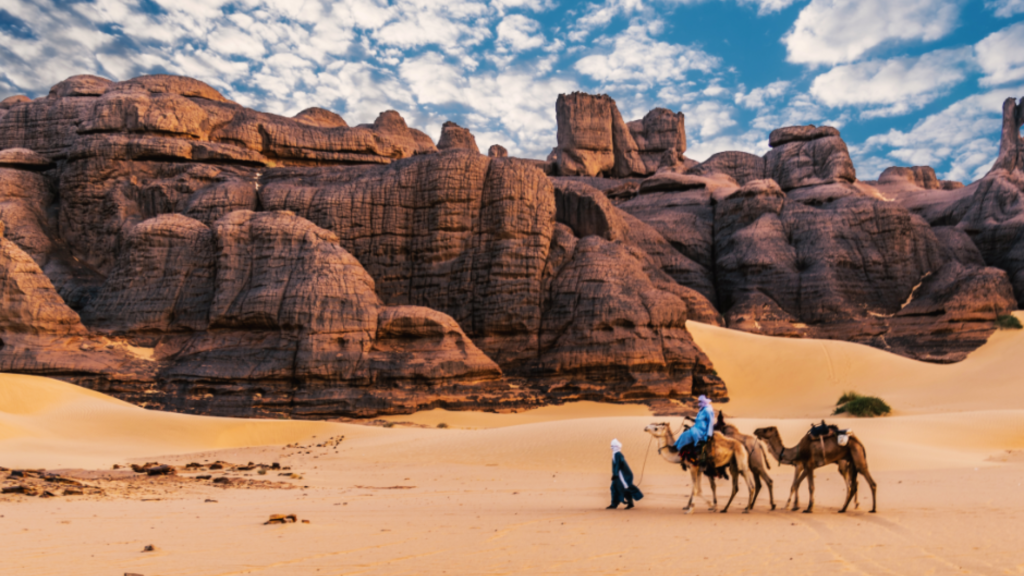

Two things decide how a group trip to Algeria goes: the visa and the choice of region. On paperwork, the dividing line is the Sahara: a group whose agency-organized tour takes in the southern Sahara can get a visa on arrival, while for a trip that stays north, most nationalities apply at an Algerian consulate before flying. And because Algeria is Africa's largest country, a one- or two-week trip works best with one or two regions, roughly a week each: Algiers, the Roman north-east, the M'Zab Valley or the deep south around Djanet.
Most groups fly into Algiers, take domestic flights (Air Algérie or Domestic Airlines) for the long legs and use a private vehicle and driver for the rest. Below are four routes that suit groups, how the visa works for each, and what to expect on camping, safety, timing, packing and money. If someone in the group is still unsure about the destination, our Algeria travel guide is a good way to get everyone on the same page.
Algeria's 2026 moment, and what it means for a group
BBC Travel and Condé Nast Traveller each picked Algeria for their 2026 lists. For groups heading east there is a practical bonus too: in Constantine, the century-old Grand Hôtel Cirta reopened at the end of December 2025 after more than ten years of restoration, which gives the city a landmark hotel again.
Tourism is still small-scale, and for a group that cuts both ways. You'll often have Timgad or Djémila almost to yourselves, but there are few cafés or toilets at the sites, English is limited outside hotels, and outside Algiers, Oran and Constantine there aren't many hotels that can take a big group at short notice. Book rooms early, especially in Ghardaïa and Djanet.
How the four routes below compare:
| Route | Days | Best months | Nights | Visa route | Suits |
|---|---|---|---|---|---|
| Algiers city and culture | 4 to 6 | Mar to May, Sep to Nov | Hotels | Consulate | First-timers, mixed ages |
| Roman north-east | 8 to 10 | Mar to May, Sep to Nov | Hotels | Consulate | History lovers |
| Djanet and the Tassili | 7 to 9 | Oct to Apr | Mostly camp | Visa on arrival through the agency | Fit groups happy to camp |
| M'Zab Valley | 6 to 8 | Oct to Apr | Hotels or guesthouses | Visa on arrival possible on an agency tour | Patient, culture-minded groups |
Four group itineraries in Algeria
Algiers: the usual starting point
Most groups fly into Algiers, and four to six days there is enough for a first look at the Algiers city and culture route. The core is the Casbah, on the UNESCO list since 1992, with its Ottoman-era houses and palaces such as Dar Mustapha Pacha and the Palais des Raïs (Bastion 23).
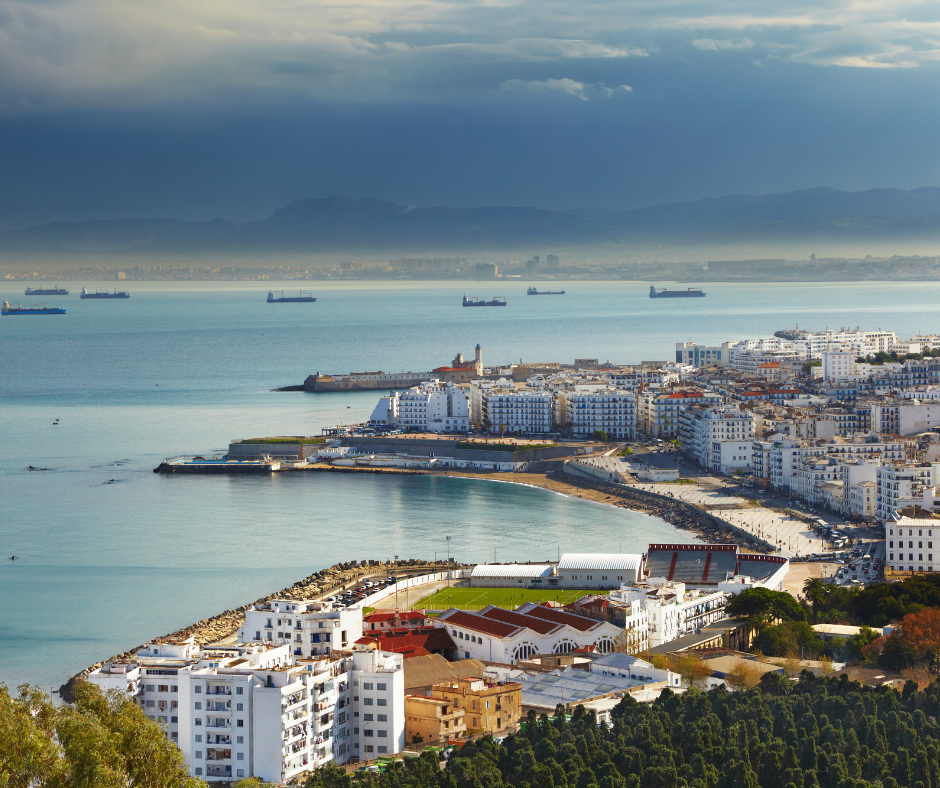
Start the Casbah early, and not on your own: plenty of its houses are in poor repair, and the UK Foreign Office (FCDO) recommends going round with a good local guide. In the afternoon, the Jardin d'Essai du Hamma, a 32-hectare botanical garden founded in 1832, is a calm place to regroup (entry is a small fee, about 150 to 200 DZD). Not every group wants to plan everything itself, and our overview of tours in Algeria explains when a private or small-group tour makes more sense.
Roman ruins for history lovers
For groups interested in history, the Roman ruins loop through the north-east takes eight to ten days. It runs through Sétif to Constantine, the city of bridges, where the Sidi M'Cid suspension bridge (1912) hangs 175 m above the Rhumel gorge.

Two names justify the drive. Timgad lies about 35 km east of Batna and was founded by the emperor Trajan in AD 100; Djémila, a 1st-century Roman town, sits at about 900 m in the hills north-east of Sétif.
Both have been UNESCO sites since 1982, and both get compared to Pompeii because so much of the street plan, forum and theater survives. There are rarely other tour groups, so you can walk the stone-paved streets at your own pace. The catch is shade: there's almost none at either site, so from May onward start early.
The Sahara trip: Djanet and the Tassili
For a more rugged trip, seven to nine days around Djanet is the classic desert itinerary. The draw is the Tassili n'Ajjer, a plateau of sandstone pillars and arches, now a national park, where UNESCO (which listed it in 1982) counts more than 15,000 rock paintings and engravings, the oldest from about 10,000 BC and the latest from the first centuries AD. Groups fly from Algiers to Djanet with Air Algérie (in the Saharan season there have also been direct flights from Paris) and meet their Tuareg guides and camp crew there.
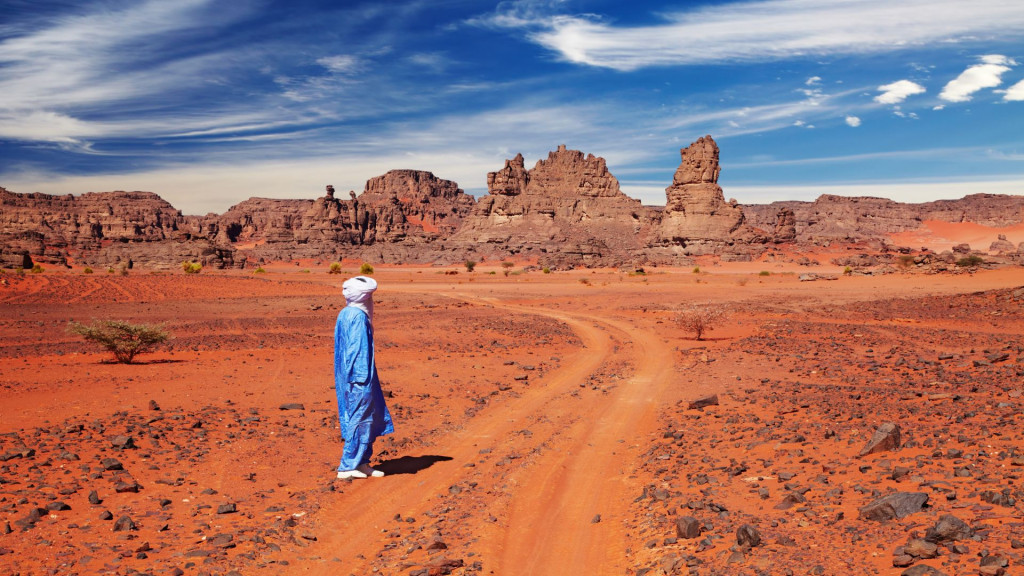
Most nights are spent in camp and the walking days can be long, so this route suits groups who are happy with basic conditions. If someone needs a bed and a hot shower every night, a hotel base in Djanet with shorter outings is possible, though you'll see much less of the plateau.
Read also: Algerian Sahara Travel Guide: Routes, Visas & Safety Tips
Slow travel in the M'Zab Valley
The M'Zab Valley around Ghardaïa has five fortified towns (ksour) founded between 1012 and 1350 and on the UNESCO list since 1982. Each is built around a hilltop mosque, with houses stepping down to the walls, and the Mozabite community that lives in them is conservative and private.

Six to eight days lets a group take the valley slowly: the arcaded market square in Ghardaïa, the palm groves, and the old towns with a guide. The rules are strict, so brief everyone before you arrive.
Nobody enters Beni Isguen without a guide, and you hire one at the gate. Visitors leave by sunset (outsiders don't sleep inside the walls), shoulders and legs stay covered, nobody smokes, and cameras stay off people, women above all. It suits patient groups; anyone after nightlife or a beach will be bored.
Day by day: two sample 8-day group trips
These are outlines we use as a starting point; flight days and drive times shift with the season and the timetable.
Eight days in the Roman north-east
- Arrive in Algiers. Afternoon in the Jardin d'Essai and the cable car up to Maqam Echahid. Night in Algiers.
- The Casbah with a local guide in the morning, the lower town and the seafront in the afternoon. Algiers.
- Day trip west to Tipasa's Roman ruins by the sea, about 70 km away. Algiers.
- Drive east on the motorway to Sétif. Night in Sétif.
- Morning at Djémila and its mosaic museum, then on to Constantine. Constantine.
- Constantine on foot: the bridges, the Souika and the Palace of Ahmed Bey. Constantine.
- Day trip to Timgad, 35 km east of Batna, early to beat the heat. Constantine.
- Fly back to Algiers for your international flight.
Eight days around Djanet and the Tassili
- Fly Algiers to Djanet, about 2 hours 15 minutes, and meet the Tuareg guides and crew. Night in Djanet.
- The Crying Cows engraving near Djanet by 4x4, then the first camp in the dunes.
- Climb to the Tassili plateau with the guide; the crew brings the camp gear. Camp on the plateau.
- Rock-art sites and sandstone forests on the plateau. Camp.
- More painting sites on the plateau. Camp.
- Walk down and drive back toward Djanet. Camp or hotel.
- Dunes and engravings around Djanet by 4x4, farewell dinner with the crew. Djanet.
- Fly back to Algiers.
Visas for groups: consulate visa or visa on arrival
There are two routes. The one that helps groups is the Sahara-tourism visa on arrival, introduced in 2022-23.
To qualify, the trip has to be organized and booked through an approved Algerian travel agency, and the itinerary has to include at least one of the 24 southern wilayas (provinces) on the list; Djanet, Tamanrasset, Ghardaïa, Timimoun and Biskra are among them. Your agency submits the request on the Tourism Ministry's platform.
Each traveler then receives a QR-code authorization that lets them board, and pays for the visa on landing (the figure usually reported is about EUR 110, varying by nationality). Flying into Algiers is fine as long as the south is on the program, and the visa covers the length of the trip, up to 30 days. Some nationalities are excluded, so check yours with the agency first.
Groups that stay in the north go the consulate route, and every traveler applies individually for a standard tourist visa before departure; there is still no e-visa (October 2026). Take London as an example.
The consulate there wants two application forms and two photos, a passport with at least six months' validity and two blank pages, plus one supporting document, which can be a hotel booking, a certificat d'hébergement from a host certified by their town hall, or an invitation and itinerary from an Algerian travel agency. You pay GBP 85.
Allow about 10 working days if you apply in person and 15 or more by post, more in summer and around Ramadan and Eid; we'd get the applications in six to eight weeks before departure. Everyone should carry paper copies of their visa documents and keep their passport on them: hotels and domestic flights ask for it, and there are police and gendarmerie checkpoints on the roads.
For the full list of documents, fees and waiting times, see Algeria Visa: Requirements and Visa on Arrival.
What a group trip to Algeria costs
A group price depends on four things: how many internal flights the route needs, how many days are spent in the desert (vehicles, fuel, crew and food), the hotels, and the group size. Guide, vehicle and crew costs are shared, so the price per person drops as the group grows, while a single room adds a supplement.
Some fixed costs to budget on top of the trip price, at autumn 2026 rates:
- Visa: GBP 85 at the London consulate for British citizens, or about EUR 110 for the visa on arrival (it varies by nationality).
- Site and museum tickets: 200 to 300 DZD each, about EUR 1.30 to 2 at the official rate.
- Tips for the desert crew: the usual pool is 1,500 to 2,000 DZD per traveler per day (EUR 5.50 to 7.30 with cash changed at the informal rate); in groups of eight or more, about 1,000 each is enough.
- Any meal not in the plan: budget about 600 to 1,200 DZD for a simple plate in a popular restaurant.
Send us the route, dates and number of travelers and we'll quote a per-person price for your group.
Sahara camping: what it is really like
On a Sahara trip you'll usually sleep in a simple bivouac or mobile camp that the local crew sets up each afternoon: tents or mats on the sand, a fire, sweet tea and meals cooked by the team. It's comfortable enough, but it isn't glamping, and on most nights there's no shower and no proper toilet. Far from any town lights the sky gets very dark, and on moonless nights the Milky Way is easy to see.
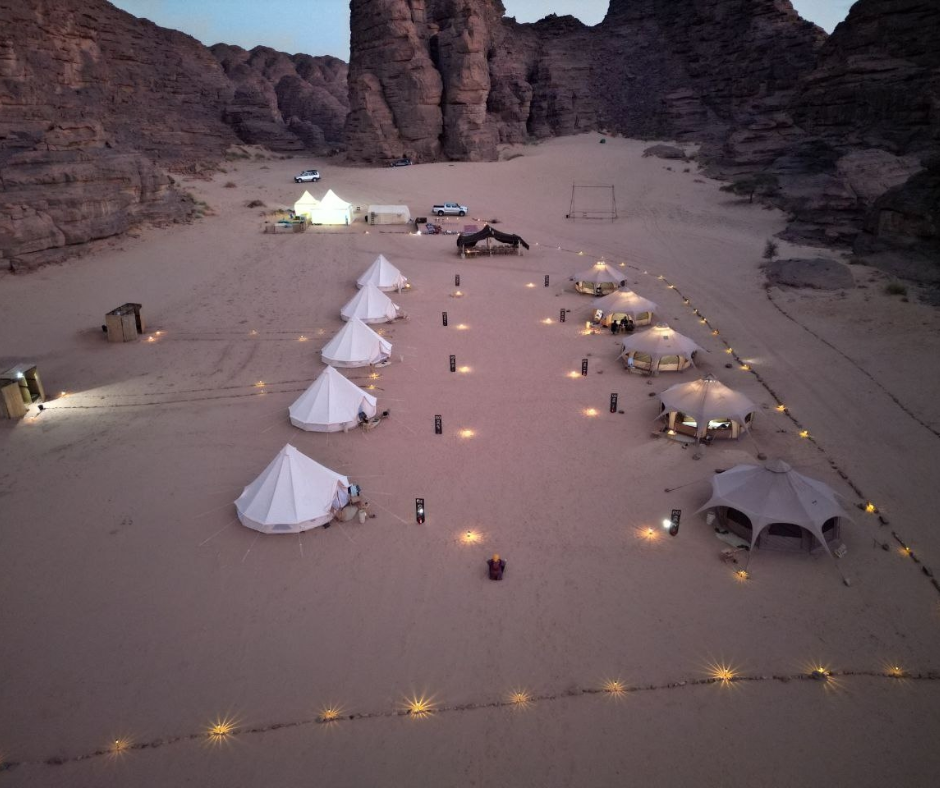
The temperature swing is what catches people out. Winter days can be warm, but the temperature drops fast after sunset and can get close to freezing in December and January, especially up on the Tassili plateau. Pack thermal base layers and a warm fleece, ask your agency what bedding they supply, and bring a headlamp for moving around camp after dark.
Phone signal is patchy or absent in remote areas, so tell people at home you'll be offline for a few days. Some groups take this further and build the whole trip around a yoga retreat in Algeria, with sessions in Timimoun guesthouses or desert camps.
More on desert nights: Camping in the Algerian Sahara: Seasons, Gear, Rules and Safety
How safe it feels, plus escorts and checkpoints
The comment we hear most from groups after a trip is that Algeria was calmer and friendlier than they had expected: people stop to help with directions, shopkeepers ask where you're from, and guests are looked after, in the cities and in the desert camps. In Algiers, Oran and Constantine the things to watch are everyday ones: pickpocketing in crowds and taxi overcharging.
Keep valuables in a zipped crossbody bag, avoid walking alone in unfamiliar neighborhoods late at night, and use Yassir or Heetch (Uber does not operate in Algeria) or agree the taxi fare before you get in. Expect a visible police presence and checkpoints on the main roads; at checkpoints, slow down and have photo ID ready.
The south is the part most groups remember longest: the sandstone forests and rock art of the Tassili, the red dunes of the Tadrart, evenings around the fire with a Tuareg crew. Foreign visitors go there with an approved Algerian agency. Our own desert trips stick to routes we know well, with licensed local agencies and Tuareg guides, and not one of them has had an incident.
On some desert routes the authorities also assign a police or gendarmerie escort to tour groups; the agency arranges it, and it is a normal part of desert travel here. One job for the organizer before anyone pays: look up the current official travel advice for the route, and make sure each traveler's insurance covers every area on the itinerary.
For more on how travel in Algeria works region by region, see Is Algeria Safe for Tourists?
Best months for a group trip
For Algiers, the coast and the northern mountains, we'd pick March to May or September to November: warm enough for long walks in the city and hikes in the hills, without the summer heat. Spring is also when the hills are green and the wildflowers are out. July and August are hot inland, and the coast fills with Algerian families on holiday.
For the Sahara, go between October and April. Summer temperatures in the desert often pass 45°C, which makes walking and camping dangerous. Winter brings warm, sunny days and cold nights, with December and January the coldest.
Then there's the Islamic calendar. In 2027, Ramadan should begin around 8 February, Eid al-Fitr should fall around 9 or 10 March and Eid al-Adha around 16 or 17 May; the moon settles the exact dates, and each Eid brings three days of public holidays.
Through Ramadan, eating, drinking and smoking in public are off-limits in daylight, plenty of restaurants open only after sunset and business hours shrink, though the evenings after iftar are lively. Around the Eids, buses, trains and flights fill up with people going home to their families.
What to pack for coast and desert
Packing for Algeria means planning for a Mediterranean city and the desert in the same bag. For the day, light cotton or linen works best. Dress is conservative outside beach resorts, and more so in the south and the M'Zab: cover shoulders and knees, which also helps against the sun. A large scarf earns its place: warmth at night, shade for your neck, or covering your hair in a mosque.
Bring sturdy walking shoes for the uneven paving at Timgad and Djémila and the steep lanes of Algiers. In the desert, closed hiking boots keep the sand out and support your ankles on rock. Add high-SPF sunscreen, a wide-brimmed hat and good sunglasses; the glare off the sea and the sand is strong even in winter.
Don't pack a drone. According to the FCDO, bringing drones, binoculars or telescopes into Algeria without authorization is illegal, and customs usually confiscate drones.
For a longer packing list: What to Wear in Algeria
Cash, SIM cards and keeping the group together
Outside large hotels, airline offices and a few upscale places, a foreign card won't get you far, and the south runs on cash. What you get for a euro depends on where you change it: around 150 dinars at banks and ATMs, around 275 on the informal "square" market (autumn 2026).
That market sits outside the letter of the exchange-control law yet operates in the open; have your guide or host find someone reliable to change your euros. Anyone who declared more than 1,000 euros on arrival should change some of it at a bank and hold on to the receipts. Dinars can't leave with you, so spend the last of them before your flight.
Small notes are handy for snacks, taxis and tips. Get a local SIM at Algiers airport (Mobilis, Djezzy or Ooredoo; you need your passport to register it). Mobilis has the best coverage in the south, and a group chat makes regrouping easy. English is limited outside hotels: Arabic and Tamazight are the official languages and French is widely spoken, so a few words of French or Arabic help.
Give everyone a copy of the itinerary, the hotel addresses and your guides' phone numbers, so anyone who gets separated knows where the next meeting point is. Leave slack in the plan: domestic flights get rescheduled, trains often run late, and desert days get rearranged around the weather. If you're aiming for the Sahara this winter or next spring, start the visa paperwork now; it's the step that takes longest.
Private groups, companies and the 2027 eclipse
A private group trip is built around your dates rather than a fixed departure. We arrange the route, hotels that can take the whole group, vehicles and drivers, and local guides at each stop. Each traveler still applies for their own visa, and we provide the agency invitation and itinerary letter for every member, or file the visa-on-arrival request for Sahara trips through our licensed partner agencies. For groups of 10 or more, start at least three months ahead: hotels with enough rooms are few outside Algiers, Oran and Constantine.
One date stands out for groups: the total solar eclipse of 2 August 2027. The path of totality crosses northern Algeria in the mid-morning.
Oran gets about 5 minutes 8 seconds of totality, starting at about 09:51 local time, and M'Sila about 5 minutes 23 seconds. Early August is hot inland, so a coastal base around Oran is the more comfortable choice. Rooms and flights are likely to go fast, so book well ahead.
Passports, visas on arrival and private trips
Which nationalities can join a group tour to Algeria?
Most can, with a visa from an Algerian consulate. Tunisia, Libya, Mali, Mauritania and a few others need no visa. The visa on arrival for southern tours excludes some nationalities. Ask us to check each traveler's passport before the group books flights.
Do groups get a visa on arrival in Algeria?
Yes, if the trip is an organized tour booked through an approved Algerian agency and the itinerary includes one of the 24 southern wilayas, such as Djanet, Ghardaïa or Timimoun. The agency files the request in advance and each traveler pays on arrival. Trips that stay in the north need consulate visas.
Is a group tour or a private trip better for Algeria?
A private trip for your own group gives you the dates, pace and hotels you want, and the visa invitation letters are made out for your group. Joining strangers costs less per person but fixes the dates. For the deep south either way works, as long as it runs with an approved agency.
If you'd like help organizing your group, contact us with your dates, group size and the region you're leaning towards. WildyNess is a marketplace of local guides and hosts: we arrange group and company trips, airport pickups and transfers between regions, and help with the visa, from the agency invitation and itinerary letter for consulate applications to visa-on-arrival requests for Sahara trips through licensed Algerian partner agencies.


