


Couscous is the dish everyone knows, and UNESCO added it to its intangible heritage list in December 2020 as a joint entry from Algeria, Mauritania, Morocco and Tunisia. Beyond it, look for chorba frik, rechta, chakhchoukha, bourek and, in Oran, karantika; below we explain what each one is, where it comes from and when people actually eat it.
Region, season and the religious calendar decide what lands on your plate more than any recipe. The whole food routine shifts in Ramadan, expected to begin around 8 February 2027, and some of these dishes rarely leave the family kitchen, so for each one we note where a visitor can realistically eat it.
Where traditional dishes in Algeria come from
Historical influences on Algerian food
Most periods of Algerian history left something in the kitchen.
The base is Amazigh (Berber) farming: wheat and barley rolled into couscous, olive oil from the northern hills, and stews cooked slowly in clay pots.
Then came the Arab conquest in the 7th century, Muslims and Jews expelled from Spain after 1492 (many settled in Algiers, Tlemcen and Blida), Ottoman rule from the 16th century to 1830, and 132 years of French rule.
Some of it is easy to trace. Bourek takes its name from Turkish börek, and baklawa came with the Ottomans. Tomatoes and peppers, now in almost every red sauce, came from the Americas and reached North Africa from the 16th century. The French left the baguette, which is now the everyday bread in cities alongside homemade kesra.
Slow cooking and shared dishes
Home cooking is slow. A proper couscous is steamed two or three times over its simmering sauce, with the grains fluffed and oiled between steamings, so a family couscous can easily take a morning.
Cooks usually make more than the family needs, because anyone who drops by at mealtime gets fed.
Couscous comes to the table in one large shared dish, the gasaa (traditionally wood or glazed clay), and everyone eats from the part in front of them, usually with a spoon. Bread is for the other dishes: people tear off a piece of kesra, the round semolina flatbread, and use it to scoop up stews and salads. If you eat with your fingers, use your right hand.
Holiday food and everyday hospitality
The calendar decides a lot of the menu. Chorba frik opens the evening meal through Ramadan, families who can afford it sacrifice a sheep at Eid al-Adha, and in Algiers rechta is cooked for Mawlid and for Yennayer, the Amazigh New Year on 12 January.
Before Ramadan and the Eids, many families give over several days to baking. Expect makroud, semolina diamonds stuffed with dates; kalb el louz, the syrup-soaked semolina and almond cake Algiers loves in Ramadan; and griwech, knots of fried dough dipped in honey and orange blossom water, then rolled in sesame.
Hospitality starts with a drink. In the north, from Algiers to Oran, a visitor to a home or a shop is usually offered coffee. In the Sahara the drink is green tea with mint, poured from a height so it foams in the glass.
Tuareg hosts in the far south serve it in three rounds, and turning down the later glasses can come across as rude, so plan to sit for a while.
Traditional Algerian main courses
Most main dishes rest on wheat in one form or another: rolled into couscous, cut into noodles, baked as flatbread or cracked into soup. Regional differences are bigger than most visitors expect, so the same dish can look quite different in Algiers and in Biskra.
Couscous and its regional versions
Couscous (seksou, or simply taam, "food", in many homes) is the closest thing Algeria has to a national dish, though it is shared across the Maghreb, which is why the 2020 UNESCO listing was joint. The grains are rolled by hand from semolina, or from barley in much of the countryside, and steamed in a keskas, the perforated top half of a couscoussier, over a pot of sauce.
What goes on top changes from town to town and with the season.
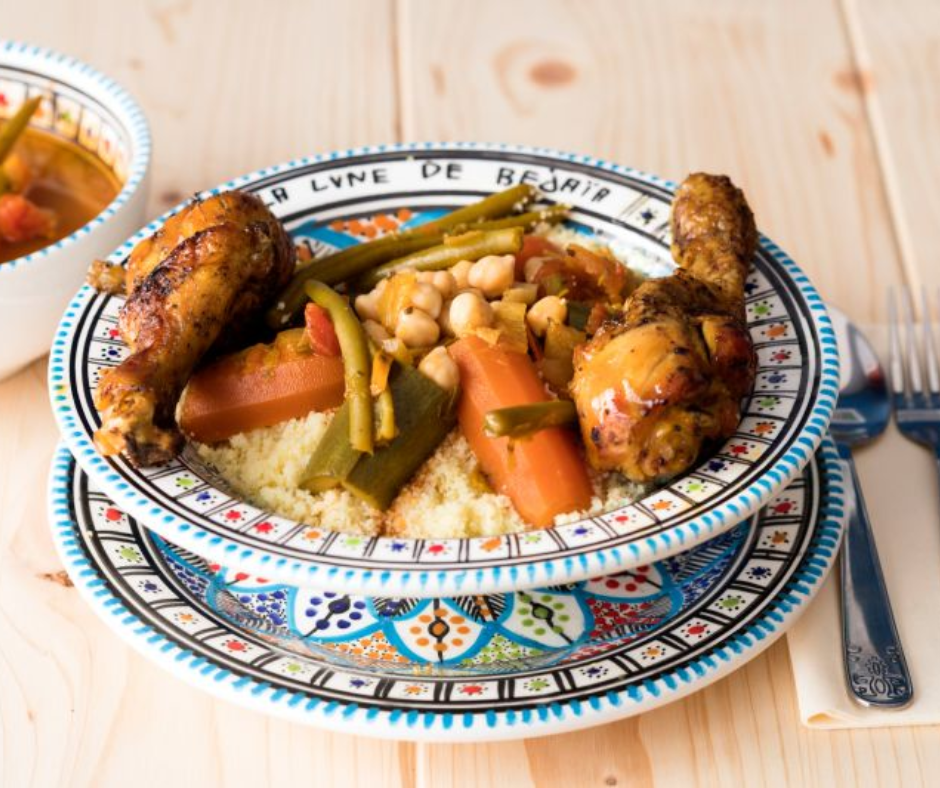
Sauces fall into two families. A white sauce (marqa beida) has no tomato and is usually made with chicken or lamb, chickpeas, turnips and zucchini; a red sauce adds tomato and paprika. You'll meet both all over the country, so don't expect a neat north-south split.
Then there are the variants worth asking for. Berkoukes (called aïch in the east) uses large hand-rolled grains cooked in a soupy sauce, mostly in winter. Mesfouf is fine couscous with butter and raisins, or with peas and broad beans, eaten at the pre-dawn meal in Ramadan. In the far south, the Tuareg bake taguella, a bread cooked under sand and embers, then break it into pieces and pour a sauce over it.
Read also: Where to Eat Couscous in Algeria
Traditional soups: chorba frik
The soup to know is chorba frik, the bowl that opens the evening meal through Ramadan in most Algerian homes. In Constantine and much of the east it's called jari.
Frik is durum wheat harvested while still green, roasted over a fire, dried in the sun and then cracked. The roasting gives the soup its slightly smoky taste.
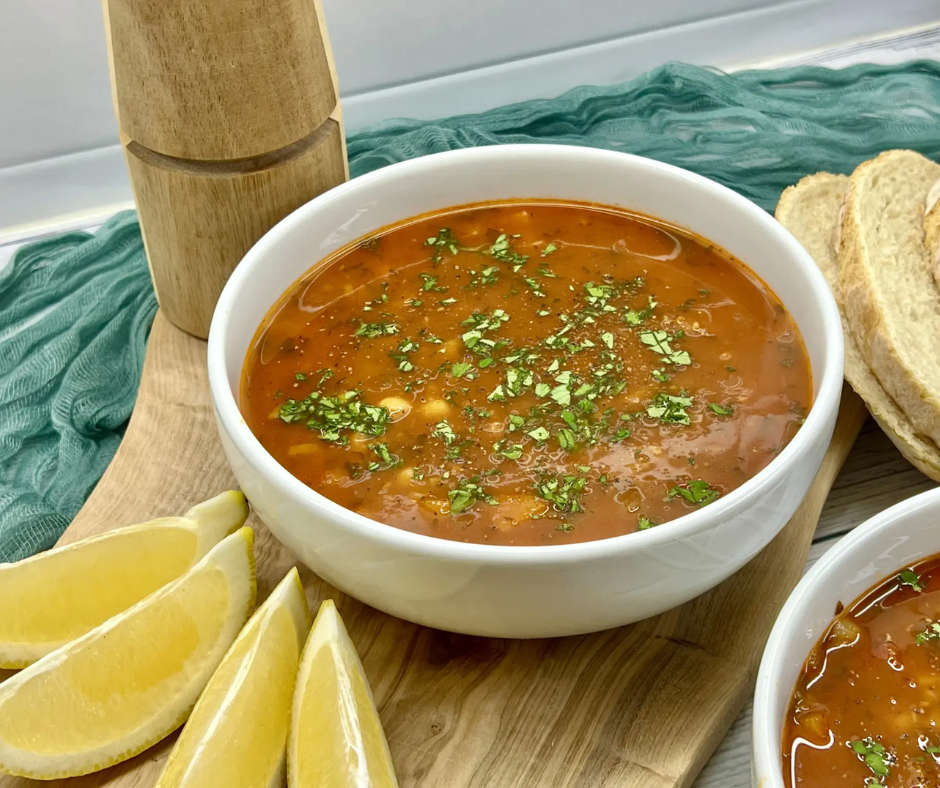
It is simmered with lamb or beef, onion, tomato, chickpeas and fresh coriander until the broth thickens, and many cooks finish it with dried mint. A squeeze of lemon at the table is common.
Outside Ramadan, chorba is a common starter in popular restaurants, especially in winter. During Ramadan you are more likely to taste it in a home, because many restaurants close during daylight hours.
Hrira: the Ramadan soup of the west
In western Algeria, Oran included, the Ramadan soup is often hrira rather than chorba frik. The Algerian version is thickened with a fermented leaven, which gives it a slightly sour, silky body, and is made with meat, tomato, onion and vegetables; one variant is flavored with wild thyme. Like chorba, it is mostly a home dish, so you're most likely to taste it at an iftar.
Rechta: hand-cut noodles from Algiers
Rechta is the signature dish of Algiers, also cooked in Blida and Constantine: long, very thin fresh noodles made from fine semolina, a little flour, water and salt.
The dough is rolled thin, cut into strands and steamed like couscous, then served with a white sauce of chicken, turnips, onion and chickpeas, seasoned with cinnamon and black pepper.
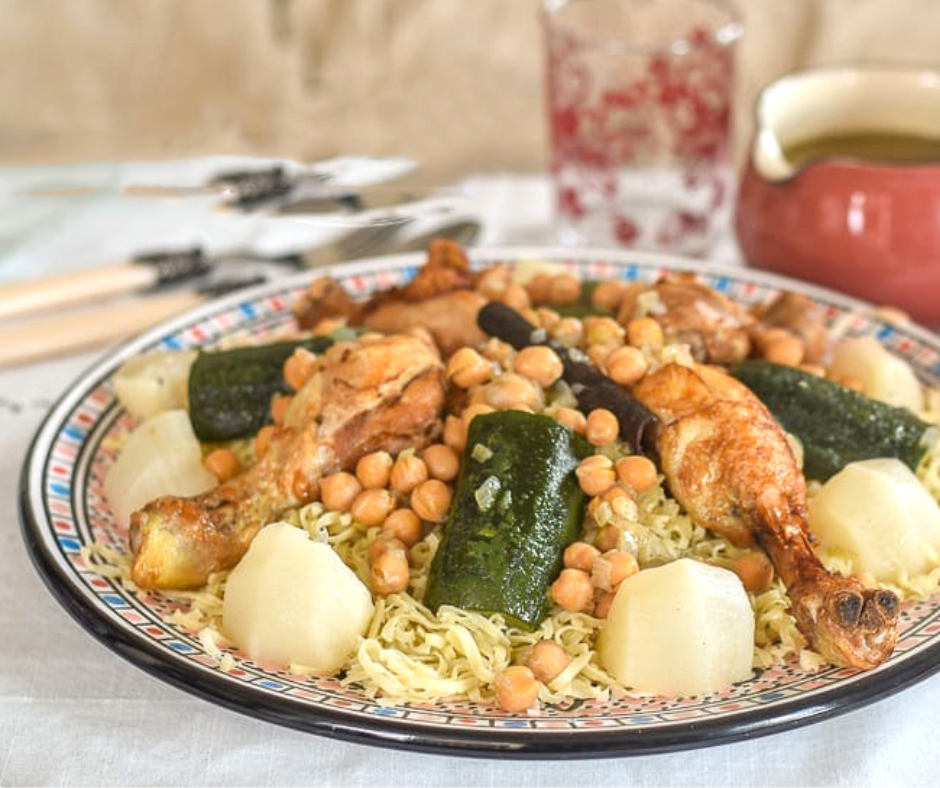
It's festive food. Families cook it for Mawlid (next expected around 14 August 2027), Yennayer and weddings, and it turns up on everyday restaurant menus far less often than couscous.
The noodles soak up the light broth, so it eats very differently from the tomato-heavy dishes of the east.
Chakhchoukha: the bread stew of the east
Chakhchoukha is an eastern dish, cooked in Biskra, the Aurès and Constantine, and it uses flatbread the way other regions use couscous.
The base is rougag, a very thin semolina flatbread cooked on a hot griddle and then torn by hand into small pieces.
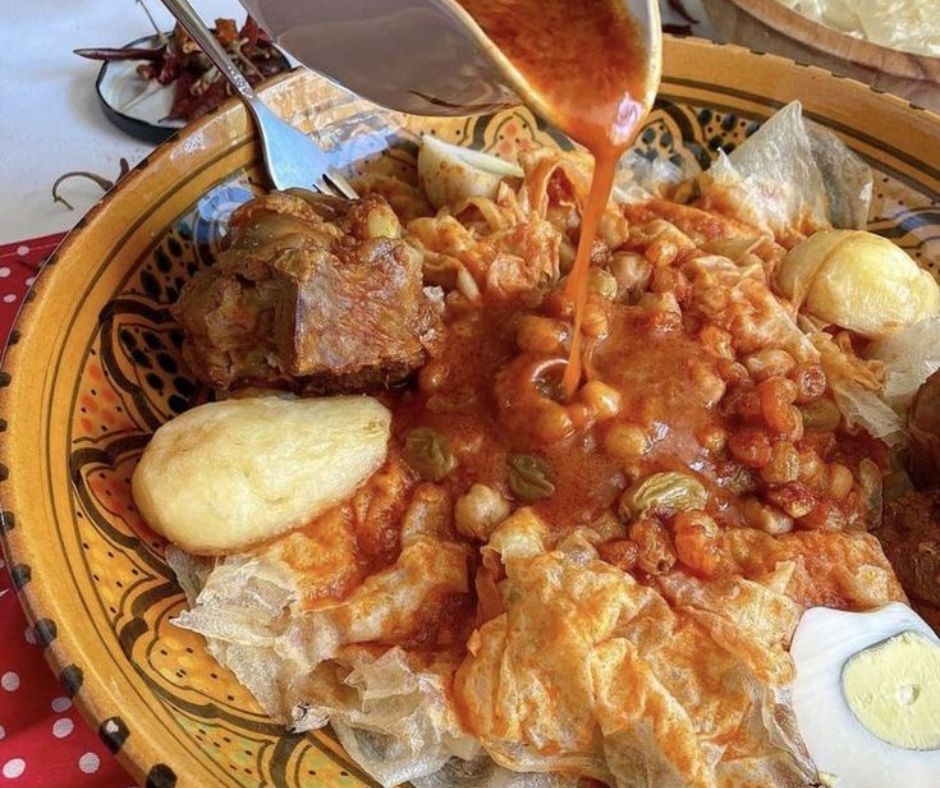
The pieces are steamed, then soaked in a spicy red marqa (sauce) of tomato, onion, garlic, hot pepper, chickpeas and lamb.
Biskra's version, chakhchoukha biskria, is the best known. In Constantine, also look for trida: small squares of pasta, steamed and served in sauce. Both are heavy; one plate is a meal.
Chtitha and tajine zitoun: everyday stews
Most family meals that aren't couscous are a stew eaten with bread. Chtitha is the name for tajines in a spicy red sauce: chtitha djaj is chicken with chickpeas, chtitha lham the lamb version, both heavy on paprika and garlic. Tajine zitoun goes the other way: chicken with green olives in a white sauce sharpened with lemon. Both turn up as the dish of the day in popular restaurants.
Dolma: stuffed vegetables
Dolma, a name that comes from Turkish, means vegetables such as zucchini, peppers or onions stuffed with minced meat and rice and simmered in a stock. It is mostly a home dish, so ask a host or a guesthouse rather than looking for it on menus.
Chakchouka and dobara: vegetable dishes of the east
Algerian chakchouka is a slow-cooked mix of tomatoes, peppers and onion, sometimes with zucchini, with eggs broken into it at the end. There are many regional versions, but it is most at home in the east. From Biskra comes dobara, a spicy soup-stew of chickpeas and broad beans finished with olive oil.
Mechoui: whole roast lamb
Mechoui is a whole lamb roasted slowly for hours over embers or in a pit oven, then pulled apart by hand at the table. It is feast food, cooked for weddings, big gatherings and especially Eid al-Adha. As a visitor, you are most likely to taste it as a guest at a celebration.
Street food and quick snacks
For a cheap lunch on the go, towns have snack bars, bakeries and stalls selling sandwiches, pizza by the slice and a few local classics.
The one you'll see nearly everywhere is mhadjeb (also spelled mahjouba): a thin semolina crêpe spread with a tomato and onion filling, folded and cooked on a griddle. It comes from the south but is sold in almost every town.
Algerian bourek
Bourek is above all a Ramadan dish: most families fry a plate of it to go with the evening chorba. The rest of the year, look for it in snack bars and popular restaurants.
It is made with dioul, paper-thin round pastry sheets, rolled around a filling into a cigar shape or folded into a triangle, then fried until crisp.
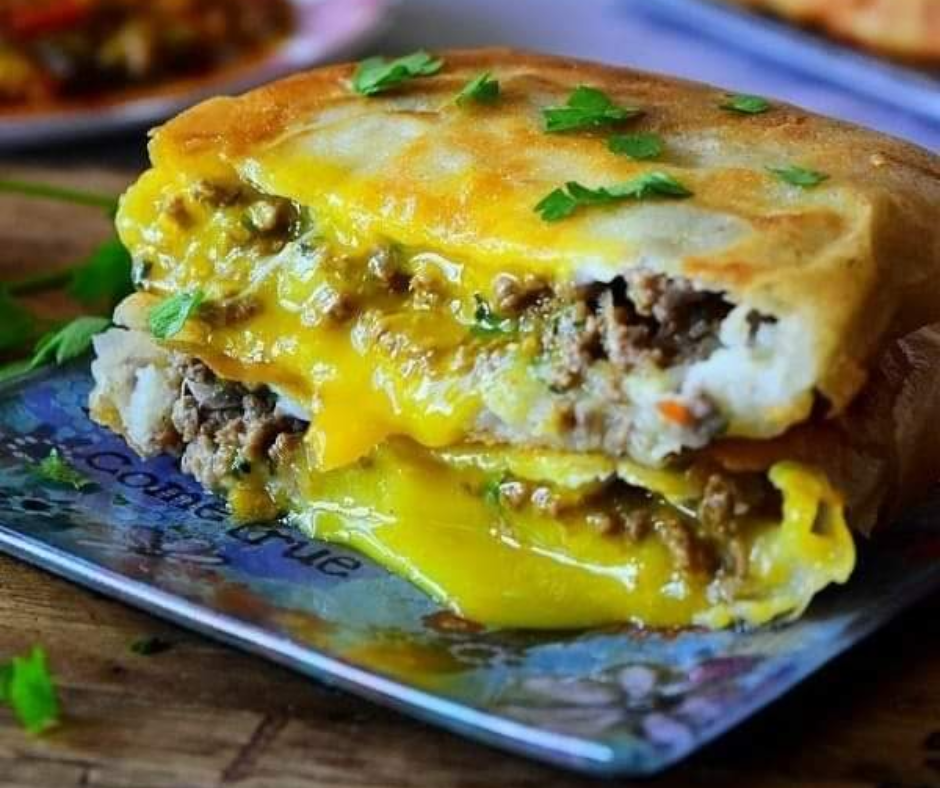
The classic filling is minced beef or lamb with onion, parsley and spices. Cheese and potato versions are common, and Annaba has its own square version, bourek annabi, with an egg broken over the meat just before the sheet is folded and fried.
Eat it hot. It goes soft within minutes.
Karantika (karentika), Oran's chickpea snack
In Oran and the west, the street snack is karantika, also called garantita or karentika.
It's a soft, savory flan of chickpea flour, water, oil and salt, sometimes with egg, baked in large trays until the top browns.
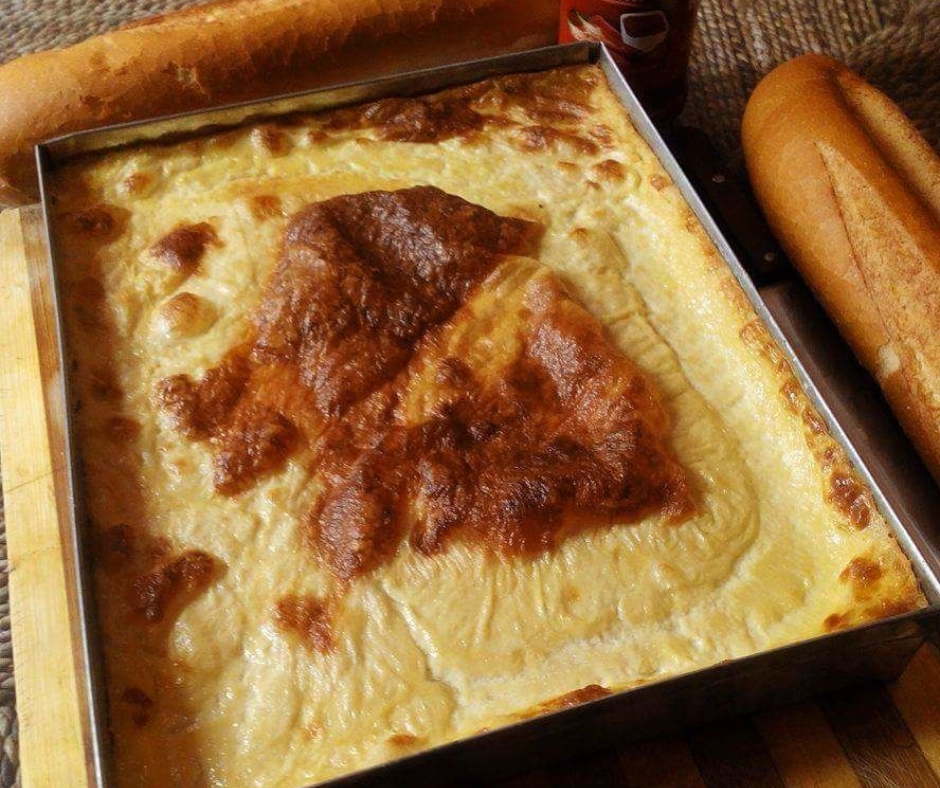
Sellers cut a slab, put it in a piece of baguette and add harissa (hot pepper paste) and a dusting of cumin.
People in Oran like to say the name comes from the Spanish caliente ("hot"), since Spain held the city for most of the 16th to 18th centuries, but that story is folk etymology, not documented history. It's one of the cheapest fillings you can buy, which is why students and workers line up for it at lunchtime.
Algerian breads and breakfast
Bread comes with almost every meal. These are the ones to know:
- Kesra: the round, flat home bread, a few centimeters thick, made from semolina or flour and baked on a griddle or in the oven. It is torn and used to scoop up stews.
- Matloua: a thicker leavened pan bread of semolina, yeast, water and salt, cooked on a hot clay or cast-iron plate.
- Msemen: square, flaky folded pancakes of semolina dough, cooked on a griddle and eaten with honey or jam.
- Baghrir: the spongy "thousand-hole" pancake, served warm with butter and honey.
Breakfast is light. In cities it is usually a milky coffee with bread and butter, a croissant or a piece of baklawa. At home or in a guesthouse, expect kesra, msemen or baghrir with honey, jam or olive oil.
Algerian sweets and pastries
Algeria takes its pastries seriously, especially around Ramadan, the Eids and weddings. Patisseries sell most of these all year; street stalls bring out zlabia and kalb el louz in Ramadan.
- Makroud: semolina diamonds filled with dates, fried or baked, then dipped in honey.
- Kalb el louz: a semolina and almond cake soaked in orange-blossom syrup, an Algiers favorite after the Ramadan iftar. A square cost about 40 DZD at an Oran street stall in 2024.
- Griwech: knotted strips of fried dough dipped in honey and sesame. Algeria's version of a pastry the Moroccans call chebakia, with a different dough and shape.
- Tcharek: crescent-shaped almond pastries flavored with orange blossom, associated with Tlemcen and eaten above all at Eid al-Fitr and weddings. Tcharek msaker is dusted with icing sugar.
- Baklawa: layers of thin pastry and ground almonds in syrup, brought by the Ottomans and now a wedding and Eid essential.
- Mhancha: a coiled almond pastry, cut into slices to serve.
- Zlabia: fried batter soaked in syrup and honey, the Ramadan sweet par excellence. The town of Boufarik, near Algiers, is famous for its own long, semolina-based version.
What Algerians drink
In the north, coffee is the everyday drink: Algerians drink a lot of it, usually as a short, strong espresso or a café au lait. In the Sahara, green tea with mint takes over (see the hospitality section above). With couscous, many families serve a glass of lben, fermented milk, and rayeb, a thicker curdled milk eaten with a spoon.
For soft drinks, look for Hamoud Boualem, an Algiers company founded in 1878 whose lemonades and Selecto soda are on every café shelf. At northern weddings, guests are served cherbet, a syrup of water, sugar and orange-blossom water. As for alcohol, licensed shops, hotels and a handful of restaurants sell it, most restaurants won't serve it, and drinking in public is against the law.
Region by region
| Region | What to order | When or where it turns up |
|---|---|---|
| Everywhere | Couscous, chorba frik, bourek, mhadjeb | Couscous at Friday lunch; chorba and bourek every Ramadan evening and in popular restaurants in winter; mhadjeb from street griddles any day |
| Algiers and Blida | Rechta, kalb el louz, Boufarik zlabia | Rechta at Mawlid, Yennayer and weddings, rarely on menus; the sweets in patisseries and Ramadan street stalls |
| Constantine, Biskra and the Aurès | Chakhchoukha, trida, dobara, chakchouka | Family meals and gatherings; spicy stews such as chtitha as the dish of the day in popular restaurants |
| Oran, Tlemcen and the west | Karantika, hrira, tcharek | Karantika in baguette at lunchtime stalls; hrira at a Ramadan iftar at home; tcharek at Eid al-Fitr and weddings |
| The Sahara | Taguella, mint tea | With a Tuareg crew or host; tea in three rounds |
Practical tips for eating in Algeria
Menus are usually in Arabic and French, rarely in English, and small places often have no menu at all. Google Translate with the Arabic and French language packs downloaded helps a lot with menus, and it is one of the apps we recommend in our guide to planning a trip to Algeria.
Lunch, roughly noon to 2 pm, is the main meal for many families, and popular restaurants are busiest then. Some close or open late on Friday, the first day of the Friday-Saturday weekend, and during Ramadan many eateries shut in the daytime and reopen after sunset.
Where to eat: markets and local restaurants
The best sign in a popular restaurant is a lunchtime crowd of local workers. Small places often cook one or two dishes of the day and nothing else.
Ask what's cooking today ("wach kayen el youm?" in Algerian Arabic) and order that. It's usually the freshest thing in the kitchen.
Go to markets in the morning. Look for dates from Biskra and Tolga, home of the Deglet Nour variety (Algeria is the world's third-largest date producer, and the new harvest arrives from mid-October), plus olives and spices sold loose by weight, such as cumin, coriander seed and dried red pepper.
For background on the country itself, see our twenty facts about Algeria guide, and for snacks city by city, Algerian Street Food: What to Eat and Where.
Cash and ordering
Bring small notes: street stalls, bakeries and most local restaurants only take cash. Couscous or a simple plate in a popular restaurant runs 600 to 1,200 DZD (autumn 2026), which is EUR 2.20 to 4.40 if you changed cash informally at roughly 275 DZD to the euro, or EUR 4 to 8 at the official rate of about 150 that cards use. Our travel guide explains how to get cash.
A few words help when ordering: kesra is the round semolina flatbread, matloua the thicker leavened pan bread, marqa the sauce, and "har" means spicy.
Spice, halal and couscous: what diners ask
Is couscous really Algeria's national dish? Yes, though it belongs to the whole Maghreb: UNESCO listed it in 2020 as a joint entry from Algeria, Mauritania, Morocco and Tunisia, and in Algeria it is the classic Friday family lunch.
What will breakfast look like? Something light and sweet. In cities, most people have a milky coffee with bread and butter, a croissant or a pastry. At home, breakfast is often kesra, msemen or baghrir with honey, jam or olive oil and sugar. In Ramadan the pattern flips: a pre-dawn meal, often mesfouf, then nothing until sunset.
Will the food be too spicy for me? Only if you pick the eastern dishes: chakhchoukha, chtitha and Biskra's dobara can be properly hot, while white-sauce dishes like rechta and tajine zitoun are mild, and harissa usually comes on the side. Say "har?" to ask whether something is spicy, and ask for it without if you prefer.
How is Algerian food different from Moroccan? They share a base of couscous, tagines, bread, mint tea and pastries, and many dishes exist on both sides under different names. Algeria has its own specialties, such as rechta, chakhchoukha, karantika and dobara, and stronger Ottoman traces in dishes like bourek and dolma. Griwech is Algeria's version of Moroccan chebakia.
Can I assume the meat is halal? In ordinary restaurants and butchers, yes, since Algeria is a Muslim country and pork isn't eaten; if you need to be sure, ask, especially in big international hotels.
Many of the best dishes are home-cooked and tied to the calendar, so a local guide or a host family is the easiest way to taste them; we can plan a food route through Algiers, Constantine and Oran, timed around Ramadan or Mawlid if you want the festive dishes.
To start, send us your dates and the cities you have in mind through our trip ideas page.


