
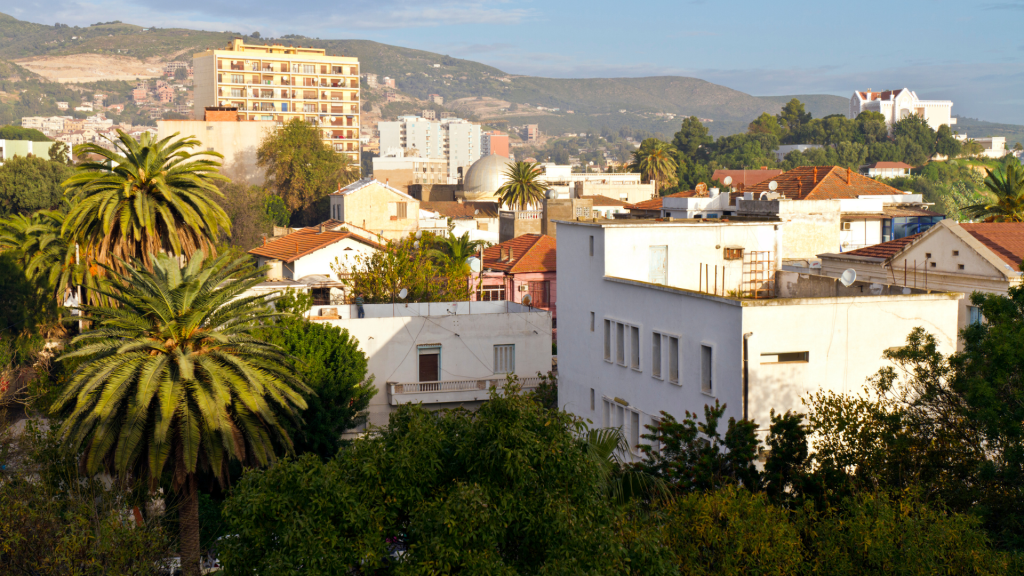

Algeria gives a photographer two trips in one: sandstone towers, dunes and rock art around Djanet in the south, and Algiers, Constantine's gorge bridges and the Roman towns of Timgad and Djemila in the north. With ten days to two weeks, we'd pair a Djanet desert loop (October to April) with two or three northern stops.
The rules shape the trip as much as the light. Drones are confiscated at customs, and you can't photograph police, soldiers, checkpoints, ports, airports or government buildings. Ask people, especially women, before you take their picture.
Seasons, permits and the no-drone rule
- Give it ten days to two weeks: a Djanet desert loop plus two or three northern stops, with the Algiers to Djanet leg flown on Air Algérie or Domestic Airlines (a little over two hours).
- Go to the Sahara between October and April. December and January have the steadiest skies but cold nights; for the north, aim for April to June or late September to October.
- Let your agency sort the Tassili paperwork: the rock art can only be visited with an official guide, and there is a photo permit on top.
- Leave the drone at home, because customs confiscates them on arrival.
- Keep the lens off police, soldiers, checkpoints, ports, airports and government buildings.
Planning Your Algeria Photography Tour Itinerary
Algeria is Africa's largest country, and over four-fifths of it is Sahara, so distance decides the plan. Split your time between the northern cities and the southern desert, and fly between the two.
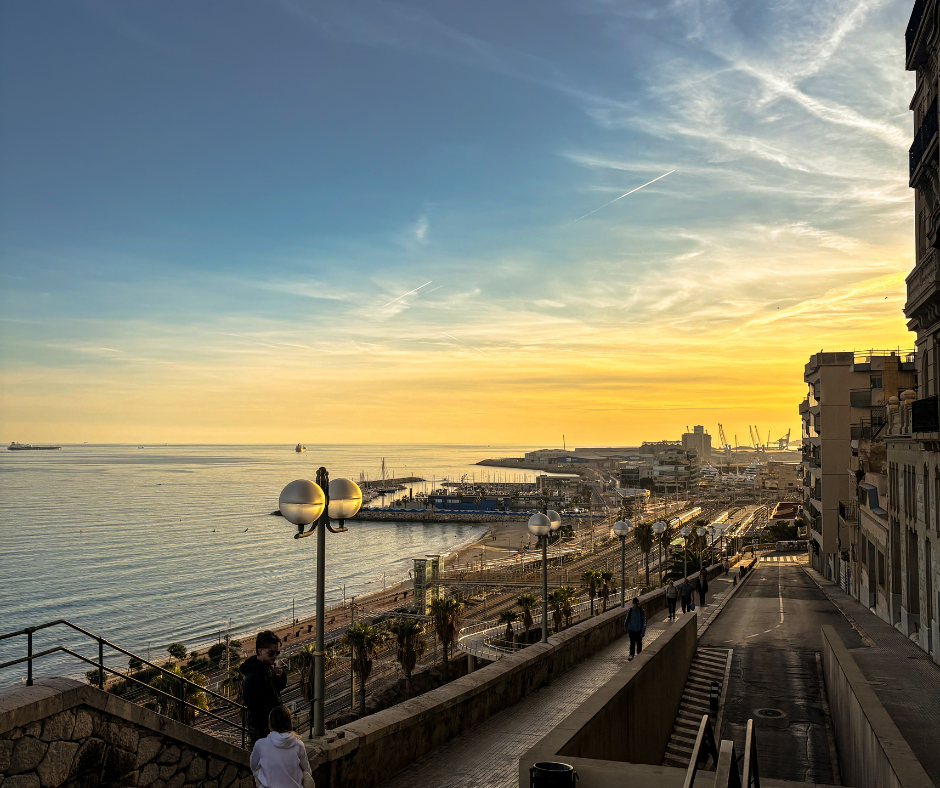
The usual order is a few days in Algiers, the "white city" stacked above its bay, then an Air Algérie flight south to Djanet. In recent winters Air Algérie has also flown direct from Paris CDG to Djanet in season, so look at this year's timetable before you book a connection.
Selecting the Right Regions for Visual Variety
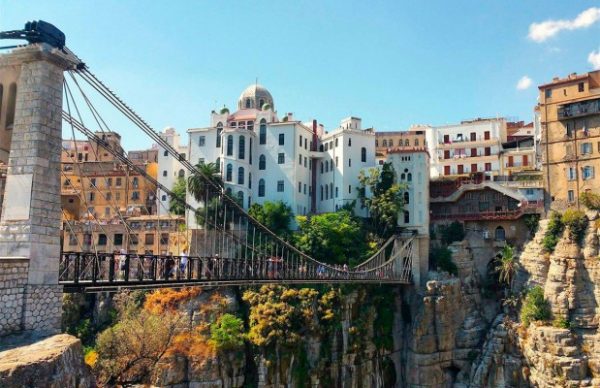
The north gives you Roman towns and Ottoman-era streets, all straight lines and cut stone, which contrast well with the soft curves of the desert. In Constantine, the old town sits on a limestone rock split by the Rhumel gorge, and its bridges cross high above the river.
On the coast, the Roman ruins of Tipaza run down to the edge of the sea, about 70 km west of Algiers, so a wide-angle lens can take in columns, rocks and open water in one frame.
Read also: Best Things to Do in Constantine
Timing Your Visit for the Best Light
Weather sets your shooting schedule more than anything else. For the Sahara, go between October and April: summer highs in the deep south pass 40°C and can top 45°C. December and January bring the steadiest skies, but cold nights and a sunset around 5:40 pm in Djanet. The north works the other way round: most of its rain falls from October to March, so April to June and late September to October suit Algiers, Constantine and the Roman sites better.
In the desert season the sun stays low and warm for longer, so you can work the golden hour without heat haze or an overheating camera.
A sample 10-day Algeria photography itinerary
This is how we would lay out ten days for a photographer, with the light plan for each stop. Time the desert days to a new moon if you want the night sky.
| Day | Where | Light plan |
|---|---|---|
| 1 | Algiers | Arrive; blue hour over the bay from the heights above the city |
| 2 | Casbah of Algiers | Morning in open shade with a local guide; a rooftop terrace for the view to the bay |
| 3 | Constantine | Fly from Algiers (about an hour); late afternoon on the bridges |
| 4 | Constantine to Batna | Sunrise from the Monument aux Morts over the Sidi M'Cid bridge, then drive south |
| 5 | Timgad | At the gate when it opens, shooting west along the decumanus toward Trajan's Arch; then back to Constantine to fly to Algiers |
| 6 | Djanet | Fly south; first sunset over the palm grove and the Tassili cliffs |
| 7 to 8 | Tadrart Rouge | Sunrise and sunset on the dunes and rock towers, midday rest in camp, a night for the Milky Way |
| 9 | Tadrart to Djanet | Rock art in early or late light, with the photo permit |
| 10 | Djanet | The Crying Cows engraving at Tegharghart, about 25 km from town, then fly out |
With a few more days, swap the Tadrart for a trek up to Tamrit and Sefar on the Tassili plateau, or add Djemila on the way to Constantine.
Where to shoot, place by place
| Place | Subject | Best light | Best months | Rule or permit |
|---|---|---|---|---|
| Casbah of Algiers | Doors, tiles, lanes, rooftops over the bay | Open shade or overcast; blue hour from outside | Spring and autumn | Ask before photographing people; a local guide helps |
| Constantine | Sidi M'Cid bridge and the gorge | Early morning from the Monument aux Morts | Spring and autumn | None beyond the general rules |
| Tipaza | Roman ruins at the sea's edge | Early and late | April to June, September to October | Site entry fee |
| Timgad | Street grid, Trajan's Arch | Opening time, before the light goes flat | Spring | Entry about 200 DZD |
| Djemila | Ruins against green hills, mosaics | Early and late | Spring | Ask at the museum desk about photos |
| Ghardaïa and Beni Isguen | Town plans, rooftops, markets | Early and late | October to April | Guide compulsory in Beni Isguen; no photos of people |
| Tadrart Rouge | Dunes and rock towers, night sky | Sunrise, sunset, new-moon nights | October to April | Agency trip only |
| Tassili n'Ajjer rock art | Painted shelters and engravings | Early and late | October to April | Official guide and photo permit; never wet a painting |
| Assekrem (Hoggar) | Sunrise over the volcanic peaks | Sunrise | October to April | Separate agency trip from Tamanrasset |
Shooting Sahara Landscapes in Tassili n'Ajjer
For most photographers the Sahara is the main reason to come, and the Tassili n'Ajjer around Djanet is where to start. UNESCO listed it in 1982 for two things: its sandstone "forests of rock," and more than 15,000 rock paintings and engravings spanning roughly 10,000 BC to the first centuries AD. South-east of Djanet, the Tadrart Rouge adds orange dunes that change color as the sun moves.
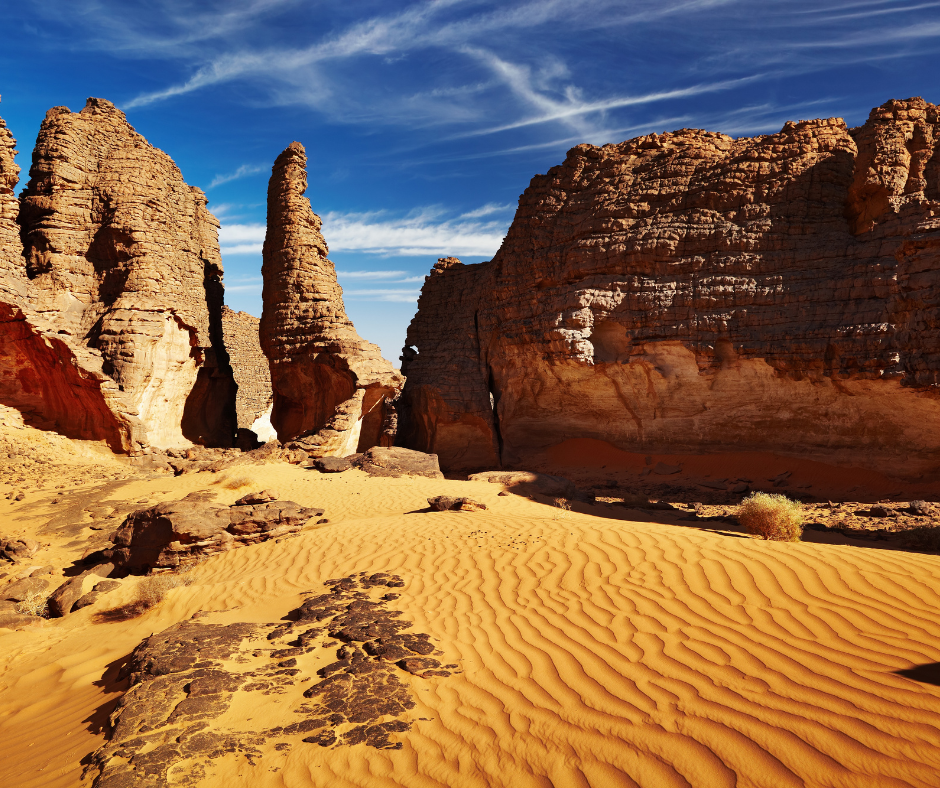
Scale is hard to show here, so put something in the frame for reference: a lone acacia, a parked 4x4, a figure on a ridge. For even emptier landscapes, the Assekrem plateau and the Gourara oases feature in our guide to traveling Algeria off the beaten path. Each is a separate trip (Assekrem from Tamanrasset, the Gourara from Timimoun), with its own local agency and guides.
The rock art comes with rules. You can only visit the sites with an official guide, and the park has charged for a photography permit on top of entry; your agency normally arranges both. Never wet a painting to bring out its colors: decades of sponging by explorers and tourists have faded some of the best-known figures for good. Leave flints and potsherds where they lie, too, since the UK FCDO warns that smuggling antiquities can mean prison.
Read also: Camping in the Algerian Sahara: Seasons, Gear, Rules and Safety
Sunrise and Sunset Tactics on the Dunes
Be in place at least forty minutes before sunrise for the pre-dawn glow. The light then is soft and almost shadowless, which brings out the texture of the sand ripples. As the sun rises, the shadows become long and sharp, defining the ridges of the dunes.

At sunset the sky often runs from orange to deep purple, and the jagged rock towers of the Tadrart Rouge make strong silhouettes against it. Your agency and Tuareg guide choose the camps and the driving route, so tell them before you leave Djanet which towers and dune ridges you want for sunset.
Explore: A 6-Day Escape into the Tadrart Rouge
Night Sky and Milky Way Composition
Away from town, the desert around Djanet has almost no light pollution. Use a wide-angle lens with a fast aperture (f/2.8 or faster) and put the sandstone arches and towers in the foreground.
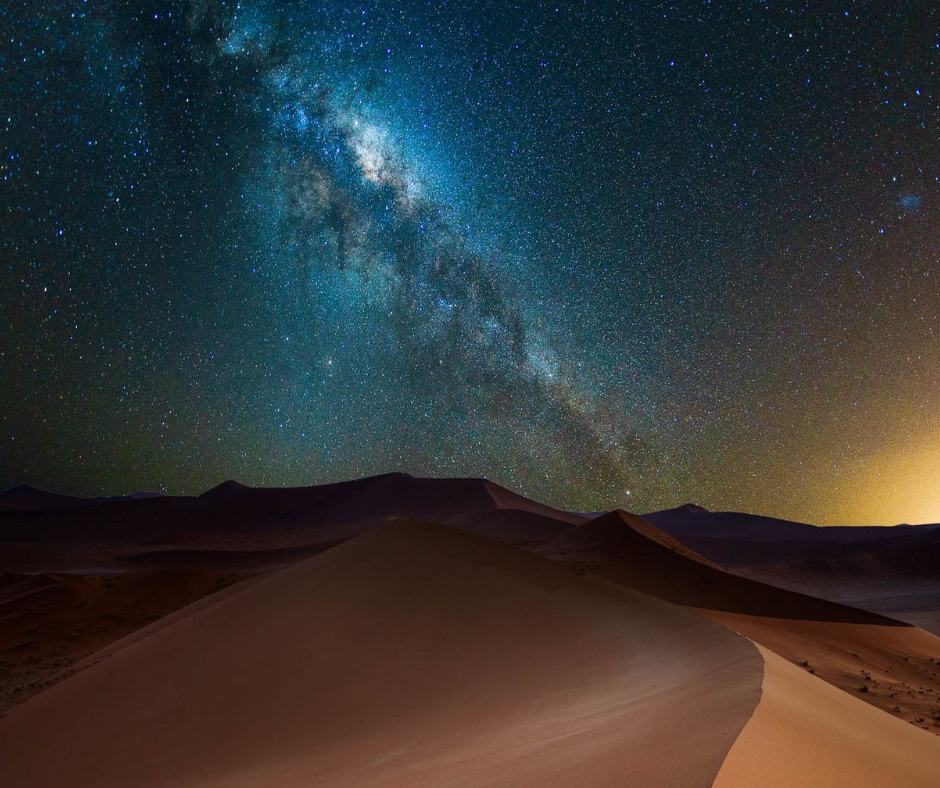
Plan around the new moon: in Algerian time, 10 October, 9 November and 9 December 2026, then 7 January, 6 February, 8 March and 7 April 2027. One catch: the bright core of the Milky Way is a summer object. In October it sits low in the south-west after dusk, from about March it rises before dawn, and in December and January you only get the fainter winter Milky Way. Bring a sturdy tripod and push the legs well into soft sand before a long exposure.
Technical Gear Protection for Arid Environments
Check your kit list before the sand. According to the UK FCDO, Algeria bars drones, binoculars, telescopes and "certain types of photography equipment" without authorization, and it doesn't say which types, so if a big telephoto or a star tracker is in your bag, ask Algerian customs first. Leave the drone at home, by the way: customs confiscates them on arrival, and photographing military sites and government buildings is forbidden, as our Algeria travel guide explains.
After that, sand and dust are the daily problem. Saharan silt works into the smallest gaps in a camera body or lens barrel, so clean your gear every evening.
Shielding Equipment from Fine Silt
A weather-sealed body helps, but it won't keep all the dust out. Between shots, keep the camera in a dust bag or a simple dry bag.
Many professionals use a clear UV filter on every lens to protect the front element from being etched by wind-blown sand. If a sandstorm begins to develop, the best course of action is to stop shooting immediately and secure all equipment in a sealed container.
Safe Field Maintenance Practices
Try not to change lenses out in the desert at all. We'd bring two bodies with different focal lengths, so the sensor is exposed as little as possible. If you must swap lenses, find a sheltered area or use a large jacket to create a windbreak.
After every day of shooting, use a manual air blower to remove dust from the exterior of your gear before wiping it down with a clean microfiber cloth.
Photographing the Architecture of Algiers and Constantine
The cities are a different job from the desert: tighter spaces, harder contrast and more people. The Casbah of Algiers, a UNESCO site since 1992, is a maze of steep lanes and Ottoman-era houses, and it rewards an eye for geometry.
Constantine is all about height: the old town sits on a rock above the Rhumel gorge, with bridges linking it to the districts across the gap.
Shooting in the Algiers Casbah
The Casbah's narrow lanes are high-contrast: sun on the upper walls, deep shade at street level. Shoot in open shade or on overcast days, and save the blue hour for views from outside, since the lanes are hard to find your way through after dark. A local guide helps a lot here: residents are more relaxed about a camera when someone they know is with you.
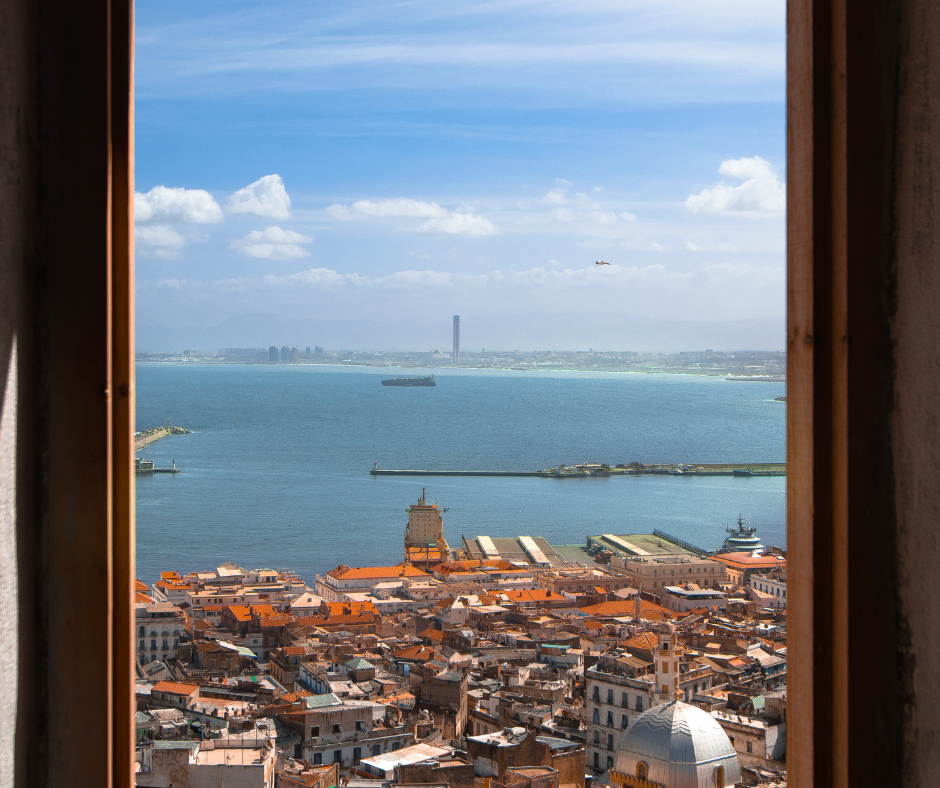
Look for carved wooden doors, tile work and the timber beams under overhanging upper floors. A local guide can get you onto a terrace for a view across the rooftops to the bay. These are lived-in homes, so ask before photographing a doorway with someone in it.
Explore: 7 Immersive Days in Northern Algeria
Capturing the Bridges of Constantine
Constantine is known as the City of Bridges, and each one gives you a different angle. Most people start with Sidi M'Cid, the suspension bridge opened in 1912, whose 164 m span hangs 175 m above the Rhumel.
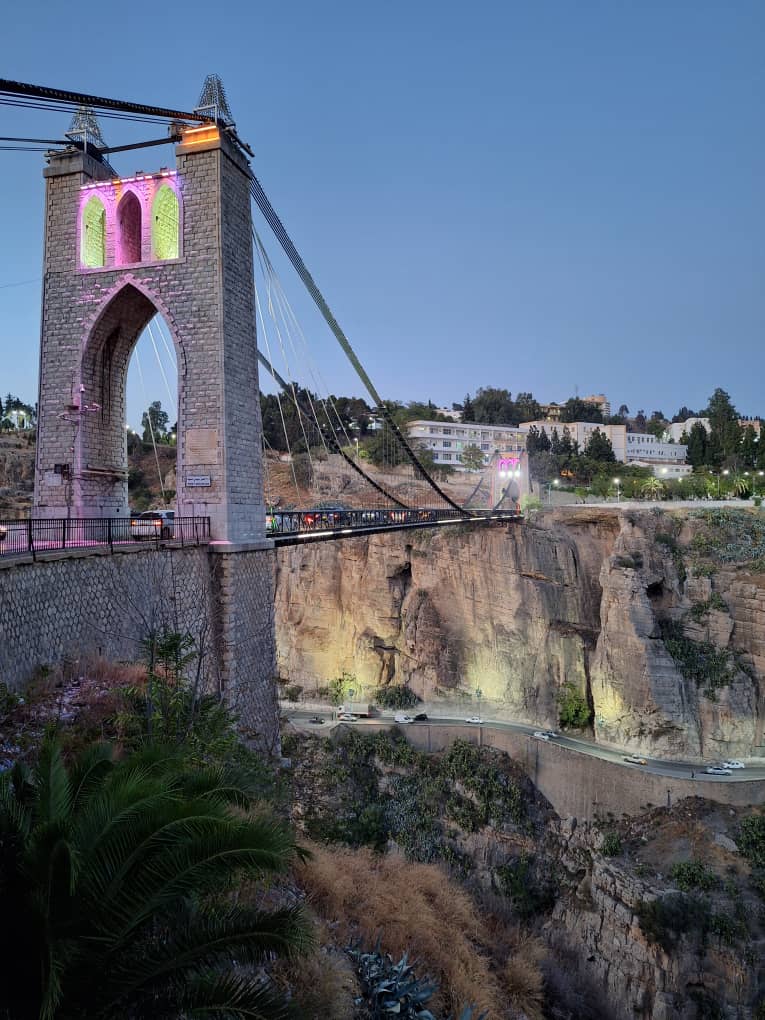
For the wide view, cross the Sidi M'Cid bridge to the Monument aux Morts in the early morning. Its terrace on the cliff edge, about 635 m above sea level, looks back over the bridge, the gorge and the old town. A telephoto lens compresses the layers so the houses seem to grow out of the cliff.
Ethical Approaches to Street and People Photography
With people, manners matter more than technique. Algerians are generally hospitable, but the culture is conservative and privacy is highly valued, above all for women and families. Knowing when to keep the lens cap on gets you better pictures and fewer awkward moments.
Seeking Permission and Building Rapport
Always ask before taking someone's portrait. A smile and a nod toward the camera usually gets the question across. If the answer is no, accept it and move on.
A few minutes of conversation or a shared tea often leads to more relaxed portraits later on. Staying with a host family makes this much easier, which is one more reason to consider an Algeria homestay for part of your trip.
Restricted Areas: What Not to Photograph
Don't photograph military or police installations, soldiers, police officers, checkpoints, ports, airports or government buildings. The rule is enforced, and ignoring it can get your memory card confiscated or your tour interrupted. At checkpoints, approach slowly with photo ID ready (FCDO advice) and keep the camera out of sight. Some routes come with a police escort; don't photograph that either.
In the Casbah and in markets, give people space, and don't photograph women or children without clear consent from them or their families. Details work well instead: market scales, crafts, doors. Beni Isguen, in the M'Zab Valley, has the tightest rules of all. Visitors go in only with a local guide taken on at the main gate, people (women above all) may not be photographed, and parts of the town are closed to cameras.
Roman ruins: Timgad and Djemila
Few places in North Africa have Roman towns as complete as Algeria's, and two of them, Timgad and Djemila, were added to the UNESCO list in 1982. Both are large, open sites with colonnades, paved streets and floor mosaics, and both are rarely crowded.
Compositional Tips for Timgad
Timgad was founded by Trajan in AD 100, about 35 km east of Batna, and its street grid is still almost complete. The 12 m "Trajan's Arch" stands at the west end of the main east-west street (the decumanus); despite the name, it was built in the late 2nd or early 3rd century. Use the wheel ruts in the paving as leading lines toward the arch.
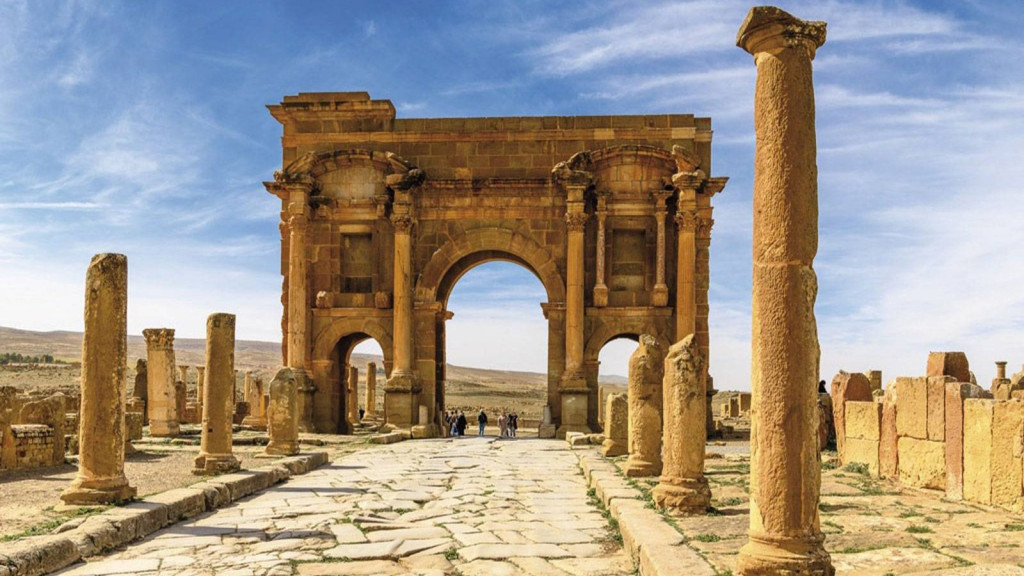
The site has almost no shade, and the light goes flat by late morning. Be at the gate when it opens (ask locally for the time) and shoot west along the decumanus with the sun behind you; the Trajan Hotel, about 80 m from the site, makes that easy. Entry was about 200 DZD in most 2026 reports.
For the practical side of a day there, see Timgad Day Trip Guide.
Mosaics and Detail at Djemila
At about 900 m up in the hills north-east of Sétif, Djemila changes with the season: in spring the honey-colored stone has green slopes behind it, and by midsummer they are brown. The site museum holds a large mosaic collection.

Ask at the museum desk whether photography is allowed, as rules differ between Algerian museums. For floor mosaics, hold the camera parallel to the surface to avoid distortion, and use a polarizing filter to cut glare on glass cases. Don't pour water on a mosaic to brighten it; repeated wetting damages it.
Explore: Discovering Algeria’s Ancient Wonders: The Roman Heritage Tour
Logistics and Local Expertise
Domestic flights and the Sahara rules are where independent photographers get stuck. Down south, foreigners are expected to travel with an approved Algerian agency, and only organized tours booked through one qualify for the Saharan visa on arrival. That is why many photographers join one of the guided tours in Algeria rather than going it alone.
Photographers who come with us to Djanet often say the town and the desert felt far calmer and friendlier than what they had read online led them to expect. We stick to well-tried routes, with licensed Algerian agencies and Tuareg guides, and we have not had a single problem on them.
Where the authorities put a police or gendarmerie escort on a desert road, the agency sorts it out and you can keep shooting; just point the camera elsewhere when the escort is in view. Look up the official travel advice for your exact route before booking, and make sure your insurer will cover it.
Our side of it is the logistics: a driver at arrivals in Algiers, then the 4x4s, drivers and cooks in the desert, which leaves you free to think about light and composition. Our local guides can also point you to viewpoints away from the usual stops. Traveling with friends who share the same passion? Our guide to planning a group trip to Algeria covers the logistics.
Sustainable and Respectful Travel
Photography works best when the people in front of the lens get something from it too. WildyNess focuses on community-based trips with local hosts and guides.
Your part: stay on existing tracks, carry your trash out of desert camps, accept a no, and offer to send people their portraits.
Packing List for an Algeria Photography Tour
Pack for protection and a wide temperature range. In the desert season, Djanet's daytime highs run from about 20°C in December and January to around 30°C in October and April, while winter nights average about 4 to 6°C and can freeze on the plateau.
Clothing and Personal Comfort
Wear light, loose cotton or linen that covers your arms and legs: it keeps off sun and sand and matches local dress norms, which are stricter in the south. A long cotton scarf, the chèche worn across the Sahara, is the most useful thing you can bring.
It can protect your neck from the sun, act as a dust mask during wind, and provide a cushion for your gear. Do not forget to pack high-quality sunscreen, polarized sunglasses, and a wide-brimmed hat to manage the intense glare of the North African sun.
For clothes beyond the camera bag, see What to Wear in Algeria.
Power and Storage Solutions
Out in the desert you'll rarely get a chance to charge, so carry batteries for at least three days of heavy shooting and keep the spares warm in an inside pocket at night. A high-capacity power bank helps if you're camping.
Bring more memory cards than you think you need, and use a dual-slot camera to back up your photos as you shoot.
Who an Algeria Photography Tour Suits
An Algeria photography tour suits photographers who will trade some freedom for access: the desert needs an agency, the cities need patience with the rules on people and security sites, and the drone stays at home. In return you get Saharan rock art and dunes, and Roman towns with few other visitors.
The key to success is patience because the best light often comes to those who are willing to wait in the silence of the dunes or the corners of a quiet medina.
Leave Room for the Unexpected
Some of the best frames come from things you can't plan: a dust storm clearing to a dramatic sky, or an invitation to tea that turns into a portrait. Keep a camera within reach on long drives.
We encourage you to keep your camera ready but also to take moments to put the lens down and experience the landscape with your own eyes.
What photographers usually ask us
Can I bring a drone to Algeria?
No. Customs confiscates drones on arrival, and the authorization you'd need, which the UK FCDO says is required by law, is essentially out of reach for tourists. Binoculars, telescopes and some photo equipment fall under the same rule, so ask customs first about a big telephoto.
What is the best month for Sahara photography in Algeria?
November and February are our picks: pleasant days, long golden light and nights that are cold but bearable. December and January have the steadiest skies but freezing nights on the plateau. From May to September the deep south is too hot for comfortable shooting, and heat haze softens distant views.
Do I need a photo permit for Tassili n'Ajjer?
Yes. The park has charged a photography permit on top of entry, and you can only visit the rock art with an official guide. Your agency arranges both, so check the photo permit is in your quote. Never wet a painting to bring out the color: it damages the pigment.
Can you photograph people in Algeria?
Yes, with permission. Ask first, accept a no, and be especially careful with women and children, for whom you need clear consent from them or their families. In Beni Isguen photographing people is not allowed at all. Police, soldiers and checkpoints are always off-limits.
How many days do you need for a photography trip to Algeria?
Ten days is the minimum for the north plus a desert loop around Djanet; two weeks lets you add a plateau trek or a second northern region. With only a week, choose one: the Tadrart Rouge and Tassili from Djanet, or Algiers, Constantine and the Roman towns.
Help Planning Your Photography Trip
If you want advice on lenses for the desert, the right season for your dates or how the visa works (most nationalities need a visa from a consulate in advance; organized Saharan tours can use the visa on arrival), contact us and we'll reply quickly.
We can also help you create the perfect itinerary for your trip. All you have to do is send us your trip details, and we will plan your personalized itinerary together.


