

Algeria's festival year splits in two. The big music events are in the north in summer (Timgad in July, raï in Oran and Sidi Bel Abbès in late summer), while the Saharan rituals of Djanet and Timimoun follow the Islamic lunar calendar and come about 11 days earlier every year: in 2027 they fall in June and August. Many dates are confirmed only weeks or even days ahead, so treat every date below as a guide and check again before you buy flights.
Below are the main events, when each one last ran and what to expect, followed by the practical side: the calendar, visas and cash. If your dates do not line up with any festival, there is still plenty to do, and our Algeria bucket list starts with the Casbah of Algiers.
Festival dates for 2026 and 2027
- Yennayer (Amazigh New Year): 12 January, nationwide and strongest in Kabylie. It's a public holiday every year, and 12 January 2027 opens the year 2977.
- Timgad International Festival: music near Batna in July. The 43rd edition ran 9 to 13 July 2026; 2027 dates are announced late.
- Ath Yenni jewelry festival: Tizi Ouzou province, late July to early August. The 19th ran 31 July to 9 August 2025, the 2026 edition was postponed, and no new date is out.
- Raï festival: Sidi Bel Abbès and Oran in late summer. The 15th national edition ran 31 August to 3 September 2026.
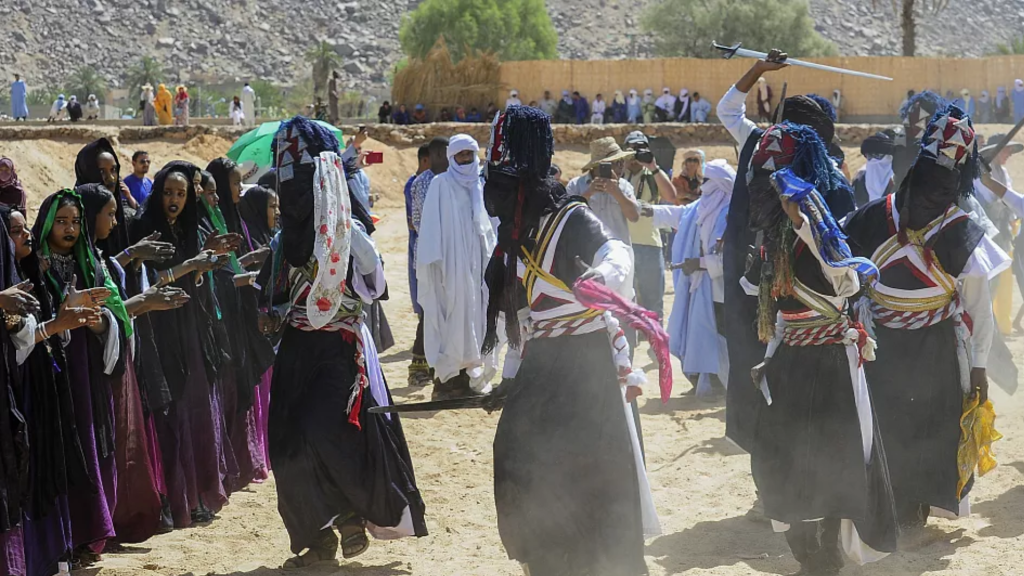
- Sebeïba: the Tuareg ritual in Djanet, held on Ashura (10 Muharram): about 25 June in 2026, about 15 June in 2027.
- S’boue pilgrimage: Timimoun, the week after Mawlid: about 1 September in 2026, about 21 to 22 August in 2027.
- FIBDA comics festival: Algiers, at Riadh El Feth, in early October. The 18th ran 1 to 5 October 2026.
- Taghit date moussem: in the Béchar region, held at each harvest in late October.
Music festivals in the north: Timgad, Constantine and Oran
The Timgad International Festival (July)
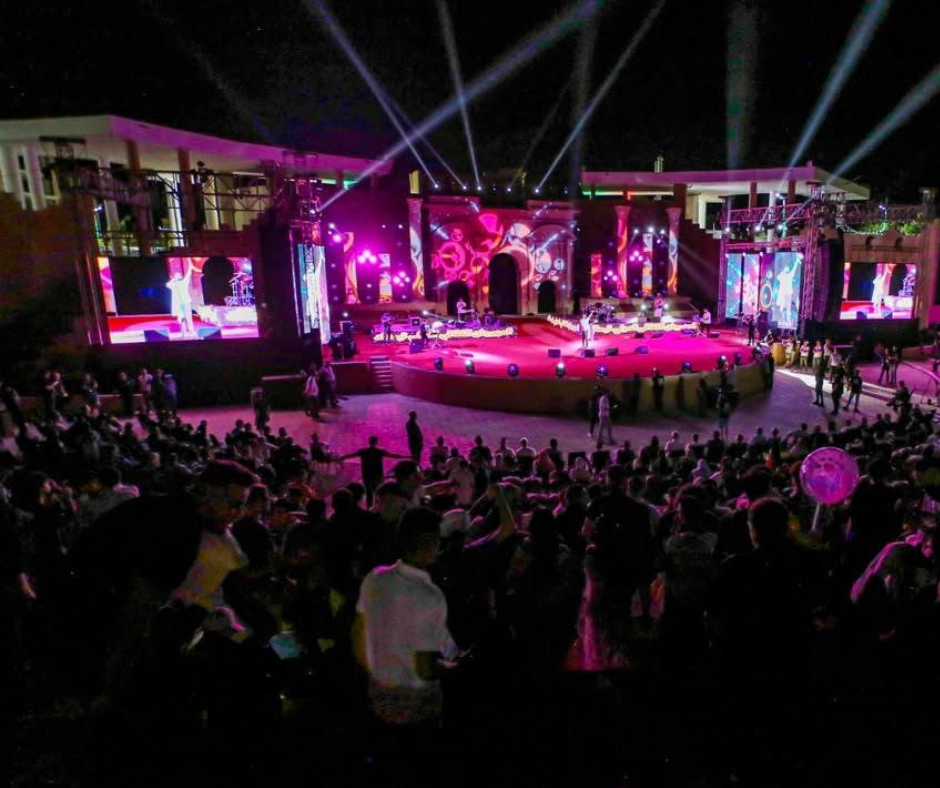
Timgad is the best-known summer music event in the north. Its 43rd edition ran from 9 to 13 July 2026, after a three-year break. The setting is Thamugadi, the Roman town Trajan founded in AD 100, about 35 km east of Batna and on the UNESCO list since 1982. Summer dates make it easy to pair the concerts with a few days on the coast, and our roundup of the best beaches in Algeria has options from Jijel to El Kala.
Don't expect to sit on Roman stones. Since about 2010 the concerts have been held in a modern open-air theater built next to the ruins, to spare the Roman theater (about 3,500 seats) the crowds and the staging.
The bill mixes Algerian singers with international pop and world-music acts. The program is often published late, sometimes only days before opening.
The crowds come mostly from across Algeria. Batna sits in the Aurès at about 1,000 m, so evenings are fresher than on the Saharan side, but July afternoons are hot, often in the mid-30s °C. With a spare day, the Aurès Mountains around Batna also hide Ghoufi Canyon and the climb up Djebel Chélia.
See the ruins in the morning or late afternoon, because the site has almost no shade, then come back for the music after dark.
Book a room early, as Batna has a limited choice of hotels in festival week. The Trajan Hotel, about 80 m from the site, is the obvious pick if it has space. Arrange your ride back to Batna (35 km) before the concert: taxis are hard to find when the shows end late at night.
Dimajazz in Constantine
Constantine is famous for its bridges over the Rhumel gorge, and since 2003 it has also had Algeria's best-known jazz festival.
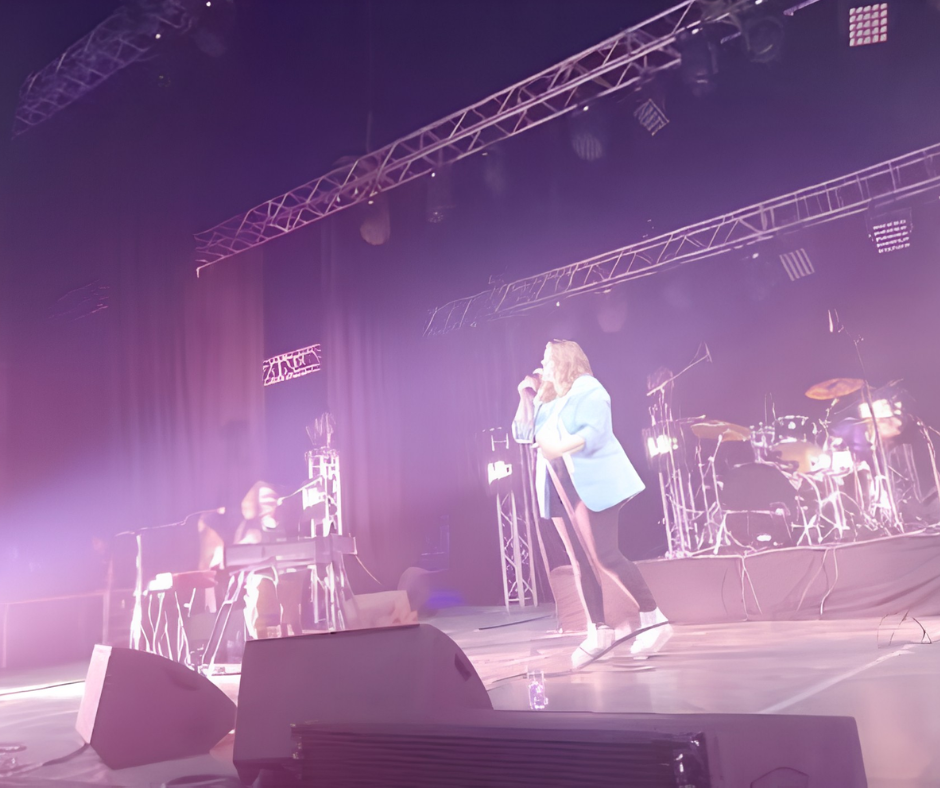
Dimajazz was founded by the Limma music association, and its programs run from jazz and blues to jazz-rock, gnawa and world fusion. The dates have moved around: early editions ran in May, later ones in April, November or December. The last edition we could confirm was the 17th, from 11 to 14 May 2022, after a break of more than two years, and none had been announced as of October 2026.
Early editions were held at the regional theater in the city center. The 2022 edition moved to the Ahmed Bey hall, a 3,000-seat Zénith in the Zouaghi district near the airport.
If it does return, Constantine is a good city for evening concerts. The old town stands on a rock plateau with the Rhumel gorge wrapped around it, and from the Sidi M'Cid suspension bridge, built in 1912, you look about 175 m down to the river.
Spend the day on the bridges and at the Emir Abdelkader Mosque (completed 1994), then walk the narrow lanes of the old town and eat street food before an evening show.
For the Zénith, take the tram, which has run since 2013 from the Ben Abdelmalek Ramdane stadium near the center out to Zouaghi. Check the time of the last tram, or book a taxi for the ride back.
The raï festival: Oran and Sidi Bel Abbès
Raï comes from the towns of the Oran region (Oran itself, Sidi Bel Abbès, Aïn Témouchent and Saïda), where it took shape in the early 20th century; since 2022 it has been on UNESCO's intangible heritage list.
It started as Bedouin and urban folk song and became the pop music of a generation in the 1980s, with singers like Cheb Khaled and Cheb Mami singing about love, drink and everyday frustrations.
Live, expect keyboards and electric guitars over the derbouka drum and, in the older style, the gasba reed flute.
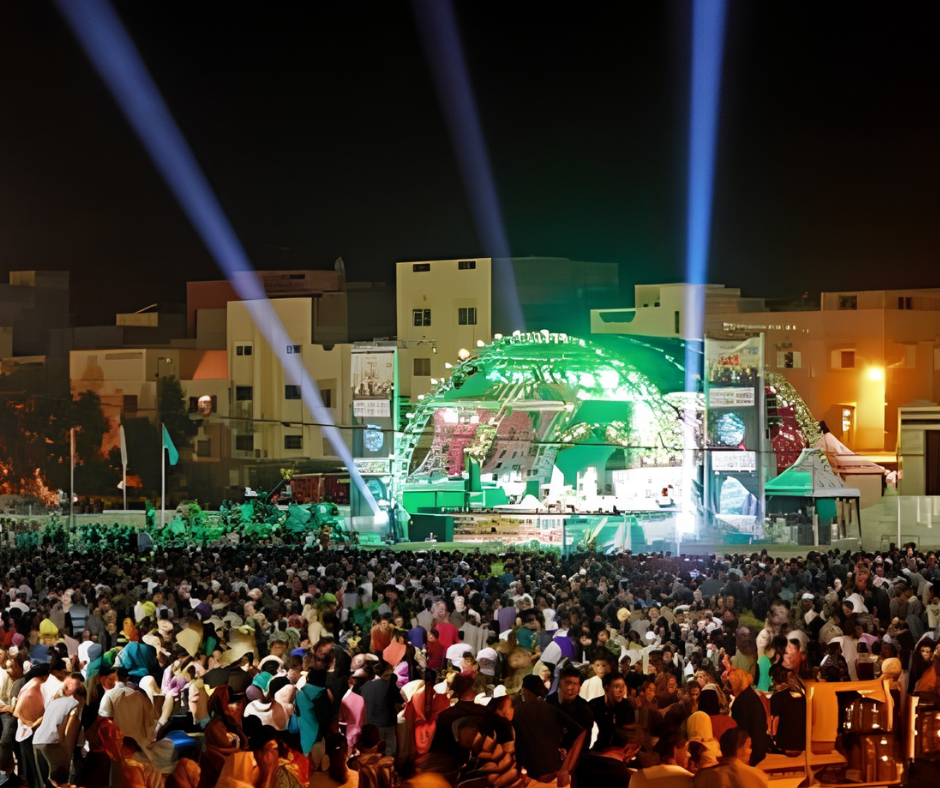
The festival itself keeps moving. In August 2025 the national raï festival was split between Sidi Bel Abbès (7 to 10 August) and Oran (from 18 August, at the open-air Hasni Chekroun theater). A decree published in July 2026 created an international raï festival in Oran and moved the national one back to Sidi Bel Abbès, where the 15th edition ran from 31 August to 3 September 2026. Those dates were announced barely a week ahead, and the first international edition in Oran had no date as of October 2026.
Expect big names alongside young singers, a crowd that knows every word, and late nights, because concerts start after dark when the heat drops. Oran, known locally as El Bahia, is the better base, with the sea on its doorstep.
The 2026 edition also held talks on the history of the genre and paid tribute to Cheikha Remitti, the Sidi Bel Abbès singer often called the grandmother of raï.
In Oran, you can fill the days around the concerts with the Spanish Santa Cruz fort (built 1577 to 1604) on Mount Murdjadjo, the seafront promenade and grilled fish at the port. Add a morning at Les Andalouses or Madagh from our Oran beach guide and you have a full weekend.
Sahara festivals: film, ritual and pilgrimage
The Sahara International Film Festival (FiSahara)
FiSahara is a film festival held in the Sahrawi refugee camps near Tindouf, in Algeria's far southwest. It bills itself as the only film festival in the world held in a refugee camp.
It is a festival of outdoor screenings and conversation rather than red carpets, with films chosen around human rights, culture and everyday life in the camps. The 19th edition ran in the Auserd camp in late April 2026, after a two-year gap; earlier editions were held in spring or in October and November, so the month changes.
Films are shown at night on big outdoor screens. The program mixes international documentaries and features with films by Sahrawi directors, around exile, identity and return, and the top prize is the White Camel.
Most visitors go through the festival itself. In 2026 it ran an Air Algérie charter from Madrid to Tindouf (27 April to 3 May), with a group visa, transfers and lodging with Sahrawi families included; guests paid their host family 15 euros a day for food. The camps sit in an area covered by official travel advice, so read your government's current guidance on Tindouf, check that your insurance covers the trip, and stay within the festival's organized program.
Staying with a family, in their tent or house, is the heart of the trip. The festival also runs photography and directing workshops for young Sahrawis.
Days bring concerts, round tables and cultural activities across the camp. Comfort is basic, and spring nights in the desert are cold.
The Sebeïba ritual in Djanet
In Djanet, in the Tassili n'Ajjer, the Tuareg hold the Sebeïba on Ashura, the tenth day of Muharram, the first month of the Islamic year. UNESCO put it on its intangible heritage list in 2014. Because the date is lunar, it moves: the next one should fall around 15 June 2027.
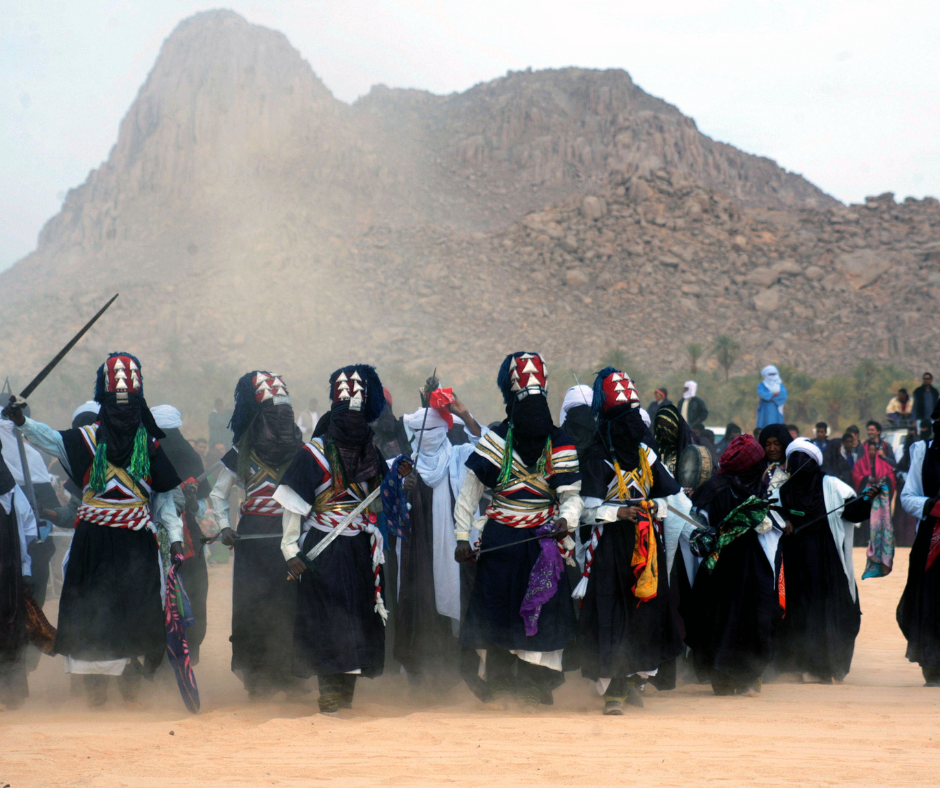
Sebeïba is a contest of drumming, song and dance between two of Djanet's ksour, Azelouaz and El Mihan. Local tradition links it to the end of an old rivalry between them and to the Ashura story of Moses and Pharaoh.
The men parade in warrior dress, veiled and carrying swords, while the women sing and play the drums.
Watch from where the organizers put spectators, and ask before you photograph anyone, especially women. Mid-June is also the Saharan summer, with average highs in the high 30s °C, so rest through the middle of the day.
Djanet itself is a relaxed oasis town, and people who come with us often say the deep south turned out calmer and friendlier than they'd pictured. Foreigners travel here with an approved agency, which also makes them eligible for the Sahara visa on arrival. Our Djanet trips run with licensed local agencies, Tuareg guides, cooks and drivers, on routes we know well, and we've yet to have an incident on one. Before booking, look up the official advice for your route and make sure your insurance covers it.
Djanet is the starting point for the Tassili n'Ajjer National Park (UNESCO, 1982), with more than 15,000 rock paintings and engravings. A June festival and a Tassili trek don't mix well, though: the trekking season runs from October to April.
The S'boue of Timimoun
In the Gourara, the oasis of Timimoun holds the S'boue (Sbuâ), a week-long pilgrimage after Mawlid, the Prophet Muhammad's birthday, which ends on the seventh day at the zawiya of Sidi El Hadj Belkacem. UNESCO listed it in 2015. Like Sebeïba, it follows the lunar calendar: the next one should fall around 21 or 22 August 2027.
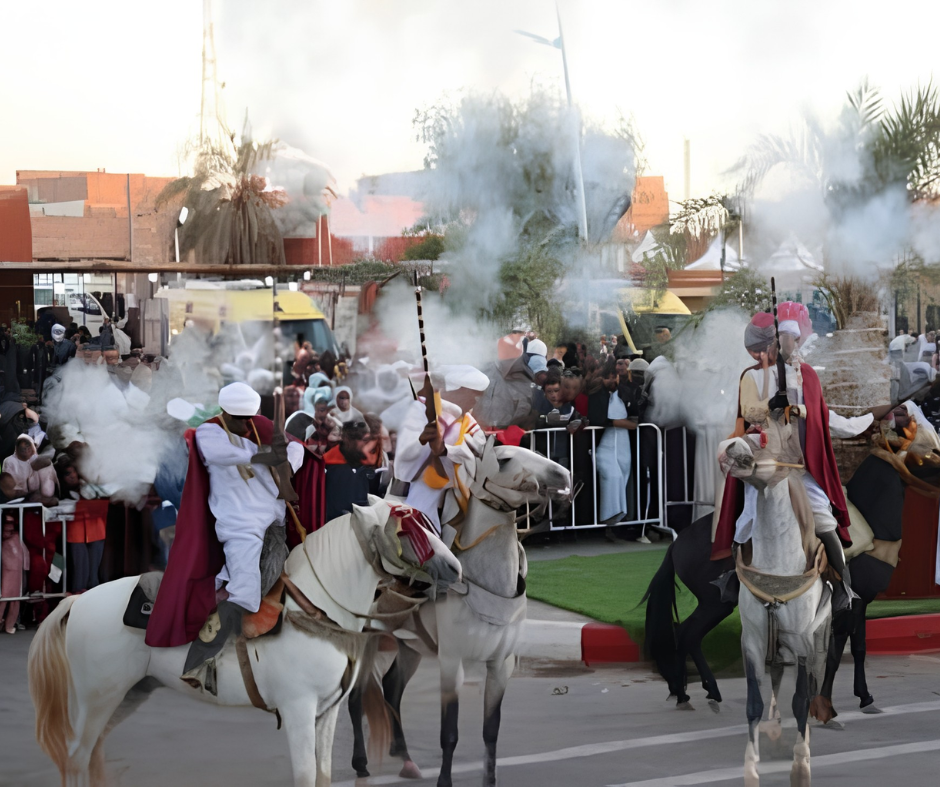
During the week, pilgrims from the Zenata communities of the ksour, the fortified villages of the region, visit the shrines of local saints.
On the last day the groups meet in the square outside the zawiya, merge around the bearer of a saint's standard, then return to their own groups, with the oldest pilgrims directing the ritual. Women ululate, and a week earlier they grind the first grain for the pilgrims' couscous.
Timimoun's red-ochre center was laid out in a neo-Sudanese style in the early 20th century, under French rule, and it makes a striking backdrop for the processions. The palm gardens around town still draw water from foggaras, the underground channels this region is known for.
You may also hear Ahellil, the sung poetry of the Gourara's Zenata, on UNESCO's list since 2008.
This is a religious event first. Dress modestly, follow your guide on where to stand and ask before taking photos. Midsummer is the hottest time to be here (July highs average around 44 °C, and August is barely cooler), so plan your days around the heat.
Crafts and harvest festivals
The Ghardaïa carpet festival (March)
The M'zab Valley is five fortified hilltop towns, the pentapolis, founded between about 1012 and 1350 and on the UNESCO list since 1982. Ghardaïa's National Carpet Festival (Fête du tapis) has run for more than 50 years, usually in March during the spring school holidays.
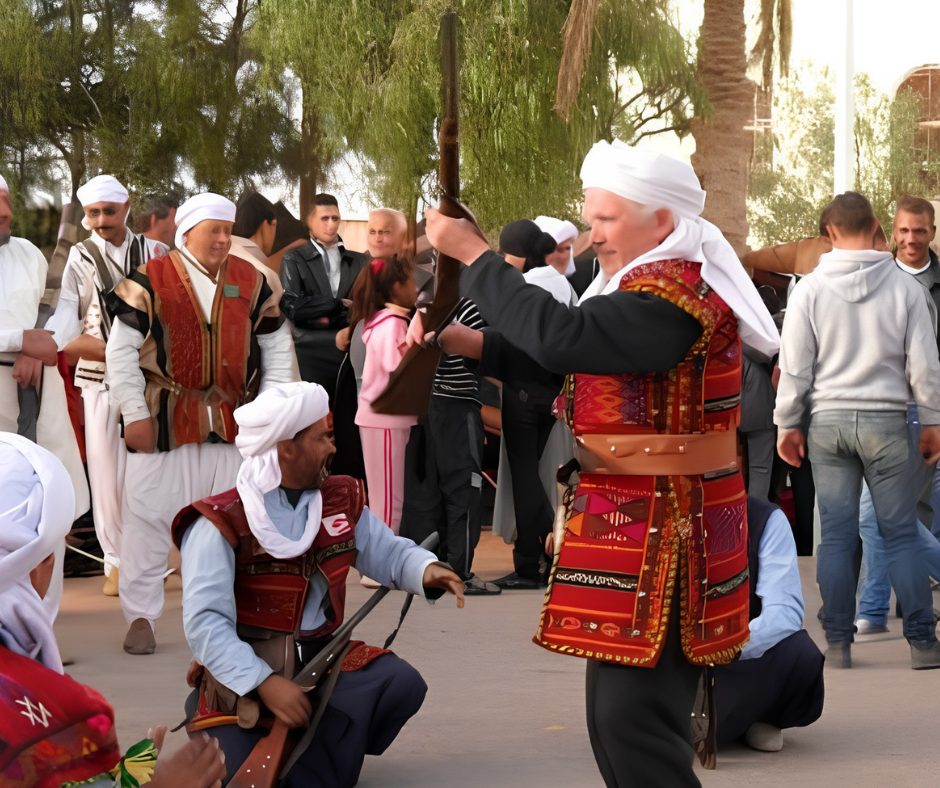
It combines a crafts fair with a parade of floats draped in handwoven carpets, fantasia and folk performances. Weaving here is women's work, and patterns are passed down within families.
Look for weavers working at upright wooden looms, and compare flat-woven kilims, which are light and fold small, with thicker knotted carpets. Most motifs are geometric; ask the weaver what hers mean.
At the fair you buy from the makers. Ask whether a piece is handwoven, local and pure wool, and turn it over: a handmade carpet shows the same pattern on the back. Bring cash.
The M'zab has its own visitor rules. You can only enter Beni Isguen with a local guide, whom you hire at the main gate, and non-residents have to be out by sunset. Cover shoulders and legs, don't smoke in the streets, and don't photograph people, especially women.
Book a room early, because the festival falls in the school holidays, when Algerian families travel south.
The Taghit Date Harvest Festival
In late October, as the harvest begins, Taghit holds its moussem, or date festival. The oasis lies on the Oued Zousfana at the edge of the Grand Erg Occidental, about 95 km from Béchar. Algeria is the world's third-largest date producer (about 1.32 million tonnes in 2023), and in the Saoura the palm groves are still the main resource.
Growers bring their dates to the stalls, which makes it easy to taste several varieties side by side. Algeria's best-known date, Deglet Nour, comes mainly from Biskra and Tolga in the northeast, so ask which local varieties you are eating. Dates also go into sweets such as makroud.
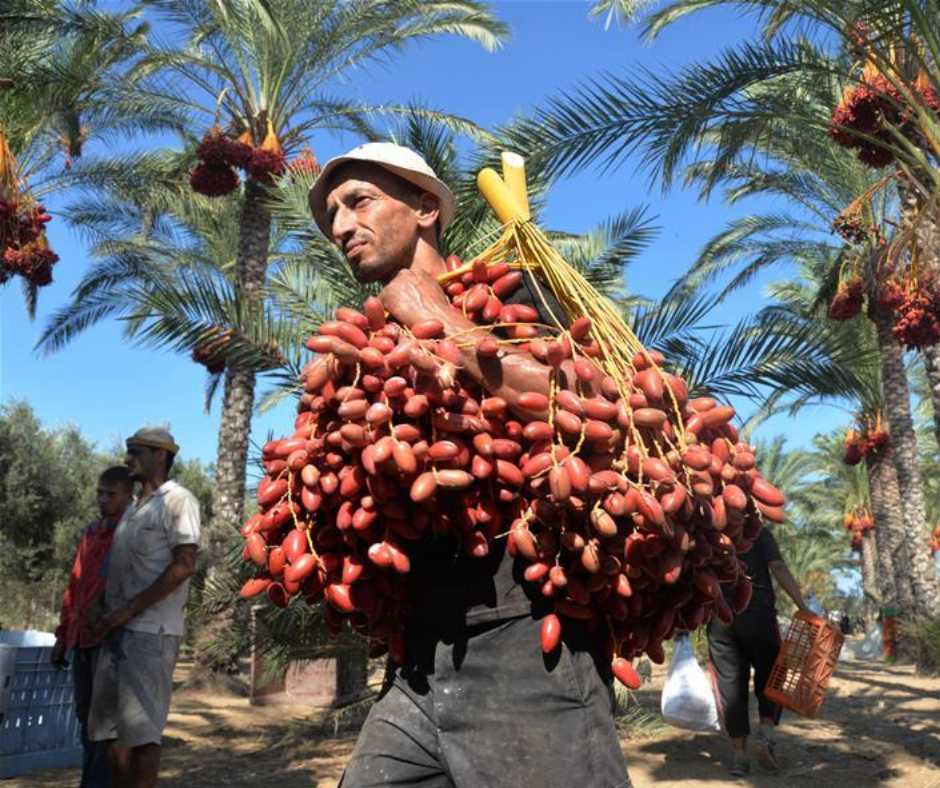
The moussem lasts about three days, with bendir frame drums, the gumbri lute and local songs. For a first look at how a Saharan oasis lives off its palms, it is the easiest event on this list.
Walk through the palm grove with a local guide to see how the gardens are watered and how the climbers go up the trunks to cut the bunches. Don't expect foggaras here: those underground channels are further south, around Timimoun.
The dunes rise straight up behind the old ksar, so you can climb the nearest crest for sunset after the festival. Late October brings warm days and cool nights, and there are Neolithic rock engravings nearby at Barrebi.
The Ath Yenni jewelry festival (summer)
In the Kabyle hill villages of Ath Yenni, south of Tizi Ouzou, silversmiths have made enameled silver jewelry for generations, and the Fête du bijou brings them together each summer. The 19th edition ran from 31 July to 9 August 2025 with about 160 jewelers from 11 wilayas. The 20th, planned for late July 2026, was postponed, and no new date had been set by October 2026.
Come for the workshops and the stalls, where you buy straight from the makers, and for a few days in the villages of the Djurdjura foothills.
Smaller harvest festivals: cherries, strawberries and Tafsit
Several regions celebrate their harvest, but these events are local and their dates move. Tlemcen’s cherry festival is held in June at Lalla Setti, above the city (the 10th edition ran in June 2022).
Skikda holds a strawberry festival in May, with a parade and prizes for the best jam and tart. In Tamanrasset, Tafsit marks the spring at the end of April with camel races and Tuareg music. We could not confirm a 2026 edition of any of the three, so check locally before planning a trip around one.
Yennayer and the Algiers festivals
Yennayer, the Amazigh New Year (12 January)
Yennayer opens the Amazigh calendar on 12 January, and it has been a national public holiday since 2018. On 12 January 2027 the year 2977 begins. The heart of it is a family dinner, imensi n Yennayer, usually couscous with chicken or lamb and dishes made with seven vegetables, followed by dried fruit and sweets for the children.
It is celebrated most visibly in Kabylie, where markets fill with dried fruit in the days before and villages hold concerts and meals, and in the west around Oran and Chlef. As a visitor, the easiest way in is an invitation to a family meal, which a local host or guide can often arrange.
FIBDA and the Algiers book fair (autumn)
Autumn is the season for culture in the capital. FIBDA, the Algiers International Comics Festival, runs in early October on the esplanade of Riadh El Feth, below the Maqam Echahid monument; its 18th edition ran from 1 to 5 October 2026. A few weeks later, the Algiers International Book Fair (SILA) fills the Palais des Expositions in Mohammadia: the 29th edition is listed for 28 October to 7 November 2026, open to the public from 29 October.
Tips for planning a trip around Algerian festivals
Working with the lunar calendar
Timing is the hard part. Religious events follow the Islamic lunar calendar, which is about 11 days shorter than the solar year, so they come round about 11 days earlier each year.
That is why Sebeïba and the S'boue drift through the seasons: in 2027 they fall in mid-June and late August, both in the Saharan heat, and they will move toward spring over the coming years. Ramadan, expected from around 8 February 2027, shifts the daily rhythm as well, with restaurants and cafés shut by day and the streets busy late into the night.
The secular festivals are no easier to pin down. Timgad took a three-year break before its 2026 edition, we could not confirm any Dimajazz edition since 2022, and the 2026 raï festival dates came out about a week ahead.
Check the dates with a local contact before you book non-refundable flights, and leave a few days of slack in your plan. Our team can check the dates locally when you plan your Algeria trip with us.
Public holidays in 2027
Banks, offices and many shops close on public holidays, and the two Eids are three-day holidays when much of the country travels to family. Islamic dates are expected dates and can shift by a day.
| What closes for | When in 2027 |
|---|---|
| New Year | 1 January |
| Yennayer (Amazigh New Year) | 12 January |
| Eid al-Fitr (3 days) | About 9 or 10 March |
| Labour Day | 1 May |
| Eid al-Adha (3 days) | About 16 or 17 May |
| Awal Muharram (Islamic New Year) | About 6 June |
| Ashura | About 15 June |
| Independence Day | 5 July |
| Mawlid | About 14 or 15 August |
| Revolution Day | 1 November |
Ramadan isn't a public holiday, but office hours shorten and daytime restaurants close.
Packing, visas and money
Festivals mean long hours outdoors, often late into the night.
In the Sahara, plan for heat and big temperature swings. In June and August, when Sebeïba and the S'boue fall, the problem is heat: bring loose long sleeves, a hat, a scarf against sand and plenty of water. At FiSahara in spring and the Taghit moussem in October, days are warm but desert nights get cold, so pack a fleece.
For Timgad and Constantine, light clothes and a layer for the evening are enough. As for paperwork, UK, EU, US and Canadian travelers, like most others, apply for a visa at an Algerian consulate before the trip.
Start at least six weeks ahead. For organized tours that include the southern wilayas (Djanet, Timimoun, Béchar for Taghit, Ghardaïa), an approved agency can arrange the Sahara visa on arrival instead. The visa section of our Algeria travel guide lists the documents you will need.
Bring cash, and sort out your dinars in a big city before heading to a desert festival: cards work mainly in big hotels and airline offices, and the south runs on cash.
Festival dates, crowds and the Sebeïba
Which festival draws the biggest crowds?
By visitor numbers, the Algiers International Book Fair (SILA): its organizers reported more than five million visits in 2025. Among music festivals, Timgad in July is the best known, and for tradition, the Sebeïba in Djanet and the S’boue in Timimoun are both on UNESCO’s intangible heritage list.
What date is Yennayer?
12 January, every year; it has been a national public holiday since 2018, and 12 January 2027 opens the year 2977.
What's on if I'm in Algeria in August?
In 2027, the S’boue in Timimoun (around 21 to 22 August), the end of the Ath Yenni jewelry festival if it returns to its usual dates, and the raï festival in late summer. Algiers also holds free summer evening concerts by the sea, and the coast is in full holiday mode.
Can tourists attend the Sebeïba in Djanet?
Yes. Visitors watch from the areas the organizers set aside, and the townspeople are used to guests. Come with an approved agency, which also makes you eligible for the Sahara visa on arrival, dress modestly and ask before photographing anyone, especially women. In 2027 it should fall around 15 June.
What are Algeria’s public holidays?
Five fixed dates (1 January, 12 January, 1 May, 5 July and 1 November) plus the lunar ones: three days each for Eid al-Fitr and Eid al-Adha, then Awal Muharram, Ashura and Mawlid. The weekend is Friday and Saturday.
So which one? For music, go to Timgad in July or to the raï festival in late summer, once the dates are out. For the Sahara, Sebeïba (June 2027) and the S'boue (August 2027) are the big ones if you can take the heat, and the Taghit moussem in late October is the gentlest introduction to the desert.


