
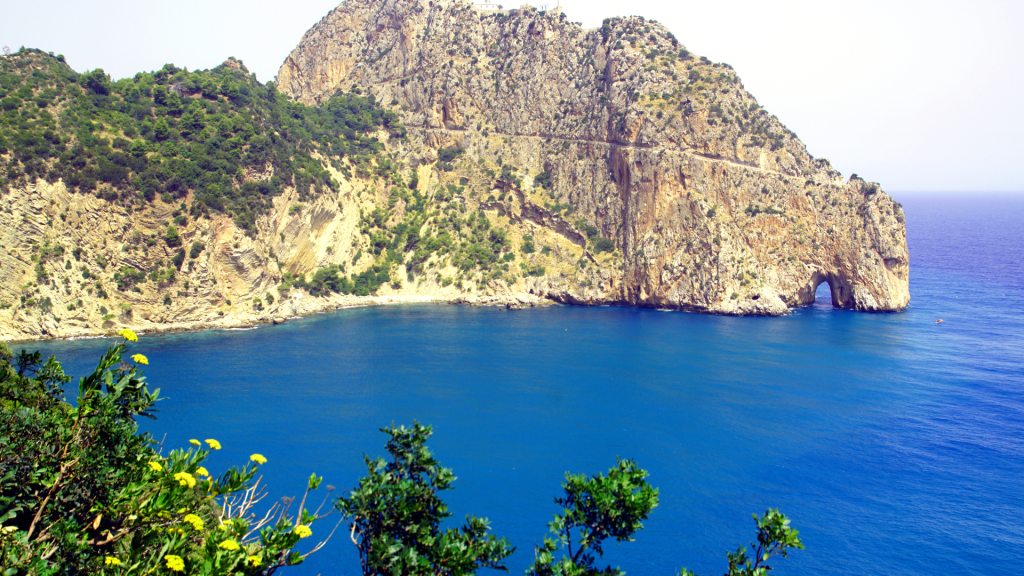

Algeria's coast runs for about 1,200 km (998 km by the CIA's simplified measure), and five places on it give a first-time visitor the most for the effort: Algiers, Oran, Tipaza, Béjaïa and Annaba. Expect Roman ruins on the shore, Spanish and Ottoman forts, forested capes and city beaches packed with Algerian families in summer, but very few foreign tourists.
Below is what to see in each place, how to get between them and when to go. For the inland highlights and the Sahara, see our full Algeria guide.
Which coastal city should you pick?
| Where | Why you would go, and for how long |
|---|---|
| Algiers | The Kasbah (UNESCO 1992) and city life; 2 to 3 days, with Chenoua beach near Tipaza |
| Oran | Evenings, raï and Spanish forts, above all Santa Cruz on Mount Murdjadjo; 2 days, with Les Andalouses beach 25 km west. About 4.5 to 5 h from Algiers by Coradia train, or a 1-hour flight |
| Tipaza | Roman ruins on the shore, with Chenoua beach next door; a day trip about 70 km west of Algiers by road |
| Béjaïa | Hiking and coves in Gouraya National Park and at Cap Carbon, swimming at Les Aiguades; 2 days, about 4 h from Algiers by direct train |
| Annaba | Hippo Regius, the Basilica of St Augustine and city beaches such as Rizzi Amor and Ain Achir; 2 days, a 1-hour flight from Algiers |
Algiers and the central coast
Algiers, nicknamed El Bahdja ("the joyful"), is built on steep hills that drop straight to the bay, so most walks here involve stairs. It is also the easiest place to start a coastal trip: the airport train reaches Agha station in the center in about 20 to 25 minutes for 80 DZD. ETUSA bus 100 runs to Place des Martyrs for 50 DZD (2026 fares).
The seafront is where the city relaxes. In the evening, families fill the Promenade des Sablettes in Hussein Dey, and in summer 2026 it hosted the Summer in Music festival (15 to 21 August), a week of free evening concerts.
The Kasbah and the port district
Wear shoes with grip: the old town's lanes are steep, stepped and often slippery. A good place to start is the fishing port just below Place des Martyrs, where the boats come in early in the morning.
From there it's a short walk up to Place des Martyrs, the main way into the lower Kasbah. Steep alleys and whitewashed houses climb to an Ottoman citadel built between 1516 and 1592, and the whole old town has been on UNESCO's World Heritage list since 1992. Go with a local guide: many houses are in poor repair, the alleys twist back on themselves, and a guide knows which lanes are open.
Higher up, the lanes open now and then onto views of the bay. Ottoman-era houses built around inner courtyards stand a few streets away from the apartment blocks the French put up after 1830.
Architecture and viewpoints in downtown Algiers
Below the Kasbah, downtown Algiers is mostly French-built, with long arcaded streets. Its best-known building is La Grande Poste, the neo-Moorish main post office opened in 1913. The interior has been closed for restoration since 2019, so you see it from the square outside.
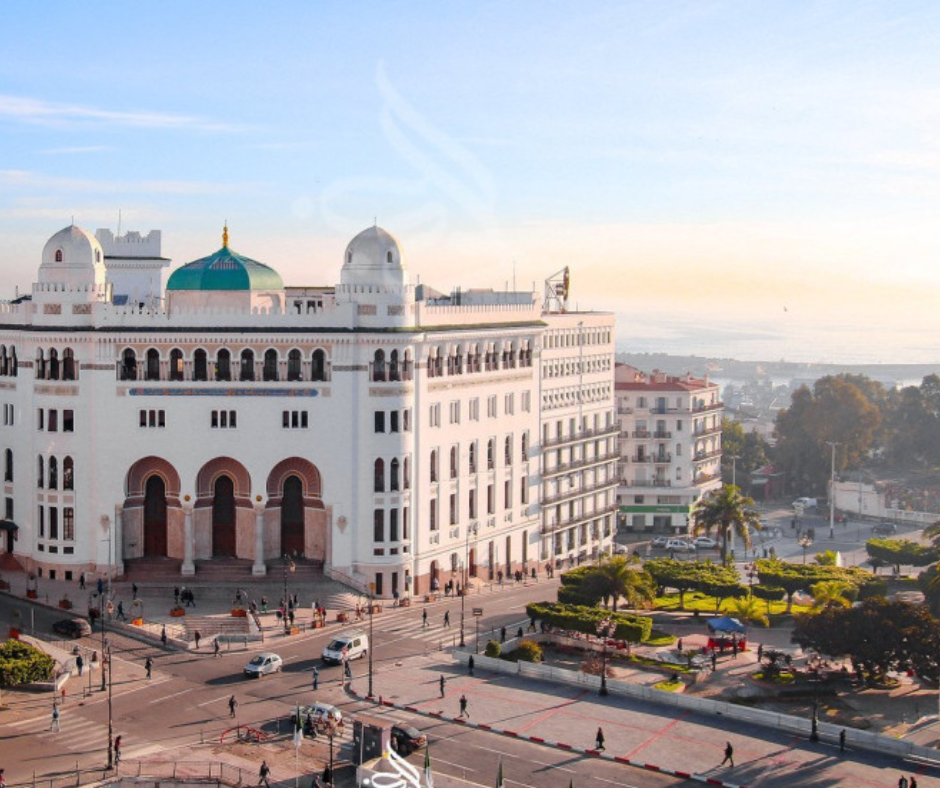
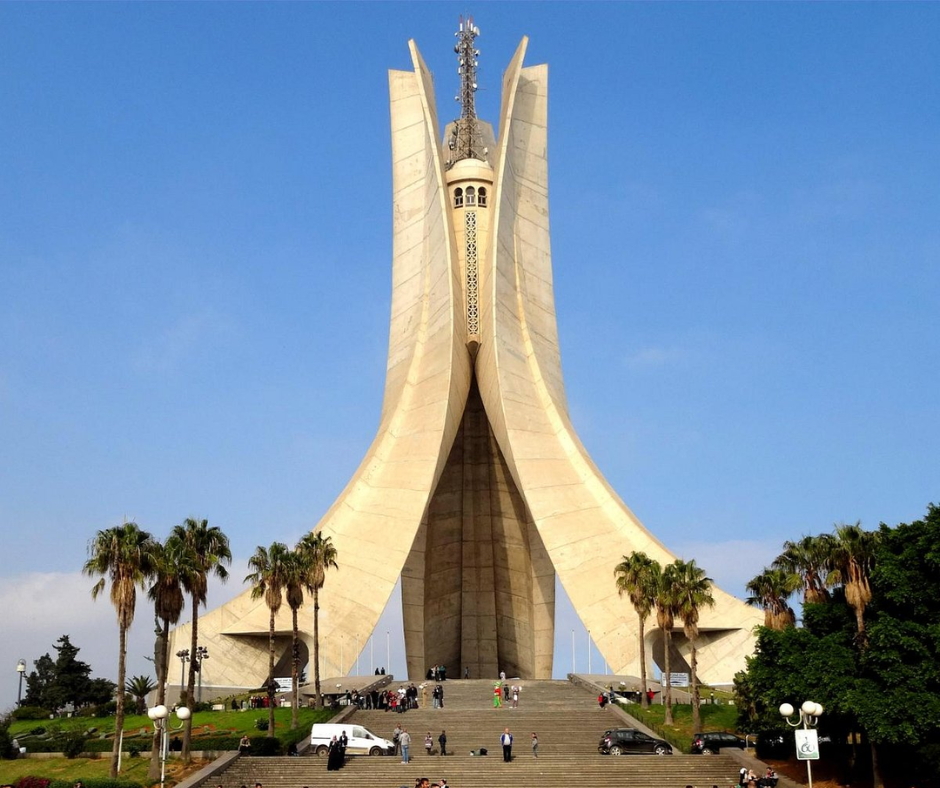
The streets around it are full of cafés with outdoor terraces. For a view over the whole bay, take the short cable car from El Hamma, by the Jardin d'Essai botanical garden, up to Maqam Echahid, the Martyrs' Memorial. It was running in the latest reports we found; if it's shut, a taxi gets you up in a few minutes.
The memorial, inaugurated on 5 July 1982 and usually given as 92 m tall, stands on the hill above the garden, with the Mujahid museum underneath. From the esplanade you look over the harbor and the full sweep of the bay. For more ideas in the capital, see our full list of things to do in Algiers.
Oran: raï, Spanish forts and beaches
Oran, El Bahia ("the radiant") to Algerians, is the country's second city, about 4.5 to 5 hours west of Algiers on the Coradia train. Days are slow here and evenings run late, especially in summer, when the seafront and the beaches west of town fill up.
The home of raï music
Raï was born in the Oran region in the early 20th century, out of Bedouin and urban folk song, and Oran-born singers such as Cheb Khaled and Cheb Hasni took it abroad in the 1980s. Since 2022 it has had a place on UNESCO's intangible heritage list. In summer it is the music of wedding parties and the cabarets along the corniche west of town; check local listings for concerts, which are announced late.
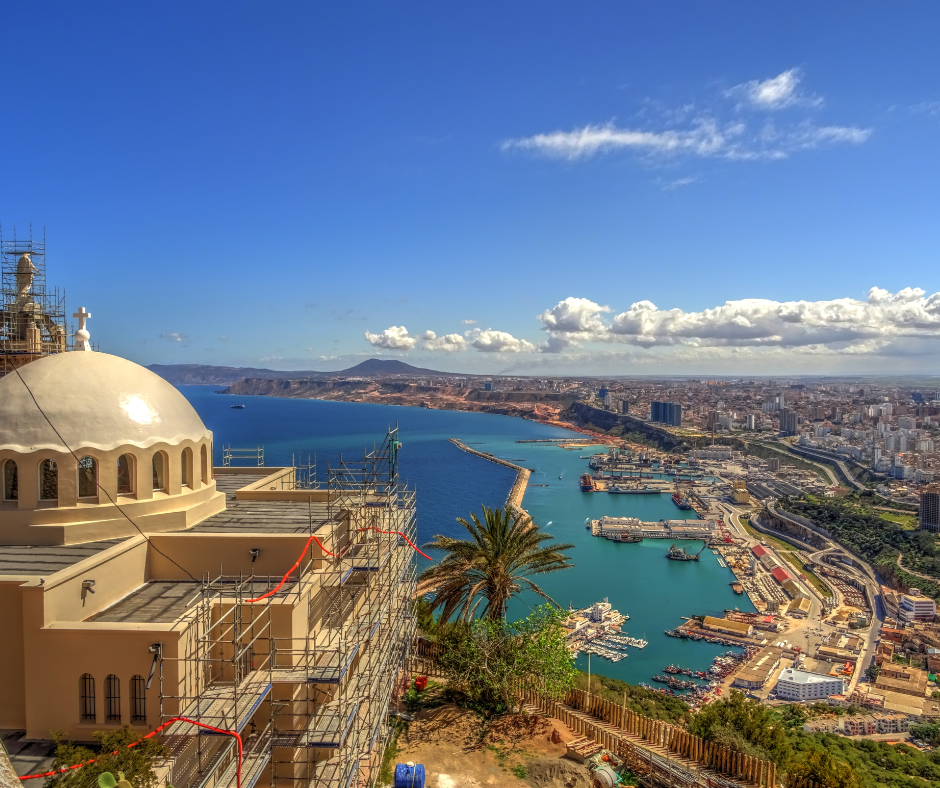
The center is Place du 1er Novembre, the old Place d'Armes, with the French-era town hall and its two bronze lions. For a beach day, Les Andalouses, about 25 km west, is the easy choice; Madagh, in Aïn El Kerma about 40 km out, is wilder, with coves set among cliffs and pine forest.
Spanish forts and the old quarter
Spain held Oran from 1509 to 1792, with a break between 1708 and 1732, and most of what survives from that time is military: ramparts, gates and forts.
In the old Sidi El Houari quarter you can see the Porte d'Espagne, a Spanish gate dated 1589, and the Rozalcazar fort, where the Bey built his palace after the Spanish left. Much of the quarter is run-down, so go in daylight. High above the city on Mount Murdjadjo is the Fort of Santa Cruz, built by the Spanish between 1577 and 1604.
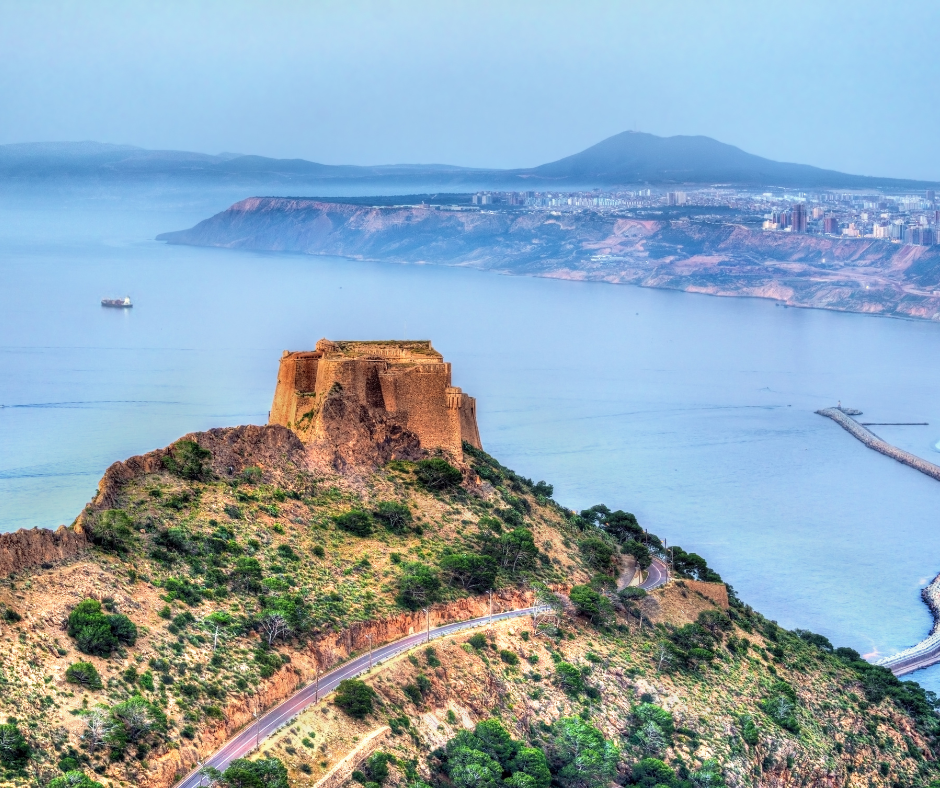
From the fort you can see why Spain wanted it: the whole harbor lies below. Back in town, head down to the Marine neighborhood for karantika, Oran's street food: a baked flan of chickpea flour and egg, sold hot by the slice and sprinkled with cumin. Karantika is only the start, and the best things to do in Oran also include its museums and the beaches west of the city.
The Roman ruins of Tipaza
Tipaza is about 70 km west of Algiers, an easy day trip, and its ruins sit right on the shore. Tipasa, as UNESCO spells it, has been a World Heritage site since 1982: a Punic trading post that became a Roman colony and later an early Christian town.
Walking the seaside archaeological park
The ruins run along the water's edge under pine trees, so there is some shade, and you hear the waves from most of the site.
The path takes you past the forum, a theater, an amphitheater and several early Christian basilicas, and through cemeteries full of stone sarcophagi.
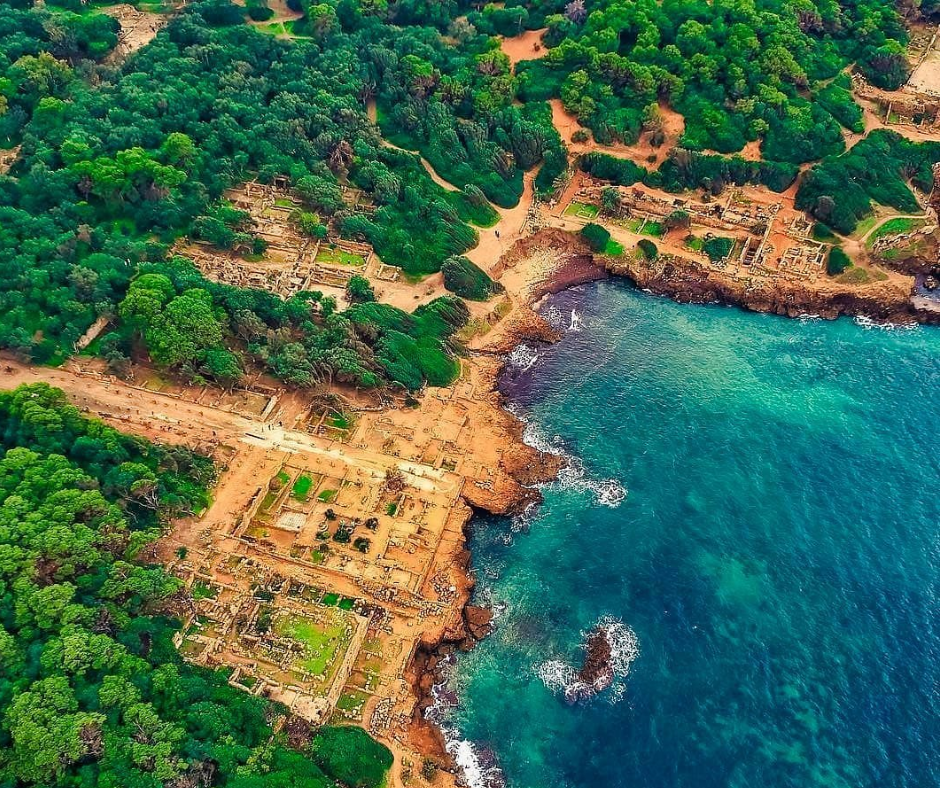
Go early in the morning: the light on the columns is better, and the site is quiet before the day-trippers from Algiers arrive. Entry to sites and museums like this is usually 200 to 300 DZD (2026).
The fishing harbor and fish restaurants
The working fishing harbor of Tipaza sits right next to the archaeological park.
Fishermen mend their nets on the quay while small wooden boats unload sardines, sea bream and red mullet. Along the waterfront, simple family-run restaurants grill the catch over charcoal.
You eat outside by the water, with bread and salads, and the fish is whatever came in that morning. Ask the price first, as fish is often charged by weight. Chenoua beach and the Royal Mausoleum are both close by, and you will find them in our Tipaza travel guide.
Hiking in Bejaia and Gouraya National Park
Béjaïa is the place to walk as well as swim: forested mountains drop straight into the sea around the city, which was the Hammadid capital from 1067. A little further east, Jijel continues the same wild coastline with red-sand coves and the Grottes Merveilleuses.
Trails of Gouraya National Park
Gouraya National Park, created in 1984 and a UNESCO biosphere reserve since 2004, starts at the edge of town. It is home to Barbary macaques, an endangered species; they often come close to the roads, but don't feed them.
Trails climb through pine and oak forest. The classic walk goes up Yemma Gouraya, a peak of about 660 m with an old fort and the shrine of Lalla Gouraya at the top.
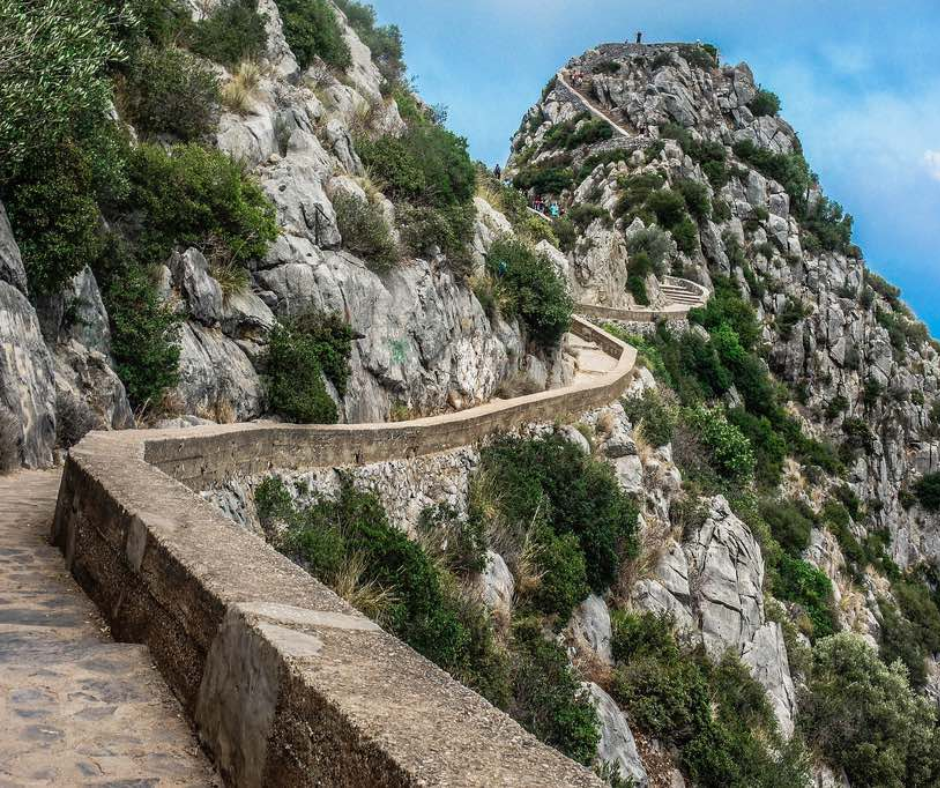
You see cliffs and sea for most of the way up. It is a real climb from near sea level, so start early in summer, before the afternoon heat.
Coastal views from Cap Carbon
Cap Carbon, also inside the park, has a lighthouse built in 1906 at about 220 m above the sea, often billed as one of the highest lighthouses on a natural site anywhere.
The road out to the cape goes through a tunnel cut in the rock, and below the cliffs are small rocky coves that are hard or impossible to reach on foot. In summer, small boat operators on the Béjaïa coast run trips past Cap Carbon and the Gouraya sea caves, which is the easiest way to see them.
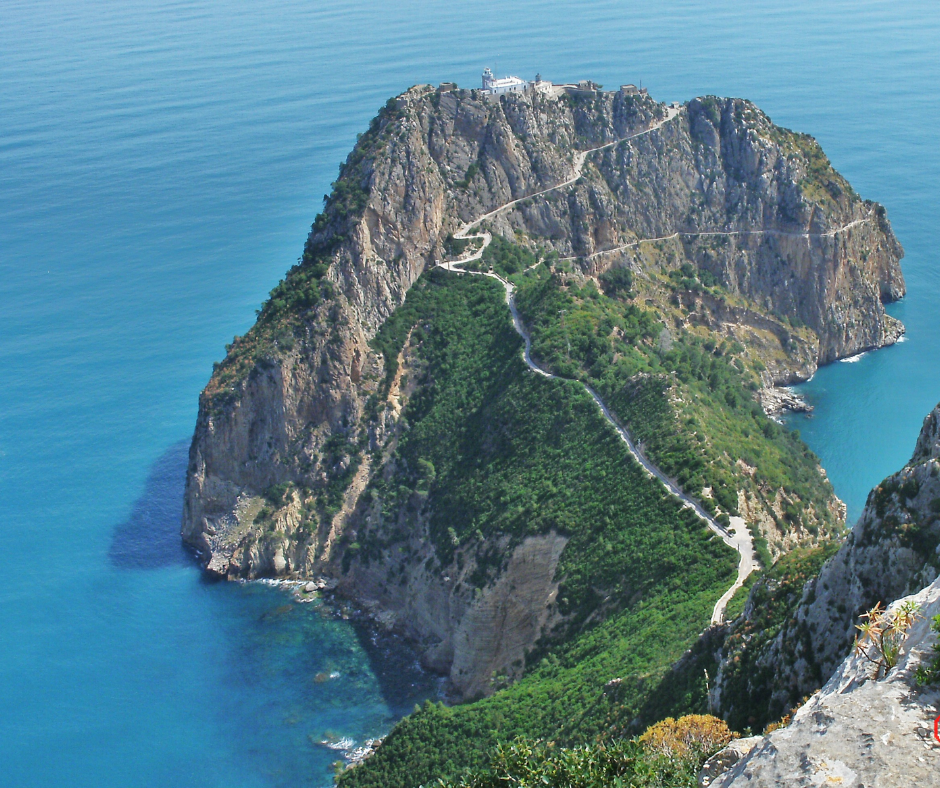
Seabirds nest on the cliffs, which draws birdwatchers. Leave your binoculars at home, though: the UK Foreign Office says bringing them into Algeria needs authorization. The old Casbah and Les Aiguades beach round out a visit, as detailed in our Bejaia travel guide.
Annaba: Hippo Regius, the basilica and the beaches
Annaba, still called Bône (its French-era name) by some older locals, is the last big city on the coast before the Tunisian border. Pick it if you want history and a city beach in the same stay. It is also reachable from Tunis: the train runs three times a week and takes about 9.5 hours on the 2026 timetable.
The Basilica of St Augustine and Hippo Regius
Annaba is ancient Hippo Regius, a Phoenician foundation that became a Numidian royal town. St Augustine was its bishop from the 390s until he died in 430, during the Vandal siege. On a hill above the modern city is the Basilica of St Augustine, built between 1881 and 1900.
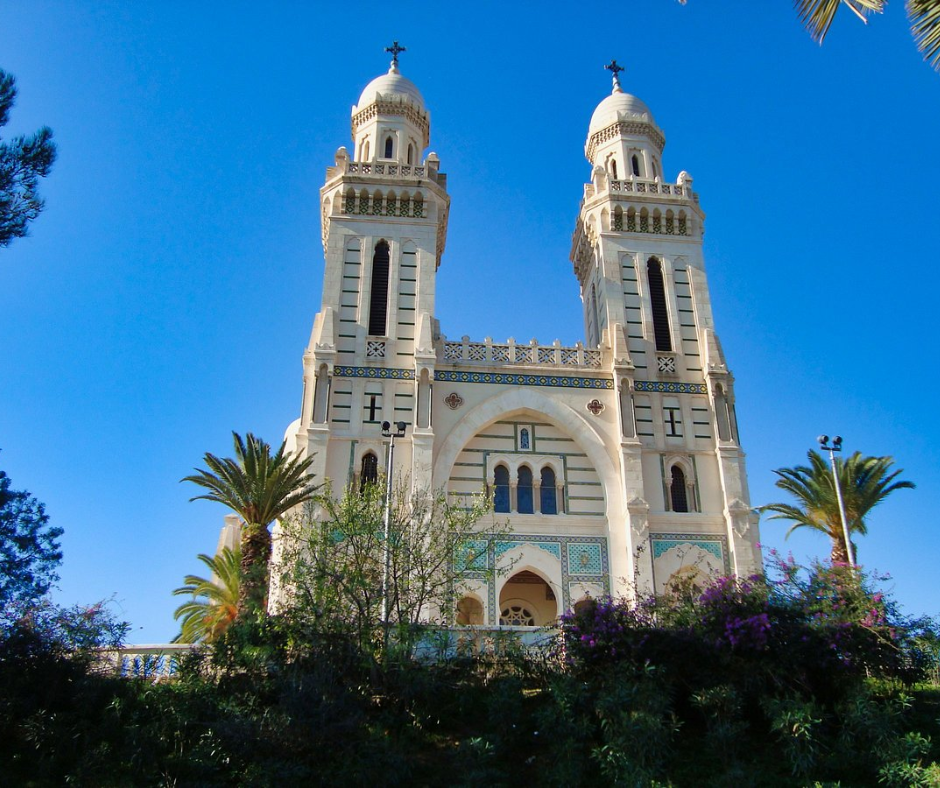
The basilica mixes neo-Byzantine and neo-Moorish styles, with horseshoe arches inside, and from its hill you look down on the ruins of Hippo Regius on the plain below.
The ruins include the forum, large public baths and the foundations of villas, and there is a museum on site.
The Corniche and Seraidi
The Corniche road runs north from the center past a string of beaches: Rizzi Amor (still often called Chapuis) and Saint-Cloud are about 3 km out, and Ain Achir is about 7 km out.
In the late afternoon, families walk the seafront, stop for ice cream or sit on the sand until sunset.
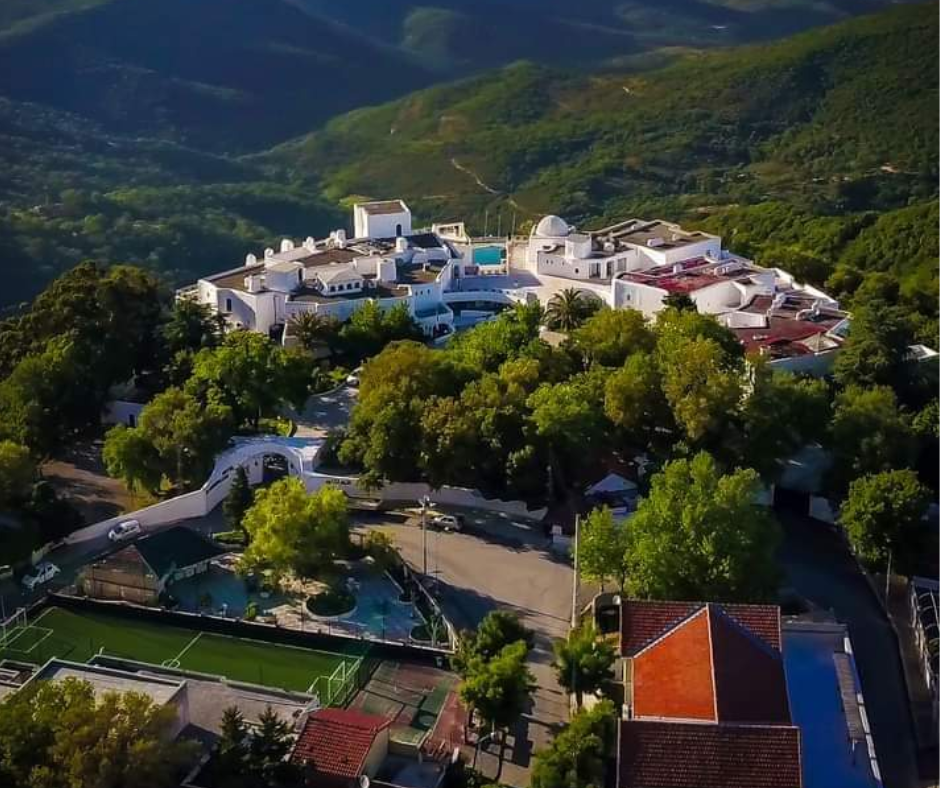
When the humidity gets too much, go up to Seraïdi in the Edough mountains, either by the winding road or by the cable car, back in service since July 2025 after about five years out of action.
The village is surrounded by cork oak forest, it is noticeably cooler than the coast, and the view takes in the whole Gulf of Annaba. The Seraïdi cable car and the Hippo Regius museum are both worth adding to your visit, as our Annaba guide explains. If you continue east to El Kala and its lakes, you are near the Tunisian border: read the official travel advice for that area before you go, and confirm your insurance covers it.
More coastal towns worth a stop
Cherchell: Roman Caesarea
Cherchell is 89 km west of Algiers, about 20 km past Tipaza on the same coast road, so the two pair well in one day. As Iol, renamed Caesarea around 25 BC, it was the capital of Juba II and Cleopatra Selene, who rebuilt it with a theater and a lighthouse modeled on the one at Alexandria.
Earthquakes and later builders took much of it, but parts of the theater, the forum and an aqueduct survive. The local museum holds the best of the Roman mosaics and statues found in the town.
Tigzirt: Roman ruins by the sea
Tigzirt, in Tizi Ouzou wilaya, is about 120 km east of Algiers and 40 km north of Tizi Ouzou. Its name means "islet" in Kabyle, after the rock just offshore. The Roman town of Iomnium stood here: a temple from the reign of Septimius Severus (3rd century) and a basilica, excavated from 1886 and partly rebuilt, sit right above the water. In summer it is a busy family beach town.
Jijel: the corniche and the caves
Jijel continues the wild coast east of Béjaïa along the RN43 corniche. The Grottes merveilleuses at Ziama Mansouriah, 35 km west of town, were found in 1917 during road building and stay at about 18°C all year. Nearby Plage Rouge is named for its reddish sand and rocks. Jijel is a favorite with Algerian families, so its beaches and hotels are full in August.
Skikda and Stora
The French founded Skikda in 1838 as Philippeville, on the site of Roman Rusicade, whose theater from Hadrian's reign is often called the largest in Algeria. Today it is an industrial port, so most visitors head for Stora, a fishing village with its own small harbor, and the beaches along the coast beyond it.
Mostaganem: Tigditt and Les Sablettes
Mostaganem is 72 km east-northeast of Oran. The old quarter of Tigditt, on one side of a ravine that splits the town, is the place to walk among older houses. In summer the beaches of Les Sablettes (in Mazagran) and Salamandre fill up, and the port has ferries to Valencia in Spain.
Getting around the Algerian coast
The coastline is about 1,200 km long, and Oran to Annaba is a long way, so with a week we'd do one half properly: Algiers, Tipaza and Oran in the west, or Algiers, Béjaïa and Annaba in the east. Inland stops like Constantine or Tlemcen are easy to add, and both feature among the 10 best cities in Algeria.
Car, public transport or an organized trip
There are three realistic ways to travel the coast, and each has a catch.
A rental car gets you to the beaches and villages that buses skip. The East-West motorway runs inland and has no tolls; the coast roads themselves (the RN11 west of Algiers, the RN24 and RN43 to the east) are slower, wind through every town and clog up in summer. Expect police checkpoints, and drive defensively in Algiers and Oran. Fuel is cheap: 47 DZD a liter for unleaded (2026).
Trains are cheap and comfortable but run inland, not along the shore. Oran is about 4.5 to 5 hours from Algiers on the Coradia; Béjaïa is about 4 hours on the direct train, which goes via Bouira and the Soummam valley. For shorter hops, shared intercity taxis leave from each town's taxi station as soon as every seat is filled; they are fast and cheap, but cramped and cash only.
An organized trip with a driver and guide is the easiest option if you don't want to drive, and in the Algiers Kasbah you'll want a local guide anyway. We can have a driver meet you at arrivals in Algiers, handle the transfers from city to city and line up a local guide at each stop. For a coastal route planned around you, send us your dates and interests.
A week on the coast: west or east
| Which half | Where you sleep | Getting along it |
|---|---|---|
| West: Algiers, Tipaza and Cherchell, Mostaganem, Oran | Algiers 3 (with a day trip to Tipaza and Cherchell), Mostaganem 1, Oran 3 | Car or driver along the coast; train or plane back from Oran |
| East: Algiers, Béjaïa, Jijel, Skikda, Annaba | Algiers 2, Béjaïa 2, Jijel 1, Annaba 2 (Skikda as a stop on the way) | Train to Béjaïa, then car or driver along the RN43; fly back from Annaba |
When to go to the Algerian coast
Spring (March to May) and autumn (September to November) bring warm days and fewer people at the ruins, so they suit sightseeing best. Swimming season runs from about June to October, and September gives you warm water without the August crowds.
July and August are hot and humid, and Algerian families pack the beaches, especially on Fridays and Saturdays, the weekend. Of the country's 657 beaches, 470 were authorized for swimming in summer 2026, and lifeguards cover the authorized ones from 9 am to 7 pm, so swim there and within those hours.
Winter is cool and rainy and too cold for most swimmers, but it is a good season for the ruins, museums and seafood without the heat. Ramadan changes the rhythm too: expected to begin around 8 February in 2027, it closes many cafés and restaurants during the day.
Beach etiquette
On city beaches you'll see swimsuits and burkinis side by side; on busy family beaches people cover up more, and topless sunbathing isn't done anywhere. Under the 2026 rules at least 70% of each authorized beach has to stay free to use, and paid parasol and chair zones take the rest. Drinking alcohol in public is illegal, so leave it off the beach, and expect the biggest crowds on Fridays and Saturdays.
What we get asked about the coast
Which coastal city makes the best base? Algiers, Oran or Annaba: they are the biggest, with international airports and ferry ports. Along the shore from west to east you also have Mostaganem, Béjaïa, Jijel and Skikda, plus smaller towns such as Tipaza, Cherchell, Tigzirt and El Kala.
Can I drive the whole coast on one road? No. The RN11 west of Algiers and the RN24 and RN43 to the east follow much of the shore but wind through every town and clog in summer, so most long trips use the inland East-West motorway and dip down to the coast for short stretches.
Which ports can I sail into from France or Spain? From Marseille: Algiers, Oran, Béjaïa, Skikda and Annaba. From Sète: Algiers, Béjaïa and Skikda. From Spain, boats run from Barcelona, Valencia and Alicante to Algiers or Oran, Valencia to Mostaganem, and Almería to Oran and Ghazaouet. Most routes run mainly in summer.
Is the sea warm enough for a swim in October? Usually, yes: from about June to October the water sits around 22 to 26°C, warmest in August.
Oran or Annaba, if I only have time for one? Oran if you want a big, lively city with late evenings, raï, Spanish forts and beaches to the west. Annaba if you prefer a calmer city with Roman Hippo Regius, the Basilica of St Augustine and the cool Edough mountains above it. With time for both, fly between them.


