


The medinas worth planning a trip around in Algeria are the Casbah of Algiers, the five walled towns of the M'Zab Valley around Ghardaïa, the old centers of Tlemcen and Nedroma in the far west, and the Souika in Constantine. Two are UNESCO World Heritage sites (the M'Zab Valley since 1982, the Casbah since 1992), and all of them are lived-in neighborhoods first, with steep lanes, few signs and phone maps that often lose track.
Each one works differently. The Casbah is a steep maze we'd walk with a guide, Beni Isguen in the M'Zab can only be entered with one, Tlemcen and Nedroma are easy to walk on your own, and Constantine's old town hangs over a gorge. Below we take them in turn, then cover cash, transport and street food.
First, a word on how these old quarters are built, because it explains why everyone gets lost in them. Two of the cities, Algiers and Ghardaïa in the M'Zab, also feature in our wider Algeria travel guide.
Before You Visit Algeria's Historic Medinas
Algeria's medinas were built for shade, defense and privacy, long before cars. Most lanes are too narrow for a vehicle, so expect to walk, often up and down steps.
The streets wind instead of following a grid. That keeps them in shade for much of the day and breaks the wind, so a lane in the old town feels noticeably cooler than an open boulevard outside it.
Houses face inward. From the lane you see thick, plain walls with few or no windows; the tiles, carved wood and arcades are around the courtyard inside, out of sight of passers-by. That kept family life private from the street, and it still does.
Thousands of families live in these quarters, so behave as you would on a residential street at home: keep your voice down, don't look or step into open doorways, and ask before photographing anyone.
Guides, time on the ground and the best months
| Old town | What it takes, and why go |
|---|---|
| Casbah of Algiers (UNESCO, 1992) | A guide is strongly recommended. Half a day, or a full day with the museums; March to May or September to November. For Ottoman houses and palaces, views over the bay and the history of the independence war. |
| Ghardaïa and Beni Isguen, M'Zab Valley (UNESCO, 1982) | A guide is compulsory in Beni Isguen. A full day covers two or three of the five towns; October to April. For desert town planning, markets and a living Ibadi community. |
| Tlemcen | No guide needed. A morning for the Mechouar, the Great Mosque and the Kissaria; spring and autumn. For Andalusian-style monuments and medieval carved plaster. |
| Nedroma | No guide needed. A morning, as a day trip from Tlemcen; spring and autumn. A quiet walled town with almost no tourists. |
| Souika, Constantine | A guide is recommended for the lower lanes. Half a day, plus the bridges; spring and autumn. For the gorge setting and engraved copper workshops. |
The Casbah of Algiers: stairs, palaces and a maze of lanes
Of all the medinas in Algeria to visit, the Casbah of Algiers is the one most people know, and UNESCO listed it in 1992. It climbs the hillside above the port, from Place des Martyrs near the seafront to the citadel at the top.
It is older than its Ottoman look suggests. The Zirids founded the town in 944, on the site of the Punic trading post of Ikosim, and the Ottomans built the citadel at the top between 1516 and 1592; the deys governed from it from 1817 until the French conquest in 1830. The French demolished much of the lower Casbah, and many of the houses that remain are in poor repair, so expect scaffolding and the odd closed lane.
Finding Your Way Through the Upper and Lower Casbah
The metro line ends at Place des Martyrs, at the foot of the Casbah, so most people start there and climb. The easier way is the reverse: take a taxi or a Yassir to the citadel at the top (Dar es-Soltane, near the Bab Jdid gate) and walk down, so the stairs go downhill.
Either way, it is steep, with uneven stone steps and very little flat ground. Wear shoes with good grip.
If you lose your bearings, head downhill. The whole Casbah slopes toward the sea, so going down always brings you out onto the wider streets of the lower town.
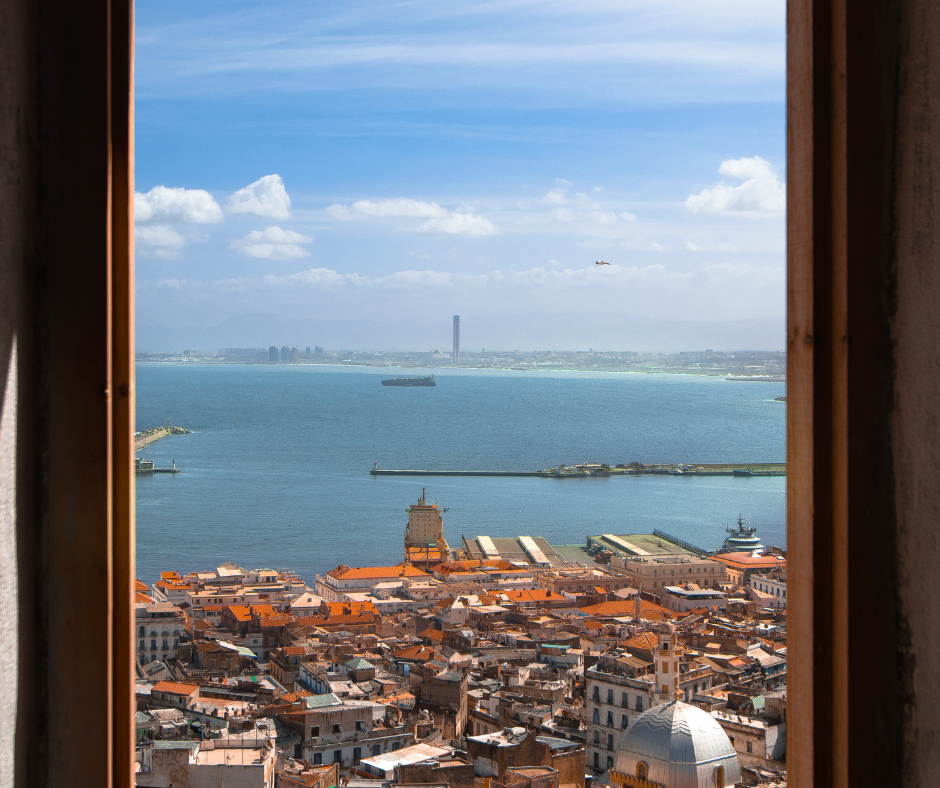
The upper lanes have the best views over the bay. On the way you pass small neighborhood mosques, old public fountains, heavy studded wooden doors and a few workshops where craftsmen still work copper and wood.
Take it slowly. Many of the best details are small: old tiles set into a wall, the shape of a doorway, a coppersmith hammering in a side lane.
The sights beyond the old town are in our Best Things to Do in Algiers, Algeria.
Inside the old houses: palaces, mosques and courtyards
To see how wealthy households lived, start at the Palais des Raïs (Bastion 23), on the seafront at the bottom of the Casbah. It began as a fort built in 1576 and grew over the next two centuries into a group of three palaces and six fishermen's houses, the last surviving block of the lower Casbah. It is now an arts and culture center.
Look up at the minarets. Most are square towers, the usual Maghreb shape, even on mosques built under Ottoman rule, such as Djamaa El Djedid (1660) on the edge of Place des Martyrs. A few minutes away, the Ketchaoua Mosque is documented from 1612 and was rebuilt in 1794; the French made it a cathedral in 1832 and rebuilt it between 1845 and 1860, and it became a mosque again in 1962. It reopened in April 2018 after a restoration funded by Turkey.
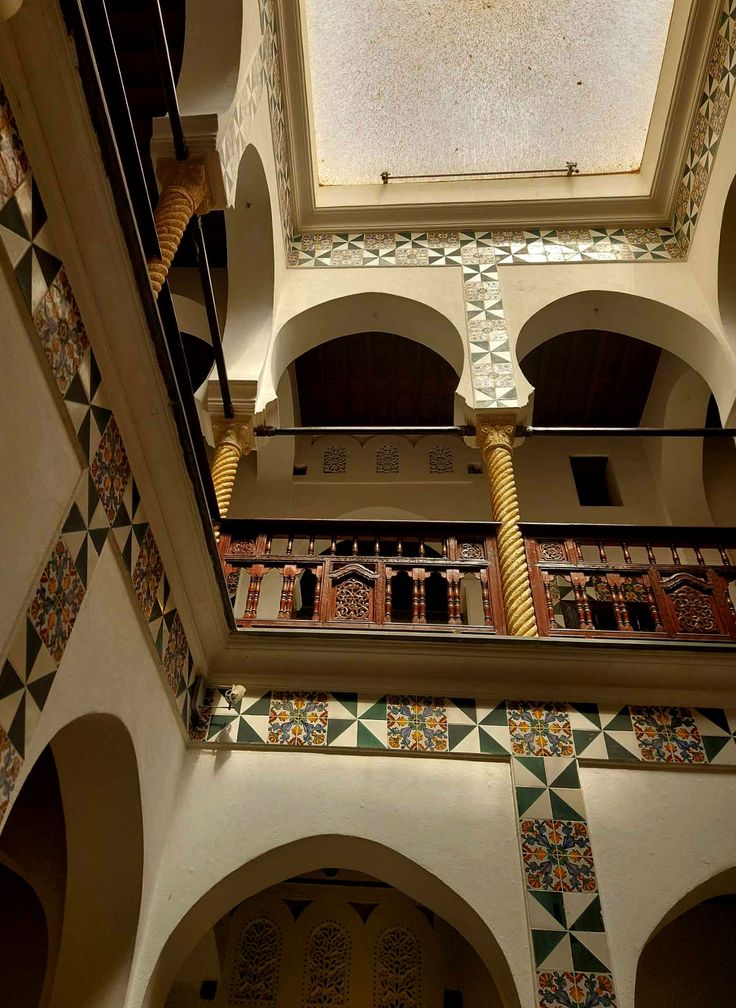
The houses are built around a central courtyard that brings in light and air. You won't usually be invited into a private home, but if a door stands open you may see the tiled courtyard and galleries inside; look, don't enter. The Palais des Raïs and the restored parts of the citadel show the same plan and are open to visitors.
Museums and palaces you can enter in the Casbah
A few of the Casbah's grand houses are open as museums, and they are the best way to see the courtyard plan from the inside. Most are national museums, which charge around 200 DZD; opening hours change, so check locally or ask your guide.
- Dar Mustapha Pacha, built in 1798 and 1799 by the future dey Mustapha Pacha, now houses the National Museum of Illumination, Miniature and Calligraphy. The entrance hall and main courtyard, with their carved columns and tiles, are the reason to go.
- Dar Khedaoudj el Amia, in the lower Casbah, was built in 1570 by a naval officer, Yahia Raïs. Since 1987 it has been the National Museum of Popular Arts and Traditions, with costumes, jewelry, carpets, pottery and copperware.
- The Palais des Raïs (Bastion 23) on the seafront shows how a wealthy household and its neighbors lived around the old port.
- The citadel (Dar es-Soltane) at the top, where the restored parts show the deys' last seat of government.
We'd go with a local guide. The UK Foreign Office (FCDO) advises using a good local guide in the Casbah and making sure your hotel or hosts know your plans. A guide also knows which lanes are open and which doorways are private homes, and can tell a Zirid wall from an Ottoman palace.
The Casbah and the war of independence
The Casbah was at the center of the Battle of Algiers in 1956 and 1957, when its lanes sheltered the independence fighters' network in the city. A memorial marks the house at 5 rue des Abdérames, where Ali La Pointe, Hassiba Ben Bouali and two companions died in October 1957, and guides often stop there. Gillo Pontecorvo's film The Battle of Algiers (1966) was shot in these same lanes, and many visitors come having seen it.
The M'Zab Valley: desert towns built around heat and water
The M'Zab Valley lies about 600 km south of Algiers on the rocky Chebka plateau, where the Sahara begins. Its five fortified towns (ksour) are El Atteuf, the oldest, plus Bounoura, Melika, Ghardaïa and Beni Isguen, all founded between about 1012 and 1350 by the Mozabites, an Amazigh Ibadi Muslim community; UNESCO listed the valley in 1982. The coastal medinas grew around ports and palaces; here the plan of every street answers to heat and scarce water.
Understanding the Ksour of Ghardaia
Ghardaïa is the largest town in the valley and the usual base, with hotels such as Hôtel M'Zab and El Djanoub. Its old ksar climbs a hill to the mosque at the top.
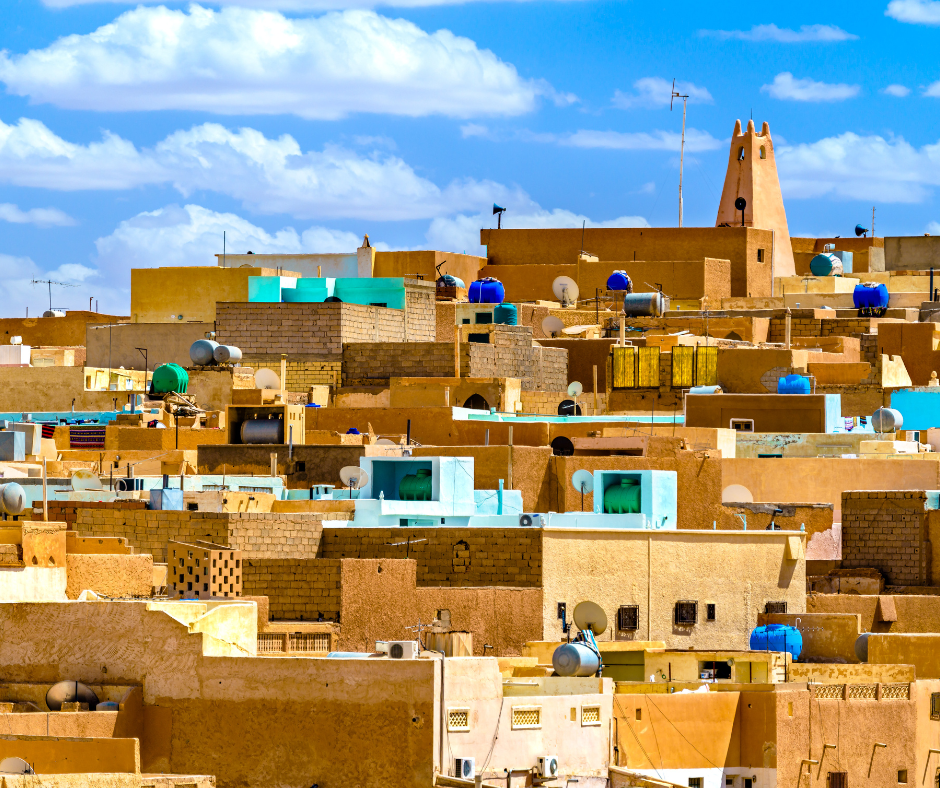
From the mosque, the houses step down the hill in rings toward the old walls, with the market square near the bottom. The plan made the town easier to defend, and it still works as one close neighborhood. Most walls are washed in white, ochre or pale blue.

The lanes are a maze of arches and covered passages. The design is about climate: high walls and narrow streets keep the lanes in shade, and small, high windows keep the heat out of the houses.
Many houses have rooftop terraces, where families traditionally slept on the hottest summer nights. Water was the other problem the builders solved. The palm groves below the towns were watered by flood-diversion dams on the wadi, channels and wells; the Beni Isguen dam, upstream of the ksar, is worth asking your guide about.
Read also: M'Zab Valley, Algeria: Travel Guide
Cultural Protocols for Visiting the M’Zab
The Mozabite community is conservative, and visitors are noticed. Men and women should cover their shoulders and legs, and in Beni Isguen women may want a light scarf as well.
Keep your voice down in the residential lanes. Many are so narrow that you pass within arm's reach of front doors, so don't linger at them or look in.
Photography is the strictest rule in the M'Zab. Don't photograph people, especially women, and ask before pointing a camera at anything close to a house.
Buildings and views are usually fine, but some areas are off-limits to cameras, so ask your guide. Beni Isguen won't let you in without one: guides are hired at the main gate, visitors must be out by sunset, non-residents can't stay the night and smoking is banned. You can walk parts of Ghardaïa's ksar on your own, though a guide will explain far more than you'd work out alone.
Tlemcen and Nedroma: The Medinas of the Far West
Tlemcen, in the far northwest near the closed Moroccan border, was the capital of the Zayyanid kingdom from the 13th century until the Ottomans took the city in the 16th.
Its old town has a strong Andalusian streak, left by Muslim and Jewish families who came over from Spain: you hear it in the city's gharnati music and see it in the Tlemcen wedding costume, which UNESCO added to its intangible heritage list in 2012. Nedroma, nearby, has the same western style on a smaller scale.
Visiting El Mechouar Palace
El Mechouar was the citadel and palace of the Zayyanid sultans from the mid-13th century. Know before you go that the palace you walk through is mostly a reconstruction: it was rebuilt on its excavated foundations in 2010 and 2011, when Tlemcen was the capital of Islamic culture, and the outer walls were restored.
The Casbah of Algiers grew house by house; the Mechouar was planned as a royal residence. Look for the carved plaster, the painted wood and the horseshoe arches, all in the Andalusian style of the period.
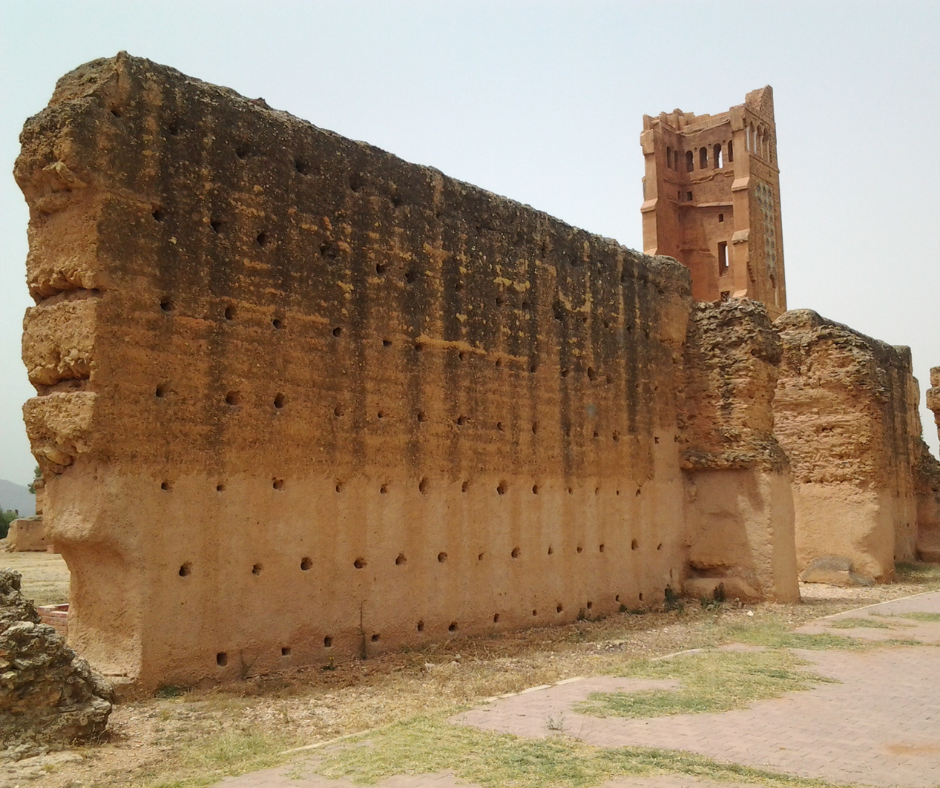
About an hour is enough for the palace. Entry was about 200 DZD in recent reports, and published opening hours disagree, so check locally before you set aside a morning. In summer, go at opening time: the courtyards have little shade.
Most of the tilework and plaster you see dates from the 2010 to 2011 rebuild. For original medieval work, walk a few minutes to the Great Mosque, founded in 1082 by the Almoravid ruler Yusuf ibn Tashfin, with its carved mihrab dome dated 1136 and a minaret added in 1236. Beside it is the Kissaria, the old market quarter, for fabric, traditional clothes, henna and sweets. All three fit into one morning.
Read also: Tlemcen, Algeria: 9 Best Things to Do
The Walled Medina of Nedroma
Nedroma is a small hill town about 60 km northwest of Tlemcen by road (under an hour), near the coast and the Moroccan border. It is much smaller than the other places in this guide, and you can walk its old town in a morning.
The medina sits on the lower slopes of Mount Fellaoucene in the Traras hills, at about 420 m. It was once ringed by walls with four gates; the northern and eastern stretches have gone, but parts of the southern and western walls still stand. Inside are quiet residential lanes, and the town is sometimes called "little Tlemcen".
Few foreign travelers come here, so the lanes are calm and you see daily life rather than souvenir shops. The trade-off is that there is little set up for visitors, with few signs and few places to eat in the old town, so we'd treat Nedroma as a day trip from Tlemcen.
The main sight is the Great Mosque, an Almoravid foundation from the time of Yusuf ibn Tashfin. Its wooden minbar, dated to about 1086 and now in Algiers, is the oldest surviving Almoravid minbar, and the minaret was added in 1348. Outside prayer times, ask at the door if visitors can go in. Afterwards, sit in a café near the mosque with a glass of mint tea and watch the town go by.
Constantine: The City of Bridges and Old Stone
In our view Constantine has the most dramatic setting of any Algerian city. It sits on a rock plateau cut off on most sides by the gorge of the Rhumel, with bridges linking it to the rest of town, and the old town, the Souika, runs down the edge of the rock toward the ravine. That old town, as much as the bridges, puts Constantine near the top of our list of the best cities to visit in Algeria.
The Souika: Constantine's Old Town Streets
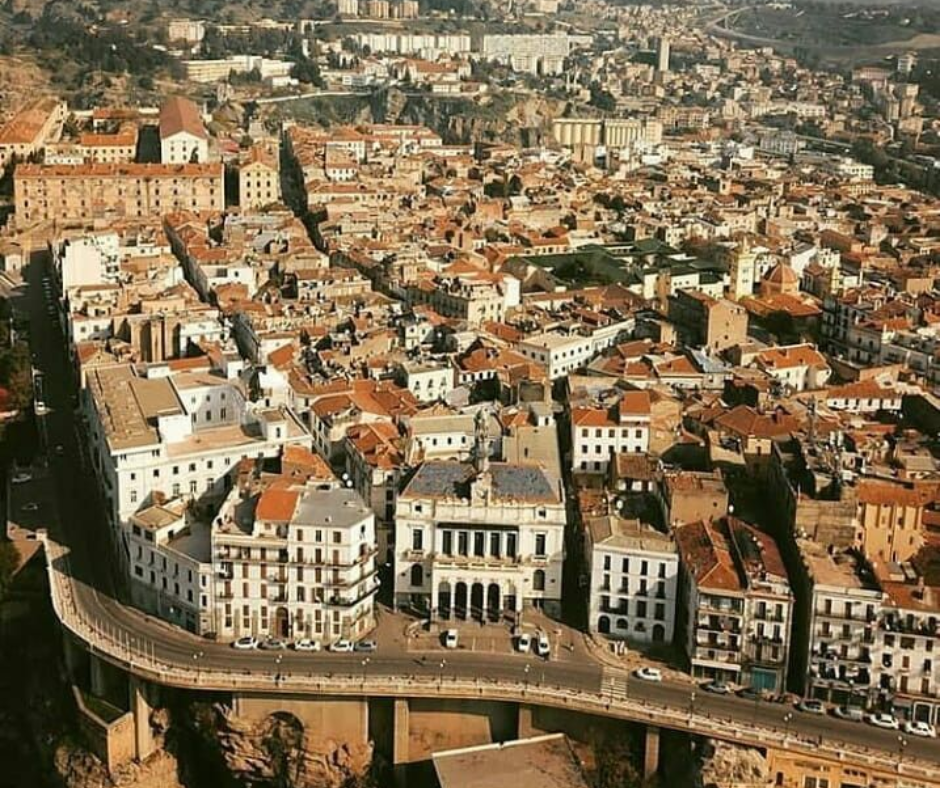
The Souika is a dense block of old houses on a steep slope, and many of its lanes are stairways.
It is in worse shape than the Casbah. Several houses have collapsed in recent years, and the restoration of the lower Souika, launched for Constantine's year as Arab Capital of Culture in 2015, stalled and was relaunched in 2022. Stick to lanes that are clearly in use, and go with a guide if you want to go deep into it.
Look for the copper workshops. Constantine is known for engraved copper and brass, above all the siniya, a large engraved tray that sits on wooden legs as a low table, and small shops in and around the Souika still sell engraved copperware. In 2023 UNESCO added the craft of metal engraving, with Algeria among the countries named, to its intangible heritage list.
If you're buying, a workshop is the best place, because you can see how the piece was made. Handmade pieces show small hammer marks and slight variations in the depth of the engraved lines; machine-pressed ones are perfectly uniform.
Read also: Best Things to Do in Constantine
The Rhumel Gorge and the Sidi M'Cid Bridge
The gorge is the reason to come. The Rhumel River has cut a deep, narrow canyon around the rock, and the old town is built right to its edge.
Then cross the Sidi M'Cid bridge on foot. It's a suspension bridge from 1912 with a 164 m span, hanging about 175 m above the river, and from the middle you see how the houses at the edge of the rock stand straight over the drop.

The bridges double as the city's viewpoints. For scale, look at the Sidi Rached viaduct, finished in 1912: 447 m long, with 27 stone arches. The Palace of Ahmed Bey, built between 1825 and 1835 for the last bey of Constantine, is the other sight to fit into a day here.
For a view from above, the city's cable car crosses the gorge; it reopened in April 2025.
Practical Tips for Exploring Algeria's Medinas
Each medina has its own habits, but the practical questions are the same everywhere: cash, getting around, finding your way and where to eat.
Managing Money and Haggling
Bring cash in small dinar notes: shops, snack stalls and cafés in the old towns rarely take foreign cards, and the ATMs, out in the modern centers, pay only the official rate of roughly 150 DZD per euro (autumn 2026). Most people change with a trusted contact on the informal market instead, at roughly 275, which is technically outside the exchange-control rules but works openly; if you declared over EUR 1,000 on arrival, keep a bank receipt for part of it to show customs.
Haggling is normal in the souks, less so for food. Ask the price, offer a little less and settle somewhere in between. Keep it friendly.
If the price doesn't come down far enough, thank the seller and walk away. Sometimes you'll be called back with a better offer, and sometimes not.
Getting Around
Ride-hailing apps make the cities easier. Yassir, the Algerian market leader, works in Algiers, Oran and other big cities, and Heetch is another option; Uber does not operate in Algeria. Most rides are paid in cash and some apps need a local number, so buy a SIM (Mobilis, Djezzy or Ooredoo, registered with your passport) at the airport.
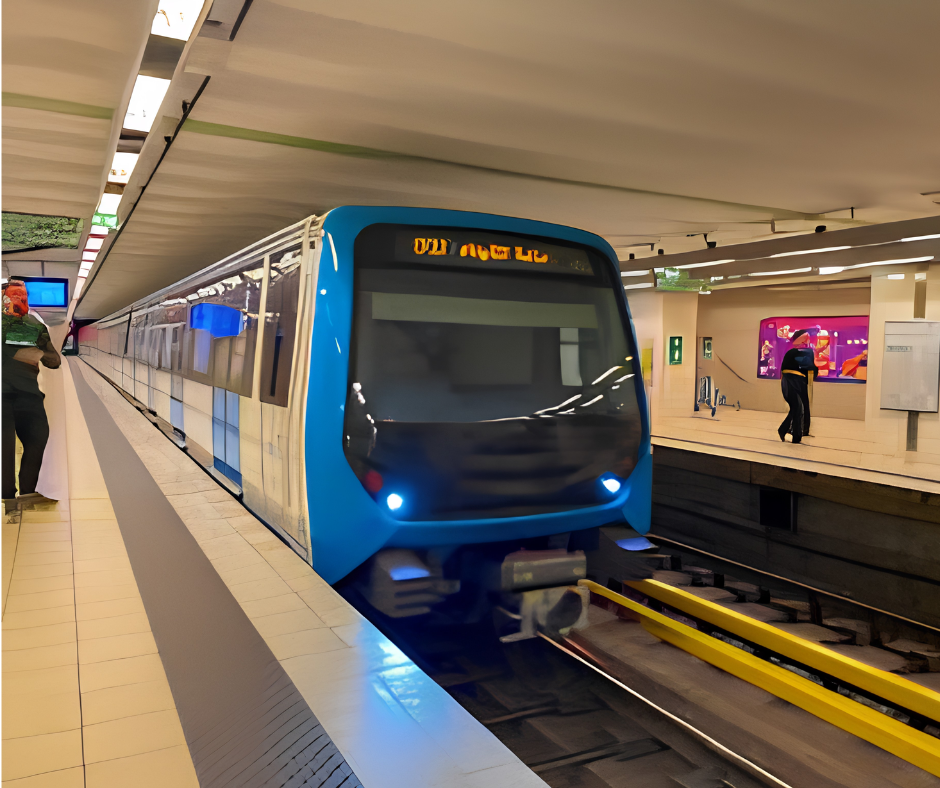
The app shows the fare and route before you get in, which saves haggling over taxi fares. In smaller towns, or with a street taxi, agree the price before you set off. In Algiers, the metro (50 DZD a ride) is the cheap way to the Casbah: the line ends at Place des Martyrs.
Inside the medinas, don't rely on your phone alone. Map apps lose the thread in narrow, multi-level lanes full of dead ends, so download an offline map before you go and keep track of landmarks.
When you enter the medina, pick a permanent feature (a large mosque, a unique doorway, or a specific town gate) and use that as your anchor. If you ever feel lost, return to your anchor point and restart your route from there.
Food and Refreshment Stops
Street food is part of any medina walk. Look for mhadjeb (also called mahjouba): thin semolina crêpes folded into a square around a filling of tomato, onion and chili, cooked on a griddle.
They're cheap and filling. Maakouda, fried potato patties with garlic and parsley, are sold at snack counters all over the country, and in the lower Casbah you'll find bourek, thin dioul pastry rolled around spiced minced meat.
For a break, sit in a café. Nobody expects you to order a meal; a coffee or a glass of mint tea buys you a seat for as long as you like. Traditional cafés in the old towns are mostly male spaces, so women may feel more comfortable in a pastry shop or tea room.
Mint tea is usually served hot and sweet. In a pastry shop, pair it with baklawa or another almond pastry.
What people usually ask us about Algeria's medinas
What is the medina of Algiers called?
The Casbah. Strictly, a casbah is the citadel at the top of a medina, but in Algiers the name spread to the whole old town, from the citadel down to Place des Martyrs by the sea. Locals also call the city El Djazaïr, which is where the name Algiers comes from.
What is the difference between a casbah and a medina?
A medina is the old walled town; a casbah (qasba) is the citadel that protected it, usually on the highest ground. Algiers is the exception, where the whole medina took the name.
Is the Casbah of Algiers safe to visit without a guide?
You can walk the lower streets around Place des Martyrs on your own. For the upper lanes we'd take a local guide, as the UK Foreign Office also suggests: the lanes are a maze, some are closed for repairs, and a guide knows which houses are open and which doorways are private homes.
How long do you need to visit the Casbah of Algiers?
Half a day covers a walk from the citadel down to the sea with a guide. Give it a full day if you want to go inside Dar Mustapha Pacha, Dar Khedaoudj el Amia and the Palais des Raïs. Start early: the stairs are hard work in the afternoon heat.
Where is the medina in Constantine?
On the rock in the center of the city, running down toward the Rhumel gorge, a short walk from the Sidi M'Cid and Sidi Rached bridges.
If you only have time for two, we'd pick the Casbah for its history and the M'Zab for a desert town plan quite unlike the coastal medinas; add Constantine if you're heading east and Tlemcen with Nedroma if you're heading west. Spring (March to May) and autumn are the best seasons for walking all of them, and the M'Zab is very hot in summer. We can put you in touch with local guides in each of these towns and link them into one custom itinerary.


