


The quickest way to Algeria from Europe is a direct flight: Algiers, Oran and Constantine are two to three hours from most of western Europe, and fares usually run about $100 to $400 depending on the season. The alternative is a ferry from Marseille, Sète or Spain. It takes 9 to 26 hours, runs mostly in summer and makes sense mainly if you're bringing a car.
Either way, you need a visa before you leave, so sort that out first and book the crossing after, or on a fare you can change.
Flights, ferries and the visa
Fly if you can: direct flights reach Algiers (Houari Boumediene), Oran (Ahmed Ben Bella) and Constantine (Mohamed Boudiaf) in two to three hours, for about $100 to $400, with July, August and the Eids the priciest weeks. Ferries from France and Spain run mostly in summer and take 9 to 26 hours, and a foot passenger pays roughly EUR 150 to 250 one way from Marseille to Algiers.
Overland, Tunisia is the only way in (the Tunis to Annaba train runs three times a week), because the Morocco border has been closed since 1994. Whatever the route, get the visa from an Algerian consulate first: there's no e-visa, and the visa on arrival is only for organized tours that include the southern wilayas.
Planning Your Route and Arrival City
Why Your Entry Point Matters
Distances are big even in the north: Algiers to Oran, the two largest cities, takes about 4.5 to 5 hours on the fastest train, and the country as a whole is the largest in Africa. Fly into the city closest to where your trip starts.
Houari Boumediene Airport in Algiers has the most flights from Europe and the most domestic connections, so it is the usual choice if you are heading for the Sahara. Air Algérie and Domestic Airlines fly on to Djanet and Tamanrasset, and in the Saharan season (roughly October to May) Air Algérie has run direct Paris CDG to Djanet flights; check whether they are on sale for your dates.
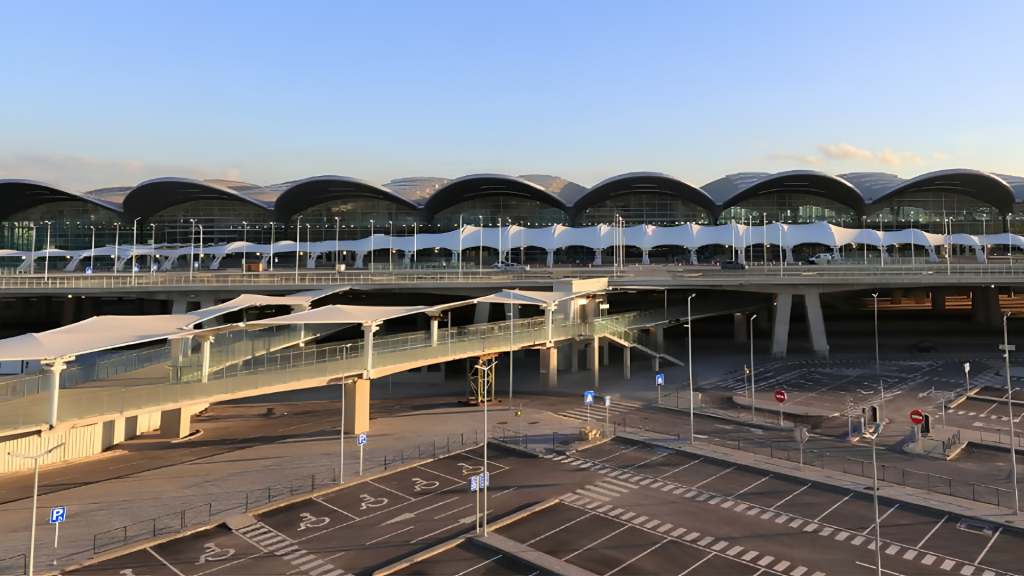
If your trip is in the west, around Oran's Santa Cruz fort and the old city of Tlemcen, land at Ahmed Ben Bella Airport in Oran and skip the long train ride from Algiers.
For the east, with the Roman sites of Djémila and Timgad and the gorge bridges of Constantine, look for flights into Mohamed Boudiaf International Airport in Constantine. Air France and Air Algérie both fly there from Paris.
Already in Tunisia? You can cross by land. The Tunis to Annaba train runs three times a week, takes about nine and a half hours and resumed on 15 September 2026 after summer track work. We cover the train and road routes for traveling from Tunisia to Algeria separately.
Choosing Between Flights and Ferries
For most people, flying wins on time and usually on price. The ferry earns its place when you're bringing a vehicle, or more gear than an airline will carry cheaply.
A morning flight from Paris lands in Algiers around lunchtime: about two and a quarter hours in the air, and Algeria is an hour behind Paris in summer and level with it in winter.
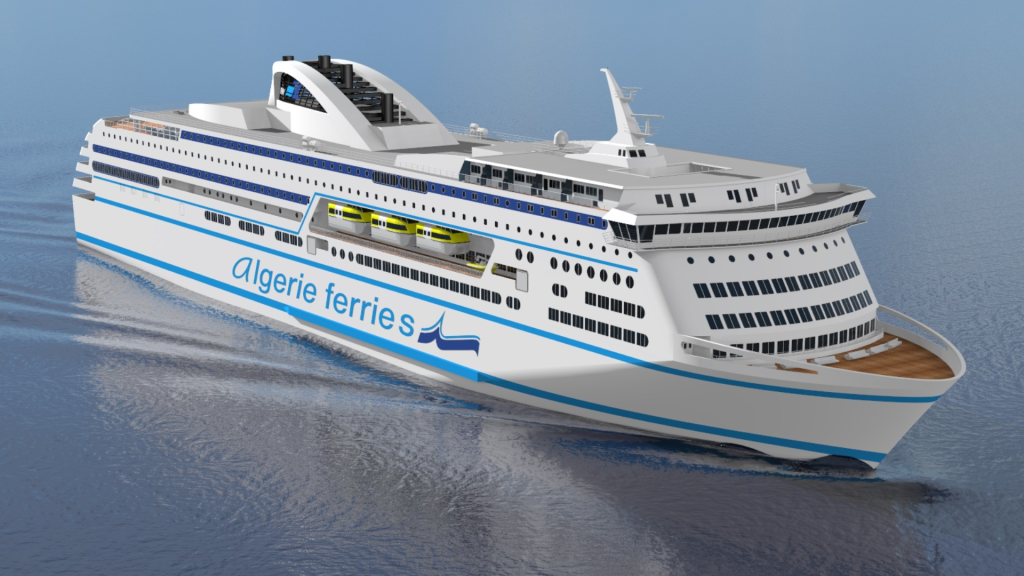
The ferry's real advantage is your own car, motorbike or camper van. The land border with Morocco has been closed since 1994, so a vehicle from Europe arrives by sea, either directly or via Tunisia.
It takes much longer. Marseille to Algiers is about 20 to 22 hours with Corsica Linea and 22 to 26 hours with Algérie Ferries, and a foot passenger pays roughly EUR 150 to 250 one way in 2026, more with a cabin or a car. In July and August the boats fill up with Algerian families from France and Spain heading home for the holidays, so book early.
Flying in and still want a car? Our Algeria car rental guide explains what to expect when renting locally.
Visas and Paperwork Before You Book
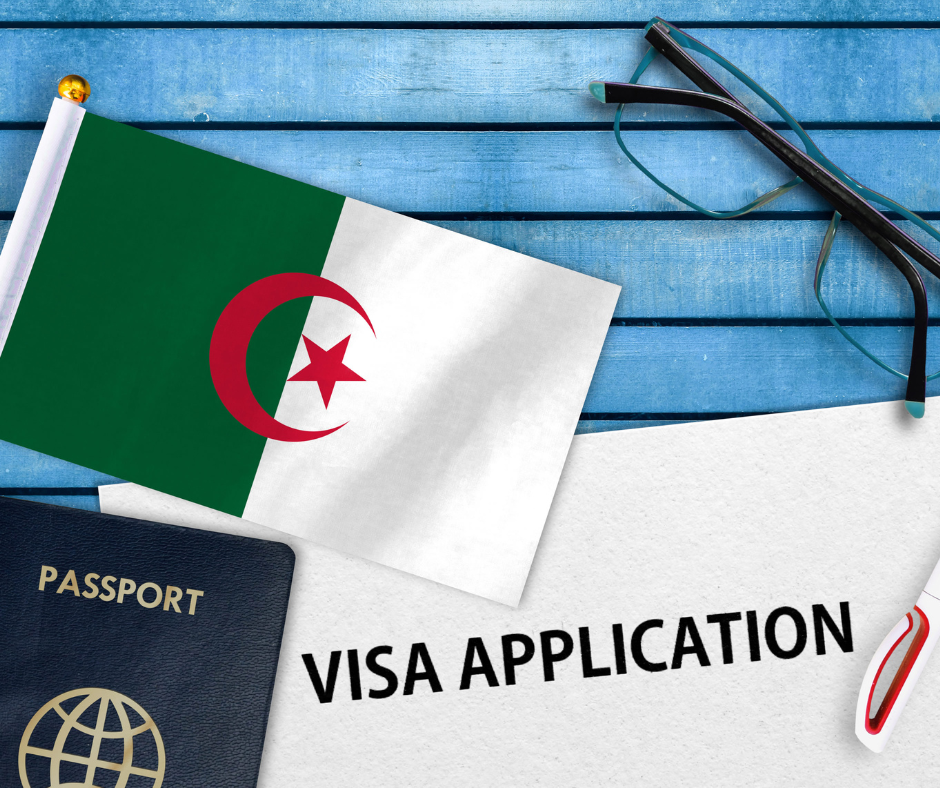
British travelers, like most other Europeans, have to apply to an Algerian consulate for a visa ahead of departure, since there is no e-visa (October 2026). Visa on arrival exists only for organized tours that include the southern wilayas, booked through an approved Algerian agency.
Apply at the Algerian consulate that covers your country of residence. London is a typical case: GBP 85, and about 10 working days if you apply in person or 15 or more by post, with longer waits in summer and around Ramadan and Eid. You need proof of where you will stay (a hotel booking, a host's certified certificat d'hébergement or an Algerian agency's invitation), so book refundable rooms and hold off on non-refundable tickets until the visa arrives.
Carry copies of the same papers in your hand luggage: hotel bookings or your agency's invitation and itinerary, plus your return or onward ticket.
Border officers sometimes ask where you're staying and for how long, and showing a booking is quicker than explaining.
Direct Flight Connections Between Europe and Algeria
Main Airlines and Departure Cities
Air Algérie has the biggest network. Its winter 2026-27 program links Algeria with ten French cities, including Paris, Lyon and Marseille, and it also flies from Frankfurt and from London, where it added Stansted in March 2025 and kept Heathrow.
Air France flies from Paris CDG to Algiers, Oran and Constantine, which is handy if you are connecting from North America or elsewhere in Europe. Lufthansa flies Frankfurt to Algiers and ITA Airways Rome to Algiers. Turkish Airlines connects Algiers, Oran and Constantine through Istanbul, which can suit travelers starting further east.
If you are departing from the United Kingdom, Air Algérie flies from Heathrow and Stansted and British Airways from Gatwick, so check which London airport your ticket uses.
On these full-service airlines the flight takes two to three hours, and most fares include a checked bag. The cheapest Light fares on Air France and Air Algérie leave it out, so read the fare before you pay.
Low-Cost Airlines and Fares
Low-cost flights to Algeria come mostly from France and Spain.
Transavia has the most routes: 19 for winter 2026-27, from Paris-Orly, Lyon, Marseille, Montpellier, Nantes, Toulouse and Strasbourg to six Algerian cities. Volotea flies Marseille to Algiers and Oran and Lyon to Sétif, ASL Airlines France runs about 15 routes with Lille as its main base, and Vueling flies from Barcelona to Algiers and Oran and from Alicante to Algiers.
Direct flights to Algeria by departure country
| From | Departure cities | Algerian airports | Airlines |
|---|---|---|---|
| France | Paris CDG and Orly, Lyon, Marseille, Montpellier, Nantes, Toulouse, Strasbourg, Lille and more | Algiers, Oran, Constantine, Sétif and other cities | Air Algérie, Air France, Transavia, Volotea, ASL Airlines France |
| Spain | Barcelona, Alicante | Algiers, Oran | Vueling |
| United Kingdom | London Heathrow, Stansted, Gatwick | Algiers | Air Algérie, British Airways |
| Germany | Frankfurt | Algiers | Air Algérie, Lufthansa |
| Italy | Rome | Algiers | ITA Airways |
| Via Turkey | Istanbul (connections from across Europe) | Algiers, Oran, Constantine | Turkish Airlines |
Season matters more than the day you book. Fares from Europe usually run about $100 to $400, peaking in July and August, when much of the Algerian diaspora flies home, and around the Eid holidays. Low-cost promotions do appear, and flying midweek can shave a little more off.
In 2027, Eid al-Fitr is expected around 9 or 10 March and Eid al-Adha around 16 or 17 May (the exact dates depend on the moon). If your dates are flexible, avoid flying out in the days just before either.
Baggage Rules on European Carriers
On a low-cost ticket, the bags are often where the real cost sits.
The cheapest Transavia and Vueling fares include only a small bag that fits under the seat, and staff check sizes at the gate. A larger cabin bag or a checked suitcase costs extra.
If you are bringing hiking boots or desert camping gear, add a checked bag when you book online. Adding it at the airport costs more.
Air Algérie's economy fares to Europe usually include one 23 kg checked bag (its Light fares don't), so once you are traveling with a suitcase, a slightly higher Air Algérie fare can work out cheaper.
Traveling by Ferry Across the Mediterranean
Ferry Routes From France and Spain
Ferries to Algeria leave from France and Spain; we found no sailings from Italy for 2026. Most run in summer only (Algérie Ferries' 2026 season was 15 June to 15 September), so check the current timetable before you plan around a boat.
From France, Algérie Ferries sails from Marseille to Algiers, Oran, Béjaïa, Skikda and Annaba. Corsica Linea runs Marseille to Algiers and Béjaïa, plus Sète to Béjaïa and Skikda, and GNV has one sailing a week from Sète to Algiers and from Sète to Béjaïa.
From Spain, Baleària sails from Barcelona to Algiers and Oran, and from Valencia to Algiers, Oran and Mostaganem. Since September 2026 it has also run Almería to Oran and Almería to Ghazaouet, routes it took over from Trasmediterránea. Algérie Ferries sails from Alicante to Algiers, and the private Algerian line Nouris Elbahr ran Alicante and Marseille sailings from mid-June to October 2026.
The Spanish crossings are shorter: about 9 to 11 hours from Almería and around 14 to 15 hours from Barcelona or Valencia. From Marseille it is a full night and most of a day, about 20 to 26 hours to Algiers depending on the operator and about 22 hours to Béjaïa.
Ferry routes compared
| Route | Operators | Crossing time | Season and frequency (2026) |
|---|---|---|---|
| Marseille to Algiers | Corsica Linea, Algérie Ferries | About 20 to 22 hours (Corsica Linea), 22 to 26 hours (Algérie Ferries) | Corsica Linea three a week in summer |
| Marseille to Béjaïa | Corsica Linea, Algérie Ferries | About 22 hours | Summer |
| Marseille to Oran, Skikda, Annaba | Algérie Ferries | Check the timetable | Summer season, 15 June to 15 September |
| Sète to Béjaïa and Skikda | Corsica Linea; GNV (Béjaïa) | Check the timetable | GNV weekly |
| Sète to Algiers | GNV | Check the timetable | Weekly |
| Barcelona to Algiers and Oran | Baleària | About 14 hours to Algiers | Check the timetable |
| Valencia to Algiers, Oran and Mostaganem | Baleària | About 14 to 15 hours to Mostaganem | Check the timetable |
| Almería to Oran and Ghazaouet | Baleària | About 9 to 11 hours | Since September 2026 |
| Alicante to Algiers | Algérie Ferries; Nouris Elbahr | Check the timetable | Nouris Elbahr mid-June to October 2026 |
Cabins, Seats and Sleep on Board
On a crossing of 20 hours or more, the choice is a reserved reclining seat or a cabin.
On the long routes from France we'd book a cabin. You get a proper bed and a door that locks, and you can wash and change before you land.
The seat lounges get crowded and noisy, especially in July and August, and few people sleep well there.
Pack a small overnight bag with toiletries, seasickness tablets and some snacks. Onboard cafeterias tend to be pricey with a short menu, and you can't go back to the car deck for anything you forgot.
Taking a Vehicle: Boarding and Port Paperwork
Most Europeans who choose the ferry do it to bring their own car, motorbike or camper van.
With a vehicle, be at the port early. Corsica Linea asks you to arrive three hours before departure with a car and two hours on foot, and your booking confirmation gives the exact time for your sailing.
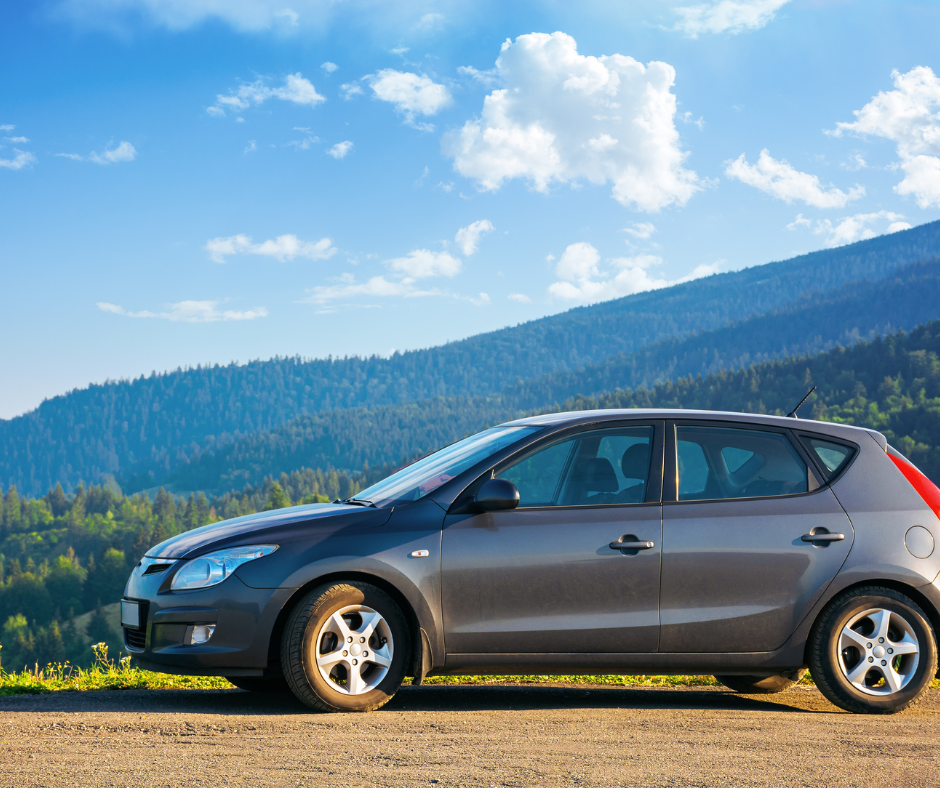
On board, park where the crew directs you, put the handbrake on and leave the car deck.
The car decks stay closed during the crossing, so take your passport, medicines, chargers and anything else you need up to the passenger decks before you lock the car.
At the Algerian port, customs issues a temporary import permit for the vehicle, valid for up to 90 days, and you buy Algerian car insurance there too. Bring the registration papers and an International Driving Permit in the 1949 Geneva format.
Without flying: train to Marseille, then the ferry
You can reach Algeria from most of western Europe without a plane. From London, the Eurostar takes you to Paris, and high-speed trains run from Paris to Marseille in a little over three hours. Plan to arrive in Marseille the day before your sailing: foot passengers need to be at the port about two hours before departure with Corsica Linea, and trains can be late.
From Spain, a train to Barcelona, Valencia or Almería puts you on the shorter crossings to Oran, Mostaganem or Algiers. The other no-fly option is through Tunisia: the Tunis to Annaba train runs three times a week and takes about nine and a half hours. In both cases the visa rules are the same as for flying in.
Arriving at Algerian Airports and Ports
Passport Control and Landing Formalities
Have your passport with its visa ready. You may also be handed a short police information form to fill in, so keep a pen in your pocket.
Officers are formal. Queues can be slow when several international flights land together or a full ferry unloads hundreds of passengers at once.
Currency Declaration and Getting Initial Cash
The Algerian dinar isn't convertible, so you can't buy it before you travel, and visitors may not bring dinars in or take them out. Bring euros in cash. Our Algeria guide explains the official and informal exchange rates, how to change on the informal market through someone you trust, and the EUR 1,000 declaration and receipts rule.
Algerian customs requires everyone to declare foreign currency worth more than EUR 1,000, on entry and on exit. Do it online before the flight through the customs ALCES system, or on a paper form at the border, and take the red channel to get it stamped.
That figure comes from Algerian customs itself. Hold on to the stamped form, since a non-resident who declared more than EUR 1,000 can be asked on departure for bank or exchange receipts proving part of it was changed officially.
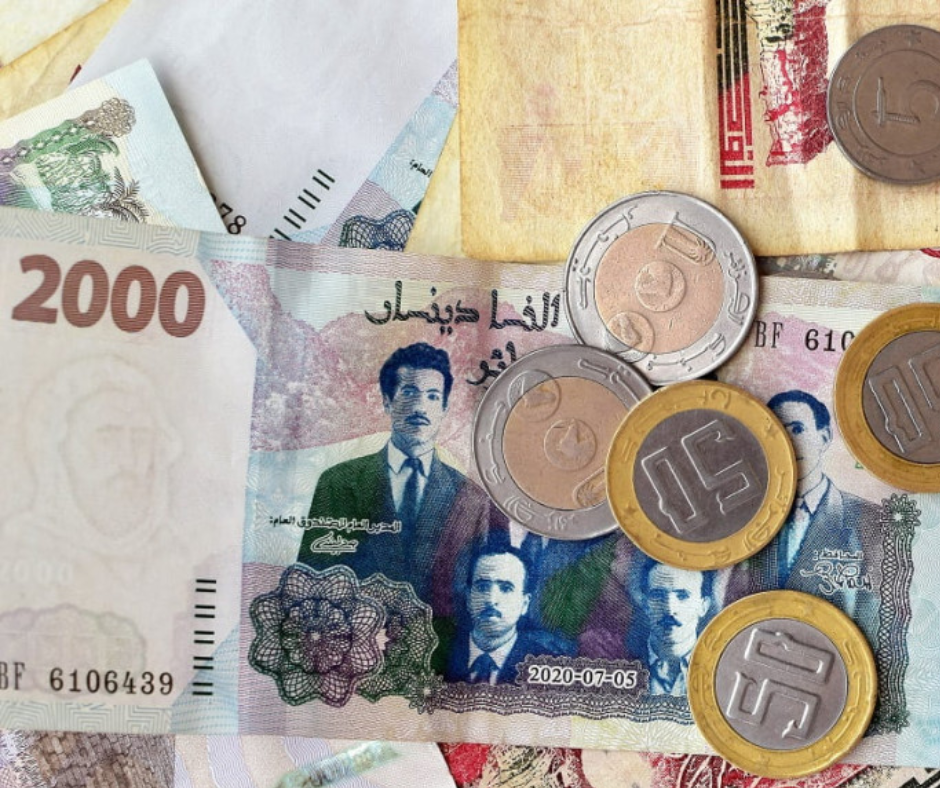
Cards and ATMs pay the official rate, about 150 DZD to the euro in autumn 2026, against about 275 on the informal market. Even so, the bank counters at Algiers airport mainly serve Algerian residents, so an ATM in arrivals is the simplest way to get your first dinars.
You'll need dinars straight away for the taxi or bus, a local SIM card (bring your passport to register it) and small tips.
Break big notes in shops when you can, because taxi drivers rarely have change for them.
Arranging Airport or Port Transfers
From Algiers airport there are three ways into town.
At Houari Boumediene Airport in Algiers, yellow taxis wait outside arrivals; agree the total fare before you load your bags. The SNTF train to Agha takes about 20 to 25 minutes for 80 DZD, and ETUSA bus 100 runs to Place des Martyrs for 50 DZD.
Expect to pay 1,500 to 2,500 DZD for a taxi into central Algiers (autumn 2026): EUR 5.50 to 9 if you paid with cash changed informally, EUR 10 to 17 at the official rate. From there, the metro, trains and shared taxis take over, as explained in our Algeria public transport guide.
Driving, trains and the cheapest way over
Can you drive from Europe to Algeria?
Yes, but only with a car ferry or through Tunisia. The land border with Morocco has been closed since 1994, so the usual route is a ferry from Marseille, Sète or a Spanish port with your car on board. At the Algerian port, customs issues a temporary import permit valid for up to 90 days, and you buy local insurance.
What is the cheapest way to get to Algeria from Europe?
Usually a low-cost flight from France outside July, August and the Eids. Compare the total with bags included, since low-cost fares add them as extras. The ferry only works out cheaper when you are bringing a car and splitting the cost.
Can you take a train from Europe to Algeria?
Not directly: no rail line crosses the Mediterranean. You can take the train to Marseille or a Spanish port and continue by ferry, or travel to Tunis and take the Tunis to Annaba train, which runs three times a week and takes about nine and a half hours.
Prefer to have all of this arranged? Share your trip idea with us and we'll have a driver waiting for you at arrivals in Algiers, Oran or Constantine, handle the transfers on your route and help with the visa, including the agency invitation and itinerary letter the consulate asks for.


