
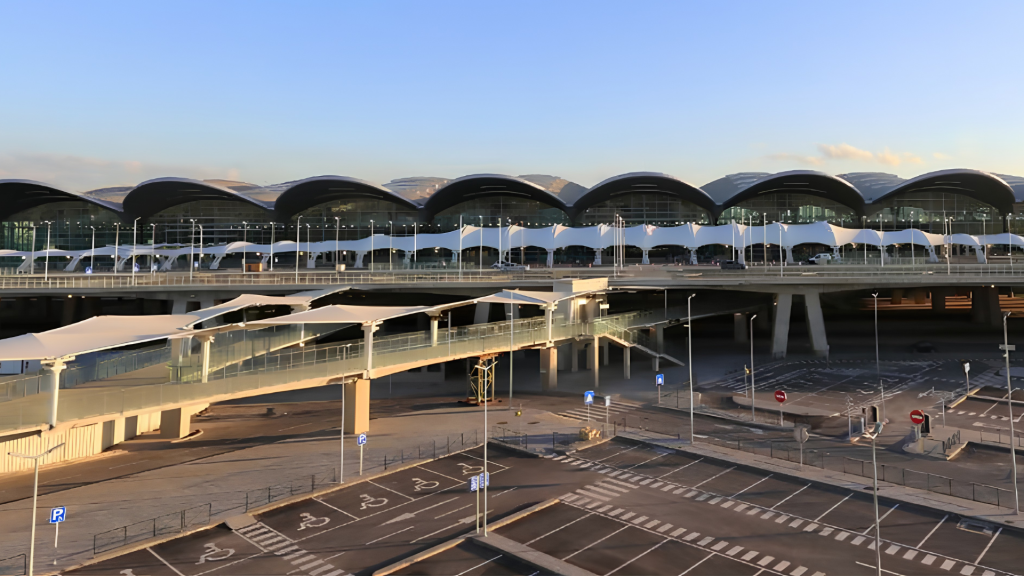

Getting from Algiers airport into the city is cheap and fairly simple in daytime. The airport train reaches Agha station in central Algiers in about 20 minutes for 80 DZD, and ETUSA bus 100 runs to Place des Martyrs for 50 DZD. The last train leaves the airport at 22:25 and the last buses around midnight, so a late landing means a taxi or a Yassir ride.
Before you get that far, three things catch people out at Houari Boumediene: you need a visa issued before you fly (the visa on arrival only covers organized Sahara tours), you must declare foreign cash worth more than EUR 1,000, and a local SIM needs your passport. All of it is covered below, in the order you meet it.
Houari Boumediene is Algeria's main international airport and Air Algérie's hub. It handled more than 10 million passengers in 2025, and the operator expects more in 2026.
It sits in Dar El Beida, about 17 km east-southeast of central Algiers. Alongside the international flights, it is where domestic routes leave for Oran, Constantine and the Sahara towns of Djanet and Tamanrasset.
Visas, safety and money get the full treatment in our Algeria travel guide, so this page sticks to the airport itself: which terminal you'll use, what happens at passport control and customs, and how to get into town.

Codes, terminals and the ride into town
- Name and codes: Houari Boumediene Airport (Aéroport d'Alger Houari Boumediene); IATA ALG, ICAO DAAG.
- Terminals: Terminal 4 (the West Terminal) for most international flights; Terminal 1 for domestic flights and, from September 2026, the low-cost airlines.
- Airlines: Air Algérie runs its hub here, and Domestic Airlines flies the domestic routes alongside it.
- Into town: the train to Agha (about 20 minutes, 80 DZD), bus 100 (50 DZD) or a taxi (about 1,500 to 2,500 DZD).
- Run by: SGSIA (Société de gestion des services et infrastructures aéroportuaires). The airport handled more than 10 million passengers in 2025.
Terminal Layout and Arrival Process
The International and Domestic Terminals
Most international flights use Terminal 4, also called the West Terminal (Terminal Ouest). It opened on 29 April 2019 with 84 check-in counters and jet bridges, and it was built to add about 10 million passengers a year of capacity.
Check the terminal on your booking, though. In April 2026 the airport operator SGSIA announced that the low-cost airlines (Transavia, Volotea, Vueling, ASL Airlines, Pegasus and AJet) would move from Terminal 4 to Terminal 1 from September 2026, to free space for Air Algérie's long-haul flights.
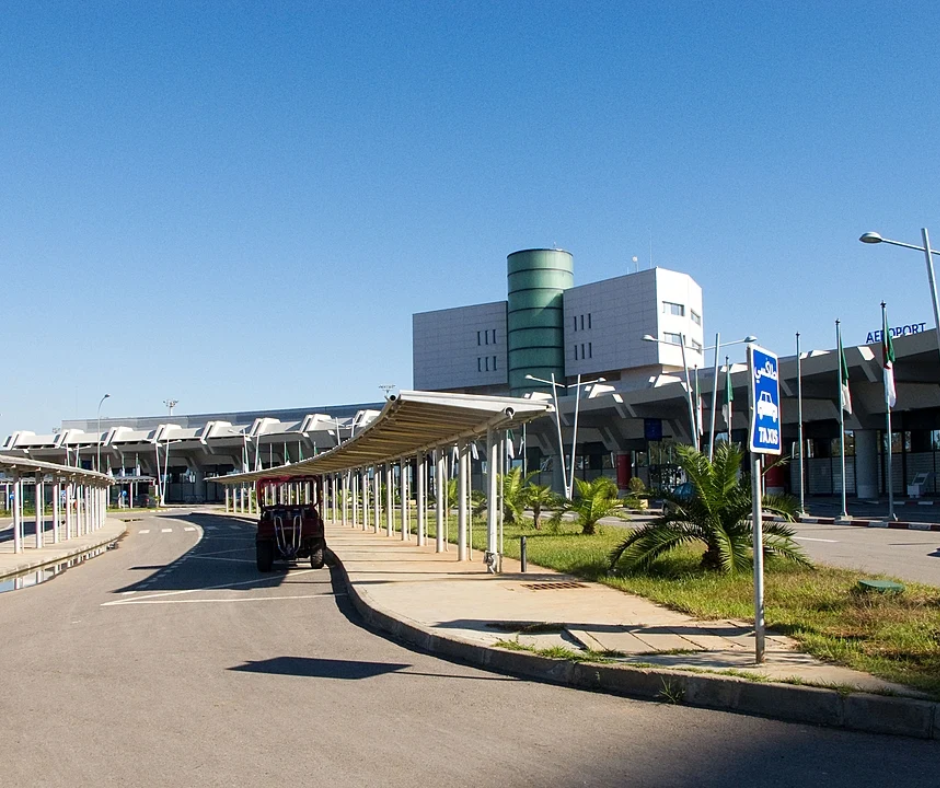
Terminal 1 handles domestic flights, plus Umrah pilgrimage flights. Two airlines share the domestic routes: Air Algérie itself and Domestic Airlines, the subsidiary that took over from Tassili Airlines in August 2025.
If you land on an international flight and connect to Djanet or Constantine, you clear immigration and customs in Terminal 4, collect your bags, then check in again at Terminal 1. The same goes if you plan to fly on to Algeria's top cities like Oran, Constantine or Annaba instead of covering those distances by road. We'd leave at least three hours between the two flights.
The terminals are close together: the airport train station sits between Terminals 1 and 2, about five minutes on foot from Terminal 4. A free shuttle bus also links the terminals, but Algerian press reports have criticized its poor signage and irregular timing, so with light bags it is often simpler to walk.
Step by Step from Touchdown to the Exit Gates
At Terminal 4, follow the overhead signs from the gate to arrivals and passport control.
The walk to the immigration hall is short. Have your passport with its visa in hand, plus the address of your first night's accommodation and, if you're on a tour, your agency's invitation letter.
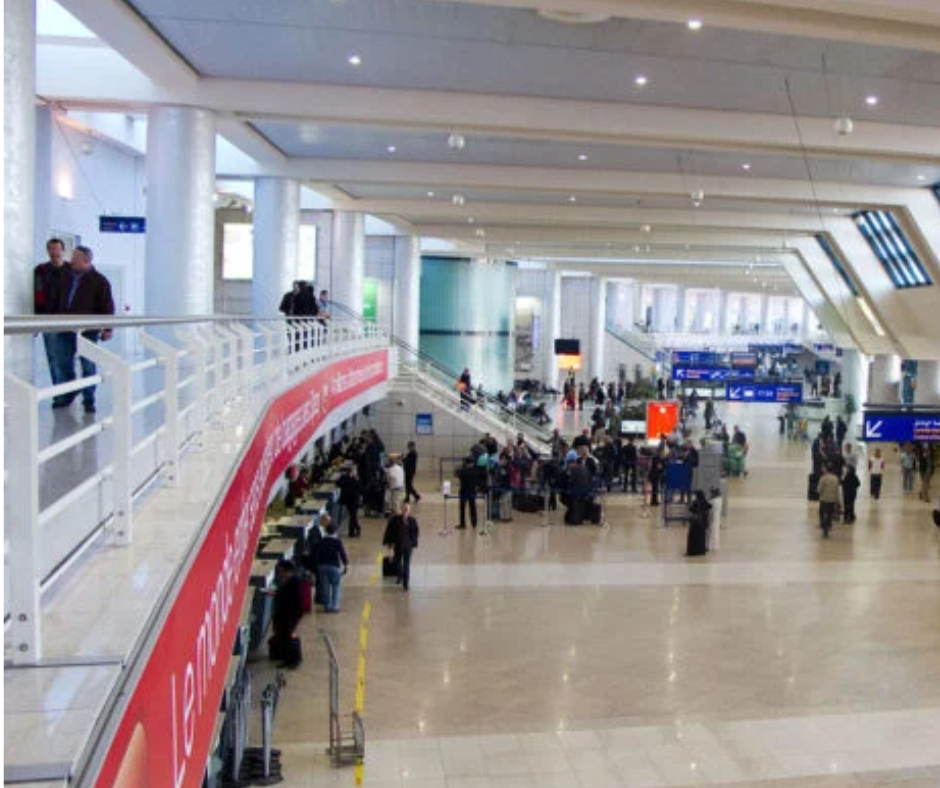
After immigration comes baggage claim, where screens above the carousels show the flight numbers.
Free luggage trolleys are available in the hall.
With your bags, you pass the final customs check and come out into the public arrivals hall, where you'll find the taxi rank, the SIM card kiosks, cash machines and bank counters.
Immigration, Customs and Currency Rules
Passport Control and Entry Formalities
Officers at passport control are formal, and the process is quick when your documents are ready.
Unless you are on an organized Sahara tour, you need a visa from an Algerian consulate before you fly, and that applies to most visitors, UK, EU, US and Canadian citizens included. The Sahara visa on arrival is the one exception, and only for tours booked through an approved Algerian travel agency whose itinerary takes in the southern wilayas.
The agency files the request beforehand, you board with a QR-code authorization, and you pay the fee (commonly reported at about EUR 110) when you land. You can't use it for an independent trip.
Expect a few questions: why you're visiting, how long you're staying and where you'll sleep the first night.
Officers work in Arabic and French, and how much English they speak varies. A printed hotel booking or your agency's invitation letter answers most questions without much talking.
Once your visa is checked, the officer stamps your passport with the entry date and hands it back, and you move on to baggage claim.
Declaring Foreign Currency and Using the Red Channel
Algeria's currency rules matter most on the way out, but you set yourself up for that check when you land.
Algerian customs requires everyone, resident or not, to declare foreign currency worth more than EUR 1,000 on entry and on exit. That includes cash and bearer instruments such as traveler's checks, and jewelry over 150 g must be declared too. There is no limit on how much you bring in, as long as you declare it.
The EUR 1,000 threshold comes from Algerian customs' own 2026 guidance, and it is the one officers apply at the airport.
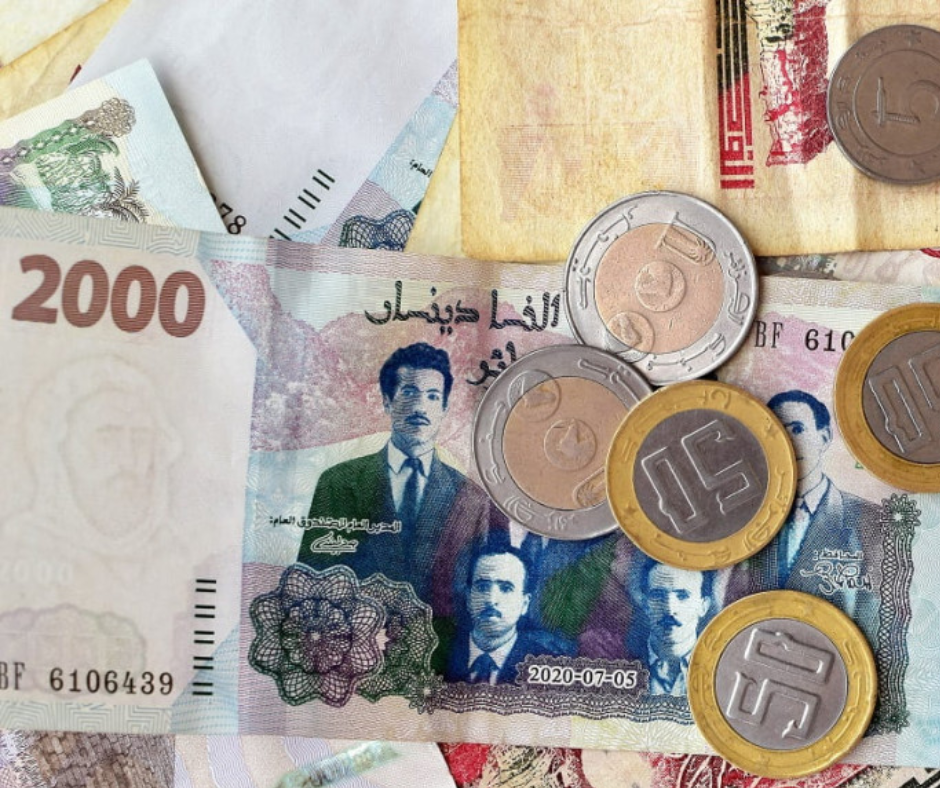
There are two ways to declare: online before you fly, through the customs ALCES system (alces.douane.gov.dz), or on a paper form at the border, before you reach the customs exit. List each currency and amount, go through the red channel and have a customs officer stamp the declaration. It is valid for one stay only.
Keep the stamped declaration with your passport for the whole trip. When you leave, a non-resident who declared more than EUR 1,000 can be asked to show it together with bank or exchange receipts proving part of that money was changed officially.
Don't plan on taking dinars home: only residents may bring Algerian banknotes in or out, up to 10,000 DZD. Spend what's left before you fly, because changing dinars back needs exchange receipts and is rarely practical.
The airport bank counters mainly serve residents, so draw your taxi money from an ATM in the arrivals hall.
Airport Connectivity: Getting Online and Staying Connected
Setting Up Mobile Data and Local SIM Cards
You'll want data from the moment you land, mainly for maps, ride-hailing apps and messages to your driver or host.
The public arrivals hall of Terminal 4 has kiosks for the three mobile operators: Mobilis, Djezzy and Ooredoo. If the Sahara is on your route, go for Mobilis: it is state-owned and covers the south better than the other two.
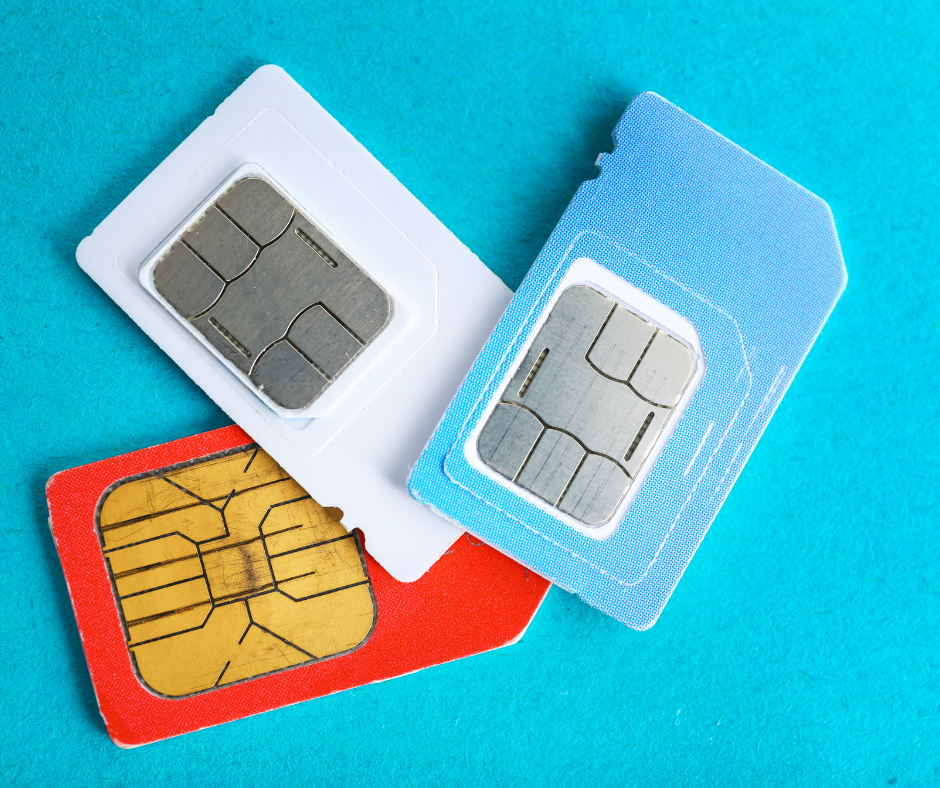
To purchase a local SIM card, you must present your physical passport for legal registration and activation.
Expect to pay roughly 1,000 to 1,500 DZD for a 30-day prepaid bundle of 10 to 50 GB (2026 offers, which change often).
Kiosk staff usually insert the card and check that data works before you leave the counter. Coverage is good in the cities but, as the FCDO notes, patchy or absent in remote parts of the south.
Accessing Airport Wireless Internet Networks
The airport has free Wi-Fi in its terminals, which helps if you need to message someone before you buy a SIM.
Select the airport network and a login page opens in your browser; you register with a few details and you are online.
Older guides mention scratch-card vouchers sold in the cafés. Those date from when the airport Wi-Fi was paid, and you should not need one now.
Use it to download offline maps, confirm your hotel check-in time or message your driver.
The connection slows down when several flights land at once, so an eSIM bought before the trip is a good backup. Check that the plan actually lists Algeria before you pay.
Ground Transportation and Leaving the Airport
Here are the ways into the city side by side (fares as of autumn 2026).
| How | First and last departures | Time on board | Cost | Where it leaves you |
|---|---|---|---|---|
| SNTF train | 05:20 to 22:25, roughly hourly | About 20 minutes | 80 DZD (children 40) | Bab Ezzouar, El Harrach, Agha |
| ETUSA bus 100 | 06:00 to midnight, about hourly | 45 to 60 minutes | 50 DZD | Caroubier, Tafourah (Grande Poste), Place des Martyrs |
| ETUSA bus 178 | 06:00 to midnight, about hourly | Depends on traffic | 50 DZD | Caroubier (Kharouba) intercity bus station |
| ETUSA bus 39 | About hourly; check times locally | Depends on traffic | 50 DZD | Place Maurice Audin |
| Official taxi | 24 hours | Depends on traffic | About 1,500 to 2,500 DZD | Your door |
| Yassir, Heetch, TemTem | 24 hours | Depends on traffic | About 2,000 DZD to the center (Yassir) | Your door |
Converted, the train fare is about EUR 0.30 if you changed cash informally (about 275 DZD to the euro) or EUR 0.53 at the official rate (about 150). A 2,000 DZD taxi ride comes to about EUR 7 or EUR 13 on the same two rates.
Taking the SNTF Train and Public ETUSA Buses
Public transport from Houari Boumediene is cheap. The catch is the hours, which suit daytime arrivals.
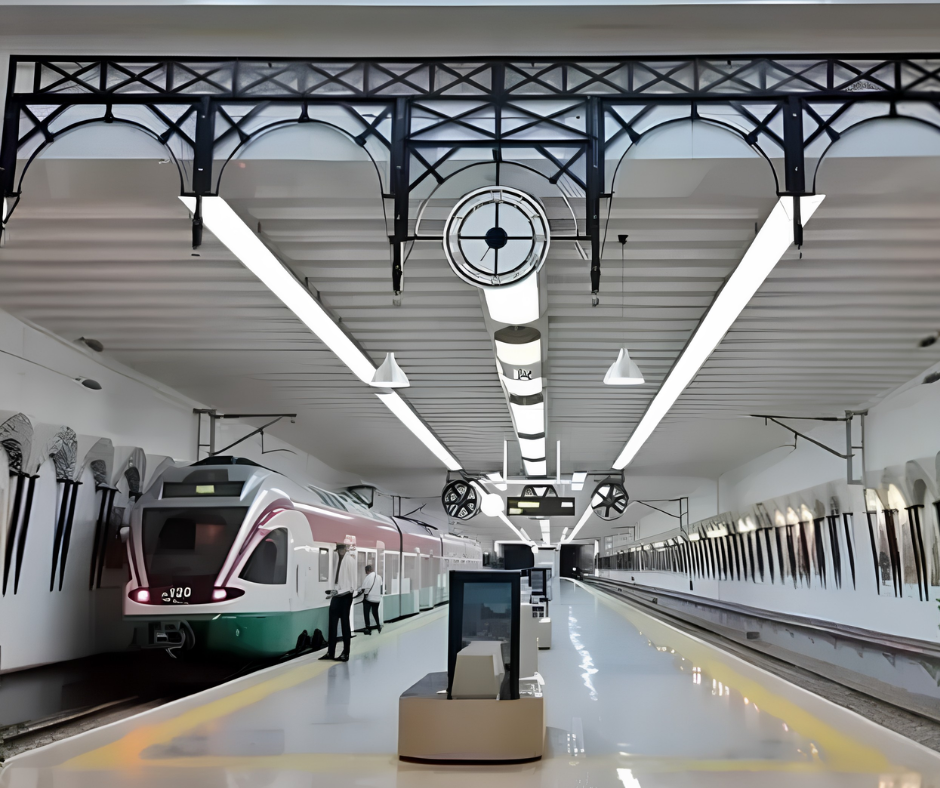
The SNTF airport station sits between Terminals 1 and 2, about five minutes on foot from Terminal 4. Trains run to Agha station in central Algiers, stopping at Bab Ezzouar and El Harrach. On the timetable in force since 19 September 2026 there are 13 to 14 trains a day each way, roughly hourly, with the first leaving the airport at 05:20 and the last at 22:25.
The ride takes about 20 minutes, skips the road traffic and costs 80 DZD per adult (40 DZD for children).
The other cheap option is the bus, run by ETUSA, the Algiers public transport company.
Three lines serve the airport, each about once an hour. Lines 100 and 178 run from 06:00 to midnight from the airport, and from 05:00 to 23:00 from town.
Line 100 goes to Place des Martyrs via Caroubier and Tafourah (Grande Poste), line 39 goes to Place Maurice Audin, and line 178 goes to the Caroubier (Kharouba) intercity bus station. Line 100 is the one to take if you are heading straight for the Casbah, which is where most things to do in Algiers begin.
A single ticket costs 50 DZD, and ETUSA's NAVIGUI travel card is valid on these lines. Have small change ready.
Don't count on the metro yet. The Line 1 extension from El Harrach to the airport (9.5 km, 9 stations) was first promised for early 2026, then for the second half of the year, and it had not opened in any report we found by early October 2026. Once you leave the capital, SNTF trains and intercity buses take over, and it helps to know how public transport works in Algeria before you rely on them.
Official Yellow Taxis and Ride-Hailing Apps
Official airport taxis work around the clock, and after the last train and bus they are your main option. The taxi ranks are just outside the arrivals exits of each terminal.
Ignore drivers who approach you inside the terminal and walk straight to the official queue.
Expect roughly 1,500 to 2,500 DZD to central Algiers (autumn 2026), paid in cash. Agree the price before your bags go in the trunk.
Ride-hailing apps are often easier. Yassir (the Algerian market leader), Heetch and TemTem all work from the airport over the Wi-Fi or your new SIM. Uber does not operate in Algeria, and some apps need a local phone number, one more reason to buy the SIM before you leave arrivals.
The app shows the fare before you book (a Yassir ride into the center is about 2,000 DZD), and most drivers expect cash. Agree a pickup point with your driver, usually the short-term parking area in front of the terminal exit.
If you would rather pick up a rental car, it pays to read up on driving in Algeria first, since traffic around the capital is intense and police checkpoints are frequent once you leave the city. From the airport, most people starting an Algeria road trip head west toward Oran or east toward Constantine.
Flying out of Algiers: departures checklist
Leaving takes longer than arriving, mostly because of the checks. Run through this list before you set off for the airport.
- Check your terminal. Most international flights leave from Terminal 4. Domestic flights, and the low-cost airlines from September 2026, use Terminal 1.
- Arrive three hours ahead for international flights. Air Algérie opens check-in four hours before departure and closes it 90 minutes before international flights (45 minutes for domestic ones). After that it accepts no one.
- Bring your currency paperwork. Customs may want to see the stamped declaration and your bank exchange receipts if you declared more than EUR 1,000 when you arrived. Non-residents can take out up to EUR 7,500 in cash per calendar year.
- Spend your dinars. Visitors may not take Algerian banknotes out, so use them up in the cafés before security.
- Pack with the checks in mind. Keep proof of authenticity for anything that looks antique, or it may be confiscated. Don't pack flints or potsherds picked up in the Sahara.
- Use the drop-off lane. Terminal 4 has a short drop-off zone where taxis and private cars can let you out without paying for parking. Overstaying it brings a fine.
Parking at Algiers airport
New parking prices took effect on 27 September 2026. Car parks P5 and P6, for shorter stays, cost 2,000 DZD per 24 hours, up from 500 DZD. Long-stay car park P7 costs 1,500 DZD per 24 hours, so ten days cost 15,000 DZD. That is roughly 7 and 5.50 euros a day at the informal rate, or 13 and 10 euros at the official rate.
Hotels at the airport
For a late landing or a dawn flight, the Hyatt Regency Algiers Airport is the closest option: it is linked to the airport by a walkway and has about 320 rooms. The Bab Ezzouar business district, one stop away on the airport train, has several more large hotels. Cheaper rooms are in central Algiers, 20 minutes away by train in the daytime.
Lounge Access and Terminal Dining Options
The Premium Passenger Lounges
The lounges are only worth knowing about if you face a long wait before departure or fly business class.
Air Algérie's Salon Première Classe is airside in Terminal 4, just to the left of the security checkpoint in international departures. It is for Air Algérie business-class passengers and eligible frequent flyers.
Expect seating, drinks, snacks and charging points rather than anything lavish.
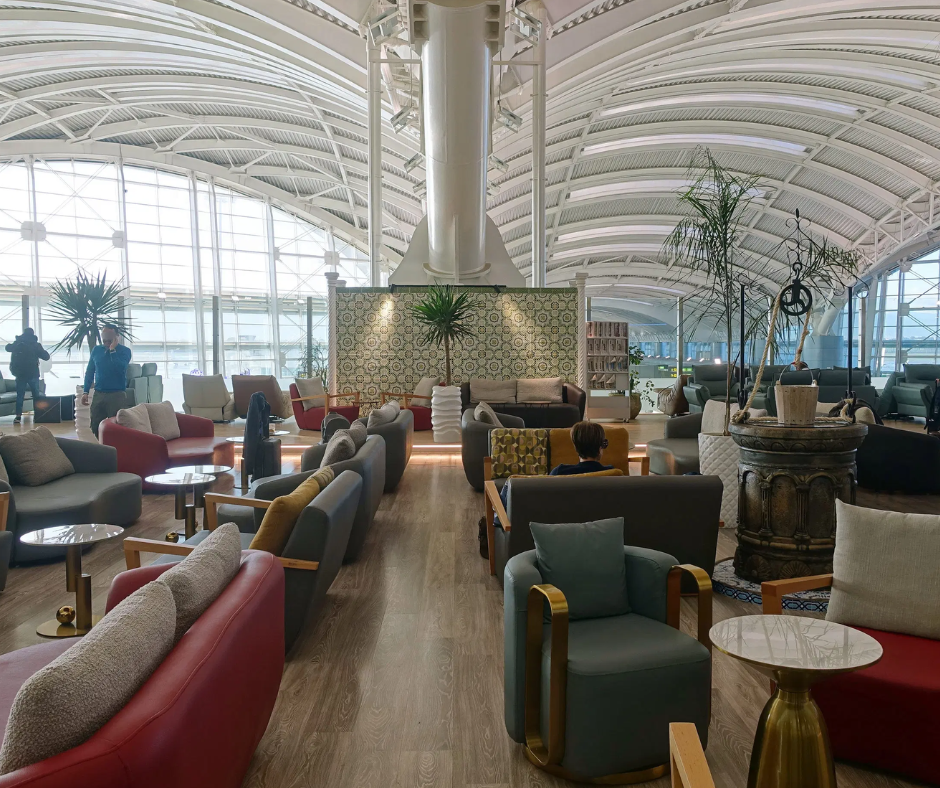
Business-class passengers on other airlines use the SGSIA Première Classe lounge, run by the airport operator, to the right of the same checkpoint.
There is also an SGSIA lounge airside in Terminal 1 for domestic departures, where travelers report being able to pay at the door.
We couldn't confirm current walk-in prices for either SGSIA lounge, so ask at the desk. If you rely on a lounge membership card, check before you travel whether it covers Algiers.
Cafeterias and Dining Options
Eating at Houari Boumediene means quick bites: sandwiches, pastries and coffee from cafés and snack counters.
Terminal 4 has cafés in the public arrivals hall and in the airside departures area, including a Segafredo.
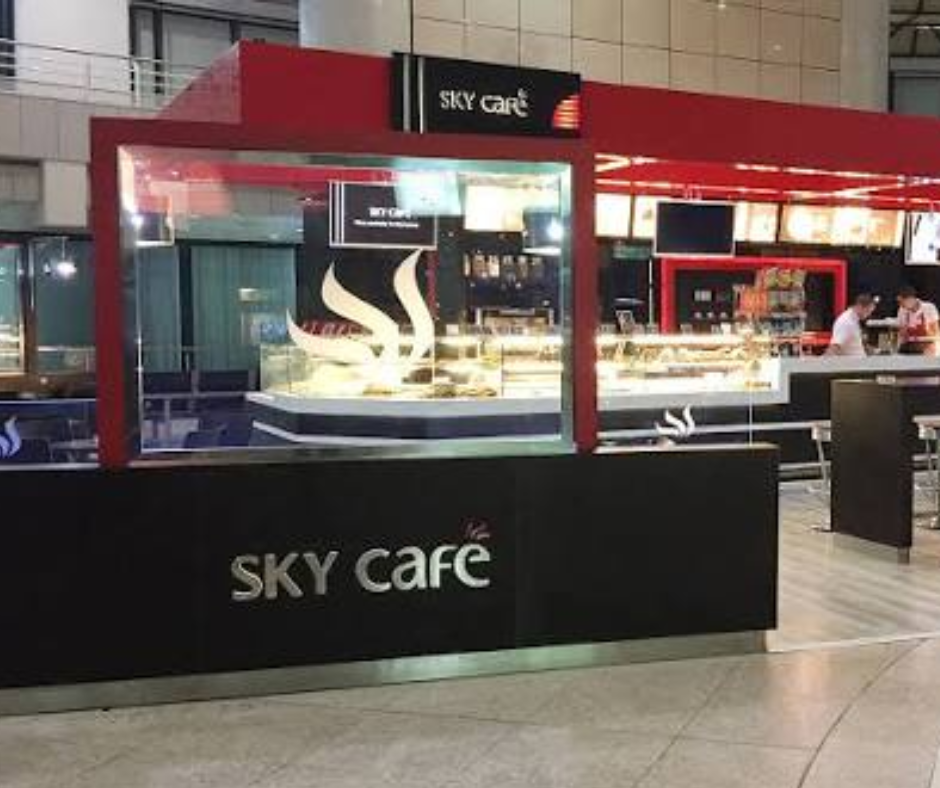
They are fine for bottled water and a sandwich before you head into the city or while you wait for a connection.
If you land hungry and it is daytime, we'd wait and eat in town. A simple restaurant serves a plate of couscous or a bowl of chorba for about 600 to 1,200 DZD (2026), and Agha is only 20 minutes away by train.
A few quick answers
What is the airport code for Algiers?
The IATA code for Algiers Houari Boumediene Airport is ALG, the one you see on tickets and luggage tags. The ICAO code, used by pilots and air traffic control, is DAAG. The airport is in Dar El Beida, about 17 km east-southeast of central Algiers.
How much is a taxi from Algiers airport to the city?
Plan on 1,500 to 2,500 DZD in cash to central Algiers (autumn 2026), agreed before your bags go in the trunk, or about 2,000 DZD on Yassir, which shows the fare up front.
Is there a train from Algiers airport?
Yes, roughly hourly from about 05:20 to 22:25: 20 minutes and 80 DZD to Agha in central Algiers, with stops at Bab Ezzouar and El Harrach. The station is between Terminals 1 and 2, about five minutes on foot from Terminal 4.
How early should I arrive at Algiers airport for an international flight?
Plan on three hours. Air Algérie opens check-in four hours before departure and closes it 90 minutes before international flights, with no exceptions. Customs, the currency check, passport control and security can each mean a queue, especially in summer and around the Eid holidays.
If your flight lands after about 10 pm, install Yassir before you fly or ask us to arrange an airport pickup, with a driver waiting for you at arrivals. Otherwise, make sure your card works in an Algerian ATM or that your host can meet you with some dinars, because taxi and app drivers both want cash.


