
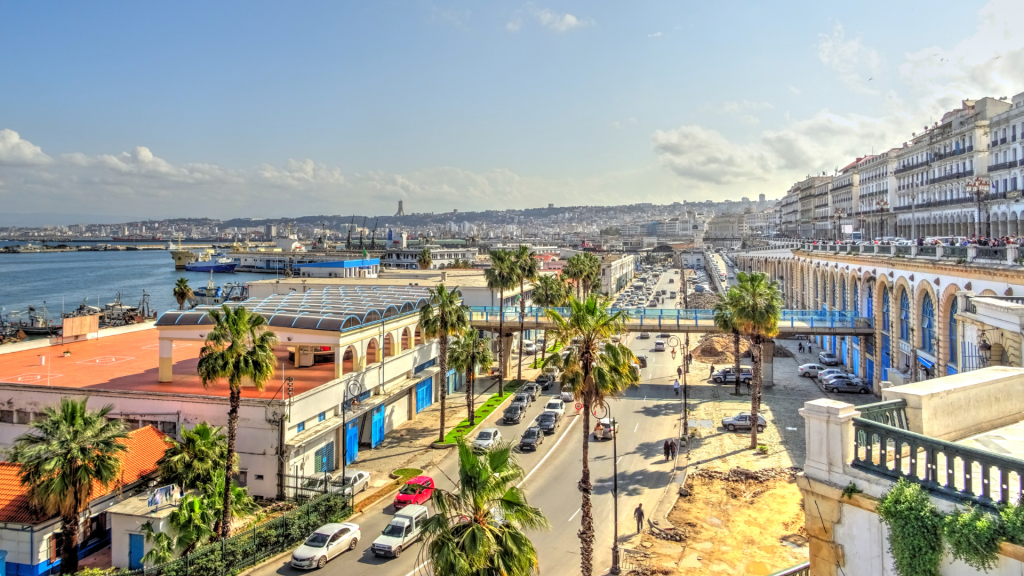

Two things need sorting before you fly. Most visitors need a visa from an Algerian consulate, and with no e-visa that means applying four to six weeks ahead. You also need euros or dollars in cash: away from the big hotels cards are of little use, and where they do work they charge the official rate, about 80% dearer than cash changed informally. Seasons, transport, dress, SIM cards and safety are easier to handle once you land, and we cover them below with prices and rules checked in October 2026.
If you are still choosing where to go, start with our Algeria travel guide and come back here for the practical details.
Sorting out the visa
British, EU, US and Canadian citizens, like most nationalities, have to get a tourist visa in advance from the Algerian embassy or consulate responsible for where they live.
The only way around it is an organized tour through an approved Algerian travel agency whose itinerary takes in the southern Sahara wilayas: the agency requests a visa on arrival for you, you pay the fee when you land (most often reported at about EUR 110, depending on nationality), and you get up to 30 days. Tunisian, Libyan, Malian, Mauritanian and Malaysian passport holders, among a few others, need no visa at all.
The lead time matters. In person, London quotes about 10 working days; by post, at least 15. Add around five more in summer, over New Year and around Ramadan and Eid, and bear in mind that any consulate can ask for an extra document.
The Visa Application Process
Your passport must be valid for at least six months from the day you arrive and have two blank pages.
Consulates usually ask for the application form (London wants two copies), two passport photos and one proof of where you will stay: a hotel booking, an invitation and itinerary from a licensed Algerian travel agency, or a certificat d'hébergement from your host, certified by their town hall.
Many also want a return flight reservation, and many require travel insurance for most nationalities, often with at least EUR 30,000 of medical cover naming Algeria. In London the fee is GBP 85 (2026), paid in cash or by postal order; British and Irish citizens do not need insurance, and the consulate asks for proof of employment or income, as set out in our guide to the Algeria visa for UK citizens.
Documents to Carry on Arrival
Once you have the visa, keep paper and digital copies of your bookings and supporting documents. Border police may ask where you are staying and when you leave. You also need your passport to check into every hotel, board domestic flights, buy a SIM card and get through roadside checkpoints, so keep it on you. If you carry more than EUR 1,000 in foreign currency, declare it on arrival.
Seasons: the north and the Sahara
At about 2.38 million km², Algeria is Africa's largest country, and more than four-fifths of it is Sahara, so the right month depends on where you are going. The Mediterranean north has hot summers and mild, wet winters. The desert is dangerously hot in summer and pleasant by day in winter.
Northern Cities and the Coastline
For Algiers, Oran and Constantine, go in spring (March to May) or autumn (September to November). Days are warm enough for walking the Casbah of Algiers or the Roman ruins at Tipaza, without the summer heat.
July and August are hot and humid on the coast, and the beaches fill with Algerian families on holiday. Winter brings rain to the coast and snow to the higher mountains, such as the Djurdjura in Kabylie.
When to Go to the Sahara Desert
For the dunes around Taghit and Timimoun or the rock art and sandstone "forests" of Tassili n'Ajjer, aim for late October to March, or April at a push. Days are comfortable for walking and photography, but nights in December and January can drop close to freezing, so pack a warm layer. Southern trips run through an approved Algerian agency, which handles the guides, vehicles and paperwork.
Skip the deep south in summer. In July, average afternoon highs in oasis towns such as Adrar and In Salah are around 45°C, too hot for walking or trekking to be safe.
Money in Algeria's Cash-Based Economy
This is where most first-timers get caught out. Only large international hotels, airline offices and some upscale shops and restaurants take foreign cards. Taxis, cafés, markets, museums and most guesthouses want dinars in cash, and in the south almost nothing else is accepted.
Currency Exchange and Rates
The Algerian dinar (DZD) trades at two very different rates. The official one, about 150 DZD to the euro or 134 to the US dollar in autumn 2026, is what banks, ATMs and every card payment give you.
Changers on the informal market, called the "square" after Square Port Saïd in Algiers (other big cities have their own spot), paid about 275 DZD for a euro and about 237 for a dollar. Put the other way round, a euro spent by card gets you about 45% fewer dinars, so everything costs you about 80% more.
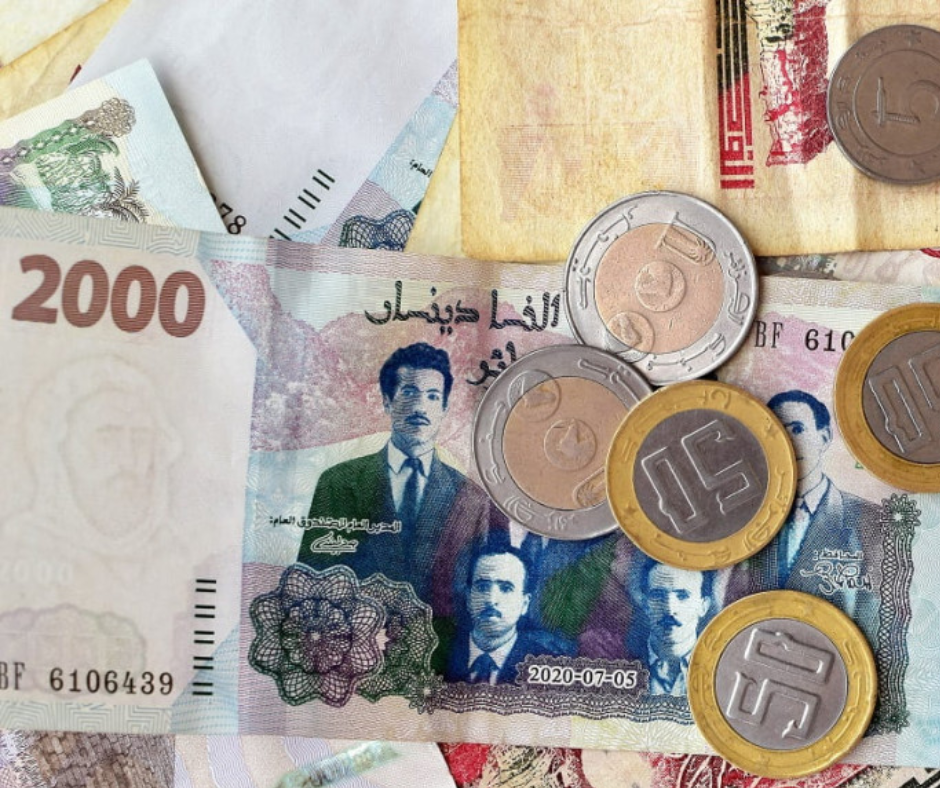
That informal market is technically outside Algeria's exchange-control law, yet it runs in the open and nearly everyone, Algerian or foreign, uses it. Leave it to your guide, host or agency, who can find you a reliable changer or arrange it for you.
Change modest sums, count every note, and never change on the street after dark. There is one catch on departure: if you declared more than 1,000 euros when you arrived, customs may want official exchange receipts on the way out, so either change some money at a bank or arrive with less than EUR 1,000. Bring clean, untorn notes, and use up your dinars before your flight home, since visitors may not take Algerian banknotes out.
Accessing Funds and Using ATMs
ATMs are easy to find in Algiers, Oran and the other big cities, and many take foreign Visa and Mastercard, though reliability varies from bank to bank. Withdrawal limits are low, and machines can run dry over the Friday and Saturday weekend and on public holidays.
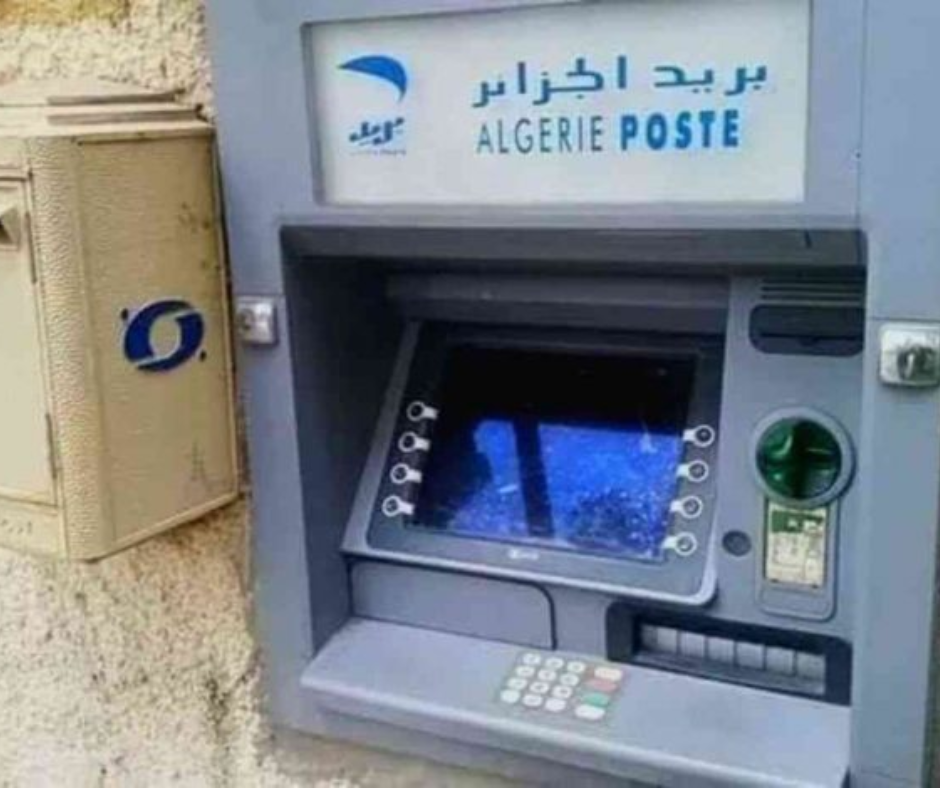
Don't count on your card in smaller towns or the southern oases, where machines are scarce. If you rely on ATMs, withdraw enough in a big city to cover the rural legs of your trip.
How much a trip costs
Here is what everyday things cost in autumn 2026, in dinars and in euros both ways (official rate about 150.5 DZD/EUR, informal about 275 DZD/EUR).
| What you're buying | Dinars | EUR by card or ATM | EUR, cash changed informally |
|---|---|---|---|
| A plate in a popular restaurant | 600 to 1,200 | 4 to 8 | 2.20 to 4.40 |
| Basic hotel or guesthouse room, one night | 4,000 to 7,000 | 27 to 47 | 15 to 25 |
| 1.5-liter bottle of water | 35 to 55 | 0.23 to 0.37 | 0.13 to 0.20 |
| One Algiers metro ride | 50 | 0.33 | 0.18 |
| Taxi from Algiers airport into town | 1,500 to 2,500 | 10 to 17 | 5.50 to 9 |
| Coradia train, Algiers to Oran, second class | 1,130 to 1,350 | 7.50 to 9 | 4.10 to 4.90 |
| SIM with 10 to 50 GB for 30 days | 1,000 to 1,500 | 6.60 to 10 | 3.60 to 5.50 |
| Ticket for a museum or Roman site | 200 to 300 | 1.30 to 2 | 0.70 to 1.10 |
Put together, a budget day (basic room, simple meals, public transport and one entry ticket) comes to about 6,000 DZD: about EUR 40 if you pay by card, EUR 22 with cash changed informally. With a better room and taxis it is closer to 12,000 DZD, roughly EUR 80 or EUR 44. Agencies price Sahara trips as packages.
Getting Around Algeria: Transport Options
Distances are huge: Algiers to Tamanrasset is about 1,900 km by road. Fly between the north and the Sahara, and use trains, buses and shared taxis within the north.
Getting to Algeria
The main international airports are Algiers (Houari Boumediene), Oran and Constantine, with direct flights from much of Europe and from Istanbul. In summer (roughly mid-June to mid-September 2026), ferries sail from Marseille and Spanish ports to Algiers, Oran, Béjaïa and other ports. Overland, you can come from Tunisia by road or on the Tunis to Annaba train, three times a week. The Morocco land border has been closed since 1994.
Flights south, trains up north
To reach the southern gateways (Djanet, Tamanrasset, Ghardaïa, Timimoun and others), fly from Algiers with Air Algérie or Domestic Airlines, its subsidiary, which took over from Tassili Airlines in 2025. Schedules change often and some flights leave at night, so book early in the Sahara season and leave a buffer after your international flight.
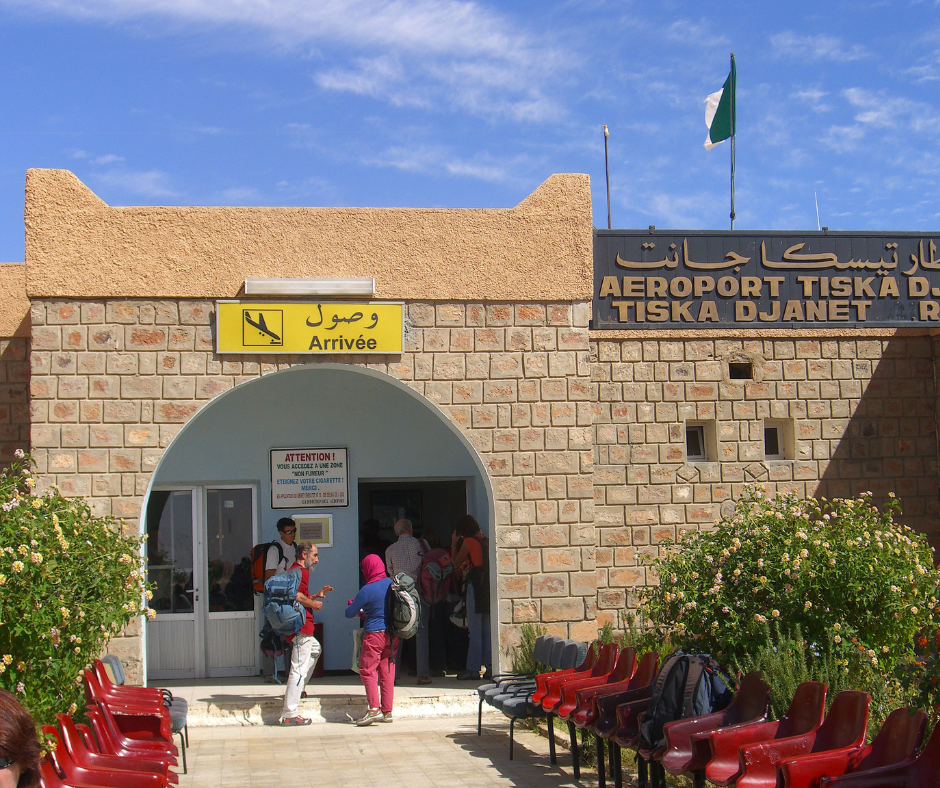
The Algiers to Tamanrasset flight takes about two and a half hours; by road it is more than 24 hours of driving, with frequent checkpoints. Up north, SNTF trains are cheap, comfortable and slow (Algeria has no high-speed rail): the Coradia express to Oran takes about 4.5 to 5 hours and often runs late, and Constantine is about 7 hours away. Into Algiers from the airport you have the train (80 DZD) or ETUSA bus 100 (50 DZD, 2026 fares); the metro does not go out there yet.
Local Transport and Rideshare Apps
In the big cities, ride-hailing apps such as Yassir, Heetch and TemTem show the fare before you ride, so there is no haggling with drivers. Uber does not operate in Algeria. Most rides are paid in cash, and some apps need a local phone number. In Algiers, a metro ticket costs 50 DZD and a tram ticket 40 DZD (2026).
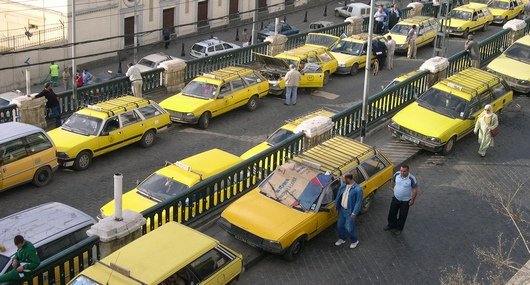
Between towns, locals use shared taxis (taxis collectifs, or inter-wilaya taxis on longer routes). They leave from taxi stations once every seat is taken, and you pay per seat. They are cheap and frequent on busy routes, but the ride can be cramped.
Etiquette and local norms
Algeria is a conservative, mostly Muslim country, and expectations are stricter in the south and in the M'Zab valley than in central Algiers or Oran. A few habits make a big difference to how you are received, and visitors who follow them usually find people quick to offer tea, directions or help.
Dress Codes for Men and Women
Dress modestly in towns and residential neighborhoods; beach resorts are more relaxed. Women do best in loose clothing that covers the shoulders and knees, and a light scarf is useful for covering your hair in mosques and keeping off the sun.
Men should skip sleeveless tops and very short shorts in city centers; trousers or knee-length shorts are the norm.
Social Graces and Public Behavior
Keep public affection to holding hands at most: anything more is frowned on and can draw police attention. In shops and markets, greet the owner ("Salam alaykum") before asking a price.
Ask before you photograph anyone, women and children above all; in the M'Zab valley, people will usually say no. Police, military or gendarmerie sites, checkpoints, ports, airports and government buildings are off limits to cameras. Don't pack a drone: the UK FCDO notes that bringing drones, binoculars or telescopes into Algeria without authorization is illegal, and customs usually confiscate drones.
Phones, SIM cards and data
You will want mobile data for maps, translation and ride-hailing apps. Hotel Wi-Fi is often slow or patchy, so most visitors buy a local SIM card on arrival.
Buying a SIM
There are three networks, Mobilis, Djezzy and Ooredoo, each with a shop at Algiers airport and outlets in town. Registration is mandatory, so bring your passport; staff can usually set up a data bundle on the spot. In 2026, 1,000 to 1,500 DZD bought 10 to 50 GB of prepaid data for 30 days, about EUR 10 or less even at the official rate. For the south, go with Mobilis, the state operator, which usually covers it best.
Practical Connectivity Tips
Download offline Google Maps for every region you plan to visit: the UK FCDO describes coverage in remote southern areas as patchy or unavailable, and the signal also drops on mountain passes. A local number is handy for calling guides and guesthouses, especially when you cannot find the door in the lanes of an old town such as the Casbah.
Health and safety
Most travelers on our trips tell us Algeria felt far calmer and more welcoming than they had been led to expect. Every route we sell is one we have tested ourselves, run by licensed Algerian agencies and their local guides, and none of our trips has had an incident.
For the deep south around Djanet or Tamanrasset, where trips run with a licensed Algerian agency and local Tuareg guides, read the official travel advice in force for your route and confirm your insurance covers it before you book. On the highways, expect routine police and gendarmerie checkpoints: slow down as you approach and have your passport ready.
General Safety and Street Smarts
Pickpockets work crowded places such as the Algiers metro and busy markets, so keep valuables in a front pocket or a zipped bag, and avoid walking alone in quiet, poorly lit streets late at night. In the cities, heavy traffic and fast driving are a bigger daily hazard than crime, so take care crossing the street.
Save the emergency numbers: police 17 or 1548, gendarmerie 1055, ambulance 1021 or 16, and fire (Civil Protection) 14. For a region-by-region view, here is our honest take on how safe Algeria is.
Health and Hydration in the Heat
The sun is strong even on cool, breezy days, and much stronger in the desert. Drink bottled water rather than tap water, wear high-SPF sunscreen and a hat, and in the Sahara plan on several liters a day. For the first few days, stick to cooked food and fruit you can peel while your stomach adjusts.
Vaccines, water and medical care
See a travel clinic a few weeks before you go. The US CDC recommends being up to date on routine vaccines (including measles and a polio booster), plus hepatitis A and typhoid for most travelers, and hepatitis B and rabies depending on your plans. A yellow fever certificate is only needed if you arrive from a country with yellow fever risk. There is no malaria: the WHO certified Algeria malaria-free in 2019.
City tap water is treated, but supply and quality vary, so most visitors drink bottled water, which costs about 35 to 55 DZD for 1.5 liters (2026). Pharmacies are easy to find in towns, and the big cities have private clinics. Take travel insurance with medical cover and evacuation for every region on your route.
Basic Language and Dining Etiquette
Arabic and Tamazight (Berber) are Algeria's official languages, and day to day most people speak Algerian Arabic, known as Darja. French is widely understood in the cities and used in business, while English is less common. A few words of Darja go a long way.
Useful Phrases for Daily Interactions
"Salam alaykum" (peace be upon you) works as hello anywhere, and "Sbah el khir" means good morning. "S'il vous plaît" and "Merci" cover most transactions, since French is widely used in shops, and "Saha" is a common, informal thanks. In a market, "Bechhal?" asks how much something costs.
Understanding Dining Customs
Sharing a meal is central to Algerian hospitality, and you may be invited to join a family for couscous or tea. When eating from a shared dish, use your right hand (or the spoon you are given) and eat from the part of the plate in front of you. In the south, Tuareg hosts traditionally pour tea in three rounds, and it is polite to stay for all three.
Meals often end with fresh fruit, and tea comes with pastries such as makroud. Ramadan is expected to start around 8 February 2027; for that month the day revolves around the fast, and eating, drinking or smoking in public in daylight is not allowed. Our guide to traveling in Algeria during Ramadan explains what changes.
Holidays, the weekend and practical facts
The weekend is Friday and Saturday. On Friday many shops close around the midday prayer, and banks and offices are shut both days. On public holidays offices and many shops close and transport fills up, especially around the two Eids, which last three days each.
- Fixed holidays: 1 January, Yennayer (Amazigh New Year) on 12 January, 1 May, Independence Day on 5 July and Revolution Day on 1 November.
- Moving holidays, expected in 2027 (confirmed by moon sighting, plus or minus a day): Ramadan starts around 8 February, Eid al-Fitr around 9 or 10 March, Eid al-Adha around 16 or 17 May, the Islamic New Year around 6 June, Ashura around 15 June and the Mawlid around 14 or 15 August.
- Plugs and power: type C and F sockets (two round pins), 230 V, 50 Hz.
- Time zone: UTC+1 all year, with no daylight saving.
- Tipping: round up in cafes, 100 to 200 DZD in casual restaurants, about 10% in upscale ones, and 100 to 200 DZD for porters.
- Emergency numbers: police 17 or 1548, gendarmerie 1055, ambulance 1021 or 16, fire 14.
- Alcohol: available from licensed shops, hotels and some restaurants; public drinking or drunkenness is illegal.
Where to stay
The big cities have international chain hotels, which charge international prices and take foreign cards, plus small budget hotels. In smaller towns, family-run guesthouses are the norm, at about 4,000 to 7,000 DZD a night for a budget room (autumn 2026). Every hotel registers your passport at check-in. Book ahead for July and August on the coast, for Christmas and New Year in the Sahara, and around the Eids.
Shots, tips, plugs and traveling alone
Do I need any shots before going? None are required for entry unless you arrive from a yellow fever country. For most travelers the CDC recommends routine vaccines plus hepatitis A and typhoid, with hepatitis B and rabies for some trips, and there is no malaria: the WHO certified Algeria malaria-free in 2019.
How much do people tip? Not much: round up in cafes, leave 100 to 200 DZD in a casual restaurant and about 10% in an upscale one, give porters and housekeeping 100 to 200 DZD, and on a Sahara trip pool 1,500 to 2,000 DZD per traveler per day for the crew.
Will my charger fit? If it is European, yes: sockets are type C and F (two round pins), 230 volts, 50 hertz. From the UK or North America, bring a plug adapter. Most phone and laptop chargers handle 230 V, so you rarely need a voltage converter.
Is it OK for a woman to travel alone? Yes. Expect curiosity, especially outside the big cities, and plan a little more. Dress modestly, use Yassir rather than street taxis in the evening, choose family-run guesthouses or central hotels, and on long buses ask for a seat next to another woman, which is a normal request. The deep south is visited with an agency anyway.
Before you commit
Algeria asks for some patience: the visa takes weeks, foreign cards are of little use, and trains run late. In return you get Roman towns such as Timgad and Djémila, on the UNESCO list since 1982 and among the best preserved in North Africa, and Sahara scenery such as the sandstone plateau of Tassili n'Ajjer. Still asking yourself is Algeria worth visiting? Our short answer is yes, and that post explains why.
With a week, we would pick either the north (Algiers, Tipaza and Constantine, or Oran and Tlemcen) or one Sahara region, not both. When you are ready to put dates on it, send us your trip idea and we will help with the route, the agency invitation letter for your visa and a driver waiting at arrivals.


