


Any lover of trekking or mountaineering has their own criteria to select their next destination. Easy visa, unique landscapes and maybe a home for unique and rare species. Tunisia checks off a few boxes. And, we believe trekking and hiking while discovering Tunisia may be the most impressive experiences to embark on.
This roundup is your best guide for trekking places and trails in Tunisia.
Ladies and Gentlemen and everyone in between, welcome to THE WORLD OF ADVENTURE!
Why Trekking in Tunisia?
One day on the trail, eight days of health
In Tunisia, we’ve been raised to staunchly believe in the sayings of our ancestors. See it as you want, but we believe when it comes to physical activity they were absolutely right. Like any physical activity, trekking is beneficial for your health, both physically and psychologically. Climbing mountains contributes to the development of your bones, the strengthening of your cardiovascular system and the improvement of your immune system.
Our bodies are the temples of our souls. That’s why our emotional balance is as important as our physical well-being. Trekking, hiking or any outdoor activity serve to strengthen your bond with nature, to go beyond your limits with it and to discover its most intimate mysteries. Ultimately, this will distract your mind, relieve the stress and calm your anxiety.
The pleasure itself is reinforced when we talk about hiking in Tunisia! With its prominent hills and breathtaking ranges, Tunisia offers a unique trekking experience.
From Boukornine Le Grand to Chaambi Le Magnifique passing by the surprising Ressass, the beautiful Korbous and the historical Zaghouan, the amateurs of Trekking in Tunisia can enjoy their passion considering this rich backbone that our country offers.
This vast natural universe decorated by the most moving peaks does not cease to surprise us with its beauty hidden between the heights.
The Must-see Circuits of Trekking in Tunisia
Indeed, Trekking in Tunisia is an unlimited delight, since the trek circuits are immense and innumerable. This is not what we say as Tunisians, but this comes out of our extensive experience in traveling locally, camping and trekking across the country.
Through this guide, we’ve rounded up a list of some of our favorites. With each site, trail or place, we will present them each with its specificities and its uniqueness.
Djebel Ressass
"Lead Mountain" in English, this limestone outcrop from the Jurassic period is located southeast of Tunis, about thirty (30km) kilometers from the Capital.

What to expect there?
This mountain has an altitude of 795m and is considered as one of the most beautiful mountainous reliefs suitable for climbing and trekking in Tunisia.
Its particularity lies in its numerous tunnels scattered all along the way to the summit.
Moreover, the circuit also offers vast horizontal zones to rest or to put its tents and to spend the night there.
Moreover, the summit of El Ressass offers a panoramic view at night on all Tunis and Hammamet. Romance in all its splendor!
In all, to reach the summit while joining trekking and walking, it takes 3 to 4 hours of walking. It is an adequate circuit for the beginners of Trekking in Tunisia.
And like most of the sites of Trekking and Hiking in Tunisia, given its location near the city of Mornag, it is possible to have a local guide among the inhabitants of the city for an even more original experience.
How to get there?
For those who are in Tunis, city center or its suburbs, this site may be the closest place to go Trekking in Tunisia.
Whether you have a car or not, it is easily accessible: It takes only 30 min to get there from Tunis by car, otherwise you can take a Collective Taxi from Carthage Avenue to Mornag or the bus n°26 to Mornag too.
Once arrived, you have to take another Collective Taxi from Mornag to the mountain. So basically, if you leave from Tunis, the way to Jebel (mountain) will take you no more than an hour drive, and your adventure will begin!

What to watch out for?
One last thing you need to know about the mountain of El Ressass. Since it is a virgin area and not very frequented by the common people, it is still home to a few wild boars. But don’t worry! Like most animals, hide at the hearing of human noises.
But if you happen to come across one, don't panic! You should not make any sudden movements, take a rock and throw it next to the animal without hurting it. Let it go on its way in peace, and it will not harm you.
The mountain of Zaghouan
Located in the north-eastern part of the Tunisian ridge, 72 kilometers from Tunis the Capital, this mountain offers a space of nine kilometers long and 3 kilometers wide, at an altitude of 1295 m.
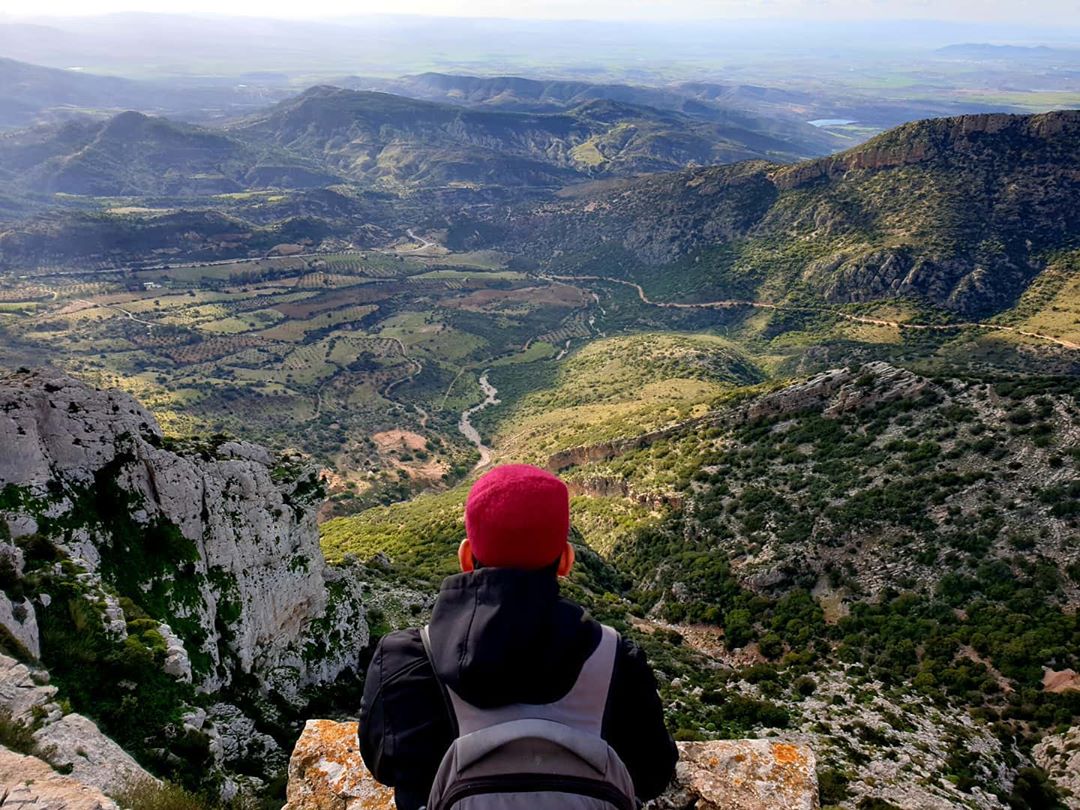
What to expect there?
For adventure eager, this is the trekking place you need to sweat, move your body and shake your soul. Trekking in this circuit begins with an easy climb to Kef Ettayara, or the summit of the plane, but the real climb is to Kef Thelj, or the summit of the snow.
As the name suggests, getting to this summit takes several hours and requires considerable effort. It is therefore recommended to stop from time to time to rest and catch your breath. Once arrived, and despite the icy cold caused by the winds from the height, the acme will offer you a breathtaking view on the other neighboring hills, the city of Zaghouan and the ancient but beautiful Zriba.
How to get there?
To get there, you can use your car for a 1h30 drive or take a rental car to the city of Zaghouan and continue with a cab or hitchhiking for the more adventurous towards the abyss of the mountain.
What to watch out for?
As mentioned above, this tour is intended more for professional trekkers. If you’re a beginner, you may want to go with professional trekkers to feel safe and motivated.
This does not prevent the amateurs among you to try to push their limits and to go trekking on several days on this site. You can combine your trekking adventure with camping.
The mountain of Bargou
We turn the compass now a little more towards the north of Tunisia, and we head to the Governorate of Siliana, a hundred kilometers in departure from Tunis. Like many hidden gems in the north-west, this is an unknown site for tourists.
This Jurassic mountain has an altitude of 1266 m and is located about twenty kilometers from the city that bears its name. The unique location, in the heart of the nature of northern Tunisia, accounts for our recommendation. The astounding scenery guarantees the awe. In spring, you will be amazed by the magnificent greenery that embraces the mountain from its valley to its summit.

What to expect there?
Chosen by the community as the most beautiful mountain of Tunisia, this Jebel (mountain) is accessible by car or by public transport (bus, rental) from the city of Bargou.
Patience and muscles are virtues when you decide to go hiking in this circuit. It can be the most difficult one in Tunisia. However, despite the fatigue and the great effort to climb it, the awe and the memories are earned. The beautiful landscapes smoothly infuse magnificent sensations.
The experience will be even more rewarding if you are guided by a local guide, especially one of the locals. The mountain offers several plateaus where you can put your tents to rest or spend the night.
For those of you who are a bit chilly, there is a very decent youth hostel located about 10 km from the mountain, which offers its services for 10TND per night.
How to Get Prepared for a Trekking Tour in Tunisia?

Like any trekking experience in Tunisia or elsewhere, you have to be prepared, whether physically and logistically.
It is undeniable to say that you will be in the middle of nowhere on your trekking adventure! For this reason, you must be equipped with your food, drinks and unwavering sense of adventure. No need to say: Avoid dehydration and try to have an average of 3 meals.
If you plan to spend the night in the cradle of nature, don't forget your camping equipment, i.e. a tent, a sleeping bag, blankets, lamps...etc.
The must-haves of Trekking
Yes, trekking is one of the hard sports. That’s why it requires special equipment. So remember to bring hiking poles to help you walk, a first aid kit, an outdoor knife (just in case) and for the more authentic among you who really want to get lost in nature, a compass to avoid getting TOO lost!
Trekking in Tunisia: the ecological discipline comes first!
A real Trekking is an eco-responsible Trekking. If not, it’s a war against the environment and eventually human beings and our collective future.
To help you be a trekker and not a soldier for the wrong case, we’ve compiled a list of simple tips that would help you ensure your well-being as well as that of nature.
Here are some tips to respect the environment while you’re hiking in Tunisia:
- Take with your bags to put your food waste.
- Avoid lighting fires in dry areas or during strong winds to avoid starting a fire in the middle of nature.
- For the sportsmen-smokers, take an empty bottle to throw away your cigarette butts, a cigarette butt takes about 2 to 5 years to disappear
- Don't leave behind bottles or glass fragments on the ground, they can hurt an animal in its crossing as well as start a fire by the reflection of the sun's rays.
That's all for our trekking guide in Tunisia.
Keep in mind that trekking in Tunisia remains a sport little known by young people, but a real euphoria for its lovers. Go and discover Tunisia differently!


