You stand before towering sandstone cliffs and meticulously carved tombs, ready to capture the magic of AlUla with your camera, only to realize the desert sun is harsh, the shadows are unforgiving, and crowds are everywhere.
It can be incredibly frustrating when your photos fail to reflect the breathtaking reality of standing in such an ancient landscape.
That is why our team at WildyNess created this guide to help you capture better photos of AlUla, from choosing the right time of day to finding the best angles and dealing with the desert light.
The Most Iconic Photography Locations in Al Ula
The Nabataean Tombs of Hegra
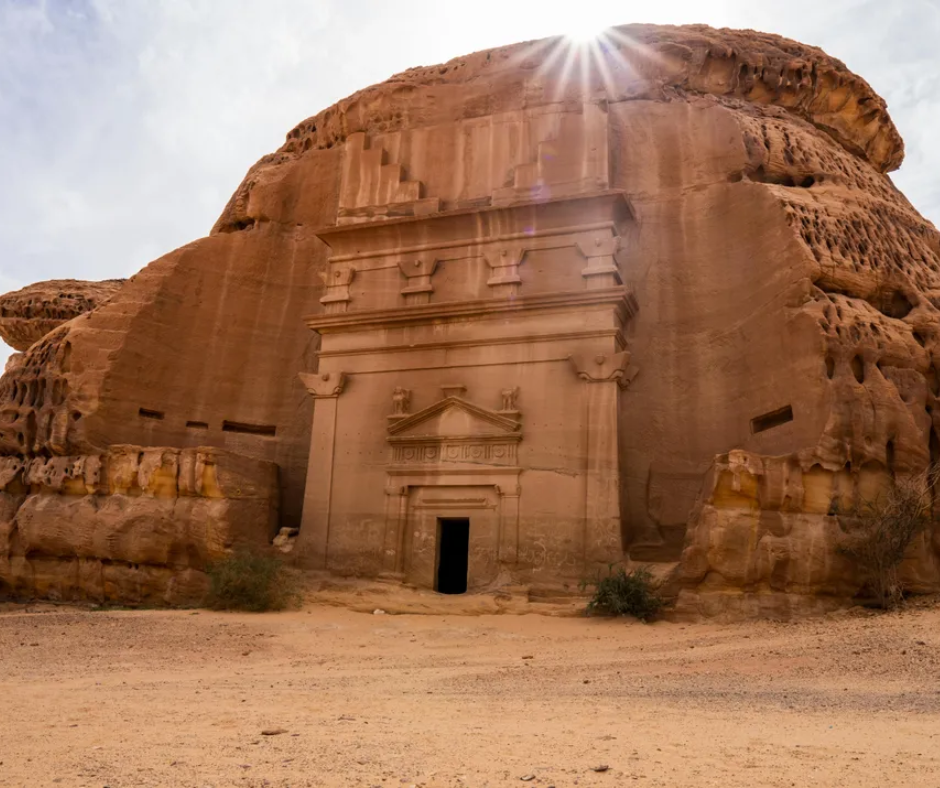
Hegra is Saudi Arabia's first UNESCO World Heritage Site and serves as the ultimate playground for any photographer. The site is famous for its monumental tombs carved directly into massive sandstone outcrops. The most iconic structure is the Tomb of Lihyan Son of Kuza, often called the lonely castle because it stands completely isolated from the other boulders.
This massive monolithic tomb is a masterpiece of Nabataean architecture and demands to be the centerpiece of your gallery. To capture Hegra properly, you should plan your visit during the golden hour when the sun casts long shadows that emphasize the depth of the carvings.
Using a wide-angle lens allows you to capture the sheer size of the tombs against the vast desert landscape. Alternatively, a telephoto lens is excellent for compressing the background and highlighting the intricate details on the facades. You should pay special attention to the eagle motifs and the ancient inscriptions above the doorframes.
Positioning a person at the base of the tombs is a great technique to demonstrate the immense scale of these ancient structures. The Nabataean civilization left behind more than one hundred tombs in this area, and each one reacts differently to the shifting desert light.
It is highly recommended that you take the official bus tour, hopping off at the most significant stops to give yourself enough time to frame your shots perfectly without rushing.
Elephant Rock During Golden Hour
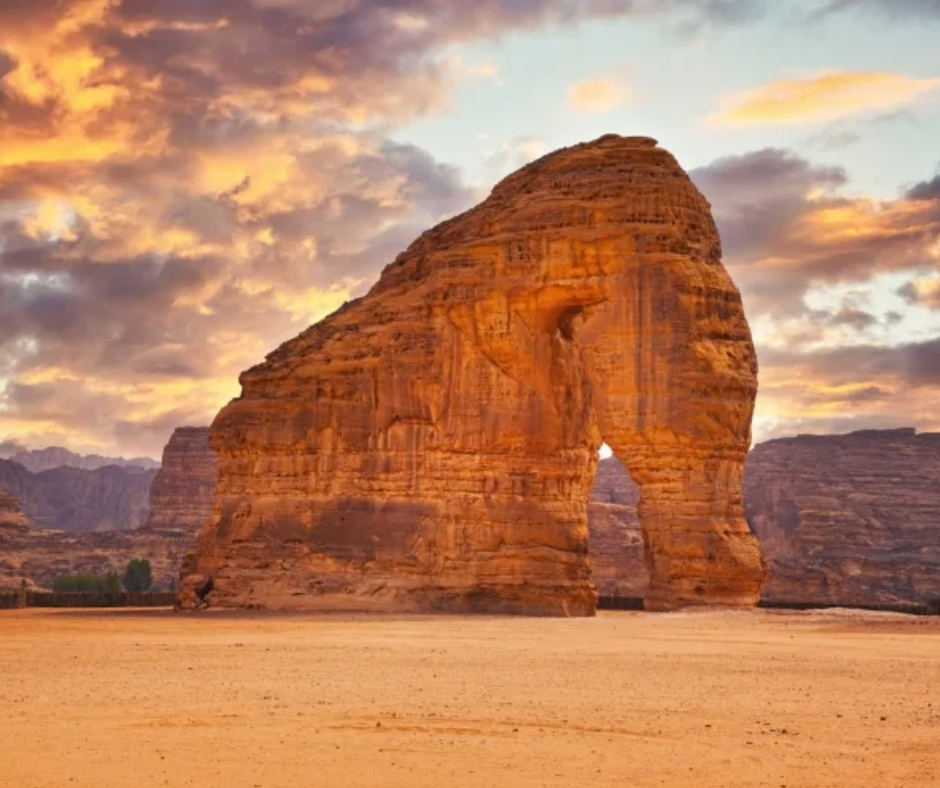
Jabal AlFil, universally known as Elephant Rock, is a fifty-two-meter-high sandstone formation shaped perfectly like an elephant with its trunk touching the ground. This geological marvel is best photographed during sunset. The rock itself was shaped by millions of years of wind and water erosion, standing out starkly against the flat desert floor.
You should arrive at least an hour before the sun goes down to scout your angles and secure a good position. The most striking photos are taken by positioning yourself so the sun sets directly behind the rock. This technique turns the massive formation into a sharp silhouette against a vibrant, colorful sky.
The sunken seating areas scattered around the site offer excellent low-angle perspectives that make the rock look even more imposing. Once the sun drops below the horizon, you should stay for the blue hour. The ambient lighting installed at the site casts a warm glow on the stone, creating a beautiful contrast with the deep blue twilight sky.
Maraya Concert Hall Reflections
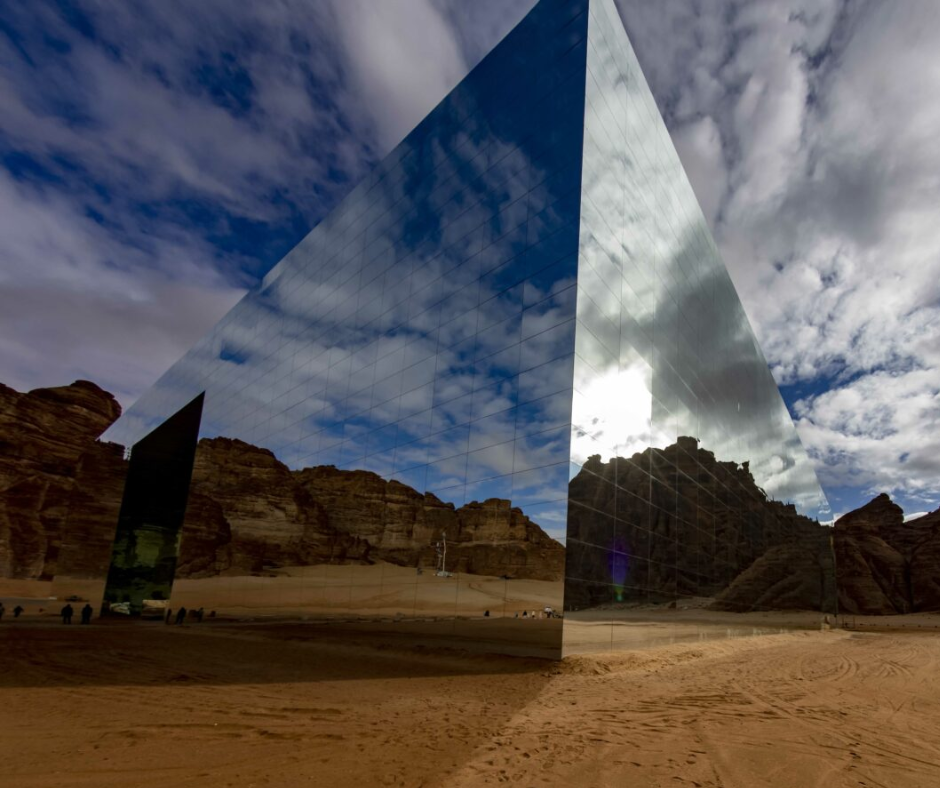
Maraya Concert Hall holds the record as the largest mirrored building in the world and sits perfectly within the Ashar Valley. The structure is designed to reflect the surrounding desert cliffs, making it look like a mirage.
Covered in nearly ten thousand square meters of reflective glass, it completely disappears into the landscape from certain angles. Photographing Maraya requires careful timing to avoid the harsh midday glare. Early morning at sunrise or late afternoon are the optimal times to visit.
During these hours, the light is soft, and the reflections of the canyon walls are incredibly clear. You should start from a distance with a wide shot to show how the building blends into the environment. Moving closer, you can use low angles near the ground to capture the reflection of the sand and sky.
A polarizer filter can be useful to manage glare, but you must adjust it carefully so you do not completely eliminate the spectacular reflections that make the building unique.
This multipurpose venue hosts world-class performances, but for a photographer, the exterior is the main attraction. The clean, modern lines of the building contrast beautifully with the rugged, organic shapes of the ancient rocks surrounding it.
Historic and Architectural Photography Spots
The Mudbrick Mazes of Al Ula Old Town
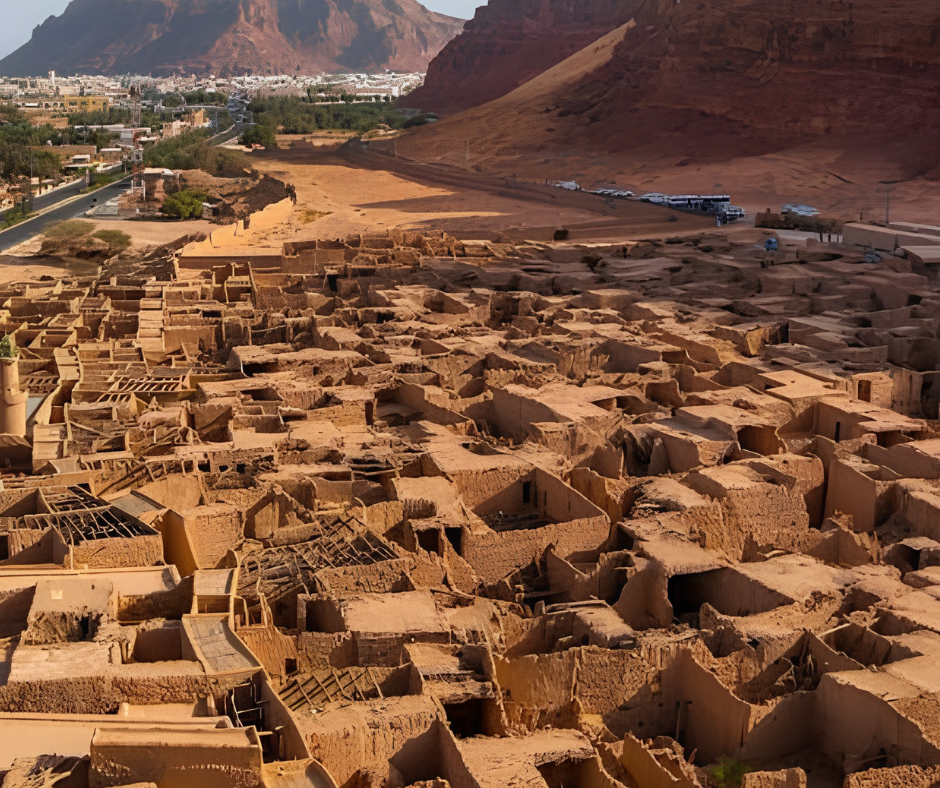
Al Ula Old Town is a dense labyrinth of nearly nine hundred mudbrick houses dating back to the tenth century. This historic settlement served as a vital crossroads along the ancient incense trade route, and every alleyway offers a unique photographic opportunity.
The narrow paths create natural leading lines that draw the viewer's eye through the frame. The best time to photograph the Old Town is during the early morning or late afternoon when the soft light warms the mudbrick walls.
However, midday can also be surprisingly productive if you focus on high-contrast black and white photography. The intense overhead sun creates sharp slivers of light and deep shadows within the covered streets.
You should look for arches and frame them using the rule of thirds for classic architectural compositions. Keeping your camera level ensures that the vertical lines of the buildings remain straight, giving your images a clean and professional look.
The Ancient Lion Tombs of Dadan
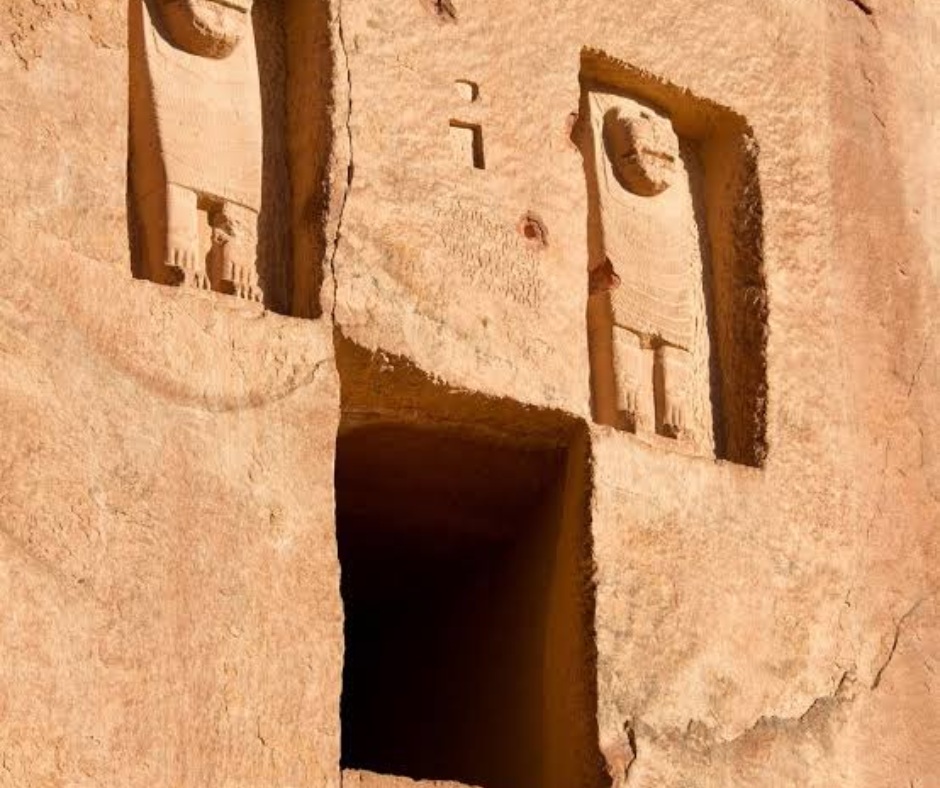
The ancient city of Dadan was once the thriving capital of the Dadan and Lihyan kingdoms. Today, it is most famous for the Lion Tombs, which are square burial chambers carved into the sheer red rock face.
These tombs feature high-relief carvings of lions, symbolizing power and protection for the elite buried within. You should photograph Dadan in the early morning or late afternoon to avoid the flat lighting of midday.
Side lighting is essential here because it creates the shadows necessary to highlight the depth of the lion carvings. Standing slightly off-axis rather than directly in front of the tombs adds dimension to your shots.
Since the tombs are elevated on the cliff face, you will need a telephoto lens to isolate the details of the lion sculptures. Capturing the entire cliff side with a wide lens helps contextualize the location, especially if you include a small figure on the ground for scale.
The scale of the cliff face is immense, and you will quickly realize why this location was chosen as a royal burial site. Exploring the Dadan ruins below the tombs also offers excellent opportunities to photograph the excavated foundations of the ancient city.
The Open Library of Jabal Ikmah
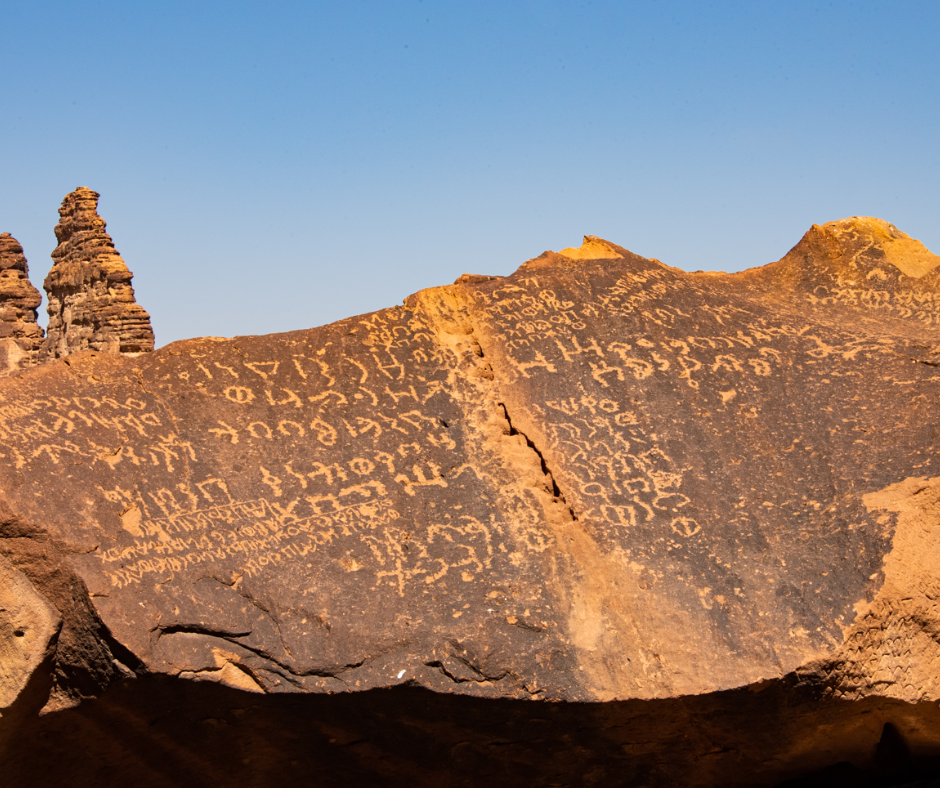
Jabal Ikmah is a beautiful desert canyon that serves as an open-air library of ancient history. The rock walls are covered in thousands of pre-Arabic inscriptions and petroglyphs detailing the daily lives, rituals, and trade of early civilizations.
Often referred to as an open-air museum, this location is a paradise for detail and macro photography. The carvings range from deeply etched Aramaic and Dadanitic letters to intricate depictions of animals and musical instruments.
To capture the textures of the stone and the depth of the carvings, you need directional lighting. Visiting during the late afternoon provides the perfect angle of sunlight to cast micro-shadows inside the etched lines, making the text pop against the rock surface.
A macro lens or a standard lens with a close focusing distance is ideal for isolating specific symbols. You should also take a few wide environmental portraits of the canyon to show the sheer volume of history recorded on these walls.
Desert Landscapes and Night Sky Photography
Astrophotography at the Gharameel Desert
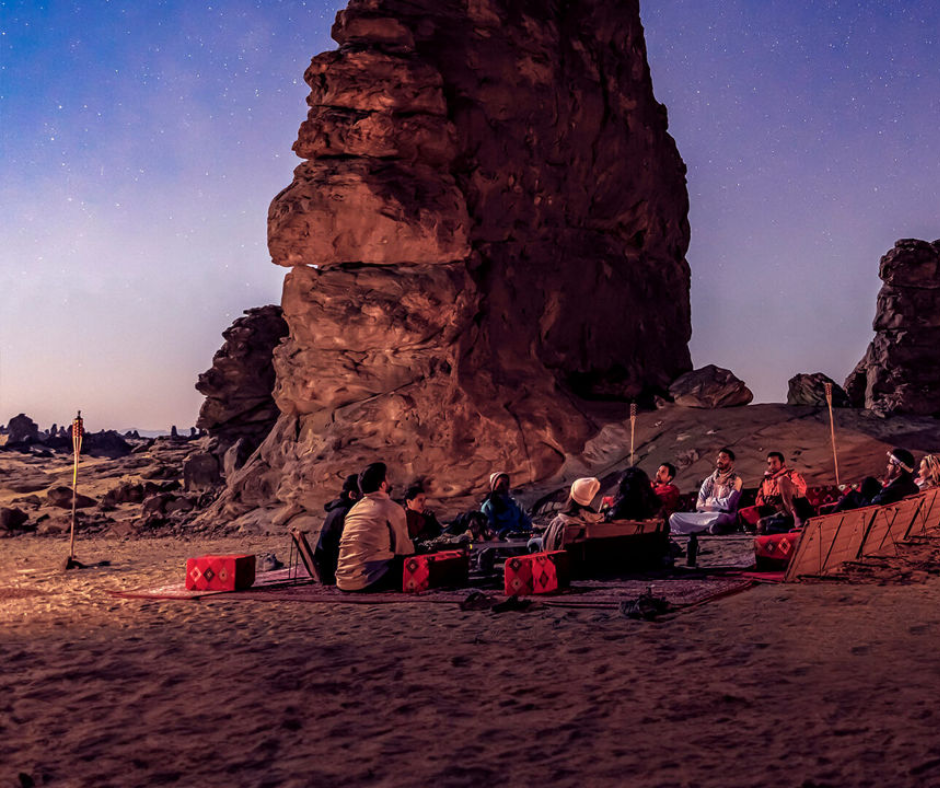
The Gharameel Desert is located about ninety minutes north of Al Ula and offers some of the darkest skies in the Arabian Peninsula. The landscape is defined by towering, dark rock pillars that look like remnants of an ancient, shattered mountain. Navigating this area at night feels like stepping onto another planet.
This combination of dramatic foregrounds and zero light pollution makes it the ultimate location for astrophotography. You must arrive before sunset to scout your composition safely and set up your tripod. Once darkness falls, you will need a fast, wide-angle lens to capture the Milky Way.
You should use the five hundred rule to determine your shutter speed, dividing five hundred by your focal length to avoid star trails. Focusing manually on a bright star ensures your image remains sharp. It is also crucial to use a red light headlamp while adjusting your camera settings so you do not ruin your night vision.
The complete lack of light pollution here allows the Milky Way to become visible to the naked eye, making it incredibly easy to frame your shots.
You should consider bringing a comfortable chair and some warm clothing, as the desert temperature drops rapidly after the sun goes down, and astrophotography requires a lot of patience.
Framing Nature at Arch Rock
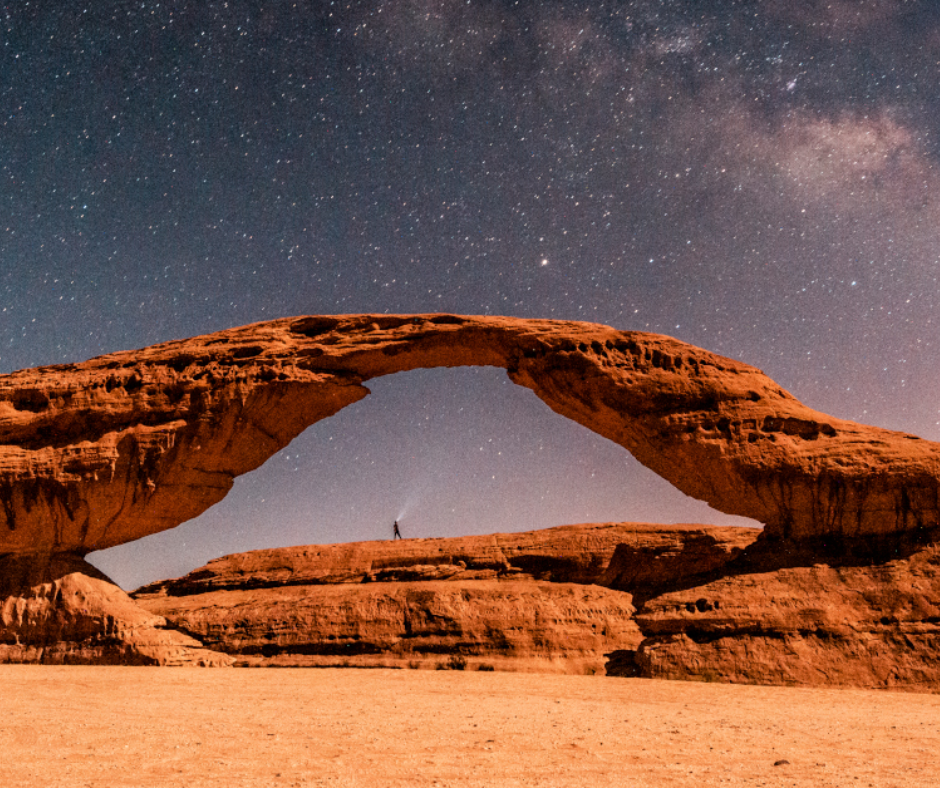
Arch Rock, sometimes called Rainbow Rock, is a massive sandstone formation sculpted by millions of years of wind erosion. The rock forms a perfect natural bridge that begs to be photographed. This location is all about showcasing the raw artistry of nature. The sheer size of the rock arch is difficult to comprehend until you are standing directly beneath it.
The golden hour enhances the rich red and orange tones of the sandstone, bringing out the rough textures of the rock face. You should get low to the ground and shoot upwards with a wide-angle lens to emphasize the towering height of the arch.
The opening of the arch provides a natural frame for the sky or the distant desert landscape. Because the dynamic range between the shadowed rock and the bright sky can be extreme, you might need to bracket your exposures or carefully expose for the highlights to ensure the sky retains its color.
The area surrounding the rock is also filled with smaller, equally fascinating geological formations that you can use as foreground elements. This spot is generally less crowded than Elephant Rock, giving you the freedom to move around and experiment with different focal lengths.
Panoramic Views from Harrat Uwayrid
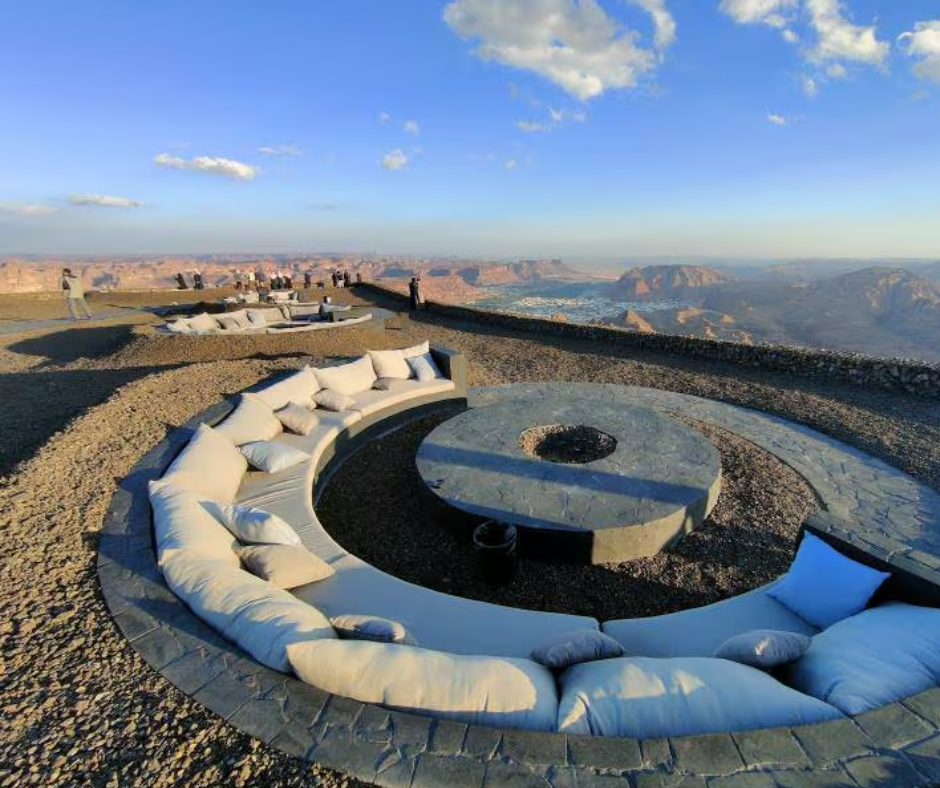
Harrat Uwayrid is a massive dormant volcanic plateau that towers over the Al Ula valley. Reaching the viewpoint involves a steep drive, but the reward is a sweeping panoramic view of the oasis, the ancient city of Dadan, and the Old Town far below. This location is unmatched for grand landscape photography.
From this elevation, you can truly appreciate the lush green strip of the palm oasis cutting through the arid desert landscape. To capture the vastness of the valley, you should shoot a series of overlapping images in a vertical orientation and stitch them together later to create a massive panorama.
The absolute best time to visit is at sunset. As the sun dips toward the horizon, the entire valley floor and the surrounding mountain ranges glow with an intense orange light. A sturdy tripod is necessary to keep your camera perfectly level while panning for panoramic shots.
Practical Photography Advice for the Arabian Desert
Essential Gear for Desert Conditions
Photographing in the Saudi Arabian desert presents unique environmental challenges that require proper preparation. Fine sand and dust are the biggest threats to your camera equipment.
You should always use a weather-sealed camera body and lenses if possible. Changing lenses in the open desert is highly risky because the wind can blow fine dust directly onto your camera sensor.
If you must change lenses, you should do it inside your vehicle or turn your back to the wind and use a protective bag. A sturdy tripod is another absolute necessity.
The desert winds can be surprisingly strong, especially on elevated viewpoints like Harrat Uwayrid, and a lightweight tripod will vibrate and ruin your long exposures.
A heavy-duty carbon fiber tripod will provide the stability you need without weighing down your pack. You should also carry plenty of microfiber cloths and a manual air blower to keep the front element of your lens clean throughout the day.
Planning Your Daily Shoot Schedule
The lighting in Al Ula changes rapidly, and building a smart schedule is the key to a successful photography trip. The midday sun in the desert is harsh, casting heavy contrast and flattening the beautiful textures of the rock formations.
You should plan to be on location at dawn to capture the soft morning light, which is perfect for places like Maraya and Hegra. The cool morning temperatures also make it much easier to hike to the best vantage points.
Once the light becomes too harsh around noon, you can retreat to the shade of the Al Ula Oasis or spend time backing up your photos. You should head back out two hours before sunset to catch the golden hour at locations like Elephant Rock or the Harrat viewpoint.
We know that organizing transportation and timing access to these remote sites can be incredibly complex.
Booking a guided WildyNess tour ensures that all logistics are handled smoothly, allowing you to focus entirely on capturing the perfect shot.
By aligning your shooting schedule with the natural rhythm of the desert, you will return home with a spectacular portfolio.