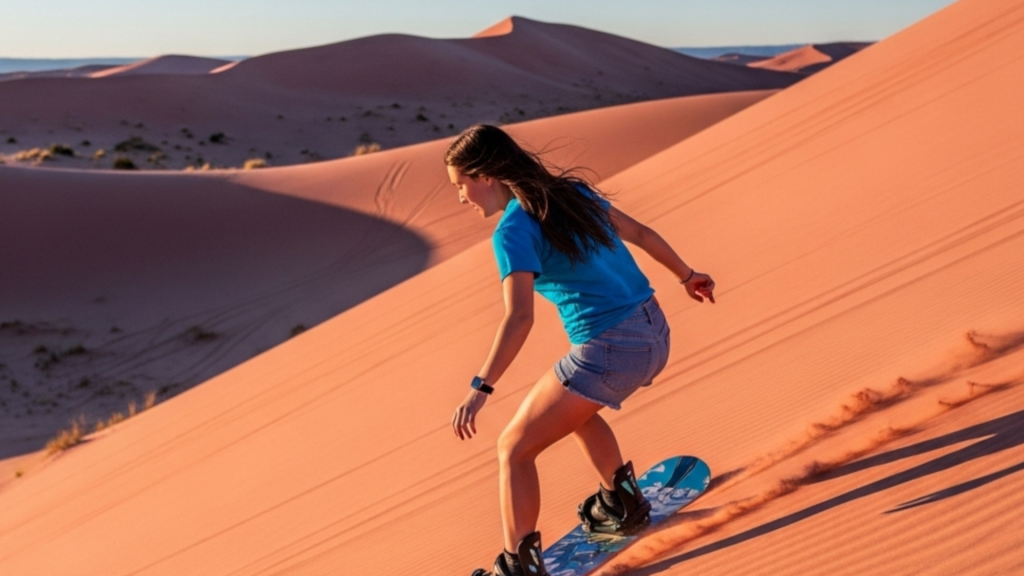

A desert trip from Dubai presents two options: a passive sightseeing tour or a hands-on, adrenaline-fueled adventure. Sandboarding offers the latter, a chance to strap in and glide down the face of some of the world's most accessible and impressive dunes.
But approaching this activity for the first time can be intimidating. Questions of logistics, safety, equipment, and technique stop many travelers before they start.
This guide eliminates that uncertainty. We, the WildyNess Team, are focused on providing the practical, direct advice you need to plan your sandboarding trip correctly.
We will cover the critical decision of booking a tour versus renting your own 4x4, detail exactly what to wear and pack, guide you to the best dunes (from the famous "Big Red" to lesser-known spots), and provide step-by-step techniques for your first ride.
What Exactly is Sandboarding?
Before you book, it’s important to understand the activity. Sandboarding is a board sport, similar in concept to snowboarding, where you ride down the slope of a sand dune.
However, the physics are different. Sand creates significantly more friction than snow, which means you generally won't reach the high speeds you see in winter sports. This makes it more accessible for absolute beginners.
Boards typically come in two variations:
-
Stand-Up Boards: These look like snowboards, often with basic strap bindings (like you'd find on a wakeboard) or sometimes just simple velcro straps. This is the most common type offered on tours.
-
Sit-Down Boards / Sleds: These are simple, waxed pieces of wood or plastic, similar to a traditional snow sled. These are great for kids or for anyone who isn't confident in their balance but still wants to experience the rush of a descent.

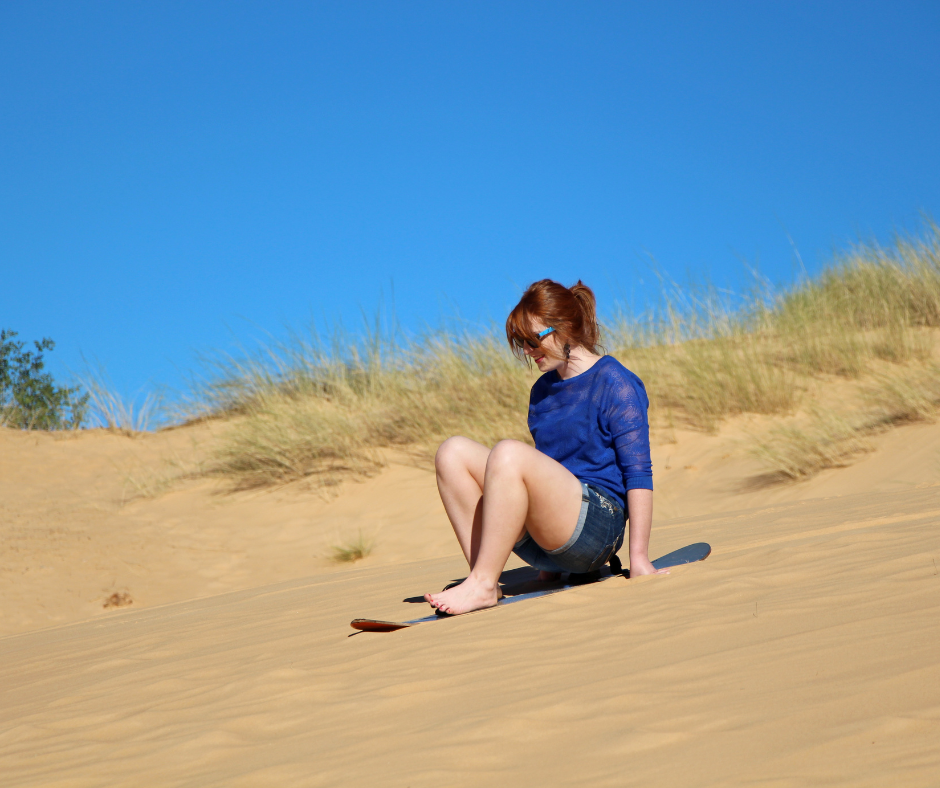
A key part of the experience, often left unsaid, is the climb back up. There are no chairlifts in the desert. For every 30-second ride down, be prepared for a 5-to-10-minute, calf-burning trek back to the top of the dune.
Tour vs. DIY: Choosing Your Adventure
This is the single most important decision you will make. How you get to the dunes and what you do there will define your entire experience.
Option 1: The All-Inclusive Desert Safari Tour (Recommended)
This is the most common, straightforward, and practical option for the vast majority of travelers. Dozens of operators in Dubai run half-day or full-day "Desert Safari" packages.
-
What it Includes: Hotel pickup and drop-off, transportation in a 4x4 vehicle, a "dune bashing" session (a thrilling, off-road drive over the dunes), all sandboarding equipment, and often other activities like a camel ride, sunset photos, and a BBQ dinner at a Bedouin-style camp with entertainment.
-
Pros:
-
Zero Logistics: You book, and everything is handled for you.
-
Safety: The drivers are experts in desert navigation and vehicle recovery. Getting a 4x4 stuck in deep sand is a real risk for a novice.
-
Cost-Effective: When you bundle transport, activities, and food, the price is often far less than renting your own vehicle.
-
Access: Tour operators have agreements and knowledge of the best, most secluded spots.
-
-
Cons:
-
Fixed Schedule: You are on the tour's timetable. You can't spend three hours on one dune if the group is scheduled to move on.
-
Shared Experience: You will be with other tourists, and the camp activities can feel crowded.
-
Option 2: The DIY (Self-Drive) Adventure
This option offers ultimate freedom but comes with significant responsibility and potential costs. This is only recommended for experienced 4x4 drivers or those prioritizing flexibility above all else.
-
What it Requires:
-
Renting a 4x4: You cannot take a standard sedan into the desert. You must rent a capable 4x4 like a Toyota Land Cruiser, Nissan Patrol, or Jeep Wrangler.
-
Renting a Board: This is the tricky part. Few shops in Dubai offer standalone sandboard rentals. You may need to purchase one from a local sporting goods store.
-
Navigation: You must have a reliable offline GPS and understand the risks of driving in deep, soft sand.
-
-
Pros:
-
Total Freedom: Leave when you want, stay as long as you want.
-
Seclusion: You can find your own private dune away from the tour groups.
-
-
Cons:
-
High Risk: Getting your vehicle stuck is highly likely without experience. A recovery service call-out to the deep desert will be extremely expensive.
-
High Cost: A one-day 4x4 rental can cost more than two all-inclusive tour tickets.
-
Navigation Stress: You are responsible for your own safety, navigation, and supplies.
-

Our Recommendation: For 99% of visitors, especially first-timers, book an all-inclusive tour. The convenience, safety, and value proposition are unbeatable.
Planning Your Desert Trip: Essentials for a Safe Outing
Preparation is key to enjoying the desert. The environment is harsh, and being uncomfortable can ruin the experience.
Best Time to Go
-
By Season (October - April): This is Dubai's "winter" and the only sensible time to go. Temperatures are pleasant, ranging from 15°C ($59^\circ$F) at night to 25-30°C ($77-86^\circ$F) during the day. Sandboarding in the 45°C ($113^\circ$F) heat of July or August is not just unpleasant; it is dangerous.
-
By Time of Day:
-
Morning/Sunrise (8:00 AM - 11:00 AM): Highly recommended. The air is cool, the sand is firm, and the light is soft. You also have the rest of your day free.
-
Afternoon/Sunset (4:00 PM - 7:00 PM): The most popular option. The "golden hour" light is fantastic for photos, and you avoid the midday heat. The sand, having been baked all day, will be very warm.
-

What to Wear
Your clothing choice should prioritize sun protection and comfort.
-
Top: Wear a lightweight, breathable, long-sleeved shirt. A technical fabric (like a hiking or fishing shirt) is ideal as it wicks sweat and blocks UV rays. A simple cotton t-shirt is acceptable, but you must be diligent with sunscreen.
-
Bottoms: Lightweight, loose-fitting trousers, cargo pants, or athletic pants are perfect. We do not recommend shorts. The sand can be abrasive if you fall, and the surface can be hotter than you expect.
-
Footwear: This is critical. You must wear closed-toe shoes.
-
Ideal: Light hiking shoes, skate shoes, or running sneakers with socks.
-
Avoid: Open-toed sandals or flip-flops. The sand surface can be surprisingly hot, and you cannot properly secure your feet into board bindings.
-
-
Sun Protection:
-
Sunglasses: Essential. Polarized lenses will help cut the glare from the sand.
-
Hat: A wide-brimmed hat is best for protecting your neck and ears. A baseball cap is acceptable.
-
Sunscreen: Apply broad-spectrum SPF 30 or higher to all exposed skin (face, neck, hands) before you leave.
-
What to Bring (Your Day Pack)
Even on a tour, we would recommend bringing a small backpack with essentials like:
-
Water: At least 1-2 liters per person, even if your tour provides it. You will dehydrate faster than you think.
-
Snacks: A high-energy snack like a granola bar or nuts.
-
Camera/Phone Protection: Fine sand gets everywhere. Bring a Ziploc bag or a dry bag to protect your electronics when you're not using them.
-
Portable Power Bank: Your phone battery may drain faster in the heat or while searching for a signal.
-
Small First-Aid Kit: Include basics like band-aids for blisters and antiseptic wipes for small scrapes.
-
Board Wax (for DIY): If you bring your own board, a block of basic candle wax or specific sandboard wax is essential. Rub it on the base before each run to reduce friction.
Where to Sandboard: Dubai's Top Dunes
While the desert looks endless, specific areas are known for their ideal dune formations.
-
Lahbab Desert: Located about a 45-60 minute drive from central Dubai, Lahbab is famous for its striking, deep red-colored sand. The dunes here are large and rolling, offering long, consistent rides perfect for both beginners and intermediate boarders. This is a favorite spot for most safari tours.
-
Al Badayer ("Big Red"): Also about 45-60 minutes from Dubai, Al Badayer is home to the most famous dune in the area: "Big Red." As the name suggests, it's one of the largest and steepest, making it a popular hub for locals on weekends with dune buggies and quad bikes. While it can be crowded, the challenge of riding this specific dune is a major draw.
-
Mleiha (Al Faya Desert): Technically in the neighboring emirate of Sharjah (but part of the greater Dubai desert-scape), Mleiha offers a different experience. The dunes are a rich orange, and the area is a protected archaeological site with 8,000-year-old tombs. You can combine sandboarding with a visit to the excellent Mleiha Archaeological Centre.
Beginner Sandboarding Technique: From Summit to Base
You're at the top of the dune, strapped to your board. Here’s how to get down.
-
Find Your Stance: Just like a snowboard or skateboard, you'll ride with one foot forward.
-
Regular: Left foot forward.
-
Goofy: Right foot forward.
-
How to check: Have someone gently push you from behind. The foot you naturally step forward with to catch your balance is your front foot.
-
-
Get Strapped In: Sit down on the sand and secure your front foot in the binding, then your back foot. Make sure the straps are snug but not cutting off circulation.
-
Stand Up and Point Downhill: Stand up, keeping your knees bent and your weight centered over the board. Point the nose of the board directly down the "fall line" (the most direct path down the dune).
-
Control Your Speed (Heels and Toes):
-
You are not "steering" so much as "balancing" and "braking."
-
To slow down: Put pressure on your heel-side edge (the edge behind you). This will engage the edge in the sand and act as a brake.
-
To turn (advanced): You can initiate gentle turns by leaning onto your heels (a "heel-side turn") or your toes (a "toe-side turn"), but the friction of the sand makes sharp carving difficult.
-
The Beginner's Default: Most beginners will simply "point and shoot," riding straight to the bottom while using their heel edge to control speed.
-
-
How to Stop: There is no elegant way to stop.
-
Method 1: Gently fall backward and sit down in the sand.
-
Method 2: As you lose momentum at the flat bottom, just step off the board.
-
Method 3: Carve a hard heel-side turn until your board is perpendicular to the hill, which will stop you.
-
-
Embrace the Fall: You will fall. The sand is soft and forgiving. The most common mistake is leaning too far back, causing the board to shoot out from under you. Try to keep your weight centered and your knees bent.
-
The Climb: Unstrap your board (it's easier to carry) and begin the hike back up. Take your time, walk in the "steps" of others if possible, and save your energy.


Key Takeaways for Your Adventure
-
Plan your trip between October and April to enjoy cooler, more comfortable sand temperatures.
-
Always wear closed-toe shoes to protect your feet when sandboarding.
-
Aim for sandboarding sessions in the early morning or late afternoon to avoid peak heat.
-
Bring more water than you think you need and use sun protection.
-
For 99% of travelers, an organized tour is safer, easier, and more cost-effective than a DIY trip.
-
Start with smaller slopes to build confidence if you're new to sandboarding.
-
Wear breathable clothing and pack minimal essentials for mobility and comfort.
-
Secure electronics in a dust-proof bag to avoid sand damage.
Curious about logistics and costs? read:
Car Rental in Dubai: The Ultimate Guide
Cost of Travel in Dubai: A Complete 2026 Budget Guide
Solo Travel Dubai: The Ultimate Guide to Independent Trips
You're trying to build your Dubai Itinerary? we recommend reading:
The Ultimate 3-day Dubai Itinerary Guide
How to Spend 4 Days in Dubai: The Perfect Itinerary
The Ultimate Dubai 7 Day Itinerary for Your First Trip
If you enjoy cafés and nice views, read:
Most Instagrammable Cafes in Dubai: A Photography Guide for 2026
Tipping in Dubai: How Much to Tip and Who to Tip in the UAE
Where to Watch the Sunset in Dubai: A WildyNess Travel Guide
If you're curious what activities you can do in Dubai, we suggest reading:
Dubai's Pottery Pulse: A Creative Oasis in the City of Gold
Yoga Retreat Dubai: A Guide to Desert & Beach Wellness Stays
Dubai Travel Guide: Authentic Things to Do & Practical Tips
Explore Dubai Hidden Gems: History, Art, and Local Eats
Dubai Museum Quarter UAE: Explore the Real Old Dubai
The Ultimate Old Dubai Walking Tour: A Guide to the City's Soul
Ready for Your Own Adventure in UAE?
Let us take the stress out of planning. We're a team of travel experts who specialize in crafting personalized itineraries that combine authentic local encounters with breathtaking landscapes, all with seamless logistics.
Let us handle the planning and coordination so you can simply enjoy a memorable trip.
Share with us your ideal trip, budget, and preferences.
You'll receive a fully personalized travel plan, completely free of charge, after a short call to understand better your preferences.
Share Your Trip Idea With WildyNess
Curious what other travelers have to say? WildyNess reviews on Google