
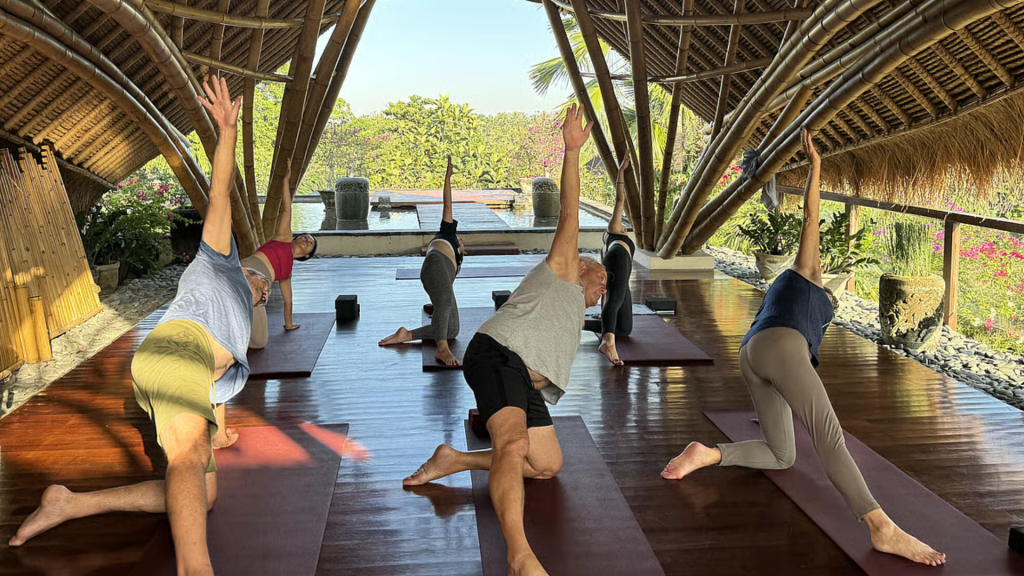

Yes, you can do a yoga retreat in Algeria, but only a handful of organized ones run, and almost all of them are in the Sahara between late October and April. The usual format is a small group with a visiting teacher and a local Tuareg crew around Djanet, or a long weekend in a Timimoun guesthouse; otherwise you put together a custom trip with an approved agency and bring your own teacher or practice.
Below: what a day of desert yoga looks like, where to base yourself, what the organized trips cost and the practical rules for the south (checked October 2026). New to Algeria? Our first-timer's guide to Algeria covers visas and the best season for the desert.
- Two bases: Djanet and the Tassili n'Ajjer if you want trekking with your yoga, Timimoun and the Gourara for a slower guesthouse stay.
- Season: late October to April; the south is too hot in summer.
- Length and price: usually about a week. A Djanet program typically runs nine days, about six of them in the desert, from around EUR 2,000 (2025-26) without international flights or the visa.
- Visa: from a consulate before you go, or the visa on arrival for organized Sahara trips, which an approved Algerian agency requests for you.
- Who it suits: beginners can follow the yoga; the walking takes basic fitness.
A day of yoga in the Sahara
Yin after dark in camp
In a desert camp, the evening session is often yin. Once the sun is down and dinner is cleared, the camp goes quiet, and there is little to look at beyond the fire, the stars and your headlamp.
Yin works with long, passive holds (often three to five minutes) for the hips, spine and hamstrings, which is what your legs want after a day of walking in sand. Leave about an hour after dinner before you start. The air cools fast after sunset, which is pleasant in October or April but cold in midwinter: Djanet's average January low is around 3 to 4 °C.
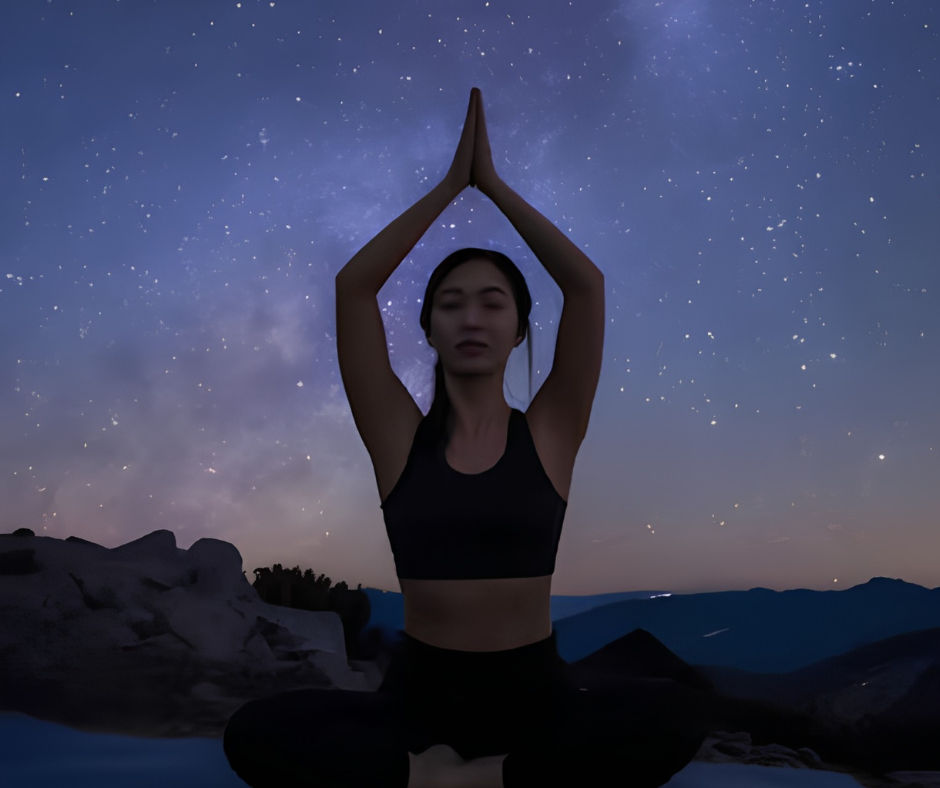
Supported butterfly and sphinx pose both work well on soft sand, and a sheet or thin mat under you keeps the grains out of your clothes. Sessions usually end with a long savasana on your back, looking straight up at the Milky Way, which is bright on moonless nights because there are no town lights out there. You need very little gear, but bring warm layers, thick socks and a headlamp for the walk back to your tent or sleeping spot.
Morning Hatha Yoga in Timimoun Guesthouses
If you'd rather sleep under a roof than in a camp, Timimoun is the alternative. It is an oasis town in the Gourara, called the "red oasis" for its ochre clay buildings, with domestic flights from Algiers.
Mornings are cool here in the desert season, which makes them the time for a Hatha class. Traditional guesthouses are built of red earth, whose thick walls keep the rooms cool, and many are arranged around a shaded inner courtyard where you can lay out a mat as the first light hits the walls. Timimoun guesthouses have hosted occasional yoga weekends (a women's retreat in March 2022, for example), but there is no regular calendar, so ask before you book.
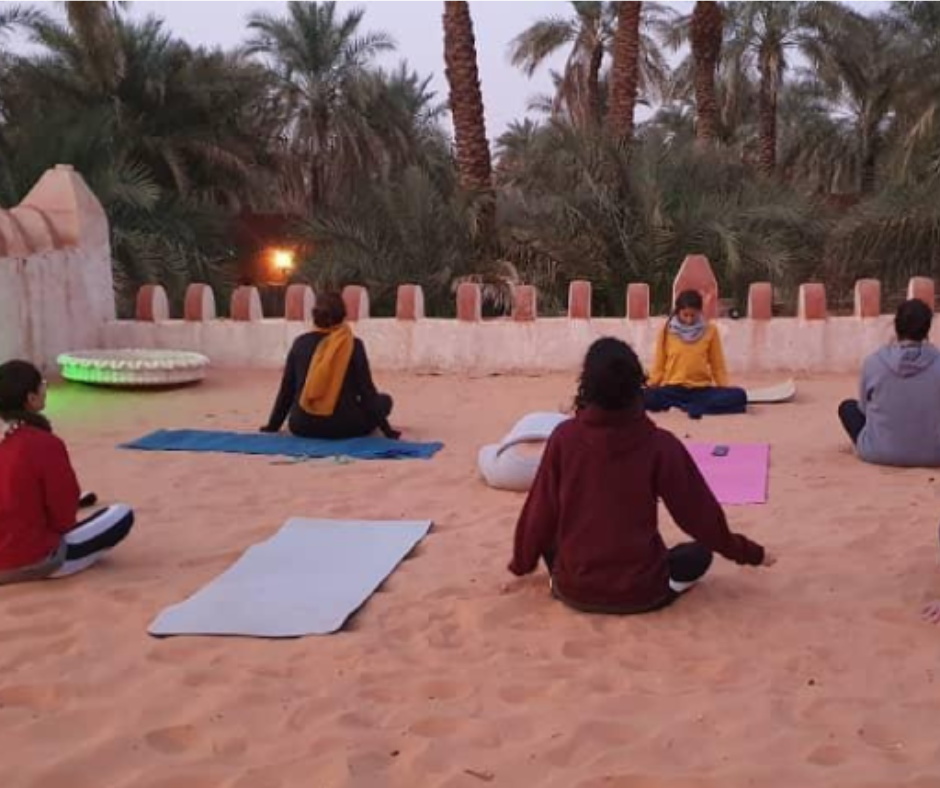
Hatha is slow and steady, which suits a small oasis town. A morning session loosens you up for a day in the ksour (fortified earth villages) around Timimoun and the palm groves below them.
Ask your host in advance if you can use the courtyard before the household is up; in a family-run house it is often the only open space, so early is easier for everyone. Some travelers skip the guesthouse and book one of the homestays in Algeria instead, which puts you right inside family life.
Campfire Meditation and Singing Bowls
The desert slows you down without much effort: once it's dark there is little to do but sit by the fire. Some retreat teachers use that hour for a guided meditation, and some bring Tibetan singing bowls for a sound session.
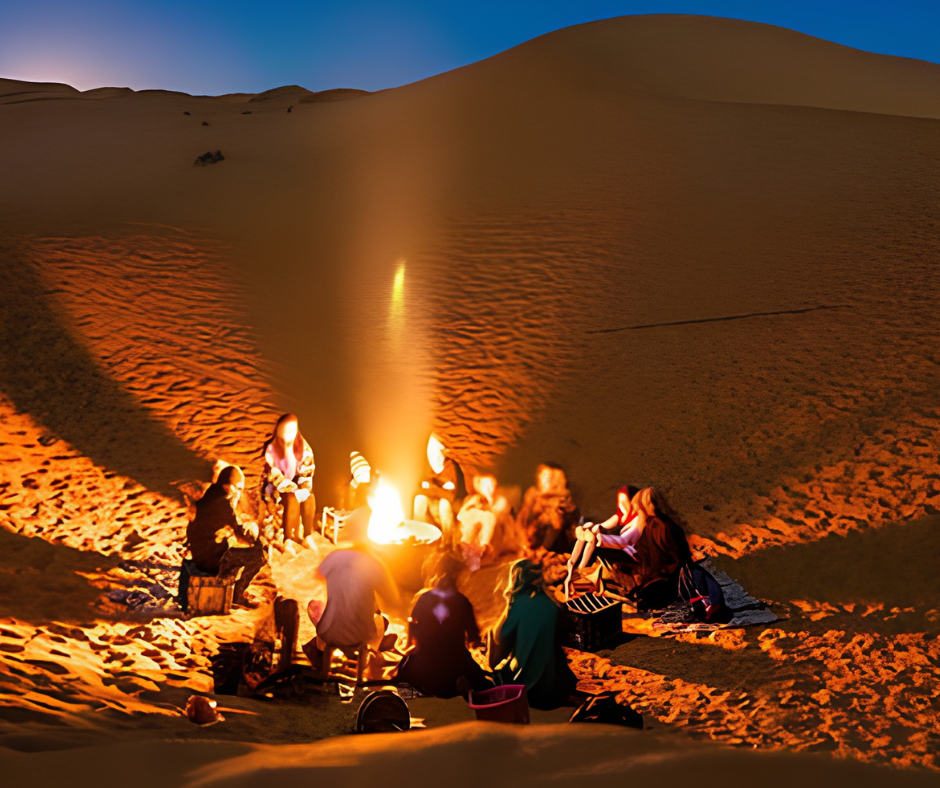
The bowls give a low, sustained tone that is easy to rest your attention on, which helps after a long travel day. If sound sessions aren't your thing, a quiet sit by the fire does much the same job.
Desert crews in the Tassili are often Tuareg, and evenings in camp usually come with their strong, sweet tea, poured in three rounds. If caffeine keeps you awake, skip the later glasses on a meditation night.
Most sessions end with people lying back on the woven mats or carpets around the fire. Bring a small notebook if you like to write things down afterwards. A quiet evening like this also works on corporate retreats in Algeria, as a counterweight to the more physical days.
Where to Hold Your Yoga Retreat in Algeria
Trekking and Yoga in Djanet
For an active retreat, base yourself in Djanet. The town sits below the Tassili n'Ajjer, a national park and UNESCO World Heritage site since 1982, whose sandstone plateau holds more than 15,000 prehistoric paintings and engravings.
Djanet yoga retreats usually follow the same pattern: gentle yoga or stretching around 7 am, a walk through the canyons, then yin yoga and meditation in the evening. If the trekking matters more to you than the yoga, our guide to Algeria hiking tours covers longer routes in the Tassili and the Hoggar.
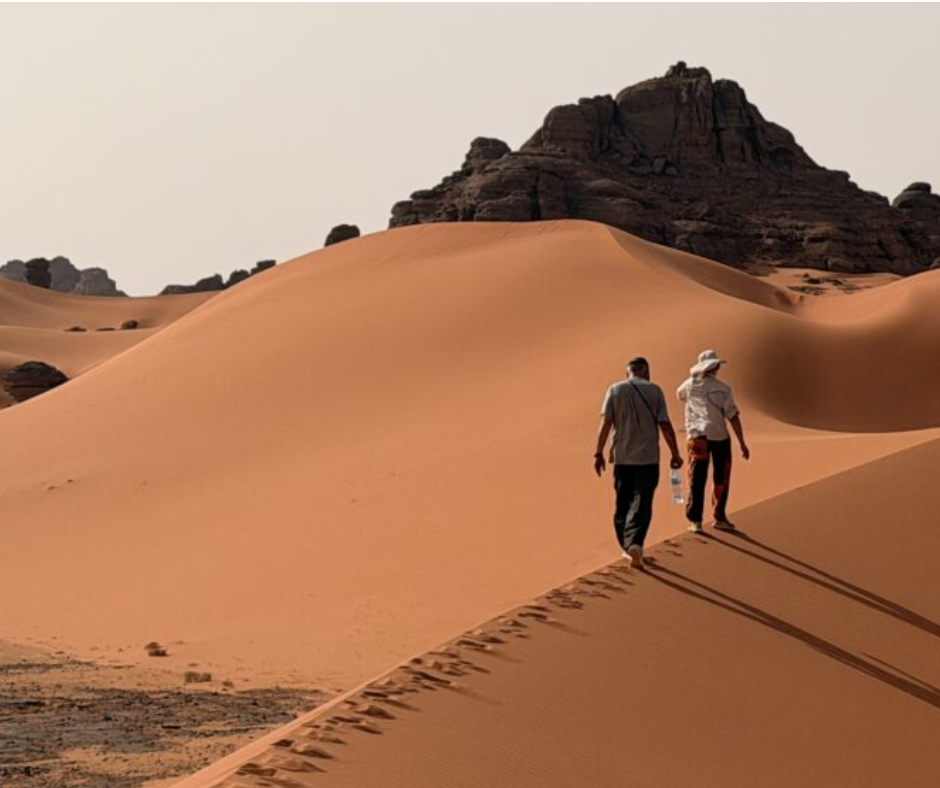
Walks start early to get ahead of the midday sun, at a steady pace through rocky canyons and sandy valleys. A typical program runs nine days, with about six in the desert sleeping in bivouac and the last nights in Algiers. Groups are small, often capped at about 12, and prices start at around EUR 2,000 for the nine days, including the flights between Algiers and Djanet, meals and yoga, but not international flights or the visa.
The practical rules are the same as for any Tassili trip. The season runs from late October to April; outside it, the daytime heat makes long walks hard. Foreigners in the south travel with an approved Algerian agency, which can also arrange the Sahara visa on arrival for organized trips.
Flights from Algiers land about 30 km south of town (Air Algérie and its subsidiary Domestic Airlines fly the domestic network), and in recent winters Air Algérie has also flown seasonally to Djanet direct from Paris CDG. Our Tassili trips keep to routes we know well, with licensed local agencies and Tuareg crews, and none of them has had an incident. Read the official travel advice that currently covers the Djanet area, and check that your insurance does too, before you commit.
For each day's walk, carry a daypack with at least three liters of water, salty snacks, strong sunscreen and a hat. Hiking poles help on the loose sand between the rock walls.
Sunset Sessions on the Dunes of Gourara
The Gourara is the oasis region around Timimoun, on the southern edge of the Grand Erg Occidental, a sand sea whose dunes reach about 120 m. Golden dunes, ochre walls and the pale sebkha (a dry salt lake) below the town make it our pick for sunset sessions.
Days here are planned around the sunset. In the late afternoon, groups walk up to a dune ridge with a clear view west and practice as the light drops.
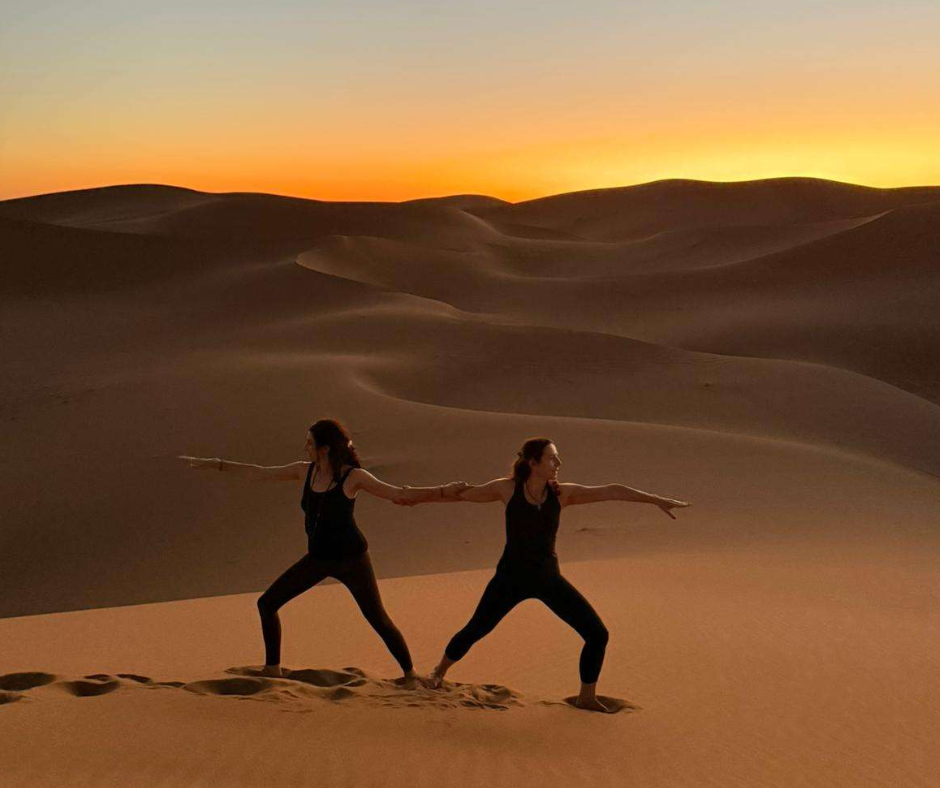
Soft sand is forgiving, so many people skip the mat altogether, though balance poses are harder on a surface that shifts under you. As the sun drops, the temperature falls quickly and the shadows across the dunes turn purple. It is also the best light of the day for pictures, which we cover in our notes on photographing the Algerian desert. Bring a windproof jacket, because the wind often picks up around sunset.
Sleeping in a Traditional Desert Bivouac
Most desert retreats sleep in a bivouac, the simple camp a trekking crew sets up each evening. On Tassili treks that usually means a foam mattress and blankets, under the sky or in a small tent. Fixed dune camps also exist, for example around Taghit. There is no light pollution, and the FCDO notes that phone coverage in the remote south is patchy or unavailable.
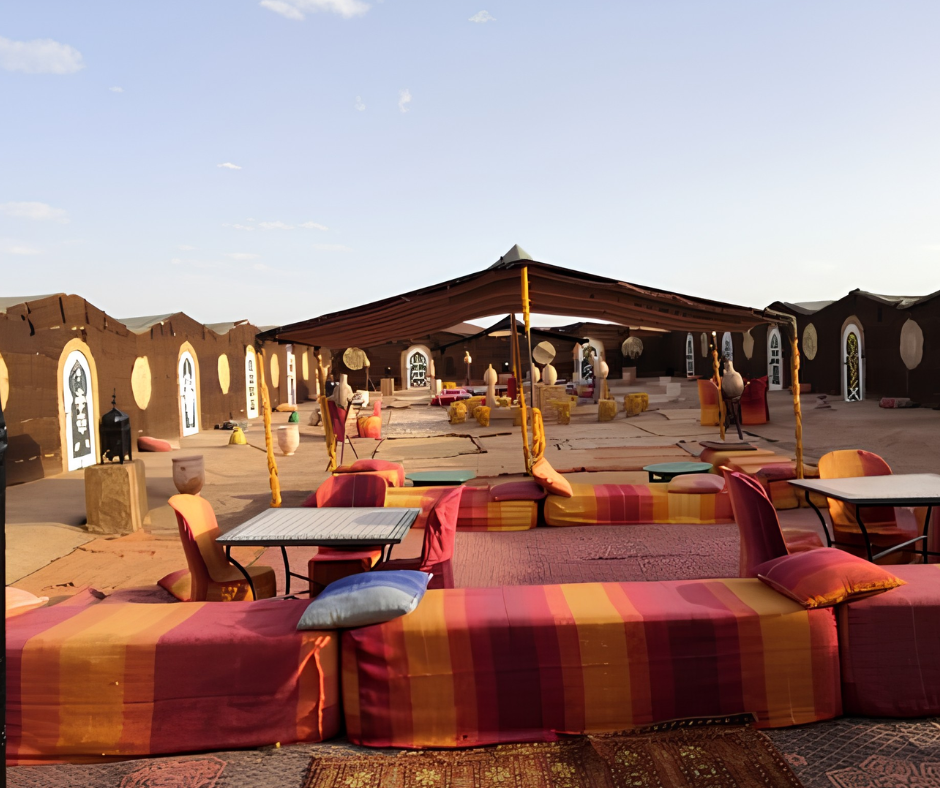
A camp has no screens and few chores: the crew cooks, carries and packs up, which leaves long stretches between sessions to read, walk or sit. The trade-off is basic washing, often no shower for several days, and a toilet that is a walk behind a rock.
Before booking, ask what bedding is provided, so you know whether to bring a sleeping bag or liner for December and January. These camps are usually booked as part of a guided package, and our guide to desert tours in Algeria explains the different formats.
Food in camp
On a desert trip the crew cooks everything over a fire or a gas ring. Expect lentil and vegetable stews, rice or couscous, salads, dates and taguella, the Tuareg flatbread baked under sand and embers and broken into a sauce. Vegetarian meals are easy to arrange in this kind of cooking. Vegan and gluten-free diets need a word with the agency before you leave, because supplies are bought in Djanet and nothing can be picked up later.
A sample week and what it costs
There is no fixed calendar of yoga departures in Algeria that we can confirm for 2026-27: teachers announce their own dates each season, and most groups travel on a private program. This is the shape we'd suggest for seven days around Djanet, adjusted to the group's level and the flight days.
| Day | Plan |
|---|---|
| 1 | Fly Algiers to Djanet; transfer to camp; evening yin by the fire |
| 2 | Morning hatha; drive out to the dunes and canyons near Djanet; sunset session on a ridge; bivouac |
| 3 | Canyon walk with a Tuareg guide and rock-art sites near Djanet; evening meditation |
| 4 | Drive to Essendilene, about 100 km northwest; walk down to the guelta and swim if the water is high |
| 5 | Slow morning and a long yin session; short afternoon walk; sound session in camp |
| 6 | Sunrise practice, last walk, back to Djanet |
| 7 | Fly to Algiers; hammam before the flight home |
On top of the program price, budget for the visa: the visa on arrival for organized Sahara trips is commonly reported at about EUR 110, paid on arrival, and a UK consulate visa costs GBP 85 (2026 figures). Ask what is included, because domestic flights, the crew's tips, a single tent and the teacher's place change the total most.
Other Wellness Experiences in Algeria
A Traditional Hammam Session in Algiers
Many Sahara trips end with a night or two in Algiers before the flight home, and a hammam is a good way to get rid of the last of the sand.
Public hammams are still part of everyday life in Algiers, and most neighborhoods have one. You start in the hot, steamy room and stay until your muscles loosen after days of sleeping on the ground.
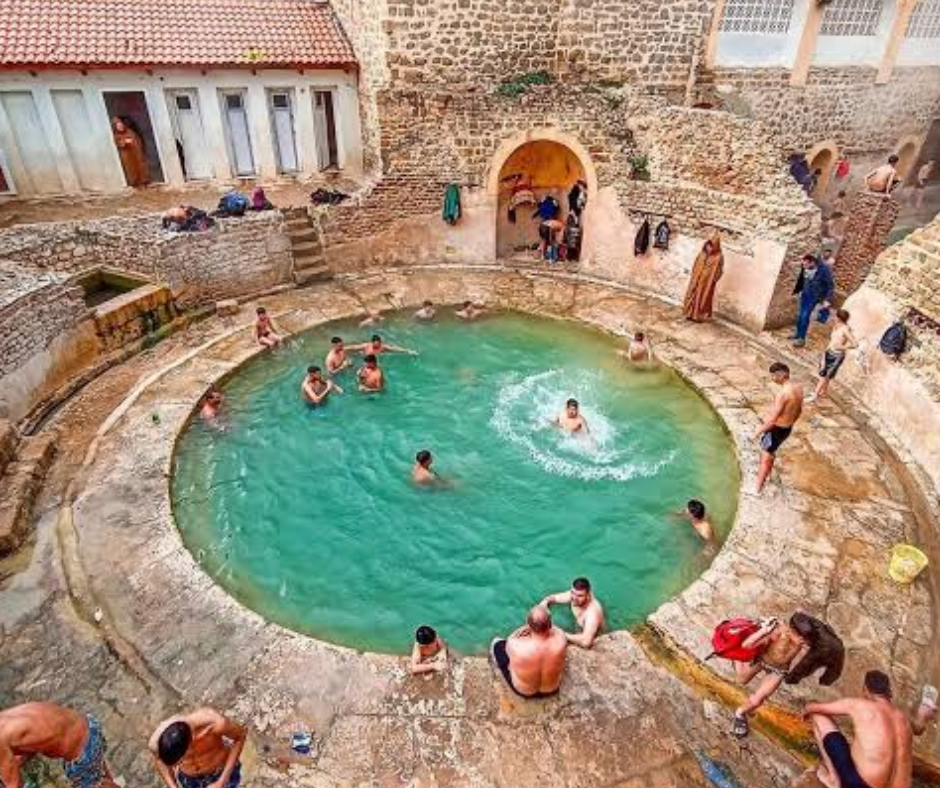
Then an attendant scrubs you down with a rough glove (the kessa), which takes off dead skin and whatever desert dust is left.
Neighborhood hammams have separate sections or separate hours for men and women. Men keep shorts or a wrap on, women usually keep bikini or underwear bottoms on, and you should bring your own towel, flip-flops and soap. For a quieter, pricier version, the El Djazaïr hotel (the old Saint-Georges) has a hammam, sauna and pool, and at least one Djanet retreat program ends there.
Swimming in the Gueltas of Essendilene
Water feels like a reward in the desert. From Djanet, many itineraries include Essendilene, a canyon in the Tassili n'Ajjer about 100 km northwest of town, with gueltas at the bottom.
Gueltas are natural rock pools that hold rain and seepage water long after the last storm. The one at Essendilene is shaded by the canyon walls and lined with oleander and tamarisk, and after a wet year it is deep enough to swim. After a dry winter the level can be low, so ask your agency before you count on a swim.
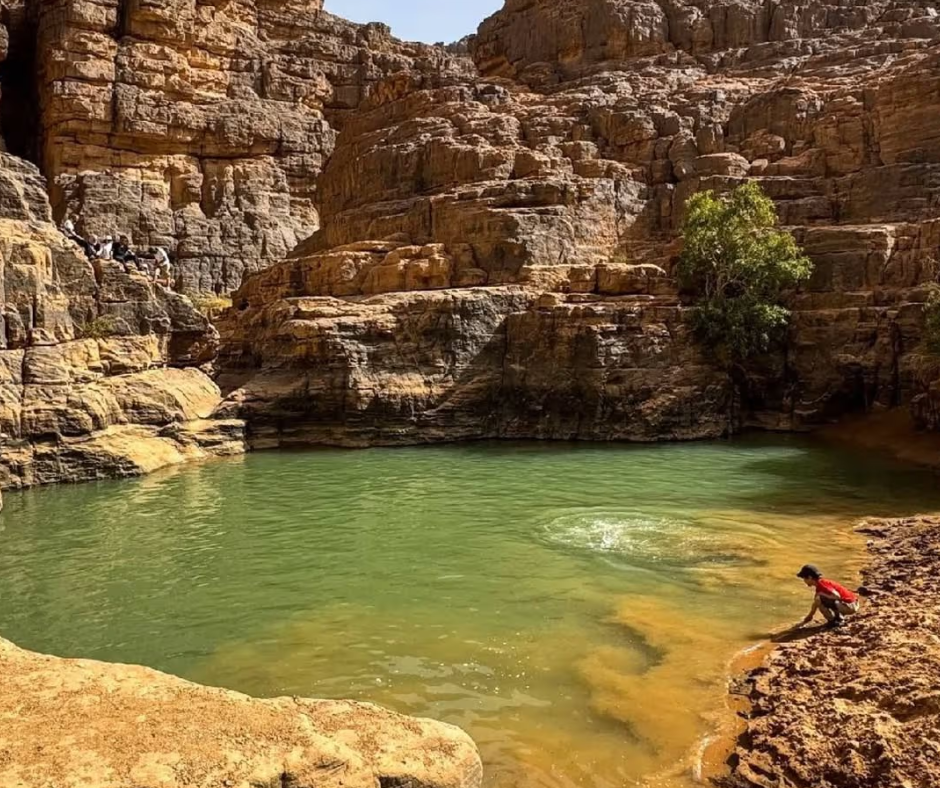
The water is cold, which feels good after a hot walk. Pack a small microfiber towel and water shoes with good grip, because the rocks around the pools are slippery. Keep soap and sunscreen out of the water: gueltas are a water source for herders and wildlife.
Go early in the morning if you can, before other trekking groups arrive.
Walking Meditations in the Palm Groves
The palm groves of Timimoun and Taghit are good places for a walking meditation: shaded, quiet and noticeably cooler than the open desert.
Timimoun's gardens are still watered by foggaras, underground channels dug to carry groundwater from higher ground to the oasis, where the flow is divided among the plots. In Taghit the palms follow the Oued Zousfana, with the dunes of the Grand Erg Occidental rising above them.
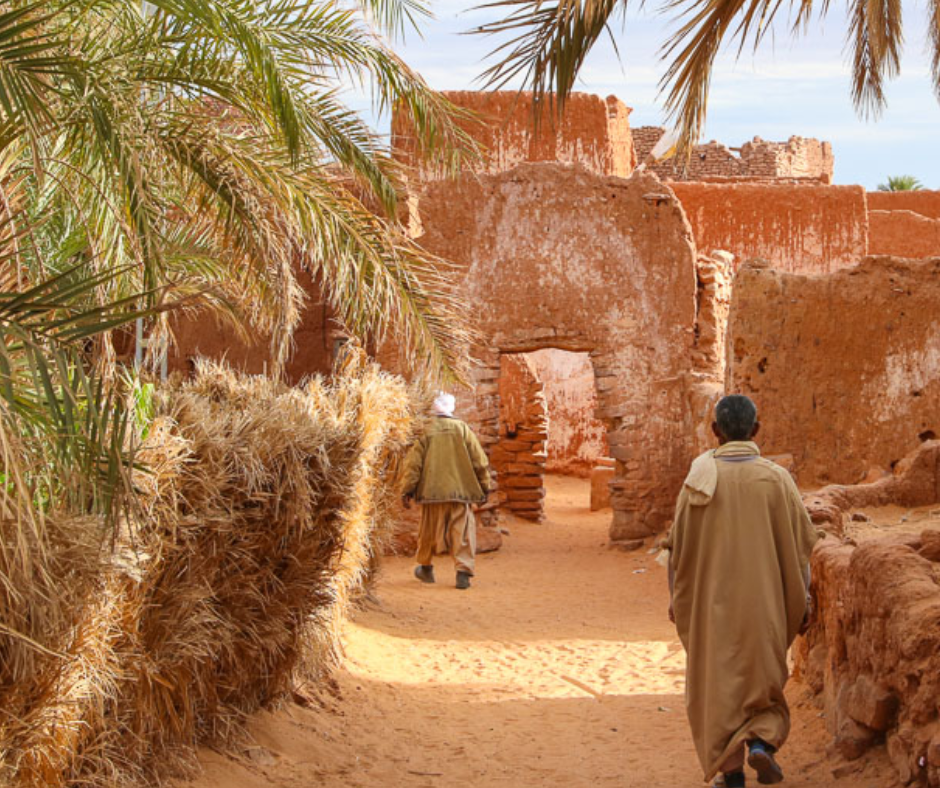
Under the palms the air feels cooler and damper. You can hear water running in the open channels and the wind in the fronds overhead.
Walk slowly and in silence on the dirt paths. The plots are private gardens, so stay on the paths or go with someone local, and keep your shoes on, since palm spines are sharp.
Packing for a Sahara yoga retreat
- A thin travel mat or a cotton sheet: soft sand does the cushioning, and a thick mat only collects grit
- A sleeping bag rated to about 0 °C for December to February, or a liner if the agency provides bedding
- Warm layers, thick socks and a windproof jacket for evening sessions
- A headlamp, a wide-brimmed hat, sunglasses and strong sunscreen
- A scarf against sun and sand
- Water shoes with grip and a small microfiber towel for the gueltas
- A daypack that holds at least three liters of water
Before a retreat in Djanet or Timimoun
What does a desert yoga program cost?
Around EUR 2,000 for a nine-day Djanet program in 2025-26, with international flights, the visa and travel insurance on top. A private trip for a small group costs more per person.
I'm fairly new to yoga. Will I keep up?
Yes, if the program is gentle. Desert sessions are mostly slow hatha and yin, which beginners can follow. The walking is the harder part: several hours a day on sand and rock, with the heat building toward midday. If you can walk four or five hours with a daypack, you'll manage; tell the organizer your level before you book.
Which visa do I need for Djanet?
Most nationalities need one. Either apply at an Algerian consulate before you travel, with an agency's invitation and itinerary as proof of stay, or use the visa on arrival for organized Sahara trips, which covers Djanet and which an approved Algerian agency requests before you fly; that fee is paid on arrival.
Can I bring my own studio group?
Yes, and with so few fixed group dates it is often the simplest way. You choose the base and the dates; we arrange the agency, the crew, camps or guesthouses, domestic flights and the visa paperwork, and your teacher runs the sessions. Start at least two months ahead, since consulate visas alone take two to three weeks.
Plan any of this for late October to April. A week suits one base, Djanet for trekking or Timimoun for a slower guesthouse stay; doing both usually means flying back through Algiers in between. We arrange yoga retreats in Sahara camps and Timimoun guesthouses, find yoga teachers for groups and build custom itineraries around your dates and level, so tell us what you are looking for.


