


You can reach Algeria by ferry from France (Marseille and Sète) or from Spain (Alicante, Almería, Barcelona and Valencia). Marseille to Algiers takes about 20 to 26 hours, while the crossings from Spain to Oran and Mostaganem are much shorter, roughly 10 to 15 hours.
A foot passenger paid roughly €150 to €250 one way in 2026, more on July and August dates, and a car and a cabin add several hundred euros. Most sailings run from mid-June to mid-September, when the Algerian diaspora in France and Spain heads home for the summer, so the best dates sell out months ahead.
Five companies sail the routes: Corsica Linea, Algérie Ferries and, in summer, Nouris Elbahr from Marseille, GNV from Sète, and Baleària from Valencia, Barcelona and Almería. Outside the summer the Marseille timetable thins out, with Corsica Linea dropping to a sailing every two weeks from October and Algérie Ferries running five to seven a month in winter. Below are the routes and operators running in 2026 (checked October 2026), the paperwork for you and your car, how to choose a cabin, and what happens when you land.
Mediterranean Ferry Routes to Algeria
Ferries from France: Marseille and Sète
Marseille has the most sailings to Algeria. In 2026 Corsica Linea and Algérie Ferries (the state-owned national line, run by ENTMV) both sailed from Marseille to Algiers, and the private Algerian company Nouris Elbahr Ferries added Marseille to Algiers sailings between mid-June and the end of October.
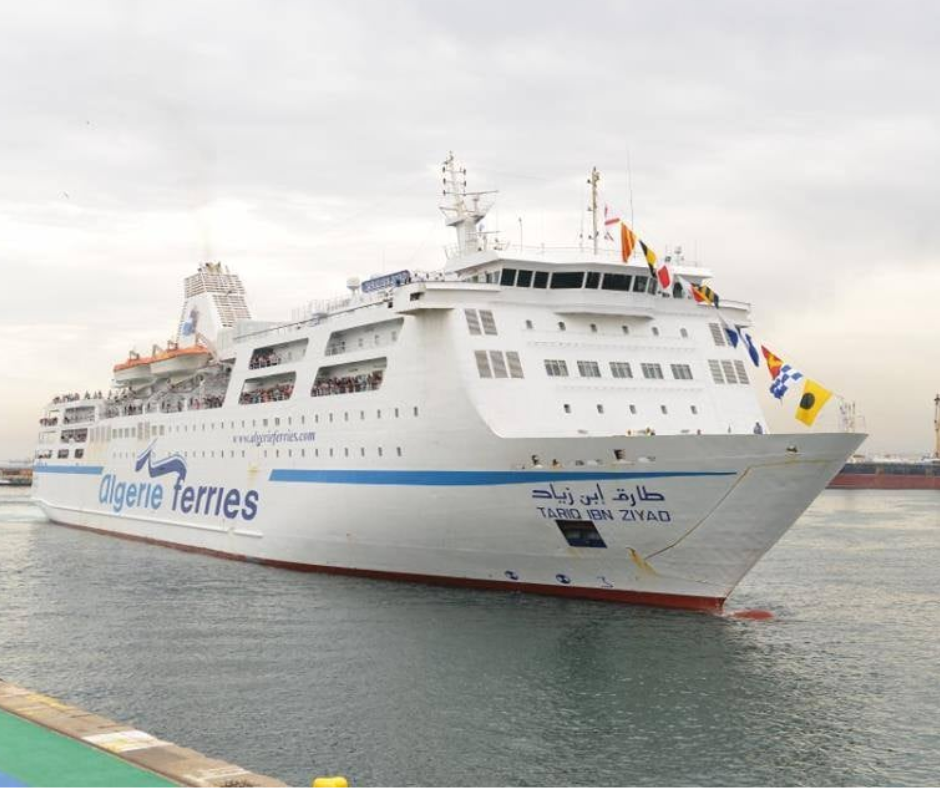
Marseille to Algiers takes about 20 to 22 hours with Corsica Linea and 22 to 26 hours with Algérie Ferries, depending on the ship and the weather.
For Kabylie and the east, Corsica Linea and Algérie Ferries sail from Marseille to Béjaïa and Skikda, and Algérie Ferries also goes to Annaba and Oran. From Sète, GNV sails once a week to Algiers and to Béjaïa, and there are summer sailings to the eastern ports with the other two companies. Allow roughly 20 to 26 hours on these routes too (Marseille to Béjaïa is about 22). Some travelers sail to Tunis instead and continue from Tunisia to Algeria by train or road.
Ferries from Spain: Alicante, Almería, Barcelona and Valencia
Spain is closer, so the crossings are shorter, and starting fares are often lower than from France.
Baleària is the main Spanish operator. It sails from Valencia to Mostaganem (about 14 to 15 hours), Oran and Algiers, and from Barcelona to Algiers (about 14 hours) and Oran. In July 2026 Baleària completed its takeover of Armas Trasmediterránea's ships in the Alboran Sea, and from September it sold the weekly Almería crossings to Oran and to Ghazaouet under its own name. At roughly 9 to 11 hours, Almería is the shortest hop to western Algeria, and Ghazaouet is the closest port to Tlemcen.
Alicante is the other big Spanish port for Algeria. Algérie Ferries and Nouris Elbahr Ferries both sail from there to Algiers and Oran, and it is a popular route for families driving to western Algeria.
Ferry Operators to Algeria in 2026
Five companies sold crossings to Algeria in 2026. Algérie Ferries has the widest network: Marseille, Sète, Alicante and Barcelona to Algiers, Oran, Béjaïa, Skikda and Annaba, with its summer season running from 15 June to 15 September. Its schedule changed several times in June 2026, so check your sailing again a few days before you leave.
Corsica Linea put its largest ship, the Méditerranée (2,800 passengers and 690 vehicles), on Marseille to Algiers from mid-June to mid-September 2026. Outside the summer the Jean Nicoli and the Danielle Casanova cover its Algeria lines. All three have large car decks, restaurants and both inside and outside cabins.
Grandi Navi Veloci (GNV) runs one sailing a week each way from Sète to Algiers and from Sète to Béjaïa. GNV is Italian, but we found no sailings from Italy to Algeria for 2026.
Nouris Elbahr Ferries is a private Algerian company. For 2026 it sold Algiers to Marseille, Algiers to Alicante and Oran to Alicante, on its ship the Cracovia, from 15 June to 31 October. It is newer and smaller than the others, so read the cancellation terms before you pay. Baleària, the fifth company, is covered in the Spain section above.
How much the ferry to Algeria costs
Fares depend on the month far more than on the route. These are fares published for summer 2026, in euros:
| Route and ticket | 2026 fare |
|---|---|
| Sète to Béjaïa, GNV, foot passenger, one way | From EUR 91 (promotional "from" fare) |
| Sète to Algiers, GNV, foot passenger, one way | From EUR 143 |
| Alicante to Algiers or Oran, Nouris Elbahr, foot passenger, one way (August) | From EUR 168 |
| Marseille to Algiers, Corsica Linea, foot passenger, one way | EUR 150 to 220 in June, 220 to 310 in July and August, 140 to 200 in September |
| Marseille to Algiers, Corsica Linea, car and driver, one way | EUR 380 to 520 in June, 520 to 720 in July and August, 360 to 490 in September |
| Algérie Ferries, one adult and a car, return, July | About EUR 930 |
| Family of four, car and cabin, return, mid-July to mid-August | About EUR 2,500 (Corsica Linea, Marseille to Algiers) to 2,700 (Algérie Ferries, Marseille to Béjaïa) |
The cheapest tickets are reclining seats on June or September sailings, booked early. In 2026 the lowest advertised foot-passenger fares came from Sète with GNV and from Alicante. Algérie Ferries opened its summer 2026 sales on 22 February, and its autumn and winter sailings are on sale through January 2027.

Documents and Border Controls at the Port
You go through two sets of checks: exit controls in France or Spain before you board, then Algerian police and customs when you land. In summer the Algerian side is slow and thorough.
Without a visa you won't be allowed to board. Without the right car papers, customs can hold your vehicle at the port.
Visa and Passport Requirements
Unless you hold one of the few exempt passports, you need a visa from an Algerian consulate before you sail. That includes British, EU, US and Canadian citizens, and the ferry terminal does not issue ordinary tourist visas. Organized tours that include the southern (Saharan) wilayas can use the visa on arrival instead, but an approved Algerian travel agency has to request it for you ahead of the trip.
Your passport needs at least six months' validity from your arrival date and two blank pages.
For the application, you prove where you will stay with one of three documents: an invitation and itinerary from an Algerian travel agency, a hotel booking, or a certificat d'hébergement certified by your host's town hall. Most nationalities also need travel insurance (the London consulate doesn't ask British and Irish citizens for it). Carry printed copies of these and of your ferry ticket, because the police on arrival often ask where you are staying.
Taking Your Car: Temporary Import and Insurance
You can take a foreign-registered car, motorcycle or camper van to Algeria, but customs keeps track of it from the moment it rolls off the ship.
At the arrival port, customs issues a titre de passage en douane (TPD), the temporary import document that ties the vehicle to you. For foreign visitors it is valid for 90 days, according to France's foreign ministry, and the vehicle has to leave Algeria before it runs out.
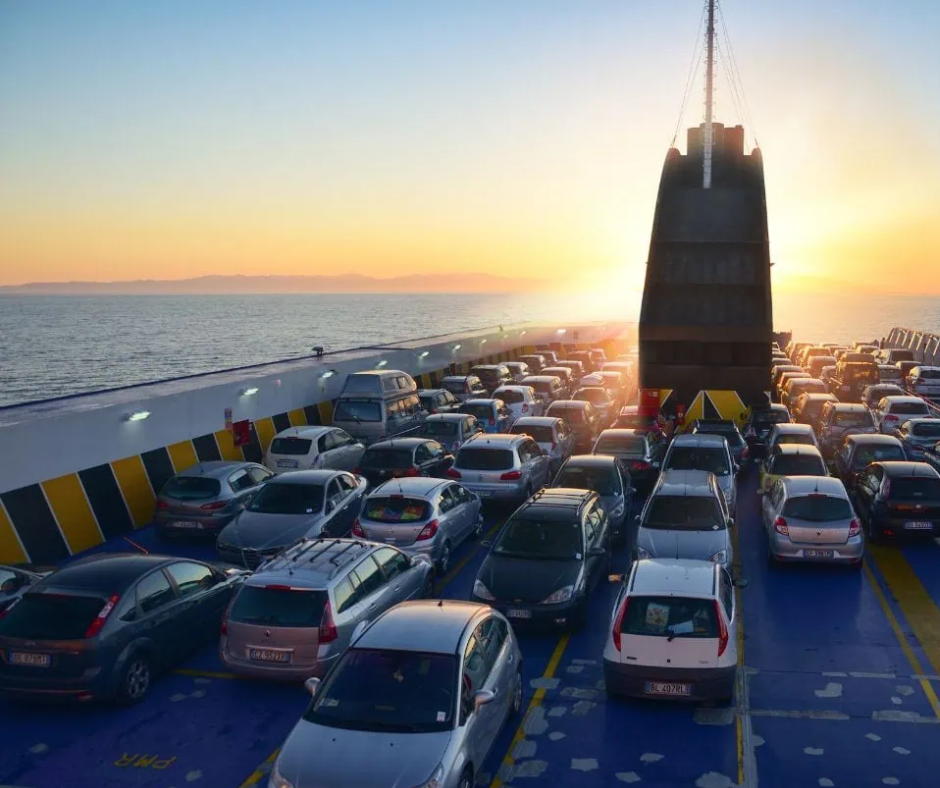
The same ministry says visitors arriving by sea take out Algerian car insurance at the port, at the same time as the TPD, so budget for it unless your insurer confirms in writing that your policy covers Algeria. Main highways are in good shape, though sandstorms can cut visibility on desert routes, as our travel guide to Algeria warns.
The registration document must be in the name on your passport, and you need your driver's license plus an international driving permit in the 1949 Geneva format. Algeria's new road code (Law 26-09, in force since May 2026) bans handheld phones at the wheel, makes rear seatbelts compulsory where fitted and keeps children under 10 out of the front seats. If all of this sounds like too much paperwork, sailing as a foot passenger and using our Algeria car rental guide to hire a car on arrival is the simpler option.
Port Check-In Times and the Summer Rush
Car ferries take a long time to load, because every vehicle goes through police and customs checks before it boards.
Your check-in time is printed on your ticket. Corsica Linea, for example, asks drivers on its Algeria lines to arrive three hours before departure and foot passengers two hours before. In July and August, come earlier than that.
July and August are the peak, when much of the Algerian diaspora drives home for the summer. Ships sell out early and the arrival ports are slow, with customs checking cars one by one. If you can sail in June or September, fares are usually lower and the queues shorter.
Choosing a Seat or Cabin on the Ferry
A crossing from Marseille takes most of a day and a night, so where you sleep matters, especially if you have to drive off the ship and through customs the next morning.
Cabin Types Compared
The cheapest tickets give you a reclining (pullman) seat in a shared lounge, which can be noisy and crowded overnight.
A cabin gives you a bed and a door that locks, and most cabins have their own shower and toilet.
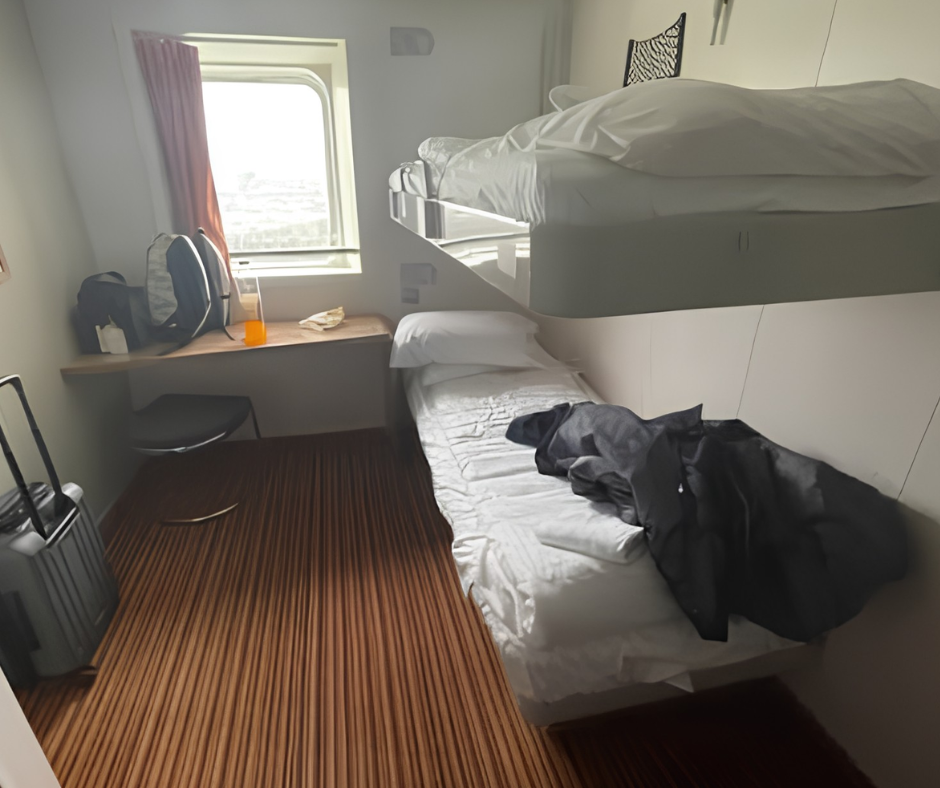
Inside cabins are cheaper and have no window, which some people find better for sleeping. Outside cabins have a porthole or window.
Families can book four-berth cabins, and operators keep a small number of cabins adapted for wheelchair users. Both go early for July and August, so book when the summer sales open (Algérie Ferries opened its 2026 sales on 22 February).
Packing a Cabin Bag for the Crossing
Once the ship sails, the car decks are closed, and you can't go back to your car or the luggage in it until they reopen shortly before arrival.
Pack a small bag for the crossing: your passport and travel papers, phone and chargers, any medicines in their original boxes, a warm layer for the air-conditioned lounges, and toiletries.
One small bag is also much easier to carry up the steep stairs from the car deck than a suitcase.
Luggage allowance and roof loads
Algérie Ferries lets foot passengers carry two hand bags of up to 15 kg each. On its France routes the hold allowance is 60 kg in a cabin and 30 kg in economy.
On the Spain routes it is 60 kg for everyone, and goods for sale don't count as luggage. Check your own operator's allowance when you book.
Drivers can fill the car, but not the roof. From 30 September 2026, Algérie Ferries bans luggage stacked on roofs on Marseille to Skikda and limits cars there to 2 m in height, so expect the same checks on other lines.
Traveling with a Pet: Rules and Kennels
Your dog or cat needs a microchip, a valid rabies vaccination and a vet's health certificate; confirm with the Algerian consulate what else Algeria asks for. Coming back is harder. The EU treats Algeria as an unlisted country for rabies, so a pet returning to the EU also needs a rabies antibody blood test, taken at least 30 days after vaccination and at least three months before re-entry. If the test is done before you leave Europe, the three-month wait doesn't apply on the way back.
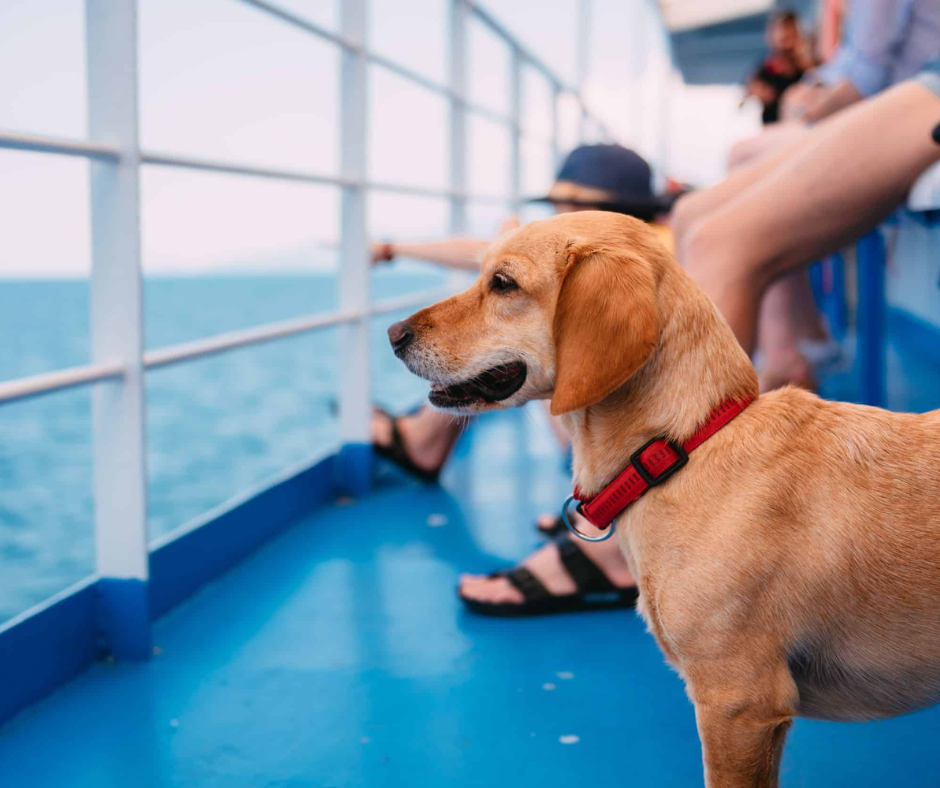
On Corsica Linea's Algeria lines, animals travel in ventilated kennels and are not allowed in cabins, lounges or on deck (assistance dogs excepted); bring a padlock for the kennel. Baleària has pet areas on board, so ask when you book whether a pet-friendly cabin is available on your sailing.
You can't leave an animal in your car during the crossing, and kennel access is often limited to set times, so read your operator's rules before you book.
Life on Board the Ferry
A day at sea is long. A little planning makes it more comfortable and saves money.
Food and Water on Board
Large ferries have a self-service cafeteria, sometimes a restaurant, and a bar, but prices are well above what you would pay ashore. Baleària includes meals with cabin bookings on its Almería lines.
Expect simple hot dishes, and long queues at mealtimes in summer.
Bring your own snacks (dates, nuts, bread, fruit) and a couple of liters of water, so you can eat when you want.
Seasickness, phone signal and Wi-Fi
- The western Mediterranean can be rough, more often in spring and autumn than in summer. If you're prone to seasickness, ask for a cabin in the middle of the ship on a lower deck, and take tablets (or ginger) about an hour before departure, not once you feel ill.
- Fresh air on an open deck and keeping your eyes on the horizon help.
- You lose mobile signal soon after leaving port. Some ships switch on an onboard network that bills at maritime roaming rates, so turn off data roaming.
- Onboard Wi-Fi, where it's sold, runs over satellite and is slow. Download your tickets, a copy of your visa, offline maps and something to read before you board.
Arriving in Algeria: Leaving the Ship and Onward Travel
Arrival is slow in summer, when hundreds of passengers and cars go through police and customs at once. It helps to know the order of things.
How Getting Off the Ferry Works
As the ship approaches port, an announcement tells passengers to get ready, but drivers can't go down to the car decks until the ship is moored.
Wait in the lounge or your cabin until the crew opens the stairwells; they are narrow and fill up fast.
When you reach your car, start the engine only when the deck crew signals, and drive off slowly: the ramps are steep and the lanes tight.
Foot passengers leave by a separate gangway into the terminal for passport control and customs. Without a car, you will rely on taxis, trains and buses from the port, so it is worth reading up on public transport in Algeria before you sail.
Algeria's ferry ports
Algiers: the ferry terminal is in the city center, next to the railway station, so you can walk or take a short taxi ride to most hotels. Oran: the port lies along the city center and serves the west.
Mostaganem: about 80 km east of Oran, with the port in town; it takes the Valencia sailings. Ghazaouet: 72 km from Tlemcen and 170 km from Oran, the closest port for the far west.
Béjaïa: the port for Kabylie and Gouraya National Park. Skikda: the nearest port to Constantine. Annaba: a new maritime station opened in July 2023, near the bus station.
Money and the last checks at the port
Outside large hotels and airline offices Algeria pays in cash dinars. The port exchange counters, where they exist, give the official rate of about 150 DZD to the euro and may be shut when a ship docks late. Changers on the informal market (technically outside the exchange-control law, but open) gave about 275 in autumn 2026, so arrange your first transfer before you sail and let your host or agency find you a trusted changer.
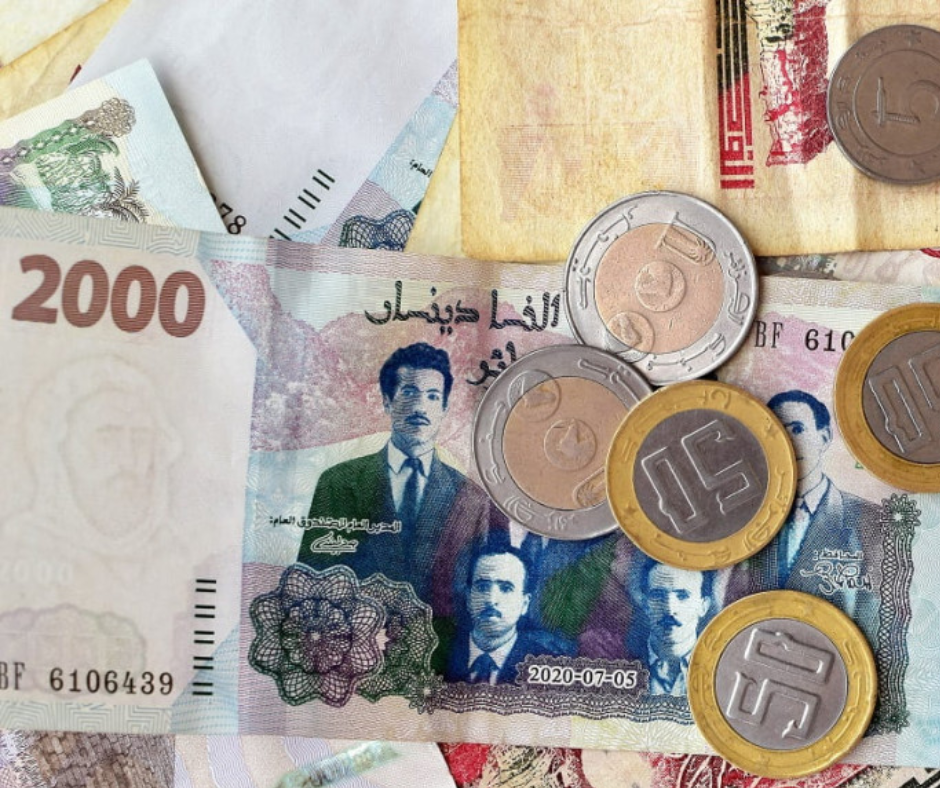
Foreign currency above €1,000 has to be declared on arrival, online beforehand through the customs system ALCES or on a paper form at the port, and if you declare that much, keep a bank exchange receipt, because customs may ask for official receipts when you leave.
Drivers then go through a final check at the port gate, where customs matches the car, its papers and your TPD before letting you out.
Keep the TPD and the insurance certificate in the car for the whole trip: police checkpoints ask for them, and customs checks the TPD again when you leave by sea.
Sailing back from Algeria
At Algerian ports, Algérie Ferries opens check-in four hours before departure and closes it an hour before; vehicle registration closes an hour and a half before. Each passenger needs a passport and visa, the police departure form and the boarding card. Drivers also need the original registration document, the TPD for customs to validate, the vehicle police form, and a power of attorney if the car isn't theirs.
Spend your last dinars before you board: non-residents can't take the notes out.
Before you sail to Algeria
What is the cheapest way across by sea?
A reclining seat from Sète with GNV, booked early for June or September: in 2026 it started at EUR 91 one way to Béjaïa and EUR 143 to Algiers. Nouris Elbahr from Alicante started at about EUR 168, and every line costs far more in July and August.
Can I sail from Italy instead?
Not in 2026. GNV has announced a Genoa to Algiers line for 2027, but it is still awaiting authorization and has no date.
Which crossing from Spain is shortest?
Almería to Ghazaouet or Oran with Baleària, about 9 to 11 hours. Ghazaouet is 72 km from Tlemcen, so it suits the far west; Oran has more onward connections. Valencia to Mostaganem comes next, at about 14 hours.
When should I book a July or August sailing?
As soon as sales open for July and August: Algérie Ferries opened its summer 2026 sales on 22 February, and family cabins and car spaces on peak weekends go first. June and September sailings are less in demand and cheaper, but cabins still go early.
If you are not bringing a car, compare the fare with a flight, which is far quicker; the ferry makes most sense when you are taking a vehicle or a lot of luggage.


