

Algeria suits team building if your group wants shared physical tasks: quad biking and 4x4 days in the dunes around Djanet, sea kayaking on the Jijel coast, a guided walk through the Algiers Casbah, strategy sessions in the M'Zab Valley. The hard part is logistics. Every participant needs a visa, and the Sahara needs an approved agency and a cool-season date.
Below are the activities first, then visas, seasons, travel policy and pacing. If some of your colleagues have never been, our Algeria travel guide makes a useful briefing before the trip.
Why Algeria Works for Corporate Team Building
Changing Settings Every Few Days
Most corporate retreats are an extended meeting in a nicer room with better coffee. An Algeria trip works the other way round: the team moves every few days, sleeps in very different places and has to rely on each other away from office routines.
Put a finance director and a new hire in the same 4x4 for a long desert drive and the org chart tends to matter less.
One workable route: the coast (Algiers, then Jijel or Béjaïa), a mountain day in Kabylie, then a domestic flight south to Djanet. The Sahara leg needs that flight; driving down from Algiers would eat several days.
Each move gives a facilitator a reset: new routines, new problems to solve and a chance to reshuffle who travels with whom.
The trade-off is fatigue. Changing base every two nights wears people out, so on a week-long trip we'd keep it to three bases at most.
Working Together in Remote Places
In the desert or on a wild stretch of coast, the tasks are simple and real: walking up dunes, finding the way across open ground, carrying water, putting up camp.
People who rarely speak in the office end up reading a map together or working out where to lay the mats for dinner.
Good outdoor exercises reward clear roles and quick decisions: pacing a long walk so the slowest person never falls behind, or splitting the day's water so it lasts to camp. Nobody needs a role-play when the task is real.
Guided treks in the Djurdjura in Kabylie or on the Tassili n'Ajjer above Djanet work well for this, and our guide to hiking tours in Algeria compares the main routes, the Hoggar included.
Which activity, where and when
| Activity | Where | Best months | Length | Fitness |
|---|---|---|---|---|
| Quad biking convoy | Dunes around Djanet | October to April | Half day | Low; passenger seats for nervous riders |
| 4x4 navigation and recovery | Dunes near Djanet | October to April | Full day | Low to moderate |
| Desert camp and debrief by the fire | Tassili or Tadrart, from Djanet | October to April | Overnight | Low |
| Tandem sea kayaking | Jijel corniche | June to September | Half day | Moderate |
| Beginner dive | Boulimat, Béjaïa | Summer | Half day | Moderate; comfortable in water |
| Casbah observation walk | Algiers | All year; avoid summer middays | Half day | Moderate; many steps |
| Strategy sessions | Guesthouse in the M'Zab palm groves | October to April | One or two days | Low |
| Horse riding | Equestrian centers near Algiers and Béjaïa | Spring and autumn | Half day | Low to moderate |
| Escape room | Algiers | All year | About 60 minutes | Low |
Sahara Adventures for High-Energy Teams
Quad Biking on the Dunes Around Djanet
Djanet, the oasis town at the foot of the Tassili n'Ajjer, has local operators that rent quads and lead rides on the dunes around town. It's a quick way to get everyone comfortable on soft sand.
Run it as a convoy with a fixed order. Riders learn to read the dune line, keep a steady throttle and shift their weight to stay upright. Helmets are non-negotiable.
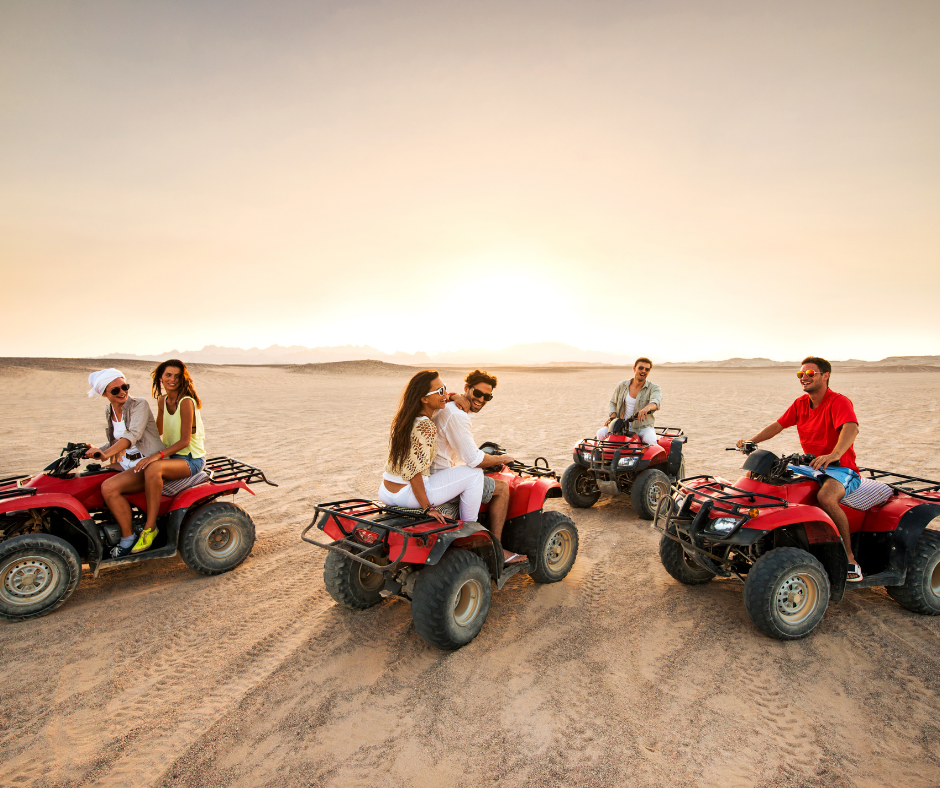
The useful part for a team is convoy discipline. The lead rider checks behind every few minutes and stops when a gap opens.
When someone bogs down in soft sand, the whole group stops and helps dig out. Nervous drivers can ride as passengers on two-seat quads.
Ride in the early morning or late afternoon, when the sand is cooler. In the deep south foreign visitors are with an approved Algerian agency in any case; where the authorities put a police or gendarmerie escort on a route, the agency organizes it, and for a company group the escort simply becomes part of the convoy.
Off-Road Challenges in Four by Four Vehicles
A 4x4 day in the dunes near Djanet adds a navigation and recovery exercise.
The agency's drivers do all the driving on the dunes: heavy vehicles and soft sand are no place for a first lesson, so nobody in your group takes the wheel there. The team handles everything else. One person navigates with a compass and paper map and calls the route to the driver, and the phones stay in the bag.
Another steps out as spotter on blind crests and guides the driver with short calls: a little left, hold, stop.
When a vehicle bogs down, which happens on any dune day, everyone gets out. Under the driver's direction the team lets some air out of the tires, digs out the wheels and lays sand ladders in front of them.
A large team means a convoy of several 4x4s, which helps the exercise: give each vehicle its own navigator and compare routes at camp in the evening.
Mediterranean Coast Activities for Group Cohesion
Kayaking Along the Jijel Coast
The Corniche Jijelienne, the coast road between Jijel and Béjaïa, runs past a string of coves and cliffs, and supervised kayak and paddleboard outings start from some of its sheltered bays in summer.
In a tandem kayak, two people paddle as one engine. Before launching, each pair agrees on its calls (power, easy, stop), or the first half hour goes in circles.
Plan it for June to September and book ahead for a big group: kayak rental on this coast is seasonal and still small-scale.
There are few facilities on the wilder stretches, so the team has to plan its own water, snacks and rest stops.
Jijel fills with Algerian holidaymakers in July and August. June and early September are quieter on the water.
Scuba Diving Training Near Béjaïa
Underwater nobody can talk, so divers rely on eye contact and standard hand signals. That makes a beginner dive a good trust exercise for a team.
Book it through a local club. Béjaïa has one at Boulimat beach, west of the city, that runs sessions from first-timers to experienced divers. First dives should stay shallow and calm until everyone is comfortable breathing from a regulator.
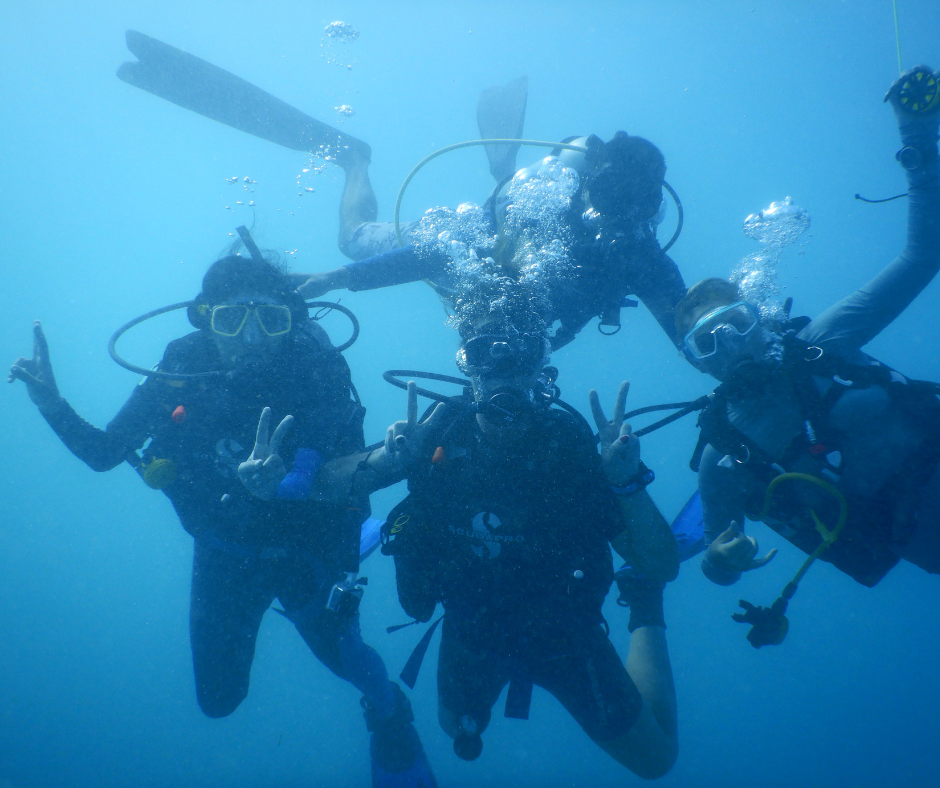
Experienced divers head for the drop-offs below Cap Carbon and Cap Bouak in Gouraya National Park. Let the club decide on the day whether the currents allow it.
Buddy pairs check each other's air and depth throughout the dive. One scheduling catch: leave at least 24 hours between the last dive and a flight, so don't dive the day before you fly south.
Culture in Algiers, strategy in the M'Zab
An observation walk in the Algiers Casbah
Begin in Algiers with a guided walk through the Casbah, the old town on the hillside, which UNESCO listed in 1992. Its Ottoman citadel dates from 1516 to 1592.
The lanes are steep and narrow and many houses are in poor repair, so the walk is slow. That suits an observation exercise: give each person one theme to track instead of just following the guide.
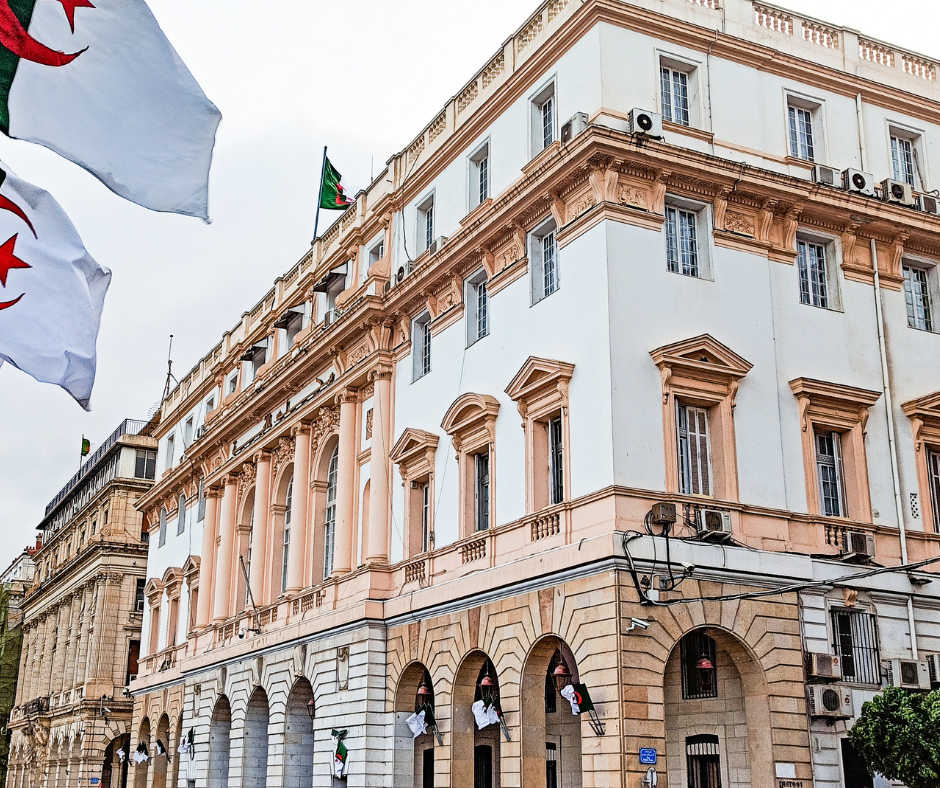
One person can note how the houses are built around inner courtyards for light and air, another can track the old public fountains, and someone else can map the small trades and workshops along the way. Ask before photographing residents.
After the stairs, regroup at a café.
Over coffee or mint tea, each person reports back. How a crowded neighborhood shares space, water and trade turns out to be a decent prompt for talking about how your own teams share theirs.
Strategy Retreats in the M'Zab Valley
From Algiers, head about 600 km south to Ghardaïa, the largest town in the M'Zab Valley. Fly, or count on a full day on the road.
The valley's five walled ksour were founded between about 1012 and 1350 and have been on the UNESCO list since 1982. Their planned layout (mosque at the top, houses stepping down the hill, palm groves outside the walls) makes a real-world case study in how a community organizes itself.
Visit Beni Isguen and El Atteuf, the oldest of the five, and look at how the water works: dams on the wadi catch the rare floods and share them among the palm groves, with wells for the rest. Beni Isguen admits visitors only with a local guide, taken on at the gate, and only until sunset. Cover shoulders and legs, and don't photograph people, especially women.
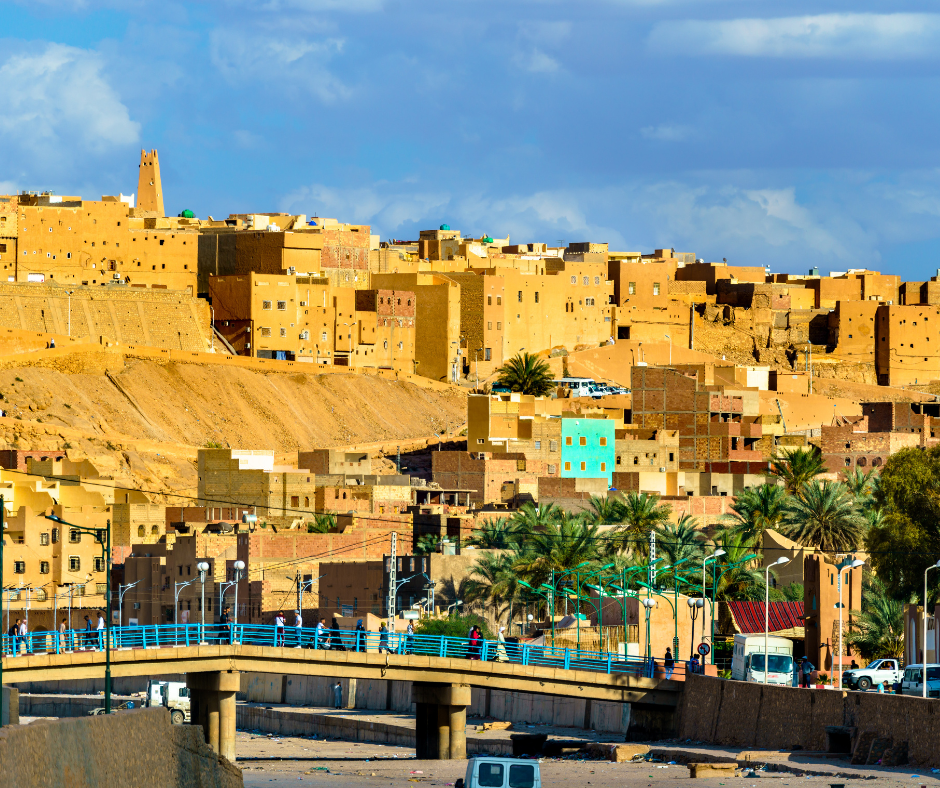
Hold the strategy sessions in a traditional guesthouse in the palm groves. These are small, so a team of more than a dozen may need a hotel in Ghardaïa for sleeping and the guesthouse for the working day. Smaller teams can also stay with local families, as described in our Algeria homestay guide.
Bring your own projector and extension cords, and don't count on fast Wi-Fi. Sessions that work on paper travel best.
Night Under the Stars in a Desert Camp
Setting Up Camp Together
On a Tassili or Tadrart trip from Djanet, nights are spent at a desert bivouac, in light tents or on mats under the open sky.
The guides and cook can do it all, but the team gets more from the evening if it pitches in.
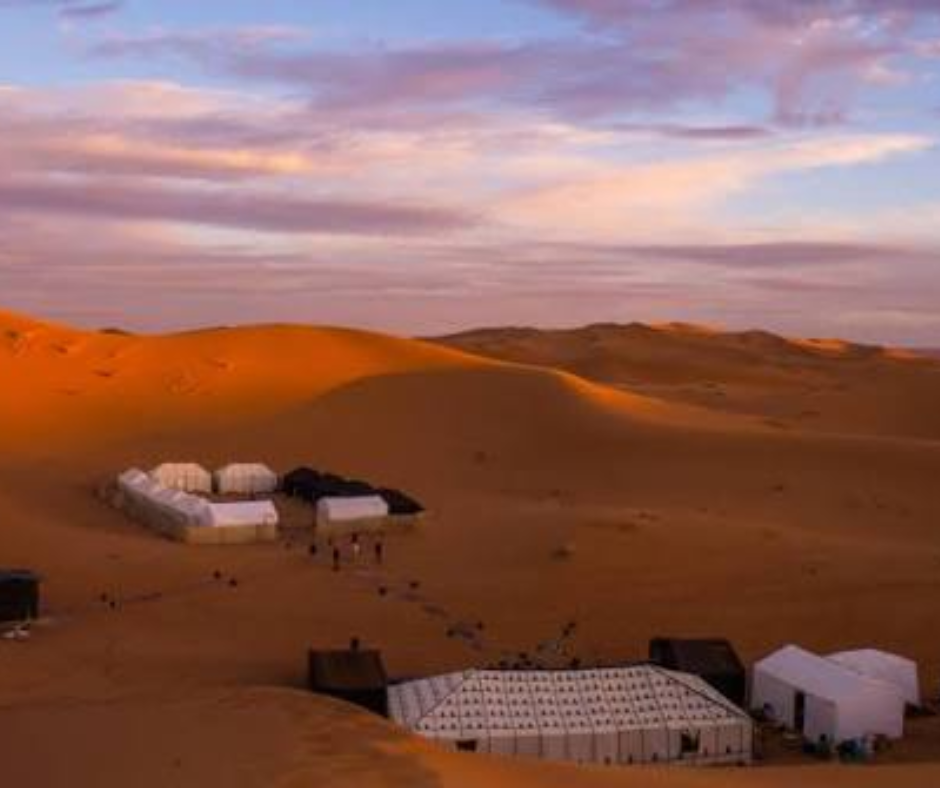
Split the jobs: one group puts up the tents, another lays out mats and blankets, and a few help the cook and look after the fire.
Ask the cook to show the group how to make taguella, the Tuareg bread baked under sand and embers and then broken into a sauce. Pack warm layers too: from December to February, nights around Djanet can drop close to freezing.
Stargazing and Evening Reflection Rings
After dinner, gather round the fire for the day's debrief.
Phone coverage is patchy or absent in the remote south, so out at the bivouac there is little to compete with the conversation.
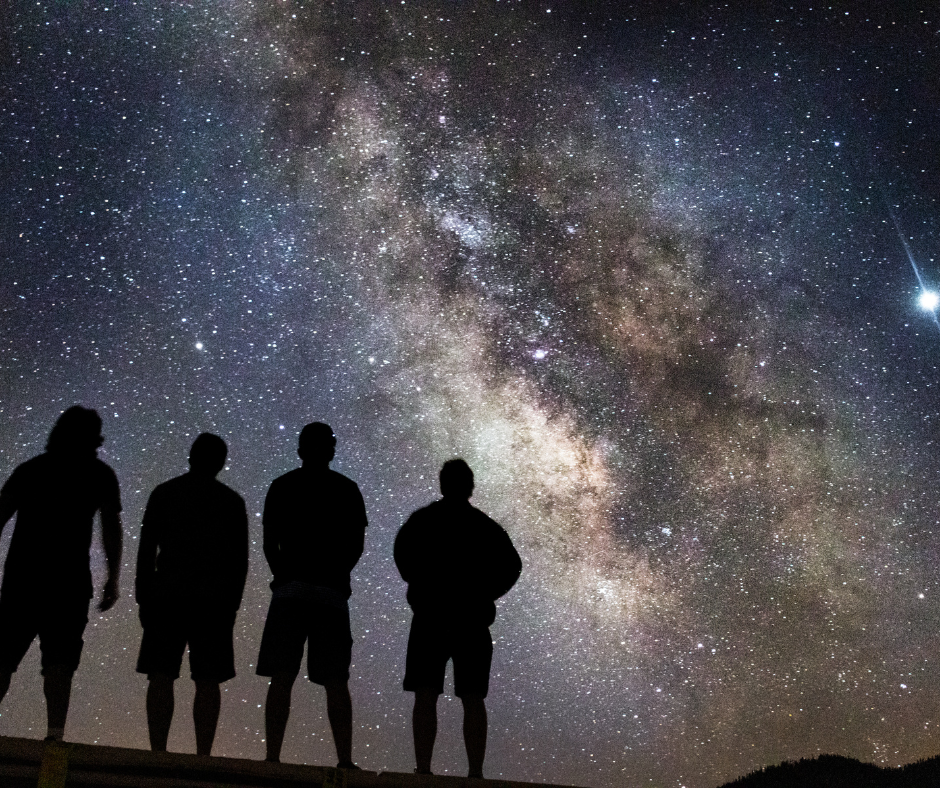
Guides sometimes join in and point out the stars they use to keep direction, the North Star first. Bring a tripod if anyone in the group enjoys photography, since the desert night sky is one of the highlights of any Algeria photography tour.
Keep the format simple: each person names one high point and one hard moment from the day, and work talk waits until morning.
Problem Solving Days in Northern Algeria
Leadership Lessons on Horseback
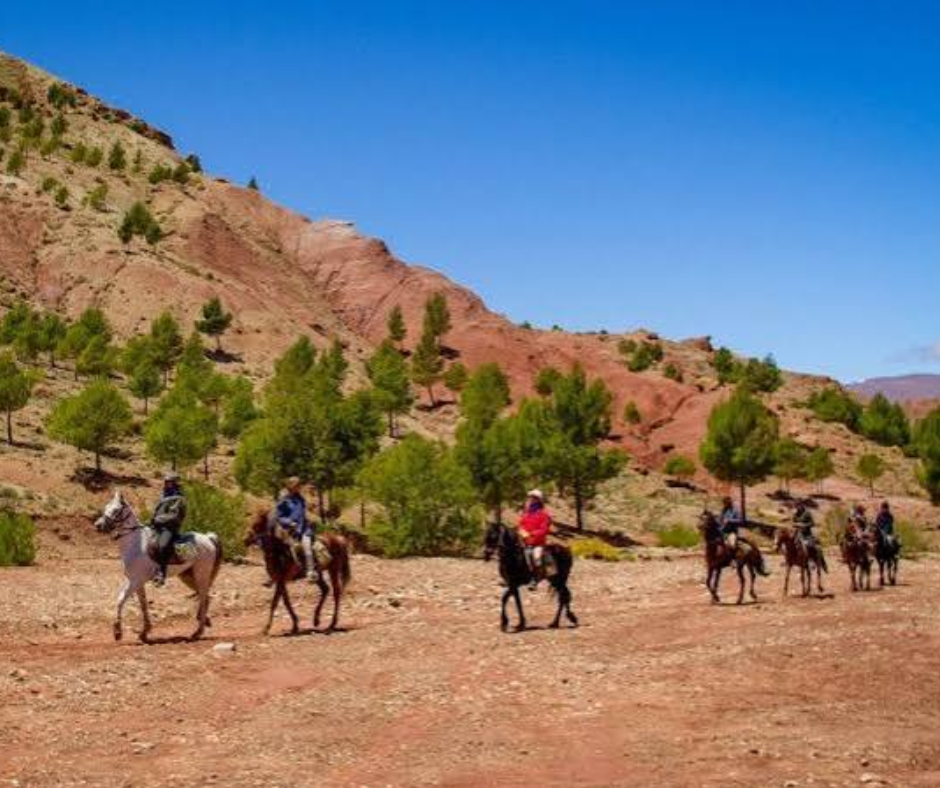
Horse riding in northern Algeria mostly runs from equestrian centers: around Algiers (Dely Brahim and Aïn Taya, for example) and on the coast road near Béjaïa, where rides go along the beach. Multi-day mountain treks on horseback are hard to find, so plan riding as a half-day.
Ask the center whether the group can help groom and tack up before the ride, and rotate who rides at the front, with the instructor alongside. The lead rider sets the pace and calls out obstacles to the line behind. Horses react to a nervous rider, which beginners notice fast.
Mental Agility in Algiers Escape Rooms
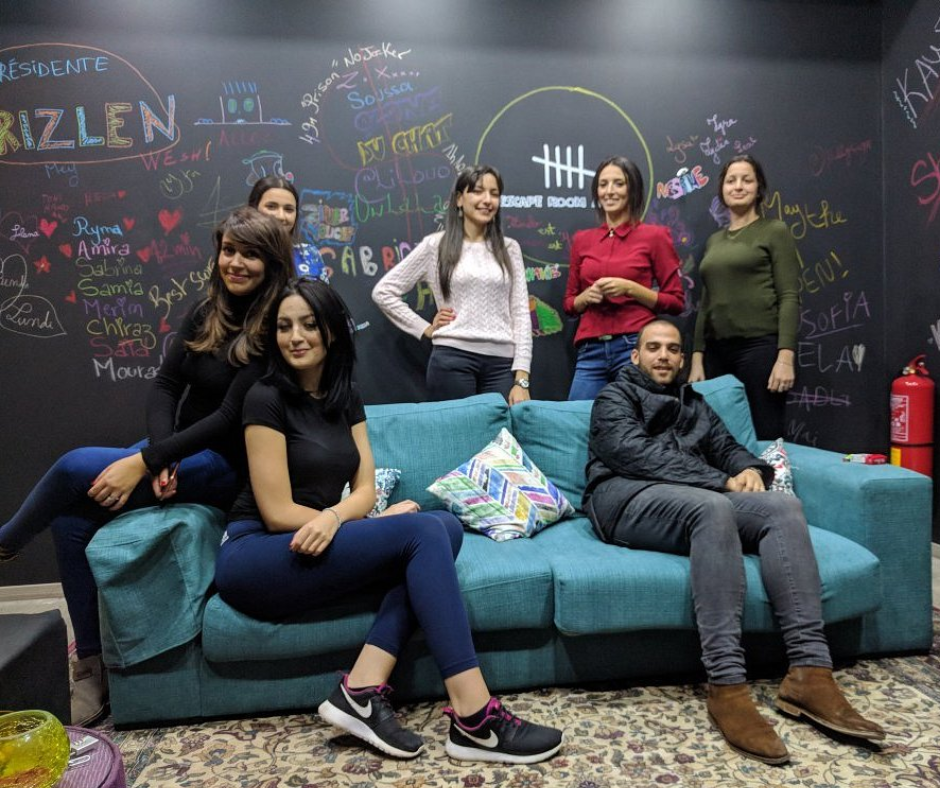
For a city day, Algiers has a handful of escape rooms; one in Draria was taking bookings in 2026. Venues open and close, so confirm before you build a day around one. Rooms take small groups (up to about eight or nine players), so a bigger team splits into squads and compares times afterwards.
Before going in, give out roles: a timekeeper, someone who tracks the clues found, and a lead who makes the final call. Once the clock starts (games usually run 60 minutes), say every find out loud, and debrief straight afterwards: where did information get stuck? Check whether the game runs in French, Arabic or English.
Planning basics for a company group
| Planning point | What works for teams |
|---|---|
| Bases | Algiers and the Casbah, the Béjaïa and Jijel coast, Kabylie and the M'Zab Valley, plus Djanet and the Tassili if you add the Sahara |
| Seasons | October to April for the Sahara; March to May or September to November for the northern cities and mountains; June to September for the coast activities |
| Trip length | Four days for a program in the north, a week once the Sahara is in |
| Visas | One per participant: from a consulate (GBP 85 in 2026 and about 10 working days in London) or, for organized trips that include the south, the Sahara visa on arrival |
| Paperwork deadline | Everyone's documents in hand about two months before departure |
| Our part | Visa invitation letters, airport pickup, transfers, guides, camps, host families and the activities |
Sample company programs
Four days in the north
| Day | Base | Activity | Team exercise and debrief |
|---|---|---|---|
| 1 | Algiers | Airport pickup; afternoon walk through the Casbah | Observation themes, report-back over mint tea |
| 2 | Béjaïa | Drive east along the coast (about 220 km); beginner dive or kayak in summer | Buddy pairs and agreed calls; debrief at dinner |
| 3 | Béjaïa | Gouraya National Park ridge walk; lunch with a Kabyle host family | Pacing the walk to the slowest person |
| 4 | Algiers | Return to Algiers; closing session | One decision the team takes home |
A week in the north and the Sahara
| Day | Base | Activity | Team exercise and debrief |
|---|---|---|---|
| 1 | Algiers | Arrival and Casbah walk | Observation walk, café report-back |
| 2 | Ghardaïa | Flight south; Beni Isguen with a gate guide and its auction | How the valley shares water and space |
| 3 | Ghardaïa | Strategy day in a palm-grove guesthouse | Working sessions on paper |
| 4 | Djanet | Flight to Djanet, usually via Algiers; buffer for delays | Short evening check-in |
| 5 | Desert camp | 4x4 navigation and recovery day in the dunes | Navigator per vehicle; compare routes at camp |
| 6 | Desert camp | Quads in the morning, then the Tassili or Tadrart | Setting up camp; reflection ring by the fire |
| 7 | Algiers | Back to Djanet and fly north; onward flights | Closing round on the flight day |
Logistics and Practical Preparations
Choosing the Season and Packing Gear
The season decides most of the program. For the Sahara you need an approved Algerian agency anyway, and our overview of private tours in Algeria shows what a fully planned trip includes.
For the northern cities and mountains we'd aim for spring (March to May) or autumn (September to November). Kayaking and diving are summer activities, so a coast-heavy trip works best in June or September.
For the Sahara, go between October and April. Daytime heat from May to September makes dune days risky, and December to February brings cold nights, so pack for both.
Every participant needs a visa, so start early. UK, EU, US and Canadian citizens, like most Western nationals, have to apply in advance at an Algerian consulate. In London an invitation and itinerary from an Algerian travel agency counts as supporting evidence; the fee is GBP 85 (2026), and processing takes about 10 working days in person, at least 15 by post, and longer in summer and around Ramadan. One late passport can hold up a whole group's flights, so we'd collect everyone's documents two months out.
If the program includes southern wilayas such as Djanet or Ghardaïa and is an organized tour booked through an approved Algerian agency, the group can skip the consulate and use the visa on arrival. The agency submits the request to the Tourism Ministry, every traveler receives a QR-code authorization that lets them board, and the fee, commonly about EUR 110 depending on nationality, is paid when you land.
It covers up to 30 days. Passports need at least six months' validity, and you will show them at every hotel check-in and on domestic flights.
Djanet is a domestic flight from Algiers, on Air Algérie or its subsidiary Domestic Airlines (formerly Tassili Airlines); in the Saharan season Air Algérie has also run direct Paris CDG to Djanet flights. Book group seats early and check that season's schedule, because frequencies change.
Tell everyone to leave rolling suitcases at home and bring a soft duffel bag: it fits in the back of a 4x4 and survives being strapped to a roof.
Each person needs a daypack, sunglasses, a warm layer for desert nights and broken-in walking shoes.
One cold, sunburned colleague can sour a whole day, so check the kit list before departure. The same kit list works for any group, along with the other logistics of group travel in Algeria.
Djanet is the leg most teams remember best: a sandstone plateau covered in prehistoric rock art, the orange dunes of the Tadrart and evenings in a Tuareg camp, about as far from an office as you can get. Groups who travel with us usually come back surprised by how relaxed and welcoming the south felt compared with what they had read online.
Our desert programs stick to well-tried routes, with a licensed Algerian agency and local Tuareg guides, and none of our trips has had an incident. Because company travel policies differ, have someone look up the official travel advice in force for each part of the route, and confirm that your company's insurance covers it, before the itinerary is signed off.
Food and dietary needs
In the cities you eat in hotels and restaurants, in the M'Zab mostly at the guesthouse, and in the desert the cook prepares every meal from supplies carried in. All meat is halal, and pork is not available. Vegetarian meals are easy to plan, since couscous, vegetable stews and lentils are everyday food. Gluten-free is harder, because bread, couscous and the desert bread taguella are all wheat.
Send dietary needs and allergies with the headcount, so the cook can shop for them. Alcohol is served only in some hotels and restaurants in the north, never in camp.
What drives the budget
The big items are domestic flights, the 4x4s and camp crew, and hotels in Algiers. A larger group shares vehicles and guides, so the price per head falls. On top come the visas (2026 figures), GBP 85 each in London or about EUR 110 on arrival, and tips for the desert crew, about 1,500 to 2,000 DZD per traveler per day.
Balancing High Action with Real Downtime
Pacing matters more than the activity list. Balance the hard days with real rest.
Don't fill every hour with challenges; back-to-back activities wear people out. Aim for one peak moment a day, such as a long hike or a dune session, and leave buffer time after it. Algeria's weekend is Friday and Saturday, so plan meetings with local partners around it.
Downtime is when people recover and talk over what happened, and on a trip with long transfers it is also your margin when a flight runs late. We arrange group and company trips end to end, from the agency invitation letters for everyone's visas and airport pickup to transfers and desert days with local guides, cooks and drivers. To plan your custom corporate retreat with WildyNess, start with three things: your dates, your headcount and how many nights the team can give the Sahara.
Lead times, visas, Wi-Fi and delays
How early should we start organizing?
About three months out, with everyone's passport details and documents in by two months before departure. London takes about 10 working days in person and longer by post or in summer, and one late passport holds up the whole group.
Can the whole group get visas on arrival?
Only if the program includes southern wilayas such as Djanet or Ghardaïa and is an organized tour booked through an approved Algerian agency. That agency files the request and gets each person a QR-code authorization to board, and the fee is paid on landing. A program limited to the north needs consulate visas.
Will there be Wi-Fi for our sessions?
In Algiers hotels, yes. In the M'Zab guesthouses, not reliably, and in the desert there is no electricity or signal for days at a time.
What if the Djanet flight is late or cancelled?
Build in a buffer. We plan Sahara programs with a lighter day after the flight, so a late arrival shortens the program instead of breaking it. Avoid a tight connection with an international flight on the way home.
Can people with very different fitness levels come?
Yes. Most activities have an easy option: passengers on quads, 4x4 days instead of long walks, and walks paced to the slowest person. Tell us about knees, heat tolerance or swimming ability in advance, and we split the group for the hardest parts instead of leaving anyone behind.
This kind of trip suits teams who are reasonably fit, can live with basic comfort for a few nights and will get their visa paperwork in on time. If your group needs a business hotel and fast Wi-Fi every night, keep to Algiers and the north. For a first company trip that mixes both, we'd pick November or March: the Casbah, two nights in the M'Zab and three around Djanet.


