


The Tunisian know-how includes several trades, materials and crafts. When we talk about it, we tend to mention: the harissa of Cap Bon, the ceramics of Nabeul and the handicraft of palm leaves.
The date palms are generally specific to arid regions with dry climates. In southern Tunisia, all the factors were in favor of an extraordinary know-how. The favorable climate for growing date palms and the cultural heritage that dates back centuries even before the arrival of the Arabs make several regions such as Tozeur, Gabes and Mednine very well known by the delicious dates and the unique handicraft of the palm leaves.
In this guide, we will introduce you to the handicraft of palm leaves and the best addresses to get unique pieces.
Medina Tunis
In the Medina of Tunis, many stores offer items made from palm leaves. Without a doubt, here you are likely to fall in love with them all. It is a place full of artisans and souks (markets). You will find traditional clothes, even those most neglected by the new generations, silk and satin clothes, perfumes, spices and copper articles.
Easily accessible, the Medina of Tunis welcomes you for a cultural and culinary tour with unexpected shopping breaks.
Armin Home
A Tunisian brand of lighting and decorative objects that tries to design and produce more or less ecological decorative items and mix modern design with a traditional touch.

By consulting their website and scrolling through their varied catalog, you will notice the mastery with which the brand mixes genres and breathes a traditional soul into modern objects.
By adding a Jonc touch to several models, ARmin Home's lighting fixtures are characterized by a rather special light.
If you are looking for decorative items with striking touches of palm leaves, this is the place for you.
El Rawassi Association
Based in Mednine, the association El Rawassi has been able to develop a varied catalog of local products, household items, essential oils and traditional clothing.
The association aims first to train young women from the region and develop their skills in several areas, and then to facilitate their integration into the labor market.

Here, you can find decorative items or accessories such as bags and hats while promoting the role of women artisans.
Djerba Insolite
It all started with a dream to safeguard the heritage of the island of Djerba, the island of dreams. Today, Djerba Insolite association has been able to develop an exceptional notoriety thanks to its various activities.
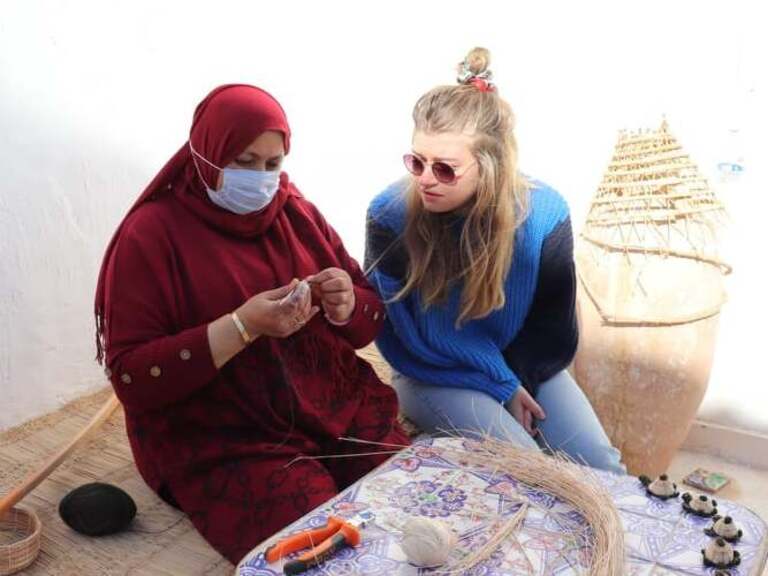
With workshops located in the association's premises, or the Houch as the Djerbians call it, you will have the opportunity to see how the pieces are transformed from high quality raw material to a decorative item or a unique traditional outfit.
The association welcomes individuals and groups who are curious enough to discover the techniques of weaving and braiding, and those who want to visit the store to make purchases and support the craftsmen of Djerba.
KALYS
Here, you will not leave empty-handed! KALYS is a 100% Tunisian brand whose mission is to present to the world the Tunisian know-how. The decorative items available at KALYS are truly exceptional and not found elsewhere.

The palm leaves are part of some unique creations that vary from wall hangings to elegant bags.
L'artisanerie
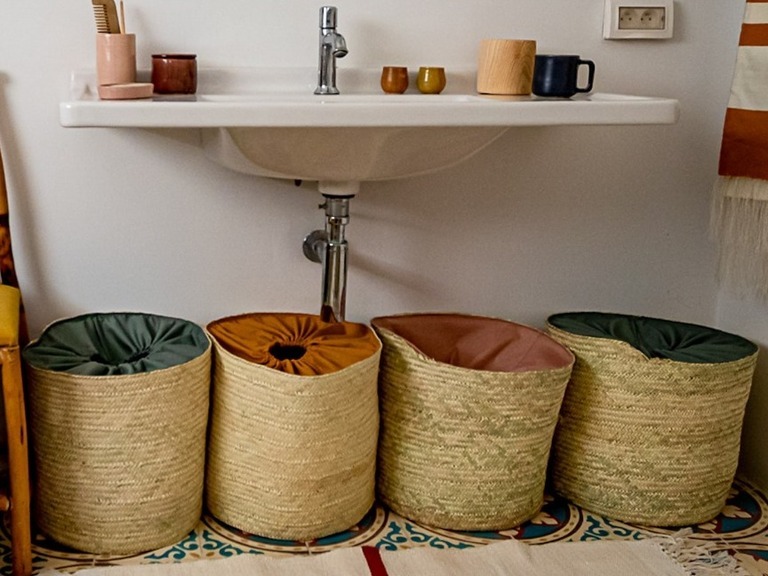
Being a boutique-workshop, L'artisanerie offers a different universe centered around artisans and ancestral know-how. Inciting responsible consumption, the company offers a varied catalog of products made from vegetable fibers, such as rush and palm leaves.
Moving from one region to another, the brand's managers are always on the lookout for artisans who master ancestral techniques and who have the determination and motivation to evolve their work and add a modern touch that is sometimes missing in their creations.
If you want to participate in this chain of production, you may have to find some decorative items that are difficult to find elsewhere before leaving the country.
Gmar
Another craft store that carries the mission to support the Tunisian handicrafts and marginalized Tunisian artisans. Gmar is defined as a group of artisans specializing in the creation of products based on vegetable fibers.

By offering all their products online, the purchase of decorative items and small gifts becomes easier.
Frequently asked questions about the craft of palm leaves in Tunisia :
Is Tunisia known by its palm trees?
Last month, UNESCO announced the new list of intangible cultural heritage. In this list appears the name of Tunisia with "the harissa, knowledge, skills and culinary and social practices" and "knowledge, skills, traditions and practices associated with the date palm".
In fact, this category has just been inscribed thanks to a candidacy coordinated by 15 Arab countries of North Africa and the Middle East and gathering the United Arab Emirates, Bahrain, Egypt, Iraq, Jordan, Kuwait, Mauritania, Morocco, Oman, Palestine, Qatar, Saudi Arabia, Sudan, Tunisia and Yemen.
What to call palm leaves in Tunisia?
Also called sa'f, the leaves of date palm are a raw material used in many Arab countries, including Tunisia. These leaves are particularly strong, but flexible and light.
This feature makes sa'f an ideal material for basketry. We often find baskets, baskets, decorative pieces and even bags very chic.
Which regions in Tunisia are known for the weaving of palm leaves?
The regions of Tozeur, Douz, Gabes and Mednine are best known for the skill of its craftsmen, since it is in these regions that we find oases. The craftsmen in the south of Tunisia are endowed with an incredible dexterity and an inescapable know-how.
Even before the stage of braiding, these craftsmen maitrise very well how to select with care the sheets which are less breakable and more flexible.
Using specific tools such as the achfa, which is a large needle, a type of knife intended to slice the leaves, the sharpener for the maintenance of metal tools and others.
It is good to note that these craftsmen are often installed in distant cities and rural areas. If we are here today to present this material cultural heritage, it is thanks to their perseverance and passion.
What techniques are used to make pieces of palm fiber?
In Tunisia, there are two types of techniques used to make unique pieces: the seff or dhfirâ and sewing.
For a cushion or a bag to reach your hand, the work done by the craftsmen is enormous. Before starting to sew or weave, there are four important steps that artisans must meticulously do for a particularly pleasing quality.
Between drying, storing, dyeing and soaking, artisans spend days working before they can begin the sewing or dhfira stage.


