Tunisia is a land of captivating contrasts. One moment you're wandering through the ancient ruins of Carthage, the next you're gazing across the endless sands of the Sahara, and later you might find yourself sipping mint tea in the blue-and-white paradise of Sidi Bou Said. This diversity extends to its history, landscapes, and culture, but also to one of the most authentic ways to experience the country: its transportation.
While you could travel by taxi, train, or bus, you'd be missing out on a truly Tunisian experience. This guide is your key to understanding a mode of transport that isn't found in Europe or the US but is the lifeblood of travel for locals. We're talking about the louage: the shared taxi that connects every corner of this beautiful nation.
For Tunisians, louages are the go-to choice for getting from point A to point B, and for good reason. They are affordable, surprisingly fast, and offer a genuine slice of daily life. They represent a perfect middle ground: more flexible and extensive than the train network, yet faster and more direct than public buses. Forget rigid timetables and expensive private fares; prepare to embrace the organized chaos and discover how to navigate Tunisia with the confidence of a local.
What Are Louages in Tunisia?

So, what exactly is a louage? Picture a minibus or a large van, typically white, that operates as a shared, long-distance taxi. These vehicles are a ubiquitous sight on Tunisian roads, instantly recognizable by the colorful stripe running along their side, which cleverly indicates their route network
Red stripe → Louages going to destinations in the north of Tunisia (like Bizerte, Beja, Tabarka).
Blue stripe → Louages heading to the coastal / Sahel region (Sousse, Monastir, Mahdia).
Yellow stripe → Louages serving the south (Gabes, Medenine, Tataouine).
Green stripe → Louages for the northwest / inland towns (like Kef, Siliana, Jendouba).
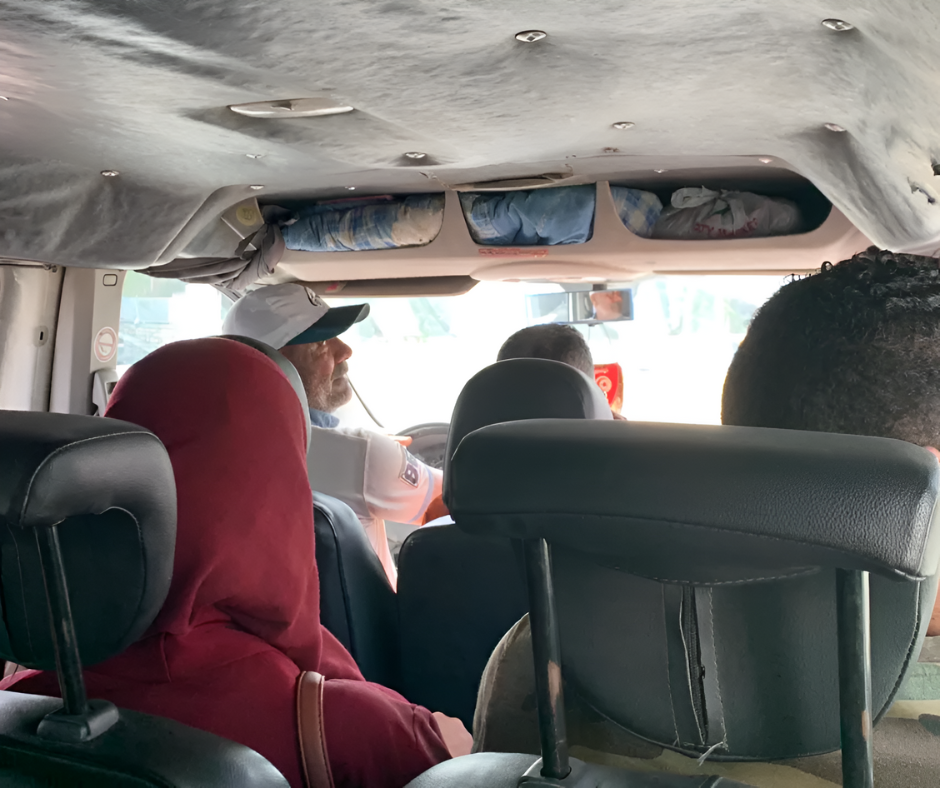
Each louage seats around eight to nine passengers, creating a communal atmosphere that’s part of the adventure.
You’ll find yourself sharing the ride with students heading home for the weekend, merchants carrying goods to market, families visiting relatives, and sometimes, fellow travelers who are also in on the secret. It’s an impromptu community on wheels.
Unlike traditional taxis, which are primarily for short, private trips within a city and can be quite costly, louages operate on a pay-per-seat basis for inter-city travel. You don’t book the whole vehicle; you simply claim your spot.
This drop-in system gives you incredible flexibility. Buses, while budget-friendly, often run on less frequent schedules and may not serve smaller towns or more remote destinations. Louages fill these gaps, departing not according to a clock, but on a simple, efficient principle: they leave when they are full. This dynamic system is designed to cater to real-time demand, meaning you rarely have to wait long.
The cost is another major advantage. Fares are standardized and incredibly reasonable, typically ranging from 5 to 20 TND depending on the length of the journey. It’s always wise to carry small bills, as drivers often have limited change. There's no complex booking website or app; the system thrives on its simplicity. You just show up, buy your ticket, and go.
Where to Find Louage Stations: Your Gateway to Tunisia
Every one of Tunisia's 24 governorates has at least one main louage station. These stations are bustling hubs of activity, connecting major cities and tiny villages alike. Finding them is your first step to adventure. Here’s a guide to the main stations in the most frequented regions, with tips to help you navigate them.
Grand Tunis (Tunis, Ben Arous, Ariana & Manouba)
The capital is the country's primary transport hub, and it has two main stations depending on your destination:
-
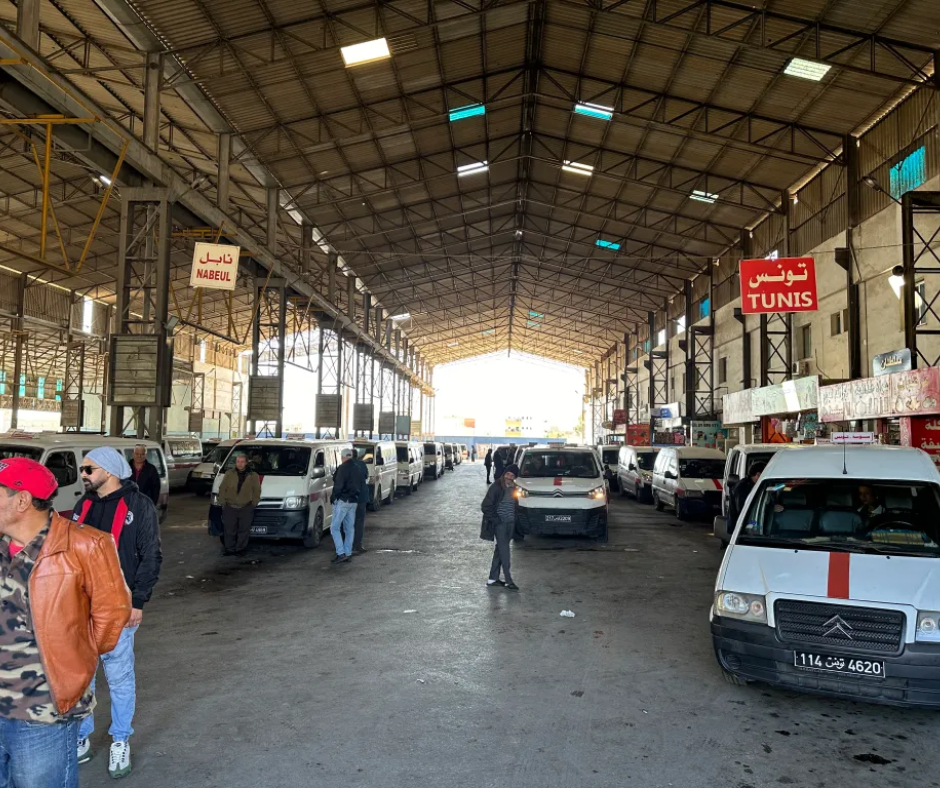
Bab Alioua Station (Gare Routière Tunis Sud): Located south of the city center, this is your departure point for destinations along the coast and in the south. If you're heading to Sousse, Sfax, Monastir, Hammamet, Nabeul, or Djerba, this is your station. It’s large and can seem chaotic, but it's well-organized. Look for the signs (often in Arabic and French) indicating the final destination.
-
Bab Saadoun Station (Gare Routière Tunis Nord): Situated to the west of the medina, this station serves the north and northwest of the country. Head here for louages to Bizerte, Tabarka, Le Kef, and other destinations in the green, hilly parts of Tunisia. It’s generally a bit smaller and easier to navigate than Bab Alioua.

The Sahel Coast
-
Sousse Main Station: this station is a major crossroads for the Sahel region. It's situated slightly outside the tourist center, but a quick 5-minute taxi ride will get you to or from the historic medina. From here, you can easily connect to Tunis, Monastir, Kairouan, and Sfax.
-
Monastir Main Station: this station is within walking distance of the city center, making it very easy to use. It’s the perfect launchpad for exploring the Ribat or heading onwards to Sousse or Mahdia.
-
Mahdia Main Station: It’s a little farther from the main tourist attractions near the coast, so you might want to grab a local taxi to reach the old medina and beautiful beaches.
Cap Bon Peninsula
-
Nabeul Louage Station: Perfectly situated right in the center of the city. Nabeul is famous for its pottery, and from this station, you're just a short walk away from the artisan workshops and the market. It's the main hub for exploring the Cap Bon, with frequent connections to Hammamet, Kelibia, and Tunis.
Northern Tunisia
-
Bizerte Station: Located near the iconic lifting bridge. This station connects Tunisia’s northernmost city with the capital and surrounding areas. The location makes it a scenic starting point for your journey.
Central & Southern Tunisia
-
Kairouan Main Station: this station is very conveniently located, allowing for easy access to the Great Mosque and the historic medina of this holy city on foot.
-
Sfax Main Station: A huge and vital hub for the south. From here, you can get louages to almost anywhere in the country, including Tunis, the south (Gabes, Djerba), and the interior.
-
Tozeur Main Station: Your gateway to the desert. If you're planning to explore the stunning salt flats of Chott el Djerid or the mountain oases, your journey will likely start here.
-
Tataouine Main Station: Deep in the south, this station is essential for exploring the Berber villages and Ksour country. It connects to major hubs like Tunis and Gabes.
Are Louages Safe in Tunisia?
As locals, we rely on louages all the time. Those white minibuses with colorful stripes are a simple, genuine way to move between cities, and after dozens of trips I have never had a serious problem. I always arrived with my bag and no crashes to report.
That said, louage stands can get busy and tourists stand out, so keep your valuables close and stay aware of your surroundings. Some friends avoid them because drivers can be fast and are eager to cover familiar routes quickly.
Bottom line is: stay calm, be attentive and respectful, and you will find louages safe, efficient and full of the small moments that make a trip feel truly Tunisian.
How to Take a Louage in Tunisia: A Step-by-Step Guide
Now that you know what a louage is and why it is one of the best ways to travel across Tunisia, here is a clear step-by-step guide to using one like a local.
1. Locate the Louage Station
First, find the louage station in the town you are leaving from. If you are unsure, search Google Maps for "gare louage" or ask someone nearby. Many cities have more than one station, so check with a local if the route you want uses the central station or a smaller local spot. In small towns, the station might just be a marked place on the side of the road. In bigger cities, the station will look busy and structured. It can feel chaotic at first, but once you get the rhythm, it all makes sense.
2. Buy Your Ticket
In very small towns, you may sometimes pay the driver directly. More often, you buy a ticket at a counter (guichet) inside the station. A local helper will usually point you to the right window. Tell the cashier your destination, pay, and they will give you a small white ticket. That same helper will then point out the correct van to board. Some stations show destination names in the Roman alphabet and list prices clearly. Others use Arabic only, so a little French or Arabic for numbers helps. Always have small bills when you can.
3. Get In and Wait
Walk toward the vans, and the person at the station will point you to the right one. Give them your ticket and climb in. Most vans carry about eight passengers, sometimes nine. The front seat next to the driver is usually the only one with a seatbelt and is best if you get car sick, though it fills up fast. Once the van is full, the driver will start the journey. Wait times are usually short. Sometimes you might wait five to ten minutes, and rarely longer.
4. Enjoy the Ride
Drivers tend to drive at a lively pace, and they know the roads well. Make sure you use the bathroom before you leave because stops are typically quick. I like to bring earbuds and a podcast to relax and enjoy the countryside. Drivers will sometimes stop to pick up people along the route if there is room, and passengers often get off before the final stop.
5. Arrive and Continue Your Trip
Most louages travel from station to station, but you can ask the driver to drop you off earlier, and they will usually accommodate you. Some stations are right in the town center, so you can walk to your destination. Others sit a little farther out, and you may need a short taxi ride to reach the medina or your hotel. For example, the stations in Monastir and Kairouan are very convenient, while Mahdia and Hammamet have stations that are a bit further from the main attractions.
Quick Local Tips from Wildyness ✨
-
Have cash ready in your pocket and keep your wallet tucked away.
-
Bring headphones so you can relax on the ride.
-
If you get car sick, try to sit in the very front seat. That is usually the only seat with a seatbelt.
-
Use the bathroom before you board. Stops are rare and quick.
-
Snacks are fine on board, but try to avoid eating in public during Ramadan out of respect.
-
Don’t carry lots of cash or valuable items. Keep what you need close to your body.
-
Louages work with cash only, so have small bills ready for exact change.
-
Try to avoid late-night louage trips when possible, especially if you are traveling alone.
-
Learn a few words of French or Arabic to buy your ticket and ask for directions. Locals appreciate the effort.
-
If the station is far from town, take a short taxi to the louage station rather than hauling heavy bags on foot.
-
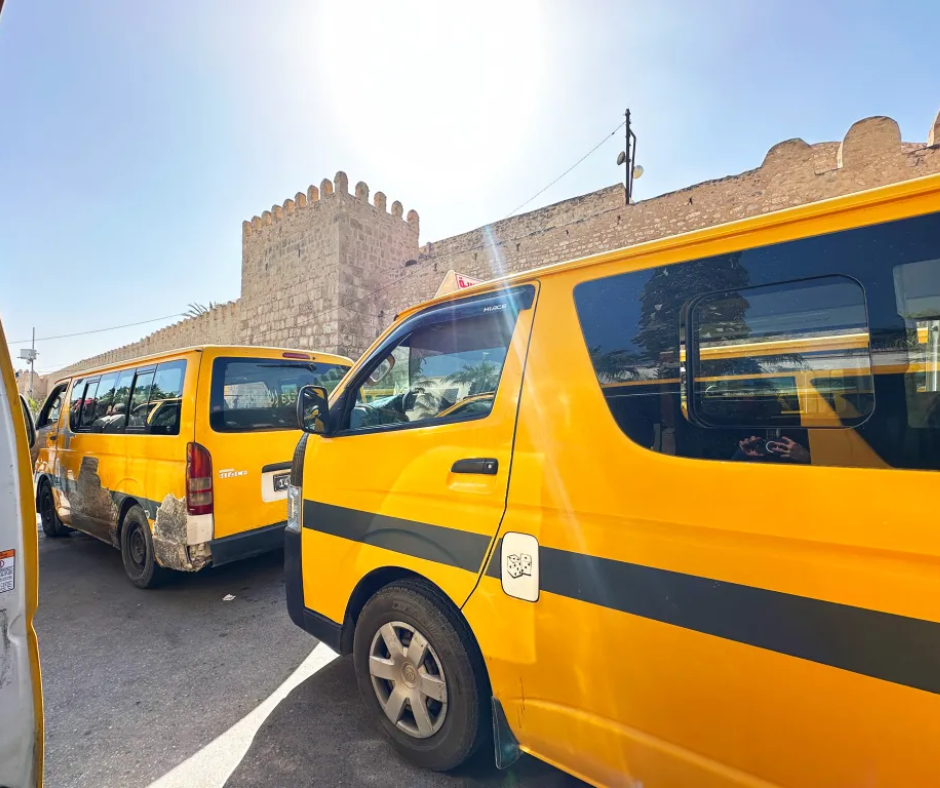
A Note on Shared Taxis (Taxis Collectifs): You might also see yellow minivans that look similar to louages. These are "shared taxis" and operate with the same logic but for shorter distances, typically within a city or its immediate suburbs. They usually cost no more than 2.5 TND. In Tunis, you can find them serving northern suburbs from Habib Bourguiba Avenue, southern suburbs from Carthage Street, and western areas from Beb El Khadhra station.
Why You Should Take Louages
-
Super Easy Once You Know the System: Louage stations follow the same rhythm across the country, so after one ride, you will feel confident hopping on at another town.
-
An Authentic Local Experience: Louages are a great way to meet Tunisians, share a conversation, and get a glimpse of everyday life that you will not find from a car window alone.
-
Incredibly Affordable: Compared with private taxis or renting a car, louages keep your travel costs low so you can take more day trips and explore more without blowing your budget.
-
Fast and Flexible: Trains and buses stick to timetables and can run late. Louages do not wait for a clock. They leave when the van fills up, so you are rarely left waiting around and you have transport available when you need it.

In short, louages are practical, friendly and full of small travel moments that make Tunisia feel more like a home away from home.
Day Trips and Adventures with Wildyness
Taking a louage is an adventure in itself, and it's the perfect way to embark on an impromptu day trip. Imagine hopping on a louage from Tunis's Bab Saadoun station to explore the north coast, where you can kayak in the old harbour of Bizerte and visit Ichkeul National Park for incredible birdwatching.
With Wildyness's local expertise, you can seamlessly integrate this wonderful transport method into your personalized adventure. While we encourage you to try it on your own, we also know that sometimes you just want to relax and have the details handled.
We run guided day trips and itineraries to many of these incredible spots and can give you the inside scoop on the best station, the right time to go, and what to see when you arrive.
Email us and let us help you craft an unforgettable exploration of Tunisia.