

Driving in Tunisia is an art and this comprehensive 2026 guide will help you master it like a local.
Tunisia's size places it among the smaller countries in the world. This fact makes traveling and exploring various regions relatively accessible within a short span of time. For all road trip lovers, this is a great occasion to embark on a captivating journey through diverse landscapes and rich cultural experiences.
From the bustling streets of Tunis to the ancient ruins of Carthage, the golden dunes of the Sahara Desert, and the picturesque coastal towns along the Mediterranean, road trippers can witness the country's mosaic of history, nature, and tradition.
Driving along scenic highways, exploring hidden villages, and stopping at local markets create a unique tapestry of exploration. If you’re seriously considering a road trip across Tunisia, WildyNess team has compiled a complete guide for you.
Quick Fact about Driving in Tunisia
As you navigate unfamiliar roads and adapt to different traffic norms, driving in a foreign country can be both exciting and challenging. It offers a unique perspective, allowing you to immerse yourself in local culture and explore off-the-beaten-path destinations. However, thorough research, understanding local road rules, and maintaining a cautious approach are essential to ensure a safe and enjoyable driving experience abroad.

When it comes to Tunisia, here's a quick fact sheet about driving in Tunisia:
Side of the Road
In theory, you drive on the right-hand side of the road. However, street dynamics in Tunisia can be lively, with drivers often engaging in zigzagging through traffic and occasionally disregarding traditional left and right lane positions. This dynamic flow reflects local driving customs, where adaptability and a sense of shared road space prevail over rigid lane adherence.
Parking
Parking regulations vary in different areas. Pay attention to parking signs and avoid blocking traffic. In cities, parking can be challenging to find, so consider using designated parking lots.
Turn Signal
While using your turn signal is customary in Tunisia, it's worth noting that many drivers might not consistently use it, and occasionally, some may forget to turn it off after making a maneuver.
Gas Cost
Gasoline prices can fluctuate, but Tunisia generally has relatively affordable fuel costs compared to many other countries. 1 liter of fuel is usually 2.5 TND (approx. $0.88 USD), making it very affordable for long-distance travel.
Speed Limit
Speed limits can vary based on the type of road. For urban areas, it's typically 50 km/h (31 mph), rural roads are around 90 km/h (56 mph), and highways can range from 90 km/h (56 mph) to 110 km/h (68 mph).

Road Signs
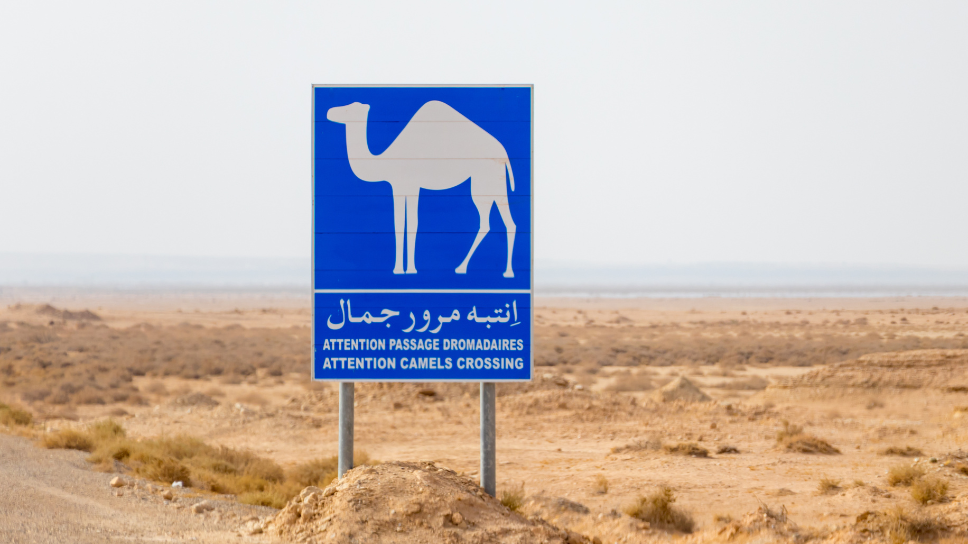
Road signs in Tunisia are usually in both Arabic and French. Familiarize yourself with common road signs to ensure safe and compliant driving.
Seat Belts
Seat belts are mandatory for all occupants in the vehicle, both in the front and back seats. Fines are imposed for non-compliance. This doesn’t apply to the taxi driver (we mention this for you not to feel confused about it).
Minimum Driving Age
The minimum age to drive in Tunisia is 18 years old. However, rental car companies might have a minimum age requirement of 21 to rent a car.
Yielding to Pedestrians
Pedestrians have the right of way at crosswalks. Always yield to pedestrians waiting to cross and be cautious around them.
While pedestrians have the right of way at crosswalks, it's common to see them navigating through traffic with a mix of assertiveness and awareness of the surrounding vehicles. However, it's important to note that some drivers might not always prioritize stopping for pedestrians, making it crucial for both pedestrians and drivers to exercise caution.
Drunk Driving
The legal blood alcohol concentration (BAC) limit is low (usually 0.02% or lower), so it's best to avoid alcohol entirely if you plan to drive. Alcohol tests are not available in Tunisia. But, if you’re clearly drunk, this can cause you legal problems, not to mention safety issues that come with driving while drunk.
Reasons for Driving in Tunisia
Driving in Tunisia can be a great alternative for tourists, travelers, and expats who prioritize flexibility and crave for more freedom.

Flexibility and Freedom
Having a vehicle gives you the freedom to explore Tunisia at your own pace. You can visit off-the-beaten-path destinations, stop for scenic views, and change your itinerary as you wish. This flexibility allows you to create a personalized travel experience that suits your interests.
Access to Diverse Landscapes
Tunisia offers a diverse range of landscapes, from bustling cities to historical sites, coastal areas, and desert regions. Having a car enables you to easily navigate between these different areas, experiencing the rich cultural heritage and natural beauty the country has to offer.
Cultural Immersion
Driving in Tunisia allows you to immerse yourself in local culture and interact with the locals. You'll have the opportunity to discover hidden gems, interact with people in rural villages, and engage in authentic experiences that might not be accessible through public transportation.
However, it's important to consider your comfort level with driving in a foreign country, local road conditions, and traffic regulations.
Renting a car in Tunisia
When renting a car in Tunisia, consider the number of passengers, the type of terrain you'll encounter, your comfort preferences, and your budget. Make sure to inquire about available features, such as air conditioning, GPS navigation, and child safety seats if needed. Always read the terms and conditions of the rental agreement and choose a vehicle that suits your travel needs. Keep in mind that rental options and availability can change, so it's recommended to check with local rental agencies for the most up-to-date information.

There is a range of vehicle types available for rent. The availability of specific models and types might vary based on the rental agency and location. Here are some main types of cars you might find available for rental in Tunisia.
Economy Cars
These are small and fuel-efficient cars suitable for city driving and short trips. They usually have basic features and are budget-friendly.
Compact Cars
Slightly larger than economy cars, compact cars offer more comfort and space. They're still good for city driving and can handle longer journeys as well.
Mid-Size Cars
Mid-size cars provide more space and comfort, making them suitable for longer road trips and journeys with a bit more luggage.
Sedans
Sedans offer a combination of comfort and style. They are ideal for families or travelers who prefer a more spacious and comfortable driving experience.
SUVs
Sport Utility Vehicles (SUVs) are larger vehicles that can handle various road conditions, including rough terrains. They offer more space and often have all-wheel drive capabilities.
Minivans
Minivans are perfect for larger groups or families. They provide ample seating and cargo space, making them suitable for longer trips. This type of car is usually more expensive and may require a private driver.
Luxury Cars
If you're looking for a more upscale experience, some rental agencies might offer luxury cars with advanced features and enhanced comfort.
Convertibles
If you want to enjoy the weather and scenery, some agencies might have convertible cars available for rent. These cars are also hard to find in rental agencies. Make sure to do your homework before arriving to Tunisia.
Off-Road Vehicles
If you plan to explore off-the-beaten-path areas, you might find rental agencies that offer 4x4 or off-road vehicles designed to handle rugged terrain. When it comes to the Sahara, there are many options with drivers available at the spot. We highly recommend renting from there, as the driver know the Sahara road more than anyone else-yes, even Google Maps.
Road conditions in Tunisia
Tunisia has a network of roads that includes highways, primary roads, and secondary roads. Although road conditions can change over time due to maintenance, construction, and other factors, they are usually decent.

While major roads are usually well-signed, some smaller roads might have limited signage. Signage are usually written in Arabic or French. Having a GPS device or navigation app can be extremely helpful, especially if you're exploring less-traveled areas.
Here's an overview of the road types in Tunisia:
Highways (Autoroutes)
Tunisia has a few major highways that connect major cities and regions. These highways are usually well-maintained and offer relatively smooth travel. They often have multiple lanes and are designed for higher-speed travel. Some of the major highways include the A1 (Tunis to Sfax), A3 (Tunis to Oued Zarga), and A4 (Tunis to Bizerte).
Primary Roads (Routes Nationales)
Primary roads are the main arteries connecting different towns and cities across the country. They vary in quality and width, but many are paved and suitable for regular driving. These roads can be busy, especially near urban areas, and might have a mix of traffic, including cars, trucks, and even pedestrians.
Secondary Roads (Routes Secondaires)
Secondary roads are smaller and narrower than primary roads. They can range from well-paved to rough and less maintained, especially in rural areas. Some secondary roads might be unpaved or gravel roads, which can be challenging to navigate, especially during rainy weather.
Local Roads and Streets
Within towns and cities, you'll find local roads and streets. These can vary widely in condition and size. In urban areas, they might be narrower and more congested, while in rural areas, they might be smaller paths or unpaved tracks.
Mountain Roads
Tunisia has mountainous regions, like Ain Drahem and Tabarka. Some roads in these areas can be winding and steep. These roads might require extra caution, especially during adverse weather conditions.
Desert Roads
If you're traveling to desert areas, we highly recommend getting there with one of the rental cars offered there. The desert can be very challenging, and you absolutely don’t want to get lost there.
International Driver License to Drive in Tunisia
If you're a foreign visitor intending to drive in Tunisia, an International Driver's License is generally required along with your regular driver's license from your home country. The IDL serves as a translation of your native license and is recognized by Tunisian authorities.
To obtain an International Driver's License, you usually need to apply for one in your home country before your trip. The process can vary, but it typically involves providing a copy of your valid driver's license, passport-sized photos, and filling out an application form.

When driving in Tunisia, you should carry both your regular driver's license and your International Driver's License at all times. Presenting both licenses to local authorities when required can help avoid any legal issues.
Please note that an International Driver's License doesn't mean adhering to local traffic laws and regulations. Familiarize yourself with Tunisian road rules, signs, and driving customs before you start driving.
Speed Limits for Driving in Tunisia
Speed limits in Tunisia depends on the type of road, urban or rural areas, and local regulations.
Urban Areas: The speed limit in urban areas is typically 50 km/h (31 mph). This speed limit applies to most roads within cities and towns. But sometimes it can be 30 km/h but a clear sign will tell you that in this case.
Rural Areas: The speed limit on rural roads is usually 90 km/h (56 mph). However, this limit can vary, and some roads might have lower limits due to safety concerns.
Highways: On highways or expressways, the speed limit can range from 90 km/h (56 mph) to 110 km/h (68 mph), depending on the specific road and its condition.
It's important to note that speed limits might be indicated on road signs, and you should always follow these posted limits. Keep an eye out for speed limit signs and adjust your driving speed accordingly. Additionally, always be cautious and drive at a safe speed based on road conditions, weather, and traffic density.
Another important rule to know is that, in bad wether (rainy days), all these speed limits become less than they actually are by 20 km/h.
Gas Stations in Tunisia
There are several major gas station companies in Tunisia. These companies operate gas stations across the country and provide fuel and other services to travelers and locals. Please note that the information provided might have changed since then, so it's a good idea to verify the current situation before your trip. Some of the main gas station companies in Tunisia are Agil, Shell, Ola Energy, and Total.

Keep an eye out for their signage and logos along the roads, especially in urban areas and along major highways. Gas stations operated by these companies usually provide a range of services, including fuel, restrooms, and convenience stores. When traveling in remote or desert regions, it's wise to plan your fuel stops carefully, as gas stations might be few and far between.
Fuel Availability, Quality & Price:
Gasoline (essence) and diesel are the most common types of fuel available at Tunisian gas stations. Unleaded petrol (sans plomb) is widely available, and diesel is commonly used for both personal and commercial vehicles.
In general, fuel quality in Tunisia is acceptable, but it's advisable to fuel up at reputable and well-maintained gas stations, especially for diesel vehicles.
Fuel prices can fluctuate based on global oil prices and local economic factors. Gasoline prices are generally affordable compared to many other countries.
Service Hours
Gas stations in urban areas and along major highways are usually open for extended hours, often operating 24/7. In more remote or rural areas, operating hours might be more limited, and some stations could close during the night.
Payment Methods
Most gas stations in Tunisia operate through cash payments (Tunisian Dinar), and some also accept credit or debit cards. However, it's a good idea to carry some cash, especially when traveling to more remote areas where card payment options might be limited.
Attendants Vs Self-Service Option
Many gas stations in Tunisia have attendants who will pump the fuel for you. This is a common practice, and tipping the attendant is appreciated, although not mandatory. While many gas station attendants might understand basic English or French, you need just to show them the amount of money and the type of fuel you need, and you’re all covered.
A few gas stations, especially in larger cities or along major highways, offer self-service options where you can fill up your tank on your own.
Parking in Tunisia
Parking in Tunisia can vary based on the location (urban vs. rural), the type of area (city center, residential, tourist sites), and local regulations. Here's some information to help you navigate parking in Tunisia:
- Parking in city centers, especially in larger cities like Tunis, can be a challenge due to limited space and high demand. Pay attention to parking signs and markings, as well as any designated parking areas. In some cases, you might need to use paid parking lots or garages.
- Some urban areas might have parking meters where you pay for the time you park. Make sure to have local currency on hand to pay for parking.
- Residential neighborhoods often have on-street parking available. However, it's advisable to park legally and considerate of local residents.
- When visiting popular tourist attractions, there might be designated parking areas nearby. Follow the signs and instructions provided.

- In busy areas, you might find paid parking lots or garages. These can be convenient options, especially in city centers.
- In some areas, you might encounter parking attendants who help you find a parking spot and manage the payment process. Tipping is customary in such cases.
- Street parking is common in residential and commercial areas. Be mindful of parking regulations and avoid blocking traffic or obstructing driveways.
- Some cities have designated parking zones with color-coded markings indicating different parking rules (e.g., short-term parking, long-term parking).
- It's important to park legally to avoid fines. If you park in a restricted area or fail to pay for parking when required, you might receive a parking ticket.
- When parking, consider the safety of your vehicle and its contents. Avoid leaving valuables visible in the car, and if possible, choose well-lit and secure parking areas.
Remember that parking regulations and availability can vary from one place to another, so it's a good idea to familiarize yourself with local rules and guidelines. Additionally, be patient and flexible when looking for parking, especially in busy areas. If you're uncertain about parking conditions in a specific location, don't hesitate to ask locals or your accommodation for advice.
General Tips about Driving in Tunisia
Go with the Flow
Tunisian driving style can be assertive and fast-paced. Adapt to the local driving behavior, but prioritize safety.
Translator or Language Aid
While many road signs are in both Arabic and French, having a language translator app or a basic understanding of these languages can be helpful for communication.
Pedestrians Matter
Always yield to pedestrians at crosswalks and be cautious around them. In Tunisia, pedestrians have the right of way at marked crossings.
Dealing with Booting or Towing
If your car gets booted or towed, contact local authorities or the nearest police station for guidance on retrieving your vehicle.
Horns' Various Meanings
Tunisian drivers use horns not just to warn, but also to greet or signal their presence. Short honks can mean "hello," while longer ones might indicate caution or frustration.
Expect Checkpoints
Tunisian National Guard checkpoints are common due to security reasons. Cooperate with authorities if stopped at checkpoints, and keep your identification and travel documents handy.
Tunisian Driving Style
Tunisians are known for their assertive driving style. While it might seem aggressive to outsiders, it's important to stay confident but cautious when navigating traffic.
Pedestrian Crossings
Slow down and be ready to stop when approaching a pedestrian crossing. Yield to pedestrians waiting to cross and only proceed when the crossing is clear.
Watch for Speed Bumps
Speed bumps, known as "dos d'âne," are prevalent in Tunisia. They're often unmarked, so maintain a moderate speed to avoid damage to your vehicle.
Major cities in Tunisia and Driving Distance For Enjoyable Road Trips:
To help you plan your travel routes in Tunisia, we compiled a list of city distances. Keep in mind that road conditions, traffic, and routes can impact actual travel times. Always consult a map or navigation app for accurate directions and estimated travel times based on your specific starting and ending points.
Here are some distances between cities and some top attractions:
Driving in Tunisia Needs a Certain Atitude
Embarking on a road trip through Tunisia unveils a captivating adventure where spontaneity and exploration take center stage. Navigating the streets of Tunis, uncovering the allure of ancient ruins, and traversing the enchanting landscapes offer an unscripted journey. While road signs in Arabic and French guide the way, it's the vibrant interactions with locals that truly immerse you in the culture.
If you are planning to visit Tunisia, EMAIL US, and we, as Tunisian travel experts, will be happy to help create your perfect itinerary in Tunisia!


