


The best couscous in Algeria is cooked at home, usually for Friday lunch, so as a visitor your options are a handful of traditional restaurants in Algiers, the cheap canteens where locals eat at midday, and any family table you get invited to. What lands on the plate also changes with the region: barley grain in Kabylie, fish in Oran, giant hand-rolled berkoukes in the south.
Couscous is on UNESCO's intangible heritage list, inscribed in December 2020 as a joint file from Algeria, Mauritania, Morocco and Tunisia covering the know-how and practices around making and eating it. This guide covers where to look in Algiers, what to order region by region, what a plate costs in autumn 2026 and how to behave at a Friday lunch.
Couscous basics: names, occasions and prices
- What it is: hand-rolled semolina grains steamed over a stew of meat or fish and vegetables.
- What locals call it: seksu in Kabyle; taâm ("the food") and naâma ("blessing") in Algerian Arabic; also kosksi and berboucha.
- When it is on the table: Friday lunch, family celebrations, Yennayer (12 January), and as mesfouf before dawn in Ramadan.
- Where to try it in Algiers: a traditional restaurant such as El Djenina, or a lunch canteen in the lower Casbah or Bab El Oued.
- What you will pay: about 600 to 1,200 DZD in a canteen, 2,000 to 4,000 DZD at a sit-down restaurant (autumn 2026).
Where the dish comes from
The dish is Amazigh (Berber) in origin. Its Kabyle name, seksu, comes from a Berber root meaning "well formed, well rolled". Clay objects that may be couscous steamers have turned up at sites in southern Mauritania dated to 700 to 400 BC. The oldest written trace of the dish under the name taâm comes from Ouargla, in the 11th century.
Every region of Algeria rolls, sauces and serves it differently, which is why counts of Algerian couscous dishes range from 300 to 1,000. In Constantine people call it naâma, in the west and among the Ouled Naïl taâm, in Kabylie seksu, and in the M'Zab ouchou.
How couscous is made by hand
Hand-rolled couscous starts with semolina in a wide, shallow wooden or clay dish. The cook sprinkles it with salted water and rolls it under the palms until small pellets form, then dusts them with dry flour so they don't stick and passes them through sieves to sort the sizes. The process is repeated until the batch is even, and families used to roll large batches together over several days, then dry them for storage.
To cook it, the grain goes into the top half of a couscoussier, a double pot, and is steamed two or three times over the simmering sauce. Between steamings it is tipped out, sprinkled with water, oiled or buttered and raked with the fingers to break up lumps. That is why a good plate is light and every grain separate.
Where to Eat Couscous in Algiers
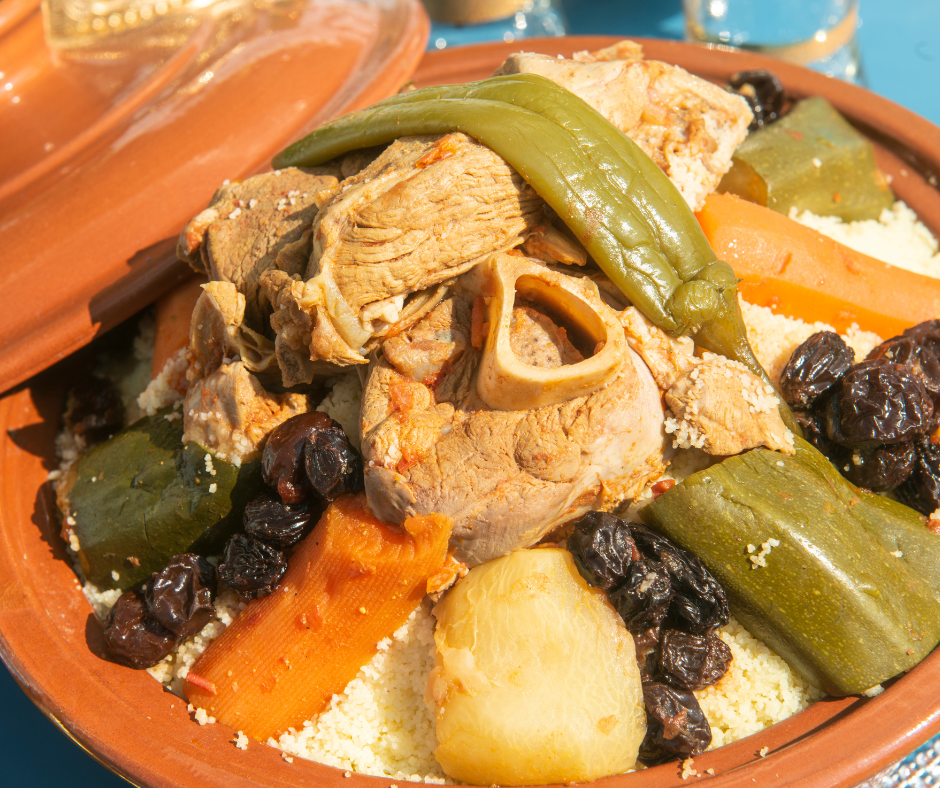
In Algiers, couscous is a lunch dish and rarely a quick one. Look for grains that are fluffy and separate, a broth (marqa) with real depth, and meat that comes off the bone without a fight. The sauce can be red, with tomato and paprika, or white, with no tomato and usually turnip, chickpeas and a little cinnamon. Algiers families often cook the white one, so ask which the kitchen makes.
El Djenina, at the top of rue Didouche Mourad near the Bardo Museum, is the classic sit-down choice. It has been open since 1968, the dining room is all tiles, brass lamps and carved wood, and reviewers keep mentioning the chicken couscous, a portion big enough for two. Book ahead. It's closed on Fridays, the day most Algerians eat couscous at home, and recent reviews are mixed on the welcome and the prices, so treat it as a polished introduction, not a bargain.
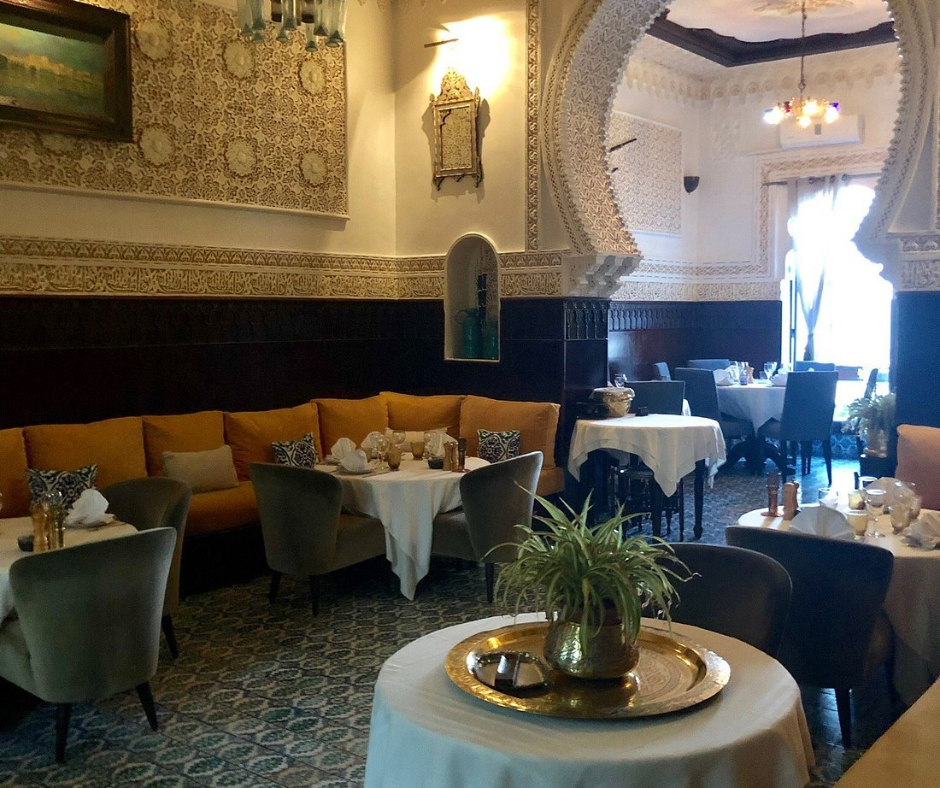
Around the lower Casbah and Place des Martyrs, small family-run places serve couscous at lunch, usually with chicken (lighter) or lamb. A walk through the Casbah, on the UNESCO list since 1992, fits well before or after.
Take a local guide for it: the lanes are a maze, many of the old houses are in poor repair, and a guide knows both the way through and the stories behind them. Plan a slow lunch. Nobody will rush you, and nobody will hurry the kitchen either.
For cheaper plates, head to Bab El Oued, the dense working-class district just west of the Casbah. Its canteens (gargotes) are basic, cash only and rarely have an English menu, so a few words of French or Arabic help. Ask for the dish of the day and go with it.
Bab El Oued runs down to the sea, so it fits neatly after a morning in the Casbah. For what to do between meals, our Algiers hit-list covers the rest of the city.
Regional Couscous: What to Eat Where
Couscous follows the land: the grain, the vegetables and the sauce all change between the mountains, the coast and the desert. Trying a version in each region takes planning in a country this big (Ghardaïa alone is about 600 km south of Algiers), and our team can design the itinerary for you.
In Kabylie (Tizi Ouzou, Béjaïa and the villages of the Djurdjura), couscous is mountain food. Barley couscous, darker and nuttier than the wheat version, is common. Some villages still make an old acorn couscous (seksou a bellout, from cork-oak acorns), though you'll rarely see it outside a home. Expect plenty of local olive oil and seasonal vegetables.
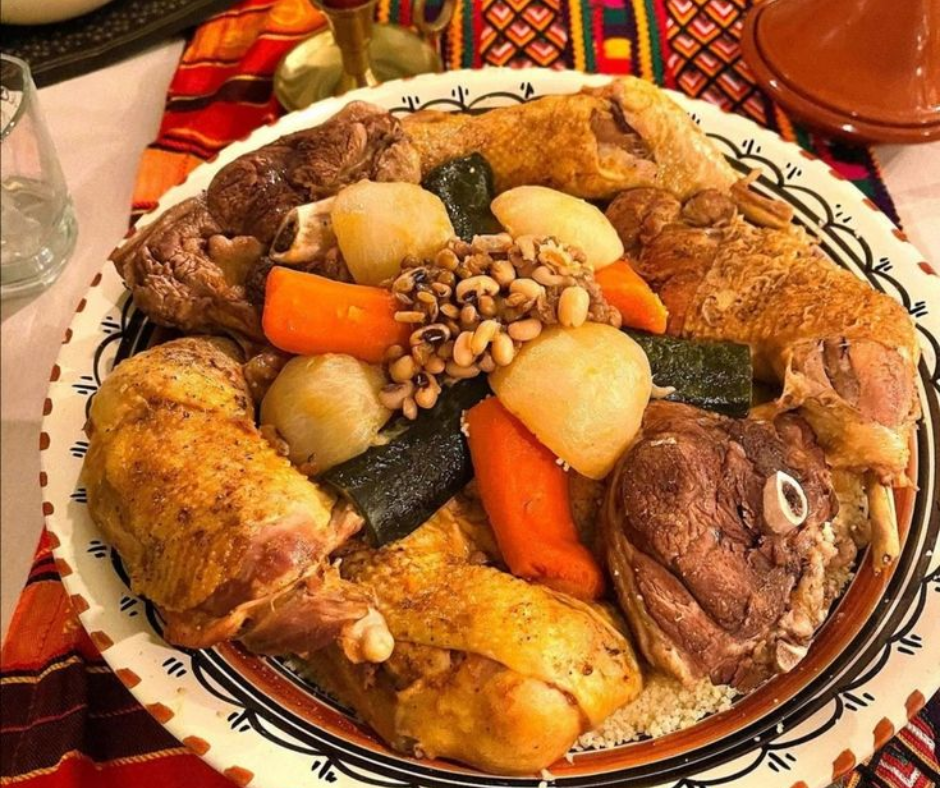
If a Kabyle family feeds you, you may get amekfoul: couscous steamed with vegetables such as fava beans, peas, carrots and zucchini, then dressed with olive oil, with no meat and no sauce. A glass of lben (fermented milk) often comes with it.
East in Constantine, the city's best-known semolina dishes aren't couscous at all. Order chakhchoukha (torn semolina flatbread in a spiced tomato and meat sauce) and trida (small squares of pasta, steamed and served in sauce). Then try the local couscous and compare the sauce with the one you had in Algiers.
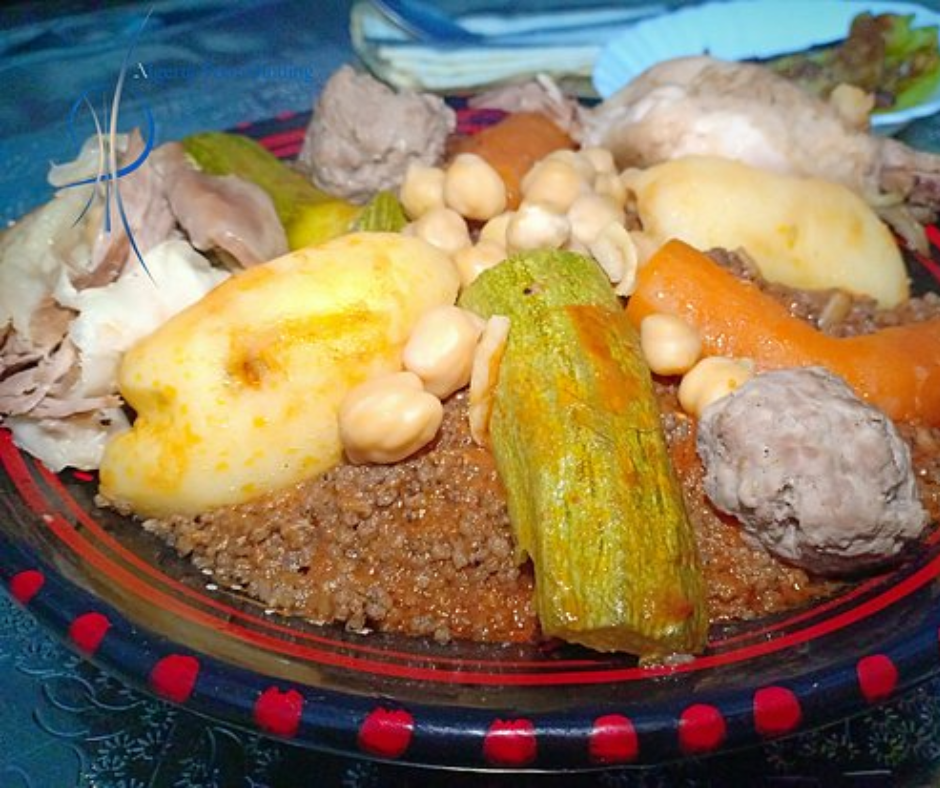
In the Saharan towns, Ghardaïa and the M'Zab Valley included, dates and big grains take over. Berkoukes is the one to try: large hand-rolled pellets of semolina simmered in a soupy meat and vegetable sauce.
It's eaten across Algeria, from Kabylie to the south, and it's at its best on a cold desert night in winter. Mozabite kitchens also serve couscous with a date sauce.
Couscous is only part of the story. Rechta, chakhchoukha and the soups that open most family meals are all in our guide to traditional dishes in Algeria.
Algerian couscous dishes, region by region
| Dish | Region | What it is | When |
|---|---|---|---|
| Couscous algérois | Algiers | White sauce with lamb or chicken, chickpeas, turnip and squash | Friday lunch, family meals |
| Red-sauce couscous | Nationwide | Tomato and paprika sauce, usually with lamb | Everyday and festive |
| Yennayer couscous | Kabylie | Chicken, dried meat and seven vegetables | Amazigh New Year, 12 January |
| Barley couscous | Kabylie | Darker, nuttier grain with vegetables and olive oil | Everyday in the mountains |
| Acorn couscous | Some Kabyle and Chenoua villages | Grain made partly from acorn flour | Rare, home cooking |
| Amekfoul | Kabylie | Steamed with fava beans, peas and vegetables, dressed with olive oil, no sauce | Family meals, with a glass of lben |
| Berkoukes | Nationwide, especially the south and Kabylie | Large hand-rolled pellets in a soupy sauce | Winter |
| Fish couscous | Jijel, Oran and the coast | Sea bream or red mullet in a fish broth | When the catch is good |
| Date couscous | The south and the M'Zab | Couscous with dates or a date sauce | Family meals |
| Mesfouf | Nationwide | Fine grain with butter and raisins or dates, or savory with peas | Ramadan s'hour |
| Seffa | Various regions | Sweet couscous with cinnamon, raisins and almonds, sometimes with chicken | Celebrations |
Seafood Couscous in Coastal Oran
Oran is a port city, and fish couscous is everyday cooking along this stretch of coast. For a good bowl, skip the city-center places with menus aimed at visitors and look for the small fish restaurants around the working port.
A chalkboard with the day's catch is a good sign that the fish came off the boats that morning. Keep the order simple: a white fish such as sea bream, or red mullet, with a few prawns. A good version keeps the grains light and the broth tasting of fish, seasoned with cumin and coriander, with harissa on the side if you want heat. The choice depends on what was landed, so after a stormy night it can be thin.
Friday Traditions and Dining Etiquette
Friday is the first day of the Algerian weekend (Friday and Saturday since 2009), and couscous after the midday prayer is a weekly habit in many homes. Cooks start in the morning, because the grain is steamed two or three times over the simmering sauce in a couscoussier, a double-decker pot, to get the right texture.
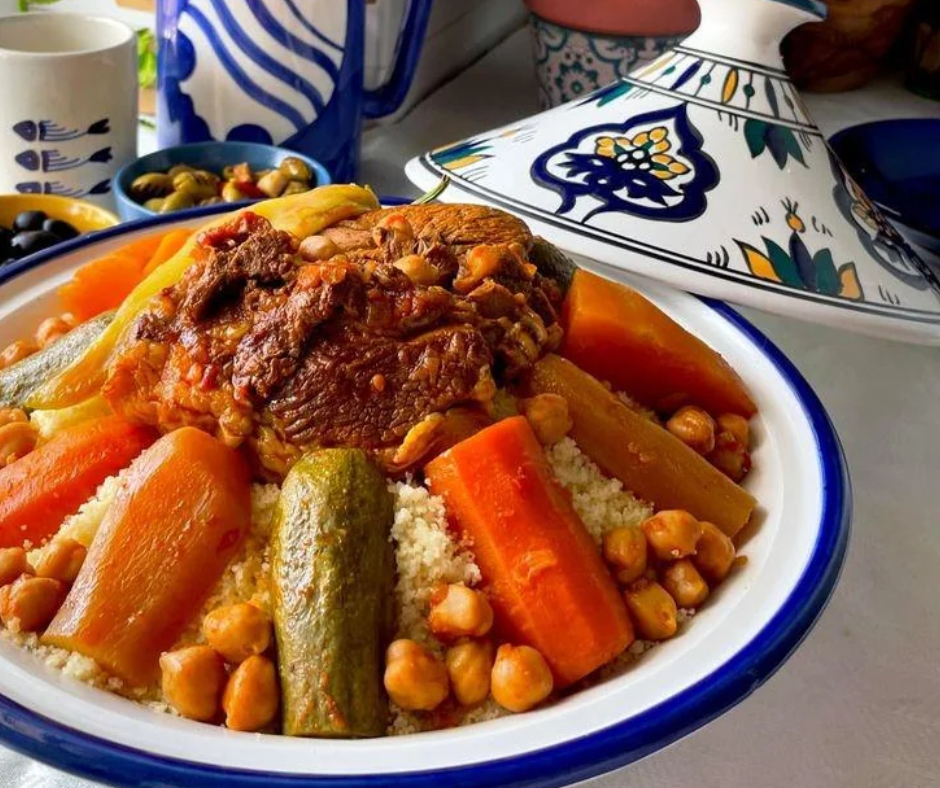
If you're invited to a home on a Friday, arrive on time and greet everyone in the room. Bring something small, such as pastries or seasonal fruit. Wait for the host to start. Couscous usually comes in one large shared dish: eat from the part directly in front of you, with a spoon or your right hand, and use your right hand to pass things too.
Restaurants are a different story on Fridays. Many small family-run places close for the day or open only after the midday prayer, and El Djenina is closed every Friday. If you want Friday couscous, check opening hours the day before, or ask your host, guesthouse or guide where it's being cooked that day. For a home-cooked plate, we can also arrange a homestay with a host family.
Mesfouf: Sweet Couscous and Dessert Versions
Couscous can also be sweet. Mesfouf is fine couscous steamed until very light, rubbed with butter and finished with sugar and raisins or dates. It's a classic s'hour, the meal eaten before dawn in Ramadan. Savory versions with fresh fava beans or peas are common too, and the Kabyle vegetable version is amekfoul.
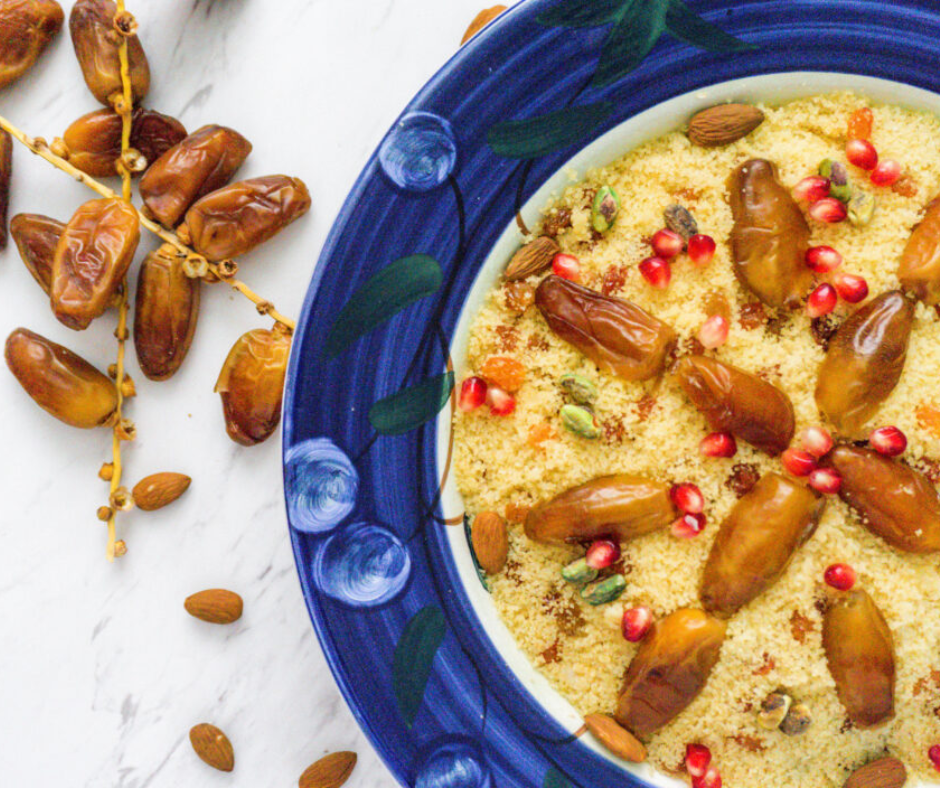
Mesfouf usually comes with a cold glass of lben, and the milk's sourness balances the sugar. It's easy to make at home, so ask at your guesthouse, especially during Ramadan.
What Couscous Costs in Algeria (2026)
Couscous is cheap in Algeria if you pay in cash. Neighborhood canteens and popular restaurants charge about 600 to 1,200 DZD (autumn 2026) for a full plate with meat and vegetables.
With dinars changed informally at about 275 to the euro, that comes to roughly EUR 2 to 4.40; at the official rate of about 150 it is EUR 4 to 8. These places are cash only. The same streets sell snacks worth trying between meals, and our Algeria food tour page explains how to order them like a local.
At a sit-down traditional restaurant in central Algiers, budget roughly 2,000 to 4,000 DZD per person (about EUR 7 to 15 at the informal rate, EUR 13 to 27 at the official one). Some bigger restaurants take foreign cards, but a card pays the official rate, which makes the same meal about 80% dearer than with cash changed informally.
That informal market is not strictly legal under the currency rules but widely used, so ask your guide or host to find a trusted changer. Also check whether bread, salad or tea come with the plate or go on the bill.
Spotting Quality: How to Identify Handmade Couscous
Strictly speaking, semolina is the milled durum wheat and couscous is the grain rolled from it, and hand-rolled grain is what makes a great plate. Look at the color first: good couscous is a warm pale gold. Grey or dusty-looking grain is probably old.
Hand-rolled grains are slightly uneven in size, while factory couscous is perfectly uniform. Rub a pinch between your fingers at the market: it should feel slightly gritty, like fine sand, and never powdery like flour. Then smell it.
Fresh grain smells clean and a little nutty. If it smells musty or sour, try another vendor. Good sellers keep their stock covered and out of the sun.
Couscous in Algeria, in Short
Algiers: El Djenina (near the Bardo Museum, closed Fridays) for a sit-down plate; lunch places around the lower Casbah and canteens in Bab El Oued for cheaper ones.
Regions: barley couscous and amekfoul in Kabylie, chakhchoukha and trida next to couscous in Constantine, berkoukes in the south.
Oran: fish couscous at the small restaurants around the port, best when the day's catch is on a board.
Fridays: the main couscous day at home, but many restaurants close. Check hours the day before.
At the table: wait for the host, eat from your side of the shared dish, use your right hand.
Money: about 600 to 1,200 DZD for a canteen plate and 2,000 to 4,000 DZD at a sit-down restaurant (autumn 2026). Carry cash.
National dish, origins and what to drink with it
What is the national dish of Algeria?
Most Algerians would say couscous, the Friday lunch in many homes and the dish of weddings and Yennayer, on UNESCO's intangible heritage list since 2020, though chakhchoukha in the east and rechta in Algiers run it close at family celebrations.
Is couscous Algerian or Moroccan?
Both, and Tunisian and Mauritanian too. Couscous is an Amazigh dish shared across the Maghreb, and the oldest written mention comes from Ouargla in Algeria. That is why the 2020 UNESCO inscription was a joint file from Algeria, Mauritania, Morocco and Tunisia rather than a single country's.
What do Algerians drink with couscous?
Lben, the slightly sour fermented milk served cold, above all with amekfoul or sweet mesfouf. Water and soft drinks fill the gaps at family lunches, mint tea or coffee follows the meal, and most restaurants don't serve alcohol.
Fitting couscous into a short trip
With only a few days, Algiers alone gives you a sit-down plate and a canteen plate. Kabylie is the easiest regional add-on, since Tizi Ouzou is about 100 km east of the capital. For everything else, from trains to where to sleep, there is our Algeria travel guide.


