
You are sitting in Riyadh and the city energy is high but the desert is calling. You want to see the carved tombs and the mirrored halls of Al Ula, yet you only have fourteen hours to make it happen. The distance between the capital and this ancient oasis is nearly 900 kilometers, which means your logistics must be precise to avoid spending your entire day in a terminal.
That is why our team at WildyNess created this guide to help you master the ultimate Al Ula day trip.
We have mapped out the flight windows, the transport hacks, and the essential sites so you can experience three millennia of history and still be back in Riyadh for dinner.
Master the Flight Windows To Al Ula from Riyadh
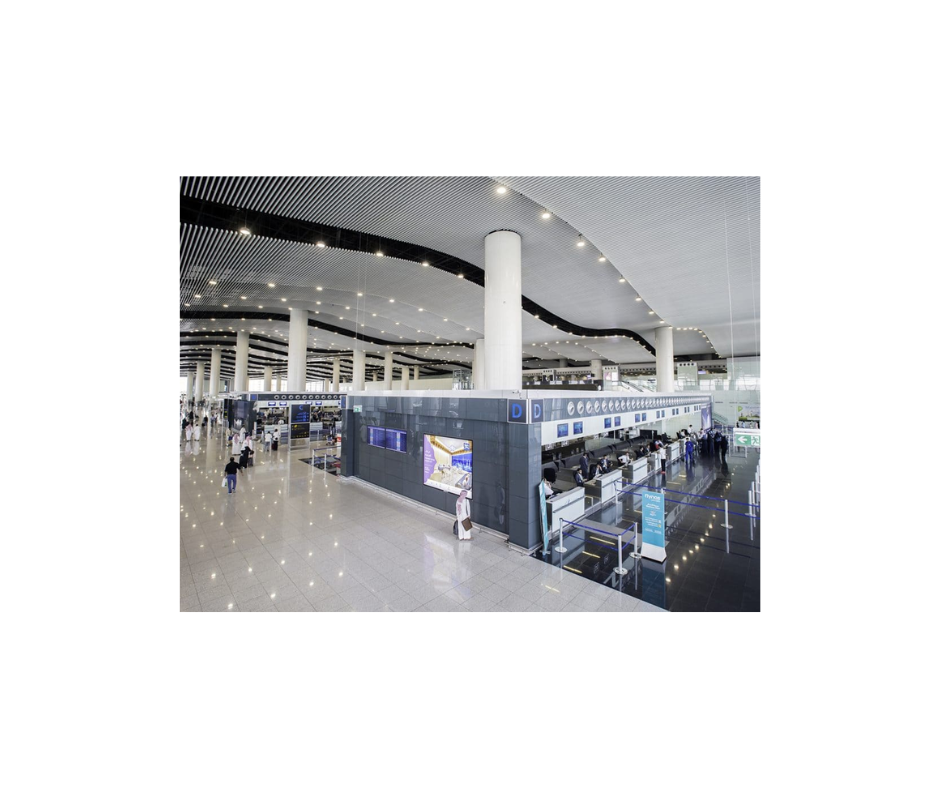
A successful day trip lives or dies by the flight schedule. You will depart from King Khalid International Airport (RUH) and land at Prince Abdul Majeed bin Abdulaziz International Airport (ULH). For this mission, you must use Terminal 5 in Riyadh because it handles the domestic routes for both Saudia and flynas.
We recommend the earliest possible departure to maximize your ground time. Most travelers aim for the flight leaving Riyadh around 9:00 AM. This puts you on the ground in Al Ula by 11:00 AM, which is just in time to catch the midday tour rotations. If you choose a later flight, you risk missing the primary entry slots for Hegra.
Your return flight is equally critical. Look for the late evening departures that leave Al Ula between 9:00 PM and 10:00 PM. This gives you a solid ten hours on the ground.
Booking these flights in advance is essential because they are popular with business travelers and weekenders alike. Always check your gate status on the way to the airport as desert winds can occasionally shift departure times.
Solving the Transport Puzzle in Al Ula
Once you land in Al Ula, you need a way to move between the heritage sites and the town center. While there are taxis available at the airport, they are not always the most efficient choice for a high-speed day trip. We suggest two primary methods for staying mobile.
Renting a car is the best way to maintain total control over your clock. Several international and local rental agencies operate directly out of the airport arrivals hall. If you book your vehicle ahead of time, you can be on the road within twenty minutes of landing. The roads in Al Ula are well paved and easy to navigate with any standard GPS app.
If you prefer not to drive, you should arrange a private driver for the day. This allows you to relax between stops and ensures you do not waste time searching for parking at busy sites like Elephant Rock. Many local operators offer full day packages where a driver meets you at the gate and stays with you until your return flight. This is the most stress-free way to tackle the itinerary.

The Morning Mission: Hegra Al Ula
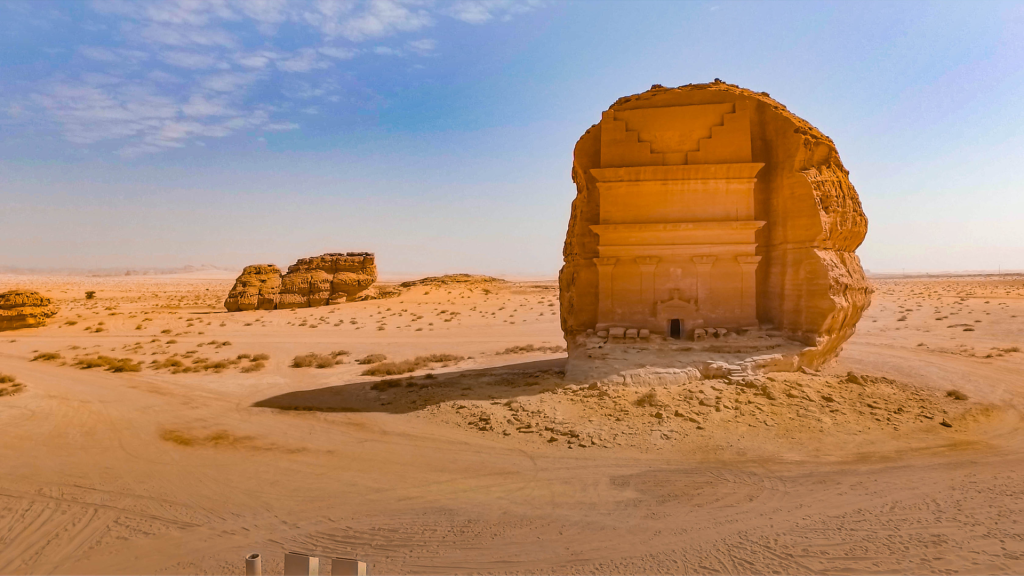
Your first priority must be Hegra, also known as Mada’in Salih. This is the most significant archaeological site in Saudi Arabia and served as the southern capital of the Nabataean Kingdom. You cannot drive your own vehicle into the site, so you must head to the Winter Park or the Hegra Welcome Center to join a guided tour.
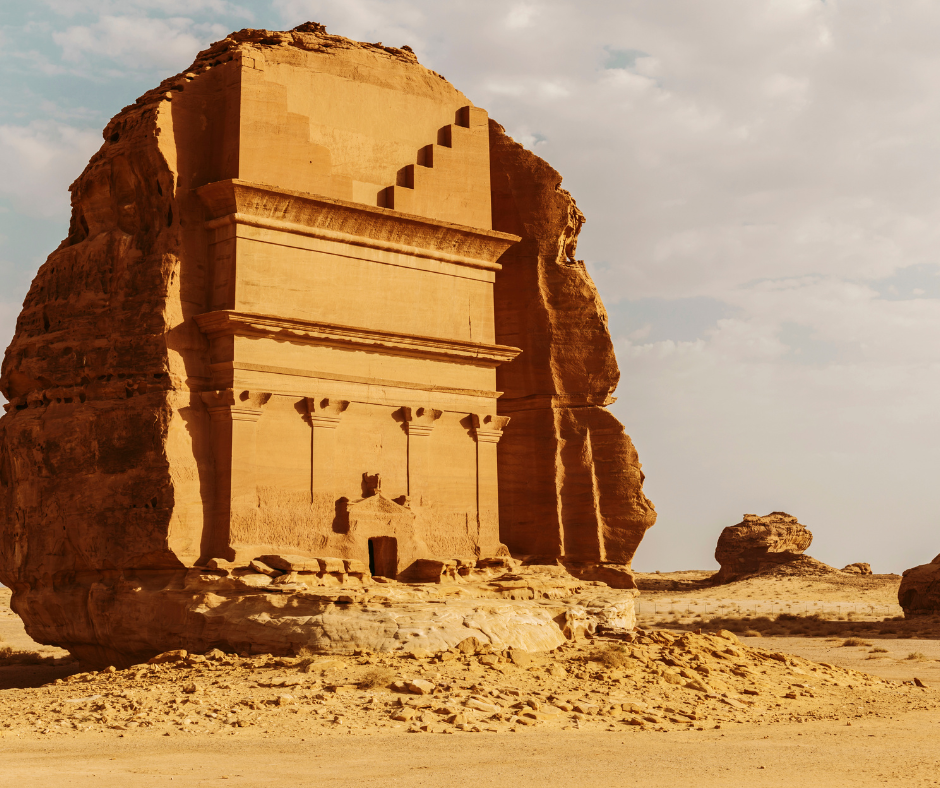
The standard tour takes about two hours and moves you through the site in a luxury coach or a vintage Land Rover. You will see the Tomb of Lihyan son of Kuza, which is the largest and most famous monolith in the area. The craftsmanship of the Nabataeans is evident in the precise eagle carvings and the Greek-inspired columns that decorate the rose-colored sandstone façades.
We suggest booking your Hegra tickets for the 1:00 PM or 2:00 PM slot. This timing allows you to finish your morning travel and grab a quick bite before heading into the archaeological park. Remember that you are not allowed to enter the tombs themselves to protect the ancient structures. You should keep your camera ready for Jabal Ithlib, a natural mountain cut where the Nabataeans held their religious assemblies.
The Afternoon Shift: Dadan and Jabal Ikmah Al Ula
After finishing at Hegra, make your way south to Dadan and Jabal Ikmah. These sites represent an even older layer of history. Dadan was the capital of the Dadanite and Lihyanite kingdoms and dates back to the 9th century BCE. The most striking features here are the Lion Tombs, which are burial niches carved high into the red cliff faces.
Just a short drive from Dadan is Jabal Ikmah, which we often describe as an open-air library. The canyon walls here are covered in hundreds of inscriptions in ancient languages like Safaitic, Thamudic, and Dadanitic. These carvings act as a historical record of the people who lived here and traded along the incense route.
A guided tour of both sites usually takes ninety minutes. Since these locations are closer to the city center than Hegra, they serve as a perfect mid-afternoon activity. The light hits the inscriptions at an angle during this time, making the ancient letters easier to see and photograph.

A Walk Through the Oasis Heritage Trail Al Ula
To escape the desert heat and experience the agricultural heart of Al Ula, you should spend an hour on the Oasis Heritage Trail. This path is approximately three kilometers long and winds through thousands of date palms and citrus trees. The trail is shaded and significantly cooler than the open desert.
As you walk, you will see the ancient irrigation systems that have kept this valley green for thousands of years. You will pass by mudbrick walls and small farms where locals still grow mint and oranges. This is a great time to slow down and appreciate the contrast between the dry sandstone mountains and the lush valley floor.
The trail eventually leads you toward the AlJadidah Arts District. This area is a transition point between the oasis and the Old Town. It is filled with murals, small art galleries, and boutique shops. It is the modern face of Al Ula and offers a glimpse into how the region is evolving into a global cultural hub.

Sunset at Elephant Rock
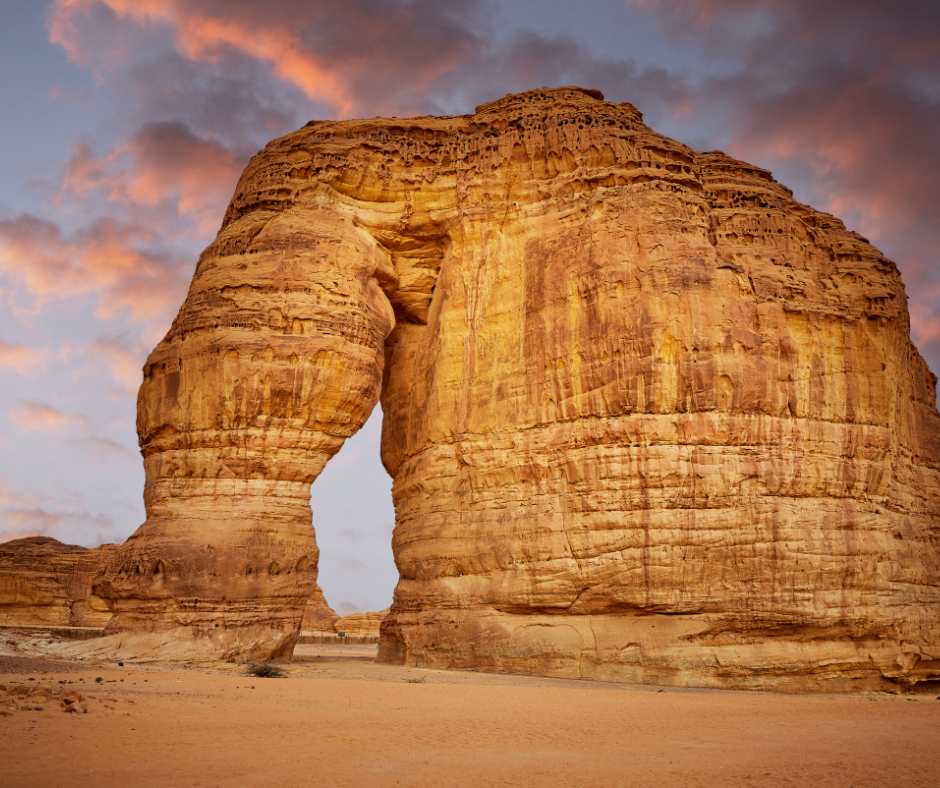
No day trip is complete without a stop at Jabal AlFil, better known as Elephant Rock. This massive geological formation stands over fifty meters tall and was shaped by millions of years of wind and water erosion. As the name suggests, it looks exactly like a giant elephant with its trunk touching the sand.
The best time to arrive is about forty minutes before sunset. As the sun drops, the sandstone changes from bright orange to a deep purple. The area around the rock has been developed into a comfortable lounge space with sunken seating and fire pits. It is the ideal place to sit back and process everything you have seen during the day.
There is a cafe on-site where you can order coffee or light snacks while you watch the colors change. Because this is a popular spot for both locals and tourists, it has an energetic and social atmosphere. It is the perfect final destination before you head back to the airport for your flight to Riyadh.
Refueling in Al Ula
Even on a tight schedule, you need to eat well. For a quick but authentic lunch, the restaurants in AlJadidah or the Old Town offer traditional Saudi dishes like kabsa or fresh flatbreads. If you want something more upscale, you can book a table at Maraya Social, located on the rooftop of the mirrored Maraya building.
Keep in mind that dining at Maraya requires a reservation. If you manage to get a seat, you will be eating in the world’s largest mirrored structure, which reflects the Ashar Valley landscapes in every direction. If you are short on time, the food trucks and cafes near Winter Park provide high-quality options that will not delay your itinerary.
We recommend carrying a reusable water bottle and some light snacks in your bag. The desert air is incredibly dry, and staying hydrated is the only way to keep your energy up for a full ten-hour day of exploration. Most tour centers provide water, but having your own supply ensures you never have to wait.

Packing for the Desert Day
Since you are flying in and out on the same day, you should pack as light as possible. A small backpack is all you need. Wear comfortable walking shoes with good grip because the terrain at the heritage sites can be uneven and sandy.
Your kit should include high-SPF sunscreen, a wide-brimmed hat, and polarized sunglasses to protect against the intense desert glare. Even if the forecast is hot, bring a light jacket or a scarf. The temperature in the desert can drop quickly after the sun goes down, and the air conditioning in the airport and on the planes can be quite cold.
Do not forget a portable power bank for your phone. You will be taking hundreds of photos and using GPS for navigation, which drains batteries fast. We also suggest downloading offline maps of the Al Ula area before you leave Riyadh, as cell service can be spotty in the deeper parts of the canyons.
Final Thoughts about the Al Ula Trip from Riyadh
As your day comes to an end, aim to arrive at the Al Ula airport at least ninety minutes before your flight. The airport is small and efficient, but you want a buffer in case there is a queue at the car rental return or security.
Reflect on the fact that you just traversed thousands of years of human history in a single day. From the Iron Age inscriptions of Dadan to the Nabataean grandeur of Hegra and the modern architecture of Maraya, you have seen the core of what makes Saudi Arabia a unique destination.
For an itinerary that combines AlUla with Jeddah, Tabuk and Abha, check out this Breezy Desert Night, a Tour in Jeddah, AlUla, Tabuk & Abha
For a more relaxed 2-day itinerary to AlUla only and a stay in a 5-star sahara resort, we recommend this Timeless Escape in AlUla with our Amazing Guide Hussain
For a 7-hour experience full of activities like sandboarding, Camel riding, Dune dashing with a traditional dinner in the red sands desert, we recommend Red Sands Desert Adventure in Saudi Arabia