


For a visitor, Algeria splits in two. The north (Algiers, Oran, Constantine and the Roman sites) is fine to do on your own by train, plane and taxi; the Sahara is done with an approved Algerian agency and local guides, and booking that way is also what makes you eligible for the visa on arrival. Otherwise, most visitors apply at an Algerian consulate before they fly.
Distances decide a lot of the planning. At 2,381,741 km², Algeria is Africa's largest country and the 10th largest in the world, and the road from Algiers to Tamanrasset runs about 1,900 km. With a week or ten days, most people pick the north or the Sahara, or one of each with a domestic flight in between.
Below: visa, safety, money (including the gap between the official and street exchange rates), transport, where to stay and desert packing, from the WildyNess team, who organize trips in Algeria.
- Apply for the visa early: allow about 10 working days at the London consulate (GBP 85 for UK citizens), and don't wait for an e-visa, because there still isn't one.
- Heading to the Sahara with an approved agency? Then the agency can request a visa on arrival for you instead, commonly about EUR 110 and good for up to 30 days.
- Plan to pay cash. Cards work in few places and convert at the official rate, about 150 DZD to the euro, against roughly 275 when you change money informally.
- Match the season to the region: March to May or September to November in the north, October to April in the desert.
- Buy a SIM at Algiers airport (Mobilis, Djezzy or Ooredoo, passport needed; 10 to 50 GB for 30 days runs about 1,000 to 1,500 DZD) and pack an adapter for Type C and F sockets, 230 V.
- Remember that the weekend is Friday and Saturday, and save the emergency numbers: police 17 or 1548, ambulance 1021, fire 14.
Table of Contents
- What makes Algeria different
- Must-see sites and activities
- Key travel considerations
- Packing for the Algerian desert
- Driving and getting around
- How much does a trip to Algeria cost?
- Where to stay in Algeria
- Useful apps for your trip
- What to eat in Algeria
- The best time to visit Algeria
- Sample itineraries: 7, 10 and 14 days
- Algeria FAQ
- Why Algeria?
What makes Algeria different
The country runs from a Mediterranean coastline of about 1,200 km (998 km by the CIA's simplified measure) through the Tell Atlas mountains and the high plateaus to the Sahara, which covers more than four-fifths of the land.
France ruled Algeria from 1830 to 1962, after about three centuries as an Ottoman regency. Arabic and Islam arrived with the Arab conquests of the 7th century, among an Amazigh (Berber) population that was here first.
Long before the French, this was the land of the Numidian kings. Rome later turned the north into one of its grain stores and left entire cities behind, like Timgad and Djemila. Arab and Amazigh cultures then mixed over the centuries, and the long fight for independence, won in 1962, still shapes the way Algerians talk about their country today.

About 48 million people live in Algeria (2026 estimates), the large majority of them in the north.
Officially the country is bilingual, in Arabic and Tamazight (the second recognized in 2016), but what you hear in the street is Darja, Algerian Arabic. French has no official status but is widely understood in cities and in business. English is spoken by some younger people and hotel staff, but not widely, so a few words of French help a lot.
Algiers, Oran, Constantine and Annaba are the cities most visitors see, and each feels different: the capital on its bay, the western port city of raï, the city built over a gorge, and the eastern beach town with the ruins of Hippo Regius on its edge. Our list of the best cities to visit in Algeria puts them in order and adds a few smaller towns worth the detour.
Since 2023, travelers on organized tours to 24 southern wilayas can get a visa on arrival, and the Tourism Ministry says about 39,000 tourists from 120 countries had used it by July 2026.
Must-see sites and activities
Most first trips combine Algiers, at least one Roman site and a few days in the Sahara. The religious buildings are a good way into the history, because the main ones span more than nine centuries.
Three stand out. Djamaa El Djazaïr, the Great Mosque of Algiers, has the world's tallest minaret at 265 m; the Great Mosque of Tlemcen dates from 1082; and Notre Dame d'Afrique, a basilica inaugurated in 1872, looks down on the bay of Algiers from its cliff. We cover the essentials below. For a longer list, see our roundup of things to do in Algeria.
Top sites in Algiers
Religious sites in Algiers
Djamaa El Djedid, the "New Mosque", is on Place des Martyrs at the bottom of the Casbah. It was built in 1660, under Ottoman rule, and its white dome is one of the landmarks of the seafront.
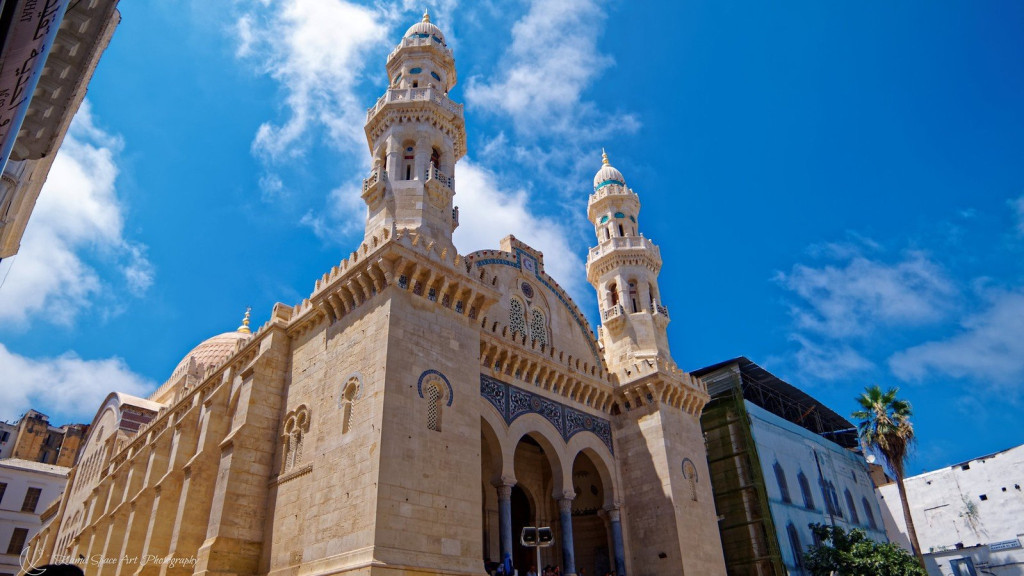
The Ketchaoua Mosque is a few minutes' walk away. It is documented from 1612 and was rebuilt in 1794. The French made it a cathedral in 1832 and rebuilt it between 1845 and 1860, and it became a mosque again at independence in 1962. A restoration funded by the Turkish agency TIKA reopened it in April 2018.
Both are at the edge of the Casbah of Algiers, on the UNESCO list since 1992, so they fit well into a walk up through its lanes. The UK FCDO advises visiting the Casbah with a good local guide, and we agree: the lanes are easy to get lost in. Dress modestly and avoid prayer times, especially Friday midday.
Botanical Garden of Hamma
The Jardin d'Essai du Hamma is where people in Algiers go to get away from the traffic.
Founded in 1832, it covers about 32 hectares on the slope below the Martyrs' Memorial, with long avenues of plane trees, ficus and dragon trees, a formal French garden and a small zoo. It's next to metro Line 1 (Jardin d'Essai station), entry is a small fee, and it fills up with families at the weekend, which in Algeria means Friday and Saturday.

Markets of Algiers
For food, the covered Marché Meissonnier on rue Ferhat Boussaad, just off Didouche Mourad, sells fruit, olives, spices, dates and fish. In the lower Casbah, rue Ahmed Bouzrina (the old rue de la Lyre) is lined with shops selling wedding dresses and traditional outfits.
Go in the morning, when the produce is freshest. For clothes and crafts, some bargaining is normal. Many people still quote prices in old centimes, so a price of "20,000" usually means 200 DZD.
Constantine, the City of Bridges
Constantine, the "City of Bridges", is built on a rock plateau cut off by the gorge of the Rhumel, and its bridges are how the old town connects to the rest of the city. As Cirta, it was the capital of the Numidian king Massinissa.

Two crossings are worth doing on foot: Sidi M'Cid, the 1912 suspension bridge about 175 m above the river, and the Mellah Slimane footbridge of 1925, which you reach from the old town by elevator or stairs. In between, visit the Palace of Ahmed Bey, built between 1825 and 1835 for the last bey of Constantine, with painted walls and tiled courtyards. One full day covers the main sights.
The Roman legacy
Constantine is the best base for the two great Roman sites of the east. Djemila (ancient Cuicul) is a 1st-century town built at about 900 m on a mountain ridge, a day trip to the west. Timgad is about 150 km to the south, past Batna, so it also takes a full day.
Timgad was founded in AD 100 by the emperor Trajan as a colony for army veterans, and both sites have been on the UNESCO list since 1982. Timgad's street grid is almost complete, so you can walk from the Arch of Trajan to the forum and the theater, and the site museum holds its mosaics.
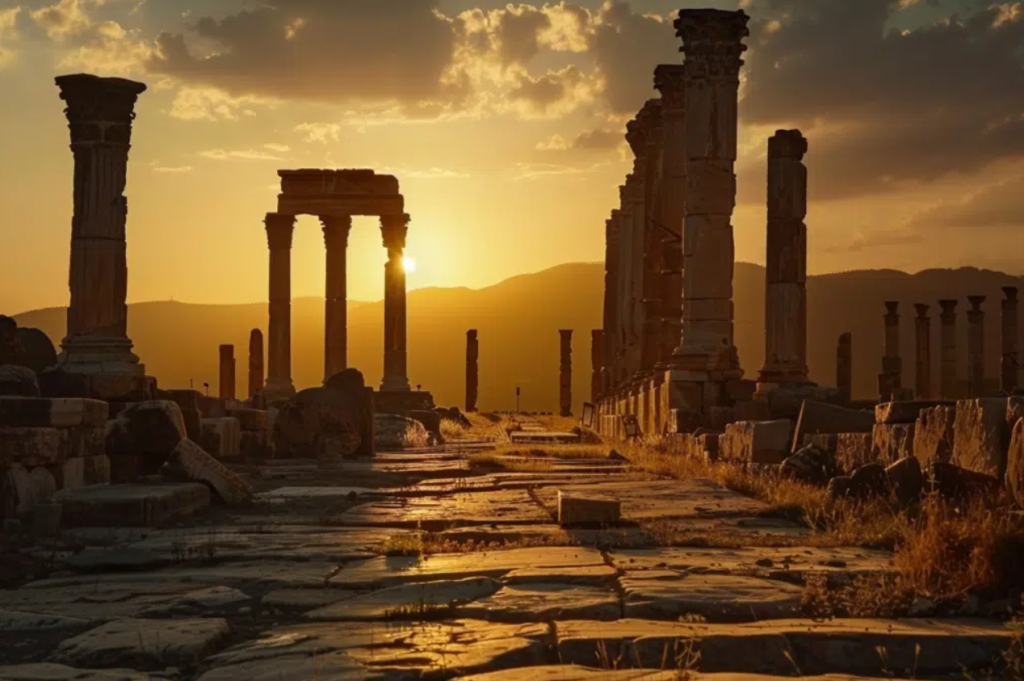
There is almost no shade at either site, so go early and bring water. Entry costs a few hundred dinars. If you only have time for one, Timgad's grid is the easier to read; Djemila's setting on its ridge is the more dramatic.
Oran, the western port
Raï was born here, and in 2022 UNESCO added the music to its intangible heritage list. The city itself, Algeria's second largest, goes by El Bahia, "the radiant".
Above the port, the Spanish-built Santa Cruz fort (1577 to 1604) sits on Mount Murdjadjo, and the view over the bay from up there is the best in the city. Back in town, walk the Front de Mer promenade.
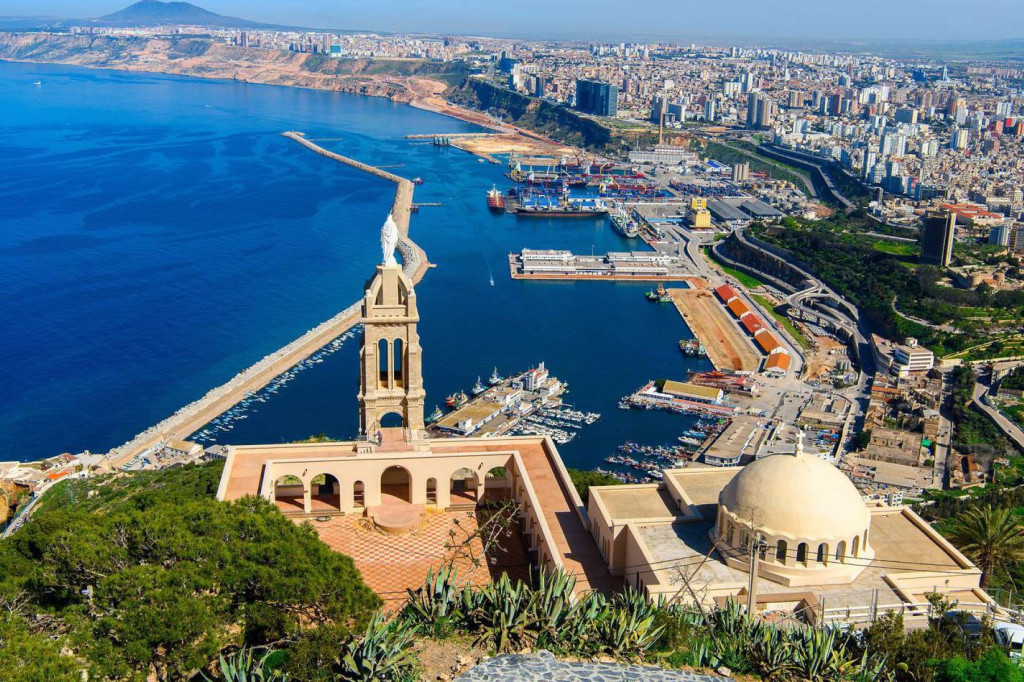
For beaches, people head west to Aïn El Turck and the coves beyond it. They are packed in July and August, when Oran is at its busiest; June and September are calmer and still warm enough to swim.
Oran is the most relaxed of the big cities in the evening, and karantika, a chickpea flan sold from street stalls, is the local snack to try.
Berber villages
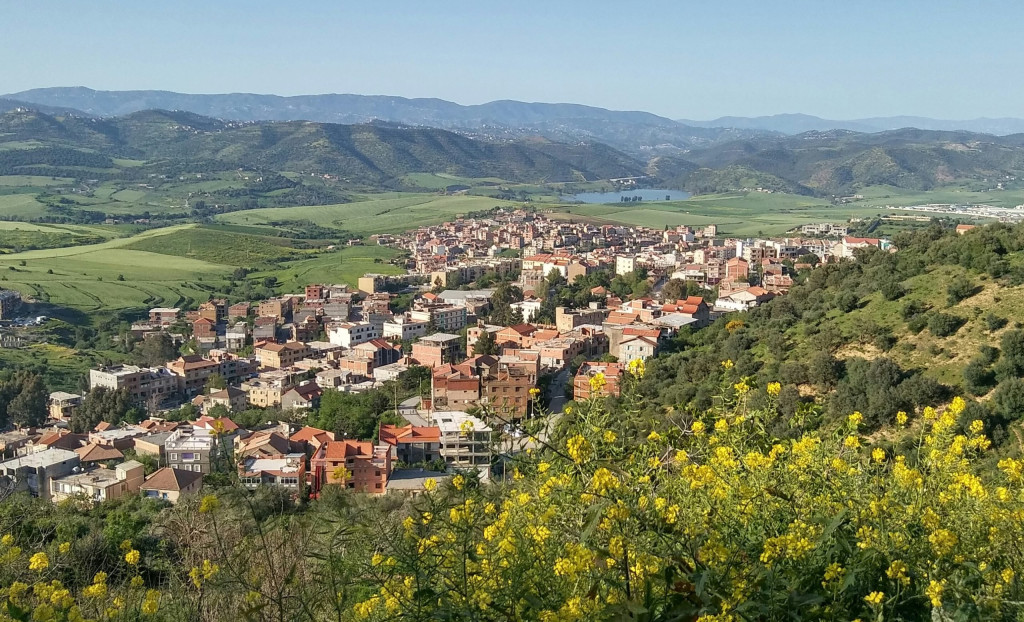
Amazigh (Berber) culture is strongest in the northern mountains of Kabylie and the Aurès, in the M'Zab and among the Tuareg of the far south. For a first visit, Kabylie is the easiest to reach, about 100 km east of Algiers.
Its villages sit along the ridgetops, and in most of them Kabyle (Taqbaylit) is the first language.
Tizi Ouzou is the main town. It grew around an Ottoman fort built in 1720-1721 and was laid out as a French colonial town from 1858, so there is not much old to see; it works as a base for the villages and the mountains.
In the villages, the interest is everyday life: olive groves, stone houses, pottery and the silver jewelry of Beni Yenni. A local guide or host who knows the families makes all the difference.
Djurdjura National Park (created 1983) is the hiking area, with Barbary macaques, cedar forest and Lalla Khedidja (2,308 m); Tikjda is the usual base. Take a local guide who knows the paths: the trails are badly marked, and in winter the high ground is under snow.
On the coast, Béjaïa has Gouraya National Park and the Cap Carbon lighthouse, built in 1906 about 220 m above the sea.
The Sahara desert
The people you meet in the Sahara depend on the region: Tuareg around Djanet and Tamanrasset, Mozabites in the M'Zab Valley, and Zenata-speaking communities in the Gourara oases around Timimoun.
You can sleep in oasis guesthouses, in hotels in towns like Taghit and Timimoun, or in camps in the dunes. Most desert trips are built around camping, and on a clear night away from the towns the Milky Way is easy to see.

Camel treks are easiest to arrange in Taghit; in the Tassili and the Tadrart, trips are done on foot and by 4x4. The trade-off is the heat: from May to September it makes most trips impractical, which is why the desert season runs from October to April.
The Algerian Sahara is not one place, though. Each region has its own character:
M'Zab Valley and Ghardaïa. Five fortified towns (ksour) founded by the Mozabites between about 1012 and 1350, on the UNESCO list since 1982, with Ghardaïa as the largest. Beni Isguen lets visitors in only with a guide taken on at the main gate, shuts at sunset, and doesn't allow photos of people, women above all. The rules are strict, but they are a big part of why the valley still looks the way it does.
Timimoun. The red oasis of the Gourara region, known for its ochre mud-brick buildings and its foggaras, the old underground channels that still bring water to the palm groves. The sunsets over the sebkha, the salt flat below the town, are worth staying a night for. Its S'boue pilgrimage, held the week after Mawlid, is on UNESCO's intangible heritage list (2015).
Tassili n'Ajjer. Near Djanet, this sandstone plateau holds more than 15,000 prehistoric paintings and engravings, made from around 10,000 BC (the dating of the oldest is debated) to the first centuries AD. You can only go with a licensed guide through an approved agency.
The plateau itself is reached on foot, a climb of about four hours from near Djanet with donkeys carrying the gear, and nights are spent camping; the 4x4 trips go to the Tadrart Rouge, south-east of Djanet. Most visitors go with one of the organized Algeria tours that take care of the paperwork.
Taghit. The easiest first taste of the big dunes. Its old ksar looks straight out onto the Grand Erg Occidental, Neolithic engravings are cut into the rocks close by, and it's where we'd send anyone for a first camel trek. Routes, the visa-on-arrival scheme and the guide rules are covered in our guide to the Algerian Sahara.
Key travel considerations
Visa requirements
UK, EU, US and Canadian citizens, like most nationalities, apply for a visa at an Algerian consulate before they travel. Only a few passports are exempt (Tunisia, Libya, Mali, Mauritania, Malaysia and the Seychelles among them), and Moroccans have needed a visa again since September 2024. An e-visa has been announced several times, but as of October 2026 there still isn't one.
The tourist visa file is paper-heavy. As an example, the London consulate asks for two forms, two photos, proof of income and a passport with six months' validity and two blank pages, plus one of three documents: a hotel booking, an official invitation and itinerary from an Algerian travel agency, or a host's certificate of accommodation, certified by their town hall.
UK citizens pay GBP 85 and wait about 10 working days when they apply in person; postal applications and busy seasons take longer. Requirements vary by consulate, so check yours before booking flights.
The Sahara works differently. Book an organized tour with an approved Algerian agency, with an itinerary in the southern wilayas, and you can get a visa on arrival, a scheme running since 2023. Your agency submits the request, a QR-code authorization lets you board, and the fee (commonly reported at about EUR 110, depending on nationality) is paid when you land. The visa lasts up to 30 days and is for that kind of trip only.

Once you're in Algeria, carry your passport: hotels need it at check-in, and so do domestic flights and checkpoints. Keep paper and digital copies of your passport, visa and insurance policy too.
Staying safe
Most people who travel with us end up surprised by how relaxed Algeria feels, and nowhere more than in the Sahara and the border regions, which are also where the country is most remarkable: the Tassili rock art, the Tuareg camps around Djanet. Our team has done every route it sells, with licensed local partners and guides on the ground, and none of our trips has ever had an incident. One practical point: the Morocco land border has been closed since 1994, so there's no overland crossing between the two countries.
Foreigners in the south are expected to travel with an approved agency, and some desert routes come with a police or gendarmerie escort. The agency organizes it; it's a normal part of a Sahara trip.
For your own route, read the current FCDO travel advice or your own government's version before booking, and check that your insurance covers each region you'll visit.
At police and gendarmerie checkpoints, slow down, keep your passport handy and don't take photos.
For solo travelers and women, see the section just below.
In an emergency, call the police on 17 (or 1548), an ambulance on 1021 and the fire service on 14. If you lose your passport or get into trouble, contact your own country's embassy in Algiers.
Traveling solo or as a woman
Solo travel is straightforward in the big northern cities: Algiers, Oran and Constantine have hotels used to foreign guests, ride-hailing apps and plenty of cafés and patisseries where women sit on their own. Hotels ask every guest for a passport at check-in, alone or not.
Some staring and catcalling happens in city streets, less so in the mornings and in busy areas. Dress modestly (shoulders and knees covered in town, more in the south and the M'Zab), sit in the back seat of taxis, and use Yassir or Heetch rather than street taxis at night: the app records the driver and the route. Tea rooms and family restaurants are more comfortable than men-only cafés.
The south is different for everyone: you travel with an approved agency and local guides, so a solo traveler joins a group or books a private trip. If you're traveling alone, we'd book a local guide for your first day in Algiers: it's the quickest way to learn how taxis, cafés and markets work.
Health precautions
Bring any prescription medicine you need for the whole trip, in its original packaging, with a copy of the prescription. Some medicines are regulated differently in Algeria, so check first.
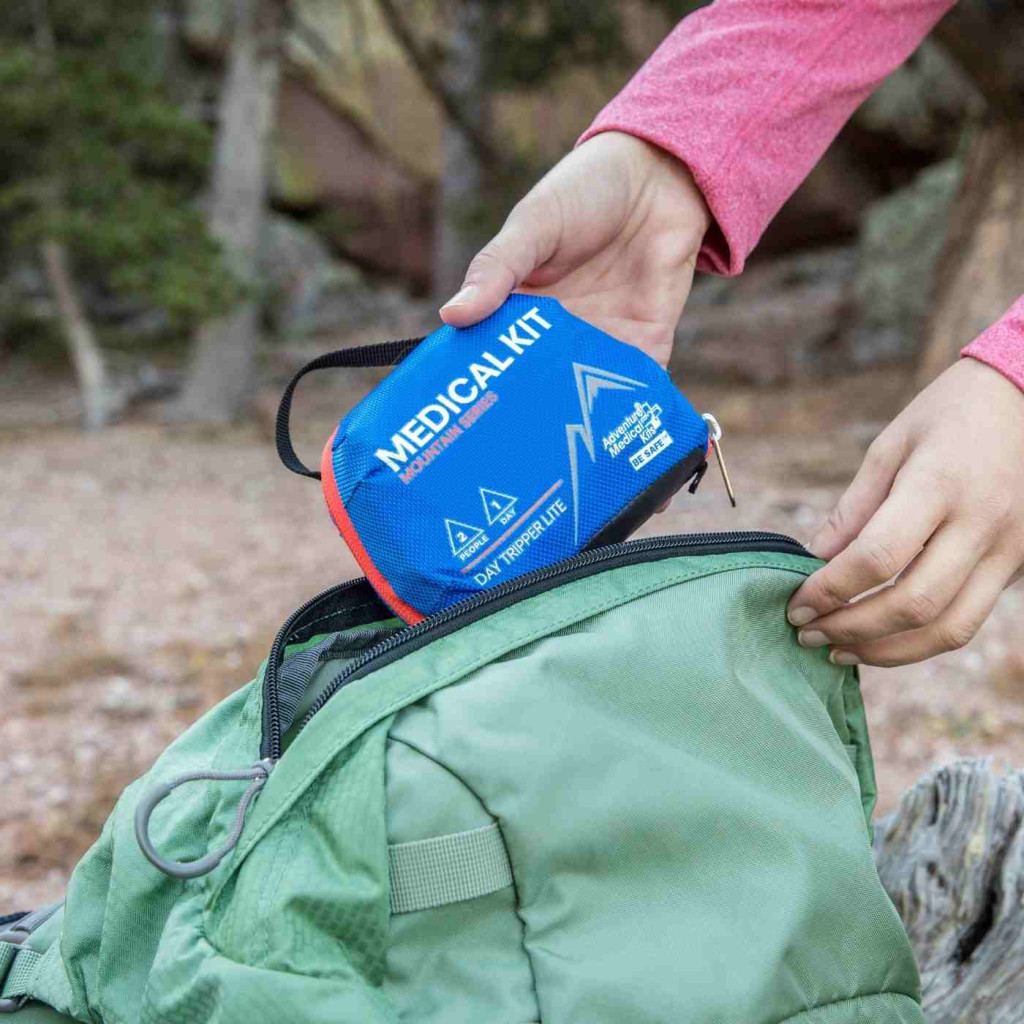
Pharmacies are easy to find in towns, but in the Sahara the nearest hospital can be hours away. According to the UK FCDO, private clinics are usually better than government hospitals, and English is not widely spoken in either.
Get travel insurance that covers medical evacuation and repatriation, and check that it covers the Sahara. Most travelers drink bottled water, which is sold everywhere.
Following local laws
Algeria is conservative, and several rules that look like etiquette are actually laws.
In public, dress modestly: shoulders and knees covered in towns, more in the south and the M'Zab, and for women a headscarf when visiting a mosque.
©Jason Billam
Keep affection private. Anything beyond holding hands is frowned on and can bring police attention, and the countryside is more conservative than Algiers or Oran.
You can buy alcohol in licensed shops, hotels and some restaurants, though most restaurants don't serve it, and drinking or being drunk in public is illegal. In Ramadan (due to begin around 8 February 2027), eating, drinking or smoking in public in daytime is off limits. Same-sex relations are illegal.
Two rules catch visitors out every year. Drones are not allowed into the country without an authorization that tourists can't realistically get, and they are confiscated at customs, so leave yours at home (the UK FCDO says the same about binoculars and telescopes). Photographing military and police sites, government buildings, ports, airports and some bridges is also forbidden, and you should always ask before taking pictures of people.
In the Sahara, don't pick up flint tools, pottery shards or anything else that looks old: exporting antiquities can lead to prison.
Paying: cash, cards and ATMs
Algeria still runs on cash. A foreign Visa or Mastercard gets you through large international hotels, airline offices and a few upscale shops and restaurants in the big cities, and not much further; almost everywhere else, and nearly everywhere in the south, you pay in dinars.
Paying by card also means paying at the official rate (about 150 DZD to the euro in autumn 2026), so everything costs roughly 80% more than with cash changed informally. We'd keep a card for a big hotel bill or an emergency.
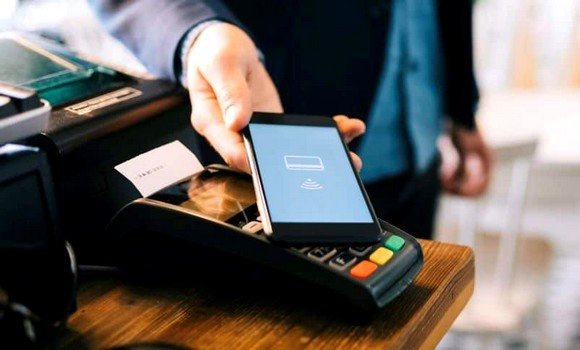
ATMs in cities and at Algiers airport often accept foreign cards, but not all of them. Travelers report the most success with BNA, BEA, Société Générale Algérie, BNP Paribas El Djazaïr and BDL machines, and frequent failures at CPA. Withdrawal limits are low, so don't count on an ATM as your only source of cash.
Keep small notes for taxis, cafés and site tickets, and split your cash between two places: the UK FCDO warns about pickpocketing and advises against carrying large sums.
Packing for the Algerian desert
Packing for the Sahara is mostly about the gap between day and night. In the season (October to April) the days are warm to hot, the nights can drop close to freezing in December and January, and there are few shops once you leave the oasis towns.
Dress code for the Sahara
Choose light, breathable fabrics like cotton and linen, with long sleeves and long pants: covered skin burns less than skin under sunscreen.
Light colors (white, beige, khaki) stay cooler in the midday sun. For the evenings, bring a fleece or a light down jacket, and a warm sleeping layer if you're camping in winter.

Algeria is conservative, so modest clothing matters in the desert too. Women should cover their arms and legs, and men should wear long pants rather than shorts in towns and villages.
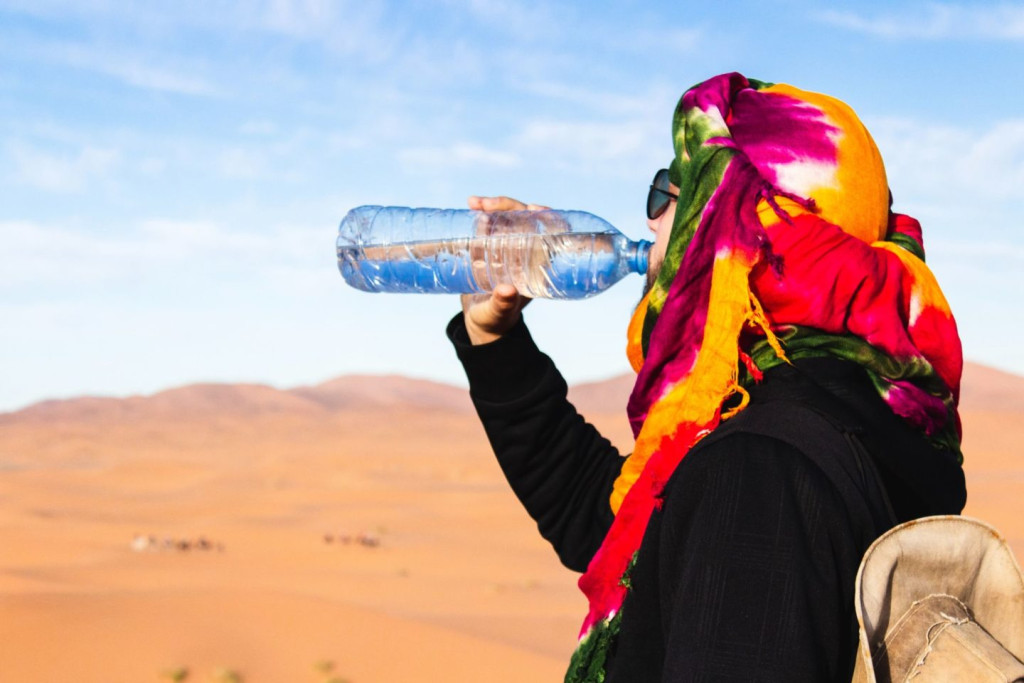
The same clothes protect you from the sand and dust the wind picks up. A chèche, the long Tuareg headscarf, is the best thing to have when the wind rises; they're sold in the southern towns, and guides will show you how to tie one.
Add a wide-brimmed hat, good sunglasses and closed shoes you can walk in on sand and rock. Sandals are fine around camp.
Staying healthy in the Sahara
Sunscreen with a high SPF and a lip balm are essential: the dry air and constant sun dehydrate and burn you quickly, so keep both within reach.
Pack a compact first aid kit with antiseptic, bandages, blister plasters and rehydration salts.
On a trek in the Tassili, the nearest doctor can be a long day away, so blisters and small cuts are yours to deal with.
Plan on drinking at least 3 to 4 liters of water a day in the desert. Organized trips usually supply it (ask), but carry a bottle of your own and some high-energy snacks.
Driving and getting around
Driving yourself is realistic in the north, but it's hard work, and in the deep south it isn't really an option.
In the Sahara, foreigners travel with an approved agency and a local driver-guide, and on some routes the authorities add a police escort, which the agency arranges. In the north, driving in and between the big cities is possible but demanding: the UK FCDO notes that Algeria has a very high road accident rate.
Road conditions
The East-West motorway across the north and the main national roads are mostly in good condition.
Off them, the UK FCDO warns about sand drifts, large potholes that appear after heavy rain, and big speed bumps. In the desert, sandstorms can cut visibility sharply.
Avoid driving at night outside towns, because roads and vehicles are often unlit.
Public transportation in Algeria
Algeria has more public transportation options than most visitors expect, especially in Algiers: one metro line (50 DZD a ride), the tram (40 DZD), ETUSA buses and suburban trains. Coming in from the airport, the train gets you to Agha in about 20 to 25 minutes for 80 DZD, and ETUSA bus 100 runs to Place des Martyrs for 50 DZD. There's no metro to the airport yet.
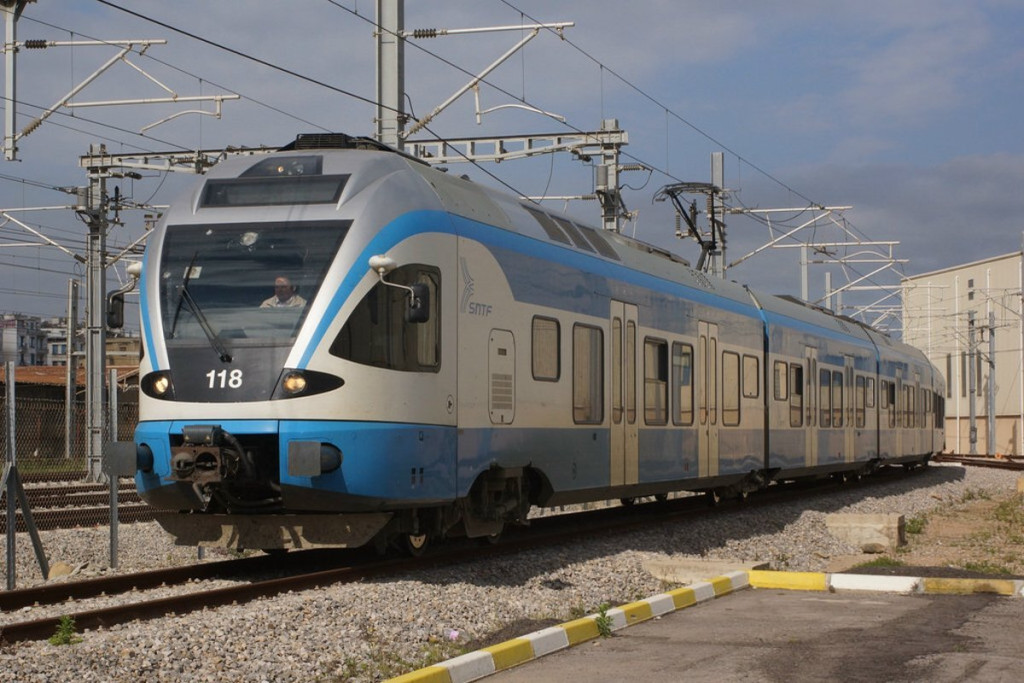
The national rail company, SNTF, runs intercity trains from Algiers to Oran, Constantine, Annaba and Béjaïa. There's no high-speed line: the Coradia express to Oran takes about 4.5 to 5 hours, and delays are common. To reach the Sahara you fly, with Air Algérie or Domestic Airlines (formerly Tassili Airlines).
Outside the cities there is less choice, especially in the south. Shared taxis (taxis collectifs) leave from the bus stations when they are full and are usually faster than buses between towns.
In cities, use a ride-hailing app: Yassir is the biggest, and Heetch and TemTem also work. Uber doesn't operate in Algeria, and many drivers expect cash.
Driving culture
Expect a different driving culture. The UK FCDO describes driving as erratic, with very little lane discipline and confusion about right of way, especially at roundabouts.
Drive defensively and leave space. Take care as a pedestrian too, even on a green light.

Police and gendarmerie checkpoints are frequent on main roads. Slow down as you approach, follow instructions and have your passport, license and car papers ready.
Away from the cities, keep a charged phone with a local SIM, and tell someone your route before long drives.
Car rental in Algeria
Renting a car gives you freedom in the north. Hertz has an office serving Algiers airport, with a shuttle from the terminal, and local rental firms operate in Algiers, Oran and Constantine.
Bring an International Driving Permit, since the police may ask for one and you have to get it in your home country. (UK travelers can drive on a photocard license for up to three months, according to the FCDO.) Check your rental company's own requirements before you book.
Book ahead for July and August, and read the insurance terms before you sign.
Fuel stations and costs
Fuel is cheap, but stations thin out quickly once you leave the north, so in the Sahara every leg needs planning.
Fill up whenever you pass a station in a town, and check where the next one is before a long drive. Running out of fuel in a remote area is dangerous.
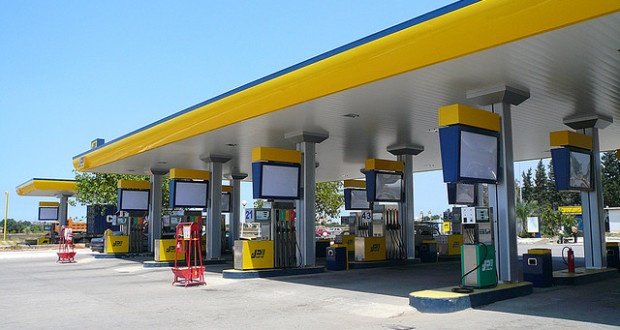
Prices are set by the state and went up on 1 January 2026. Unleaded petrol costs 47 DZD a liter, about 0.35 US dollars at the official rate (autumn 2026).
Diesel costs 31 DZD a liter (about 0.23 dollars) and LPG, sold as Sirghaz, 12 DZD (about 0.09 dollars).
Currency exchange
Dinars can't really be bought abroad, so bring cash, ideally euros, and expect two rates: about 150 DZD to the euro at banks and ATMs, and about 275 with the informal changers of Square Port Saïd in Algiers and their equivalents in other cities (autumn 2026). That street market is, strictly speaking, not allowed under the exchange-control rules, but it works in the open and nearly everyone uses it, so let your guide or host lead you to a changer they vouch for, count the notes, and change modest amounts in daylight.

The Bank of Algeria is the central bank: it sets the official rate, but you change money at commercial banks such as the National Bank of Algeria (BNA). Bring your passport and keep the receipt. It is slow, hours are limited and not every branch does it; some large hotels also change money at the official rate.
If you declare more than EUR 1,000 on arrival (online through the customs ALCES system or on a paper form), keep bank receipts for part of it, because customs may ask for them on the way out, and spend your dinars before you go, since non-residents can't export them.
For what a day costs at each rate, see our breakdown of daily costs in Algeria.
How much does a trip to Algeria cost?
Day-to-day costs are low if you pay in cash changed on the informal market, and much higher if you use cards. Below are typical 2026 prices; the first euro column uses about 275 DZD (cash changed locally), the second about 150 (the official rate cards get). Hotels booked online and flights are usually charged by card, at the official rate.
| What you're paying for | Dinars | € in cash changed locally | € on a card |
|---|---|---|---|
| Coffee in a café | 50 to 120 | 0.20 to 0.45 | 0.35 to 0.80 |
| Street snack (mhadjeb, karantika sandwich) | 150 to 300 | 0.55 to 1.10 | 1 to 2 |
| Plate of couscous in a popular restaurant | 600 to 1,200 | 2.20 to 4.40 | 4 to 8 |
| Metro or tram ride in Algiers | 40 to 50 | 0.15 to 0.20 | 0.25 to 0.35 |
| Taxi, Algiers airport to the center | 1,500 to 2,500 | 5.50 to 9 | 10 to 17 |
| Train Algiers to Oran (Coradia, 2nd class) | 1,130 to 1,350 | 4.10 to 4.90 | 7.50 to 9 |
| Museum or Roman site ticket | 200 to 300 | 0.75 to 1.10 | 1.35 to 2 |
| SIM card with 10 to 50 GB | 1,000 to 1,500 | 3.60 to 5.50 | 6.70 to 10 |
| Budget hotel or guesthouse room | 4,000 to 7,000 | 15 to 25 | 27 to 47 |
Put together, a budget day (guesthouse, local meals, public transport, a site or two) comes to about 7,000 to 9,000 DZD: roughly EUR 25 to 33 in cash changed informally, or EUR 47 to 60 by card. A mid-range city hotel booked online runs about USD 40 to 90 a night, and the Sofitel in Algiers about USD 150 to 260.
The big costs are the south. A return flight from Algiers to Tamanrasset booked online starts at about EUR 150, and an agency-run week in the Sahara costs about EUR 600 to 1,500 per person in 2026, with guides, 4x4, cook and camping included. On top of that, budget 1,500 to 2,000 DZD per traveler per day to tip the desert crew. Our daily costs breakdown linked above goes into more detail by travel style.
Where to stay in Algeria
Accommodation runs from family guesthouses in the oases to international hotels in Algiers and Oran. Outside the big cities, choice is limited and many places aren't on booking sites, so this is one area where a local contact helps.
Guesthouses
For somewhere with character, the M'Zab and the Saharan oases have the best guesthouses (maisons d'hôtes).
They are usually family-run, in traditional houses, with meals cooked by the family. Expect simple rooms and to pay in cash.
The Beni Isguen palm grove in the M'Zab has some good ones, and if you'd like to stay with a Mozabite family, we can set that up.
Hotel options across Algeria
Algiers and Oran have the widest range of hotels, from simple city-center places to international chains. Elsewhere, choice thins out quickly.
In Algiers, the Sofitel Algiers Hamma Garden is the classic high-end choice. It sits next to the Jardin d'Essai, with views over the garden and the bay, and rates usually run about 150 to 260 US dollars a night (2026 listings).

On a budget, Hotel Samir is a three-star hotel at 74 rue Didouche Mourad in central Algiers, a few minutes' walk from Khelifa Boukhalfa metro station. The building has character, but reviews of the rooms are mixed, so ask to see one.
In Oran, the Royal Hotel Oran (MGallery) occupies a 1920s Haussmann-style building in the city center, renovated in the 2000s. Near Timgad, the four-star Trajan Hotel is about 80 m from the Roman site, so you can be at the entrance when it opens.
Try camping in Algeria
Most Sahara trips spend their nights camping. Around Taghit there are fixed camps in the dunes, and hotels such as the Bladi Palace at the foot of the dunes if you'd rather have a proper bed.
Further south, in the Tassili and the Tadrart, the agency's crew sets up camp each night, with mattresses on the sand or small tents.
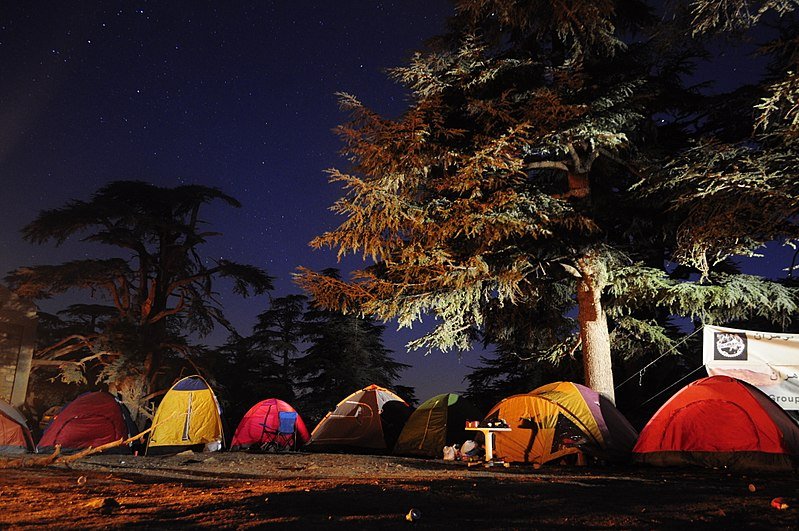
The desert has real risks: cold nights, sandstorms and long distances from help. Go with a local guide; in most of the south it's required anyway.
Useful apps for your trip
A few apps make Algeria much easier, mainly for maps, money and language.
Most of them need data, so get a local SIM card when you land. Mobilis, Djezzy and Ooredoo all have booths at Algiers airport, you need your passport to register, and a prepaid package with 10 to 50 GB for 30 days cost about 1,000 to 1,500 DZD in 2026. In the south, Mobilis is the network with the widest coverage.
Maps that work offline
Download offline maps before you leave the cities.
Apps like Google Maps generally work well within cities and larger towns. Maps.me is also an excellent choice for offline navigation. It is useful in Algeria’s more isolated regions where internet access can be spotty.
Download the regions you need in advance, and your directions will keep working when the signal drops in the mountains or the desert.

A currency converter
XE Currency is handy for quick conversions between the dinar and the euro, dollar or pound.
Keep in mind that XE shows the official rate. If you change cash on the informal market you get almost twice as many dinars, so budget at the rate you actually used.
Translation
Google Translate helps with French and standard Arabic. Download both language packs so it works without a data connection.
It's good for menus and signs. Spoken Algerian Arabic (Darja) mixes Arabic, Amazigh and French words and translation apps often struggle with it, so with people, a few words of French usually work better.
Road trips: iOverlander
For road trips in the north and for overlanders, iOverlander is a good resource.
It's user-driven, so check the date on each entry before you rely on it.
What to eat in Algeria
Couscous is the national dish, and in many homes it is still the Friday lunch. It comes with lamb or chicken, a red or white sauce and plenty of vegetables. For big occasions, look for mechoui, a whole lamb roasted slowly for hours.
On the street, try karantika, a chickpea flan served in bread, and chorba frik, the green-wheat soup served at every Ramadan iftar. For something sweet, makroud is a semolina pastry filled with dates and soaked in honey. Every region has its own recipes, and our list of traditional dishes in Algeria is a good place to start before you order.
The best time to visit Algeria
The right time depends on where you're going, because the north and the Sahara have opposite seasons.
For the Sahara, the season runs from October to April, when the days are warm rather than scorching. We'd pick October to November or February to March: December and January bring nights near freezing, and from May the heat builds fast.
The Islamic calendar matters too. During Ramadan, due around 8 February 2027, trips still run, but restaurants shut by day and opening hours get shorter. Festivals such as Sebeïba in Djanet follow the lunar calendar and move about 11 days earlier each year.

For the coast, May to September is the swimming season. July and August are hot and the beaches are full of Algerian families on holiday, so we prefer June or September. For the cities and Roman sites, spring and autumn are best.
Sample itineraries: 7, 10 and 14 days
These are the routes we suggest most often. Long distances are best covered by domestic flights or the train; in the south, an agency handles transport from the airport.
7 days, the north. Days 1 and 2: Algiers (Casbah with a guide, the Martyrs' Memorial, the Hamma garden, Djamaa El Djazaïr). Day 3: day trip to Tipasa, about 70 km west. Day 4: fly or take the train to Constantine and walk the bridges. Day 5: Djémila, a Roman town on a ridge about 50 km from Sétif.
Day 6: Timgad, 35 km east of Batna. Day 7: back to Algiers.
10 days, the north plus the dunes. Do days 1 to 5 as above. Then fly from Algiers to Béchar and continue about 95 km by road to Taghit on the edge of the Grand Erg Occidental, or fly to Timimoun for the red ksar and the Gourara sebkha. Spend four nights there, including one in a dune camp, then fly back. Our 10-day itinerary below takes a different line through Constantine and the M'Zab.
14 days, north, west and deep south. Days 1 to 3: Algiers and Tipasa. Days 4 to 6: Oran by train (the Coradia takes about 4.5 to 5 hours) and on to Tlemcen, about 140 km further. Days 7 to 9: fly to Constantine for the bridges, Djémila and Timgad. Days 10 to 14: fly to Djanet for the Tassili n'Ajjer or the Tadrart with an approved agency, which also makes you eligible for the Sahara visa on arrival if Djanet is the core of the trip.
Algeria FAQ
Is a week enough for Algeria?
For Algiers plus one region, yes: either the Roman east (Constantine, Djémila, Timgad) or a short Sahara trip. Ten days lets you add the dunes of Taghit or Timimoun to the north, and two weeks gets you Oran, Tlemcen and a proper desert trip around Djanet.
What does a day in Algeria cost?
On a budget, about 7,000 to 9,000 DZD covers a guesthouse, local meals, transport and site tickets: roughly EUR 25 to 33 with cash changed informally, or EUR 47 to 60 on a card at the official rate (autumn 2026). A Sahara week is priced on its own, usually EUR 600 to 1,500.
Will I need a plug adapter?
Probably. Sockets are Type C and F (two round pins, 230 V, 50 Hz), so UK, US and Canadian travelers need an adapter, and US devices that aren't dual-voltage need a converter as well. Charging is limited in desert camps, so bring a power bank.
Can you travel Algeria without a tour?
In the north, yes. Algiers, Oran, Constantine, Tlemcen and the Roman sites are all easy on your own by train, plane and taxi. The deep south is another matter: in the Tassili, the Hoggar and most of the desert, foreigners are expected to go with an approved agency and local guides, and you need one for the Sahara visa on arrival anyway.
Will English get me by?
Not far: beyond hotel staff and some younger people, you'll hear Darja (Algerian Arabic), Tamazight and, in cities and business, French, so a few French phrases go much further than English.
Can I use cards or Apple Pay in Algeria?
Rarely, and not by phone. Local payments run on Algerian CIB and Edahabia cards; a foreign Visa or Mastercard works mainly in big international hotels, airline offices and a few upscale shops, at the official rate. Everywhere else, and almost everywhere in the south, it's cash in dinars.
Why Algeria?
If you want Roman sites without crowds, real desert and a country still mostly off the tourist circuit, Algeria delivers. What it asks in return is patience with paperwork, cash and slow logistics. It is a harder sell for anyone who wants everything bookable online.
Start with the visa: once you have dates, contact the consulate. We can provide the agency invitation and itinerary letter that many consulates accept, or file the visa-on-arrival request through our licensed Algerian partner agencies if you are heading to the Sahara. For how we plan trips in the south and what the official advice covers, our comprehensive safety guide goes into detail.
If you have about ten days, our recommended 10-day itinerary to discover Algeria starts in Algiers and covers the Roman sites, Constantine and the M'Zab.


