


The best things to buy in Algeria are made close to where they're sold: Deglet Nour dates around Biskra, wool rugs in Ghardaïa, enameled silver in Kabylie, and engraved copper in Constantine and the Casbah of Algiers. Bring dinars in cash, expect to bargain for crafts (not for food), and keep receipts for anything that looks old, because customs checks on the way out.
Below, for each craft: what the handmade version looks like, where it comes from and what to watch for. Then where to shop, how bargaining works here, how to pay, and the export rules that catch people out (antiques, raw coral, dinars).
Rugs, silver and dates: where each one comes from
- Rugs and kilims: woven in Ghardaïa (M'Zab) and Babar in the Aurès. Buy at the Ghardaïa market or the carpet festival, usually in March, and have the seller fold and wrap the rug for your checked bag.
- Kabyle enameled silver: from Ath Yenni in Kabylie, sold in its workshops and at the summer jewelry festival. It goes in your hand luggage, with the receipt.
- Tuareg silver: made in Tamanrasset and Djanet, and also sold by craft shops up north. Get the silver content in writing.
- Red coral: from El Kala on the east coast. Buy finished pieces only, from a jeweler who writes "natural coral" on the receipt.
- Pottery: hand-built in Maâtkas (Tizi Ouzou province), sold in village workshops and city craft shops. Wrap it in clothes and keep it in your hand luggage.
- Copper and brass: engraved in Constantine's old-town workshops and in the Casbah of Algiers. Small pieces travel best.
- Deglet Nour dates: from the Biskra and Tolga oases, in the markets from October and at Algiers airport. Vacuum-packed, they can go in either bag.
- Spices: every stall blends its own ras el hanout. Double-bag it and put it in your checked luggage.
Algerian handicrafts to look for
Kabylie pottery and glazed ceramics
Kabyle pottery is women's work. It's shaped by hand from local clay, without a wheel, and painted before firing with natural pigments: red from iron oxide and black from manganese on a white slip, sometimes with yellow ochre. The triangles, zigzags and lozenges are traditionally linked to fertility and protection.
Maâtkas, in Tizi Ouzou province, is the best-known pottery village. Handmade pieces are slightly uneven in shape and line, and that's what to look for; dead-straight, identical patterns usually mean a mold. The downside: it's low-fired and chips easily, so carry it in your hand luggage.
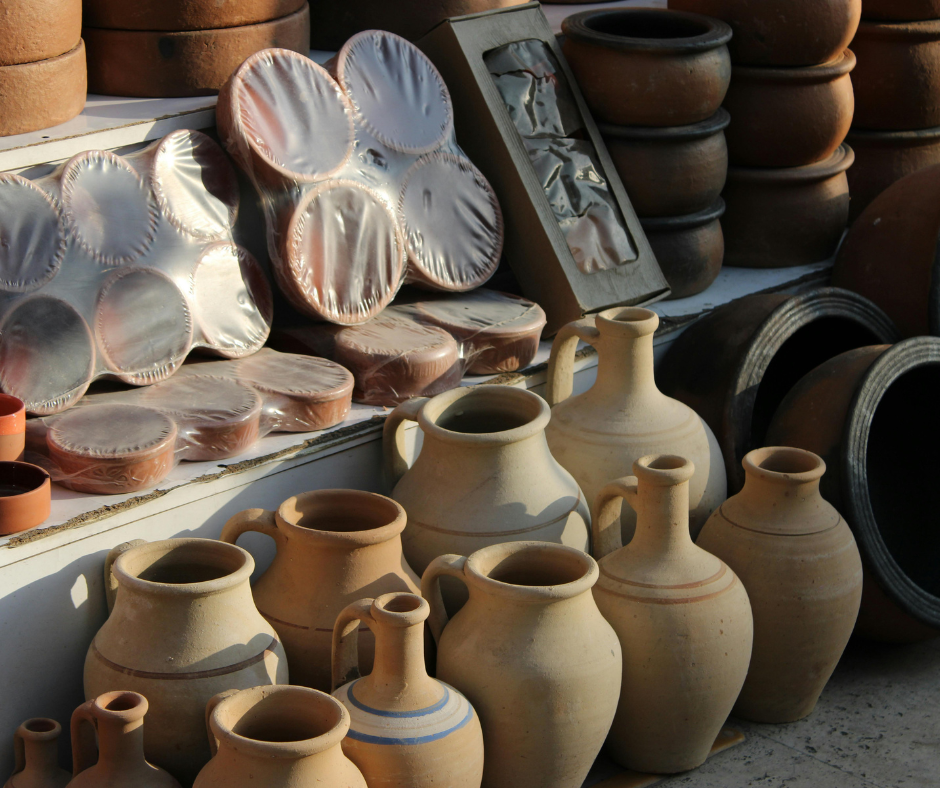
City craft shops also sell wheel-thrown glazed ceramics with floral and geometric patterns, used for serving couscous and tajines. Similar plates are made across the Maghreb, so ask where a piece was made. If you plan to eat off it, ask whether the glaze is lead-free; if the seller can't say, hang it on a wall instead.
Hand-woven Berber rugs and carpets
Ghardaïa, in the M’Zab Valley, is the rug town most visitors reach, and it holds a national carpet festival (the Fête du tapis) each spring, usually in March. Pure-wool rugs are the local pride.
Algeria has other weaving centers too: Babar near Khenchela in the Aurès, known for red, black and yellow rugs whose wool is traditionally dyed with pomegranate peel, henna and walnut bark, plus the Djebel Amour, the Nemencha and the Guergour. You'll see flat-woven kilims, which are light and fold small, and thicker knotted carpets. Plenty of modern rugs use chemical dyes, so ask.
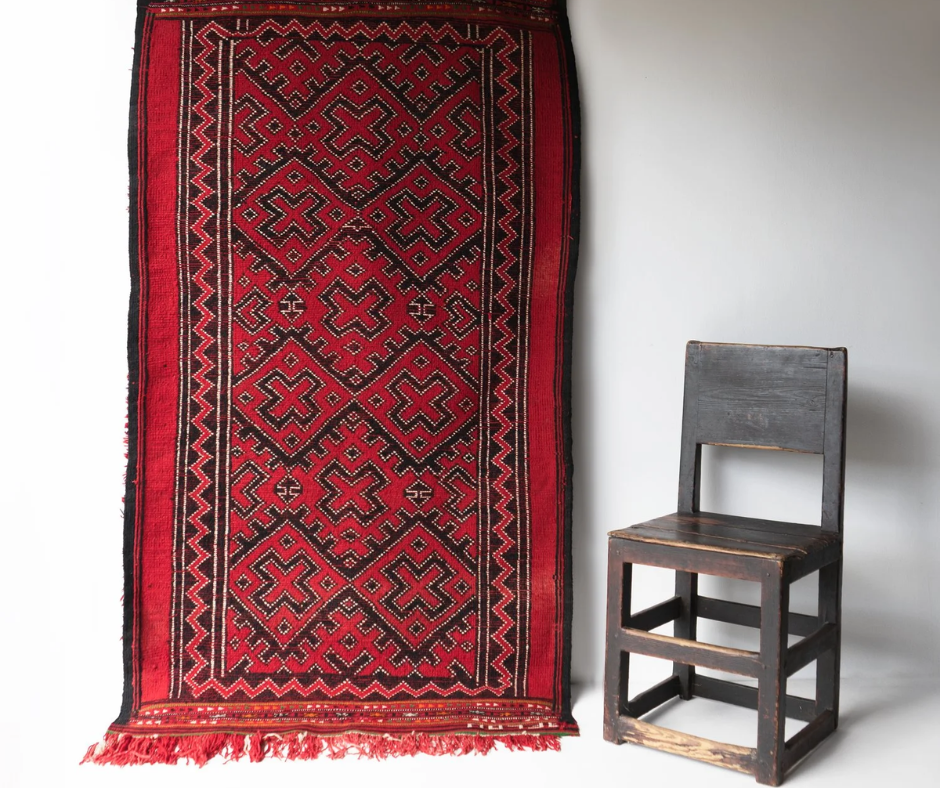
Flip a knotted rug over before you buy: a clear, sharp pattern on the back is a sign of a skilled weaver, and the denser the knots, the longer it will last. Ask whether it's wool on wool, and whether the dyes are natural or chemical.
The lozenge, one of the most common motifs, is often read as protection against the evil eye. A good rug costs real money, so take your time: sitting with the seller over tea and asking where the rug was woven is normal, and it's the best way to find out what you're buying.
Kabyle and Tuareg silver jewelry
Jewelry has long been a way for Algerian families to hold wealth, and it gets handed down. The best-known style is Kabyle silver from Ath Yenni, about 35 km south-east of Tizi Ouzou: silver set with Mediterranean coral and enamel in blue, green and yellow.
Look out for the tabzimt, a large round brooch. The technique isn't filigree: the jeweler solders thin silver wire onto the piece to mark out small cells, then fills them with enamel.
Ath Yenni holds a jewelry festival each summer, usually from late July into early August, which is the easiest time to meet the jewelers. Finished coral jewelry is fine to take home; raw or semi-finished coral is banned from export.
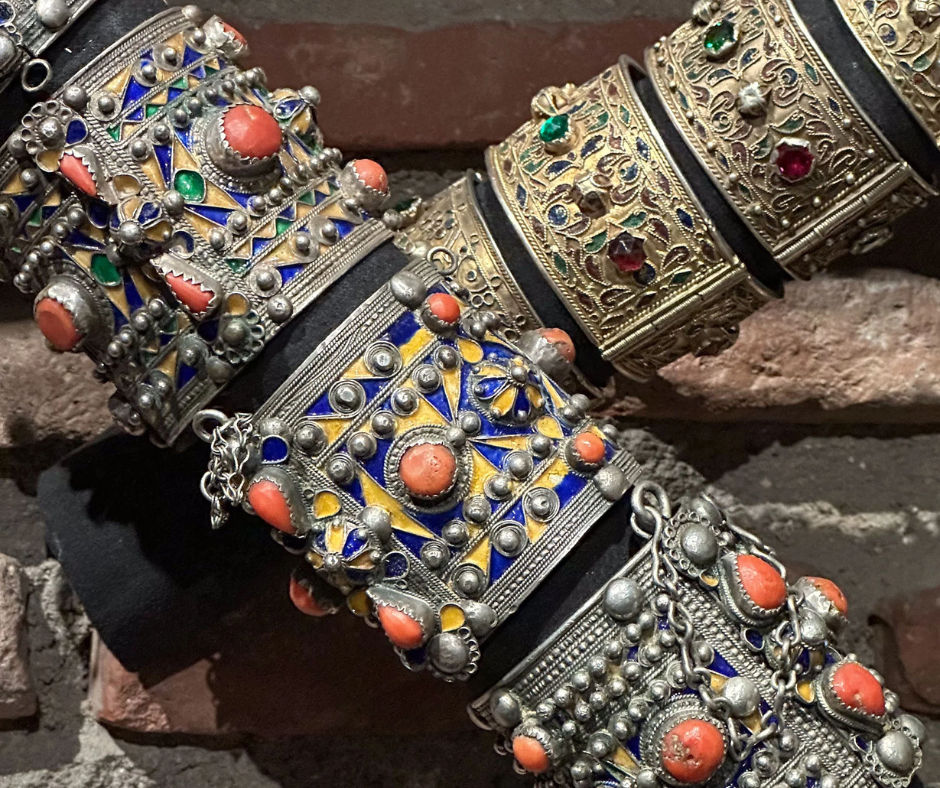
Tuareg silver from the far south looks completely different: plain or engraved geometric surfaces, heavy bracelets and the cross-shaped pendants called the Southern Cross. You'll find it in Tamanrasset and Djanet, and in craft shops up north. Silver quality varies a lot, and cheaper pieces are often nickel silver (maillechort), which contains no silver.
A hallmark helps, but many workshop pieces don't have one, so buy from a jeweler or cooperative that will tell you the silver content and write it on a receipt. Buying it at the source means traveling to the far south, which foreigners do with a licensed agency and local Tuareg guides (that's how our trips there work); look at the current official travel advice for that route, and check your insurance, before you commit.
Red coral jewelry from El Kala
The red coral in Kabyle silver comes from the east coast. El Kala, near the Tunisian border, has been known since the Middle Ages for one of the richest red coral beds in the Mediterranean. Coral fishing is strictly limited by quota (6 tonnes a year nationally, shared between El Kala, Skikda and Jijel), and raw coral may not be exported, so that it is worked into jewelry in Algeria.
Fakes are common, so look closely. Under a magnifier, real coral shows fine growth lines and fairly even color.
Dyed coral shows color pooled in cracks and rings, and a cotton swab with nail-polish remover picks the dye up. Plastic feels noticeably light. Buy from a jeweler who writes "corail naturel" on the receipt, and keep it: finished jewelry can leave the country, raw or semi-finished coral can't.
Metalwork and leather goods
Constantine copperware and brass
Constantine is Algeria's copper town. Its dinanderie (hand-worked copper and brass) is chased and engraved rather than just hammered, and the city's signature piece is the siniya, a large engraved tray that sits on carved wooden legs as a low table.
Other things to look for: coffee pots, sugar bowls, the m'rach used to sprinkle rose water at weddings, and the kettara, a copper still for making rose and orange-blossom water. The workshops are in the old town, with Rue de Bardo one of the last streets where you still hear the hammers. The trade is shrinking: copper sheet is scarce and expensive, and factory goods undercut it.
In 2023 UNESCO added the craft of metal engraving, with Algeria among the countries named, to its intangible heritage list. Pieces meant for cooking are tinned inside so they're safe for food.
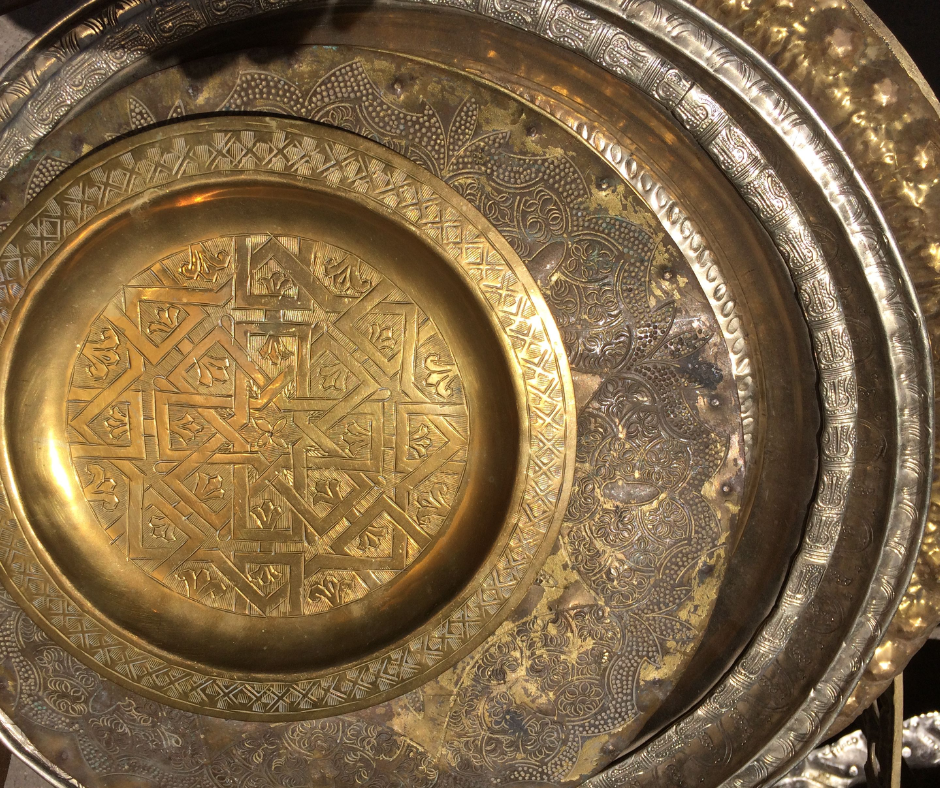
To tell handmade from machine-pressed, look for small hammer marks on the surface and slight variations in the depth of the engraved lines; pressed pieces are perfectly uniform. Think about luggage before you fall for a full-size siniya. A coffee pot, a rose-water sprinkler or a small tray packs much more easily and gets daily use.
Leather goods
Most city souks sell leather slippers (babouches), sandals, bags and belts. Quality ranges from good local work to cheap imports, so check the stitching and ask where it was made. The most distinctive leather comes from the south, where Tuareg craftsmen make bags, pouches and cushions in dyed leather, often trimmed with fringes and stamped or embroidered patterns.
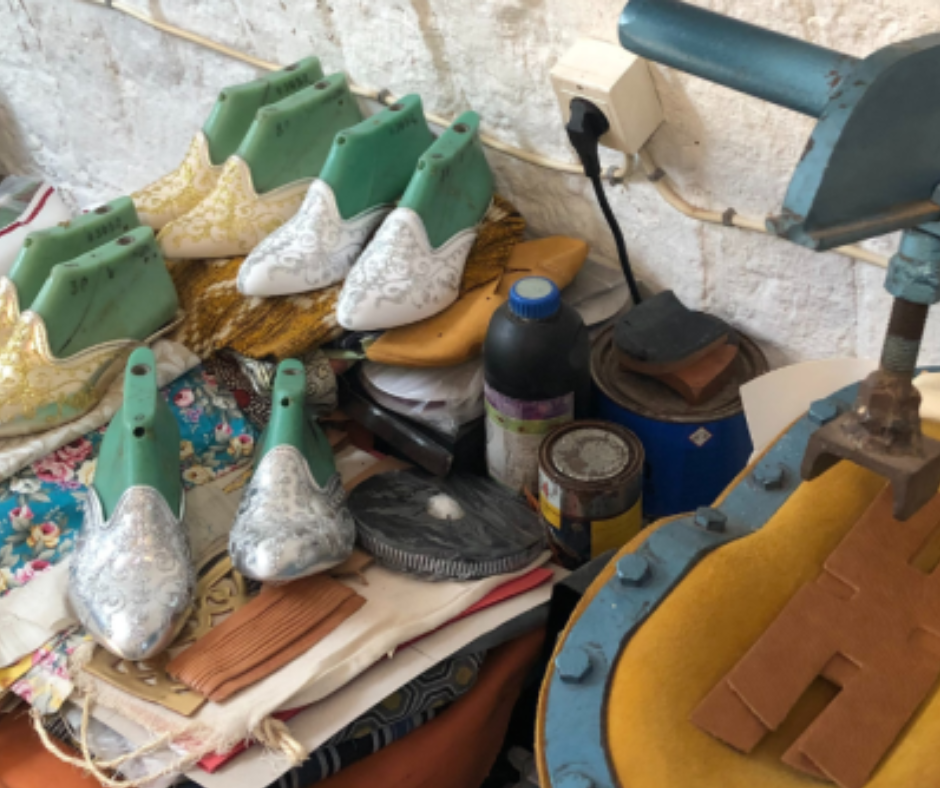
Leather floor cushions (poufs) are often sold unstuffed, which makes them easy to fold flat and pack. At home you fill them with cotton, foam or old fabric. Smell the leather before you buy: well-cured leather smells earthy, and a sharp chemical smell is a bad sign.
Traditional clothing: karakou, burnous and chech
Clothing is a good buy when it's something people still wear. The karakou, Algiers' gold-embroidered velvet jacket, is sold and made to measure in the shops around Bab Azzoun and Rue de la Lyre, at the foot of the Casbah. A made-to-measure one takes time and real money, so ask about both before you order. The burnous, a hooded wool cape that men wear in winter, is sold in the same streets.
For a desert trip, the cheapest useful buy is a chech, the long cotton scarf that Saharan men wrap into a turban against sun and sand. Markets in the south sell them in every color, and your guide will show you how to tie one.
Food souvenirs: dates and spices
Deglet Nour dates from Biskra and Tolga
Deglet Nour, usually translated as "date of light", is the premium date of the Maghreb: amber, slightly translucent, soft, with a honey taste. Algeria is the world's third-largest date producer (about 1.32 million tonnes in 2023, after Egypt and Saudi Arabia), and its Deglet Nour comes mainly from the Ziban oases around Biskra and Tolga. The harvest starts in autumn, so from about October the markets are full of new-season dates, often still on the stalk, which keeps them moist.
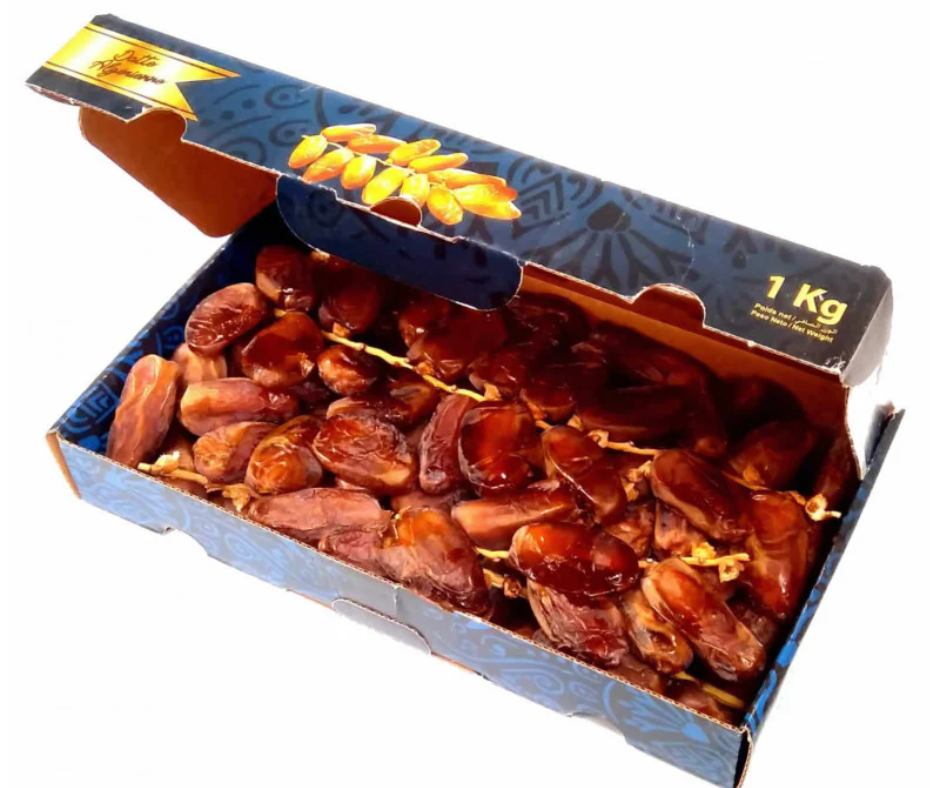
Dates travel well. Buy them plain or stuffed with walnuts or almonds, and if you're shopping at the end of your trip, look for a shop that will vacuum-pack them so they keep for months. They're also one of the few fruits you can bring into the EU and the UK in your luggage without a plant-health certificate. Don't try to take date-palm shoots home: palm plants are on Algeria's list of banned exports.
Algerian spice blends
Spice stalls sell their own ras el hanout, a house blend that can run to a dozen or more ingredients such as cardamom, nutmeg, anise, ginger, pepper and dried rosebuds, so it tastes different from one stall to the next. Cumin, caraway and paprika are everyday staples. Dried rose petals are sold for cooking and for traditional beauty treatments. Be careful with cheap "saffron": real saffron is expensive everywhere, and loose market stuff is often safflower.
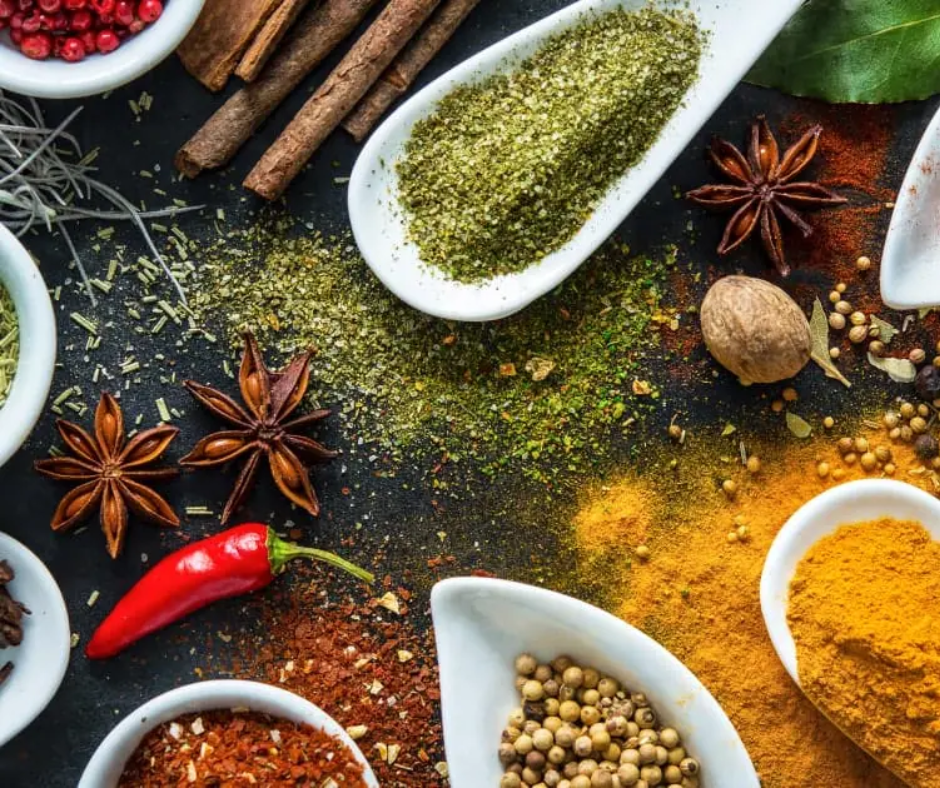
Buy from busy stalls, where stock turns over fast. Whole spices keep their flavor longer than ground ones, so grind them at home. Ask for double airtight bags, or everything in your suitcase will smell of cumin.
Palm-leaf baskets, flower waters and oils
In the oases of the south and the M'Zab, palm fronds are woven into baskets, mats, fans and covers for bread and couscous. They weigh almost nothing, squash flat in a suitcase and cost little, which makes them good gifts on a small budget.
Rose water and orange-blossom water, the same flower waters the copper kettara stills are made for, are sold in markets and grocery shops, along with black seed oil and Kabylie olive oil. Put bottles in your checked bag, sealed in a plastic bag, because the 100 ml liquid limit applies to hand luggage on international flights.
Where to shop: the Casbah and the M’Zab
The Casbah of Algiers
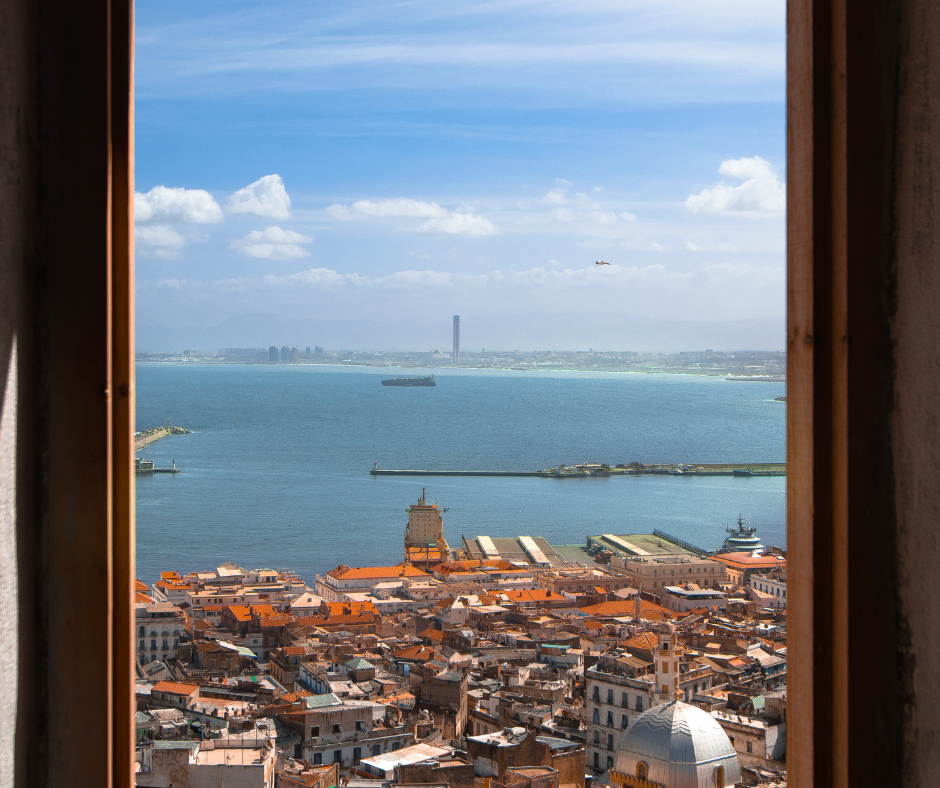
The Casbah, on the UNESCO list since 1992, still has lanes named after their trades (copperworkers, cabinetmakers, goldsmiths), and the clothing shops around Bab Azzoun, on its lower edge, are where you'll find burnous and the karakou, the gold-embroidered velvet jacket that is Algiers' traditional dress for women. Expect scattered workshops rather than a big souk, and fewer every year: by recent counts only two or three master coppersmiths still work here. The lanes are steep and confusing, and the UK Foreign Office advises using a good local guide in the Casbah and letting your hotel know your plans.
Set a shopping budget before you go, since our breakdown of daily costs shows how quickly small purchases add up. Exploring with a local guide also helps you find the master craftsmen who have no shop on the main streets, and if you would like us to arrange one, contact us and we will build it into your itinerary.
The Markets of the M’Zab Valley in Ghardaïa
Ghardaïa's arcaded market square in the old town is where locals buy and sell carpets, textiles, brassware and everyday goods. The one to see is next door in Beni Isguen: a daily auction on the Place Lalla Achou, held after the afternoon prayer every day except Friday.
Auctioneers chosen by the mosque council walk around the square holding up old carpets, kitchenware and used clothing and calling out the bids. Be careful with anything sold as an antique: old pieces can count as heritage that you can't legally take out of the country (more on that below).

The M’Zab is conservative. Beni Isguen in particular has firm rules for visitors: a local guide from the main gate is the only way in, the town shuts to outsiders at sunset, shoulders and legs stay covered, and people, women especially, are not to be photographed. Ask before photographing a stall too. Weavers and traders are usually happy to explain what the patterns in a rug mean if you ask.
How to shop in Algerian markets
Bargaining
Prices for food, groceries and most goods in city shops are fixed. Bargaining is normal for rugs, jewelry, copper and other crafts in markets and small shops. It's friendly and slow: a greeting, maybe a question about where you're from, then the price. Make a counter-offer well below the first price and meet somewhere in between.
Keep it light, and a few words of Arabic or French go a long way. If the price won't come near your budget, thank the seller and walk away; that often brings a final offer. A few hundred dinars matter more to a weaver than to you, so if you love a piece, pay a fair price for the work in it. Tipping, on the other hand, is not expected in shops; our page on tipping in Algeria lists where it is.
Market etiquette
Start with "salam alaykoum" and a moment of small talk before asking prices. If you're offered tea or coffee, accept, even if you only take a sip. Handle things carefully, and don't run down an item's quality to push the price down; it tends to end the conversation rather than lower the price.
The pace is slower than you may be used to. If a shopkeeper is praying or serving someone else, wait or come back later. Friday is the weekly day off, and many shops open late or stay shut, especially around the midday prayer, so plan market days for Saturday to Thursday.
Buying from artisans
Buying direct from workshops and cooperatives
When you buy from the person who made something, or from a cooperative, more of the money reaches the maker. That matters, because several of these crafts are shrinking: Constantine's coppersmiths struggle to get copper sheet, and the number of workshops keeps falling. Women's associations and cooperatives in Kabylie run pottery workshops to pass on the skills. Look for workshops where you can see the tools and materials in use.
Each wilaya also has a Chambre de l'artisanat et des métiers, which runs craft fairs and exhibitions where you can buy straight from makers. The big festivals (Ghardaïa's carpet festival, Ath Yenni's jewelry festival) work the same way, with stalls run by the artisans themselves.
How to spot handmade work
Ask about materials and time: a maker can tell you where the clay came from, how the wool was dyed or how long a rug took. Handmade pieces have small irregularities, like a slightly asymmetric pattern or a shift in color between batches of wool.
Be wary of shops with dozens of identical pieces stacked up; that usually means factory production. If the price seems too low for the hours of work involved, the piece probably isn't handmade. One good piece beats several cheap copies.
Paying and getting it home
Cash, cards and exchange rates
Markets and small shops take cash only, in Algerian dinars, so carry plenty of small notes. Where you get them changes what that rug really costs you: about 150 DZD to the euro at banks, ATMs and on cards (autumn 2026), against roughly 275 on the informal market, which is technically against Algeria's exchange-control law but used openly (our travel guide to Algeria explains how to change safely, and why to keep bank receipts if you declared over EUR 1,000 on arrival).
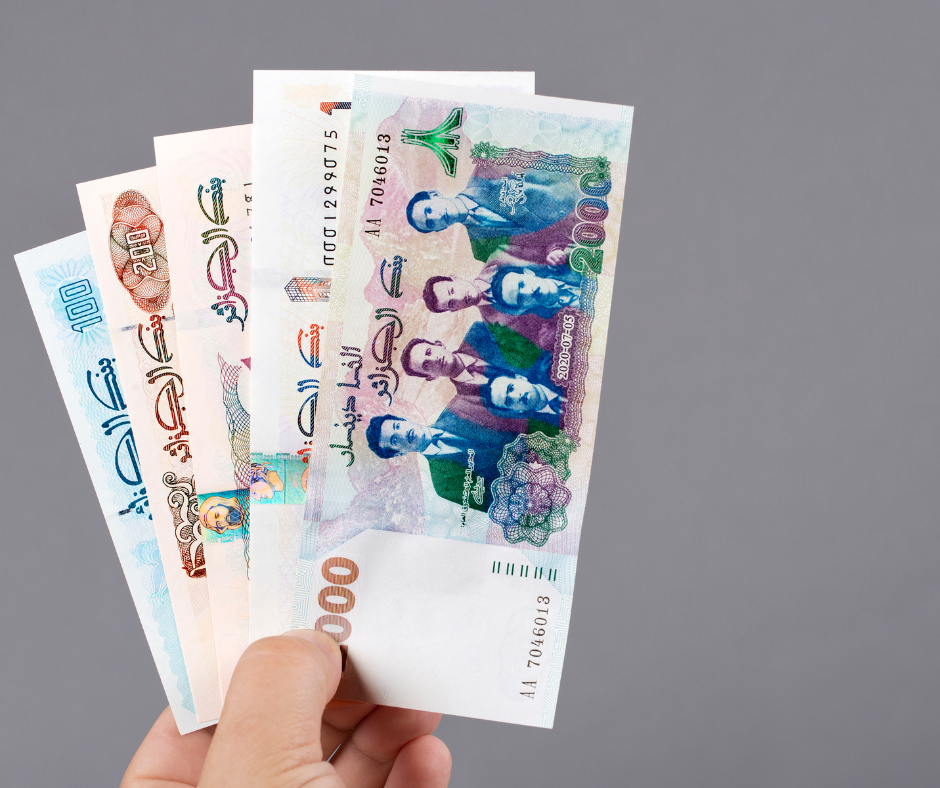
In the souks a foreign card is almost useless; only large international hotels and a few upscale shops in Algiers and Oran take one, and there a piece priced at 10,000 DZD costs about EUR 66 on a card (official rate, 150.5 DZD/EUR, autumn 2026) against about EUR 36 in cash changed at 275. Paid in cash, prices are low by European standards, as our comparison of whether Algeria is cheap shows. Keep your cash split between pockets and don't flash a big wad of notes in a crowded market.
Packing and customs rules for souvenirs
Wrap pottery and copper in clothes and put the fragile pieces in your hand luggage. Most rug sellers will fold a rug into a tight square and wrap it in heavy plastic for you. Then the rules.
Algerian customs bans the export of objects of historical, artistic or archaeological interest, and the UK Foreign Office warns that smuggling antiquities can mean prison. Keep a receipt for anything that looks old, or it may be confiscated at the airport. Customs on both sides of the Mediterranean also seize stone tools and fossils taken out of Algeria.
Desert roses are sold openly in the south and aren't on the banned list, but they're heavy and crumble, so pad them well. Finally, check your home country's rules on food and plant products.
| What you're taking home | The rule |
|---|---|
| Finished coral jewelry | Allowed; keep the receipt |
| Raw or semi-finished coral | Banned from export |
| Antiques and old-looking pieces | Objects of historical or archaeological interest are banned from export; keep receipts |
| Prehistoric flints, potsherds, fossils | Leave them where they are; customs seize them |
| Date-palm shoots | Banned from export |
| Desert roses | Allowed; pack them well |
| Jewelry over 150 g | Declare it to customs |
| Algerian dinar notes | Non-residents can't take them out; spend them first |
Souvenir FAQ
What is Algeria famous for making?
Hand-woven wool rugs from Ghardaïa and the Aurès, Kabyle silver set with enamel and coral from Ath Yenni, engraved copper from Constantine, hand-built pottery from Maâtkas and Tuareg silver from the south. On the food side it's Deglet Nour dates from Biskra and Tolga: Algeria is the world's third-largest date producer.
Can I bring Algerian dates into the UK, EU or US?
Yes, in most cases. Dates are one of the few fruits you can bring into the UK and the EU in your luggage without a plant-health certificate. For the US, declare all food on your customs form and let the officers decide. Sealed, vacuum-packed dates from a shop are the easiest to get through any border.
Is Algerian red coral real, and can I take it home?
Yes, El Kala's coast has real Mediterranean red coral, though dyed and plastic copies are sold too, so check for fine growth lines and even color, get "natural coral" on the receipt, and take only finished jewelry home, since raw or semi-finished coral is banned from export.
Can I buy souvenirs at Algiers airport?
Some. The Terminal Ouest at Algiers airport has a duty-free shop that stocks Algerian products, and a date shop in the departure area sells Deglet Nour and other varieties. It works for last-minute dates and sweets, but the choice of crafts is far smaller than in town, so buy rugs, silver and copper before you get there.
What should I not bring back from Algeria?
Leave behind antiques and anything of historical or archaeological interest, prehistoric flints and potsherds, fossils, raw coral and date-palm shoots: all are banned from export or seized by customs. Don't keep dinar notes either, because non-residents can't export them. Declare jewelry over 150 g, and keep receipts for anything that looks old.
If shopping is a big part of your trip, time it: Ghardaïa's carpet festival usually runs in March, Ath Yenni's jewelry festival in late July and early August, and new-season dates reach the markets from about October.
Read also:
Is Algeria Worth Visiting? What to Know Before You Go (2026)
What to Wear in Algeria: Packing Guide


