


You’ve started to pack your things to move to Tunis, Tunisia? Congrats! There is always a spell Mediterranean countries are able to put on their visitors. And, Tunisia is one of them. The year-round warm climate, the slow pace of life, the affordable living and the incredible hidden gems you are craving to explore.
Relocating to Tunisia or deciding to spend a few months is a great experience. To make it greater, research is your key. WildyNess team pours out their expertise of the country and their knowledge of its ins and outs to create a comprehensive guide for those planning to live in Tunisia.

Tunisia in a Glance

General Information about Tunisia:
Known as the Republic of Tunisia, Tunisia is one of the southern Mediterranean country that makes up the Arab Maghreb Union. Located in North Africa, the country has multiple layers of culture, history and identity. This makes it one of the countries you should be excited to visit and settle down in. From the southern arid desert to the northern turquoise waters, Tunisia is a great destination for every season. This is to say, you will enjoy being around as an expat regardless of the weather or, even, the budget.
Geographic Location :
The smallest country in the Maghreb union and North Africa is bounded to the east by Libya; to the south by Algeria; and to the north by the Mediterranean Sea. Predominantly a Muslim country, Tunisia is influenced by the Mediterranean country along with Amazigh, Andalusian and Arab cultures.
The highest mountain in the country is Jebel ech Chambi with an elevation of 1,544 m. The Medjerda River is the most important river, flowing through the third of the country with reliable rivers.
Tunisia boasts many different and mesmerizing landscapes. The Sahel in the east, the desert in the south and the wide plains in the north, will make sure you always have a region to explore and discover in each and every season.
Climate:

With its incredible landscapes and human-made wonders, Tunisia is a great destination for tourists and expats, alike. If we are going to use one word to describe the climate in general, it would be “warm”.
While being there, you can expect a Mediterranean climate in the north, with its mildly rainy winters and hot summers. In the south, temperature is hotter with seasonal hot and drying sirocco.
Language:
The official language in Tunisia is Arabic. While you may be expecting everything to be written and referred to in Arabic, French is also widely used in institutions, restaurants, hotels, etc. Speaking French would make your experience smoother and easier. English is less spoken, but younger generations are starting to adopt it and speak it smoothly.
While wandering in the country, it will be easy to identify neighborhoods, places and attractions as name plates are usually bilinguals, using both French and Arabic.
Healthcare in Tunisia
Public Healthcare :
Caisse Nationale d'Assurance Maladie (CNAM) is the legal and medical body in charge of overseeing the Tunisian healthcare system. Public healthcare is not exclusive to Tunisian citizens. Foreigners who have work permits in Tunisia can have access to it, if their employers administer the registration.

Unless you have a job in Tunisia, you need to administer the registration after getting your work permit.
To gain access to local healthcare, both foreign immigrants and Tunisian citizens must register with CNAM.
Your CNAM registration will be administered by your employer if you have a job in Tunisia. On the other hand, if you work for yourself, you will have to go through the processes independently.
Bear in mind that having a CNAM insurance may be not that effective in certain cases, especially in case of emergencies.
Public hospitals are usually crowded and chances to get someone speaking English fluently are random. However, you may need to go there for basic treatment.
Private Healthcare :
Private healthcare in Tunisia is good, if not great. Hospitals and doctors of all specialities are always available. This may alleviate most of your worries. For regular check-ups and visits, med.tn, a platform that connects patients to doctors or healthcare professionals, provides a comprehensive list and allows you to take appointments online.

As an expat in Tunisia, you must ensure that you have adequate health insurance that will protect you in case of emergency and pay for your essential medical needs.
Be aware that you will frequently be requested for payment up front at Tunisian hospitals and clinics, sometimes even before receiving care. That’s why, it is highly recommended that you carry a solid private insurance. Even if you are only temporarily in the nation. Your access to private clinics in Tunisia will be made reimbursements possible by your private health insurance, which will also keep you safe during crises there and assist you in managing unforeseen costs.
Transportation in Tunisia
Local Transport:
Taxi in Tunisia
Metered taxis are used for daily rides. Comparing to Europe or the US, taxis are rather affordable for expats in Tunisia. You can easily identify a taxi by its yellow color. A faint red light is shown when the taxi is empty. While, a green one signifies it’s taken.
Foreigners, who cannot speak little French or Arabic, may encounter some mishaps. So, we highly recommend insisting on turning on the meter once you get the taxi.
For a hassle-free experience, some taxi apps are very popular in Tunis. You can download Bolt or Indrive, to hire a taxi and feel comfortable and safe.
Good to know: Starting from 9 pm, fares get higher by 50%.
Collective Taxi :
Collective taxi are a great means of transportation in Tunis. As they are always available, it makes it easy for you to go from one part of Tunis to the other.
Collective taxis cater for these part:
- Lac, Aouina, La Marsa, near the Agil TGM
- La Goulette, Le Kram, near the TGM station
- Bardo, near metro station of Beb El Khadra
- Ariana, near Le Passage
Tunis-Goulette-Marsa (TGM) Train :
TGM is the train connecting Tunis Marine station to Marsa Plage, including the most interesting cities in Tunis such as La Goulette, Sidi Bousaid and Le Kram.

The train has a whole different vibe from all other local transport means. Taking you back in time, you will feel as if you’re starring in a 80s Tunisian movie. One ticket costs 0.5 TD in low season and 0.8 TD in summer.
Metro :
The light rail system is only served in Tunis. Referred to as Metro, the light rail system links the parts of Greater Tunis, meaning Tunis, Manouba, Ariana, & Ben Arous. Metro stations are usually easy to identity and find. In order to make your experience smoother, try to rely on the maps and indicators available on all metro stations, as well as google translation if you’re not a French or Arabic speaker.
The experience depends hugely on time and the metro line. But, it’s absolutely a good one to see how locals navigate the city.
Local transport in Tunisia is quite easy to get accustomed to. From metros, the TGM and taxis, you can choose whatever fits your needs.
Good to know: there are also buses that cater for the whole Greater Tunis and other cities, but due to their unfixed and unpredictable time, we’ve dropped it from this guide.
Regional Transport:
Domestic flights :
Heading to one of the cities of Tunisia and preferring to avoid public transport? Domestic flights are the perfect solution. The local airline company, Tunisair, offers internal flights to many cities including Djerba,Sfax, Tozeur, Gafsa and Tabarka.
For more details, check their website.
Boat or Ferry:
To make transport to islands easier, ferry services are provided, so you can reach Kerkennah or Djerba. The ferry linking to Kerkennah is in Sfax, while the one linking to Djerba is in El Jorf, few kilometers after Mednine.
Ferries are available regularly.
Bus :
When it comes to buses, we genuinely find them the most comfortable and affordable. Safety is also guaranteed. Their fixed times and the possibility of booking in advance make them a great alternative. From Beb Alioua station, you can book your seat for all cities in the southern part of the country.
To know more about the bus services of The Société Nationale du Transport Rural et Interurbain (SNTRI), head to their website: https://sntri.com.tn/
From Beb Saadoun, you can also book your seat for cities located in the north west, including El Kef, Ain Drahem, and Tabarka.
For more details, here is a link that may help you.

Group Taxi, aka Louage:
Known under “louage”, the minivans are a great alternative for those who want to avoid buses or trains. To enjoy their rapid and affordable rides, you need to compensate the ability of booking in advance.
Louages work with “first come first served” system. Thus, you need to go early to the station, book your ticket and wait for the taxi to get full.
- Blue louages: for trips to regional neighbrhoods.
- White louages with a red band: for long trips.
Louage stations are available in all cities. As for Tunis, there are three major louage stations:
- Beb Alioua: taking to Hammamet, Nabeul, Kelibia, Zaghouan
- Beb Saadoun : taking to Bizerte, le Kef, Tabarka, Béja
- Moncef Bey : taking to Sousse, Monastir, El Jem, Mahdia, Sfax, Gabès, Sidi Bouzid, Mednine, Tataouine, Djerba, Douz, Tozeur
Train :
Trains are usually opted for in order to enjoy the scenery, and discover the country through the window. However, the railway network in Tunisia is not the best, especially when it comes to the network linking Tunis to the southern part, meaning Sfax, Sousse and Gabes.
Slow, and sometimes erratic, trains are a test of patience and resilience. the Société Nationale des Chemins de Fer Tunisiens (SNCFT) provides 11 main lines.
- Tunis to Ghardimaou
- Tunis to Bizerte
- Tunis to Sfax
- Tunis to Kalâa Khasba
- Tunis to Tozeur
- Tunis to Sousse
- Tunis to Nabeul
- Tunis to El Kef
- Tunis to Gabes
Driving in Tunisia
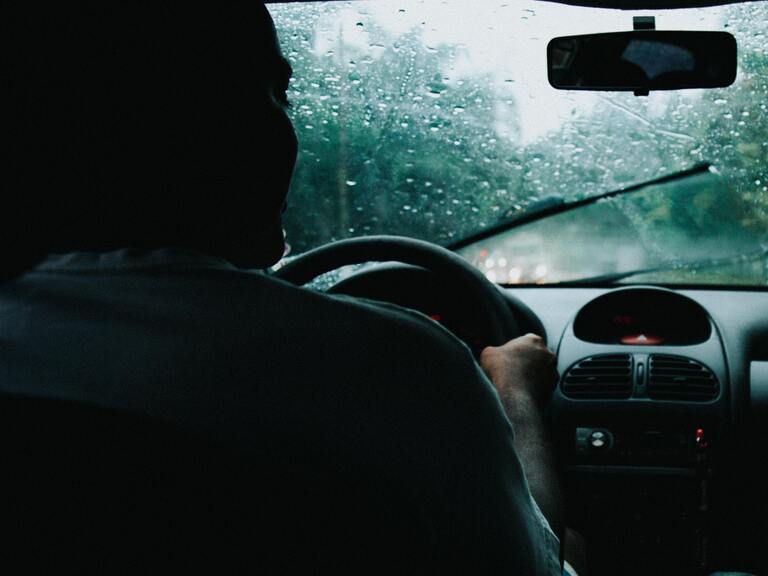
Heading to the roads of a foreign country may be scary and challenging. But, a lot of your worries will be washed off, once you’re equipped with the necessary information. And, Tunisia doesn’t make an exception. Before entering the Tunisian roadways, you need to take a few things into consideration. We’ve round up what you need to know about driving in Tunisia as an expat or tourist.
Driving Style
We compiled a list of driving laws, rules, and regulations in Tunisia, so expats and tourists can know what to expect while being behind :
- In Tunisia, driving is done on the right side of the road.
- Wearing a seatbelt when driving a rental automobile is required.
- Except for hands-free devices, using a mobile phone while driving is not permitted.
- A valid driver's license, registration papers, and insurance papers must be carried by drivers at all times while they are operating a motor vehicle.
- Gas stations are often open seven days a week, twenty-four hours a day.
- The legal driving age is 18 years old. Yet, you need to have had your license for at least two years in order to rent a car.
- Driving in Tunisia will expose you to honking, flashing headlights, and excessive speed. On the highways, speeding is common, and
- Vehicles should pass from the left-hand side. And, it's best to stay in the right-hand lanes and give the left-hand side to people who are moving quickly.
- Crosswalks and sidewalks are not really a thing in Tunisia. Every square inch of the country is a pedestrian zone. Drive accordingly!
- Non-verbal communication is the key to deal with cars and pedestrians, alike. So, use your hands and eyes to understand your surroundings.
- Keep an eye out for moped drivers, as they do not adhere to the same traffic laws as drivers of other vehicles. There are many 50cc mopeds with top speeds of about 65 km/h on Tunisian highways (40 mph).
Driver License

In Tunisia, expats and tourists can use their driver’s license, but couldn’t exceed the 3-month period. After 3 months, foreigners need to have their Tunisia driver license.
However, you need to have other papers in police check points, whether you are using your own vehicle, renting, or borrowing from a friend. These papers include:
- your driver's license
- passport
- the ownership card for your car
- attestation d'assurance, aka proof of insurance
- Carte grise, aka grey card, which the title of the vehicle that contains necessary information about the owner's name, address, ID number, and vehicle details.
Cost of Life in Tunisia
Cost of living is one of those factors expats look deep into before relocating to Tunisia. Depending on each one’s lifestyle and priorities, no one can really tell you the exact cost of living in Tunis or any other neighborhood in Tunisia. However, your decision depends hugely on the prices and costs of basic life needs, the pillars of calculating your average spending.
We’ve compiled some sample prices that will help you picture the big picture of your bank account balance when living in Tunisia.
Average Salary in Tunisia
In 2022, The minimum wage, SMIG or Interprofessional Guaranteed Minimum Wage, is set to be 459.964 TND for the 48-hour regime and 390.692 TND for the 40-hour regime. However, the gross salary typically ranges from 700 TND to 2900 TND. It hugely depends on the field, years of experience and company.
In Tunis, salaries tend to be higher than other cities. This is mainly due to the expensive living cost in the capital.
Accommodation costs in Tunisia
The cost of accommodation is a bit expensive to what you may be thinking of. Comparing rent prices in other capitals around the MENA region (Middle East & North Africa) may help you get a full picture of everything.
Comparing to Rabat, Morocco, and Amman, Jordan, rent in Tunis is respectively 43.9% and 16.3% lower. However, rent in Cairo, Egypt is 30.9% lower than in Tunis.
Generally speaking, rent can range from 500 to 3000 TND for an S+2 in Tunis, considering La Marsa, Gammarth and Carthage the most expensive neighborhoods.
Rent in other cities like Sousse, Hammamet and Monastir is relatively cheaper than Tunis. You can expect prices ranging from 300 to 1000 TND for an S+2.
There are a few Facebook groups where you can check rent suggestions and hunt for a house. Some of them are Expats in Tunisia and VIA/VIE Tunisie.
Food
This is where Tunisia clearly wins, the affordable cost of groceries and food. Resorting to the same comparison above-mentioned, Groceries Prices in Tunisia are respectively 31.5% lower than Amman and 11.6% higher than Marrakech. This is to say, food is relatively cheap despite the inflation if you stick to local food and brands.
Restaurants are relatively cheap depending on where you eat. Popular restaurants offer sandwiches and courses ranging from 6 TND to 25 TND. Prices increase in fancier restaurants to reach an average of 70 TND per menu.
Restaurant Prices in Marrakech are 33.3% higher, and those in Amman are also 92.2% higher. So, you can spoil yourself in a delicious meal without breaking your bank account.
Telecommunication
Phone Plans
Prepaid cards give you the flexibility you may need. Being cheaper and rechargeable, you can get 25 GB for 25 TND (9$). There is no difference between one phone operator and another in terms of price. Therefore, you can expect the same price of internet plans no matter the operator.
Contrarily to Morocco or Egypt, there is prevention or censorship of using certain apps, which weigh down the cost of VPN subscriptions.
ADSL
Adsl may be the perfect alternative to have functional at-house Wi-Fi. Topnet, Globalnet, and Orange offer some interesting plans with affordable monthly prices. Prices range from 300 TND to 650 TND per year.
Boxes are also a great option if there is a plan available in the area you’re settling in. Check Oreedo and Orange to know more about it.
Optic Fiber
Plans start from 45,9 TND per month for 20 Mbps to reach 110,9 TND for 100 Mbps. However, the procedure to get optic fiber installed and well set needs time and patience. Therefore, we recommend starting claiming your internet, once you settle down in a house.
You can check Tunisie Telecom, Oreedoo and Orange to know how things go.
Spaces for Digital Nomads in Tunisia :
With the boom in remote working, digital nomads are turning to North Africa and Tunisia, as the living cost is cheaper, the weather is fabulous, and the time zone is convenient. Tunisia witnessed a boom in digital nomads, and we can surely say that there are a lot of adjustments made to cater for them. Whether you’re considering to work from Tunisia for a few days or months, we’ve compiled a handy list of places you may want to visit.
Unfortunately, there is no digital nomad visa for Tunisia. Most remote workers and digital nomads resort to the 90-day tourist allowance. Some prefer to go for a trip after these 3 months, but many digital nomads go for paying the fees once they are leaving the country. Exceeding your stay comes with paying 20 TND for each week.
Cafés for work, meetings or hanging out with Expats & Digital Nomads:
If not for the delightful cup of coffee, it will be for the charming and enchanting atmosphere, the delicious food and the possibility of networking and meeting new people. We’ve compiled a list of some cafés with reliable Wi-Fi, so you can sip your coffee without the frustration of refreshing the web page a million time.

Les Indécis :
Address : 4 rue Hanon Carthage Dermech, Carthage, Tunisia
Facebook Page : here
Bleue Deli
Address : 8 Rue Habib Thameur, Site archéologique de Carthage 2026
Instagram Page : here
Sabato
Address : 3 avenue de la république, la marsa
Facebook Page : here
Cosmitto
Address : La Marsa: V8GH+Q3P, Carthage
Menzah 6 : R5W8+M6Q, Ariana
Lac I : R6MP+4JM, Rue du Lac Biwa, Tunis
Facebook Page : here
Barista’s Cafe
Address : LAC I: Lac Albert, Tunis
Menzah 6: 01 Rue Jebel Ressas, Tunis
Centre Urbain : R5XW+397, Tunis
Jardins de Carthage : Tunis 1090
Facebook Page : here
Coworking Spaces for Digital Nomads and Expats:
There are a handful of coworking spaces in Tunis, with a convenient infrastructure for the small digital nomad community growing in number day after day. If you want to meet like-minded people, young entrepreneurs or fellow digital nomads, all the coworking spaces compiled below will allow you to immerse yourself into the Tunisia you want to explore. Live like a local and surround yourself with wonderfully warm community in these coworking spaces.

The Dot
Address: 2 rue du lac Malaren , Tunis, Tunisia
Facebook Page: here
Work Zone-Coworking Space
Address: A8-8 Immeuble Golden Towers, Centre Urbain Nord, Tunis, Tunisia
Facebook Page : here
Ecozone Coworking Space
Address: Av. du Golf Arab, Immeuble El Khalij Bloc 1, Ariana 2037
Facebook Page: here
Westerwelle Startup Haus Tunis
Address:71 Avenue Jean Jaurès, Tunis, Tunisia
Facebook Page : here
The Ace Coworking Space Tunis
Address: 9 Rue Amilcar, Tunis, Tunisia
Facebook Page : here
For more options, here is a full list of coworking places in Tunisia here.
Safety in Tunisia
Tunisia, like any country in the world, is safe to live in as long as you stay vigilant and do what locals do. Try to bond with locals in order to get their perspective of things and make a list of what they do and what they refrain from doing. This way, you’re sure you’re not acting like a tourist or an easy prey for scam, theft or pickpocketing.
Like anywhere in the world, street crime including theft, pickpocketing and purse snatching can happen. Just watch out for the ‘drive by’ thefts of criminals on scooters or motorbikes when you go to tourist areas.
While Tunisia had witnessed some terrorist attacks, the government has increased its security measures, just like other metropolitan cities that underwent these infamous incidents.
Tips to Stay Safe in Tunisia :
- Avoid going to militarised zones like El Borma or the Chaambi Mountains
- Avoid areas going to Habib Bourguiba Avenue if there is a protest or large gatherings.
- Keep an eye on local media like the National Tunisian TV or the radio station of Mosaique FM, along with the latter’s Facebook page.
- Always make sure to have a receipt for payment or down payment.
- Don’t compromise on a rent contract covering all the details you want to include.
- Always go for reputable service companies in order not to be scammed.
-Don’t take photos near military installations and embassies.
- Use ATMs the way you’re usually doing: be vigilant.
- Try to opt for modest attire if you’re going to crowded places or La Medina.
- Opt for taxis when it’s late and use taxi apps at peak times.
- Don’t wear open bags and make sure you’re always keeping your money and papers in a separate bag like banana bags.
One Day Trips to Do From Tunis, Tunisia:

Zaghouan:
Known for its Zaghouan - Carthage aqueduct, the only surviving roman water temple, Zaghouan is a great destination for those who want to dig deep in the history of Tunisia and immerse themselves in the Roman heritage and history.
Why to go to Italy, when you can follow the steps of Romans in Zaghouan?
Testour :
Testour is the perfect-hidden gem you would need to explore the country and its rich history. Its breathtaking nature, delicious local food and remarkable monuments allow you to go back in time and immerse yourself in a whole new culture.
Hamammet :
The first destination that would come to mind, if you think like a tourist. And, guess what? you’re not totally wrong. Hammamet is a melting pot where expats and locals create an attractive vibe in the town.
There is so much into it than it’s touristy beaches. You can seize the opportunity to learn paddling or go for a yoga class to unwind and forget about the bustling capital.
Bizerte :
Whether in winter or spring, Bizerte is the perfect one day destination. If it’s not for its vivid Medina and historical monuments, we bet you want to spend the day in one of its magnificent secluded beaches.
Fast Facts About Tunisia For Expats to Be Aware of:

To wrap up all the details, we covered above, here is a bullet point list for the most important things you need to keep in mind:
Capital: Tunis
Population: 11,00,000 people
Language: Arabic & French
Money: Tunisian Dinar (prices are usually written using milim , meaning 1 TND = 1,000 milim)
International Dialing Code: +216
Time : GMT+1
Internet speed: 5 MBPS
Outlet: European Type C
Best Wifi (ADSL): Depends on the area
Best ATM: ATB
Best coworking space: The Dot
Tap water: not drinkable
S+2 Flat to rent in La Marsa: Starting from 400$ per month
Coworking: starting from $50 per month
Meals (restaurants): Starting from $5
Beer (bars): $2.5
Coffee: $0.7


