
Navigating the loud and highly commercialized side of Dubai desert tours often leaves travelers feeling disconnected from the actual culture of the sands, as roaring engines and buffet lines easily drown out the quiet traditions of nomadic life.
That is why our team at Wildyness created this guide to help you find the best bedouin experience in Dubai.
What to Expect from an Authentic Bedouin Experience in Dubai
Shifting from Commercial Safaris to Cultural Immersion
When you book a standard desert safari in the United Arab Emirates, you usually get a thrilling roller coaster ride over the dunes in a large four by four vehicle.
While this is entertaining, it does not reflect how people historically survived in this harsh environment. True cultural immersion requires slowing down completely.
You should look for operators that restrict vehicle access to the outer edges of the camp and prioritize walking or animal transport. A genuine heritage experience replaces loud music and crowded buffets with quiet observation and small group interactions.
The focus shifts entirely from adrenaline to education. You will spend your time learning how nomadic families tracked water sources, built shelters from goat hair, and thrived in a landscape that appears entirely inhospitable to the untrained eye.
The Core Values of Nomadic Desert Hospitality
Hospitality in the desert is not just about being polite. Historically, offering shelter and food to a passing traveler was a matter of basic survival.
If a family turned a stranger away, that person would likely perish in the heat. This survival necessity evolved into a deep cultural mandate that still defines the region today.
According to tradition, a host must welcome a guest for three full days before even asking their name or the purpose of their journey.
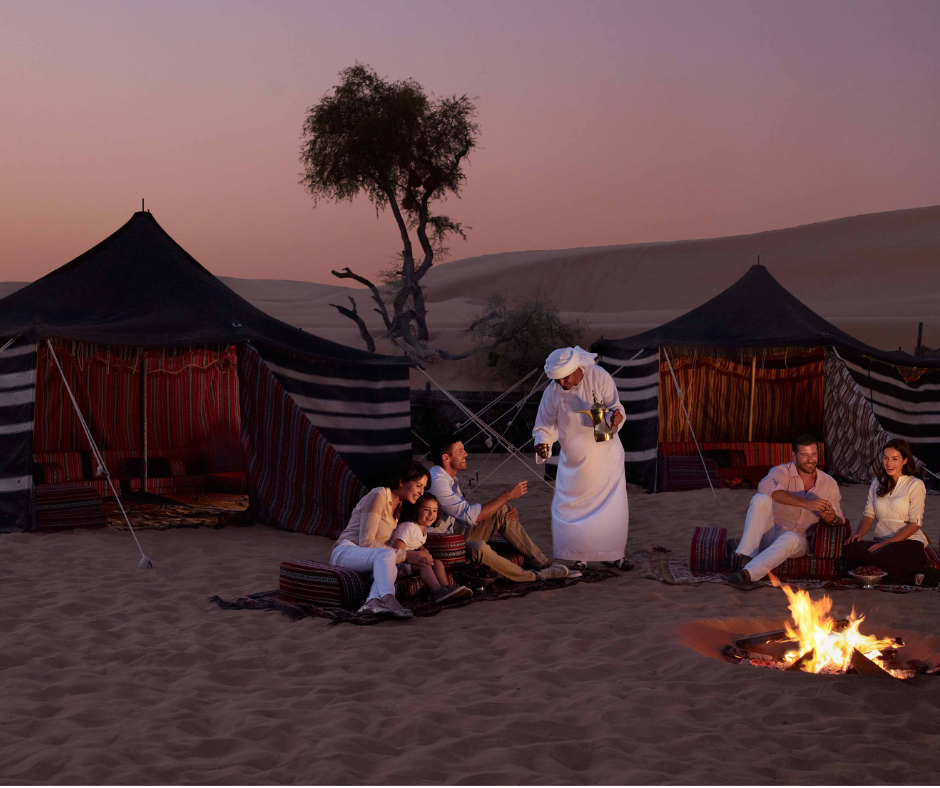
When you visit a heritage camp, you will see this generosity modeled in real time. Your hosts will constantly offer you seating, fresh beverages, and food.
You should accept these offerings graciously. Refusing a cup of water or a date can be seen as a rejection of their fundamental cultural values.
Traditional Desert Transport and Navigation
Riding Camels Across the Dubai Dunes
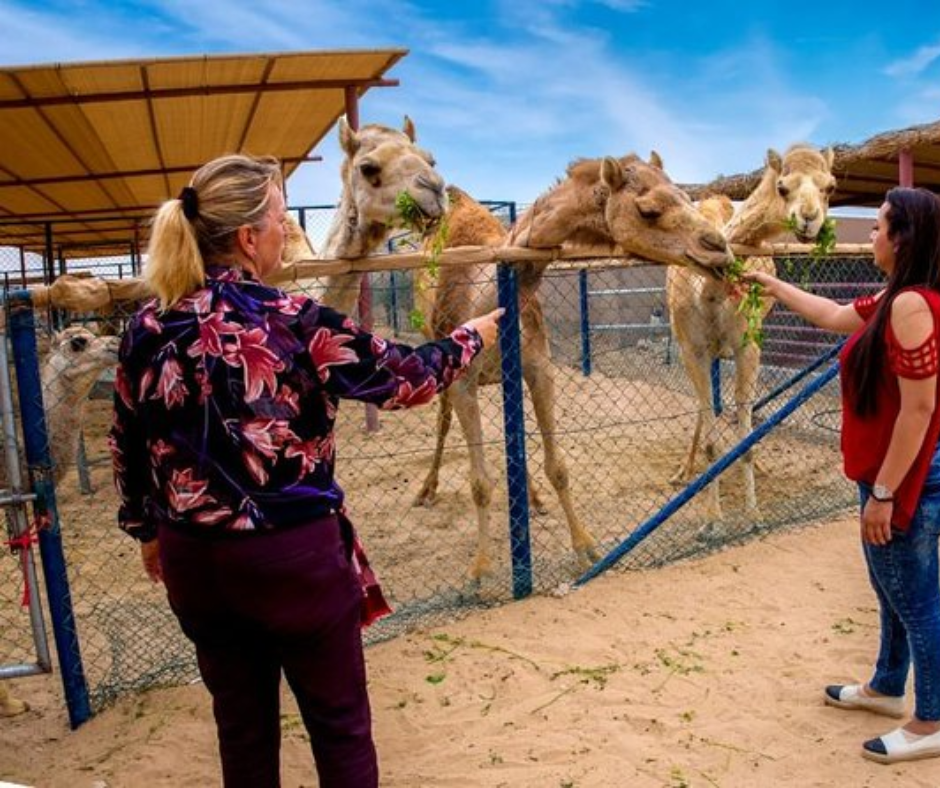
Camels are far more than a simple photo opportunity for tourists visiting the Middle East. They were the ultimate lifeline for trade, communication, and survival across the vast Arabian Peninsula.
When you embark on a camel trek, you are participating in the oldest form of desert travel. To ride comfortably, you should wear long, loose trousers to prevent the coarse hair of the animal from chafing your legs.
When the camel prepares to stand up, you must lean back slightly to counter the forward motion, and then lean forward when it rises on its back legs.
Once you are moving, allow your body to sway naturally with the slow, methodical walking pace. We recommend booking a trek that lasts at least forty five minutes, which allows you to travel far enough away from the main roads to experience the profound silence of the open dunes.
How Nomads Navigated by the Stars
Before the invention of modern navigation tools, nomadic tribes relied entirely on their deep knowledge of the natural world to travel across featureless landscapes.
Because the daytime sun in Dubai is incredibly intense, much of the travel occurred at night. The clear, unpolluted skies provided a reliable map.
Elders taught younger generations how to read the positions of specific constellations to find their way to seasonal oases. During an authentic evening camp experience, your guides will often turn off all the artificial lights and point out these exact same celestial markers.
You will learn how to locate the North Star and understand how the changing seasonal sky dictated when tribes would move their herds. This activity provides a stark and humbling contrast to the glowing skyline of modern Dubai just an hour away.
Deepening Your Cultural Understanding Through Art and Animals
The Historical Significance of Falconry
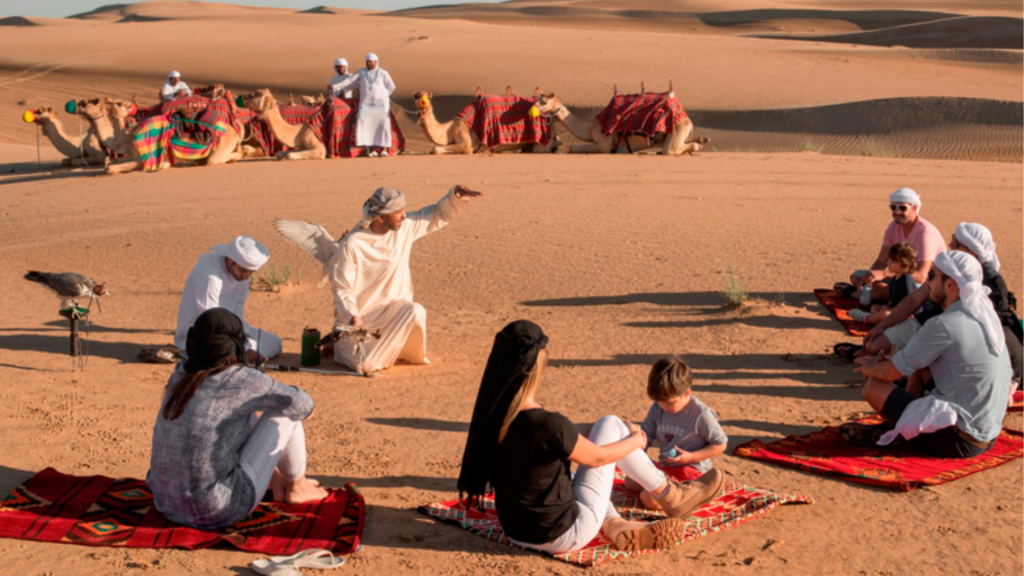
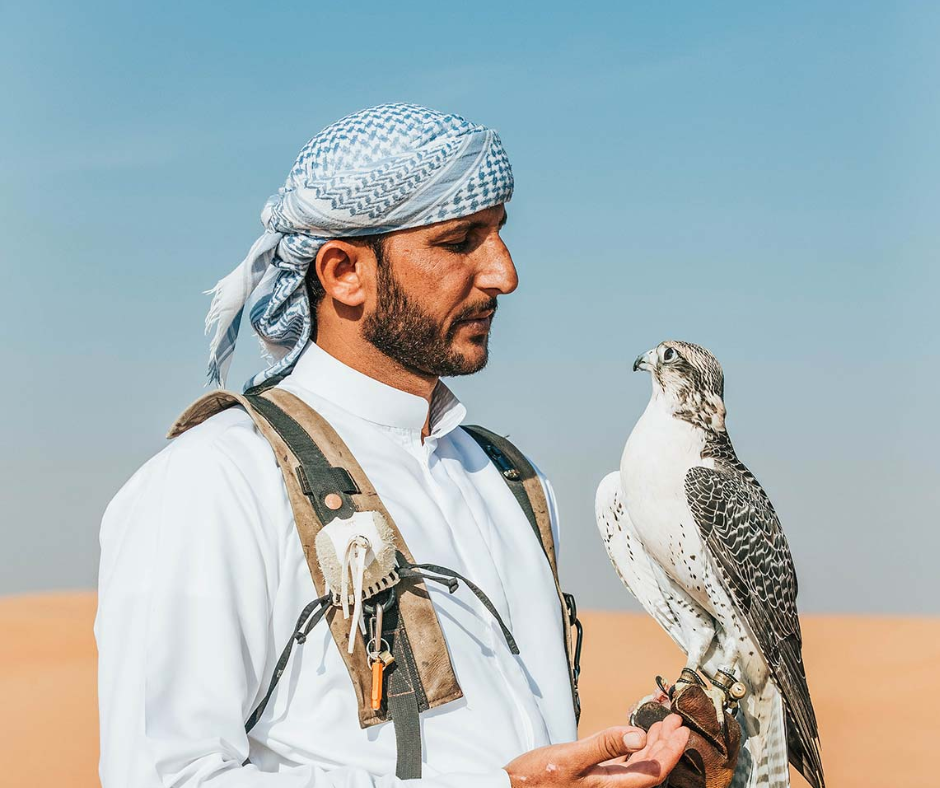
Falconry is a highly respected pillar of Emirati heritage and holds a prominent place in daily life today. In the past, falcons were not kept as pets or status symbols.
They were essential hunting partners that helped families supplement their limited diets with fresh meat, specifically by catching the houbara bustard and desert hares.
Training a wild bird of prey requires immense patience, respect, and skill. When you watch a live falconry demonstration, you will see the deep bond between the handler and the bird.
The falconer uses a leather lure to simulate prey, calling the bird back to the glove with a specific vocal command. You should stand completely still and keep your voice low during these demonstrations so you do not distract the hunting bird.
The Tradition and Meaning of Henna Application
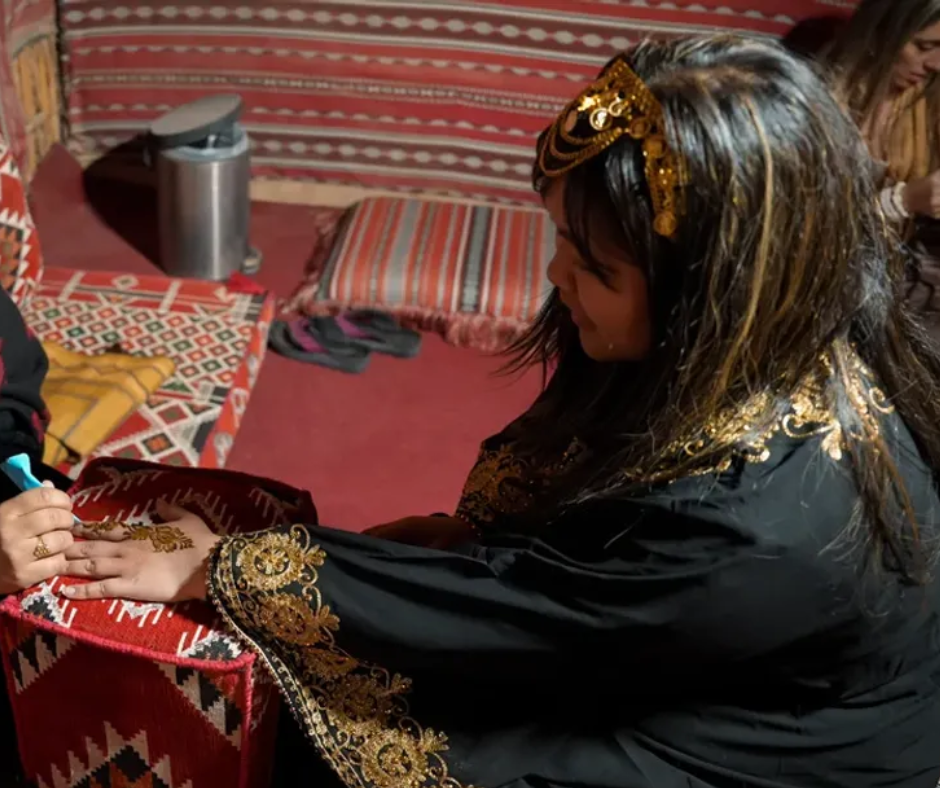
The intricate art of henna is a beautiful tradition that carries significant cultural weight. Historically, the paste was derived from crushing the leaves of the henna tree and was primarily used for its natural cooling properties on the skin during the intense summer heat.
Over time, it evolved into a decorative practice used to mark important life events, celebrations, and weddings. The patterns often feature geometric shapes and floral designs that vary slightly depending on the specific tribe or region.
If you choose to have henna applied at your camp, ensure the skin on your hands or arms is clean and free of heavy lotions. You must allow the paste to dry completely and crumble off naturally rather than washing it with water, which ensures a darker and longer lasting stain.
Savoring Authentic Bedouin Culinary Traditions
The Ritual of Arabic Coffee and Dates
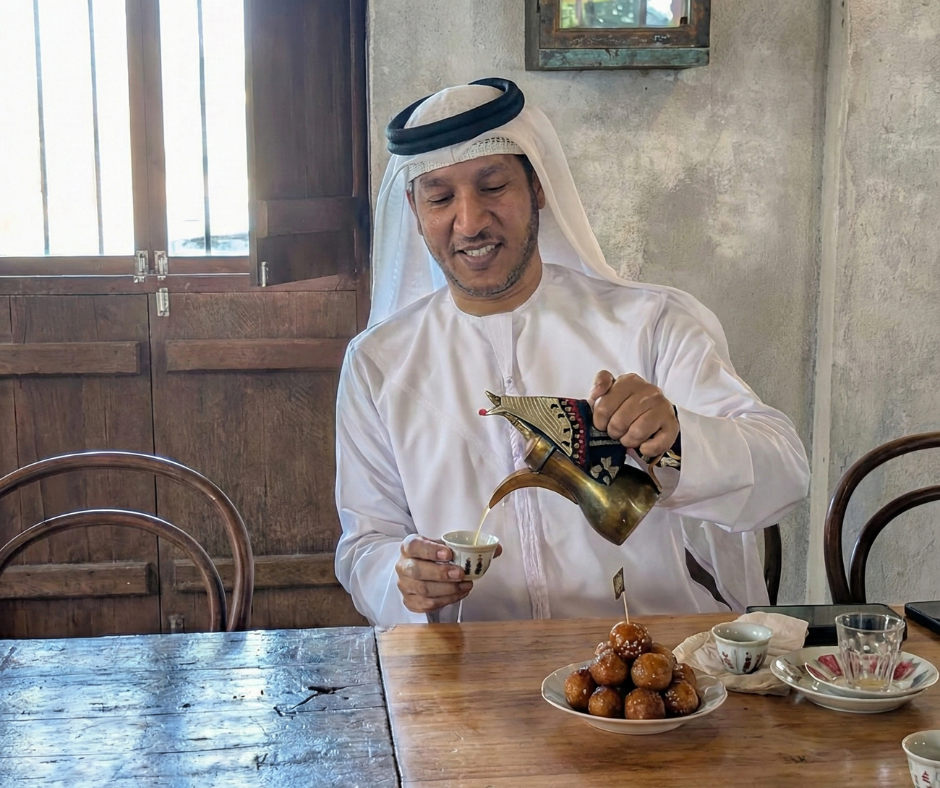
Your culinary journey in the desert begins the moment you sit down with a serving of traditional Arabic coffee, locally known as gahwa.
This is not the dark, heavily roasted espresso you find in city cafes. Gahwa is lightly roasted and heavily infused with cardamom, saffron, and cloves, giving it a distinctive golden color and an herbal aroma.
It is traditionally served from a long spouted pot into small, handleless cups. You should always accept the cup with your right hand.
The host will only pour a small amount of coffee at a time. This is intentional, as pouring a full cup implies the host wants you to drink quickly and leave.
By pouring small amounts continuously, the host encourages you to stay and converse. When you have had enough, simply give your empty cup a small shake side to side before handing it back.
Traditional Slow Cooked Meats and Desert Barbecues
Dinner in a traditional camp is a communal event designed to bring people together after a long day of travel. The centerpiece of the meal is often meat cooked in an underground oven, a technique that traps the heat and moisture in the sand.
Lamb or goat is marinated in a complex blend of regional spices and slow roasted for several hours until it falls apart easily. It is served on a massive platter over a bed of fragrant rice dotted with raisins and roasted nuts.
When it is time to eat, you will likely sit on cushions around a low table. If you are invited to eat in the traditional manner without utensils, remember to use only your right hand to scoop the rice and meat.
We highlight these exact types of intimate, food focused cultural exchanges when crafting our Wildyness heritage itineraries across the Middle East.

Planning Your Overnight Desert Stay in Dubai
Choosing the Right Camp in the Dubai Desert Conservation Reserve
Not all desert sectors in Dubai offer the same level of authenticity or environmental protection. To get the most historically accurate experience, you should look for camps located within the Dubai Desert Conservation Reserve.
This protected area enforces strict limits on visitor numbers and completely bans recreational dune bashing to protect the fragile ecosystem.
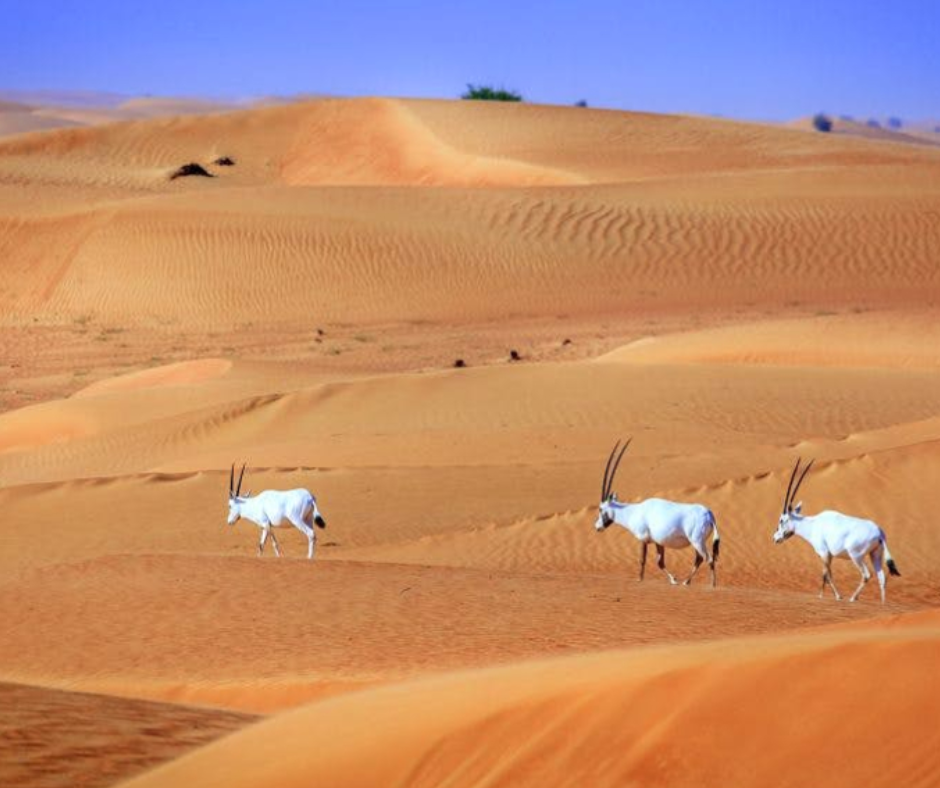
Because of these regulations, the native wildlife has flourished. You are highly likely to spot Arabian oryx and native gazelles roaming freely near your tent.
The camps in this reserve focus entirely on low impact tourism, using solar power and natural materials to blend seamlessly into the environment.
Booking a stay here ensures your money supports local conservation efforts while giving you the quiet, authentic night you are seeking.
What to Pack for a Night in the Dunes
Packing correctly for an overnight desert stay requires understanding the dramatic temperature swings of the region. While the daytime sun is intensely hot, the temperature drops rapidly the moment the sun dips below the horizon, especially between November and March.
You must bring warm layers, including a thick fleece jacket or a sweater, and comfortable closed toe shoes to protect your feet from the cold sand and native insects.
Leave your heavy wheeled luggage at your hotel in the city and bring only a soft sided duffel bag or a small daypack.
You should also pack a reliable headlamp to help you navigate from your tent to the main seating area at night, as authentic camps keep artificial lighting to an absolute minimum to preserve the visibility of the stars.
Evening Gatherings and Traditional Entertainment
Sharing Stories Around the Campfire
Long before televisions and smartphones existed, the campfire was the center of all evening entertainment and education. The majlis, which translates to a place of sitting, is the traditional gathering space where guests and hosts recline on heavy woven carpets and cushions.
Here, elders would pass down tribal history, survival knowledge, and moral lessons through storytelling and poetry. Nabati poetry is a specific form of spoken word art that remains deeply popular in the Emirates today.
Even if you do not understand Arabic, the rhythmic cadence and the expressive delivery of the reciter are captivating.
You should embrace the slow pace of the evening, turn off your mobile phone, and allow yourself to be fully present in the quiet conversations happening around the fire.

Traditional Dances and Communal Relaxation
As the evening progresses, you will likely witness traditional performances that celebrate tribal unity. Instead of the Egyptian dances often imported for commercial tourist camps, an authentic Emirati experience features the Al Ayala dance.
This performance involves men standing in two facing rows, holding thin bamboo canes, and moving their heads and shoulders in time to a steady drumbeat. It symbolizes courage, victory, and the solidarity of the tribe.
During this time, the shisha pipe is often prepared and passed around. The purpose of shisha is not simply to smoke tobacco, but to facilitate long, relaxed conversations.
If you choose not to smoke, you can still participate in the communal atmosphere by enjoying a cup of hot mint tea and watching the dancing.
Just remember to sit respectfully, keeping your feet tucked under you or flat on the floor, as pointing the soles of your feet at another person is considered highly offensive in this culture.