

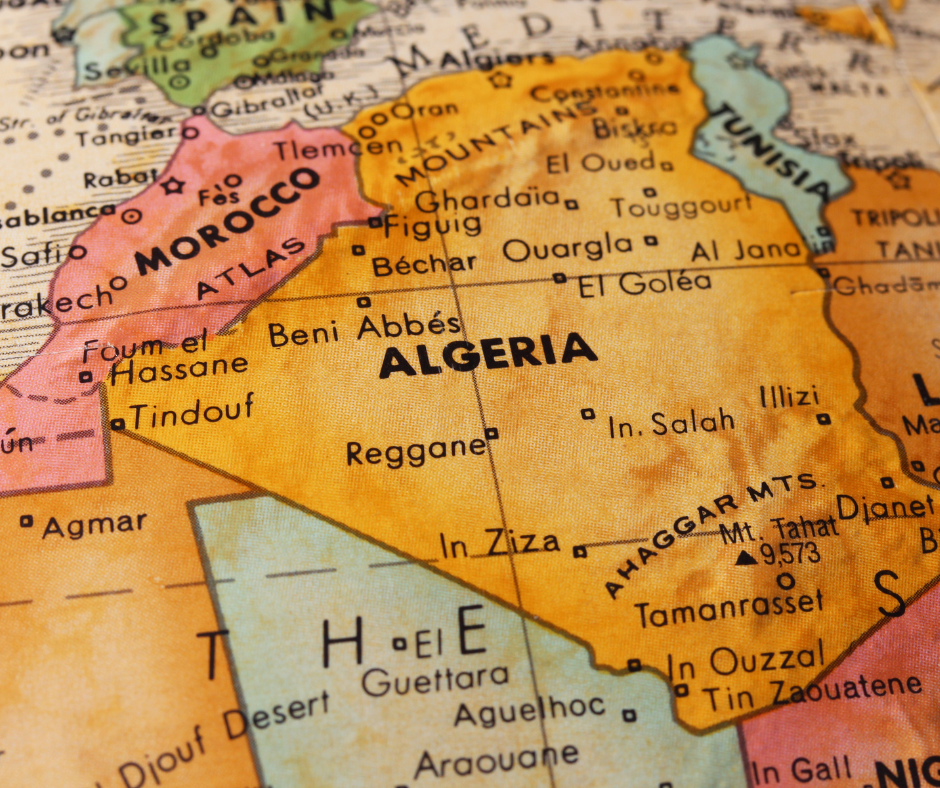
An Algeria road trip works best when you pick one region: the north, where motorways link Algiers, Oran and Constantine, or the edge of the Sahara around Ghardaïa. The country is huge (Algiers to Tamanrasset is about 2,000 km by road), so the deep south is usually a flight and an agency 4x4, not a self-drive.
Below are the main routes with real distances and drive times, then the paperwork, the car, checkpoints, the 2026 road rules, food stops and the best months to go. Prices and rules are as of October 2026.
Picking one region to drive
More than four-fifths of Algeria is desert, and at about 2.38 million km² it is the biggest country in Africa. Most road trips stick to the northern strip between the coast and the Tell Atlas, or drive south as far as Ghardaïa. Doing the north and the deep south by car in one trip means several long driving days back to back, so with one or two weeks, pick one.
The Northern Heritage Route
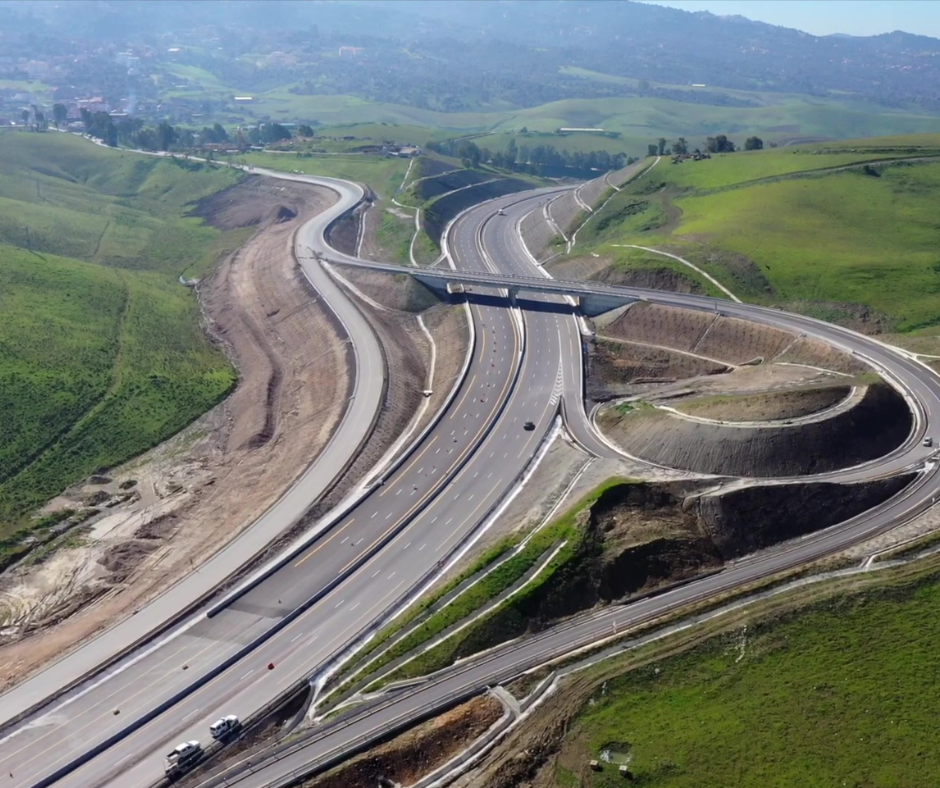
Most first road trips follow the coast and the Tell Atlas out of Algiers, west to Oran or east to Constantine. Algiers to Oran is about 415 km on the East-West motorway (A1), roughly four and a half to five hours with fuel stops and checkpoints.
The Roman ruins of Tipaza are not on the motorway: they sit on the coast about 70 km west of Algiers, so see them on a day trip or take the slower RN11 coast road west through Tipaza and Cherchell. The motorway has no tolls (as of 2026), fuel stations are frequent, and a standard sedan is all you need.
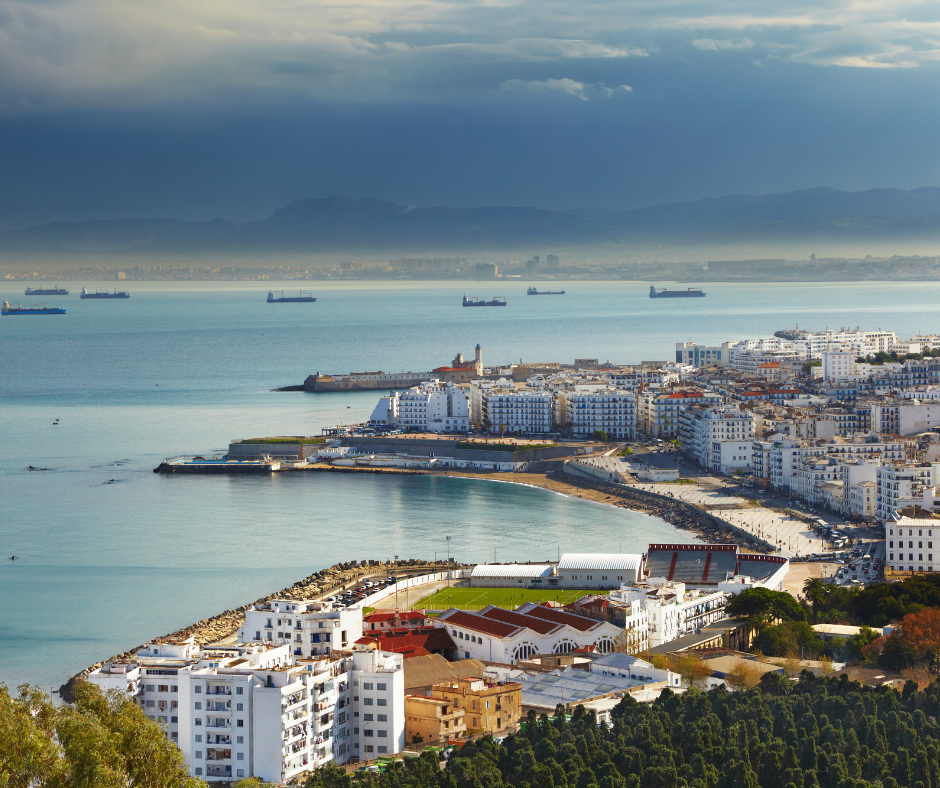
East of the capital, Constantine, the City of Bridges, is about 390 km away on the A1, four to five hours of driving. The motorway skirts the southern edge of Kabylie near Bouira and climbs onto the high plains around Sétif.
Two Roman sites, both on the UNESCO list since 1982, make good detours: Djémila, about 50 km northeast of Sétif, and Timgad, the colony Trajan founded in AD 100, about 120 km south of Constantine (allow two hours each way). The side roads to both are narrow and twisting, so budget more time than the map suggests.
If you'd rather follow a set plan for the north: 7 Immersive Days in Northern Algeria
City guides for both ends of the drive: Best Things to Do in Algiers, Algeria
Best Things to Do in Constantine
South to Ghardaïa: the Sahara gateway
The desert drive we'd suggest first is Ghardaïa in the M'Zab Valley: about 600 km south of Algiers on the RN1 through Médéa, Djelfa and Laghouat, seven to eight hours at the wheel. Either split it with a night in Djelfa or Laghouat, or leave at dawn so you arrive before dark.
The road is paved all the way and mostly in good condition. South of Médéa the green hills give way to the steppe: flat grazing land, flocks of sheep and long straight stretches with little shade and fewer towns.
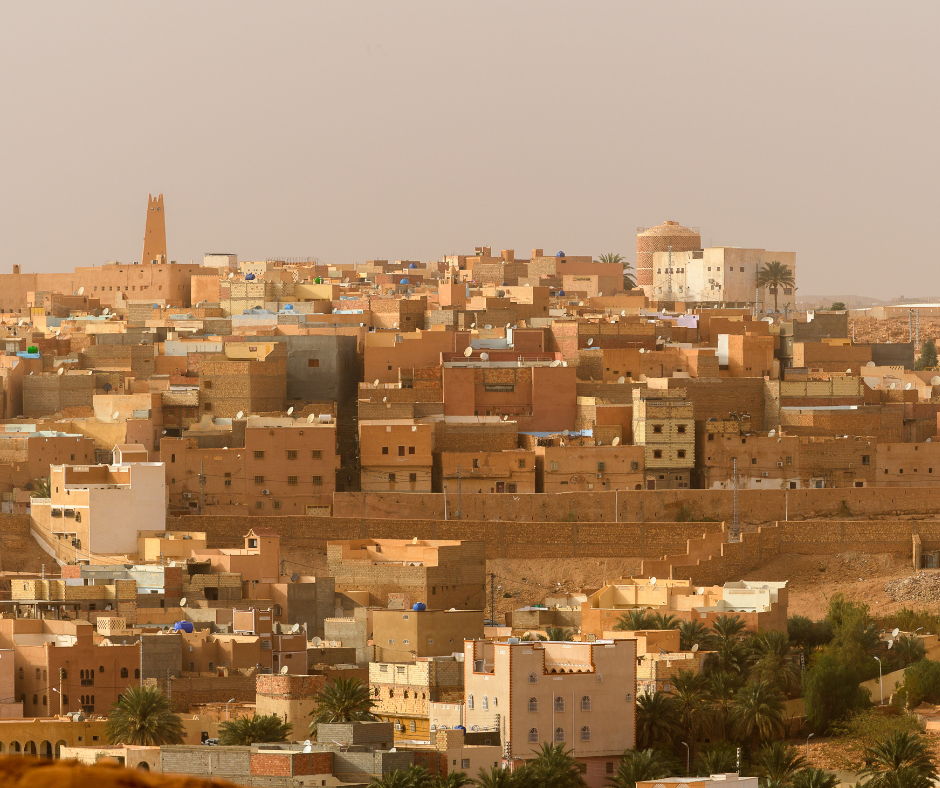
Ghardaïa is the largest of the five walled towns (ksour) of the M'Zab, a UNESCO site since 1982. Inside the ksour the lanes are too narrow for cars, so park outside and walk. In Beni Isguen you'll need a local guide, hired at the gate, and you can't photograph people, women least of all.
Going further south is a different undertaking. From Ghardaïa it's another 1,300 km down the RN1 to Tamanrasset, and Djanet is farther still. Foreigners go to both with an approved Algerian agency, which also arranges the police or gendarmerie escort that the authorities assign on some desert routes. Many travelers skip that stretch and take a domestic flight south instead, as explained in our Algeria public transport guide.
It is worth the flight. The deep south is where Algeria feels most unlike anywhere else: the sandstone and rock art of the Tassili around Djanet, the volcanic peaks of the Hoggar, and Tuareg tea around the campfire at night. Travelers who go south with us often say it felt calmer and more welcoming than they had expected.
Our trips there follow routes we've driven many times, with licensed local agencies and Tuareg guides, and not one has had an incident. If you're heading that way, read the official travel advice for your exact route first, and make sure your insurance will cover it.
If this is your first self-drive in Algeria, we'd keep to Ghardaïa and the M'Zab: you get the desert edge with regular fuel stations and hotels, without the permits, escorts and distances of the deep Sahara. Check first that your rental contract allows the trip, as some city rentals exclude desert regions.
Read also: Djanet, Algeria: Things to Do and Tassili Treks
Licenses, fuel and the best months
- Where to self-drive: the north (Algiers to Oran and Tlemcen, or to Constantine and Timgad) and the desert edge as far as Ghardaïa.
- Time: a week for one region, ten days for a loop through the east and the M'Zab.
- Months: April, May, September and October.
- Papers: passport and visa, your national license plus a 1949 Geneva-format International Driving Permit, and the car papers.
- Car hire: about 4,500 to 7,000 DZD a day for a small car (October 2026); minimum age usually 21.
- Fuel and tolls: state-set prices of 47 DZD a liter for unleaded and 31 DZD for diesel, and no tolls on the motorways (2026).
- Deep south: fly, then go by agency 4x4 with local guides rather than driving yourself.
Algeria road trip distances
Route planners give shorter times than you will actually drive. Our figures below allow for fuel stops, checkpoints, speed bumps and slow trucks on national roads.
| Leg | Distance | Main road | Realistic driving time |
|---|---|---|---|
| Algiers to Tipaza | About 70 km | Coast road | 1 to 1.5 hours |
| Algiers to Oran | About 415 km | A1 motorway | 4.5 to 5 hours |
| Oran to Tlemcen | About 140 km | Motorway and national road | About 2 hours |
| Algiers to Béjaïa | About 245 km | National roads | 3.5 to 4 hours |
| Béjaïa to Sétif | About 120 km | RN9 through the Kherrata gorges | 2 to 2.5 hours |
| Sétif to Constantine | About 130 km | A1 motorway | 1.5 to 2 hours |
| Algiers to Constantine | About 390 km | A1 motorway | 4 to 5 hours |
| Constantine to Batna | About 115 km | National road | About 2 hours |
| Batna to Biskra | About 120 to 140 km | National road | 2 to 2.5 hours |
| Biskra to Ghardaïa | About 550 km | Via Touggourt and Ouargla | 7 to 8 hours |
| Algiers to Ghardaïa | About 600 km | RN1 | 7 to 8 hours |
| Ghardaïa to Timimoun | About 620 km | Via El Menia | A full day, 8 hours or more |
One note on the Béjaïa to Sétif leg: the gorge section near Kherrata has been closed for road works at times, so ask locally the day before.
Algeria road trip itineraries: 7 and 10 days
Both plans start and end in Algiers and keep every drive in daylight. The nights are in towns with a choice of hotels; you need your passport to check in everywhere, and on the coast in July and August you should book ahead.
7 days in the west: Algiers, Tipaza, Oran and Tlemcen
- Day 1: Algiers to Tipaza on the coast road (about 70 km). Walk the Roman ruins by the sea, then drive on to Cherchell for its museum and Roman remains. Night in Tipaza.
- Day 2: Rejoin the A1 and drive west to Oran, about five hours. Front de Mer at sunset. Night in Oran.
- Day 3: Oran: Santa Cruz fort in the morning, Sidi El Houari and the center in the afternoon. Night in Oran.
- Day 4: Oran to Tlemcen (about 140 km, about 2 hours). Night in Tlemcen.
- Day 5: Tlemcen: the Great Mosque, Mansourah and the Lalla Setti plateau. Night in Tlemcen.
- Day 6: The long drive back to Algiers on the A1 (about 555 km, 6 to 7 hours with stops). Leave at dawn. Night in Algiers.
- Day 7: Algiers: the Casbah with a local guide and the Martyrs' Memorial before your flight.
10 days in the east and the M'Zab: Béjaïa to Ghardaïa
- Day 1: Algiers to Béjaïa (about 245 km, 3.5 to 4 hours). Night in Béjaïa.
- Day 2: Béjaïa: Gouraya National Park and the Cap Carbon lighthouse. Night in Béjaïa.
- Day 3: Béjaïa to Sétif (about 120 km) on the RN9, with a detour to Djémila, about 50 km northeast of Sétif. Night in Sétif.
- Day 4: Sétif to Constantine (about 130 km on the A1). Afternoon on the bridges. Night in Constantine.
- Day 5: Constantine: the Palace of Ahmed Bey and the Emir Abdelkader Mosque. Night in Constantine.
- Day 6: Constantine to Batna (about 115 km), then Timgad, 35 km east of Batna. Night in Batna.
- Day 7: Batna to Biskra through the Aurès, stopping at the Ghoufi balconies above the Oued Abiod canyon. Night in Biskra.
- Day 8: Biskra to Ghardaïa (about 550 km via Touggourt and Ouargla), the longest day. Start at first light. Night in Ghardaïa.
- Day 9: The M'Zab: Ghardaïa market and Beni Isguen with a local guide. Night in Ghardaïa.
- Day 10: Ghardaïa to Algiers on the RN1 (about 600 km, 7 to 8 hours).
The 10-day loop covers about 2,000 km. To shorten it, skip Ghardaïa and return north from Batna.
Road Trip Logistics: Papers, Maps and SIM Cards
Fuel is cheap in Algeria; the paperwork takes more effort. Sort it out before you leave home, because the visa and the driving permit can't be arranged once you've arrived.
Passport, visa and license
Before you fly you'll need a tourist visa from an Algerian consulate, and a passport with at least six months' validity from arrival. Visa on arrival exists only for organized trips booked through an approved agency that include the southern wilayas, so it doesn't cover a self-drive trip. On the road, carry the original passport plus several photocopies of the photo page and visa. Checkpoint officers sometimes write down your details and ask where you are staying that night, so keep your hotel bookings handy too.
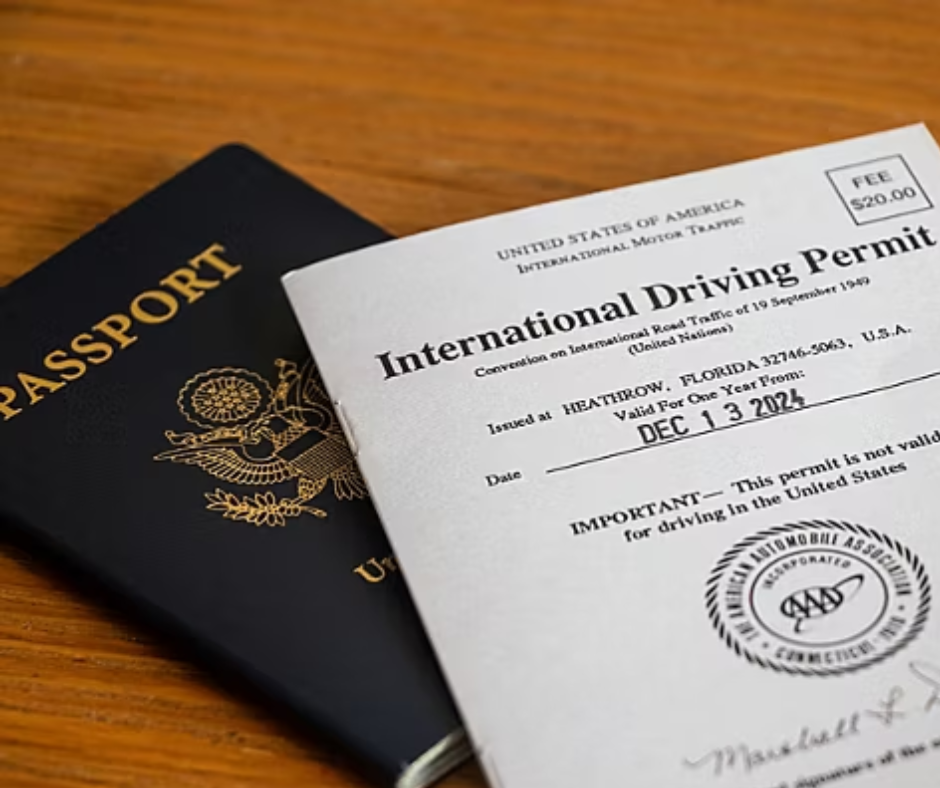
If you are renting, check that the contract covers driving between wilayas and gives a 24-hour assistance number, and that the registration document (carte grise) and insurance certificate are in the car. Carry your national driving license together with an International Driving Permit in the 1949 Geneva format (Algeria signed the 1949 convention, not the 1968 Vienna one), and get it at home before you leave. Police and gendarmerie expect the originals at roadside checks; photos on your phone won't do.
Visa rules in more detail: Algeria Visa: Requirements and Visa on Arrival
Maps, signal and SIM cards
Before you set off, download offline maps; Google Maps and Maps.me both let you. Coverage thins out in the mountains and on the steppe, and in remote southern areas the UK Foreign Office calls it "patchy or unavailable". Use your phone for navigation and leave standalone GPS units and satellite messengers at home: Algerian customs restricts GPS and geolocation devices without prior authorization, and they can be held at the border.
Pick up a local SIM at Algiers airport: Mobilis, Djezzy and Ooredoo all have shops there, and registration needs your passport. Once you drive south, the state operator, Mobilis, gives the best coverage. For campsites and fuel stops off the main roads, iOverlander is the app we suggest in our guide to Algeria. Each morning, tell your hotel or a contact where you are driving and when you expect to arrive.
Signs on the main roads are in Arabic and French (and Tamazight in Kabylie), but on minor roads you may get Arabic only. Keep a screenshot of each destination's name in Arabic script so you can match it on signs when the phone has no signal.
Choosing the Right Vehicle and Driving on Algerian Roads
A car that copes with the streets of Oran may struggle on the back roads of the Aurès, so rent for the roughest part of your route.
Vehicle Selection and Rental Tips
On the A1 and between the big cities, a compact car or sedan is enough and cheap on fuel. If your plan includes the mountain roads of Kabylie or the Aurès, or tracks around the desert towns, an SUV with higher ground clearance copes better with potholes and gravel detours. A real 4x4 only matters off the tarmac, and many rental contracts forbid that anyway.
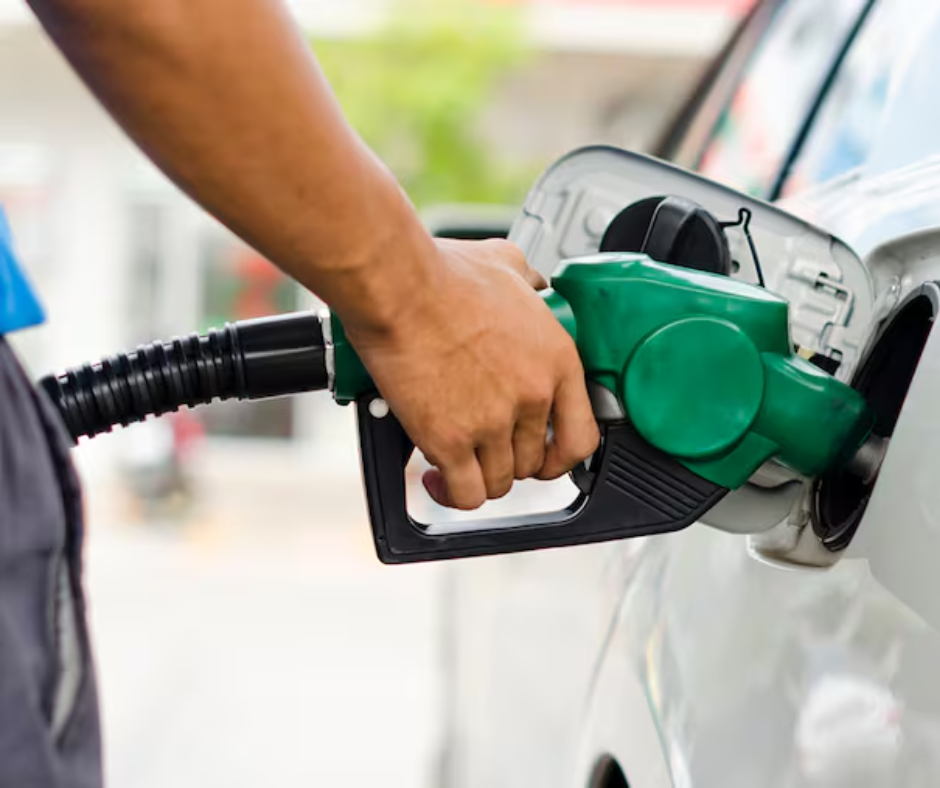
When you pick up the car, check the spare tire and the jack, the air conditioning and the fluid levels. Pumps are labeled Gasoil (diesel) and Sans Plomb (unleaded), so confirm which one your car takes: the wrong fuel in a remote area is a hard mistake to fix.
Prices are set by the state and are the same at every Naftal pump. The current rates date from 1 January 2026: 47 DZD a liter for unleaded, 31 DZD for diesel and 12 DZD for LPG (Sirghaz).
A liter of unleaded therefore works out at about EUR 0.31 at the official rate (about 150 DZD to the euro), or about EUR 0.17 if you changed cash on the informal market (about 275). Our Algeria car rental guide goes deeper into vehicle classes, insurance and the off-road clause that voids many contracts.
Renting a car in Algeria: the essentials
Local rental firms in Algiers and Oran will usually deliver the car to the airport, sometimes free and sometimes for a fee of about 2,000 to 5,000 DZD (2026). Expect these conditions:
- Minimum age 21, often 25 for SUVs and 4x4s, and a license held for at least two years.
- A deposit of about 20,000 to 80,000 DZD depending on the car, and an international credit card for non-residents.
- About 4,500 to 7,000 DZD a day for a small car, more for a sedan, and about 9,500 to 12,000 DZD for an SUV.
- A clause on which wilayas you may drive in. Ask about the south before you sign.
Photograph every scratch with the agent before you drive off, and check the spare tire. Anything paid by card goes through at the official rate.
How much does an Algeria road trip cost?
Here is a one-week budget for two people on the western route above, at autumn 2026 prices. Hotel prices are for simple hotels and guesthouses (Algiers costs more), and the fuel assumes a small car using about 7 liters per 100 km.
| Item (2 people, 7 days, about 1,250 km) | DZD | EUR official rate (about 150) | EUR informal rate (about 275) |
|---|---|---|---|
| Small rental car, 7 days | 31,500 to 49,000 | 210 to 327 | 115 to 178 |
| Fuel, about 90 liters of unleaded | About 4,200 | About 28 | About 15 |
| 6 nights in simple hotels or guesthouses | 24,000 to 42,000 | 160 to 280 | 87 to 153 |
| Meals, two plates a day each in popular restaurants | 16,800 to 33,600 | 112 to 224 | 61 to 122 |
| Total | About 76,500 to 128,800 | About 510 to 860 | About 280 to 470 |
On top of that, budget for site tickets (about 200 to 300 DZD each), a local guide in the Casbah or Beni Isguen, and a refundable deposit on the car.
Local Driving Etiquette and Rules
Driving in Algiers and the other big cities is assertive. Traffic is dense, and at roundabouts drivers push in on a first-come basis rather than keeping to lanes. On the open road the pace settles, but watch for slow trucks and farm vehicles pulling out without warning, and for large speed bumps at village entrances.
Speed limits are 50 km/h in towns, 100 km/h on roads outside towns and 120 km/h on motorways, dropping to 40, 80 and 100 km/h in the wet.
Drivers who have held a license for less than two years are capped at 80 km/h. Fixed cameras are rare, but police and gendarmerie run mobile radar checks, and the new road code (Law 26-09, in force since 20 May 2026) raised the fines: 6,000 DZD for 10 to 20 percent over the limit and 25,000 to 80,000 DZD for more than 30 percent over. Local drivers often flash their headlights to signal that they are overtaking.
Hold your lane and speed and let them pass. A few other rules: children under 10 may not ride in the front seats, handheld phones and headphones over both ears are banned, and the alcohol limit is 0.20 g per liter of blood, so don't drink at all if you're driving. On a narrow mountain road where two cars can't pass, the law (Decree 04-381) says the car going downhill stops first.
For the rest of the rules of the road, see Driving in Algeria
Road Safety and Checkpoints in Algeria
The biggest hazard on an Algerian road trip is the driving itself: the UK Foreign Office describes the road accident rate as very high, so keep your speed down and leave plenty of room. Off the road, most visitors find the country easygoing, and people at fuel stops and cafés are quick to help with directions. In the Kabylie mountains and other remote areas, ask locally about road conditions before you take an unpaved track, and tell your hotel which way you are going.
Police and Gendarmerie Checkpoints
Expect checkpoints run by the police or the Gendarmerie Nationale at the entrances and exits of most towns and along national roads. The FCDO's advice is to approach slowly, not to cross the line until you are waved through, and to have photo ID ready. At night, dip your headlights as you approach. Never photograph or film a checkpoint, police or soldiers.
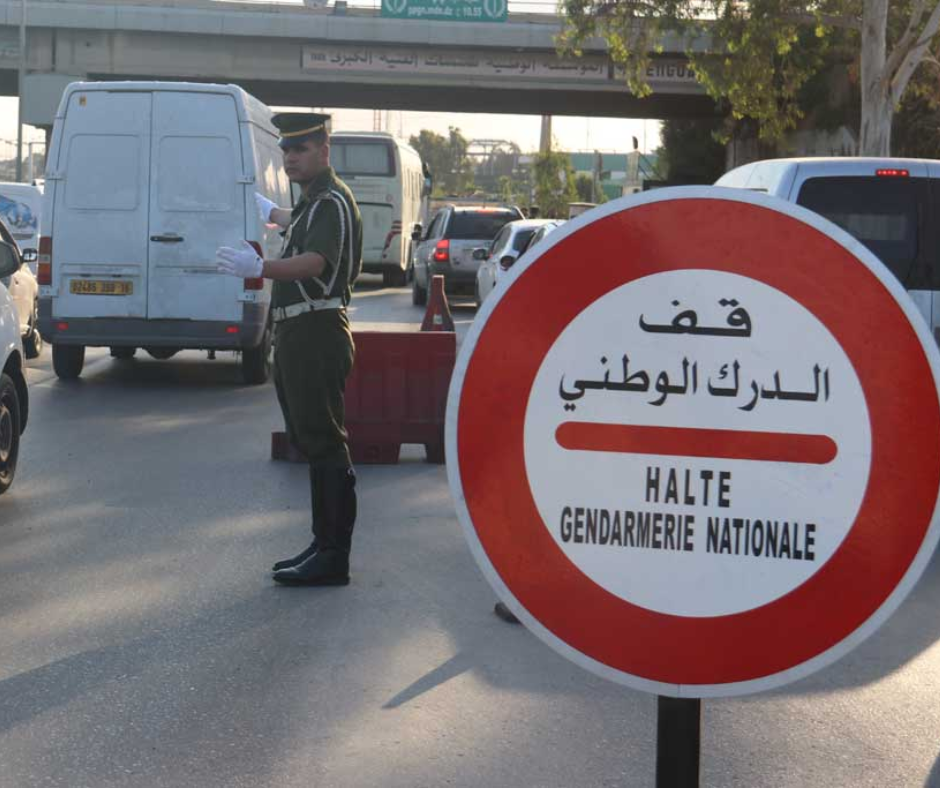
A greeting in French or Arabic helps. Officers usually ask where you have come from and where you are going; answer simply. Foreign drivers get more attention than locals: officers may note your passport details, and in some wilayas they assign a police car to accompany you for part of the drive. It is routine and meant to look after visitors, so be patient and cooperate.
Desert Driving Safety
The desert edge demands more self-sufficiency. South of Laghouat, fill up whenever you pass a station and don't let the tank drop below half; further south, stations can be hundreds of kilometers apart. Carry at least 10 liters of water per person per day, even for a short drive, plus food that keeps.
Heat wears out drivers and engines. Check oil and coolant each morning, drive early and rest through the hottest part of the afternoon.
Our firm rule applies on every road, in the desert or not: don't drive between towns after dark. Many roads are unlit, and animals, unlit carts and broken-down trucks show up late. If a sandstorm hits, pull well off the road, switch on your hazard lights, turn off the engine and wait for visibility to improve.
Emergency numbers and breakdowns
- Police: 17 or 1548
- Gendarmerie (outside towns): 1055
- Ambulance: 1021 or 16
- Fire and civil protection: 14
After a breakdown, pull well off the road, put on your hazard lights and call the rental company's assistance number first. After a minor accident, fill in a joint accident report (constat amiable) with the other driver and photograph both cars and their plates. Then call the rental company before you move on. Keep the numbers in your phone and on paper, since coverage drops out between towns.
Roadside Food and Rest Stops
Eating at roadside grills and small-town cafes is one of the easy pleasures of driving in Algeria, and it costs little.
What to Eat Along the Way
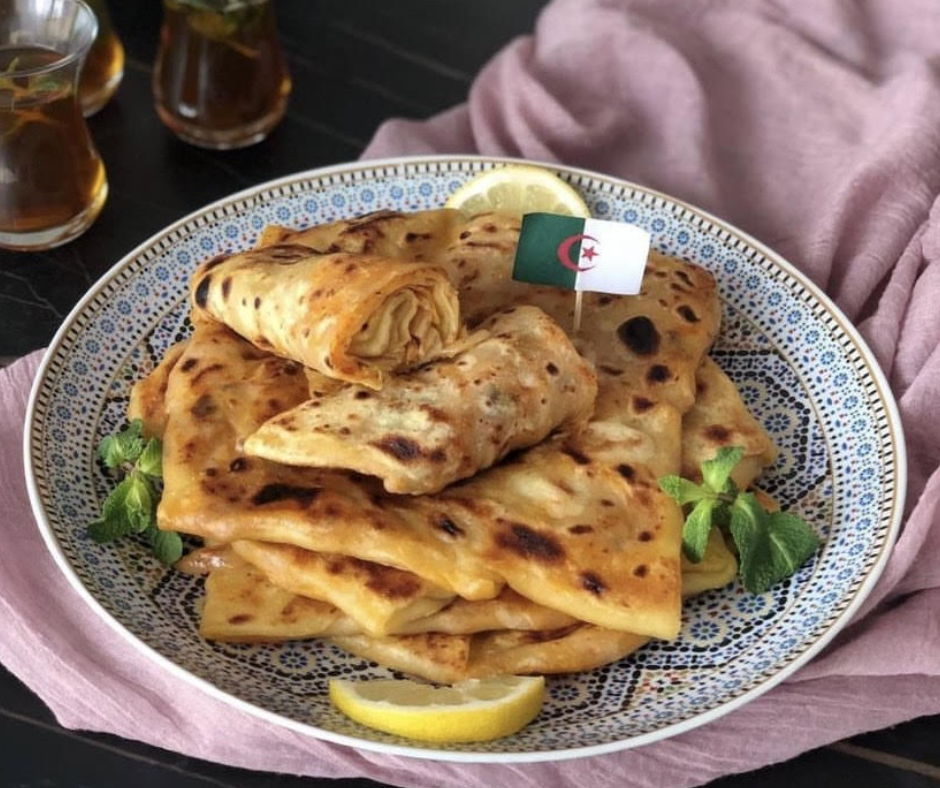
In the north, roadside rotisseries serve grilled chicken, merguez skewers and salads; pick the busy ones, where the food turns over fast. Street stalls everywhere sell mhadjeb, thin semolina crêpes folded around a spicy tomato and onion filling, easy to eat in the car.
On the RN1 south, Djelfa wilaya is sheep country, and roadside grills sell lamb cooked to order. In Ghardaïa, buy dates at the market after the autumn harvest. Coffee stalls are everywhere in the north; further south, sweet mint tea takes over.
What to order at the stalls: Algerian Street Food: What to Eat and Where
Paying, drinking water and toilet stops
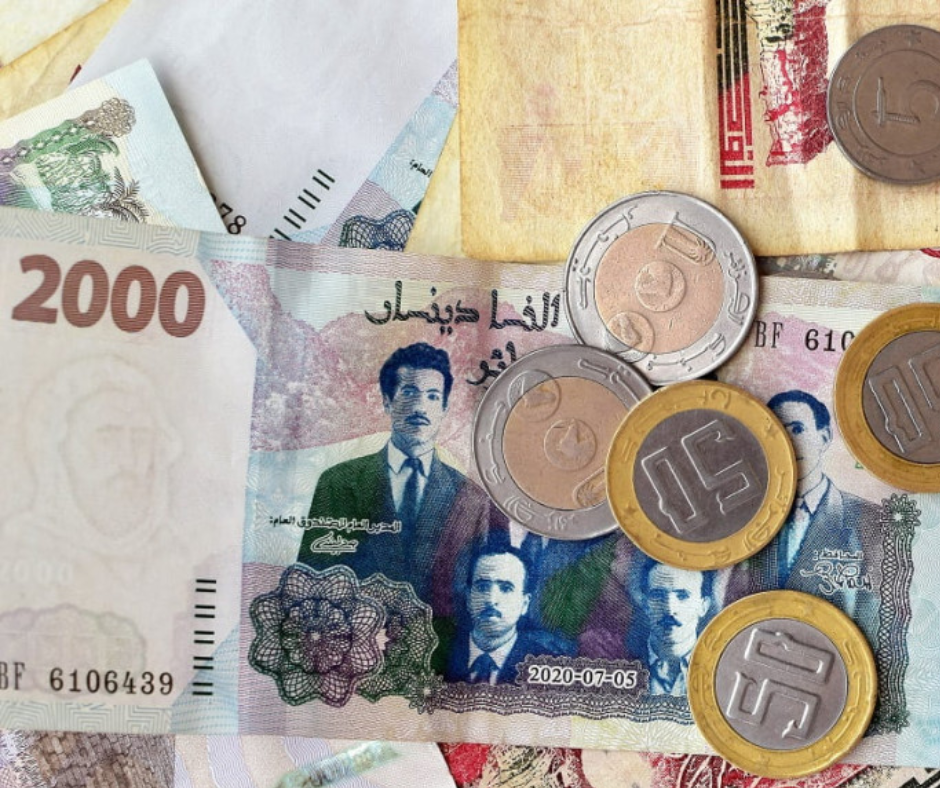
Once you leave the cities, ATMs get scarce and roadside cafes and small restaurants want cash, so keep enough dinars in small notes for meals, coffee and fuel. Tap water is fine for washing; drink bottled mineral water, sold in 5-liter jugs at almost every roadside shop.
Dinars from a card or ATM come at the official rate (about 150 to the euro, autumn 2026), against about 275 on the informal market, which is not legal on paper but works openly; let your host or guide pick a changer they know is honest. If you declared over 1,000 euros on arrival, change part of it at a bank, because customs may ask for the receipts when you leave.
Fuel stations on the motorway and main roads usually have toilets and a prayer room, but cleanliness varies, and in rural areas facilities are basic. Carry hand sanitizer and tissues. A long lunch at a roadside grill is also the easiest way to sit out the hottest hours of the day.
Best Time for an Algeria Road Trip
The coast and the Sahara have opposite problems: winter rain and mountain snow in the north, summer heat in the south. Plan around both.
Spring and Autumn Windows
April, May, September and October suit a road trip that covers the north and the desert edge. In spring the northern hills are green, wildflowers are out, and it's mild enough to walk around Roman sites at midday. Ghardaïa averages highs of about 31°C in May and 34°C in September: hot at noon, with pleasant evenings.
Autumn adds the date harvest in the southern oases. The sea is still warm, the mountain passes are clear of snow, and the car's cooling system isn't under the strain of a July drive.
Seasonal Considerations for the North and South
In winter, keep to the north and the coast. Expect rain and cold nights, but the sites are quiet. Snow can close high passes in the Djurdjura and the Aurès, mostly in January and February, so check conditions before a mountain drive. Winter is the season for the deep Sahara, but that is a trip with an agency, not a self-drive.
Avoid the desert in summer. Ghardaïa averages about 40°C in July and the deep south gets hotter, which is hard on people and engines. If you must travel then, stick to the coast and drive in the early morning, and expect heavy traffic out of Algiers toward the beaches on summer weekends (Friday and Saturday).
Read also: Algeria in Summer: Beaches, Heat & Travel Tips
What drivers usually ask us
How long does it take to drive from Algiers to Oran?
About 4.5 to 5 hours for the 415 km on the A1 motorway, including fuel stops and checkpoints. Route planners show less, but traffic leaving Algiers and the checks along the way add time. Leave in the morning, and if you want the coast, take the slower RN11 through Tipaza and Cherchell instead.
Can you drive to the Sahara in Algeria on your own?
To the desert edge, yes: Ghardaïa and the M'Zab are about 600 km south of Algiers on a paved road with regular fuel stations. Beyond that, foreigners travel with an approved agency, and many rental contracts exclude desert regions. For Djanet or Tamanrasset, fly south and join a 4x4 trip.
How much does it cost to rent a car in Algeria?
In 2026 a small car costs about 4,500 to 7,000 DZD a day, a sedan more, and an SUV about 9,500 to 12,000 DZD. That is roughly EUR 30 to 47 a day for a small car at the official rate. Expect a deposit of 20,000 to 80,000 DZD and a minimum age of 21.
Will police escort me on a road trip in Algeria?
Sometimes. Foreign drivers get more attention at checkpoints, and in some wilayas officers assign a police car to accompany you for part of the drive. It is routine and meant to look after visitors. Be patient, keep your passport and hotel booking handy, and follow the escort's pace.
Before You Set Off
Start each driving day early. You reach your hotel well before sunset, with time to spare for a detour, a slow checkpoint or a long lunch.
Keep a small bag on the front seat with your passport, license, IDP, car papers, water and a flashlight, so you don't have to dig through your luggage at a checkpoint.
Leave slack in the plan. A drive that takes six hours on the map can easily take eight with checkpoints, speed bumps and stops in small towns.
With one week, choose either the north (Algiers, Constantine and Oran) or Algiers to Ghardaïa and back, not both, and leave the deep Sahara for a separate trip with an agency.
Don't want to drive every leg yourself? We can plan a custom itinerary, have a driver waiting at arrivals in Algiers, handle transfers between cities, and set up a desert trip in the south with local guides, cooks and drivers. You can always reach out to us with your dates and we will help you plan the route.
Read also:
Algeria with Kids: Family Trip Guide for 2026
Is Algeria Worth Visiting? What to Know Before You Go (2026)


