
Planning a driving route across the United Arab Emirates sounds simple until you begin mapping the actual distances. Balancing the modern highway systems of Dubai and Abu Dhabi with the mountain passes of the north, the isolated expanses of the southern desert, and the rocky coastlines of the eastern emirates requires a strategic layout. Many travelers find themselves overwhelmed by conflicting navigation notes, changing speed limits across emirate borders, and unpredictable timing for off-the-radar natural sites.
That is why our team at Wildyness created this guide to map out your ultimate regional driving route.
Regulations and the Car to Pick
Choosing the Right Rental Vehicle and Insurance
The foundational step of your journey involves selecting a vehicle that matches your planned terrain. While a compact economy car is perfectly sufficient for navigating the multi-lane highways linking Dubai and Abu Dhabi, it will severely limit your ability to explore the gravel tracks of the northern wadis or the sandy approaches of the southern desert fringes. If your route includes the mountain passes of Ras Al Khaimah or the steep drives around Al Ain, upgrading to an SUV with a capable engine offers better stability and power.
When finalizing your rental contract at the counter, you must pay close attention to insurance terms. Standard rental insurance typically covers basic collision damage on paved surfaces but voids all coverage the moment your tires leave the asphalt. If you plan to park near trailheads or drive along unpaved valley floors, explicitly ask your provider about off-road coverage extensions.
Additionally, ensure your package covers windshield and tire damage, as loose gravel on mountain roads can easily cause minor chips or punctures.
Navigating Local Regulations and Documentation
Operating a vehicle in the country requires specific documentation that must remain in the car at all times. Drivers must possess a valid passport, a national driving license from their home country, and an International Driving Permit depending on their specific nationality.
It is critical to confirm these requirements with your specific rental company well before your arrival date to avoid entry denials at the pickup desk. Keep the physical rental agreement and emergency roadside assistance numbers inside the glove compartment, and maintain digital copies on your personal device.
Understanding local traffic laws is equally vital for a stress-free journey. Speed limits are clearly posted on overhead gantries and change frequently when transitioning from major intercity freeways to municipal sectors. It is important to note that fixed speed cameras are heavily deployed across every emirate, and fines for tailgating or lane drift are substantial.
Always maintain a conservative buffer with the vehicle in front of you, utilize hands-free setups for navigation, and ensure every passenger utilizes a seatbelt throughout the duration of the drive.

Essential Toll Systems and Navigation Logistics
Managing the logistics of multi-emirate driving involves understanding how toll infrastructure and digital navigation work together. Highways are highly advanced, but unexpected lane choices can quickly route you toward costly diversions or urban bottlenecks.
Understanding Salik and Darb Toll Networks
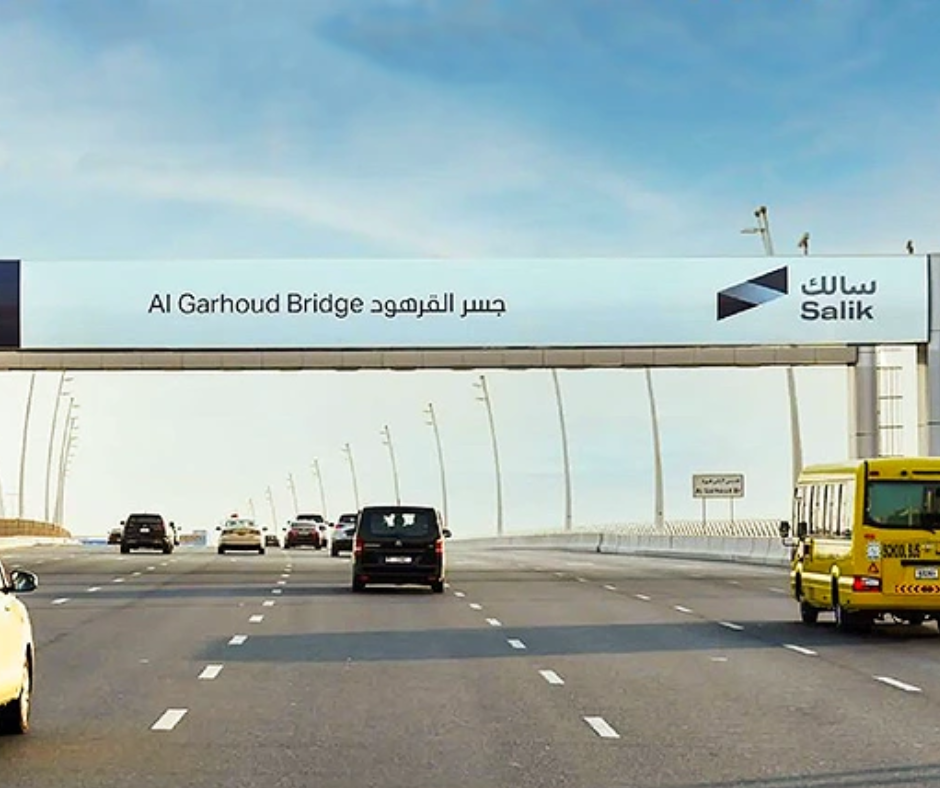
Drivers will regularly encounter electronic toll gates when passing through specific regions, particularly within Dubai and Abu Dhabi. Dubai utilizes the Salik system, which operates via an electronic tag affixed to the windshield of your rental car.
There are no physical toll booths, as overhead scanners automatically register the vehicle as it passes beneath the gate. Rental agencies track these crossings electronically and will bill you for the accumulated balances at the end of your rental period.
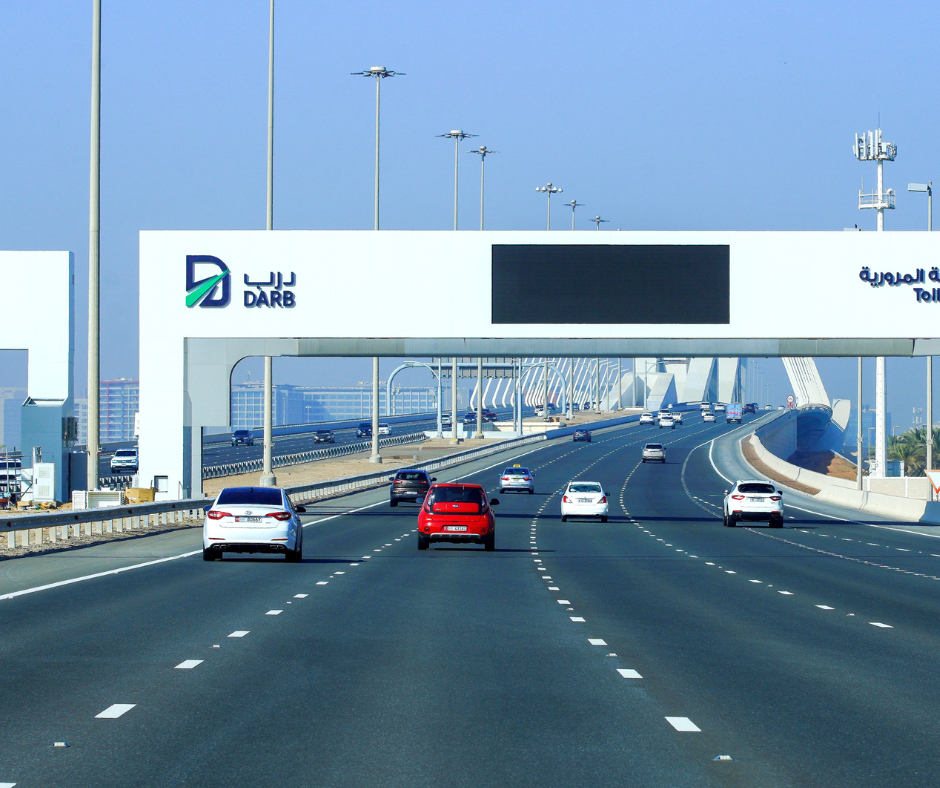
Abu Dhabi operates its own distinct toll network known as Darb, which activates during specific peak commuter hours. When planning your route through the capital, it is wise to schedule your transitions during the mid-morning or early afternoon to minimize these automated charges.
Ask your rental provider how they handle Darb registrations, as policies can vary between local operators. Staying informed about these fees ensures your travel budget remains accurate and predictable.
Northern Emirates and the Hajar Mountain Pass
The northern leg of your journey introduces you to the highest elevations in the country, trading urban skylines for dramatic limestone massifs and winding mountain roads.
Driving the Switchbacks of Jebel Jais
Located in the northernmost emirate of Ras Al Khaimah, Jebel Jais offers one of the most engineered mountain driving experiences in the region. The road features wide lanes, banked corners, and multiple viewing pull-outs that look out over the stark terrain of the Hajar range.
As you climb toward the summit, the ambient temperature drops noticeably, making it a refreshing escape from the coastal humidity.
To experience the pass at its best, plan your ascent for the early morning hours when the air is clear and traffic is minimal. Fuel up your vehicle completely before leaving the highway network at the base of the mountain, as there are no refueling stations along the steep climbing sections.
Keep a light jacket or extra layers in your vehicle, because the summit areas experience strong winds and rapid cooling as afternoon transitions into evening.


Exploring the Geologic Layers of Rainbow Valley
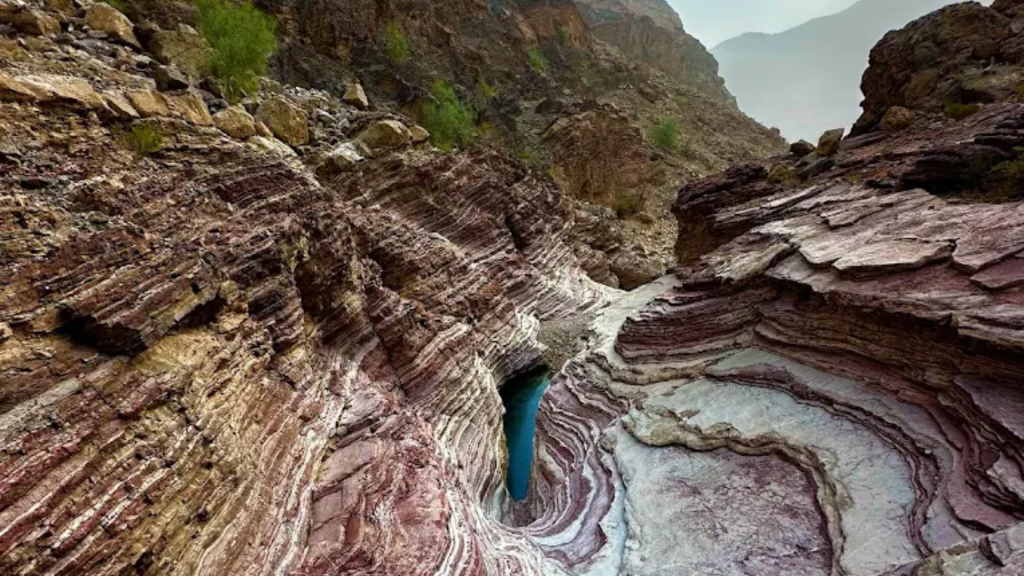
For travelers eager to discover unique terrain, transitioning toward Fujairah reveals the dramatic formations of Wadi Ghub, popularly known as Rainbow Valley.
Park your vehicle in designated flat areas near the entrance of the valley, and avoid entering the dry riverbeds if there is any forecast of rain in the surrounding mountains.
Selecting the Ideal Hiking Route in Wadi Ghub
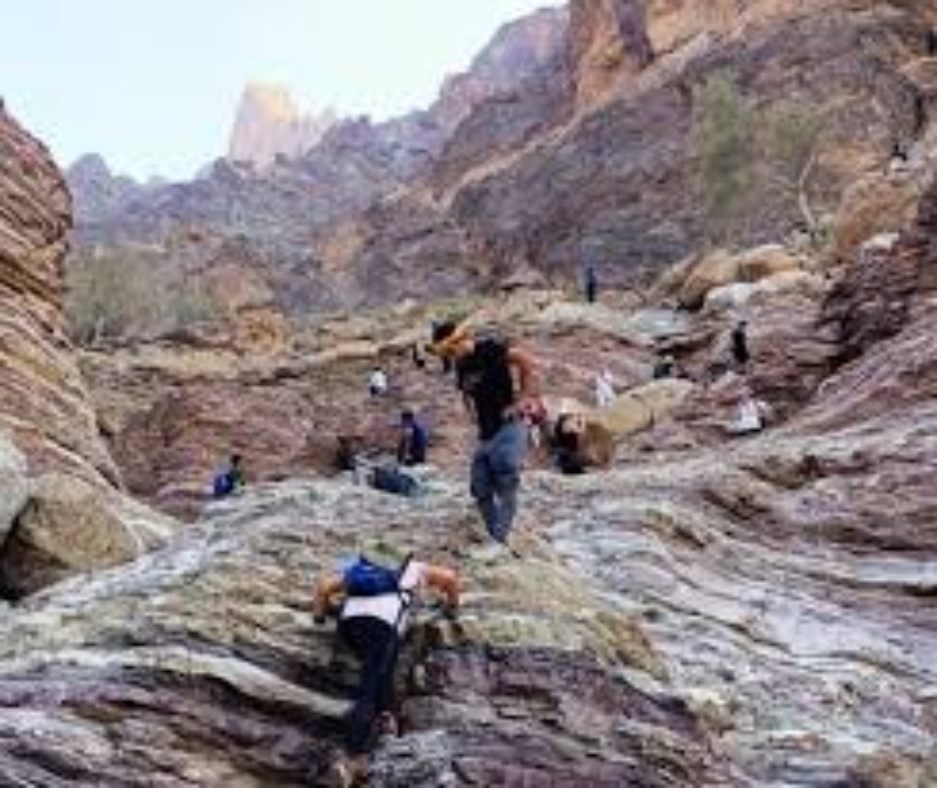
The trail system within Rainbow Valley scales across multiple difficulty levels, allowing you to customize your time on the ground. A gentle introduction covers a short walk where you can view the primary colorful stone layers within the first two kilometers of flat terrain.
More experienced walkers can follow the moderate route deeper into the canyon, navigating larger limestone boulders and gaining moderate elevation to reach panoramic valley viewpoints. The full challenge requires sturdy footwear and proper navigation tools to climb the rugged scree slopes toward the border ridges.
The Historical Inlets and Terraces of Hatta
Turning south along the mountain spine brings you to Hatta, an inland enclave of Dubai that showcases traditional agricultural engineering and deep-water mountain reservoirs.
Navigating the Hatta Dam Reservoir
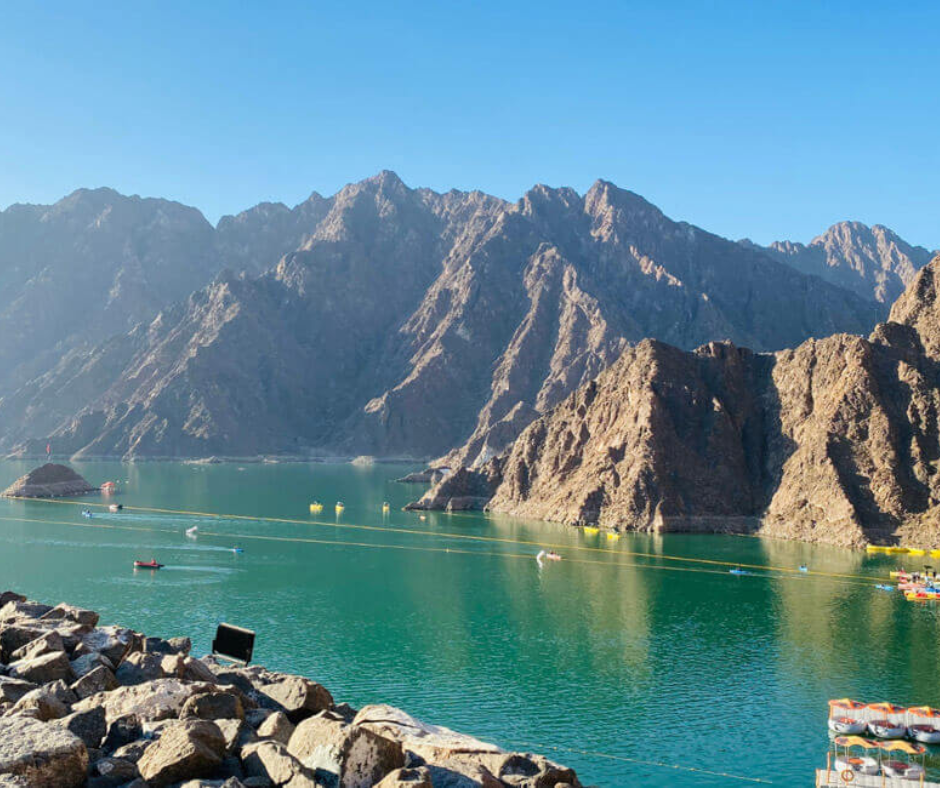
The deep blue waters of the Hatta Dam stand in sharp contrast to the surrounding arid peaks, offering a unique aquatic setting in the middle of the mountains.
The road leading to the dam includes short, steep inclines that open up to an expansive viewpoint over the reservoir. Visitors can park in the primary municipal lots and walk down to the water's edge to rent kayaks or pedal boats for an independent excursion into the quiet limestone inlets.
To avoid long queues and secure a parking spot close to the water, aim to arrive during the early morning hours on weekends. Bring a reliable dry bag to safeguard your electronic devices and cameras while you are out on the water. Wearing sandals with a strong heel strap or dedicated water shoes will protect your feet from the sharp, slippery rocks when launching your watercraft from the shore.
Cultural Traditions at Hatta Heritage Village
A short drive from the reservoir stands the Hatta Heritage Village, a carefully preserved historical site that showcases rural mountain life from centuries past. The village features traditional dwellings, defensive towers, and educational exhibits constructed from local stone, mud, and palm fronds.
Walking through this site allows you to see the domestic architecture and defensive strategies that defined the region before modern infrastructure developed.
Pay close attention to the traditional falaj irrigation channels that run through the adjacent date palm plantations. This ancient system utilizes gravity to distribute water from mountain springs directly to agricultural terraces, demonstrating how early communities managed scarce water resources.
Plan your walk for the late afternoon when the sun is lower, dress respectfully by covering your shoulders and knees, and carry a small water bottle to stay comfortable during your tour.
The Desert Oases of Al Ain and Jebel Hafeet
South of the mountains, your itinerary transitions into Abu Dhabi's eastern region, where a historic oasis city sits at the base of a solitary limestone mountain.
Scaling the Heights of Jebel Hafeet
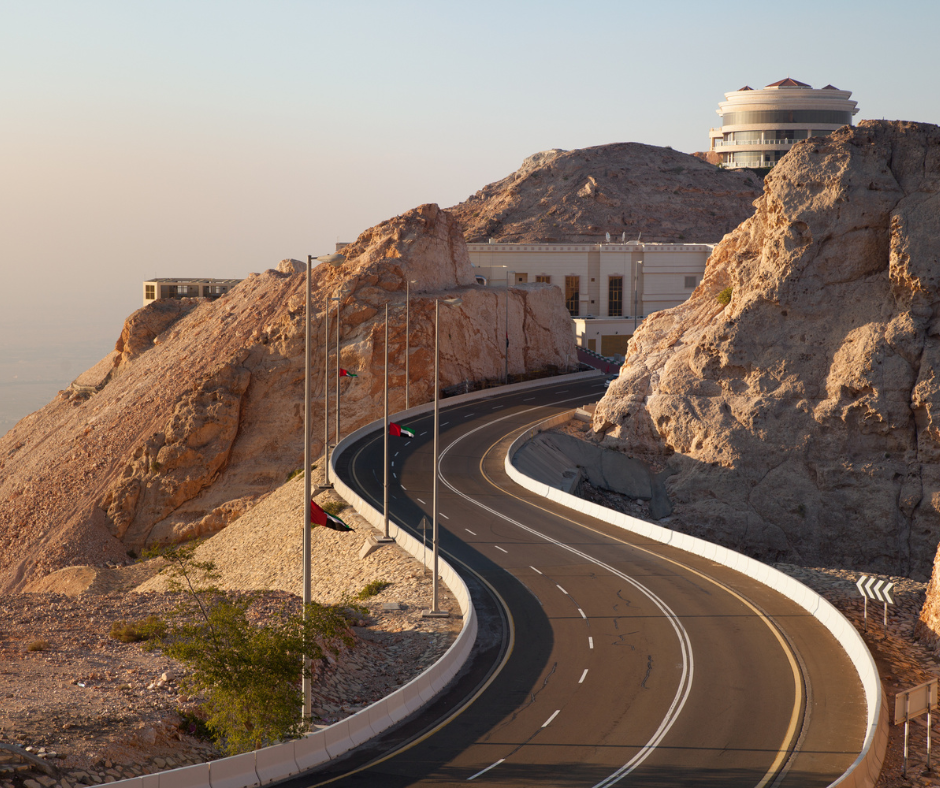
Jebel Hafeet rises sharply above the flat desert surrounding Al Ain, providing an iconic driving experience defined by sweeping corners and precipitous drops.
The road up the mountain is widely recognized as one of the finest driving layouts in the world, featuring three distinct lanes designed to handle steep gradients safely. As you climb, the expansive desert floor opens up beneath you, offering views that stretch across the border.
Driving this route at sunrise allows you to watch the morning light illuminate the limestone cliffs without the midday glare. There are several large parking turn-outs along the ascent where you can safely pull over to take photographs and let your engine cool.
Due to the intense radiant heat during the summer months, minimize strenuous walking along the upper ridges and focus instead on the driving viewpoints.
Walking the Shaded Lanes of Al Ain Oasis
After tackling the mountain pass, driving down into the center of Al Ain brings you to the expansive Al Ain Oasis. This UNESCO World Heritage site features hundreds of thousands of date palms, creating a cool microclimate that provides natural relief from the desert heat.
The narrow mud-brick lanes are closed to regular vehicular traffic, making it an ideal destination for a quiet afternoon walk or a bicycle tour.
The entire agricultural matrix relies on the functional mechanics of the falaj irrigation network, which has been maintained by local farmers for generations. You can observe the intricate sluice gates that divert water to individual plots of land, ensuring each palm grove receives its precise share.
Wear comfortable, closed-toe walking shoes to explore the shaded paths, and take advantage of this stop to rest between your longer driving legs.

The Deep Dunes of the Liwa Corridor
The final major driving segment takes you deep into the southern expanses of Abu Dhabi, where the highway terminates at the edge of the massive Rub al Khali desert.
Pacing the Route to the Empty Quarter
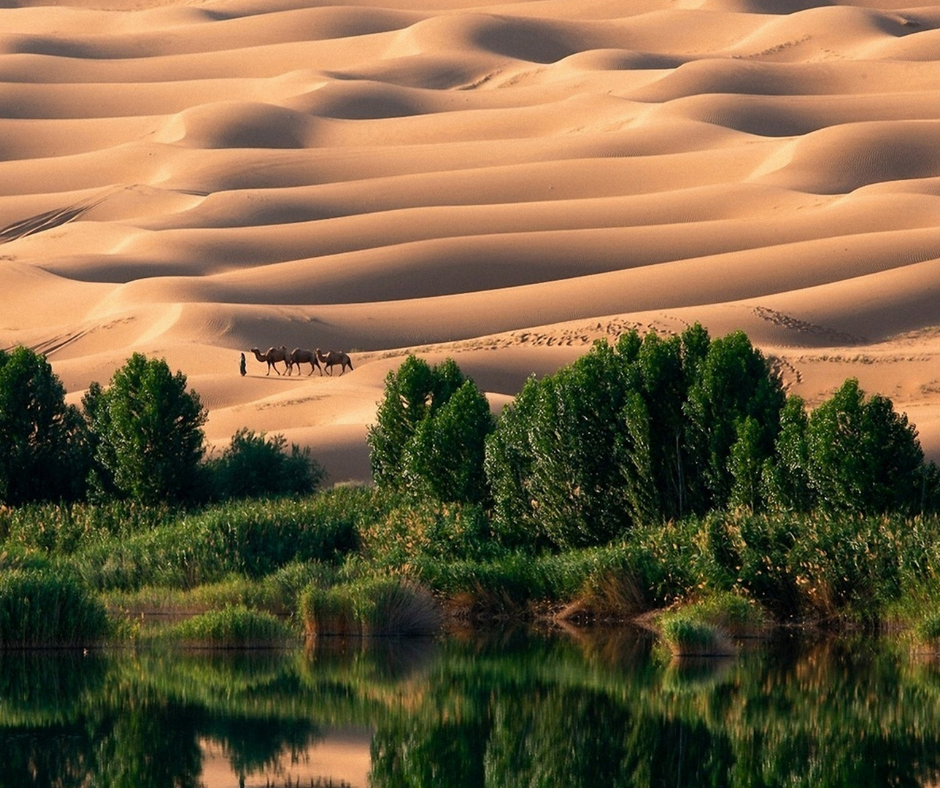
Driving to the Liwa Oasis requires a shift in your road trip mindset, as the landscape transforms into endless horizons of towering crescent dunes.
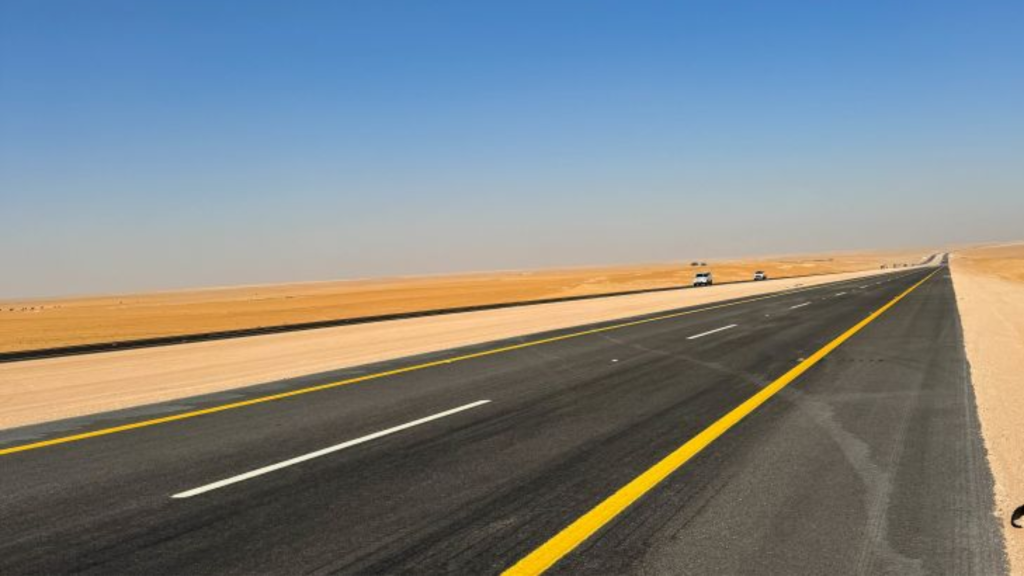
The highways leading south are exceptionally straight and well-maintained, but the distances between service stations increase dramatically. You should make it a strict rule to top off your fuel tank whenever it drops to half capacity, as searching for fuel in remote desert stretches can cause unnecessary complications.
Maintain a steady, conservative speed on these open roads, and remain alert for blowing sand that can accumulate unexpectedly across the driving lanes.
The afternoon sun can create intense glare on the asphalt, making high-quality polarized sunglasses essential for maintaining clear visibility. Planning an overnight stay at a local desert lodge allows you to experience the transition of light over the dunes without needing to rush back to the city before dark.
The Eastern Coastline and Marine Sites of Fujairah
Your route concludes by cutting back toward the Gulf of Oman, where the mountains meet the sea to create unique marine habitats and historic coastal settlements.
Coastal Snorkeling Near Snoopy Island
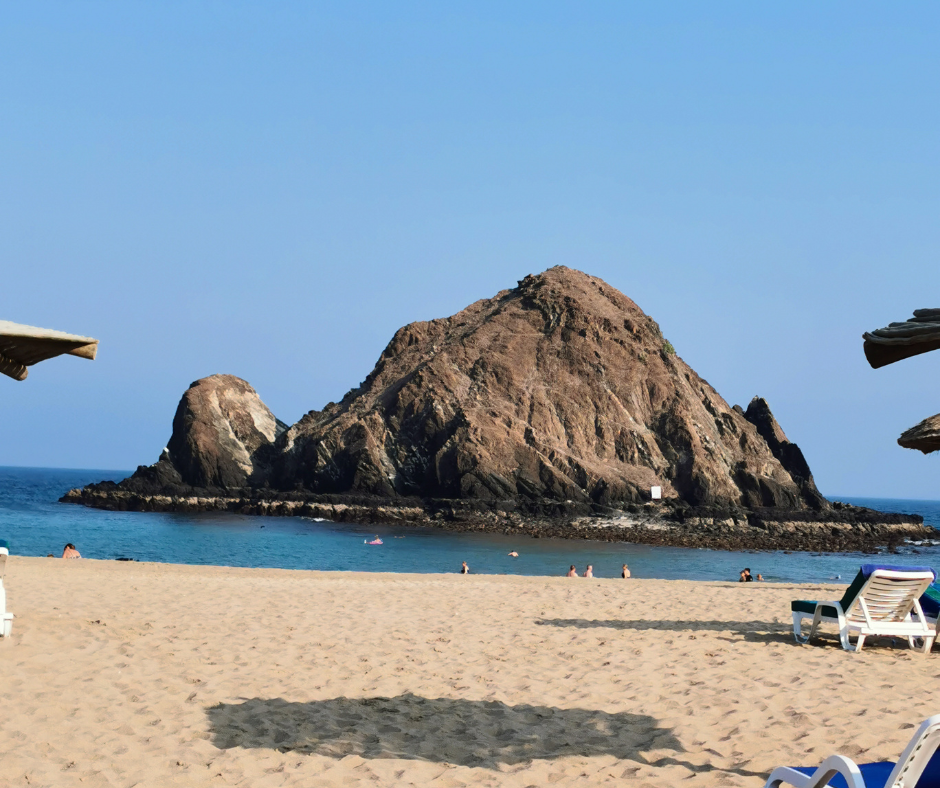
Fujairah's rocky coastline offers some of the most accessible marine exploration zones in the region, centered around the prominent rock formation known as Snoopy Island.
The shallow waters surrounding this landmark feature natural coral patches that attract a wide variety of local marine life, including sea turtles and colorful reef fish. Drivers can park easily near the public beach access points and enter the water directly from the sandy shore.
To enjoy the best underwater visibility, enter the water during the calm early morning hours before afternoon coastal winds create chop. Bring your own mask and snorkel to ensure a secure, watertight fit, and wear a rash guard to protect your skin from the intense midday sun.
Always swim within your personal physical limits, stay close to the shallow reef structures, and keep a safe distance from passing watercraft.
Historical Analysis at Al Bidyah Mosque
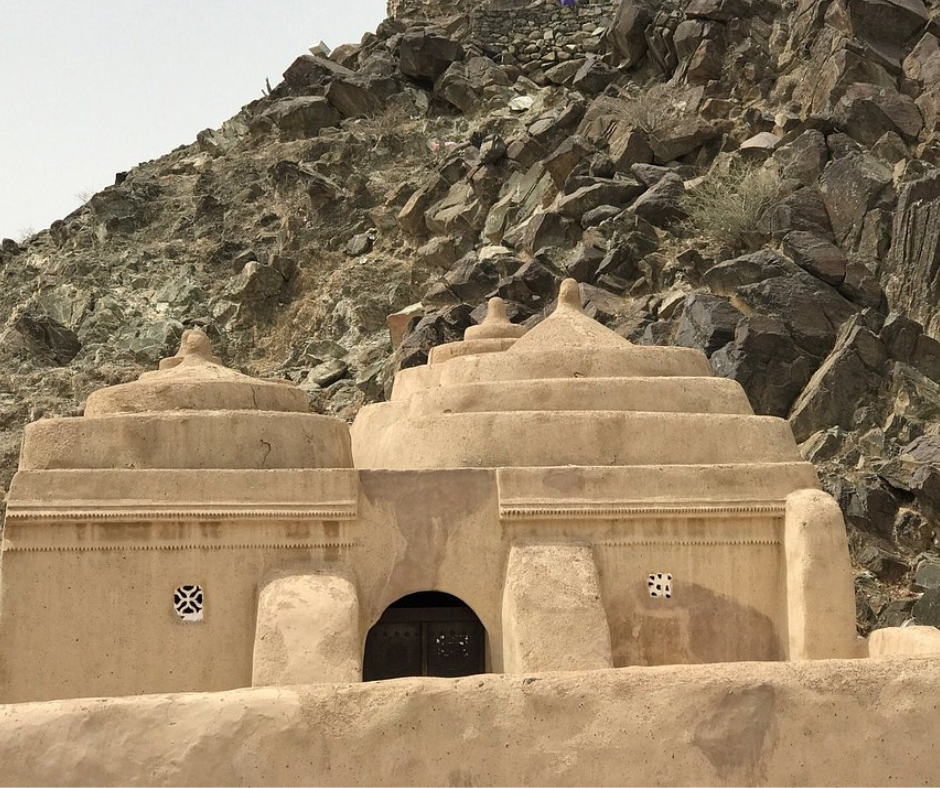
A short drive north along the coastal highway brings you to the ancient settlement of Al Bidyah, home to the oldest known standing mosque in the United Arab Emirates.
This unique structure features an architectural design characterized by four unequal domes and an internal support pillar, setting it apart from traditional Islamic designs found elsewhere in the region. The surrounding site includes defensive watchtowers that offer panoramic views over the coastal palm groves.
Approach the historical site quietly and respect the local rules regarding dress and photography. Visitors must dress modestly, ensuring their clothing covers their shoulders and legs fully before entering the precinct.
Visiting in the early morning or the cooler hours of the late afternoon allows you to explore the stone foundations comfortably without facing the intense heat of the midday sun.
Finalizing Your Travel Arrangements
Organizing a comprehensive driving loop requires balancing technical logistics with a flexible approach to daily exploration. By structuring your itinerary around regional geographic clusters, you ensure that each driving segment remains manageable and rewarding.
Independent road trips offer the freedom to adjust your pacing on the fly, allowing you to spend more time exploring mountain trails or resting in quiet desert oases.
If you have additional questions regarding vehicle choice, route timing, or regional driving regulations, contact our team to clarify your plans. We can help you organize the specific details of your journey to match your individual preferences.