
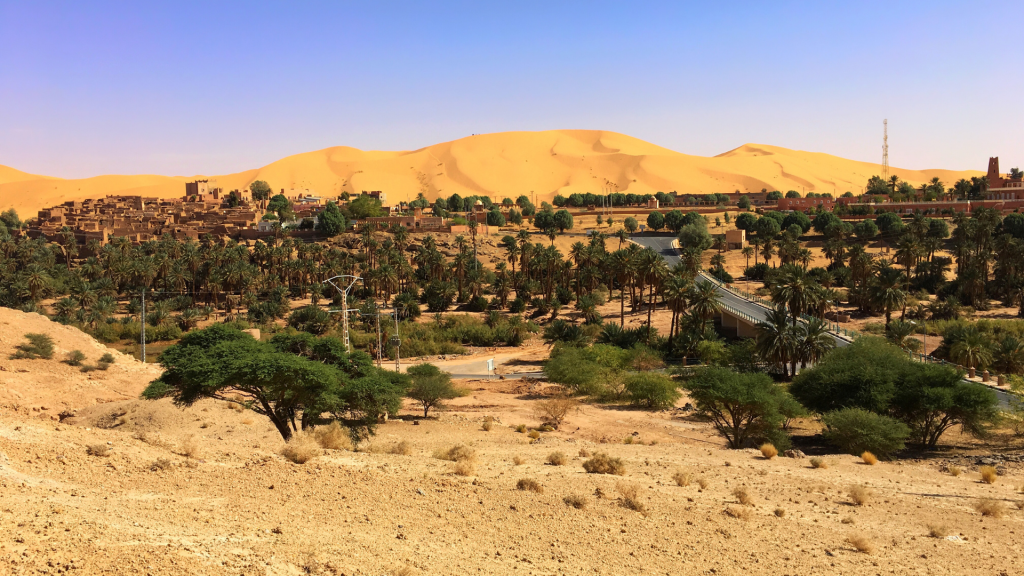

Taghit is an oasis on the Oued Zousfana in Béchar wilaya, at the western edge of the Grand Erg Occidental, where the dunes rise straight up behind an old mud-brick ksar and a palm grove. Algerians call it the pearl of the Saoura. To get there, fly from Algiers to Béchar and drive about 95 km (roughly an hour and a half), and come between October and April, when the days are warm rather than dangerous.
Most visitors sleep in a guesthouse in or near the old ksar or in a hotel in town, and many add a night in the dunes. For that, our Algeria travel guide covers the fixed camps by the dunes, and the Bladi Palace hotel at the foot of them if you'd rather have a proper bed.
Is Taghit worth the trip south?
Yes, if you want big dunes without an expedition: the Great Dune, about 190 m high and one of the tallest in the Grand Erg Occidental, starts at the edge of the village. Around it you get an 11th-century ksar, a palm grove about 20 km long and Neolithic rock engravings, enough for two or three nights with one of them out in the dunes.
Come between October and April, and in late October if you'd like to catch the date festival. Entry is on a consulate visa, or on the Sahara visa on arrival if an agency organizes your trip.
Planning Your Trip to Taghit
Choosing the Best Time to Visit
Taghit has a hot desert climate, and the season decides the trip. In Béchar, the nearest weather station, July highs average about 41°C and the record is close to 48°C. June to August are too hot for walking on sand, and May and September are still hot, with highs in the low to mid 30s.
We'd advise against desert outings in summer. Come between October and April instead. Late October brings the date harvest and Taghit's date festival. The busiest week of the year is New Year, when Algerian visitors fill the guesthouses, so book early if you're coming at the end of December.
Within that window, average highs in Béchar are about 28°C in October, 21°C in November and 17°C in December and January, rising again to about 23°C in March and 27°C in April.
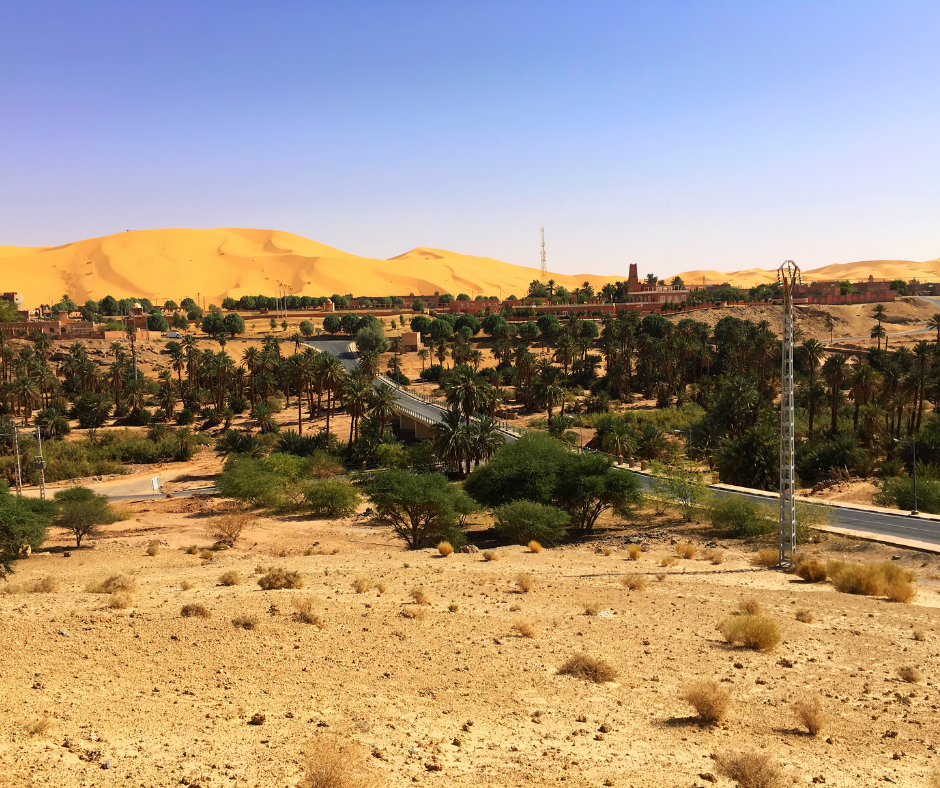
Those are good temperatures for climbing dunes and walking the rocky hills around the oasis. The catch is the night. The temperature falls fast after sunset, and in December and January the average low is around 3 to 5°C, with the odd frost (Béchar's record lows are just below -4°C).
Plan the day around that swing. Do the dune climb, the hikes and the sandboarding in the morning, while the sand is still cool.
Spend the middle of the day in the shade of the palm grove or at your guesthouse, then go out again for the last couple of hours of light.
Getting to Taghit from Béchar and Algiers
Taghit is about 1,000 km from Algiers by road, so almost everyone flies the long leg.
Most international travelers land in Algiers and take an Air Algérie domestic flight south to Béchar. Béchar is one of the 24 southern wilayas covered by Algeria's visa on arrival for Sahara tourism, but that visa only works for an organized trip booked through an approved Algerian agency; otherwise, get a visa from a consulate before you leave.
Béchar is the capital of its wilaya and the main town of the Saoura, the valley region that runs south through Béni Abbès.
The nonstop flight takes about an hour and a half. Schedules change from season to season, so check Air Algérie's timetable before you fix your dates.
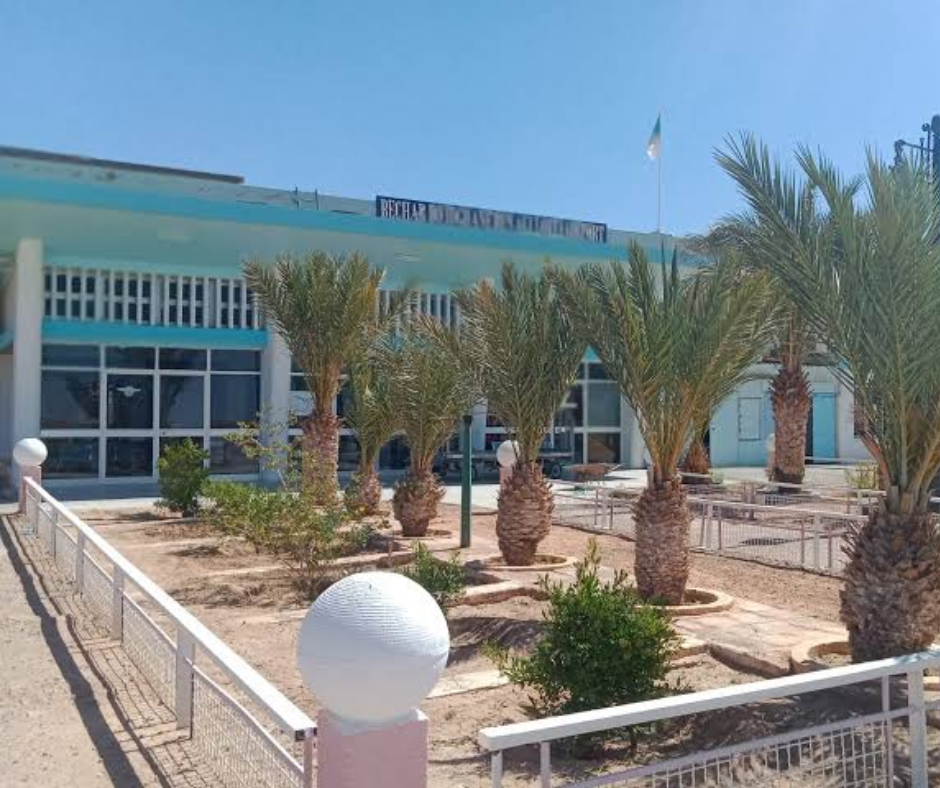
Boudghene Ben Ali Lotfi Airport is about 4 km northwest of Béchar, and Taghit is about 95 km away to the southeast, roughly an hour and a half by road. Since foreign visitors in the south travel with an approved agency, it's usually the agency's driver who meets you at arrivals and takes you on to Taghit.
Minibuses and shared taxis also run from Béchar's bus station to Taghit, but they leave when full, and they are not how most foreign visitors arrive.
The road is paved and crosses flat stony plain and dark rock outcrops. There are police and gendarmerie checkpoints on the way, as on most roads in the south: keep your passport at hand, expect questions about your route, and don't photograph them. Taghit and Timimoun make up the western loop of our Algeria desert road trip; the Tassili around Djanet is on the far side of the Sahara and works as a separate trip.
Taghit is where many first-time Sahara visitors start, and most leave surprised by how relaxed it felt: Algerian families fill the guesthouses at New Year, and the people who run them are used to foreign guests too. We work with licensed local agencies and guides on routes we use every season.
Foreign visitors in the south travel with an agency, and on the road from Béchar the authorities sometimes assign a police escort; it's routine, and the agency arranges it. The Moroccan border, well over 100 km away, is closed, so don't plan a crossing.
The Main Sights in Taghit
Climbing the Great Sand Dune of the Grand Erg Occidental
Taghit sits on the western edge of the Grand Erg Occidental, the sand sea that stretches east from here toward Timimoun. Of the desert regions in our Algerian Sahara guide, it is one of the easiest to reach from the north. The big dune rises right behind the ksar and the palm grove, so you can walk onto the sand from the village.
Climbing it is the main reason most people come. Start about an hour before dawn if you want to be on top for sunrise.
Walking up loose sand is much harder than a mountain path of the same height. Follow the ridge lines, where the sand is firmer, instead of going straight up the steepest face.
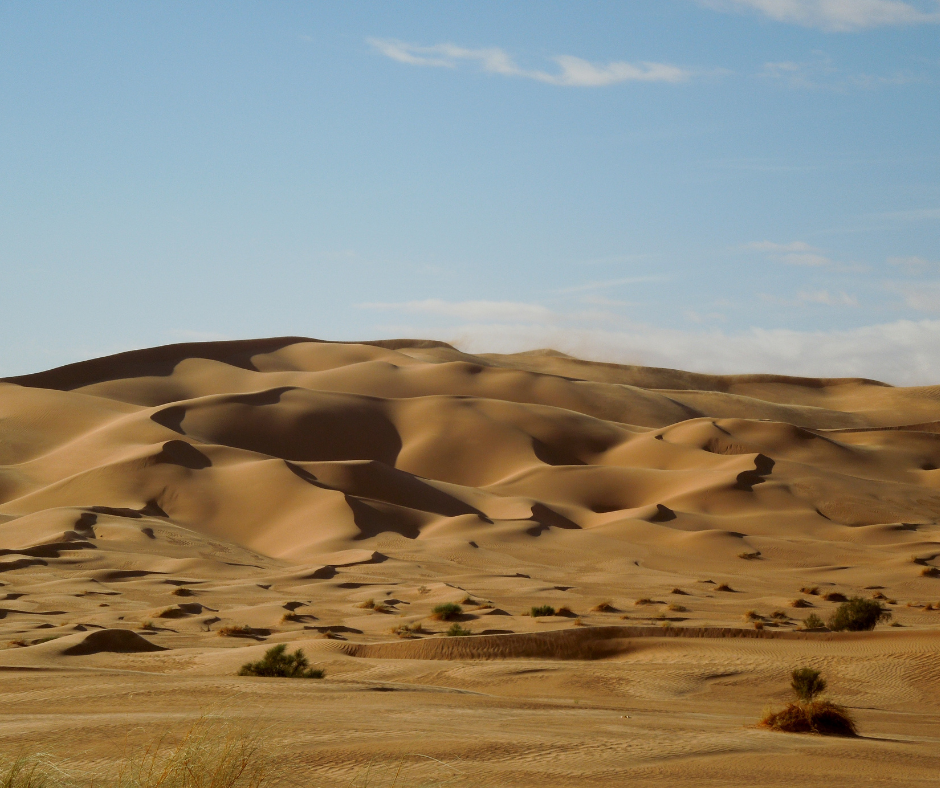
Go slowly, keep your breathing steady and stop often. The town gets smaller below you each time you look back.
From the top you see in every direction: dunes running away to the east, and on the other side the palm grove of the Zousfana valley, with the ksar and the rocky hills behind it.
In the first hour of light the sand turns from pale yellow to orange. Bring a warm layer for the wait, because it's cold on the crest before sunrise in winter.
Walking Through the Old Ksar
Back down, walk over to the old ksar, the fortified village of earth and stone on the bank of the Zousfana, under the rocky hills. It is usually dated to the 11th century, and it has been a classified national monument since 1999. Its walls kept out raiders, and its layout kept out the heat.
The narrow alleys are partly roofed over, which keeps them shaded and cooler in the hottest months.
Look at the ceilings: palm trunks and palm fronds laid across thick earth walls. There are about 160 houses inside, reached through three main gates, and the alleys twist enough that you'll lose your bearings for a while. That's part of the fun.
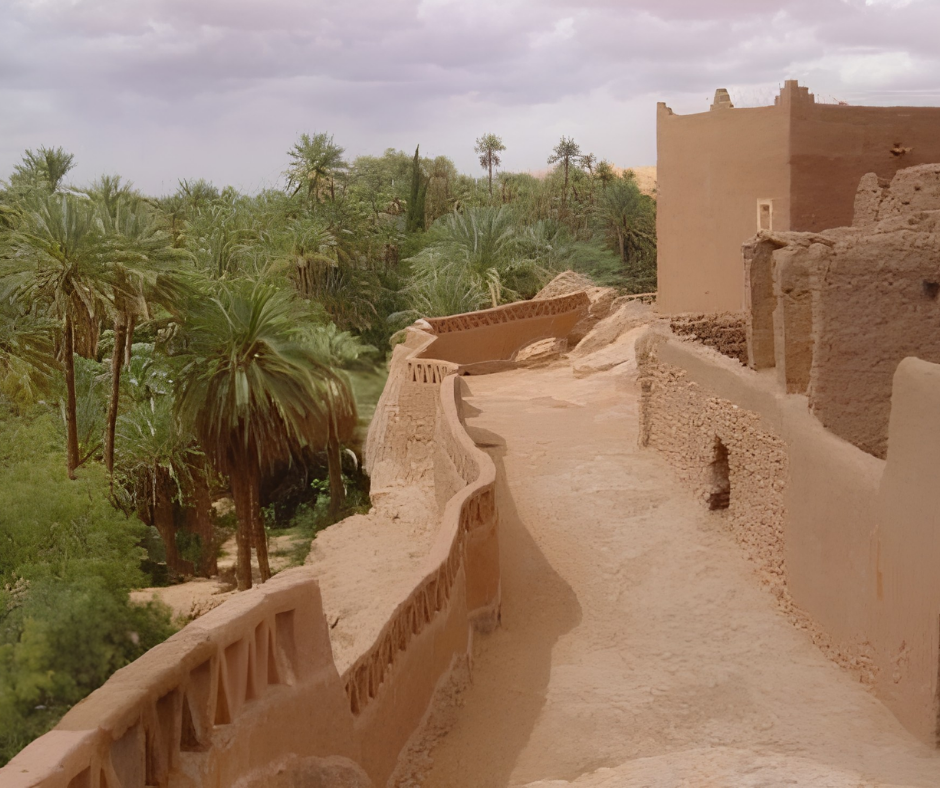
Most families moved out to newer houses decades ago, and floods in 2008 and 2014 brought down many of the empty ones. Restoration has been patchy, so expect collapsed sections next to repaired ones, and don't climb on crumbling walls.
A few residents have turned their old houses into guesthouses, workshops and craft shops; a 2018 TSA report counted about ten guesthouses inside the ksar. Keep your voice down in the lived-in lanes and ask before stepping through an open door.
If someone invites you in for tea, it's fine to accept. If you like this kind of earth architecture, the fortified towns of the M'Zab Valley are bigger and still fully lived in, and Ghardaïa, the largest of them, makes a good base.
Djebel Baroun and the palm grove
The rocky ridge of Djebel Baroun closes the oasis on the side opposite the dunes. A short, steep walk from the village takes you up to the ruins of an old stone settlement on its heights, with a view over the ksar, the palm grove and the first dunes. Allow about two hours, and go early or late in the day.
Below it, the palm grove runs for about 20 km along the Zousfana, with walled gardens and a string of smaller ksour. Walk part of it with a local guide, who can show you how the gardens are watered and which plots are still farmed.
Taghit in history
The ksar is usually dated to the 11th century. In August 1903 it was the scene of the siege of Taghit: for four days, from 17 to 20 August, several thousand fighters from the Guir and the Tafilalet attacked the French military post here, which held out until they withdrew.
Rock Art and Desert Activities Around Taghit
The Prehistoric Rock Carvings
The rock art around Taghit is thousands of years older than the ksar. The best-known engravings are at Zaouia Tahtania, about 18 km south of town, and at Barrebi; you need a car to reach both.
They are Neolithic, cut into dark sandstone when this part of the Sahara was wooded savanna. You can make out elephants, giraffes, antelope, gazelles, ostriches and cattle, along with human figures, and at Barrebi horses and camels from later periods.
Most panels have no signs or visitor facilities, and some have been damaged: the Algerian press has reported graffiti and serious degradation at the Taghit sites.
The panels are scattered and easy to miss, so take a local guide who knows where the clearest ones are. A guide also keeps you off the engraved surfaces, which are easy to step on without noticing.
Don't touch the carvings or brush the dust out of the grooves: skin oils and rubbing wear down the surface. Leave flints and pottery fragments where you find them.
Sandboarding Down the Sahara Dunes
For something less contemplative, sandboarding is the easy afternoon option. Guesthouses and guides in Taghit can usually find you a board, often a simple wooden one.
You don't need any snowboarding experience. Carry the board up a moderately steep dune, stand on it and go.
Wax the base well and top it up every few runs; dry sand is slow without it.
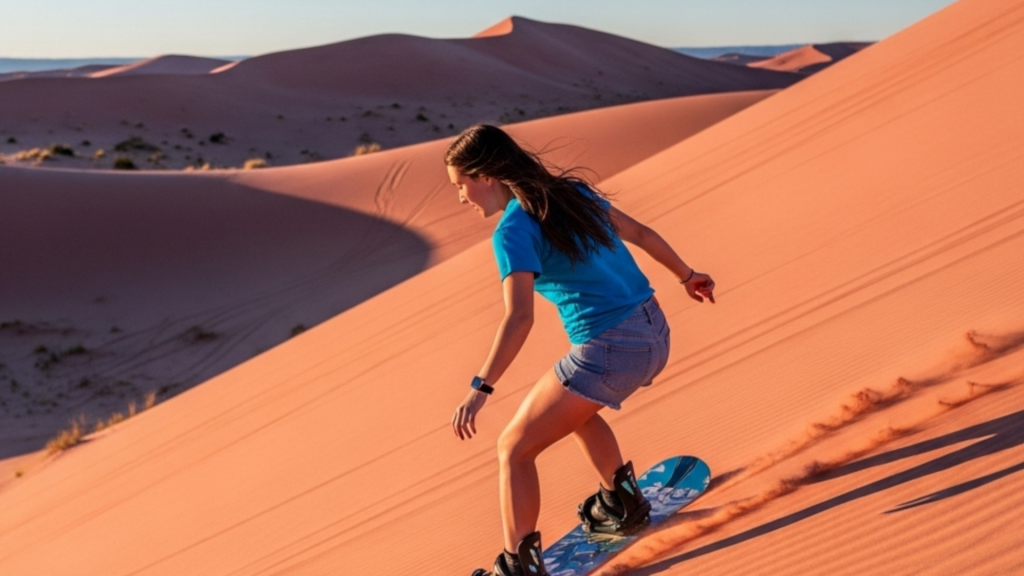
Keep your weight centered over the board and your knees slightly bent; the ride starts slow and picks up on the steeper sections.
You will fall a few times, and the sand is soft. Wear closed shoes, though: the sand rubs bare feet raw and gets hot by late morning.
Before each run, check the bottom of the slope for rocks, scrub and other people.
Spending a Night in a Desert Camp
If you have the time, spend at least one night out in the dunes. Away from the town lights the sky is properly dark, and on a moonless night you can see the Milky Way.
Camps around Taghit range from fixed sites with tents and real beds to simple bivouacs with blankets around a fire. Evenings usually start with tea.
The tea is strong green tea with mint and a lot of sugar, poured from high above the glass to raise a froth.
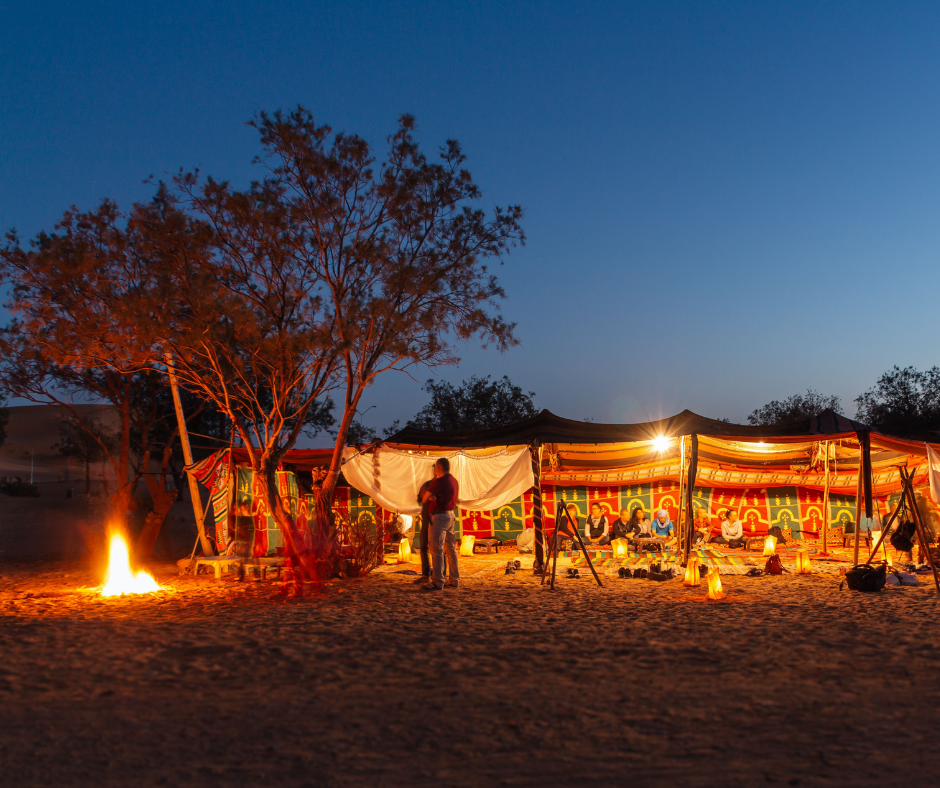
It usually comes in three rounds, each a little weaker than the last because the same leaves are reused.
After dinner there is often drumming and singing around the fire, depending on the camp and the crew. Step away from the fire for a few minutes and the quiet is total.
Sand loses its heat quickly after sunset, and winter nights in the dunes can drop close to freezing, so bring a warm sleeping bag or check that the camp provides heavy blankets.
Where to stay in Taghit
Taghit is small, and the choice comes down to four kinds of place. Book ahead for the end-of-year holidays and the date festival.
| Where | Type | Location | Best for |
|---|---|---|---|
| Guesthouses in the old ksar | Restored earth houses, family-run | Inside the ksar | Atmosphere and home cooking |
| Hotel Taghit Saoura | Hotel | Near the ksar, the palm grove and the dunes | Comfort in town |
| Bladi Palace | Hotel | At the foot of the dunes | A proper bed next to the sand |
| Fixed desert camps | Camp | By the dunes | A night in the desert |
Ask if your guesthouse serves dinner: it is usually the easiest way to eat well in a town this small.
Two or three days in Taghit
Day 1: Arrive from Béchar, walk the old ksar in the afternoon and climb the Great Dune for sunset.
Day 2: Sunrise from the dune, then drive out to the engravings at Zaouia Tahtania and Barrebi with a guide. Sandboard in the late afternoon and spend the night in a desert camp.
Day 3: The palm grove and Djebel Baroun in the morning, then head back to Béchar, or continue about 150 km south to Béni Abbès and on toward Timimoun.
What to Pack and Local Etiquette
Packing the Right Gear for the Sahara
Pack for strong sun, blowing sand and cold nights. In the day, loose, light-colored cotton or linen that covers your arms and legs works best, and from November to February you'll want a fleece and a warm jacket for the evenings.
Bring or buy a long cotton scarf, the chèche. Wrapped around your head it keeps off the sun, pulled over your face it keeps out sand, and in the evening it's an extra layer.
Sturdy closed shoes with good grip are worth packing for the rocky hills and the walk out to the engravings.
A headlamp helps in the ksar's dark alleys and around camp after dark.
Do not forget to pack strong moisturizing eye drops and heavy lip balm, as the arid desert air will rapidly dry out your face.
Respecting Local Customs in the Saoura Valley
Taghit is a small, conservative town, and how you dress matters more here than in Algiers. Covering up is the easiest way to show respect.
Both men and women should wear clothing that covers their shoulders and extends past their knees while walking through the town center or visiting the palm groves.
Ask before you photograph anyone, and don't photograph police, gendarmes or checkpoints at all.
Women and older people in particular often prefer not to be photographed, and children shouldn't be photographed without a parent's OK. If someone says no, smile, thank them and put the camera away.
A few words of Arabic go a long way. Greet shopkeepers and guides with "as-salamu alaykum" (peace be upon you) and thank them with "shukran".
People in Taghit are used to visitors, and a greeting and a bit of patience often lead to an invitation for tea. For a first desert trip we'd allow two or three nights: enough for the dune, the ksar and the engravings. We can arrange the pickup at Béchar airport, a guide for the rock carvings and a night in the dunes, plus the visa on arrival through a licensed partner agency; just let us know your dates.
What people ask us about Taghit
How far is Taghit from Algiers?
Roughly 1,000 km by road, which is why nearly everyone flies to Béchar and covers the last 95 km by car.
How hard is the climb up the Great Dune?
Harder than its height suggests. The dune is about 190 m, among the tallest of the Grand Erg Occidental, and loose sand doubles the effort; follow the ridge lines, where the sand is firmer, and start an hour before dawn if you want to be on top for sunrise.
Is one night in Taghit enough?
Not really. Two or three nights give you sunrise and sunset on the dune, the ksar, a half-day for the rock engravings with a guide and a night in a desert camp. With a fourth day, continue south to Béni Abbès, about 150 km away.
How old are the Taghit rock carvings?
Several thousand years: they are Neolithic, from when this part of the Sahara was savanna, and the main sites, Zaouia Tahtania (about 18 km south) and Barrebi, are both reached by car.
Is there anything to do after dark?
Not much in town, which is the point. Spend an evening in a dune camp with tea, music around the fire and a dark sky full of stars; on moonless nights the Milky Way is clear. In town, a long guesthouse dinner is the main event.


