
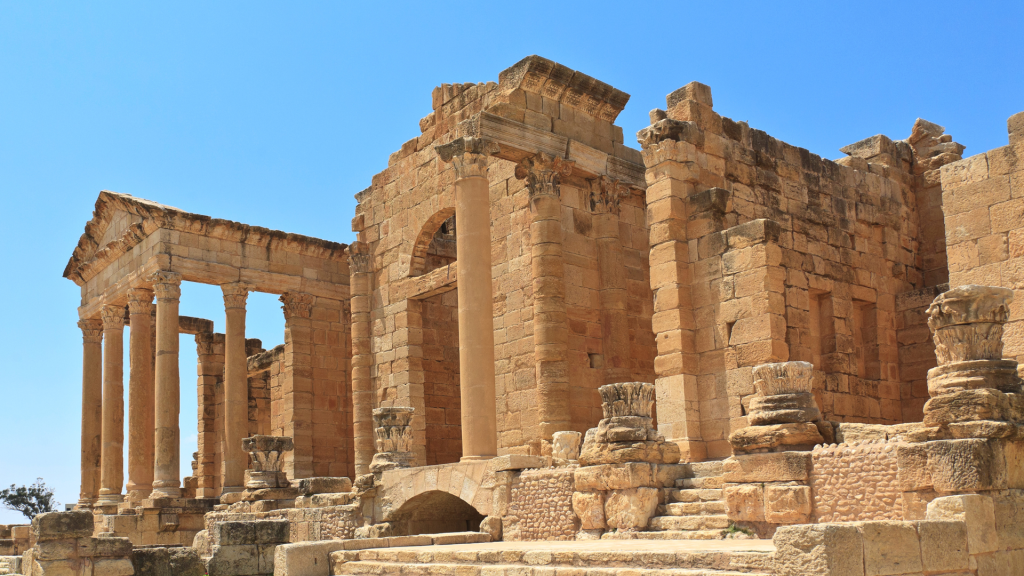

Tunisia contains some of the best-preserved and most extensive Roman archaeological sites in the world. While many travelers focus on Italy, Tunisia's ruins offer a less crowded and arguably more complete picture of Roman provincial life.
This guide, made by the WildyNess Team, provides a practical framework for exploring these sites, focusing on logistics, context, and the specific details that make each location worth your time.
Understanding the Context: Rome in Africa
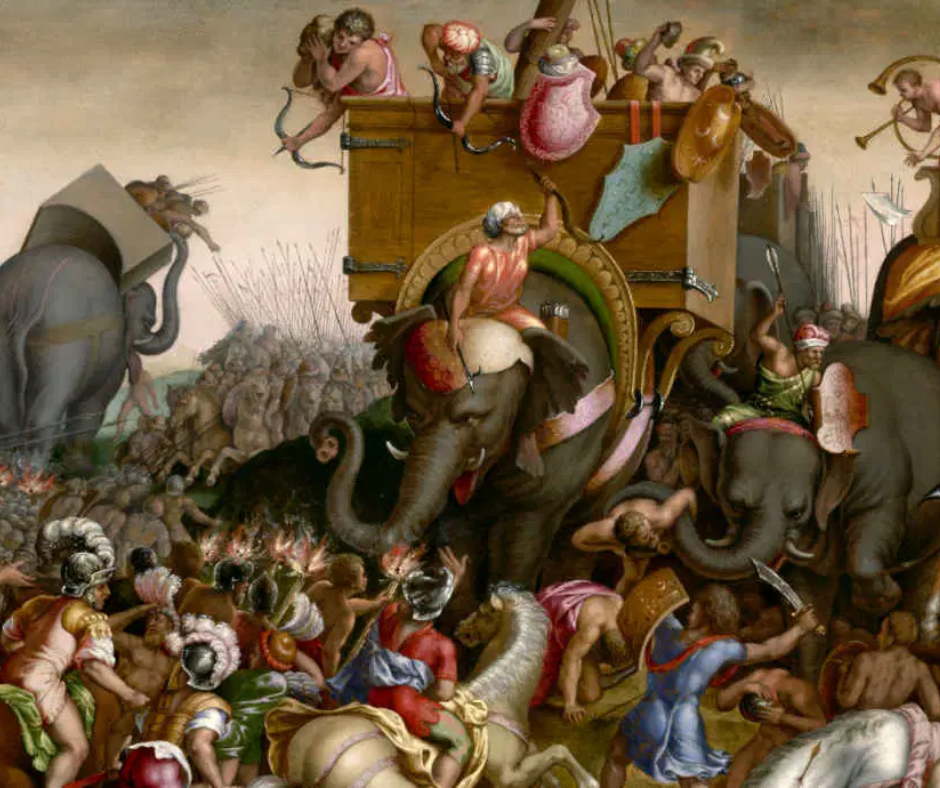
To appreciate the scale of what you are seeing, it is important to understand why Tunisia is so saturated with Roman history. After defeating Carthage in the Punic Wars (concluding in 146 BC), Rome established its first African province, Africa Proconsularis, with its capital at Carthage.
This region became the "breadbasket of Rome," supplying the empire with a vast portion of its grain, olive oil, and other goods. This immense agricultural wealth funded the construction of the massive public buildings, theaters, baths, and private villas you see today. The cities of Thugga (Dougga), Sufetula (Sbeitla), and Thysdrus (El Jem) were not minor outposts; they were wealthy, critical hubs of the Roman economy.
What remains today is a direct result of that prosperity. Unlike in Rome, where later civilizations built directly on top of ancient foundations, many of these Tunisian cities were simply abandoned to the desert sands and left relatively untouched for centuries, preserving them in remarkable condition.
The Core Sites: A Geographical Guide
The Roman sites are distributed throughout the country. They can be grouped by geography, with some easily accessible from Tunis and others requiring dedicated overnight stops.
The Tunis Hub: Carthage and the Bardo Museum
Many visitors base themselves in Tunis or the nearby coastal suburbs of La Marsa or Sidi Bou Said. From here, you can access the most famous site, Carthage, and the museum that holds its treasures.
Carthage
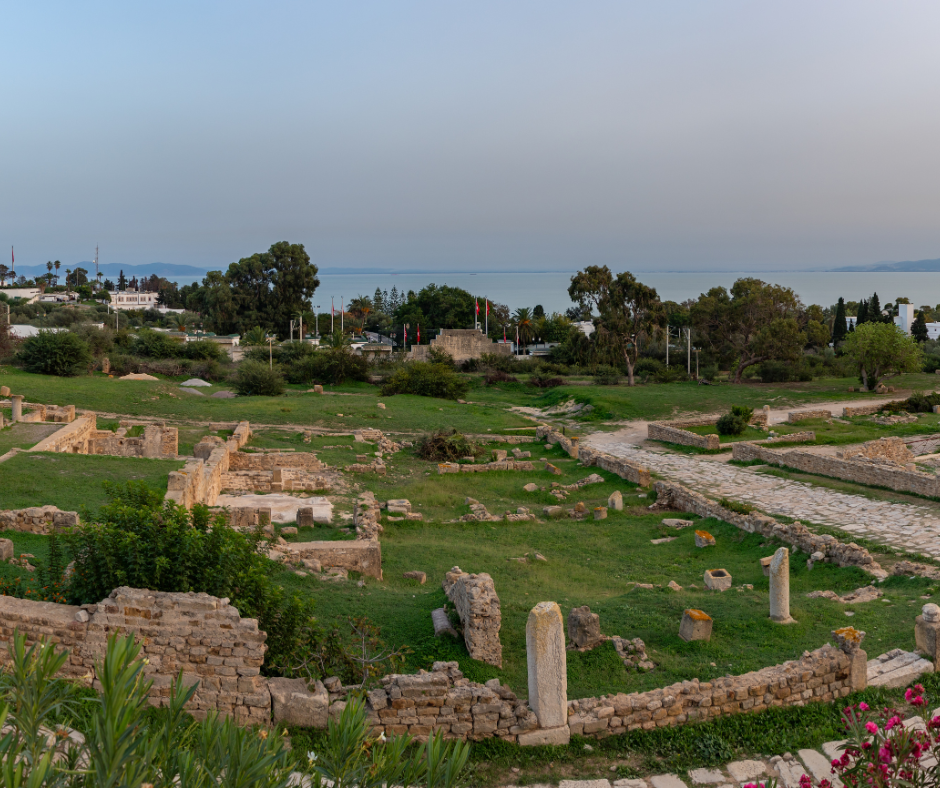
Do not expect a single, intact Pompeii-style city. Carthage is a sprawling, affluent suburb of Tunis, and the archaeological sites are spread across it in several distinct parks. To visit effectively, you must travel between these component sites by car or taxi.
-
The Antonine Baths: This is the most substantial ruin in Carthage. As the largest Roman baths outside of Rome, this complex gives a tangible sense of the city's scale. The seaside location is exceptional, and you can explore the vast, collapsed foundation levels.
-
Byrsa Hill: This was the heart of Punic (pre-Roman) Carthage and later the site of the Roman forum. The Carthage National Museum (check for reopening status, as it has been under renovation) is located here, offering context on the city's Punic origins.
-
Roman Villas: This park showcases the foundations of luxurious Roman homes, many with in-situ floor mosaics, set on a hillside overlooking the sea.
-
Practical Tip: A single ticket covers entry to all the disparate Carthage sites. Plan on needing at least a half-day and budget for taxi rides between the main locations.
The Bardo National Museum
Located in the Bardo suburb of Tunis, this museum is non-negotiable for anyone interested in Roman history. While the ruins are impressive, most of the finest mosaics were moved indoors for preservation. The Bardo houses the largest and most important collection of Roman mosaics in the world.
Here, you will see the intricate, art-like mosaics recovered from Dougga, Uthina, El Jem, and others. Seeing the "Virgil Mosaic" or the "Ulysses and the Sirens" mosaic provides the artistic context for the stone foundations you will explore elsewhere.
Easy Day Trips from Tunis: Uthina, Thuburbo Majus & Zaghouan
Beyond Carthage, several major sites are easily managed as a half-day or full-day trip from the capital.
-
Uthina (Oudna): Only 30 km south of Tunis, Uthina is often overlooked but is one of the region's most rewarding sites. It features a large, well-preserved amphitheater (partially built into a hill), a Capitol (temple), and extensive remains of baths and villas. You can often explore its vast cisterns and arched foundations with few other visitors.
-
Thuburbo Majus: Located further southwest, this site can be combined with Uthina. It was a prosperous Roman-Berber town. Key sights include the Forum, flanked by the Capitol and the Temple of Mercury. The "Palaestra of the Petronii" (a sports ground) is also notable for its size.
-
Zaghouan Aqueduct: While in the area, you can visit the source of Roman Carthage's water: the Zaghouan Water Temple. From here, you can see segments of the massive aqueduct (an engineering marvel that stretched over 132 km) that carried water to the Antonine Baths.
The Interior Must-Sees: Dougga (Thugga)
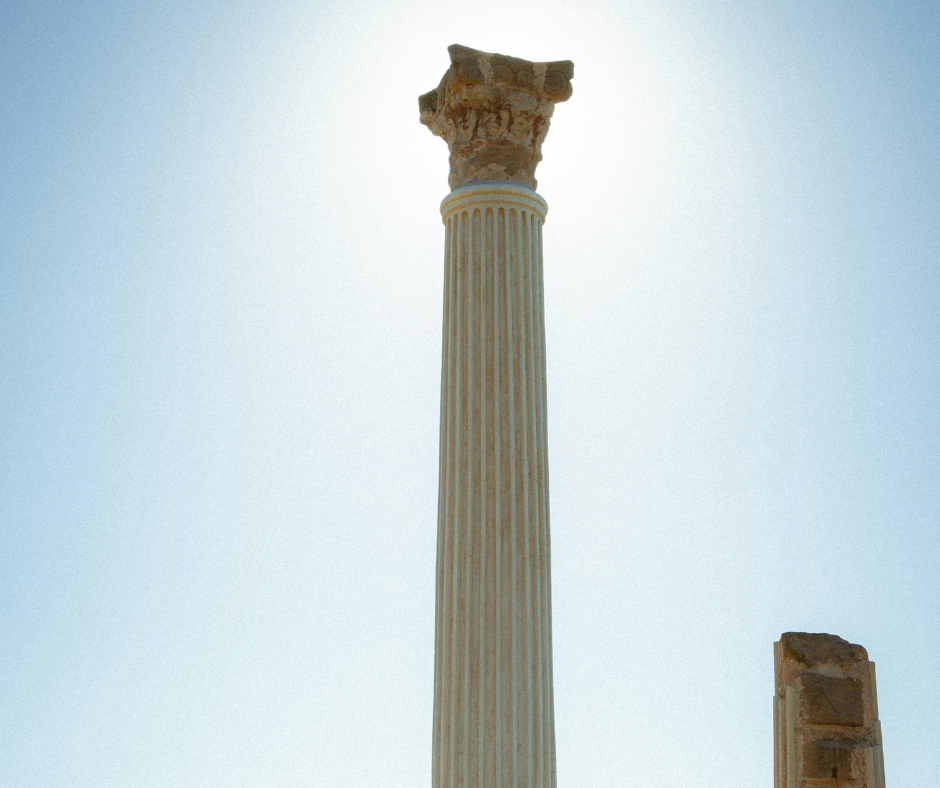
If you only visit one Roman city in Tunisia, make it Dougga. Located about 2.5 hours southwest of Tunis, this UNESCO World Heritage site is arguably the best-preserved Roman town in North Africa.
Its preservation is due to its hilltop location, which protected it from being built over. The site is vast, and you should allocate a minimum of 2-3 hours to explore.
-
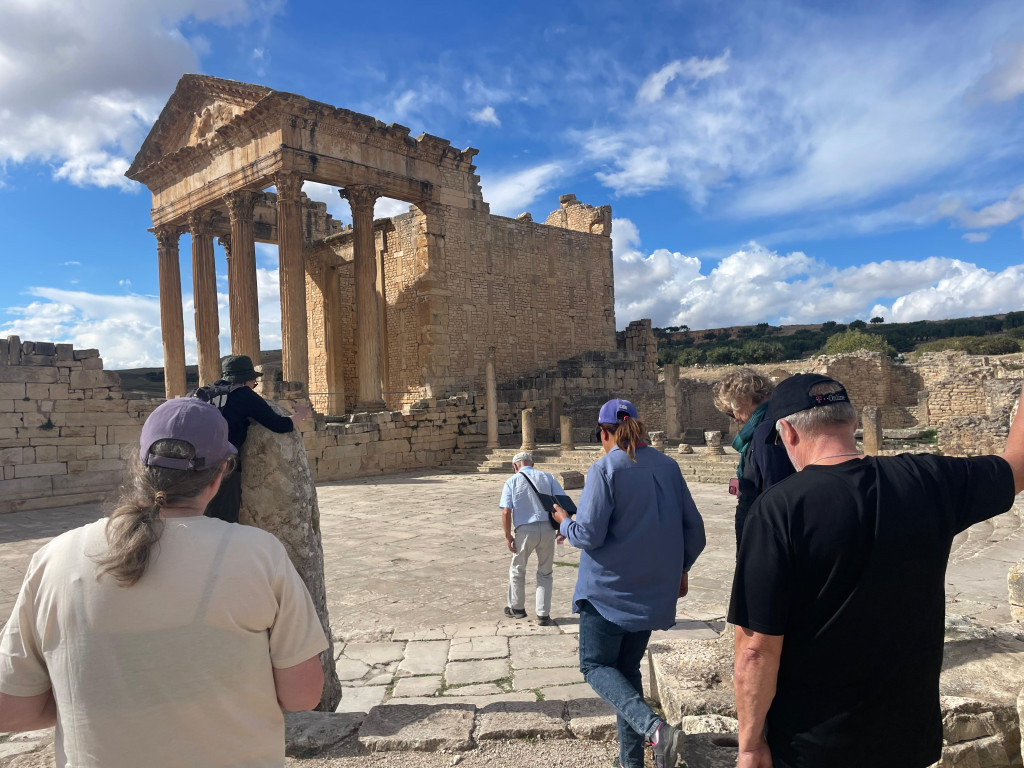
The Capitol: This is the site's icon. Dedicated to Jupiter, Juno, and Minerva, this 2nd-century AD temple is in exceptional condition, with its portico and pediment largely intact.
-
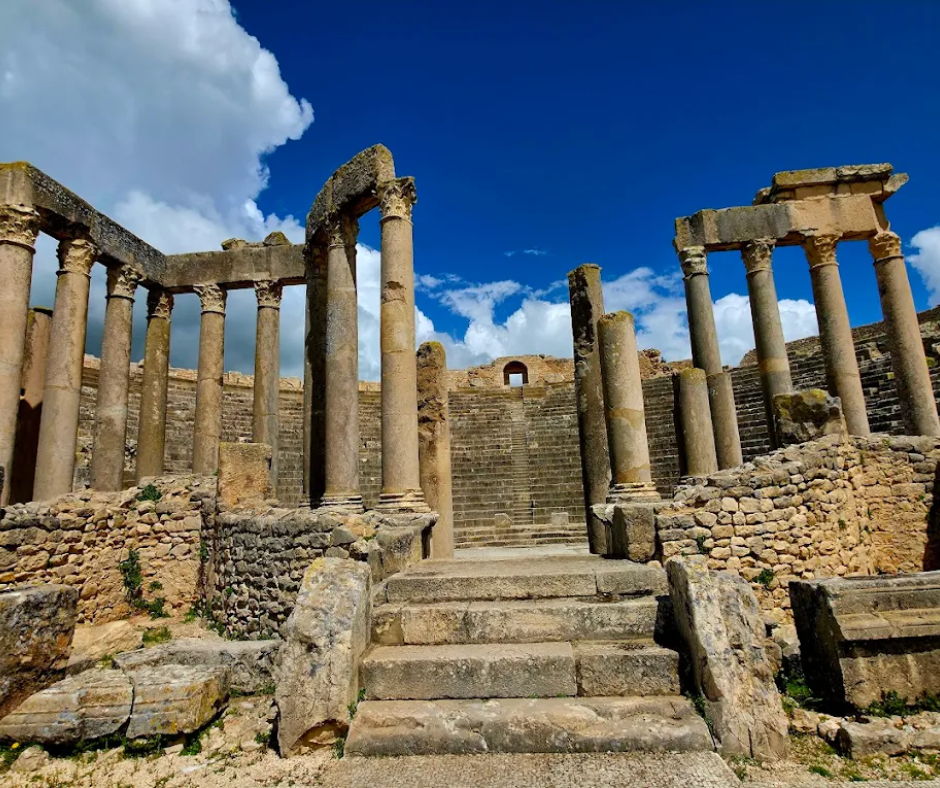
The Theater: Built around 168 AD, this 3,500-seat theater is so well-preserved it is still used for performances during the Dougga Festival.
-
The Mausoleum of Ateban: A rare and important example of Numidian (pre-Roman) architecture, this 2nd-century BC tomb highlights the site's deep Punic and Berber roots.
-
Other Structures: The site is a complete city. You can wander through the Licinian Baths, the Trifolium Villa (a former brothel), public latrines, and along paved Roman roads.
The Unique Wonder: Bulla Regia
Near the border with Algeria, Bulla Regia offers a feature found nowhere else: subterranean villas. While the city has a typical forum, temples, and baths above ground, its elite citizens engineered a brilliant solution to the extreme summer heat.
They built their luxurious primary living quarters underground. You can descend stone staircases into multi-room villas complete with central courtyards (acting as light wells) and floors covered in stunning in-situ mosaics. The House of the Hunt and the House of Amphitrite are two of the most famous examples. It is a unique experience to see this Roman domestic architecture preserved in its original form and location.
The Central Plains: Sbeitla (Sufetula)
Sbeitla, located in central Tunisia, represents the intersection of Roman and early Christian (Byzantine) history. While it has all the standard features of a Roman city (forum, baths, theater), its international fame comes from two key features:
-
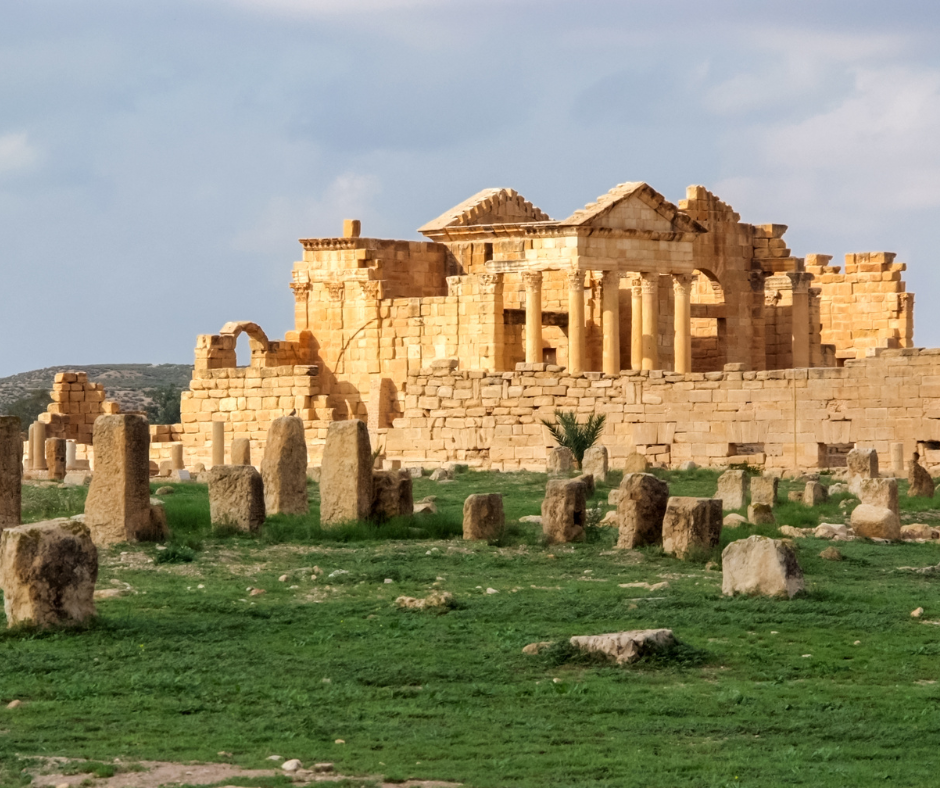
The Capitol: Unlike Dougga's single temple, Sbeitla's forum is anchored by three distinct, separate temples standing side-by-side, dedicated to the Capitoline Triad (Jupiter, Juno, Minerva). This unique layout is visually striking.
-
Byzantine Churches: Sbeitla was a major Christian center. The site contains the ruins of several large basilicas with intricate floor mosaics (many religious) and large, cross-shaped baptismal fonts.
The Colossus of the South: El Jem (Thysdrus)
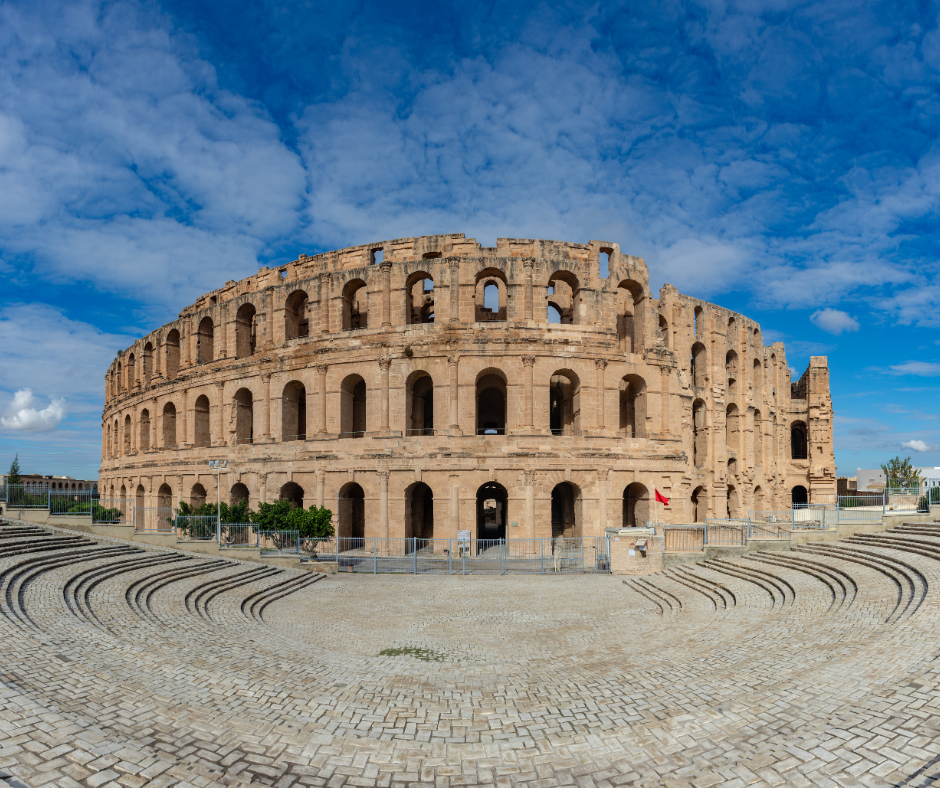
The Amphitheater of El Jem is the single most imposing Roman structure in all of Africa. Built in the 3rd century AD, it rivaled the Colosseum in Rome and could hold an estimated 35,000 spectators.
-
The Amphitheater: Its scale is staggering. Unlike the Colosseum, much of its three-tiered facade remains intact, and you can explore it thoroughly. Be sure to:
-
Descend into the Hypogeum: Go beneath the arena floor into the two long, subterranean passages. This is where gladiators, animals, and stage machinery were held before being lifted into the arena.
-
Climb the Tiers: Ascend to the upper levels for a commanding view of the surrounding town and the arena floor.
-
-
El Jem Museum: Do not skip the nearby archaeological museum. It is built on the site of a Roman villa and contains some of the most spectacular mosaics in Tunisia, including "The Lion Hunt" and "The Hare and the Grapes." The museum ticket is often included with the amphitheater entrance.
Planning Your Roman Tunisia Itinerary
Logistics are the main challenge in seeing these sites, as they are spread out. A rental car is the most efficient option, but it's not the only one.
Logistical Guide: Transportation Between Sites
-
Rental Car (Self-Drive): This offers the most flexibility. You can rent a car from Tunis-Carthage Airport (TUN).
-
Pros: You move on your own schedule, can combine sites easily (e.S., Dougga and Bulla Regia), and can stop for photos.
-
Cons: Driving in Tunis, Sousse, or Sfax is aggressive and not recommended for the nervous. Signage can be inconsistent (use GPS/Google Maps offline). Police checkpoints are common; they are routine and usually just require you to slow down or stop (keep your passport and rental papers handy).
-
-
Private Driver: This is the most comfortable, stress-free option. You can hire a driver and car for a daily rate.
-
Pros: No navigation or driving stress. Your driver knows the locations and best routes and can wait for you at each site.
-
Cons: This is the most expensive option.
-
-
Louages (Shared Taxis): This is the local method and the most adventurous. Louages are shared, long-distance taxis that run fixed routes between towns.
-
Pros: Very inexpensive. An authentic local experience.
-
Cons: Requires time and flexibility. You would take a louage to the modern town (e.g., El Jem, Sbeitla, Dougga) and then hire a local taxi (petit taxi) to take you to the ruins, wait, and bring you back. This is difficult for sites like Dougga, which are far from the main town.
-
Tickets, Opening Hours, and Site Guides
-
Opening Hours: Most archaeological sites in Tunisia operate on seasonal hours. Generally, they open around 8:00 AM and close at 5:00 PM in winter and 7:00 PM in summer. Hours are often reduced during Ramadan. Always check the latest hours before setting out.
-
Tickets: Many sites (like Carthage) offer a single ticket that covers all component parts. The Tunisian Ministry of Culture and the "Agence de Mise en Valeur du Patrimoine" (AMVPPC) occasionally offer multi-day, multi-site passes, which can be cost-effective. Ask at the ticket counter of the first major site you visit (like Carthage or the Bardo).
-
Hiring On-Site Guides: At the entrance to major sites (Dougga, El Jem, Carthage), you will find official, badged guides.
-
Pro: A guide is invaluable at a complex site like Dougga to provide context and point out details you would otherwise miss.
-
Con: The quality can vary.
-
Tip: Clearly agree on the price and the duration of the tour (in English or French) before you start. Prices are often negotiable.
-
What to Wear and Pack for the Ruins
-
Sturdy Footwear: This is non-negotiable. You will be walking for hours on uneven, 2,000-year-old Roman cobblestones, loose gravel, and up steep theater steps. Closed-toe walking shoes or trail runners are essential.
-
Sun Protection: Most sites are completely exposed. There is very little shade.
-
A wide-brimmed hat is critical.
-
High-SPF sunscreen is a must.
-
A light, long-sleeved shirt (e.g., linen) is more effective than a t-shirt for protecting your skin during a long day of exploration.
-
-
Water: Bring more than you think you will need, especially from May to September. Many sites have no (or very overpriced) concessions inside.
-
Modesty: While Tunisia is a Muslim country, strict dress codes are not enforced at archaeological sites. However, when visiting the small towns near the sites, it is respectful to dress modestly (covering shoulders and knees).
When to Go: The Best Seasons for Exploring
The season will dictate the quality of your experience.
-
Best: Spring (March - May) & Autumn (September - November): This is the ideal time. The weather is warm and pleasant, and in spring, the ruins are often covered in wildflowers.
-
Difficult: Summer (June - August): The inland heat is brutal. Temperatures at sites like Dougga or Sbeitla can easily exceed 40°C (104°F). If you must travel in summer, you must visit sites the moment they open (8:00 AM) and be finished by 11:00 AM.
-
Good: Winter (December - February): This is an excellent time for exploration. Crowds are minimal, and the weather is cool. The only downside is the higher chance of rain and shorter daylight hours.
Beyond the Stones: The Roman Legacy in Modern Tunisia
The Roman influence did not end when the empire fell. It is woven into the fabric of modern Tunisia.
The Living Legacy: Language, Food, and Engineering
You will see the Roman legacy everywhere. The most obvious is in agriculture. Rome industrialized olive oil production here, and today, Tunisia remains one of the world's largest producers of olive oil.
The Roman focus on water management also endured. The Zaghouan Aqueduct, which fed Carthage, was a monumental feat of engineering, and its principles are still respected. In language, many Tunisian Arabic and Berber words for plants and agricultural terms have Latin roots.
Preserving the Past: Challenges and Triumphs
Tunisia has done an admirable job of protecting these sites, seven of which are designated as UNESCO World Heritage. This status helps fund conservation and research, protecting the ruins from development and decay.
When you visit, you are directly supporting the preservation of this shared human history. By hiring local guides and respecting the sites (never climbing on fragile structures or touching mosaics), you become part of the effort to ensure these places survive for another 2,000 years.
Ready for Your Own Adventure in Tunisia?
Let us take the stress out of planning. We're a team of travel experts who specialize in crafting personalized itineraries that combine authentic local encounters with breathtaking landscapes, all with seamless logistics.
Let us handle the planning and coordination so you can simply enjoy a memorable trip.
Share with us your ideal trip, budget, and preferences.
You'll receive a fully personalized travel plan, completely free of charge, after a short call to understand better your preferences.
Share Your Trip Idea With WildyNess
Curious what other travelers have to say? WildyNess reviews on Google


