

Stepping into a deep desert landscape where ancient customs dictate daily life can feel intimidating if you lack a clear blueprint for your journey.
That is why our team at WildyNess created this guide to ensure you navigate the architectural wonders and precise cultural codes of this northern Saharan oasis with absolute confidence.
Understanding the Pentapolis of Mzab Valley Algeria
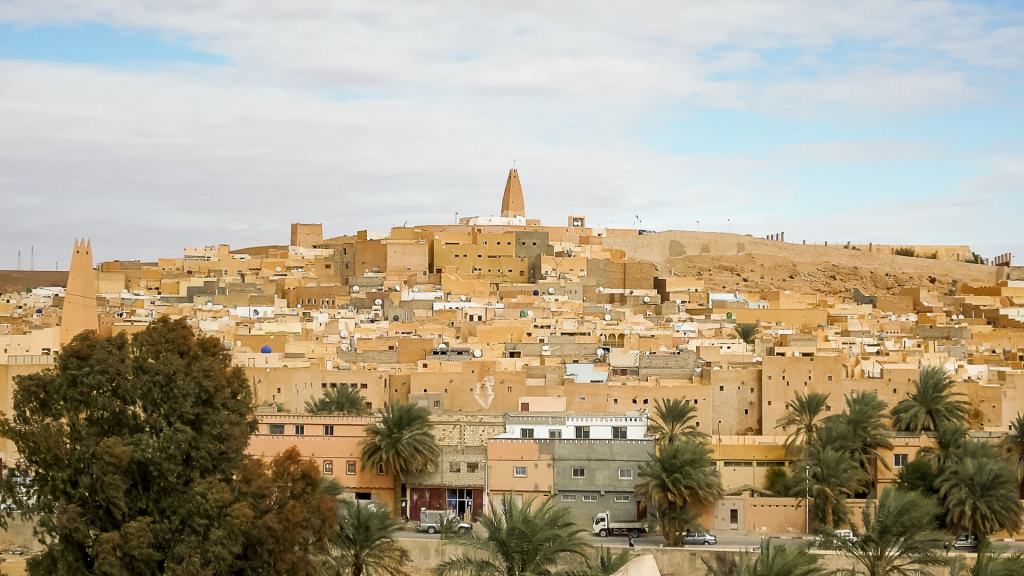
The Mzab Valley consists of a historic pentapolis, a cluster of five fortified hilltop towns founded during the eleventh century along the Wadi Mzab bed. These settlements were constructed by the Mozabites, an indigenous Imazighen community belonging to the Ibadi school of Islam, who sought a secure sanctuary in the hyper-arid desert environment.
The resulting urban centers present a masterclass in communal isolation, functional engineering, and preservation of religious traditions that remain fully intact today.
The Historical Foundations of the Five Ksour
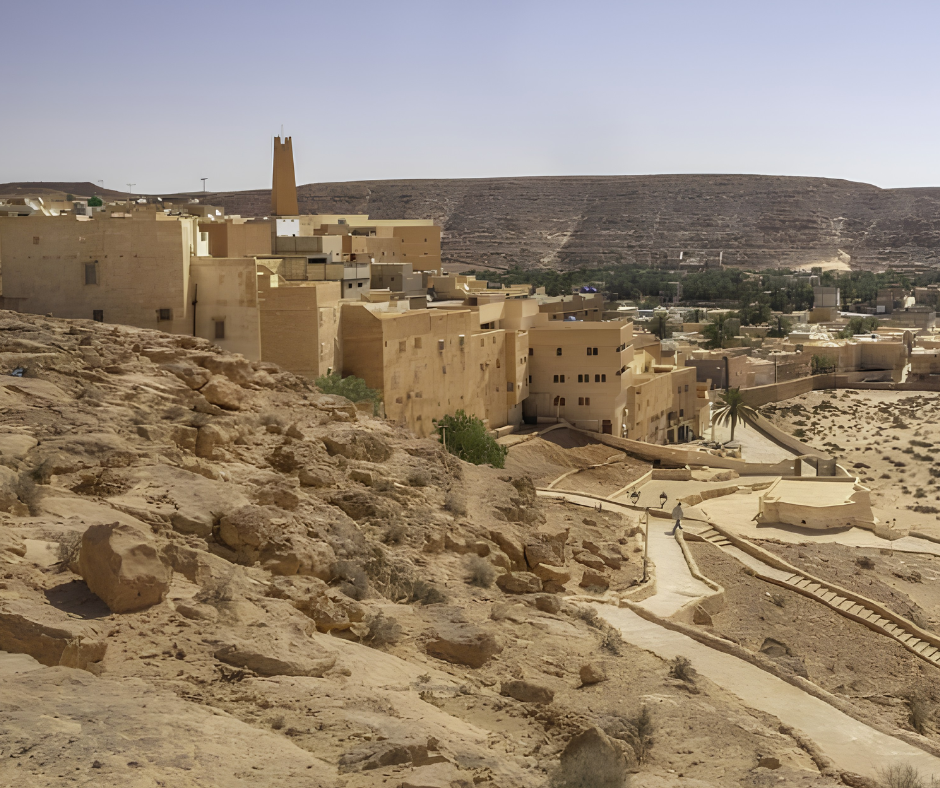
Every town within the pentapolis is known locally as a ksar, which refers to a fortified desert village built from mudbrick, gypsum, and palm limestone. The oldest settlement is El Atteuf, established in the year 1012, which served as the architectural prototype for the rest of the valley.
Following its success, the communities founded Bou Noura, Melika, Beni Isguen, and finally Ghardaïa, which evolved into the commercial capital of the region. Each site was purposefully positioned along the rocky outcrops of the valley to protect agricultural lands while keeping watch over historic trans-Saharan caravan trade routes.
The Spiritual and Civil Organization of Ibadi Society
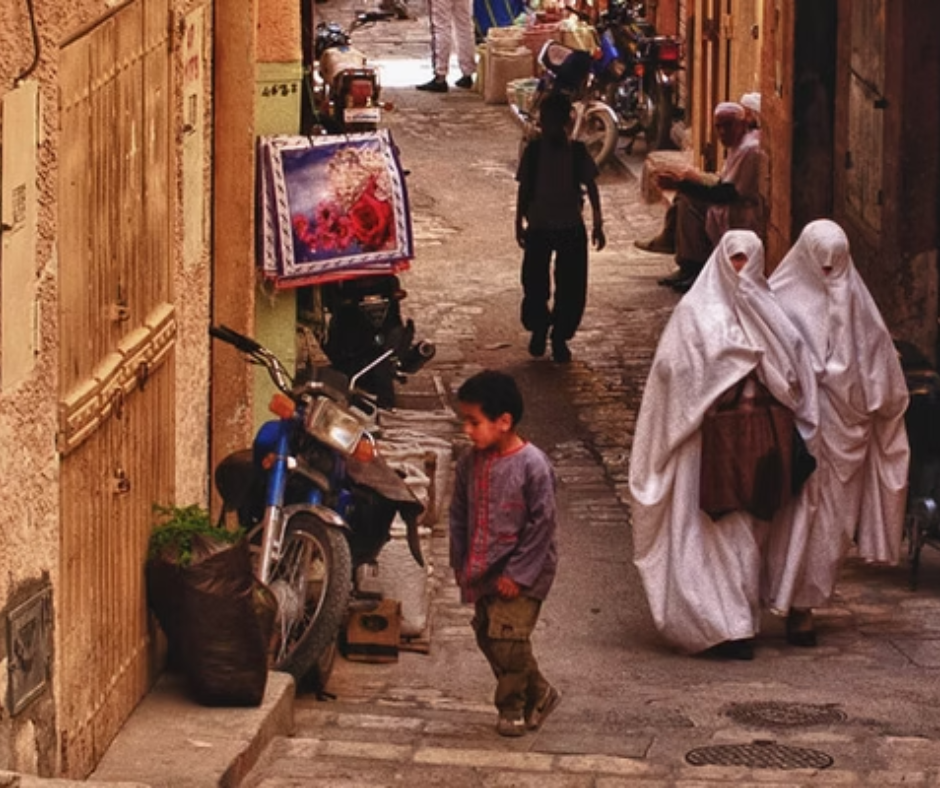
The social structure of the valley operates under an strict framework governed by a council of religious scholars known as the Halqa. This administrative body manages civic life, ensures wealth equality, and maintains the preservation of Mozabite traditions, including the distinctive local dress where married women wear the white houli cloth covering everything except a single eye.
Understanding this deep-rooted societal cohesion helps you appreciate why certain sectors of the towns remain private and why local customs are protected so fiercely from outside disruption.
The Architectural Blueprint of a Desert Fortress
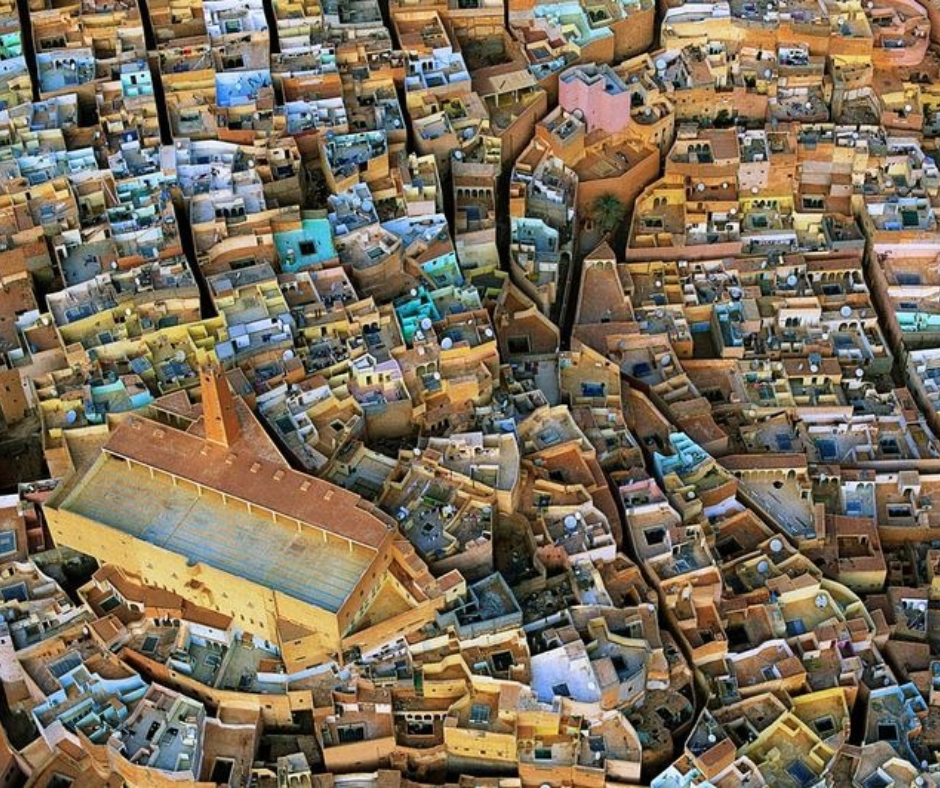
The spatial design of the valley serves a profound functional purpose where every residential structure, alleyway, and public space plays a role in defense and climate mitigation. By utilizing local resources like clay, straw, and palm trunks, the ancient builders created an ecosystem capable of withstanding the intense summer heat of the Sahara.
The Mosque as the Urban and Defensive Anchor
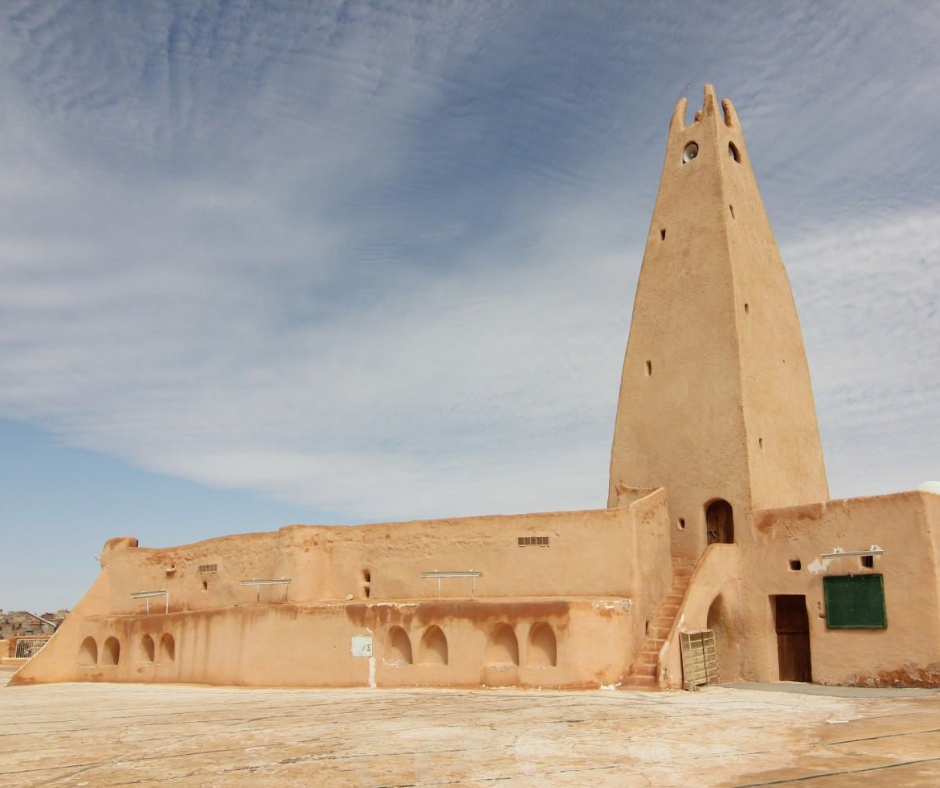
At the absolute crest of every hilltop town stands its monumental mosque, featuring a stark, tapering minaret that functions simultaneously as a prayer tower and a military watchtower. Unlike traditional Islamic architecture found in northern coastal cities, these structures completely lack ornate mosaics or expensive tilework, reflecting the ascetic values of Ibadi theology.
The thick mudbrick walls of the mosque serve as the final citadel of retreat during historical conflicts, and the entire urban grid of houses spirals downward from this central point in concentric rings.
Climate Control Through Close Quarter Urban Design
The residential streets cascading down from the mosques are deliberately narrow, winding, and flanked by high, windowless walls that block direct sunlight from reaching the pavement during peak afternoon hours. This dense configuration traps the cool night air within the pathways, creating a natural cooling effect throughout the morning.
Individual homes are constructed with an interior central courtyard that maximizes vertical ventilation, while the ground floors are designed without external-facing windows to protect family privacy and prevent desert dust storms from penetrating the living quarters.
Essential Logistics and Cultural Protocols for Visitors
Navigating the Mzab Valley Algeria requires strict adherence to local regulations that distinguish it from standard tourist destinations in North Africa. Because these towns are living religious communities rather than open-air museums, entry into the historic cores is structured around local accompaniment.
Navigating the Mandatory Local Guide System
You cannot enter the historic ksour of Ghardaïa, El Atteuf, or Beni Isguen as an independent wanderer. To pass through the gates, you must hire a certified local Mozabite guide at the entrance checkpoint of each respective town. These guides are members of the local community who ensure you do not inadvertently stumble into private residential lanes, interrupt local prayer times, or violate cultural spatial boundaries.
They provide vital context regarding the architectural markers, historical sieges, and neighborhood divisions that remain invisible to an unescorted traveler.
Photography Etiquette and Dress Requirements
Respecting personal privacy is paramount when walking through the narrow alleyways of the pentapolis. You must never point your camera toward local residents, particularly women, and you should always seek explicit permission from your guide before photographing storefronts or public squares.
Modest dress is non-negotiable for all travelers, meaning shoulders and knees must be fully covered, and loose-fitting clothing is highly recommended. In certain traditional towns like Beni Isguen, smoking, playing loud music, and consuming alcohol are completely forbidden within the historic perimeter.
Exploring the Engineering Wonders of the Oasis System
Beyond the fortified residential walls lies an extensive agricultural network that showcases the advanced hydrological intellect of the early Mozabite settlers. The persistence of these green spaces within a hyper-arid stone desert relies on an ancient infrastructure that captures and distributes every drop of seasonal rainwater.
The Traditional Subterranean Water Distribution Network
The palm groves of the valley are sustained by an intricate hydraulic system that redirects flash floods from the Wadi Mzab into underground tunnels, cisterns, and stone canals known as foggaras. This equitable water-sharing mechanism divides resources among family plots based on centuries-old mathematical calculations monitored by a dedicated water council.
When seasonal rains finally arrive, a series of stone dams and sluice gates open automatically to direct the torrent away from the residential hilltops and straight into the root systems of the date palms.
The Seasonal Migration to the Summer Palm Groves
During the scorching summer months when temperatures in the main towns regularly exceed forty-five degrees Celsius, the local population migrates en masse to their secondary residences located within the shade of the oases.
These summer homes are built with lighter materials and benefit from the microclimate generated by the dense canopy of date palms, pomegranate trees, and fig bushes. Walking through these groves with a guide allows you to see how the multi-tiered agricultural system provides shade for ground crops while producing some of the finest Deglet Nour dates in North Africa.
Authentic Commerce in the Traditional Souks
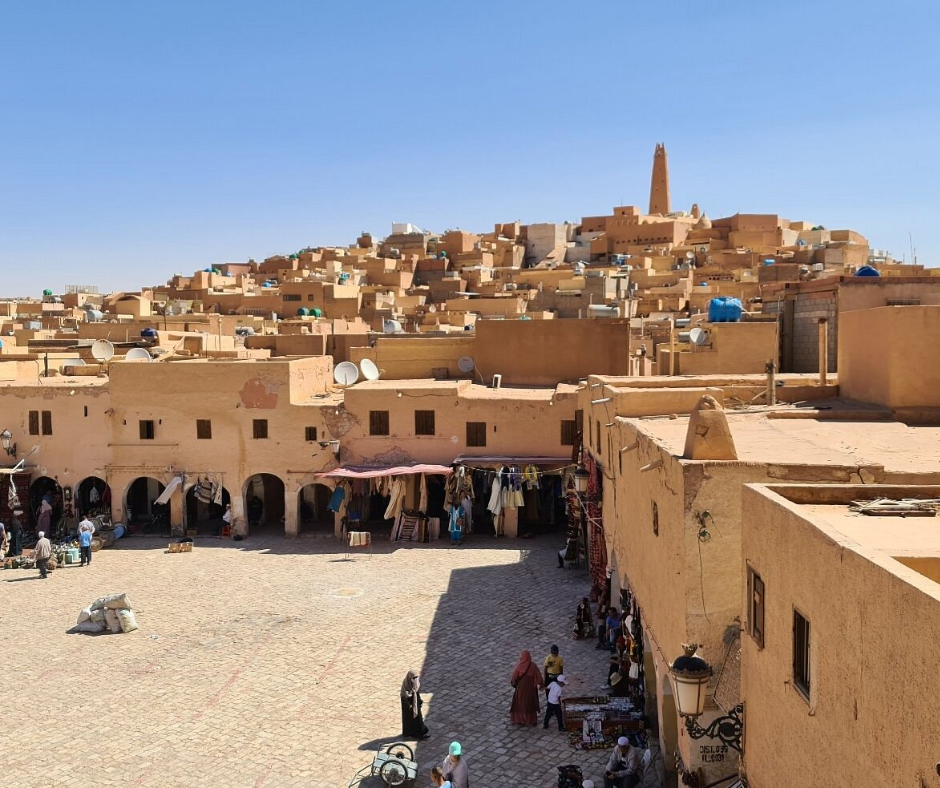
The central market squares of the valley, particularly the large rectangular plaza in Ghardaïa, have operated as vital trading hubs for centuries. Here, commerce is conducted with a quiet efficiency that avoids the aggressive sales tactics often encountered in larger continental medinas.
Sourcing Authentic Mozabite Textiles and Crafts
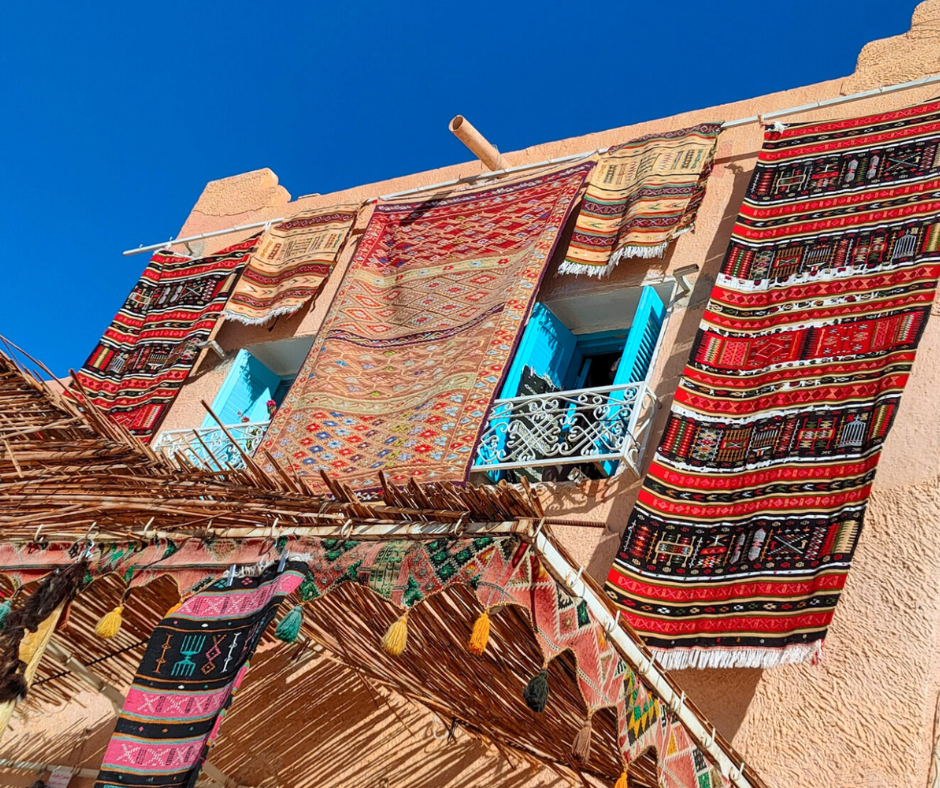
The markets of the Mzab are internationally famous for their distinctive hand-woven wool carpets, which feature bold geometric patterns, symbols of Ibadi identity, and natural vegetable dyes. When inspecting these textiles, you can identify authentic local workmanship by checking the density of the knots on the reverse side and discussing the symbolic meaning of the woven patterns with the merchant.
Aside from carpets, the souks offer high-quality leather goods, hand-hammered copper vessels, and traditional silver filigree jewelry crafted by local artisans who maintain workshops passed down through generations.
The Evening Auction Tradition of Beni Isguen
A unique cultural event occurs daily in the main market square of Beni Isguen during the late afternoon hours before the sunset prayer. The community gathers for the traditional auction, where residents bring household items, antique books, carpets, and copperware to be sold by a designated group of town criers.
The auctioneers walk in a circle through the seated crowd, calling out bids in a calm, orderly manner that forbids shouting or disruptive behavior. Visitors are permitted to observe this quiet spectacle from the periphery of the square provided they remain completely silent and refrain from taking photographs.
Desert Hospitality and Culinary Traditions
To fully absorb the culture of the Mzab Valley Algeria, you should experience the regional lifestyle through its distinct culinary preparations and residential spaces. The local hospitality reflects the survival principles of the desert, emphasizing sharing, conservation, and deep respect for the guest.
Staying in a Restored Architecture Guesthouse
Choosing a heritage accommodation located within the palm groves or on the edges of the ancient walls provides an immersive window into local daily life.
These properties are typically restored mudbrick structures that have been adapted to offer modern comforts while preserving traditional architecture features like central ventilation courtyards, exposed palm-trunk beams, and thick insulation walls.
Staying in these settings allows you to experience the natural nighttime cooling of the desert while enjoying direct access to the morning paths of the oasis.
Key Culinary Staples of the Mzab Region
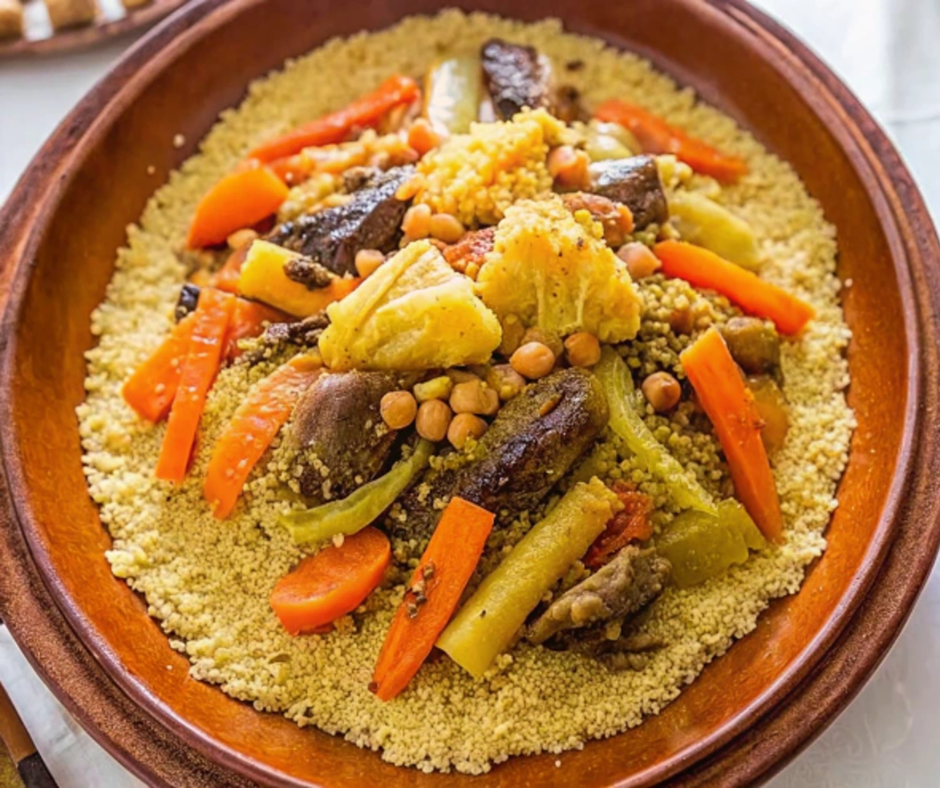
The gastronomy of the valley is hearty and practical, relying on grains, dried fruits, and locally sourced meats that could historically withstand desert storage. The regional variation of couscous features fine semolina grains steamed over a rich broth of pumpkin, turnips, and slow-cooked lamb, often flavored with a unique blend of Saharan desert herbs.
Another essential winter dish is berkoukes, a hand-rolled, thick pasta pearls simmered in a heavily spiced tomato broth concentrated with garlic, wild coriander, and dried dates. Every meal concludes with the traditional pouring of hot mint tea, served alongside a plate of fresh, amber-colored dates coated in locally pressed olive oil.
Maximizing Your Journey Across the Saharan Landscape
Executing a successful trip to this isolated section of the Algerian interior requires careful timing and strategic packing. Because the environmental conditions transition quickly from extreme midday heat to chilly desert nights, preparation directly dictates your comfort level.
Optimal Seasonal Windows and Packing Preparation
The ideal timeframe to organize your exploration extends from October through April, when the daytime temperatures remain comfortable for walking through the steep, unshaded stairs of the hilltop towns. You should pack durable, closed-toe walking shoes to safely navigate the rough stone steps and uneven dirt paths of the oases.
Bring a lightweight wool layer for the evenings when temperatures drop sharply, a wide-brimmed hat to shield against the intense solar glare, and a reusable water container to stay hydrated during extended morning treks.
Preserving the Living Integrity of the Valley
As you conclude your journey through this architectural marvel, remember that the survival of the Mzab Valley Algeria relies on the delicate balance between external curiosity and internal preservation. Travelers who choose Wildyness join us in supporting sustainable local economies by hiring community guides, purchasing directly from neighborhood artisans, and respecting the quiet rhythm of Ibadi traditions.


