


Is Algeria worth visiting? If Roman ruins, desert and empty sites appeal to you, very likely. The country holds seven UNESCO World Heritage Sites, Roman towns in better shape than most in Africa and a vast share of the Sahara, and crowds are almost unknown at any of them. The catch is the effort: a visa arranged in advance, a cash economy with a poor official exchange rate, and Sahara trips that have to go through an approved agency.
It gets far fewer foreign tourists than Morocco or Tunisia: the sites are quiet, but information is thin and infrastructure is patchy outside the big cities.
Below we cover both sides: the sights that make the trip worthwhile, then the hurdles (visa, safety, money, health, transport).
Is Algeria worth the extra planning?
| Why people go | What it asks of you |
|---|---|
| Seven UNESCO World Heritage sites, including Timgad, Djémila and the Tassili rock art | A visa from a consulate, arranged weeks ahead, for most visitors |
| Roman towns and Ottoman medinas with hardly any other tourists | Cash for almost everything: foreign cards work in few places, and the official rate is poor |
| A huge, varied Sahara: dunes, oases, volcanic peaks | An approved agency and local guides for the deep south |
| Low daily costs if you pay cash changed at the informal rate | Thin tourist infrastructure outside Algiers, Oran and Constantine |
| People who are curious about the few visitors they see | Slow transport: no high-speed rail, long distances, flights for the south |
Why should Algeria be on your travel radar?
It is Africa's largest country (2,381,741 km²). With a week or ten days, we usually suggest picking the north or the desert, not both.
A long history, from Numidia to independence
Its past runs from prehistoric Saharan rock art through the Numidian kingdom (its capital, Cirta, is today's Constantine), Rome, Berber and Arab dynasties and three Ottoman centuries, to French rule from 1830 to 1962.
Roman ruins
Algeria's Roman towns are among the best preserved in Africa, and they are rarely crowded.
Timgad and Djemila are the two to prioritize. Both have been UNESCO World Heritage Sites since 1982.
Both began as Roman colonies settled by army veterans, not as capitals.
Timgad, 35 km east of Batna, was founded by Trajan around AD 100. Its grid of straight streets is still almost complete.
© Amine Layati
It's often called the "Pompeii of Africa": look for the Arch of Trajan, the theater, the forum and the library. There is almost no shade, so go early.
Djemila (Roman Cuicul) sits at about 900 m on a ridge northeast of Sétif. It has two forums, the Arch of Caracalla, a theater outside the walls and a site museum known for its mosaics.
UNESCO World Heritage Sites
Algeria has seven World Heritage Sites, all cultural or mixed.
Tipasa, on the coast about 70 km west of Algiers, began as a Punic trading post and became a Roman colony. Its theater, amphitheater and basilicas run down to the sea, and the listing includes the Royal Mausoleum of Mauretania on a hill east of town. It's the easiest day trip from Algiers.
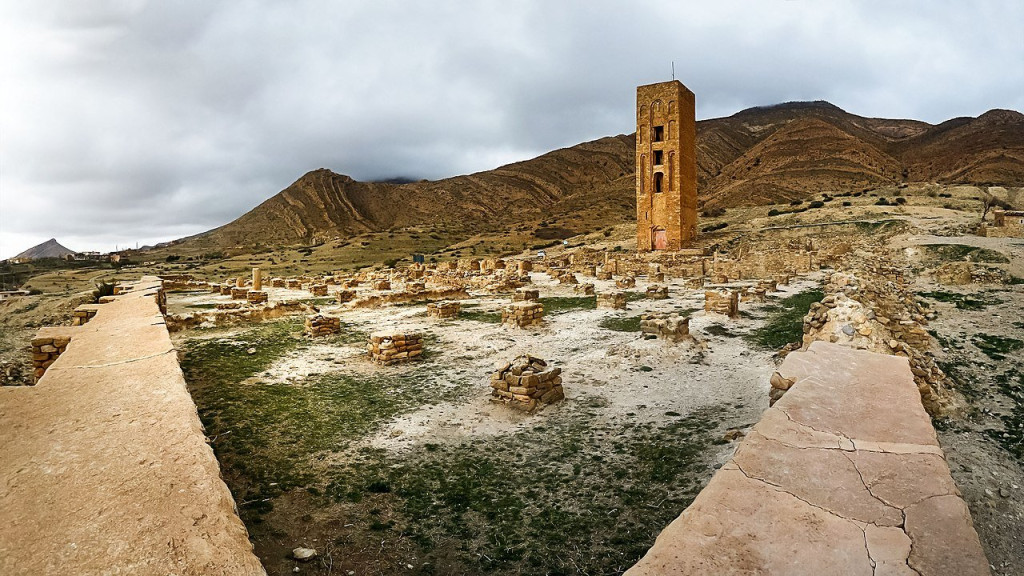
Al Qal'a of Beni Hammad, in M'Sila province, was Algeria's first listing (1980): the ruined capital of the Hammadid dynasty, founded in 1007. UNESCO calls it "an authentic picture of a fortified Muslim city", and the 25 m minaret of its great mosque still stands. It is remote, so plan a day trip with a driver.
Tassili n'Ajjer, a sandstone plateau above Djanet in the far southeast, holds more than 15,000 prehistoric paintings and engravings.
The M'Zab Valley around Ghardaïa has five walled ksour built by the Ibadi Mozabites between about 1012 and 1350. In Beni Isguen you must hire a local guide at the gate, and photographing people, especially women, is not allowed.
Ketchaoua Mosque, at the foot of the Casbah, dates from at least 1612. It was a cathedral from 1832 to 1962 and reopened in 2018 after restoration.
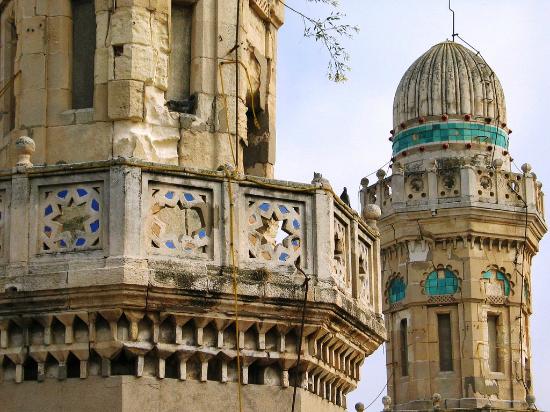
Algiers' old medina, the Kasbah, joined the UNESCO list in 1992, and its citadel dates from the Ottoman period (1516 to 1592). Many of the houses are crumbling, so go with a local guide, which is also what the UK Foreign Office (FCDO) recommends.
Lesser-known sights in Algiers, Oran and Constantine
Start with the Great Mosque of Algiers (Djamaa El Djazaïr), officially inaugurated in February 2024. Only two mosques in the world are bigger, and no minaret anywhere is taller than its 265 m tower.
About 15 minutes' drive away, the Maqam Echahid (Martyrs' Memorial) was inaugurated on 5 July 1982, the 20th anniversary of independence, for those killed in the War of Independence.

Below it, the Jardin d'Essai du Hamma, founded in 1832, covers about 32 hectares of palm and plane-tree avenues.
It has fountains and a small zoo, and the National Museum of Fine Arts sits just above it.
In Oran, the old quarter of Sidi El Houari mixes Spanish and Ottoman buildings, including the Bey's Palace. Much of it is run-down, so go with someone who knows it.
Above the old town, the Spanish Santa Cruz fort (1577 to 1604) on Mount Murdjadjo has the best view over the bay.
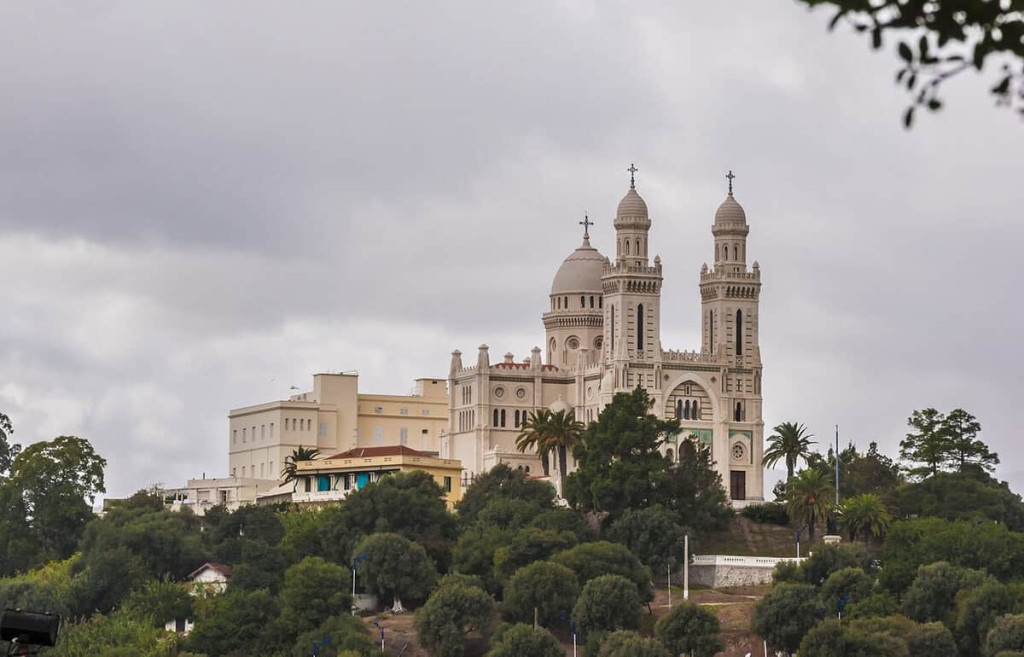
Two more that are worth the detour: the basilica of Notre-Dame d'Afrique, inaugurated in 1872 on the cliffs above the Bay of Algiers, and, in Constantine, the Sidi M'Cid suspension bridge (1912), which hangs about 175 m above the Rhumel gorge.
Natural landscapes
The country runs from about 1,200 km of Mediterranean coast (998 km by the CIA's simplified measure) to the Sahara. Algiers to Tamanrasset is about 1,900 km by road, so the deep south is a flight.

The Sahara Desert
The Sahara covers more than four-fifths of Algeria, and it is the world's largest hot desert.
Only part of it is sand: dune seas such as the Grand Erg Occidental alternate with gravel plains, plateaus and volcanic mountains. The season runs roughly October to April. Foreigners are expected to travel in the south with an approved agency.
The Hoggar (Ahaggar) mountains rise around Tamanrasset. Mount Tahat, usually given as 2,908 m, is Algeria's highest peak, and the Assekrem plateau (about 2,726 m), with Charles de Foucauld's 1911 hermitage, is the classic sunrise spot.
The region covers about 550,000 km² of mostly bare rock, and the distances are long. You cross it by 4x4 with a licensed agency, whose Tuareg guides and drivers also take care of the route paperwork.

Tassili n'Ajjer, around Djanet, is often called the world's largest open-air museum of prehistoric art.
The UNESCO-listed area covers about 72,000 km² of sandstone plateau and canyons running toward the Libyan and Niger borders.
UNESCO inscribed it in 1982. The paintings and engravings run from roughly 10,000 BC into the first centuries AD, and you can follow the Sahara drying out in them: first wild animals, then herds of cattle, then horses and finally camels. Seeing it means a guided trek of several days from Djanet.
The Mediterranean coastline
Around Algiers and Oran the beaches are busy in summer; toward Béjaïa, Jijel and Annaba the coast is greener and rockier.
Beach tourism is mostly domestic, peaking in July and August, and outside a few resorts facilities are basic.

Surfing is a small scene, mostly west of Oran around Madagh and Cap Falcon, with waves mainly from November to March.
For coastal walks, head to Gouraya National Park in Béjaïa (a UNESCO biosphere reserve since 2004), with trails up Yemma Gouraya (about 660 m).
The rocky coast around Cap Carbon, whose 1906 lighthouse stands about 220 m above the sea, is good for snorkeling and diving.
The Atlas Mountains
In Algeria the Atlas forms two chains, the Tell Atlas near the coast and the Saharan Atlas on the desert edge. In the east, Djebel Chélia (2,328 m) in the Aurès is the highest point of northern Algeria.
Walkers usually head for the Djurdjura in Kabylie, whose highest peak, Lalla Khedidja (2,308 m), tops the Tell Atlas. Its national park has Barbary macaques, and Tikjda is the usual base.

Hike in spring or autumn, with a local guide: trails are rarely waymarked, and the weather on the ridges changes fast.
The mountains are the Amazigh (Berber) heartland: Kabyle villages along the ridges of the Djurdjura, Chaoui villages in the Aurès.
Each has its own Tamazight dialect (Tamazight became an official language in 2016). In the Aurès, the cliff houses of Ghoufi were lived in until the 1970s.
Cultural experiences: markets, people, food and music
Some of the best moments here are everyday ones, in markets, cafés and kitchens rather than at monuments.
Visiting traditional souks
The old quarters of Tlemcen and Algiers are good places to buy crafts, and most towns have a covered market for food, spices and household goods.
Mornings are busiest. Friday is the weekly day off, and many shops close for at least part of it, especially around midday prayers.

Classic buys are Kabyle silver jewelry with enamel and coral, Tuareg silver, carpets and copperware. Bargain, and pay cash. Keep receipts for anything that looks old: customs can confiscate suspected antiquities.
Engaging with locals
With so few foreign tourists, people are curious: expect to be asked where you're from, and offered tea in shops.

Traditional cafés are mostly male spaces. Women travelers, and mixed groups, usually feel more at ease in pâtisseries, tea rooms and newer coffee shops.
Savoring Algerian cuisine
Algerian food is built on wheat and semolina rather than rice: couscous, flatbreads, soups such as chorba frik (the Ramadan staple, made with green cracked wheat) and slow-cooked stews.
In Oran, try karantika, a baked chickpea-flour flan eaten in bread with cumin and harissa. Its supposed Spanish origin is more legend than history.
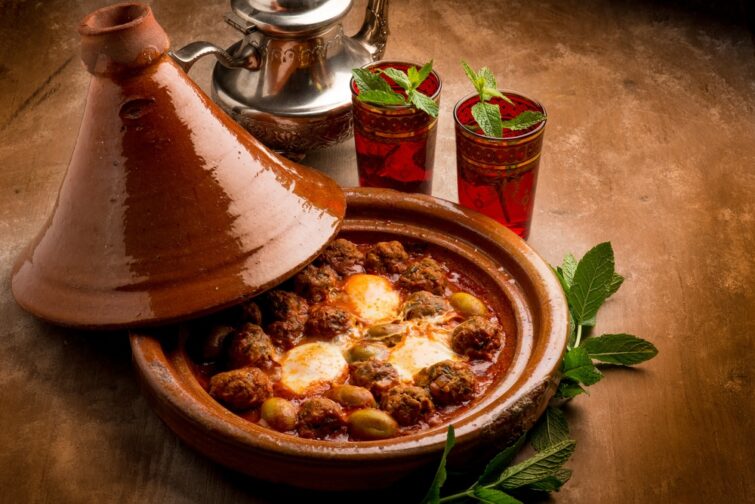
For something sweet, try kalb el louz (semolina and almond cake in syrup) or mouna, the orange-blossom and anise brioche of Oran.
Traditional music
Music is everywhere, from taxi radios to weddings, and each region has its own style.
Chaâbi grew up in the Casbah of Algiers in the early 20th century, shaped above all by El Hadj M'Hamed El Anka; its singers set long poems to the mandole and banjo.
Raï comes from the Oran region, where it grew in the early 20th century out of Bedouin and urban folk song; it has been on UNESCO's intangible heritage list since 2022.

It went international in the 1980s and 1990s with singers such as Khaled and Cheb Mami.
The hard parts of an Algeria trip
Getting the visa
Unless you hold one of the few exempt passports, you need a visa from an Algerian consulate before you fly, and that includes UK, EU, US and Canadian citizens. Despite several announcements, there is still no e-visa (October 2026).
At the London consulate, for example, you need forms, photos, a passport valid six months with two blank pages, proof of income, and a hotel booking, an Algerian travel agency's invitation and itinerary, or a host's town-hall-certified certificate of accommodation. The UK fee is GBP 85.

Processing in London runs about 10 working days if you apply in person and 15 or more by post, and peak periods add roughly five days. Give yourself at least a month.
There is one shortcut. On an organized Sahara tour booked through an approved Algerian agency, the agency can request a visa on arrival for you; you pay at the airport (commonly about EUR 110) and get a stay of up to 30 days.
Citizens of Libya, Mali, Mauritania, Tunisia, Malaysia, the Seychelles and the Sahrawi Arab Democratic Republic don't need a visa for stays of up to 90 days. Moroccans do: Algeria reinstated visas for all Moroccan passport holders on 26 September 2024. Syria, Yemen and the Maldives are no longer exempt either.

Algeria's Ministry of Foreign Affairs lists the entry requirements here; your consulate's site has current forms and fees.
How safe Algeria feels
People who travel with us often say Algeria turned out calmer and friendlier than they had expected, whether they were walking Roman streets in the north or sleeping at a Tuareg camp in the Sahara. Every itinerary we offer is one we have tested ourselves. Licensed Algerian agencies and local guides run them on the ground, and none of our trips has had an incident.
The everyday precautions are simple. Main roads have police checkpoints: slow down and keep your passport handy. Southern trips go through an approved agency, which also sorts out the police or gendarmerie escort that the authorities assign on some desert routes. In city crowds and markets, watch for pickpockets.
If your plans reach the deep south, read your government's latest advice for that route before booking, and confirm that your insurance covers it. Our guide to safety in Algeria for tourists goes through it region by region.
Weather and seasonal hazards
Nature sets a few practical rules: in summer, check fire warnings before hiking in Kabylie and the wooded north, and in autumn keep an eye on the forecast, since storms can bring flash floods.
So skip forest hikes on hot, windy summer days, and never camp in a dry wadi bed.
Summer water cuts are common in many towns, so short or cold showers happen. Drink bottled water.
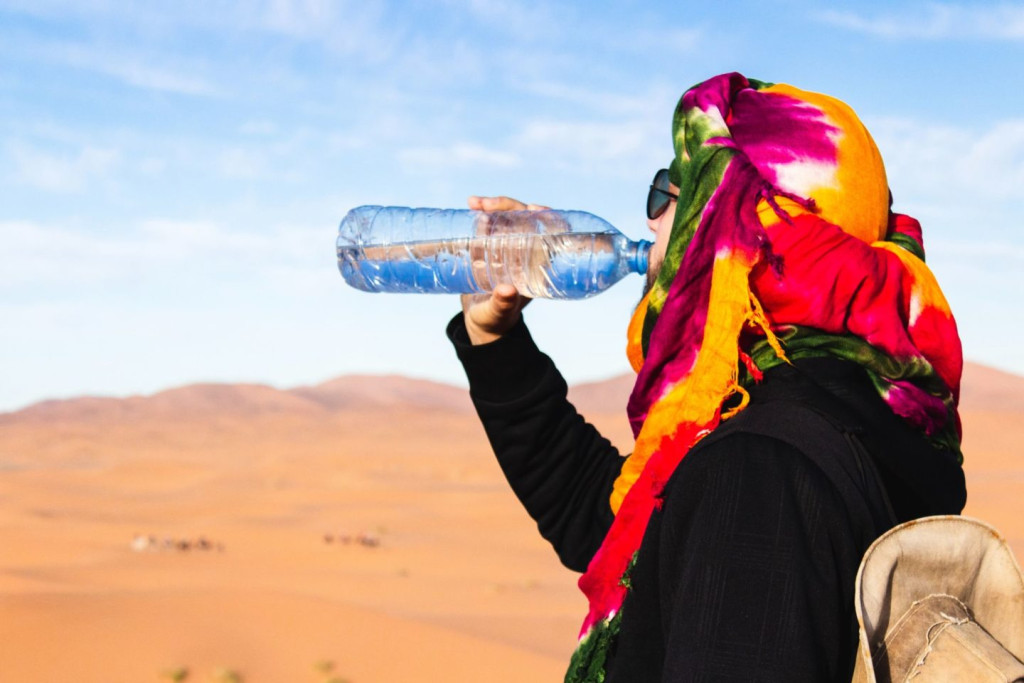
Summers are fierce inland, often above 40 °C in the Sahara; the coast has mild, wet winters.
Politics and daily life
Day to day, Algeria is politically calm, and daily life goes on as normal in the cities.
If you come across a gathering or demonstration, move on and don't photograph the police.
For current news, follow your government's travel advice and the state news agency APS, which publishes in English.
Health situation
See a travel clinic four to six weeks ahead. The US CDC recommends hepatitis A and typhoid for most travelers, hepatitis B for unvaccinated under-60s, and rabies vaccine if you'll be around animals. It no longer recommends the cholera vaccine.
The CDC also advises a polio booster for adults. A yellow fever certificate is needed only if you arrive from a yellow fever risk country.
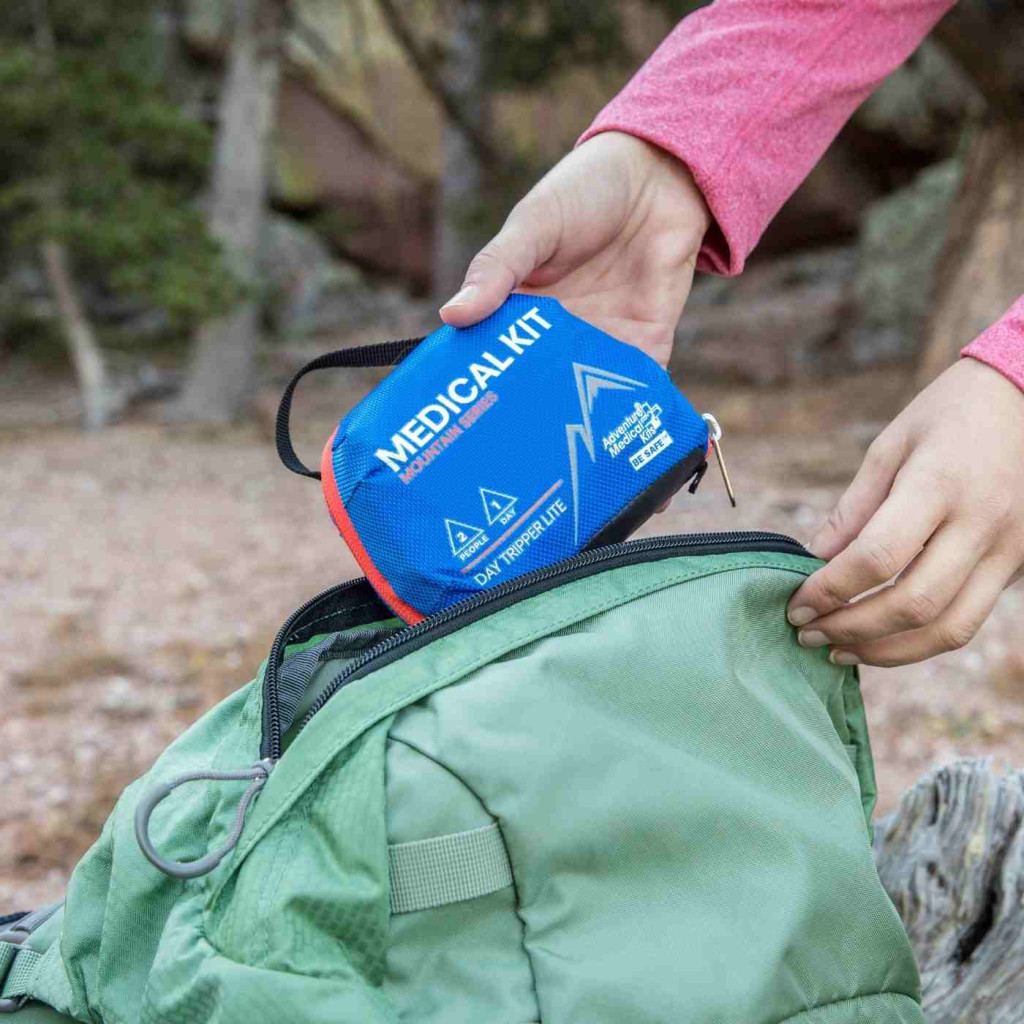
Pack insect repellent, a first-aid kit and your prescriptions. Medical care in rural areas and the south is limited.
Get insurance that covers medical evacuation; private clinics are quicker than public hospitals but may want payment up front. For current advice, see the CDC's Algeria page or the UK's TravelHealthPro.
Lack of information
Algeria gets far fewer foreign tourists than Morocco or Egypt, and planning reflects that.
Guidebooks are few and dated, many hotels have no website, and opening hours online are often wrong.

That is where a local operator helps: we arrange custom itineraries, guides, airport pickup and the agency invitation for your visa.
You can reach out to us with questions while you plan, even if you end up traveling on your own.
Other obstacles you may face
Dress conservatively outside beach resorts: cover shoulders and knees, and more so in the south and M'Zab. Foreign women don't need to cover their hair except in mosques.
You can buy alcohol at licensed shops, hotels and some restaurants; drinking it in public, or being drunk there, is against the law. Keep affection in public to holding hands. These norms are felt even more strongly during the holy month, so look at our notes on Ramadan in Algeria if your dates overlap.
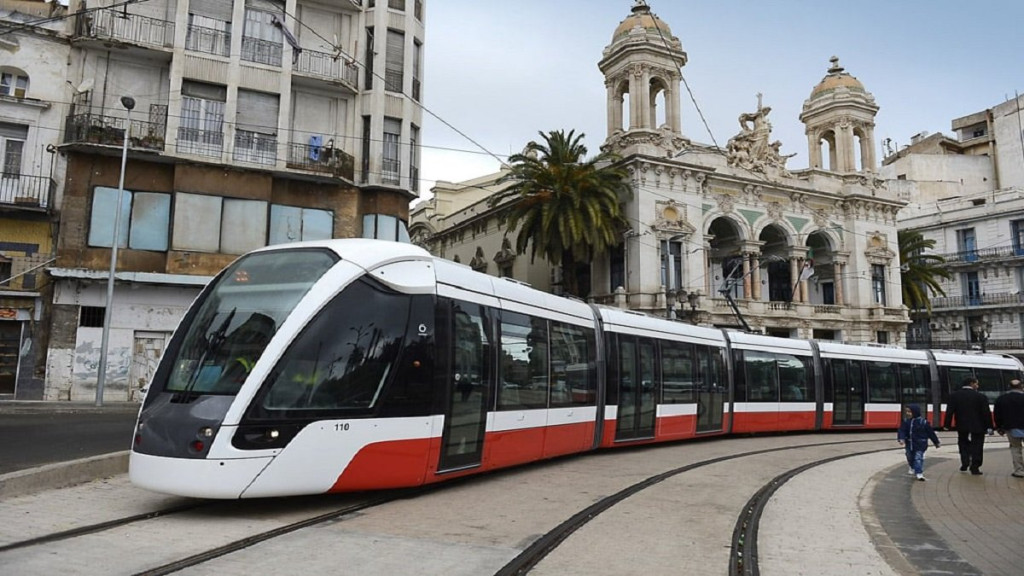
Transport is slow. Algeria has no high-speed line, and even the quickest Coradia trains between Algiers and Oran need about 4.5 to 5 hours, more when they run late, which is often. Uber doesn't operate (use Yassir or Heetch), and for the south you fly with Air Algérie or Domestic Airlines.
Most people speak Algerian Arabic (Darja) or Tamazight. French is widely understood in cities; English much less.
Money is the biggest adjustment: outside big international hotels you pay cash. The next section shows why it matters how you change it, and our practical tips for traveling in Algeria explain how to handle cash day to day.
Is Algeria expensive?
Not if you pay in cash. Everyday prices are low, but what they cost you depends on how you get your dinars: about 275 DZD to the euro on the informal market, about 150 at banks, ATMs and by card (autumn 2026). Hotels booked online and flights are usually charged by card.
| What you're buying (2026) | Dinars | € with cash changed locally | € by card or ATM |
|---|---|---|---|
| Coffee in a café | 50 to 120 | 0.20 to 0.45 | 0.35 to 0.80 |
| Street snack | 150 to 300 | 0.55 to 1.10 | 1 to 2 |
| Couscous in a popular restaurant | 600 to 1,200 | 2.20 to 4.40 | 4 to 8 |
| Museum or Roman site ticket | 200 to 300 | 0.75 to 1.10 | 1.35 to 2 |
| Budget hotel or guesthouse room | 4,000 to 7,000 | 15 to 25 | 27 to 47 |
Where the money really goes is the Sahara. Booked online, an Algiers to Tamanrasset return flight starts at about EUR 150, and a week in the desert with an agency (guides, 4x4, cook and camping) runs about EUR 600 to 1,500 per person in 2026.
Getting to Algeria
Most visitors fly into Algiers, Oran or Constantine. Air Algérie and several European airlines, including low-cost ones, fly from France and Spain, and connections from further away usually go through a European hub, Istanbul, Dubai or Doha. There are no direct flights from the US.
In summer (roughly mid-June to mid-September) ferries sail from Marseille and Sète in France and from Spanish ports to Algiers, Oran, Béjaïa and other ports; Marseille to Algiers takes about 20 to 26 hours. By land, the Tunisian border is open, and a train runs three times a week between Tunis and Annaba. The Moroccan border has been closed since 1994.
Traveling solo or as a woman
Women do travel alone in Algeria, mostly in the north. Expect some staring and catcalling in city streets, less in the morning and in busy areas. Dress modestly, sit in the back of taxis, and use Yassir or Heetch at night, since the app records the driver and the route. Pâtisseries, tea rooms and family restaurants are more comfortable than traditional cafés. In the south everyone travels with an agency, so a solo traveler joins a group or books a private trip.
Algeria, Morocco or Tunisia?
Most people deciding on Algeria are also looking at its two neighbors. Here is how they compare for a typical UK, EU or US traveler in 2026.
| Algeria | Morocco | Tunisia | |
|---|---|---|---|
| Visa | From a consulate in advance; visa on arrival only for agency Sahara trips | None for most Western passports, up to 90 days | None for most Western passports, up to 90 days |
| Crowds | Very few foreign tourists | Busy at the main sights | Busy in the beach resorts |
| Roman sites | Timgad, Djémila, Tipasa: large and quiet | Volubilis | Carthage, Dougga, El Jem |
| Sahara | The biggest and wildest; agency needed in the south | Easy dune trips | Easy dune trips |
| Beach resorts | Mostly domestic, basic facilities | Developed resorts | Developed resorts |
| Independent travel | Fine in the north, harder elsewhere | Easy | Easy |
| Paying | Mostly cash; two exchange rates | Cards widely accepted in cities | Cash and cards |
In short: Morocco and Tunisia are easier, Algeria is emptier. If you have already been to one of the neighbors, or the Roman sites and the deep Sahara matter more to you than convenience, Algeria is the one that will surprise you.
So, is Algeria worth visiting?
Yes, as long as paperwork, cash and slow logistics don't put you off: in return you get Roman sites and desert with hardly any crowds. By type of traveler:
- History lovers: yes. Timgad, Djémila, Tipasa and the Casbah are among the best sites in North Africa, and you'll have most of them nearly to yourself.
- Desert trekkers: yes. The Tassili, the Tadrart and the Hoggar are hard to match anywhere in the Sahara; go with an approved agency between October and April.
- First trip to Africa or the Arab world: possible, but Morocco or Tunisia are easier first steps. If you start with Algeria, use a local guide for the first days.
- Beach holidaymakers: probably not. The coast is lovely, but resorts are basic and busy with Algerian families in July and August.
- LGBTQ travelers: same-sex relations are illegal under the penal code, and public displays of affection draw attention. Many travel discreetly; read your government's travel advice first.
We'd pick spring (March to May) or autumn (October and November), when both north and Sahara are pleasant.
With a week, choose one region; with two, combine them using a domestic flight.
What people ask us before they book Algeria
Is Algeria cheap to visit? For daily spending it is, as long as your cash was changed at the informal rate (about 275 DZD to the euro, autumn 2026); pay by card at about 150 and everything costs roughly 80% more, while the Sahara trips are the big expense either way.
Is Algeria better than Morocco for tourists? It depends on what you want. Morocco is easier: no visa for most Western passports, cards accepted in cities and plenty of tourist services. Algeria has bigger and quieter Roman sites, a wilder Sahara and almost no crowds, but needs a consular visa, cash and more planning. Many travelers do Morocco first, then Algeria.
Do you need a guide to visit Algeria? Only in the deep south, where you travel with an approved Algerian agency and local guides (the Sahara visa on arrival requires an agency trip anyway). In the north, Algiers, Oran, Constantine and the Roman sites can be done on your own, though a guide is recommended for the Casbah and compulsory in Beni Isguen.
How many days do you need in Algeria? A week is enough for Algiers plus one region: the Roman east around Constantine, or a short Sahara trip from Djanet, Taghit or Timimoun. With two weeks you can combine the north and the desert using a domestic flight. Ten days is a good middle ground for a first visit.
© Emil Danailov
For routes, transport and costs, start with our comprehensive travel guide.
Then sort out the visa first: it takes the longest, and the rest of the plan depends on it.


