

Gathering a group of friends for a trip to Algeria often feels like trying to solve a complex puzzle while everyone is shouting different directions.
That is why our team at WildyNess created this guide to simplify your planning and ensure your 2026 group trip to Algeria is as rewarding as the landscapes you are about to explore.
Why 2026 is the Year to Visit Algeria
Algeria is stepping into the global spotlight as a top destination, recognized by authorities like the BBC and Condé Nast Traveler. The government is currently implementing a tourism master plan that is rapidly expanding infrastructure, adding 10,000 hotel beds and restoring historic landmarks like Constantine’s Grand Hôtel Cirta. With Air Algérie’s fleet renewal and new routes to hubs like London Stansted, reaching Algiers is easier than ever.
This year offers a rare window to experience world-class sites with authentic peace before the tourism boom hits full scale.
Top Group Itineraries in 2026
Popular Starting Point
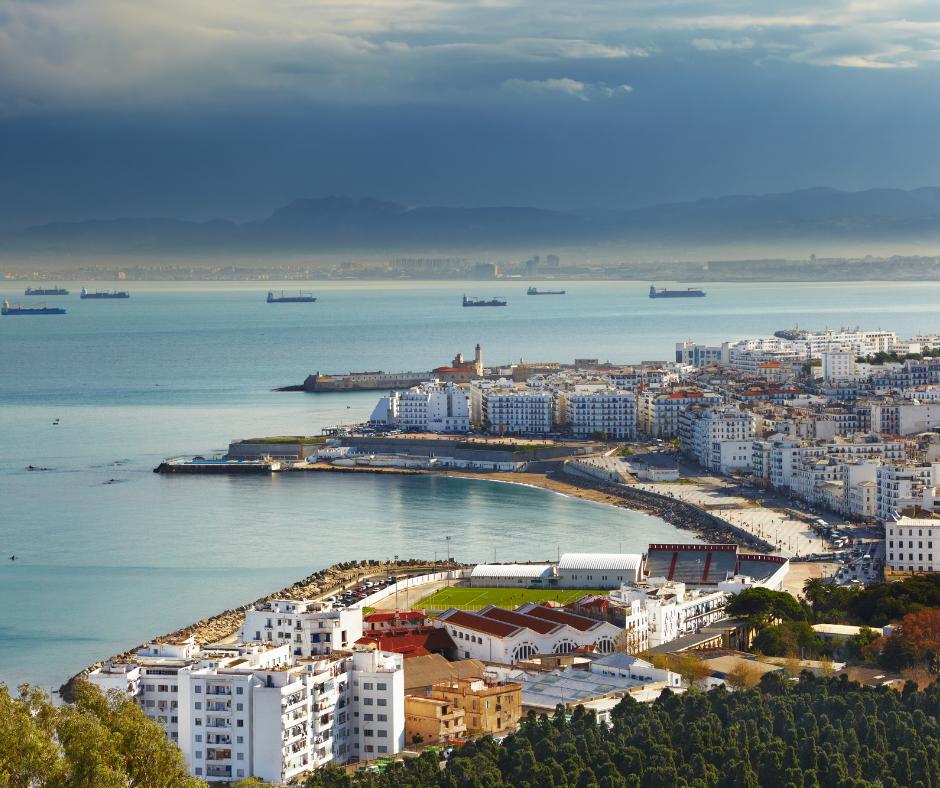
When you start planning your route, you need to account for the sheer scale of the country. A popular starting point for many groups is the Algiers City and Culture route, which typically lasts between four and six days. This itinerary focuses on the layers of history found in the capital, from the UNESCO-listed Casbah to the Ottoman-era palaces.
You can spend your mornings wandering the narrow alleys of the old city with a local guide who can point out the architectural details that most visitors miss. Afternoon hours are best spent at the Jardin d’Essai du Hamma, a massive botanical garden that offers a quiet escape from the city’s energy.
For history Buffs
For groups that have a deep interest in history, the Roman Ruins loop through the north and east is the premier choice for an eight to ten-day trip. This route takes you through Sétif and toward Constantine, the famous city of bridges.
Along the way, you will explore Timgad and Djemila, which are often compared to Pompeii because of how well their forums, theaters, and basilicas have been preserved. Because these sites are less crowded than their European counterparts, your group can take the time to appreciate the intricate mosaics and stone-paved streets without feeling rushed by other tour groups.

The Sahara Trip
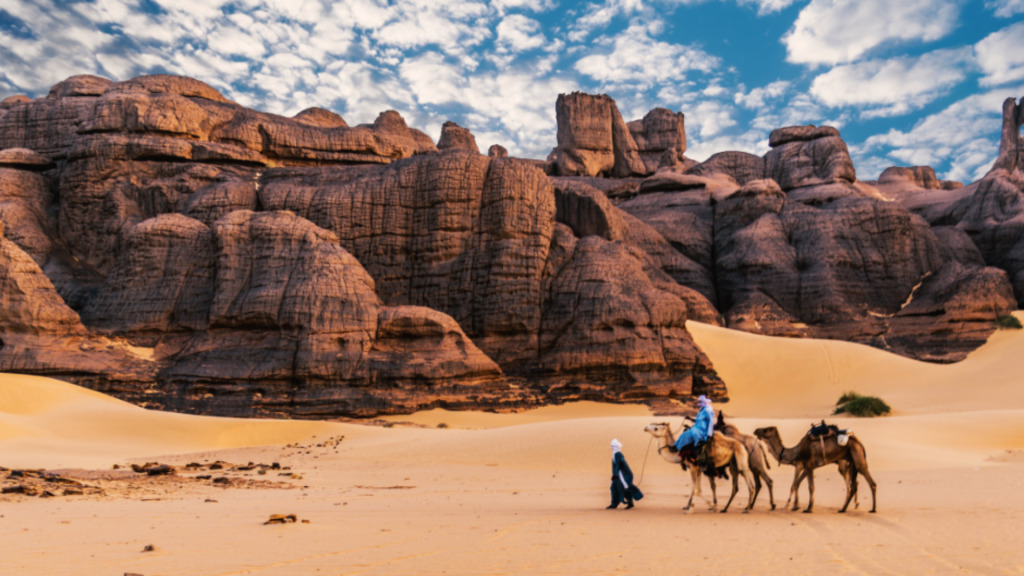
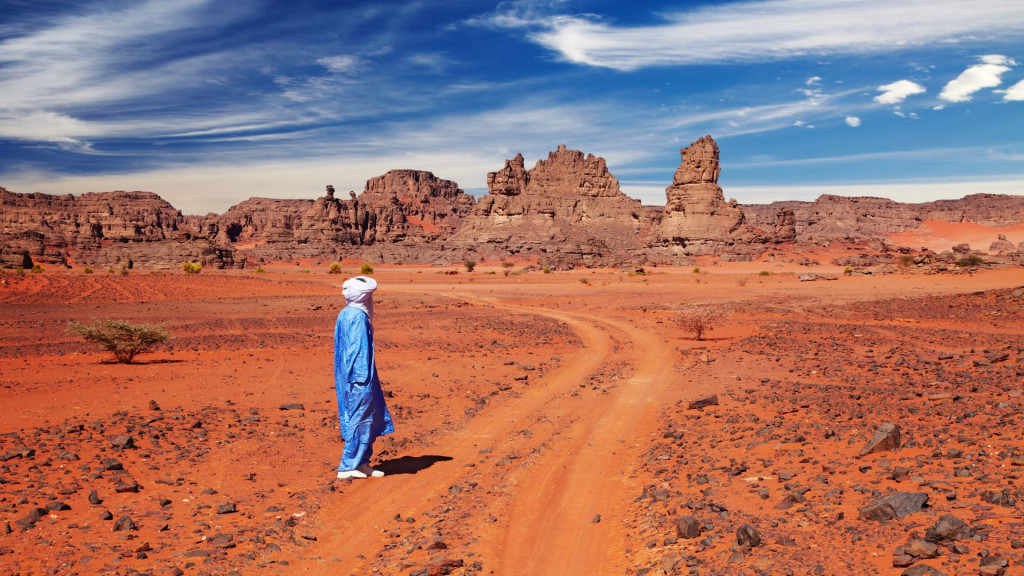
If your group seeks a more rugged experience, the Sahara Adventure in Djanet is the classic desert itinerary. Lasting between seven and nine days, this trip centers on the Tassili n’Ajjer National Park. You will fly south to meet your Tuareg guides, who will lead you through a landscape of surreal sandstone formations and ancient rock art that dates back thousands of years.
This trip involves camping under the stars and moving with the natural rhythm of the desert, making it a profound bonding experience for close-knit groups.
Read also: Algerian Sahara Travel Guide: Routes, Visas & Safety Tips
Slow Travel and Cultural Immersion
Another culturally rich option is the M’Zab Valley and the oases of the Ghardaïa region. This area is famous for its distinctive 11th-century urban planning and the conservative, community-driven lifestyle of its residents.
A six to eight-day trip here allows you to see how traditional markets and religious architecture have remained largely unchanged for centuries. It is an ideal itinerary for groups that enjoy slow travel and deep cultural immersion, as you will need to follow local etiquette and participate in the community's way of life during your stay.

Navigating the New Visa Landscape
The most significant change for travelers in 2026 is the relaxation of visa rules, particularly for those heading south. While most travelers still need to secure a visa through an Algerian consulate before they depart, there is now a streamlined visa-on-arrival system for organized tours visiting the southern provinces. If your group is working with an authorized local travel agency and your itinerary includes spots like Djanet, Tamanrasset, or Ghardaïa, you can often obtain a 30-day visa upon landing at the airport. This change has removed one of the biggest hurdles for adventure travelers and makes group planning much more flexible.
For those focusing on the northern cities, the traditional application process still applies. You should begin this process at least 60 days before your departure date to ensure there are no delays. Each member of your group will need to provide a passport valid for six months, a completed application form, and proof of accommodation, such as a hotel reservation or an invitation letter from your tour operator. It is essential that everyone in the group keeps digital and physical copies of these documents, as you may need to show them at various checkpoints or during domestic travel within the country.
For more details, we recommend reading Your Guide to Algeria: Visa, Safety, and Security
The Reality of Sahara Camping
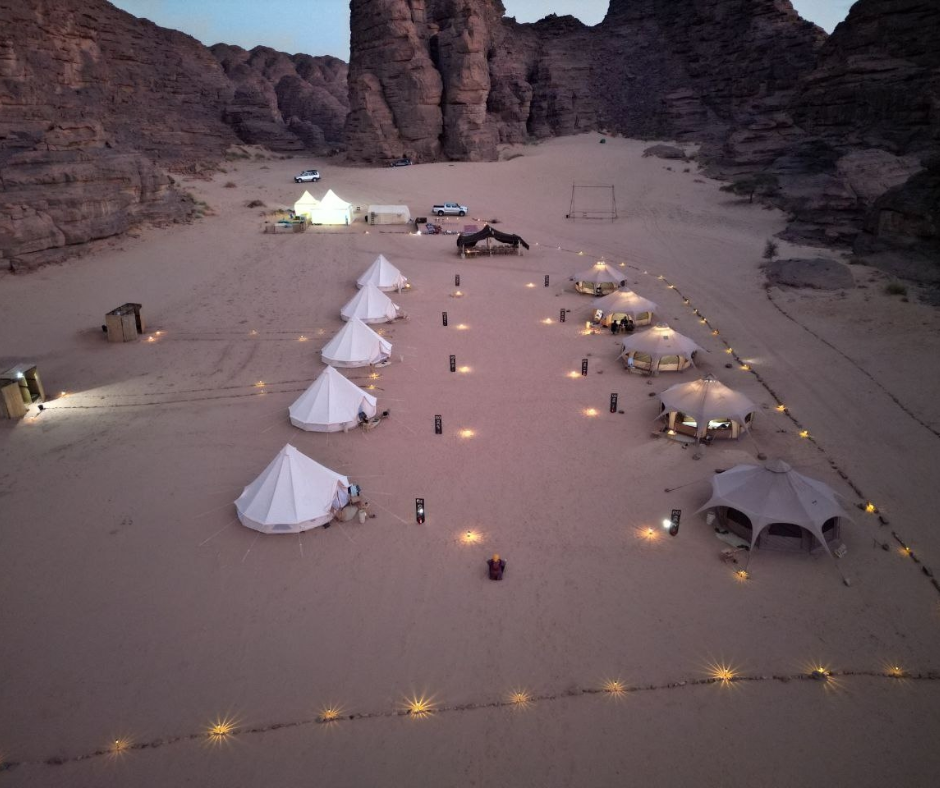
Camping in the Algerian Sahara is an experience that stays with you long after the sand has been washed out of your boots. Your home for the night will typically be a simple bivouac or a mobile camp set up by your local support team. This is not a luxury glamping setup but a functional, comfortable way to experience the wilderness. You will spend your evenings around a fire, drinking traditional tea and eating meals prepared by your guides. The lack of light pollution means the sky is incredibly dark, allowing you to see the Milky Way with total clarity.
Temperature management is the most important part of desert survival. While the days can be quite warm, the temperature drops rapidly as soon as the sun goes down. You will need to pack high-quality layers, including thermal base layers and a warm fleece, to stay comfortable during the night. A headlamp is another essential item, as it keeps your hands free while you navigate the camp after dark. Most groups find that the simplicity of the desert provides a much-needed break from the digital world, allowing everyone to reconnect through conversation and shared silence.
Read also: Camping in Algerian Sahara: The Ultimate Guide to The Desert
Safety and Security Protocols
Your safety in Algeria is a priority, and the country has made significant strides in securing its tourist regions. In major cities like Algiers, Oran, and Constantine, you will see a visible security presence, and the atmosphere is generally very welcoming. Like any large city, it is important to practice common-sense safety habits. Keep your valuables in a secure crossbody bag, avoid walking alone in unfamiliar neighborhoods late at night, and always use official taxis or ride-sharing apps when they are available.
In the desert and border regions, the security situation is managed more strictly. This is where the role of security escorts sometimes comes into play. Depending on your itinerary and the current local guidance, your tour might be assigned an escort for certain long-distance drives or visits to remote archaeological sites. While this can feel formal at first, these escorts are there to ensure that your movement between regions is smooth and that you are following the safest possible routes. At Wildyness, we coordinate closely with local authorities to ensure that your security setup is appropriate for your specific path without being intrusive.
For more details, we suggest reading Is Algeria Safe for Tourists?
The Best Months for Your 2026 Trip
The timing of your trip will change your entire experience of the country. For the northern coastal cities and the mountainous regions of the Atlas, the best months are from March to May and September to November. During these shoulder seasons, the weather is mild enough for long walks in the city and hiking in the mountains without the intense heat of the summer months. The landscape is also at its most beautiful during the spring when the wildflowers are in bloom and the hills are green.
If the Sahara is your main priority, you must plan your visit between October and April. Summer temperatures in the desert regularly climb above 45°C, which makes any kind of outdoor activity dangerous and exhausting. The winter months in the desert bring warm, sunny days and very cold nights, which is the classic Saharan experience. You should also keep an eye on the lunar calendar for Ramadan and the Eid holidays. Traveling during these times offers a unique look at Algerian culture and incredible evening celebrations, but you should expect shorter business hours and a slower pace during the day.
Packing Strategy for Varied Climates
Packing for Algeria requires a strategy that accounts for both the Mediterranean coast and the arid desert. We recommend focusing on breathable, natural fabrics like linen and cotton for your base layers. Because Algeria is a conservative country, you should aim for clothing that covers your shoulders and knees, which is both respectful of local customs and helpful for sun protection. A light, versatile scarf should be at the top of your list because it can be used for extra warmth, sun protection, or as a head covering when visiting religious sites.
Your footwear choice will define your comfort on this trip. You will need a pair of sturdy, comfortable walking shoes for the uneven stone streets of the Roman ruins and the steep hills of Algiers. If you are heading into the desert, a pair of closed-toe hiking boots is better for keeping the sand out and providing support on rocky terrain. Do not forget to pack a high-SPF sunscreen, a wide-brimmed hat, and a good pair of sunglasses, as the glare from the Mediterranean and the desert can be very intense even on cooler days.
Read also: What to Pack and Wear in Algeria: A Traveler’s Guide to Packing Smart
Final Advice for a Smooth Journey
To ensure your Algerian adventure is as smooth as possible, we have a few final field-tested tips. Always carry enough cash in Algerian dinars, as credit cards are rarely accepted outside of international hotels and high-end restaurants. You will find that having small bills is helpful for tipping, buying snacks, and paying for taxis. It is also a good habit to learn a few basic phrases in Arabic or French. Even a simple greeting can go a long way in showing respect and opening doors to more authentic local interactions.
If you are traveling as a group, make sure everyone has a copy of the itinerary and the contact information for your local guides. This ensures that even if the group gets separated for a few hours, everyone knows where the final meeting point is. Algeria is a country that rewards those who are patient and flexible, so be prepared for plans to shift slightly based on the weather or local events. Embracing these small changes is often how you end up with your most memorable travel stories.
If you still have any other questions about organizing your group, feel free to contact us and we will respond to you quickly. Also, we can help you create the perfect plan for your trip if you email us and we will work together on your personalized 2026 itinerary.


