One Week Saudi Arabia Itinerary, An Adventure Travel Guide
Saudi Arabia, which covers overs the bulk of the Arabian Peninsula with a recent tourist infrastructure, is a must-visit location.
KSA got 95% of its terrain classified as desert! A one of kind place made of golden sand and mesterious secrets, waiting for you to discover.
One of the largest country which has a land area of about 2,150,000 km². Saudi Arabia has a rich history, and one of the Arab world 's most interesting country you want to visit.
You would need 7 full days just to see the most important parts of the Kingdom of Saudi Arabia. Getting around KSA requires long drives. An enormous country such Saudi Arabia require your own ride there, as per our recommendation.

The best option for transportation is that you can get your rental car from one of the rental companies here to have your own ride to get to all the wonderful places, as they do have long distances separating them.
Here are the main cities open for tourist in KSA, Riyadh, Jeddah, Medina, and if you are Muslim, you can also visit Mecca.
You might want to get your cheap flight here.
Hotels: You get get the best affordable and luxurious hotels here. Make sure you got all you need to start a relaxing, yet exiting adventure of the golden age of discovery in KSA. Make sure to pack your water, and your outfit for a hot weather.
1st day: Al Ula Area, and historical Places
Best places around Saudi Arabia are the one that would tell the story of the place, Wildyness is always eager to take you around and show you the way to show you wonders of Saudi Arabia. Let's start with the must see, the archaeological sites!
Al Ula Area
The area includes spectacular world heritage sites and ancient ruins. This must be your first stop as it is rich of stories of Arabian vibrant culture, and more.
An interesting fact about Al Ula which is worth mentioning, is that the nature of adventure travel is full of surprises, and you can even be the first visitor of an untouched place.
Believe it or not, but it has been closed for a while, to be exact for centuries. Saudi Arabia remained a hidden realm, shrouded in mystery and largely closed off to outsiders.
But even more intriguing, parts of Al Ula were believed to be cursed, a forbidden land where even Muslims—native to Saudi Arabia—dared not tread.
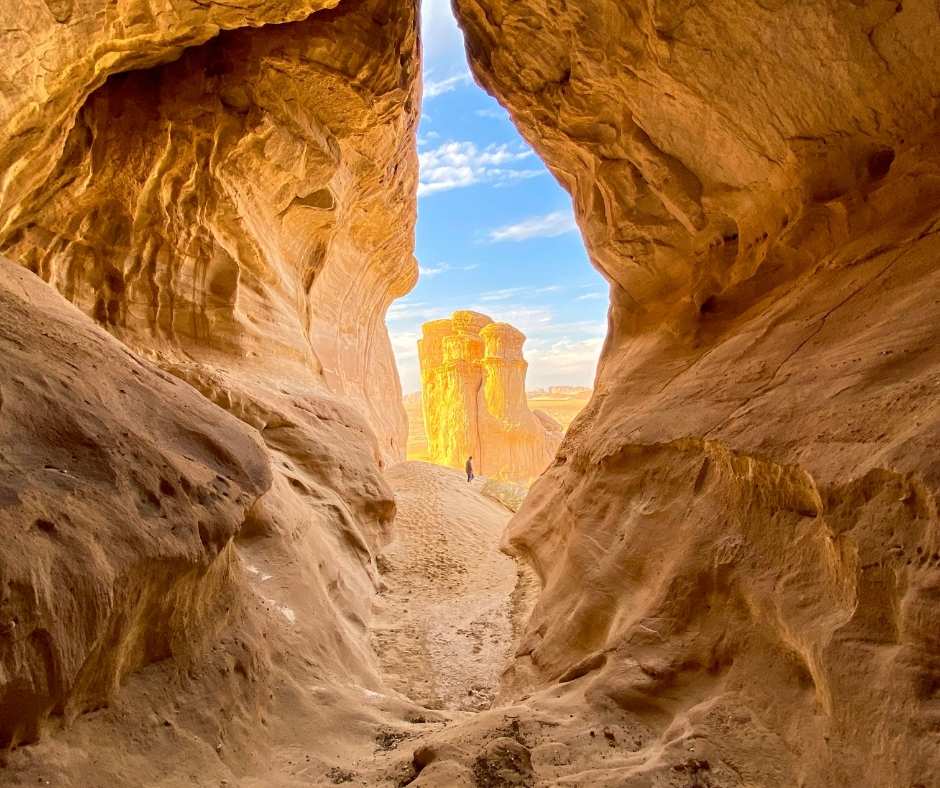
This eerie taboo was rooted in the ancient belief that the Prophet Muhammad had cursed the region, leaving it haunted by restless spirits.
The desolate landscapes, with their towering rock formations and haunting silence, only added to its sinister reputation.
It wasn’t until recently that the dark veil over Al Ula was lifted, revealing its otherworldly beauty to the world once more.
Al Ula List of sites you must visit:
Hegra (Madain Saleh)
Mada’in Salih, which means literary the city of Salih, is the main remain of Nabataean Kingdom which goes back to the 1st century AD. This is a UNESCO World Heritage Site, an old town in which it sites the best time of KSA history. The historical area is accessible for all tourists. You can get there whether you are local citizens or western visitors.
Hegra is located about 22 kilometers north of Al Ula, Hegra is accessible via Al Ula–AlHijr Road. Here is the link for the directions.

It is Saudi Arabia’s first UNESCO World Heritage Site, featuring over 100 Nabatean tombs carved into sandstone from the 1st century CE. Often referred to as the "Petra of Saudi Arabia," it’s a must-visit for history lovers.
Iconic Elephant Rock (Jabal AlFil)
It actually looks like an elephant if you look at it for a bit longer.
The rock is a symbol, you would hear about it often in KSA. It is actually situated 11 kilometers east of Al Ula, this striking sandstone formation resembles a giant elephant and is especially stunning at sunset.

It’s a favorite spot for photographers and visitors seeking to experience Al Ula’s natural beauty. You would love just to take a picture, and imagine an elephant with that size.
Dadan and Jabal Ikmah
This place is an interesting indicator of the rich Arabian history, a group of remains of ancient cities.
It is found about 10 kilometers south of Al Ula Old Town, this archaeological area is known as the Kingdom of Dadan, a powerful ancient Arabian city. Jabal Ikmah, nearby, is frequently referred to as the “open library” due to its numerous rock inscriptions.
Al Ula Old Town
Located in the heart of Al Ula, this site features mudbrick houses and narrow alleyways that date back over 700 years. The old way of building these houses will leave you in wonder about their creativity.
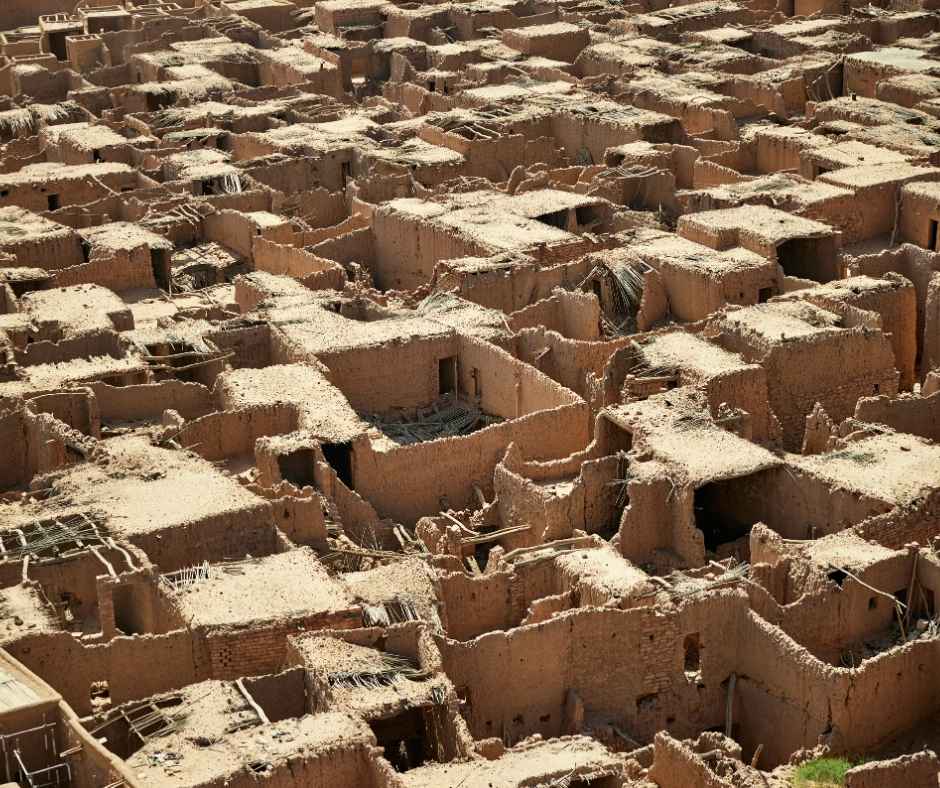
Visitors can explore restored sections and learn about the region’s vibrant history and culture.
Maraya Concert Hall
Get ready for the huge, large mirror all over the place. To be fair, this is the world's largest mirrored building.
This place is located about 30 kilometers north of Al Ula, Maraya is a modern architectural marvel entirely covered in mirrors, blending seamlessly with the surrounding desert.
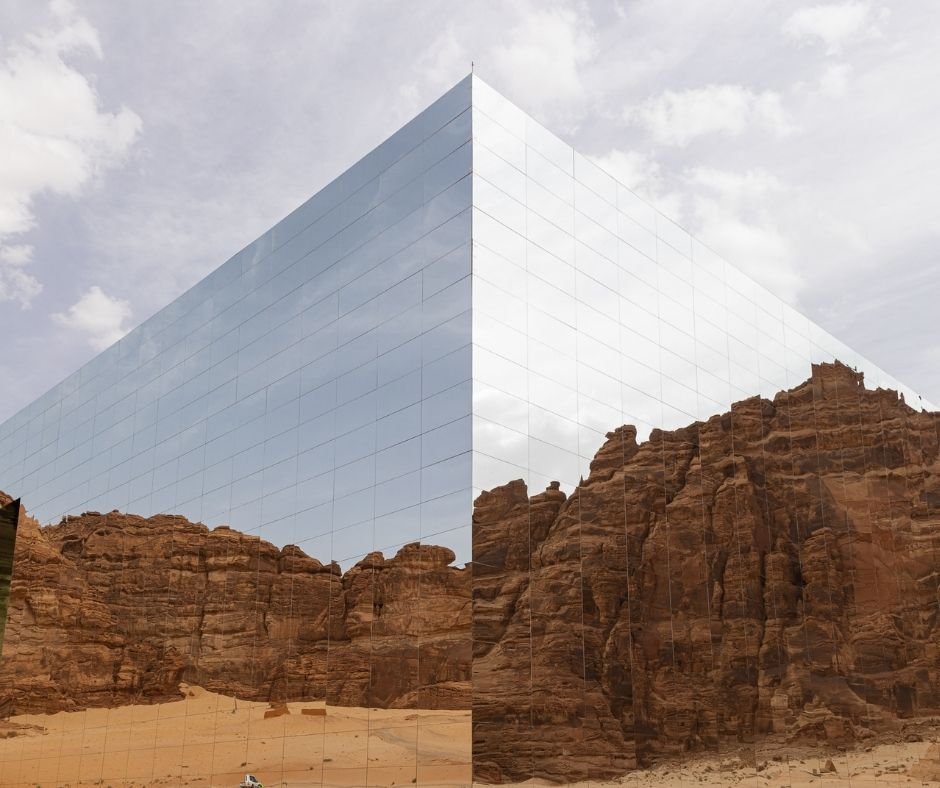
It holds the Guinness World Record for the largest mirrored building in the world and hosts cultural events and performances.
The Oasis Heritage Trail
This walking trail weaves through Al Ula’s lush palm groves and farms, showcasing the area’s rich agricultural heritage.

It is accessible from various points within Al Ula and offers a peaceful escape to nature.
Food! Time to eat in Al Ula?
Here are the top restaurants near Al Ula, along with their locations, price ranges, and Google Maps links:
Ducasse in AlUla
Location: Al Ula Old Town, Al Ula, Saudi Arabia
Price Range: $13 - $40 per person
Al Ula Heritage Village
Location: Al Ula Heritage Village, Al Ula, Saudi Arabia
Price Range: $18 - $53 per person
Maraya Concert Hall Restaurant
Location: Maraya Concert Hall, AlUla, Saudi Arabia
Price Range: $40 - $80 per person
These links will direct you to the exact locations on Google Maps, making it easy to find your way to these great dining spots in A lUla.
Next day: (2end) Museum, Historical Center, and the Edge of the World
King Abdulaziz Historical Center
On your second day, and while you are hungry to know more about history of this place. We would recommend a brief visit to King Abdulaziz Historical Center.
You can check here to get the direction, but it is not one place. The whole place is under this name: King Abdulaziz.
In Riyadh, Saudi Arabia, there is the King Abdulaziz Historical Center, a cultural and historical landmark dedicated to conserving the legacy of King Abdulaziz Al Saudi, who founded modern Saudi Arabia.
The center, created in 1999 to commemorate the 100th anniversary of Riyadh's unification, encompasses a vast complex of museums, libraries, gardens, and heritage sites.
The national museum of Saudi Arabia considered a key attraction, highlights Saudi Arabia's rich history, culture, and Islamic heritage through interactive exhibits.

The center brings together education and cultural enrichment to highlight the nation's journey and pivotal historical moments.
The list of places you would really want to visit include The king Houses which are accessible for visitors: The first house which amazingly turned into a museum can be reached here.
The king second house can be reached here
Edge of the World, Saudi Arabia
Only 23 minutes away from the Historical center, you would find one of the most astonishing Saudi Arabia wonders: The edge of the world.

Here is the direction from where you are.
The Edge of the World, also known as Jebel Fihrayn, is a breathtaking natural landmark approximately 90 kilometers northwest of Riyadh, Saudi Arabia.
To reach this site, travelers typically drive from Riyadh to the town of Al Uyaynah. From there, the journey continues on unpaved desert trails, making a 4×4 vehicle essential due to the rough terrain.
It's advisable to travel with a guide or in a convoy for safety. Upon arrival, you have the chance to hike along the edge of the escarpment, where the dramatic cliffs provide ample views of the surrounding desert, creating the impression of being at the edge of the world'.
3rd Day, Sacred Places is open for visitors, and Oldest Mosque
Most sacred cities, it is well known that Saudi Arabia is the birthplace of Islam.
Only in recent years, has Saudi Arabia opened its door for tourism, and for the world to discover KSA wonders. Especially those that are built for religious purposes. Still, there are some restrictions that foreign visitors have to be aware of.
In Saudi Arabia, it depends if you are a foreign visitor, or not.
Here is how the rules go, if you are a foreigner you are allowed to visit some sacred cities, but specific rules and regulations depend on the type of visit:
Mecca
Hajj and Umrah: Only Muslims are allowed to visit Mecca to perform the Hajj or Umrah pilgrimages.

Foreign Muslims who are performing either of these rituals can visit Mecca with the appropriate visa. Non-Muslims are strictly prohibited from entering the city.
Visiting for Tourism: Mecca is generally off-limits to non-Muslim tourists due to its religious significance.
Medina
Tomb of the Prophet: Foreign Muslims are permitted to visit Medina and the Prophet's Mosque (Al-Masjid an-Nabawi), where the tomb of Prophet Muhammad is located.
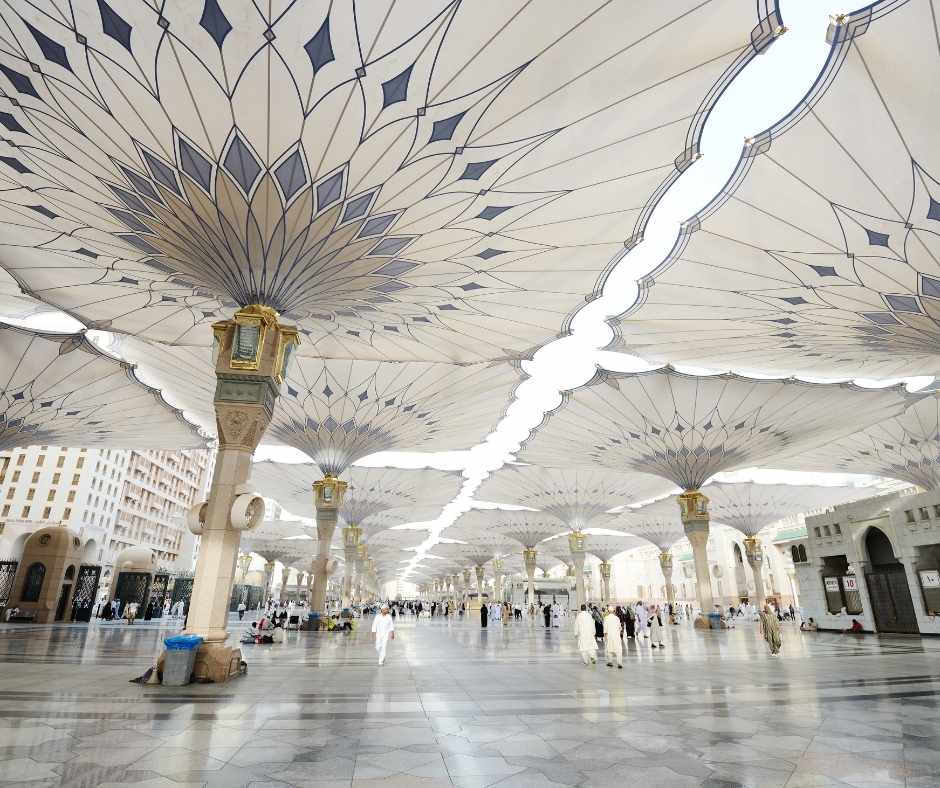
However, like Mecca, non-Muslims are not allowed to enter the city.
Tourism: Non-Muslim tourists are allowed to visit other parts of the city, but access to the mosque and certain religious sites is restricted.
Diriyah
Foreign tourists, both Muslims and non-Muslims, are welcome to visit Diriyah, a historical and cultural site. The town is home to the Al-Turaif District, a UNESCO World Heritage Site. This area is open to all visitors, and it is a major attraction in Riyadh for those interested in the history of Saudi Arabia.
Taif
Tourism: Foreign tourists (Muslim and non-Muslim) are allowed to visit Taif. This city is famous for its cool climate and historical significance and is a popular destination for visitors interested in both natural beauty and Islamic history.
Other Sites
Many other cities and historical landmarks, such as AlUla, Jeddah, and the Red Sea coast, are also open to foreign tourists. In recent years, Saudi Arabia has made significant efforts to boost tourism and has opened up several cultural and natural attractions to international visitors, especially through its new tourist visa program.
Mosques in Saudi Arabia
On your third day, and while you are around these spiritual sacred places, Wildyness would recommend checking these old mosques. The three oldest mosques in Saudi Arabia are significant landmarks in Islamic history.
The three oldest mosques in Saudi Arabia are significant landmarks in Islamic history.
Al Masjid al Haram
Also called The Grand Mosque in Mecca is the holiest mosque in Islam, dating back to around 638 CE.
It surrounds the Kaaba, the most sacred site in Islam, which Muslims face while praying. The mosque was originally built by Prophet Ibrahim and his son Ismail.
Over the centuries, it has expanded to accommodate millions of pilgrims during Hajj and Umrah. Its key features include the Kaaba, Maqam Ibrahim, and the Zamzam Well.
Al Masjid an Nabawi (The Prophet’s Mosque)
It is located in Medina, built in 622 CE, and is the second holiest mosque in Islam.
It was constructed by Prophet Muhammad himself after he migrated to Medina.
The mosque houses the tomb of the Prophet Muhammad and has undergone many expansions to meet the needs of millions of visitors.

Its key features include the Prophet’s tomb, the Green Dome, and the Rawdah area, which is considered a blessed space between the Prophet's tomb and his pulpit.
Quba Mosque in Medina, also built in 622 CE, holds the distinction of being the first mosque built by Prophet Muhammad and his followers. It was constructed after the Prophet migrated from Mecca to Medina and is highly revered in Islam.
A prayer here is considered to carry the reward of an Umrah pilgrimage. The mosque is known for its spaciousness, simplicity, and religious importance.
4th Day, A wonderful walking Al Balad
Al Balad, the second-largest city in Saudi Arabia, is a wonderful place with dreamy colors. You won’t believe your eyes when you wander in those bright streets.
We recommend wonderful walking al-Balad. It is the perfect place to ditch the wheels and take a walk!

Jeddah Historic District is the second name of Al Balad, you can check here our article about The Best Jeddah Itinerary you Can Spend in 3-4 Days (2024).
We would recommend checking this traveler’s experience in Al Balad here.
1st Place to visit in Al Balad is Naceef House
The building construction began in 1872 and still standing today to tell the stories of the people who visited it and lived in it ages ago.
What used to be a house, is now an open museum open for visitors. You might want to get an insight about what is inside the museum, and why it is super important and fun to take a look at.

Naceef House is not only a museum but also a preserved historical site with various rooms and levels that provide a detailed glimpse into life in 19th-century Jeddah.
Inside, you can explore:
- Historical Rooms and Furniture: The house is filled with vintage furniture and artifacts that reflect the lifestyle of wealthy families during the time it was built.
- Decorative Architecture: The intricately carved wooden windows, traditional Islamic arches, and stone walls make the house a fascinating architectural study.
- Exhibitions: The house hosts exhibitions showcasing Jeddah's history, cultural heritage, and the significance of the city in the context of Saudi Arabia’s history. Some exhibitions also explore the history of the Naceef family and their impact on the city.
- Rooftop: You can visit the rooftop for a panoramic view of Al Balad, offering a unique perspective of the area’s historic buildings and streets.
- The Courtyard: The central courtyard is a beautiful example of traditional Arabian courtyard design, something familiar to locals, which was a focal point in many old homes. The open space lets in natural light, and there’s often a garden or water feature in the middle.
Time for a Lunch Break: we recommend a local traditional restaurant called Granny’s Cuisine, click here for directions.
5th day: A Relaxing Day in the Desert
You would not dare to miss a day in the desert if 95% of Saudi Arabia is desert.
This a great place to head to, if you want an authentic desert experience, check the place yourself, and take your tent with you.
The UNESCO World Heritage Site of Al-Ula includes the Al Ula Desert, which is about 400 kilometers north of Jeddah. It is famous for its striking sandstone formations and historical sites.
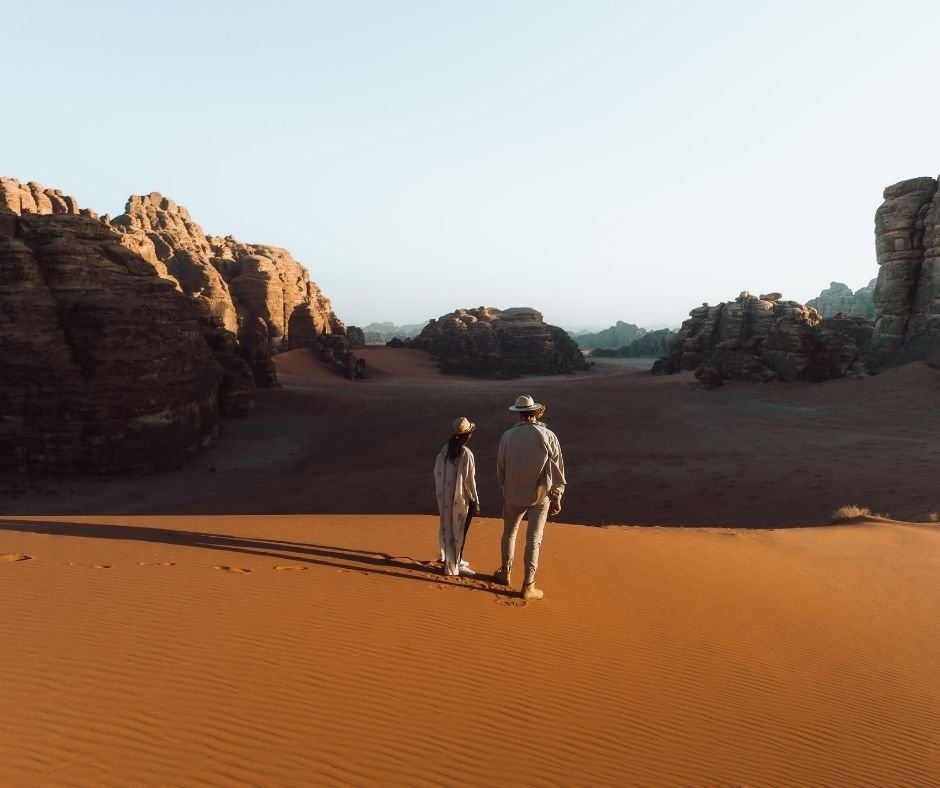
It’s a remarkable desert landscape with both natural beauty and cultural significance.
Located 40-50 kilometers northeast of Riyadh, the Thumamah Desert could be a great option if you're looking for somewhere closer to Al Balad.
The place offers popular desert activities and vast sandy expanses typical of Saudi Arabia’s desert scenery.
Click here for your directions to the AL Ula Desert location.
6th and 7th Day Road Trip to UNESCO Site of ad Diriyah
This is a long trip, around 9 to 10 hours, if you count breaks. But trust us, it is worth it. The first thing you want to do is to book a hotel, it is up to you if you want to show up last minute as well without booking.
Check here for the closest hotels to Diriyah! After all, you get your preferences, spacious rooms or small ones just to spend the night. Hotel room comfort for any traveler is the most important part of their stay.
Grab your water bottle and get ready to visit the UNESCO historic site. Historical Diriyah in our opinion is worth the trip.
On the way, you will discover, wonders and local legends you will know on this trip will be definitely memorial for you. Something to tell your grandchildren one day.
We would like to walk you through the steps first. Here is the link for the Google map path for your visit to the UNESCO site of Ad Diriyah. It is an action-packed itinerary and would need at least a couple of days. The trip to this site is an adventure in itself!
Put on your desert outfit, and grab your water, added to your microfiber towel for the road should be ready.
The first place to start with is At-Turaif World Heritage Site
You can get to this site through Google map direction here.
At-Turaif has been a UNESCO World Heritage Site since 2010 and is a historic district in Diriyah near Riyadh.
It is celebrated as the birthplace of the First Saudi State and the seat of power of the Al Saud dynasty in the 18th and 19th centuries.
While happiness is often said to be a journey, not a destination, in this case, it's important to focus on the destination too.
The second place in ad Diriyah is Salwa Place
This site is a large one, it is 10000 square meters. It is indeed The largest structure in At-Turaif, serving as the residence of the Al Saud ruling family.
Salwa Palace was the ruling center during the First Saudi State and is among the largest and most significant historical palaces in Saudi Arabia.

Click here for directions to reach Salawa Palace!
The third place is a must-see, it is Imam Mohammad bin Saud Mosque
This mosque played a crucial role in spreading Islam and calling for it. It is a religious center central to the early Saudi state's foundation.
Check here for directions to be amazed at the architecture and size of the mosque.
Fourth Place to visit is Diriyah Museum
Now, you cannot come to this unique historical site, without visiting Diriyah Museum
Diriyah Museum is an 18th-century palace, the galleries will walk you through the history of the religion, all the way back. It will also tell you more about the ruling national royal family Al Saud.
Don't miss the opportunity to check out this amazing place, here are the direct directions to it.
Now this is your last day. We recommend heading to the closest airport which is King Khalid International Airport, Airport Road, King Khalid International Airport, Riyadh Saudi Arabia. This will save time.
Keynotes
Visa in Saudi Arabia is limited and you have to always check if you are allowed in the area you are heading to or not.
There are places for foreigners, there are places for locals, and there are places for non-muslims and others restricted for Muslims. That is how Saudi Arabia is.
It is crucial to ask before you head to a place, whether your tourist via would give you access or not.
It's better to be wise than to wish you had been. This will give you peace of mind, and allow you to enjoy your stay.